AFP

Russia's invasion of Ukraine enters 100th day as fighting rages

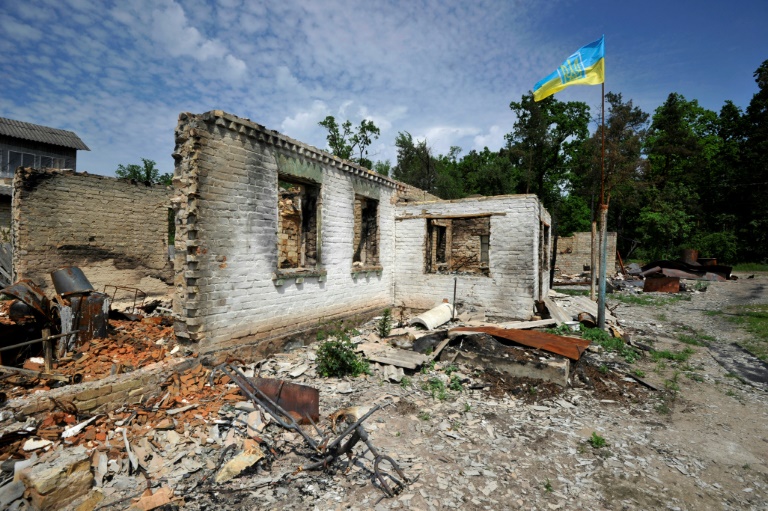
Ukraine marked 100 days since Russia’s invasion on Friday with fighting raging across the east of the country, where Moscow’s forces are tightening their grip on the Donbas.

The sombre milestone came as Kyiv announced Moscow was now in control of a fifth of Ukrainian territory, including Crimea and parts of the Donbas seized in 2014.

After being repelled from around the capital, President Vladimir Putin’s troops have set their sights on capturing eastern Ukraine, prompting warnings the war could drag on.

Following White House talks with US President Joe Biden, NATO chief Jens Stoltenberg warned Thursday that Ukraine’s allies needed to brace for a gruelling “war of attrition”.

“We just have to be prepared for the long haul,” Stoltenberg said, while reiterating that NATO does not want direct confrontation with Russia.

Despite a slower than expected advance, Moscow’s forces are making progress — President Volodymyr Zelensky told Luxembourg lawmakers about 20 percent of Ukrainian territory was now in Russian hands. 

Since Russia’s February 24 invasion, thousands of people have been killed and millions forced to flee. On the battlefield, up to 100 Ukrainian soldiers are dying every day, according to Zelensky.

Street battles are raging in the industrial hub of Severodonetsk in Lugansk, part of the Donbas.

Russia already controls about 80 percent of the strategic city but its defenders are putting up stiff resistance, with Lugansk regional governor Sergiy Gaiday vowing Ukrainian forces will fight “until the end”.

Severodonetsk’s Azot factory, one of Europe’s biggest chemical plants, was targeted by Russian soldiers who fired on one of its administrative buildings and a warehouse where methanol was stored.

– ‘Shooting is everywhere’ –

Ukrainian troops were still holding an industrial zone, Gaiday said, a situation reminiscent of Mariupol, where a huge steel works was the southeastern port city’s last holdout until Ukrainian troops finally surrendered in late May.

In the city of Sloviansk, about 80 kilometres (50 miles) from Severodonetsk, residents said there were constant bombardments by Russian troops. 

“It’s very difficult here,” said paramedic Ekaterina Perednenko, 24, who only returned to the city five days ago but realises that she will have to leave again.

“Shooting is everywhere, it’s scary. No water, electricity or gas,” she said.

In the southern city of Mykolaiv, Russian shelling killed at least one person and injured several others, Ukrainian military officials said late Thursday.

Valeriy Zaluzhnyi, the commander in chief of Ukraine’s armed forces, pleaded for modern armaments, saying that “the enemy has a decisive advantage in artillery.”

“It will save the lives of our people,” he added.

– Financial squeeze –

Led by the United States, Western nations have pumped arms and military supplies into Ukraine to help it survive the onslaught.

Bridget Brink, the new US ambassador to Kyiv, promised Thursday that the United States would “help Ukraine prevail against Russian aggression,” after presenting her credentials to Zelensky.

Earlier this week, the United States announced that it was sending more advanced Himar multiple rocket launch systems to Ukraine.

The mobile units can simultaneously fire multiple precision-guided munitions at targets up to 80 kilometres away.

They are the centrepiece of a $700 million package that also includes air-surveillance radar, ammunition, helicopters and vehicles.

Kremlin spokesman Dmitry Peskov accused Washington of “adding fuel to the fire,” although US officials insist Ukraine has promised not to use them to strike inside Russia.

Beyond sending arms to Ukraine, Western allies have also sought to choke off Russia’s financial lifeline in a bid to get Putin to change course.

Ramping up an already long list of embargoes, the United States blacklisted Putin’s money manager and a Monaco company that provides luxury yachts to Moscow’s elite.

Across the Atlantic, EU nations agreed new sanctions that would halt 90 percent of Russian oil imports to the bloc by the end of the year. 

– Oil move disappoints –

Russia warned that European consumers would be the first to pay the price for the partial oil embargo.

Major crude producers agreed to boost output by about 50 percent more a month in an effort to calm an overheated market and ease pressure on inflation.

But the move disappointed investors, and prices rose following the announcement.

The war risks triggering a global food crisis, as Ukraine is one of the world’s top grain producers.

It was already translating into higher costs for essentials from cereals to sunflower oil to maize, with the poorest among the hardest hit.

The head of the African Union, Senegalese President Macky Sall, is to visit Russia on Friday for talks with Putin.

The visit is aimed at “freeing up stocks of cereals and fertilisers, the blockage of which particularly affects African countries”, along with easing the Ukraine conflict, Sall’s office said.

burs-sr/oho
Asian markets track Wall St rally ahead of jobs data, oil holds gains

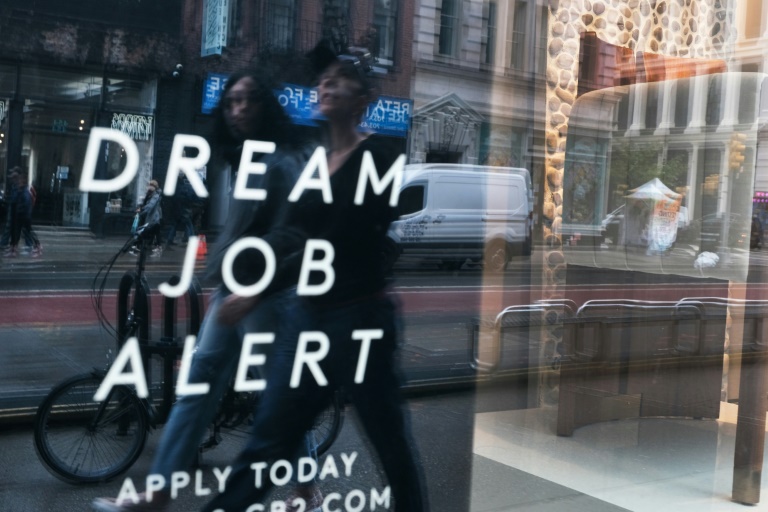
Asian equities rose Friday following a strong performance on Wall Street ahead of a key US jobs data release, while crude held most of the previous day’s gains after an output hike disappointed traders.

A below-forecast reading on US private jobs offered some support to New York, even as inflation and interest rate hike concerns remained major headaches.

While observers said the reading from payroll firm ADP was not usually a good guide for the official report, a soft number on Friday could give the Federal Reserve a little room to ease off its rate hike drive and provide a much-needed boost to sentiment.

“Seemingly, anything that keeps the Fed from a more aggressive rate-hiking path appears to be greeted with open arms by equities,” said Stephen Innes of SPI Asset Management.

For now, expectations are for the US central bank to continue tightening monetary policy with half-point hikes at upcoming meetings, while vice chair Lael Brainard warned she did not yet see any reason to take a breather in the third quarter, as some had hoped. 

Still, a rally in beaten-down tech firms helped drive healthy gains on Wall Street, and Asia managed to ride on the coattails.

Tokyo rose more than one percent, while Sydney, Seoul, Singapore, Wellington and Jakarta were also up, though Manila dipped.

Hong Kong, Shanghai and Taipei were closed for holidays.

– Oil pressure –

But analysts remain on edge about the near-term outlook owing to uncertainty caused by a range of issues including the Ukraine war and China’s economic travails.

“We believe a slight lean toward defensive sectors and away from the growth-oriented areas of this market still make sense,” said Scott Brown, of LPL Financial.

“Outside of this recent rally, very little about this market has changed from a technical standpoint and that makes us wary of calling the all-clear.”

Hopes that OPEC and other major crude producers could ease pressure on inflation by ramping up output were dealt a blow when they agreed to pump just 50 percent more per month.

The announcement did little to soothe worries about a supply shortage caused by bans on US and UK imports from Russia, and came just as European leaders said they would impose a partial embargo on shipments.

A report showing a steep drop in US stockpiles added to the woes on oil trading floors, with some commentators saying prices could once again spike as China relaxes long-running lockdown measures in major cities.

– Key figures at around 0230 GMT –

Tokyo – Nikkei 225: UP 1.1 percent at 27,713.23 (break)

Hong Kong – Hang Seng Index: Closed for a holiday

Shanghai – Composite: Closed for a holiday

Brent North Sea crude: DOWN 0.1 percent at $117.54 per barrel

West Texas Intermediate: DOWN 0.2 percent at $116.70 per barrel

Euro/dollar: UP at $1.0762 from $1.0753 on Thursday

Pound/dollar: UP at $1.2581 from $1.2568

Euro/pound: UP at 85.54 pence from 85.49 pence

Dollar/yen: DOWN at 129.80 yen from 129.85 yen

New York – Dow: UP 1.3 percent at 33,248.28 (close)

London – FTSE 100: Closed for a holiday

Biden makes emotional appeal for action on gun violence

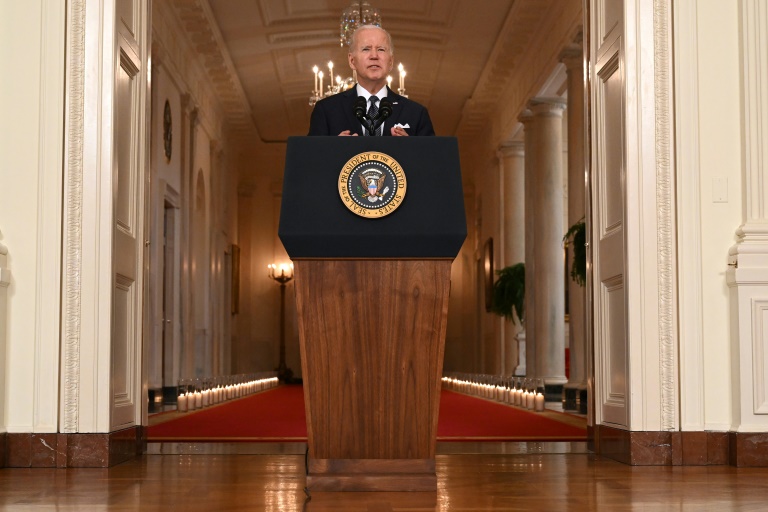
US President Joe Biden on Thursday made a fervent appeal for lawmakers to pass tougher gun control laws, including a ban on assault weapons, to curb a scourge of mass shootings turning American communities into “killing fields.”

Biden made the 17-minute address — his latest call for tougher firearms measures — with 56 lighted candles arrayed along a long corridor behind him, representing US states and territories suffering from gun violence.

“How much more carnage are we willing to accept?” the president asked in the speech, which he delivered with anger in his voice, and at times dipping close to a whisper.

“We can’t fail the American people again,” he said, condemning the refusal of a majority of Republican senators to support tougher laws as “unconscionable.”

At a minimum, Biden said, lawmakers should raise the age at which assault weapons can be purchased from 18 to 21.

He also urged them to take steps including strengthening background checks, banning high-capacity magazines, mandating safe storage of firearms, and allowing gun manufacturers to be held liable for crimes committed with their products.

“Over the last two decades, more school-age children have died from guns than on-duty police officers and active duty military combined. Think about that,” Biden said.

He highlighted the story of a young student who smeared a dead classmate’s blood on herself to hide from a gunman at a Texas elementary school, saying: “Imagine what it would be like for her to walk down the hallway of any school again.”

“There are too many other schools, too many other everyday places that have become killing fields, battlefields here in America,” Biden said.

While Republican lawmakers have largely resisted tougher gun laws, a cross-party group of US senators held talks Thursday on a package of firearms controls.

Nine senators have been meeting this week to discuss a response to the mass shootings that have appalled the nation, projecting optimism over the prospects for modest reforms.

The group has focused on school security, bolstering mental health services and incentives for states to grant courts “red flag” authority to temporarily remove guns from owners considered a threat — a measure Biden also called for in his remarks.

– Hospital attack –

Even as lawmakers were mulling a response to the racist murder of 10 Black supermarket shoppers in Buffalo and the school shooting in Texas that killed 19 children and two teachers, another attack took place in Oklahoma on Wednesday.

A man with a pistol and a rifle murdered two doctors, a receptionist and a patient in a Tulsa hospital complex before killing himself as police arrived.

Lawmakers are aware that they risk wasting momentum as the urgency for reforms sparked by the killings dissipates, and another smaller group of senators is holding parallel discussions on expanding background checks on gun sales.

The political challenge of legislating in a 50-50 Senate, where most bills require 60 votes to pass, means that more wide-ranging reforms are unrealistic.

Mitch McConnell, leader of the Senate Republicans, told reporters that senators were trying to “target the problem” — which he said was “mental illness and school safety” rather than the availability of firearms. 

House Democrats are nevertheless set to pass a much broader but largely symbolic “Protecting Our Kids Act,” which calls for raising the purchasing age for semi-automatic rifles from 18 to 21 and a ban on high-capacity magazines.

The package will likely pass the Democratic-led House next week before dying amid Republican opposition in the Senate.

With regulation being so difficult at the federal level, an effort is also underway among state legislatures to push for tighter gun laws.

California lawmakers advanced a gun control package in the aftermath of the Uvalde shooting that included proposals to open up gunmakers to civil legal liability in certain cases.

The proposals echo action by lawmakers in New York state, while a permit-to-buy bill is moving through the Delaware legislature and pro-gun rights Texas is looking to “make legislative recommendations” in response to the Uvalde shooting.

Activists for greater restrictions fear a setback at the federal level however as the Supreme Court is set to issue its first major Second Amendment opinion in more than a decade.

Justices are expected to rule in the coming weeks in a dispute over New York state’s stringent limits on the concealed carry of handguns outside the home.

A narrow opinion could affect just a few states with similar laws, but campaigners fear the conservative majority will make a broader ruling clearing the way for constitutional challenges to gun safety laws across the country.

US-Venezuela business picking up despite punishing sanctions

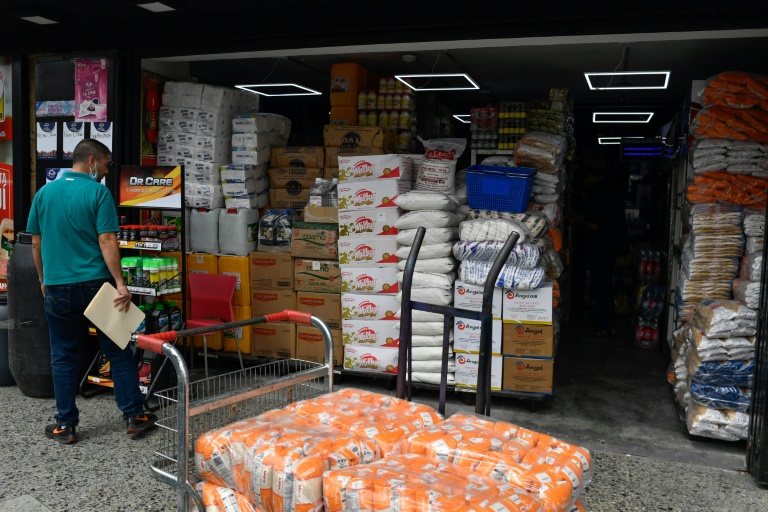
Venezuela’s imports of US food and farming products are on the rise, with the private sector driving increased business between the two former partners despite punishing sanctions imposed on Caracas by Washington.

“Venezuela was disappearing from the world of imports and exports for a while, but it’s coming back,” Luis Vicente Garcia, general manager at the Venezuelan-American Chamber of Commerce (VENANCHAM), told AFP.

“We’re at a turning point,” Garcia said.

Total imports of food and farming supplies in Venezuela were $2.4 billion in 2021, a 31.2 percent increase over 2020.

The oil-rich but cash-strapped South American country is now experiencing timid growth after a years-long recession in which its gross domestic product shrunk by 80 percent.

Purchases from the United States reached $634 million in 2021, second only to the $934 million spent in Brazil, according to a report by the US Department of Agriculture, which said that opportunities in Venezuela are improving.

Although the US figure represents a 45 percent increase from the previous year, it is still a far cry from the $1.4 billion per year seen between 2010 and 2014. In 2017, at the height of US-Venezuelan tensions, US imports were worth just $400 million.

The main purchases are grains, pasta, tinned fruit and vegetables, liquor and animal feed.

Imports are crucial for Venezuela, which only produces 50 percent of its basic corn and 45 percent of its rice needs, according to the Fedeagro union of agricultural producers.

VENAMCHAM says trade between Venezuela and the US were around $38 billion in 2008, at a time when Washington was Caracas’s largest crude customer.

– Softening controls –

That figure fell to just under $2 billion in 2021, but has increased almost 28 percent in the first quarter of 2022 compared to the previous year.

At the height of Venezuela’s economic crisis, the government of President Nicolas Maduro blamed the scarcity of basic necessities such as food, which produced interminable lines at supermarkets, on the US “blockade.”

Between 2017 and 2018, sanctions were against individuals, freezing bank accounts and barring US businesses and citizens from engaging in commerce with dozens of Venezuelan state officials.

The United States did not recognize Maduro’s 2018 re-election in a vote boycotted by the opposition. The year before, Washington imposed a series of sanctions against his government, including an oil embargo, in response to a crackdown on demonstrators.

“When the sanctions arrived… there was a reaction (by businesses): I’m not going to take part in this market,” said Garcia.

Even though medicine and food was exempt, the fear of reprisals was a barrier.

But faced with a cash flow problem, the government, which used to almost monopolize food imports, opened the doors to the private sector.

It was “around two or three years ago that the government started to let private enterprises import,” Garcia said.

Venezuela food imports have also benefited since 2018 from the lifting of tariffs.

The softening of tight currency exchange controls has also helped, as has remittances that are worth an estimated $2.5 billion to $3 billion a year.

There have also been movements on the political front.

On May 17, US President Joe Biden softened certain sanctions in a bid to promote negotiations between Maduro and the opposition, which were suspended in October.

Ecuadoran frogs Rocket and Harlequin taking on mining industry

On the banks of a crystalline waterfall, biologist Andrea Teran lets out a yelp.

She holds in the palm of her hand one of two frog species at the center of a legal battle against Ecuador’s mining industry.

Teran, 37, is a specialist in the fragile existence of a creature called the Resistance Rocket Frog, which does not yet have a scientific name, and the Longnose Harlequin (Atelopus longirostris), which was believed extinct for 30 years.

The discovery several years ago of these two tiny frogs measuring no more than four centimeters has become the central argument in opposition to a proposed nearly 5,000 hectare mining project in a native forest in Junin, Imbabura province, around three and a half hours north of Quito.

The Longnose Harlequin reappeared in 2016.

“It was a frog that came back from the dead,” said an emotional Teran, whom AFP accompanied on an expedition in this forest area following a two-hour walk.

“If the water is polluted (by mining) the last populations of this frog will be lost,” said the biologist from the Jambatu Center dedicated to the study and conservation of amphibians.

The Longnose Harlequin is extinct according to the International Union for the Conservation of Nature’s (IUCN) red list.

But scientists rediscovered traces of life in this forest where the mineral exploitation license was granted to Ecuador’s Enami and Chile’s Codelco. They are due to begin in 2024 to extract 210,000 tons of copper a year.

In Ecuador, which launched a massive mining exploitation operation in 2019, there are at least 12 projects at advanced stages to mine reserves of 43.7 million ounces of gold, 46 billion pounds of copper and 183 million ounces of silver, according to the Spurrier Group consultancy.

But the 2019 discovery of a new species of rock frog has only intensified the desire to protect its forest habitat.

– Last hope –

In 2020, Teran launched a legal battle to prevent the mining project from going ahead.

Although she succeeded in the first instance, she then lost on appeal.

But the mining concession has also been challenged by a collective of Junin residents pointing to errors in the environmental impact studies, such as the lack of a protection plan for the two frog species.

“There are so many mistakes. They are violating the rights of nature, and on top of that the documents were never correctly communicated to the community and there was no environmental consultation,” the file’s lawyer Mario Moncayo told AFP.

But a judge rejected the claim of oversights.

Defenders of these two frogs can still appeal, which is perhaps their last hope of halting the mining project.

Contacted by AFP, both the government and the mining companies refused to comment.

– No solutions –

When the Jambatu Center scientists came across the new rocket frog species they initially mistook it for one called the Confusing Rocket Frog (Ectopoglossus confusus). 

However, an anatomical difference in its tongue was found, and genetic studies allowed experts to identify it as a completely new Ectopoglossus species that they named “resistance.”

“It lives in unique conditions, with the sound of the waterfall we don’t know how it communicates, we don’t know anything about its reproductive biology,” said Teran.

Their skin contains great medicinal potential, and renders them extremely sensitive to environmental changes.

They are thus considered bioindicators, meaning that if the ecosystem is affected, they could disappear.

Protection of nature is enshrined in the constitution of Ecuador, which has 650 known species of frogs, 60 percent of which are in danger of extinction.

But the South American country derives six percent of its GDP from its oil and mining industries, according to the Central Bank.

“We are in a mega-diverse region and the decisions taken have to be mega-responsible,” said Teran.

It’s an issue that divides opinion in Junin.

“If authorities value the species that live here then they need to halt” the mining project, said farmer Hugo Ramirez, 40.

But for carpenter Pedro Vallejos, 63, environmentalists are offering no solutions to end poverty.

“There’s no employment in the countryside, there are no alternatives,” he said.

Elvis wedding crackdown leaves Las Vegas all shook up

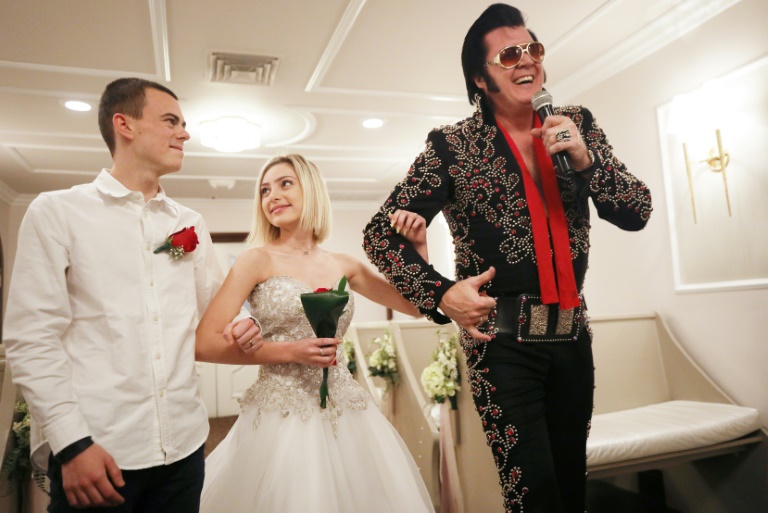
Every year thousands of visitors to Las Vegas can’t help falling in love — at least long enough to get married by an Elvis impersonator.

But the company that controls the rights to the King’s likeness has sparked outrage in Sin City by cracking down wedding chapels offering Elvis-themed nuptials.

Authentic Brands Group, which bought a controlling stake in Elvis Presley’s estate in 2013, last month sent cease-and-desist letters to companies offering the kitschy weddings.

The move triggered angry responses from Elvis impersonators, chapel owners, and even the mayor of Las Vegas, who called for a little more open conversation — and less legal action — from the group. 

“Elvis Presley long called Las Vegas his home and his name has become synonymous with Las Vegas weddings,” Jason Whaley, president of the Las Vegas Wedding Chamber of Commerce, told AFP.

“The Vegas Wedding Chamber shares a concern that many of our chapels and impersonators livelihoods are being targeted, especially as many are still trying to recover financially from the hurdles we all endured with Covid shutdowns.”

ABG on Thursday apologized for its initial approach, saying it was committed to protecting Presley’s legacy.

“We are sorry that recent communication with a small number of Las Vegas based chapels caused confusion and concern. That was never our intention,” the company said in a statement to AFP.

“We are working with the chapels to ensure that the usage of Elvis’ name, image and likeness are in keeping with his legacy.”

It added: “From tribute artists and impersonators to chapels and fan clubs, each and every one of these groups help to keep Elvis relevant for new generations of fans.”

But a day earlier, the Las Vegas Review-Journal reported that ABG was now offering chapels financial “partnerships,” including annual licensing deals to continue business as usual.

“That is their solution, to pay $20,000 a year to do what we’ve been doing for the past nine years,” said Kayla Collins, co-owner of the Las Vegas Elvis Wedding Chapel.

“This was not on the table a few days ago. Frankly, I think this thing going to the public has changed their minds.”

– ‘Elvis Pink Caddy’ –

The move comes weeks before the release of Baz Luhrmann’s new big-screen biopic “Elvis” — a large-scale Warner Bros production expected to boost interest in the singer.

Elvis-themed weddings have been a lucrative business in Las Vegas since the 1970s.

Packages today run as high as $1,600 for the Elvis Pink Caddy Luxury Model Wedding Package, which offers couples the chance to be driven up the aisle of the Viva Las Vegas Wedding Chapel by Elvis in a 1964 pink Cadillac convertible.

Weddings are a $2.5 billion industry in Las Vegas, according to the Wedding Chamber of Commerce.

But while Elvis musical tribute acts are freely allowed under Nevada law, businesses using Presley’s likeness simply to attract publicity and customers are not protected.

Harry Shahoian, one of dozens of Elvis impersonators in the city, who officiates at the Graceland Wedding Chapel in Las Vegas, told the Review-Journal that people just “love to be married by Elvis.”

“I did the whole day Sunday, 22 ceremonies. I’ve done more than 30 in one day, 100 in a week, all of those Elvis-themed.”

US sues cryptocurrency exchange run by Winklevoss twins

US regulators on Thursday said they are suing the Gemini Trust cryptocurrency exchange, which is run by Cameron and Tyler Winklevoss, for giving misleading answers in 2017 about a bitcoin project.

The Commodity Futures Trading Commission lawsuit filed in federal court in New York accuses Gemini of not being upfront about how easy it would be to manipulate a bitcoin futures project proposed at the time, the agency said in a statement.

The futures contract launched at the end of 2017 and stopped trading two years later, according to blog posts from Gemini and a partner company

Making false or misleading statements to the commission undermines its work to protect market participants, prevent price manipulation, and promote fair competition, acting director of enforcement Gretchen Lowe said in the statement.

“This enforcement action sends a strong message that the Commission will act to safeguard the integrity of the market oversight process,” Lowe said.

The US agency is seeking financial penalties, the surrender of any ill-gotten gains, and an injunction forbidding Gemini from such behavior in the future, it said.

Gemini defended its record when asked about the suit.

“We have an eight year track-record of asking for permission, not forgiveness, and always doing the right thing,” it told AFP, adding: “We look forward to definitively proving this in court.”

Cameron and Tyler Winklevoss, twin Harvard classmates of Mark Zuckerberg, who sued him over claims he stole the idea for Facebook from them, started and run New York-based Gemini.

The brothers told Gemini employees on Thursday that about 10 percent of them were being laid off as staff is trimmed to endure a “crypto winter” likely to persist for a while, according to a copy of the email posted online by the company.

“The crypto revolution is well underway and its impact will continue to be profound, but its trajectory has been anything but gradual or predictable,” the brothers said.

The industry is in a “contraction phase that is settling into a period of stasis — what our industry refers to as ‘crypto winter'” compounded by macroeconomic and geopolitical turmoil, they added.

Police chief not told of children's calls during Uvalde shooting: state senator

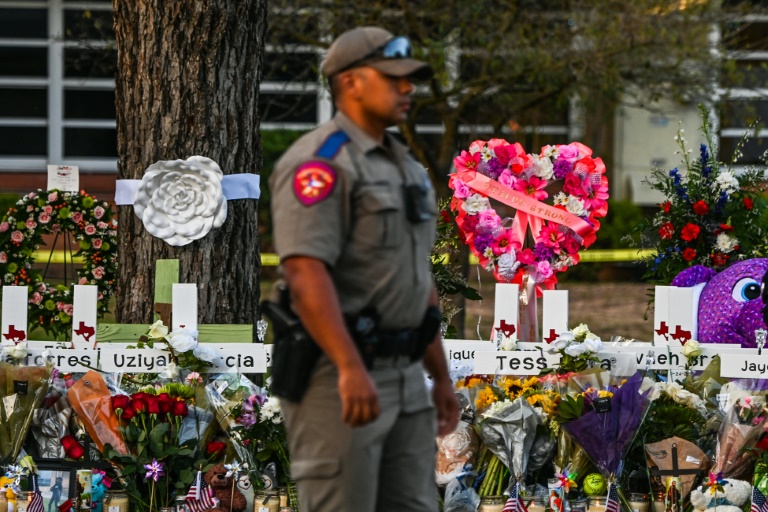
The police chief in charge of operations at the Texas elementary school where a gunman murdered 21 people was not informed of desperate calls made by children trapped inside, a state senator said Thursday.

The 911 calls “were not being communicated to the so-called incident commander,” Senator Roland Gutierrez told a news conference, referring to the school district’s police chief, Pete Arredondo.

“There is human error, there is system error,” Gutierrez said, adding it was unclear exactly who all was receiving the calls, but that he had been told it was only the Uvalde city police.

Officers have come under intense criticism over why they waited more than an hour to neutralize the gunman after arriving at the school. Texas Department of Public Safety (DPS) director Steven McCraw has admitted that delaying was the “wrong decision.”

Gutierrez said: “We need to know what law enforcement was doing, what radio procedures were followed and not followed.”

“We have all failed. There’s been a lot of failure here,” the senator said.

The US Department of Justice said Sunday that it would investigate the law enforcement response in Uvalde and issue a report.

Surgeons transplant 3D ear made of living cells

A US medical team said Thursday they had reconstructed a human ear using the patient’s own tissue to create a 3D bioimplant, a pioneering procedure they hope can be used to treat people with a rare birth defect.

The surgery was performed as part of an early-stage clinical trial to evaluate the safety and efficacy of the implant for people with microtia, in which the external ear is small and not formed properly.

AuriNovo, as the implant is called, was developed by the company 3DBio Therapeutics while the surgery was led by Arturo Bonilla, founder and director of the Microtia-Congenital Ear Deformity Institute in San Antonio, Texas.

“As a physician who has treated thousands of children with microtia from across the country and around the world, I am inspired by what this technology may mean for microtia patients and their families,” Bonilla said in a statement.

He said he hoped the implant would one day replace the current treatment for microtia, which involves either grafting cartilage from a patient’s ribs or using synthetic materials, porous polyethylene (PPE), to reconstruct outer ears.

The procedure involves 3D scanning the patient’s opposite ear to create a blueprint, then collecting a sample of their ear cartilage cells and growing them to a sufficient quantity. 

These cells are mixed with collagen-based bio-ink, which is shaped into an outer ear. The implant is surrounded by a printed, biodegradable shell, to provide early support, but which is absorbed into the patient’s body over time.

The implanted ear is supposed to mature over time, developing the natural look and feel, including elasticity, of a regular ear.

The clinical trial expects to enroll 11 patients and is being conducted in California and Texas.

Bonilla said: “The AuriNovo implant requires a less invasive surgical procedure than the use of rib cartilage for reconstruction. We also expect it to result in a more flexible ear than reconstruction with a PPE implant.”

According to the Centers for Disease Control and Prevention, microtia occurs in about 1 of every 2,000-10,000 babies. Factors that can increase risk include diabetic mothers and maternal diet that is lower in carbohydrates and folic acid.

Boys are more likely to be affected than girls, with Hispanic, Asian, Pacific Islander and Native Americans more impacted than non-Hispanic whites.

Absent other conditions, children with microtia can develop normally and lead healthy lives — though they may have self-esteem issues and suffer from teasing and bullying about their appearance.

Looking forward, 3DBio wants to develop implants with more severe forms of microtia.

3D printed implants could also be used for other conditions involving cartilage, including nose defects or injuries, breast reconstruction, damaged meniscus in the knee or rotator cuff tears in shoulders.

“Our initial indications focus on cartilage in the reconstructive and orthopedic fields, and then our pipeline builds upon this progress to expand into the neurosurgical and organ system fields,” the company says on its website.

Elvis wedding crackdown leaves Las Vegas all shook up

Every year thousands of visitors to Las Vegas can’t help falling in love — at least long enough to get married by an Elvis impersonator.

But the company that controls the rights to the King’s likeness has sparked outrage in Sin City by cracking down on dozens of wedding chapels offering Elvis-themed nuptials.

Authentic Brands Group, which bought a controlling stake in Elvis Presley’s estate in 2013, last month sent cease-and-desist letters to companies offering the kitschy weddings.

The move triggered angry responses from Elvis impersonators, chapel owners, and even the mayor of Las Vegas. 

“Elvis Presley long called Las Vegas his home and his name has become synonymous with Las Vegas weddings,” Jason Whaley, president of the Las Vegas Wedding Chamber, told AFP.

“The Vegas Wedding Chamber shares a concern that many of our chapels and impersonators livelihoods are being targeted, especially as many are still trying to recover financially from the hurdles we all endured with Covid shutdowns.”

On Wednesday, the Las Vegas Review-Journal reported that ABG had instead offered chapels financial “partnerships,” including annual licensing deals to continue business as usual.

“That is their solution, to pay $20,000 a year to do what we’ve been doing for the past nine years,” said Kayla Collins, co-owner of the Las Vegas Elvis Wedding Chapel.

“This was not on the table a few days ago. Frankly, I think this thing going to the public has changed their minds.”

ABG, which also controls rights for the Marilyn Monroe and Muhammad Ali estates, did not immediately respond to AFP request for comment.

But the company said in a statement to local media that though it has “no intention to shut down chapels that offer Elvis packages,” it remained the company’s “responsibility to safeguard his legacy in Las Vegas.”

The move comes weeks before the release of Baz Luhrmann’s new big-screen biopic “Elvis” — a large-scale Warner Bros production expected to boost interest in the singer.

Elvis-themed weddings have been a lucrative business in Las Vegas since the 1970s.

Packages today run as high as $1,600 for the Elvis Pink Caddy Luxury Model Wedding Package, which offers couples the chance to be driven up the aisle of the Viva Las Vegas Wedding Chapel by Elvis in a 1964 pink Cadillac convertible.

Weddings are a $2.5 billion industry in Las Vegas, according to the Las Vegas Wedding Chamber of Commerce.

But while Elvis musical tribute acts are freely allowed under Nevada law, businesses using Presley’s likeness simply to attract publicity and customers are not protected.

Harry Shahoian, one of dozens of Elvis impersonators in the city, who officiates at the Graceland Wedding Chapel in Las Vegas, told the Review-Journal that people just “love to be married by Elvis.”

“I did the whole day Sunday, 22 ceremonies. I’ve done more than 30 in one day, 100 in a week, all of those Elvis-themed.”

Close Bitnami banner
Bitnami