AFP

Surgeons transplant 3D ear made of living cells

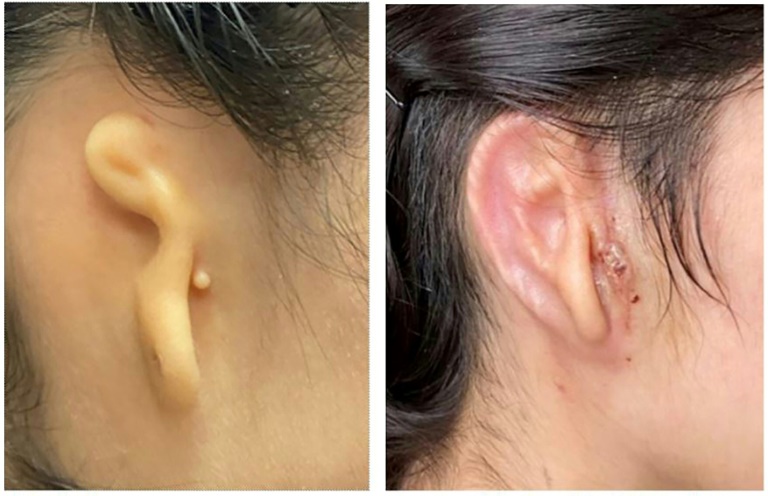
A US medical team said Thursday they had reconstructed a human ear using the patient’s own tissue to create a 3D bioimplant, a pioneering procedure they hope can be used to treat people with a rare birth defect.

The surgery was performed as part of an early-stage clinical trial to evaluate the safety and efficacy of the implant for people with microtia, in which the external ear is small and not formed properly.

AuriNovo, as the implant is called, was developed by the company 3DBio Therapeutics while the surgery was led by Arturo Bonilla, founder and director of the Microtia-Congenital Ear Deformity Institute in San Antonio, Texas.

“As a physician who has treated thousands of children with microtia from across the country and around the world, I am inspired by what this technology may mean for microtia patients and their families,” Bonilla said in a statement.

He said he hoped the implant would one day replace the current treatment for microtia, which involves either grafting cartilage from a patient’s ribs or using synthetic materials, porous polyethylene (PPE), to reconstruct outer ears.

The procedure involves 3D scanning the patient’s opposite ear to create a blueprint, then collecting a sample of their ear cartilage cells and growing them to a sufficient quantity. 

These cells are mixed with collagen-based bio-ink, which is shaped into an outer ear. The implant is surrounded by a printed, biodegradable shell, to provide early support, but which is absorbed into the patient’s body over time.

The implanted ear is supposed to mature over time, developing the natural look and feel, including elasticity, of a regular ear.

The clinical trial expects to enroll 11 patients and is being conducted in California and Texas.

Bonilla said: “The AuriNovo implant requires a less invasive surgical procedure than the use of rib cartilage for reconstruction. We also expect it to result in a more flexible ear than reconstruction with a PPE implant.”

According to the Centers for Disease Control and Prevention, microtia occurs in about 1 of every 2,000-10,000 babies. Factors that can increase risk include diabetic mothers and maternal diet that is lower in carbohydrates and folic acid.

Boys are more likely to be affected than girls, with Hispanic, Asian, Pacific Islander and Native Americans more impacted than non-Hispanic whites.

Absent other conditions, children with microtia can develop normally and lead healthy lives — though they may have self-esteem issues and suffer from teasing and bullying about their appearance.

Looking forward, 3DBio wants to develop implants with more severe forms of microtia.

3D printed implants could also be used for other conditions involving cartilage, including nose defects or injuries, breast reconstruction, damaged meniscus in the knee or rotator cuff tears in shoulders.

“Our initial indications focus on cartilage in the reconstructive and orthopedic fields, and then our pipeline builds upon this progress to expand into the neurosurgical and organ system fields,” the company says on its website.

US lawyer Avenatti gets four years for stealing from porn actress

Disgraced US celebrity lawyer Michael Avenatti was sentenced to four years in prison Thursday for stealing $300,000 from porn actress Stormy Daniels, who was due the money for writing a book about her alleged tryst with Donald Trump.

Avenatti, who represented Daniels in her lawsuit against the former president, was convicted of wire fraud and aggravated identity theft following a trial in Manhattan in February.

The 51-year-old former California attorney had already been found guilty in February 2020 of trying to extort millions of dollars from sports apparel giant Nike.

Avenatti is currently serving a 30-month sentence for the Nike extortion.

In the Daniels case, New York judge Jesse Furman ruled that 30 months of the sentence should be served consecutively after the Nike sentence, with the remaining 18 months running concurrently.

Avenatti’s current predicament is a far cry from the dizzying heights of February 2018 to March 2019 when he was the lawyer for Daniels, whose real name is Stephanie Clifford.

He became a household name during her legal battles with Trump over hush money she received for an alleged affair with the then-real estate developer in 2006.

Reveling in his role as an outspoken critic of the president and darling of America’s left, Avenatti appeared frequently on camera and on social media, raising suspicions that he harbored a run for the White House.

But while representing Daniels, Avenatti was also defrauding her.

He tricked literary agents into sending $300,000 of an $800,000 advance she received for a book called “Full Disclosure” into a bank account that he controlled, without her knowledge. 

Avenatti then spent the money on personal and professional expenses including plane tickets, restaurant meals and the lease of a Ferrari, prosecutors said.

He later paid back about half the money, or $150,000. Avenatti, representing himself during the trial, unsuccessfully argued that he was owed the payments.

Egyptian antiques seized from New York's Met in Louvre probe

New York prosecutors have seized five Egyptian antiques from the Metropolitan Museum of Art as part of an international trafficking investigation involving the former head of Paris’s Louvre Museum.

The artifacts — which include a group of painted linen fragments, dated between 250 and 450 BC, depicting a scene from the Book of Exodus — are worth more than $3 million, according to the Manhattan district attorney’s office.

A New York state judge ordered their confiscation on May 19, a court document shows.

“The pieces were seized pursuant to the warrant,” a spokesperson for the district attorney told AFP on Thursday.

He added that they are “related” to the investigation in Paris in which Jean-Luc Martinez, who ran the Louvre from 2013 to 2021, was charged last week with complicity in fraud and “concealing the origin of criminally obtained works by false endorsement.”

The fraud is thought to involve several other art experts, according to French investigative weekly Canard Enchaine.

The five pieces seized from the Met were purchased by the famous museum between 2013 and 2015, according to The Art Newspaper, which first reported the news.

When contacted by AFP, a Met spokesperson referred to a previous statement in which the museum said it was “a victim of an international criminal organization.”

In 2019, the museum returned the gilded sarcophagus of the priest Nedjemankh to Egypt after New York prosecutors determined it had been stolen during the revolts against ex-president Hosni Mubarak in 2011.

The Met had purchased the coffin in 2017 and later said it had been a victim of false statements and fake documentation.

French investigators are also seeking to establish whether pieces looted during the Arab Spring protests were acquired by the Louvre’s branch in Abu Dhabi. 

Several of the individuals charged in the case — including Roben Dib, owner of a gallery in Hamburg and who is currently in custody — were involved in the sarcophagus’s sale to the Met, according to a 2019 report by the Manhattan district attorney.

The Book of Exodus painting is valued at $1.6 million. Also among the five works is a painted portrait of a woman dated from between the years AD 54 to 68 worth $1.2 million.

Gauff in 'peace, end gun violence' message at French Open

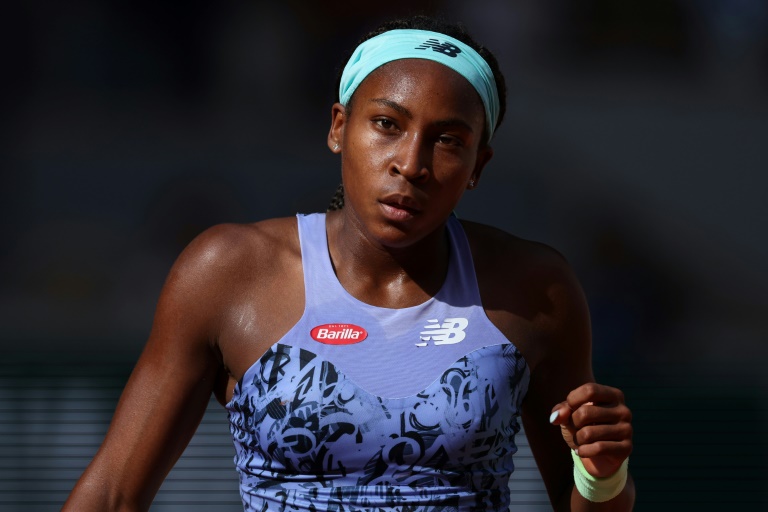
Coco Gauff became the youngest Grand Slam finalist in 18 years at the French Open on Thursday and used her landmark performance to demand action on mass shootings in the United States by writing “peace, end gun violence” on a courtside TV camera.

American star Gauff, 18, will face world number one Iga Swiatek in the final on Saturday after defeating Martina Trevisan 6-3, 6-1 in her semi-final.

Before penning her plea for gun control at home, she insisted that recent tragedies mean she will treat victory or defeat in the championship match with equal equanimity.

“Yeah it’s a Grand Slam final but there are so many things going on in the world, especially in the U.S. — I think it’s not important to stress over a tennis match,” she said in her on-court TV interview.

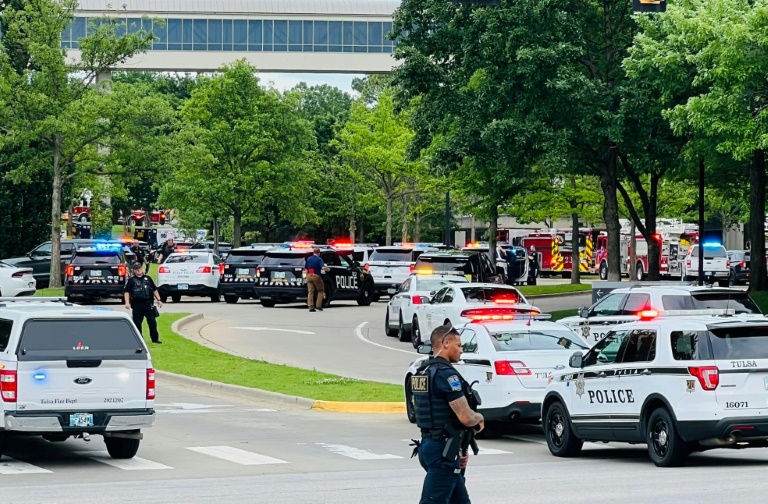
Gauff was talking just hours after a gunman killed at least four people at a hospital building in Tulsa, Oklahoma, — the latest in a string of mass shootings across the United States in recent weeks.

The killings come as Texas families bury their dead after a school shooting left 19 young children dead just eight days earlier.

Winning players at the French Open are invited to write messages on the courtside TV camera. Usually they are light-hearted, often bland declarations.

However, Gauff seized her chance in front of a global TV audience, hoping that her gun control message will “get into the heads of people in office to hopefully change things”.

“The first thing my dad said to me after I got off court, I’m proud of you and I love what you wrote on the camera.”

Gauff said she had not planned to write the message should she have won the match on Roland Garros’ showpiece Philippe Chatrier Court.

“It just felt right in that moment and to write that. I woke up this morning and I saw there was another shooting, and I think it’s just crazy.”

Gauff hoped that being in Europe will help get her message home to a wider audience.

“I know people globally around the world are for sure watching,” she said.

Gauff explained that the deaths of 17 students at the hands of a teenage gunman in the Parkland school shooting in Florida in February 2018 had already brought the issue sharply into focus on a personal level.

Some of her close friends were present at the time.

“Luckily they were able to make it out of it. I just think it’s crazy, I think I was maybe 13 or 14 when that happened, and still nothing has changed.”

Gauff insisted that she will continue to speak out on political and social issues now that she has passed her 18th birthday and has the right to vote.

“Since I was younger, my dad told me I could change the world with my racquet. He didn’t mean that by like just playing tennis. He meant speaking out on issues like this.”

Seen from space, the snow-capped Alps are going green

The famous snow-capped peaks of the Alps are fading fast and being replaced by vegetation cover — a process called “greening” that is expected to accelerate climate change, a study said Thursday.

The research, published in Science, was based on 38 years of satellite imagery across the entirety of the iconic European mountain range.

“We were very surprised, honestly, to find such a huge trend in greening,” first author Sabine Rumpf, an ecologist at the University of Basel, told AFP.

Greening is a well-recognized phenomenon in the Arctic, but until now hadn’t been well established over a large scale in mountainous areas.

However, since both the poles and mountains are warming faster than the rest of the planet, researchers suspected comparable effects.

For their analysis, the team examined regions at 1,700 meters above sea level, to exclude areas used for agriculture. They also excluded forested areas and glaciers.

According to the findings, which covered 1984-2021, snow cover was no longer present in summer on nearly 10 percent of the area studied.

Rumpf pointed out that satellite images can only verify the presence or absence of snow — but the first effect of warming is to reduce the depth of the snowpack, which can’t be seen from space.

Secondly, the researchers compared the amount of vegetation using wavelength analysis to detect the amount of chlorophyll present, and found plant growth increased across 77 percent of the zone studied.

– Vicious cycle –

Greening happens in three different ways: plants begin growing in areas they previously weren’t present, they grow taller and more densely due to favorable conditions, and finally particular species growing normally at lower altitudes move into higher areas.

“It is climate change that is driving these changes,” said Rumpf.

“Warming means that we have longer vegetation periods, we have more benign conditions that foster plant growth, so plants can just grow more and faster,” she added. 

The effect is additive: “The warmer it gets, the more precipitation falls as rain rather than snow.”

And there are several harmful consequences.

First, a large part of drinking water comes from melting snow. If water is not stored as snow, it disappears faster via rivers.

Next, the habitat species adapted specifically to the alpine environment is disrupted.

The snow’s disappearance also harms the tourism industry, a key economic driver for the region.

“What we kind of tend to forget is the emotional aspects of these processes that the Alps are like a very iconic symbol and when people think about Switzerland, it’s usually the Alps that they think about,” stressed Rumpf.

While alpine greening could increase carbon sequestration, feedback loops are more likely to cause a net result of amplified warming, and thawing of permafrost, the researchers argue.

Snow reflects about 90 percent of solar radiation, vegetation absorbs much more, and radiates the energy back in the form of heat — which in turn further accelerates warming, snow melt, and more vegetation: a vicious cycle.

– From green to brown? –

The future of the Alps can’t be predicted with certainty.

“In terms of snow, it’s pretty straightforward,” said Rumpf. “I would expect the snow cover to disappear more and more, especially at lower elevations.”

For the time being, another phenomenon known as “browning” — in which the ground is no longer covered with either snow or vegetation — has only been detected in less than one percent of the area studied.

This is much less than what has been observed in the Arctic, or in the mountains of Central Asia.

It is fueled by two factors: the increase in episodes of extreme rain followed by droughts, and a reduction in water available to plants that was produced by annual snowmelt.

“We do not know for the future whether browning is going to occur more and more,” concluded Rumpf, who hopes to repeat the observations in a few years’ time. 

NFT market sees first insider trading case in US

US authorities have charged a former manager at a digital exchange platform with fraud and money laundering, in what they said was the first insider trading case involving non-fungible tokens, or NFTs.

Nathaniel Chastain was working as a product manager at New York-based OpenSea last year when he secretly bought dozens of NFTs that were about to be featured on the platform’s home page, federal prosecutors said in a statement Wednesday.

Chastain, 31, went on to sell the NFTs for two to five times the initial price after they got star billing at the OpenSea website, the criminal case against him states.

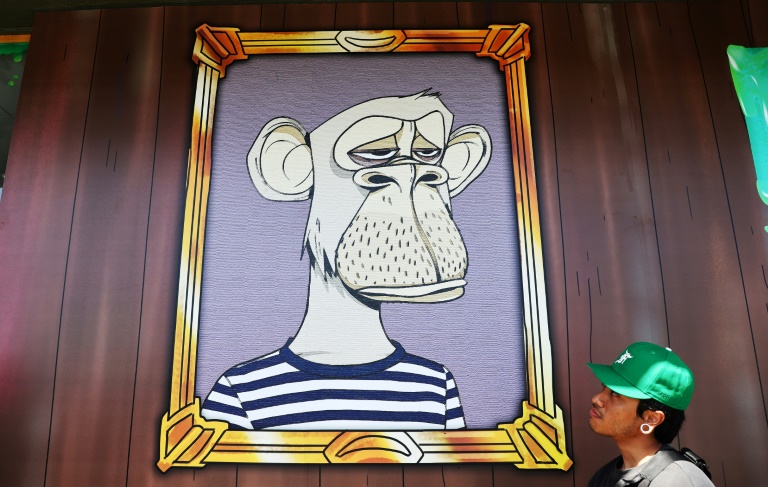
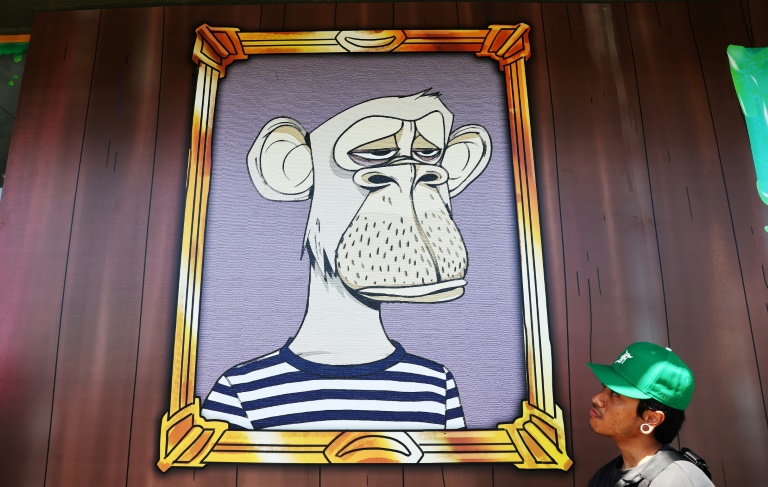
NFTs are tokens linked to digital images, collectable items, avatars in games or objects in the burgeoning virtual world of the metaverse.

“NFTs might be new, but this type of criminal scheme is not,” US attorney Damian Williams said in a release. “Nathaniel Chastain betrayed OpenSea by using its confidential business information to make money for himself.”

Chastain was arrested in New York on Wednesday on charges of wire fraud and money laundering that each carry a maximum penalty of 20 years in prison, prosecutors said.

US media reported that he was later released on bail after entering a non-guilty plea.

The arrest was touted by prosecutors as the first-ever insider trading bust involving digital assets.

“With the emergence of any new investment tool, such as blockchain supported non-fungible tokens, there are those who will exploit vulnerabilities for their own gain,” FBI assistant director-in-charge Michael Driscoll said in the release.

Part of Chastain’s job was to pick NFTs to be featured on OpenSea’s homepage, with the choices kept secret because prices typically jumped after they got top billing, the criminal complaint said.

The likes of Paris Hilton, Gwyneth Paltrow and Serena Williams have boasted about owning NFTs and many under-30s have been enticed to gamble for the chance of making a quick profit.

Prices have fallen and the reputation of the industry has been hammered for much of the year.

NFT market sees first insider trading case in US

US authorities have charged a former manager at a digital exchange platform with fraud and money laundering, in what they said was the first insider trading case involving non-fungible tokens, or NFTs.

Nathaniel Chastain was working as a product manager at New York-based OpenSea last year when he secretly bought dozens of NFTs that were about to be featured on the platform’s home page, federal prosecutors said in a statement Wednesday.

Chastain, 31, went on to sell the NFTs for two to five times the initial price after they got star billing at the OpenSea website, the criminal case against him states.

NFTs are tokens linked to digital images, collectable items, avatars in games or objects in the burgeoning virtual world of the metaverse.

“NFTs might be new, but this type of criminal scheme is not,” US attorney Damian Williams said in a release. “Nathaniel Chastain betrayed OpenSea by using its confidential business information to make money for himself.”

Chastain was arrested in New York on Wednesday on charges of wire fraud and money laundering that each carry a maximum penalty of 20 years in prison, prosecutors said.

US media reported that he was later released on bail after entering a non-guilty plea.

The arrest was touted by prosecutors as the first-ever insider trading bust involving digital assets.

“With the emergence of any new investment tool, such as blockchain supported non-fungible tokens, there are those who will exploit vulnerabilities for their own gain,” FBI assistant director-in-charge Michael Driscoll said in the release.

Part of Chastain’s job was to pick NFTs to be featured on OpenSea’s homepage, with the choices kept secret because prices typically jumped after they got top billing, the criminal complaint said.

The likes of Paris Hilton, Gwyneth Paltrow and Serena Williams have boasted about owning NFTs and many under-30s have been enticed to gamble for the chance of making a quick profit.

Prices have fallen and the reputation of the industry has been hammered for much of the year.

Oklahoma shooter killed surgeon treating him for back pain: police

The gunman who shot dead four people at a hospital in the US state of Oklahoma killed the surgeon whom he blamed for pain after back surgery, police said Thursday.

The suspect, identified as Michael Louis, stormed into the Saint Francis hospital in the city of Tulsa on Wednesday with a rifle and a handgun, in the latest mass shooting in the United States in recent weeks.

Louis had recently been operated on by surgeon Preston Phillips at the hospital and had called the clinic to complain of continuing back pain, Tulsa Police Chief Wendell Franklin said during a press conference.

Police found “a letter on the suspect, which made it clear that he came in with the intent to kill Dr. Phillips and anyone who got in his way,” Franklin said.

“He blamed Dr. Phillips for the ongoing pain following the surgery.”

As well as Phillips, the other victims included another physician, a receptionist and a patient.

“They stood in the way and Lewis gunned them down,” Franklin said, adding Louis then shot himself.

The suspect purchased an semi-automatic gun at a local gun shop shortly before the shooting, police said.

The killings come as families in Texas bury their dead after a school shooting left 19 young children and two teachers dead last week.

The tragedies have prompted calls for tighter gun control legislation but US lawmakers have failed to pass significant new laws despite years of worsening gun violence.

According to the Gun Violence Archive, there have been 233 mass shootings this year in the United States. It defines mass shootings as when four or more people are injured or killed in a single event, not including the shooter.

'Russia controls fifth of Ukraine' as war's 100th day looms

Russian forces hammered Ukrainian positions in the Donbas region on Thursday, as Kyiv said Moscow was in control of 20 percent of Ukrainian territory on the eve of the war’s 100th day.

Vladimir Putin’s troops have set their sights on capturing eastern Ukraine since being repelled from around the capital Kyiv after their invasion began on February 24.

While their advance has been much slower than Moscow expected, Russian troops have expanded their control beyond the 43,000 square kilometres (16,600 square miles) taken when Russia seized Crimea and parts of the Donbas in 2014.

“Today, about 20 percent of our territory is under the control of the occupiers,” Ukrainian President Volodymyr Zelensky said in an address to Luxembourg lawmakers.

The invasion, which enters its 100th day on Friday, has allowed Moscow to capture territory that was “much greater” than the Netherlands, Belgium and Luxembourg combined, added the president.

Thousands of people have been killed and millions forced to flee, with Ukraine’s east now bearing the brunt of Russia’s assault which Zelensky said was killing up to 100 Ukrainian soldiers every day.

Street fighting was raging in the industrial hub of Severodonetsk in Lugansk, part of the Donbas.

The strategic city is a key target for Moscow which already controls 80 percent of the area, but Lugansk regional governor Sergiy Gaiday vowed Ukrainian forces would fight “until the end”.

Severodonetsk’s Azot factory, one of Europe’s biggest chemical plants, was targeted by Russian soldiers who fired on one of its administrative buildings and a warehouse where methanol was stored.

– ‘Shooting is everywhere’ –

Ukrainian troops were still holding an industrial zone, Gaiday said, a situation reminiscent of Mariupol where a huge steel works was the south-eastern port city’s last holdout until Ukrainian troops finally surrendered in late May.

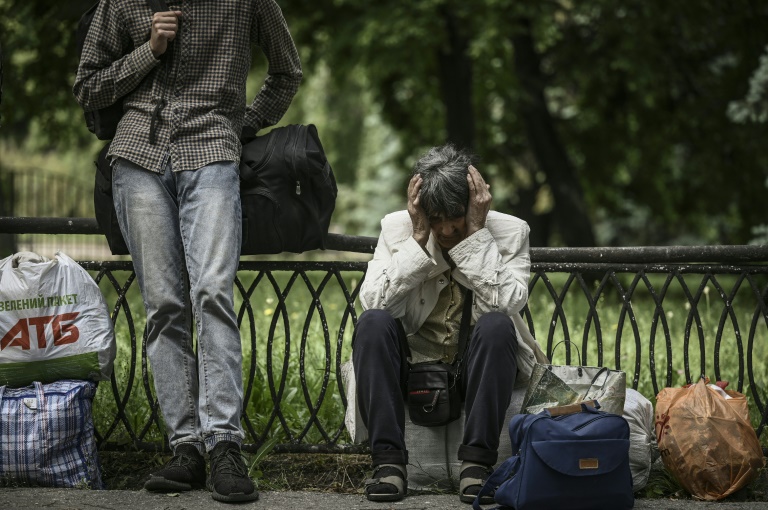
In the city of Sloviansk, about 80 kilometres (50 miles) from Severodonetsk, residents recounted constant bombardments by Russian troops. 

Paramedic Ekaterina Perednenko, 24, said she had only just returned to the city five days ago but realises that she will have to leave again.

“It’s very difficult here. Shooting is everywhere, it’s scary. No water, electricity or gas,” she said.

Retiree Leonid, 79, said he was also leaving the city and would seek refuge elsewhere in Europe.

“I feel pain. The most prominent feeling I have is that we didn’t deserve this. We don’t understand why we are punished like this,” he told AFP.

Valeriy Zaluzhnyi, the commander in chief of Ukraine’s armed forces assessed that “the most difficult situation is in the Lugansk region, where the enemy is trying to displace our units”. 

He pleaded for modern armaments from NATO, telling France’s top general, Thierry Burkhard that “the enemy has a decisive advantage in artillery.”

“It will save the lives of our people”.

– Financial squeeze –

Bridget Brink, the new US ambassador to Kyiv, promised Thursday that the United States would “help Ukraine prevail against Russian aggression” after presenting her credentials to Zelensky.

Earlier this week, US President Joe Biden announced that Washington was sending more advanced, Himar multiple rocket lunch systems to Ukraine.

The mobile units can simultaneously launch multiple precision-guided missiles up to 80 kilometres away.

They are the centrepiece of a $700 million package that includes air-surveillance radar, more Javelin short-range anti-tank rockets, artillery ammunition, helicopters, vehicles and spare parts.

Kremlin spokesman Dmitry Peskov accused Washington of “adding fuel to the fire,” although US officials insist Ukraine has promised not to use them to strike inside Russia.

Beyond plying Ukraine with armaments, Western allies have also sought to choke off Russia’s financial lifeline in a bid to get Putin to change course.

Ramping up an already long list of embargoes, the United States blacklisted Putin’s money manager and a Monaco company that provides luxury yachts to Moscow’s elite.

Washington hit Sergei Roldugin, labelled “Putin’s middle-man,” Roldugin’s opera singer wife Elena Mirtova, and Foreign Affairs Ministry spokeswoman Maria Zakharova with sanctions, as well as several large yachts in which Putin allegedly has an interest, the Treasury said.

Across the Atlantic, EU nations agreed new sanctions that would halt 90 percent of Russian oil imports to the bloc by the end of the year. 

– Hunger crisis –

Russia warned that European consumers would be the first to pay the price for the partial oil embargo.

EU ambassadors dropped, however, the leader of Russia’s Orthodox church, Patriarch Kirill, from a proposed blacklist to win over opposition from Hungary.

But some relief was in view for the overheated oil market as top producers including Saudi Arabia agreed to add 648,000 barrels per day to the market in July, up from 432,000.

The war has wrecked Ukraine’s economy, forcing the central bank to more than double its key interest rate in an unprecedented action on Thursday to prop up the hryvnia. 

But it carries far wider consequences too, with risks that it could trigger a global food crisis growing.

Ukraine — one of the world’s main producers — will likely export only half the amount of grain that it did in the previous season, the Ukrainian Grain Association said.

The conflict was already translating into higher costs for consumers purchasing essentials from cereals to sunflower oil to maize, with the poorest among the hardest hit.

The head of the African Union, Senegalese President Macky Sall, is to visit Russia on Friday for talks with Putin.

The visit is aimed at “freeing up stocks of cereals and fertilisers, the blockage of which particularly affects African countries”, along with easing the Ukraine conflict, Sall’s office said. 

burs-hmn/jm

Weinstein loses sex crimes conviction appeal

Disgraced Hollywood mogul Harvey Weinstein on Thursday lost a bid to have his 2020 sex crimes conviction in New York overturned.

In a ruling, five judges from a New York appeals court unanimously upheld the guilty verdicts and resulting 23-year sentence.

They rejected Weinstein’s argument that the jury had been prejudiced by hearing allegations from women who were not part of the charges.

Judge Angela Mazzarelli, writing the ruling, said the witnesses had provided “useful information,” which had helped jurors “fully understand the dynamics” between Weinstein and his victims.

“We perceive no basis for reducing the sentence, and we have considered defendant’s remaining arguments and find them unavailing,” she wrote.

“Pulp Fiction” producer Weinstein was convicted of rape and sexual assault in February 2020 in a landmark verdict for the #MeToo movement.

He is currently awaiting trial on separate sexual assault charges in California.

Weinstein, 70, pleaded not guilty in September in a Los Angeles court to counts involving alleged abuse of five women.

Widespread sexual abuse and harassment allegations against Weinstein exploded in 2017.

In total, nearly 90 women including Angelina Jolie, Gwyneth Paltrow and Salma Hayek have accused Weinstein of harassment or assault.

He has maintained that all his sexual encounters were consensual.

Close Bitnami banner
Bitnami