AFP

Racists trolls are not real 'Star Wars' fans: Ewan McGregor

Ewan McGregor hit back Wednesday at people targeting fellow “Star Wars” actor Moses Ingram with racist abuse, saying they are not true fans.

Ingram — who stars alongside McGregor in limited series “Obi-Wan Kenobi” — highlighted racist messages she had received online in a story on her Instagram account, prompting him to respond with a video on the site.

“We stand with Moses. We love Moses. And if you’re sending her bullying messages, you’re no Star Wars fan in my mind,” said McGregor, who plays the title character in the series.

“She brings so much to the series, she brings so much to the franchise. And it just sickened me to my stomach that this had been happening,” he added.

The franchise’s Twitter account also took aim at those attacking Ingram, a Black actress who plays a Jedi-hunting Inquisitor in the Disney+ series.

“We are proud to welcome Moses Ingram to the Star Wars family and excited for Reva’s story to unfold,” it said in a tweet that included an image of Ingram with a red lightsaber in hand.

“If anyone intends to make her feel in any way unwelcome, we have only one thing to say: we resist.”

It is not the first time that racism has been directed against a “Star Wars” actor of color.

Asian-American actress Kelly Marie Tran, who made her “Star Wars” debut in 2017’s “The Last Jedi,” was hounded off social media by racist and sexist abuse.

British actor John Boyega has meanwhile criticized the treatment of non-white characters in the most recent three “Star Wars” films, saying they were marketed as important elements in the franchise but were ultimately “pushed to the side.”

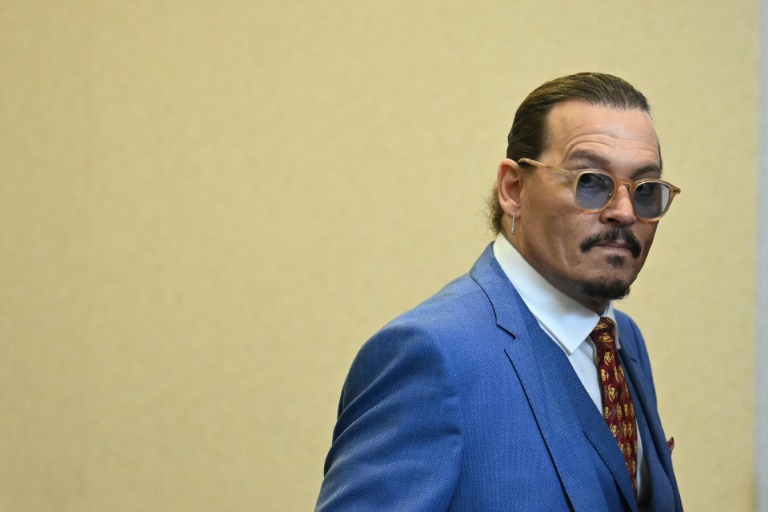
Jury reaches verdict in Depp vs Heard defamation case

The jury reached a verdict on Wednesday in the high-profile defamation case between “Pirates of the Caribbean” star Johnny Depp and his ex-wife Amber Heard.

The seven-person Virginia jury has been deliberating for about 13 hours over three days in Fairfax County Circuit Court near the US capital.

The court said the verdict is to be read out at 3:00 pm (1900 GMT).

A spokesperson for Heard said she was making her way to the courthouse after the jury reached its verdict. Depp, who has been in England for the past few days, was not expected to be present according to ABC News.

Closing arguments in the case were held on Friday at the end of a six-week trial riding on claims and counterclaims of domestic abuse between the Hollywood celebrities.

The 58-year-old Depp filed suit against Heard over an op-ed she wrote for The Washington Post in December 2018 in which she described herself as a “public figure representing domestic abuse.”

The Texas-born Heard, who had a starring role in “Aquaman,” did not name Depp in the piece, but he sued her for implying he was a domestic abuser and is seeking $50 million in damages.

The 36-year-old Heard countersued for $100 million, saying she was defamed by statements made by Depp’s lawyer, Adam Waldman, who told the Daily Mail her abuse claims were a “hoax.”

The jury has been working painstakingly through a special verdict form that contains dozens of questions.

The eight-page verdict form contained 24 questions relating to Depp’s suit against Heard and 18 questions relating to her countersuit against him.

Both needed to prove the statements were defamatory, and to win compensatory or punitive damages, the jury needed to find they were made with actual malice — with knowledge that they were false or with “reckless disregard” for whether they were false or not.

Depp flew to England over the Memorial Day weekend and made surprise appearances at concerts by Jeff Beck in Sheffield on Sunday and at the Royal Albert Hall in London on Monday and Tuesday.

Depp, a guitarist, has his own band, the Hollywood Vampires, with Alice Cooper and Joe Perry of Aerosmith.

“Your presence shows where your priorities are,” Heard’s spokesperson said in a statement. 

“Johnny Depp plays guitar in the UK while Amber Heard waits for a verdict in Virginia. Depp is taking his snickering and lack of seriousness on tour.”

Dozens of witnesses testified during the trial, including bodyguards, Hollywood executives, agents, entertainment industry experts, doctors, friends and relatives.

Depp and Heard each spent days on the witness stand during the televised trial, which was attended by hundreds of fans of the “Pirates” star and accompanied by a #JusticeForJohnnyDepp campaign on social media.

– ‘Monster’ –

Video and audio recordings of heated, profanity-laced arguments between the couple were played for the jury, which was also shown photographs of injuries allegedly suffered by Heard during their volatile relationship.

Hours of testimony were devoted to a grisly finger injury that Depp suffered while filming an installment of “Pirates” in Australia in March 2015.

Depp claimed the tip of a finger was severed when Heard threw a vodka bottle at him. Heard said she did not know how the injury occurred.

Both agreed that Depp went on to scrawl messages on walls, lampshades and mirrors using the bloody digit.

Heard said Depp would become a physically and sexually abusive “monster” during alcohol- and drug-fueled binges and resisted her repeated efforts to curb his drinking and drug use.

Depp testified that it was Heard who was frequently violent and said it has been “brutal” to listen to “outlandish” accusations of domestic abuse made against him.

“No human being is perfect, certainly not, none of us, but I have never in my life committed sexual battery, physical abuse,” he said.

Heard, who was married to Depp from 2015 to 2017, obtained a restraining order against him in May 2016, citing domestic violence.

Depp, a three-time Oscar nominee, filed a libel suit in London against the British tabloid The Sun for calling him a “wife-beater.” He lost that case in November 2020.

Both sides have claimed damage to their Hollywood careers.

EU says Croatia ready to adopt euro in 2023

The European Commission said Wednesday that Croatia had met all the criteria to join the eurozone, paving the way for the country to become the single currency’s 20th member on January 1.

Croatia’s switch from the kuna to the euro will come less than a decade after the former Yugoslav republic joined the European Union, setting a new milestone in the bloc’s further integration.

The EU’s executive said Croatia had met the strict conditions to be part of the single currency, including keeping inflation in the same range as its EU peers, as well as embracing sound public spending.

Joining the single currency “will make Croatia’s economy stronger, bringing benefits to its citizens, businesses and society at large,” said European Commission President Ursula von der Leyen.

“Croatia’s adoption of the euro will also make the euro stronger,” she added.

The European Central Bank also gave a positive opinion in a separate report released on Wednesday.

Croatia expressed  willingness to adopt the single currency upon joining the EU in 2013, and Brussels’ decision comes as the euro has just celebrated its 20th anniversary.

Croatia still needs the endorsement of the EU’s finance ministers, who are expected to give their full backing in July.

“The indications which we are having are positive. So normally, I would expect that the procedure goes through and Croatia will be able to join the euro area as of next year,” said EU executive vice president Valdis Dombrovskis.

Dombrovskis, the commission’s most senior economic official, will travel to Zagreb on Thursday to formally present the opinion to the Croatian government.

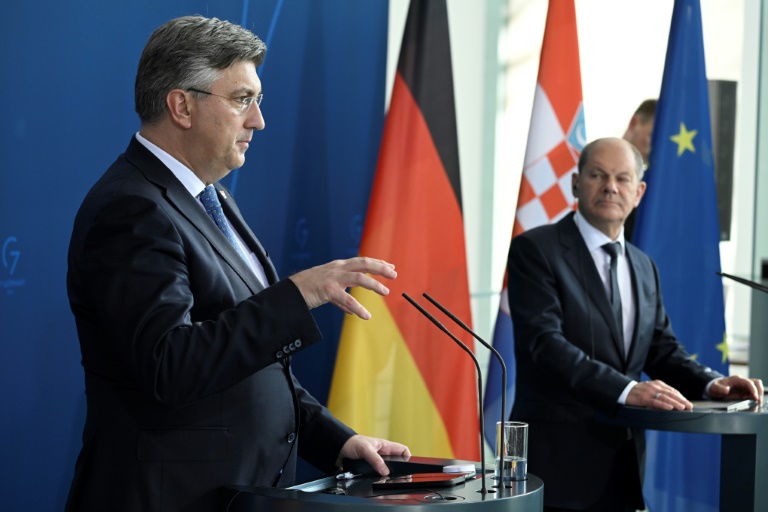
Croatian Prime Minister Andrej Plenkovic expressed confidence his country would be join the currency club in the new year.

The country’s “aim” was to enter the Schengen open-borders zone on the same date, Plenkovic said at a press conference in Berlin.

– Price hike fears –

On January 1, 2002, millions of Europeans in 12 countries gave up the lira, franc, deutsche mark and drachma for euro bills and coins. 

They have since been joined by seven other countries: Slovenia in 2007, Cyprus and Malta in 2008, Slovakia in 2009, Estonia in 2011, Latvia in 2014 and finally Lithuania in 2015.

Bulgaria is the next county in line to join the euro, and has stated its willingness to adopt it as of January 1, 2024.

However, eurozone members are worried about the long-term stability of the Bulgarian economy and Sofia has yet to garner the same political support as Croatia.

EU governments are wary of repeating the mistakes of the euro’s early days when countries such as Greece were rushed into the single currency with shaky finances, setting the stage for the eurozone debt crisis.

Like euro-adopting citizens before them, many Croatians fear the introduction of the euro will lead to a hike in prices — in particular that businesses will round up prices when they convert from the kuna.

Russians advance on Severodonetsk, Kyiv awaits new US weapons

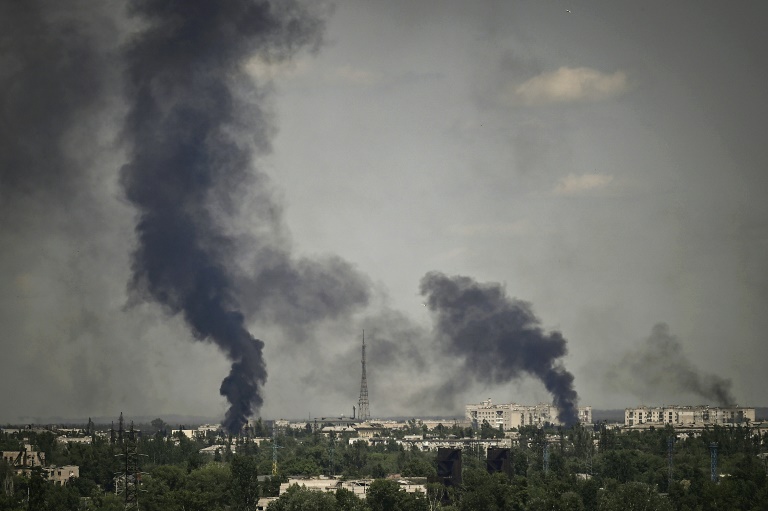
Russian forces edged closer Wednesday to taking the key eastern Ukraine city of Severodonetsk but Kyiv’s hopes of holding off their invaders were boosted by a US pledge of more advanced rocket systems to help their defence.

“The Russians control 70 percent of Severodonetsk,” Lugansk region governor Sergiy Gaiday announced on Telegram, adding that Ukrainian forces were withdrawing to prepared positions.

“If in two or three days, the Russians take control of Severodonetsk, they will install artillery and mortars and will bombard more intensely Lysychansk,” the Ukrainian-held city across the river, he said.

A key industrial hub and with Lysychansk the last pocket of resistence in the eastern Lugansk region, Severodonetsk has become a target of massive Russian firepower since the failed attempt to capture Kyiv.

Oleksander Motuzianyk, spokesman for Ukraine’s defence ministry, said there was “fighting in the streets” in Severodonetsk, and the Russians had reached the city centre.

“The Ukrainian armed forces are actively resisting them,” he said.

In a boost for the outgunned Ukrainian military, President Joe Biden confirmed that more US weaponry was on the way to allow them to “more precisely strike key targets” in Ukraine.

The new weapon is the Himars multiple launch rocket system, or MLRS, a mobile unit that can simultaneously launch multiple precision-guided missiles.

They are the centrepiece of a $700 million package being unveiled Wednesday that also includes air-surveillance radar, more Javelin short-range anti-tank rockets, artillery ammunition, helicopters, vehicles and spare parts, a US official said.

With a range of about 50 miles (80 kilometres), they will allow Ukrainian forces to strike further behind Russian lines.

– ‘Fuel to the fire’ –

Kremlin spokesman Dmitry Peskov accused Washington of “adding fuel to the fire”, saying “such supplies” did not encourage Kyiv to resume peace talks.

Biden said that the United States would not support attacks inside Russia, writing in the New York Times: “We do not seek a war between NATO and Russia.”

Later, US Secretary of State Antony Blinken said Ukraine had promised not to use the new missiles inside Russia — and warned of a long conflict ahead.

“As best we can assess right now, we are still looking at many months of conflict,” he told a news conference with NATO Secretary-General Jens Stoltenberg.

While some analysts have suggested the Himars could be a “game-changer”, others caution they should not be expected to suddenly turn the tables, not least because Ukrainian troops need time to learn how to use them effectively.

But they may improve morale after 98 days of war.

“If you know you have a heavy weapon behind you, everyone’s spirits rise,” one Ukrainian fighter on the frontline told AFP before the announcement.

– ‘Negative consequences’ –

In an intelligence briefing, Western officials said Russia is making “incremental but pretty steady gains” but even after taking Severodonetsk, there would be “a lot more challenges to come”.

“There are some river crossings that need to be completed after the closure of the (Ukraine-controlled) pocket and we’ve seen previously how difficult those river crossings are.”

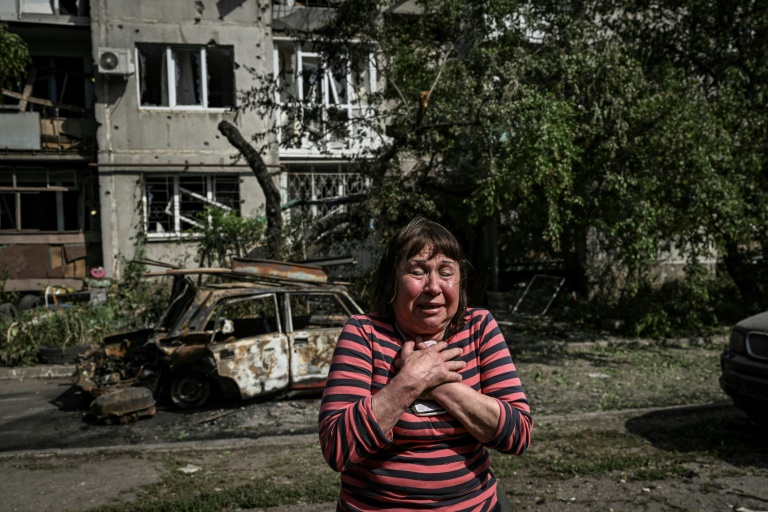
West of Severodonetsk, in the city of Sloviansk, AFP journalists saw buildings destroyed by a rocket attack in which three people died and six others were hurt.

And on Wednesday, at least one person died and two others were injured in Soledar, between Sloviansk and Severodonetsk, AFP saw.

The European Union has also sent weapons and cash for Ukraine, while levelling unprecedented economic sanctions on Moscow.

Germany said Wednesday it would deliver an air defence system capable of shielding a major city from Russian air raids, although it will take months to get to the frontline.

EU leaders agreed this week to ban most Russian oil imports but played down the prospects of shutting off Russian gas on which many member states are hugely dependent.

Moscow said a “reorientation” was under way to find alternative destinations for its oil, as it moved to “minimise the negative consequences”.

The sanctions are biting — a panel of investors said Wednesday Russia has failed to pay $1.9 million of accrued interest on a sovereign bond.

And Russian energy giant Gazprom said its gas exports to countries outside the former Soviet Union dropped by more than a quarter year-on-year between January and May after losing several European clients.

Russia has sought to get around sanctions by demanding payment for gas in rubles, cutting off countries that refuse. 

Denmark was set to become the latest target Wednesday, after the Netherlands, Finland, Poland and Bulgaria.

Danes meanwhile voted on whether to overturn the country’s opt-out on the EU’s common defence policy, just weeks after neighbouring Finland and Sweden applied to join NATO as a defence against Russian aggression.

– Grain as weapon –

Russia’s invasion on February 24 has killed thousands of people and sent millions of Ukrainians fleeing, but also risks triggering a global food crisis. 

Ukraine — one of the world’s main producers — will likely export only half the amount of grain that it did in the previous season, the Ukrainian Grain Association (UGA) said.  

At the Vatican, Pope Francis pleaded against the use of grain as a “weapon of war”.

The leaders of France, Germany and Italy have all urged Putin in recent days to end Russia’s blockade of the port of Odessa.

But Russian Foreign Minister Sergei Lavrov said it was up to the West and Kyiv to resolve the crisis, starting with the lifting of sanctions.

In Kyiv, meanwhile, Ukrainian football fans were set to watch their national side play its first official match since Russia’s invasion, facing Scotland in a World Cup qualifier later Wednesday in Glasgow.

“I am hoping for victory,” 44-year-old army serviceman, Andriy Veres, told AFP. 

“These days it is very important for the country, for all people, for all those who are fans and even for those who are not.”  

burs-ar/har

Texas town mourns teacher killed in school shooting

The Texas town of Uvalde on Wednesday laid to rest one of the two teachers gunned down in last week’s elementary school massacre, along with her husband who died days later — leaving their four children orphaned.

Irma Linda Garcia, 48, was killed when a teenaged gunman went on a rampage at Robb Elementary, in an attack that left 19 young children dead and convulsed the nation with shock and grief.

Compounding the tragedy, Garcia’s 50-year-old husband Joe died two days later. They had been married for more than 24 years.

“They began their relationship in high school and it flourished into a love that was beautiful and kind,” obituaries for the pair said. They are survived by two sons and two daughters, the youngest just 12 years old.

Pallbearers carried the Garcias’ flower-topped caskets into Sacred Heart Catholic Church in Uvalde for Wednesday’s funeral mass. They were to be buried later in the day.

A GoFundMe set up for the Garcias said Joe died of a “medical emergency” on May 26, two days after the shooting. It sought to raise $10,000, but more than $2.78 million has been donated so far.

“I truly believe Joe died of a broken heart and losing the love of his life,” the page said. 

John Martinez, who identified himself as Joe’s nephew, tweeted that the father of four had “passed away due to grief.”

With the community plunged into mourning — the first funerals for the children killed were held Tuesday — anger has also seethed over the police response as the tragedy unfolded.

Officers have come under intense criticism over why they waited well over an hour to neutralize the gunman, which Texas Department of Public Safety (DPS) director Steven McCraw has admitted was the “wrong decision.”

– ‘Not coming back’ –

ABC News on Tuesday cited multiple law enforcement sources saying that the Uvalde police department and school district had stopped cooperating with the DPS’s investigation into the handling of the attack.

Beside a memorial of white crosses surrounded by wreaths and bouquets of flowers, the great-grandfather of one of the young victims berated police.

“They could tell me ‘Oh, we made a mistake. We made the wrong decision’. But my great-granddaughter is not coming back to me,” said 78-year-old Ruben Mata Montemayor.

The Uvalde massacre, the latest in an epidemic of gun violence in the United States, has rekindled desperate calls for gun reform. It came less than two weeks after 10 people died in an attack at a Buffalo, New York grocery store by a young gunman targeting African Americans.

Gun regulation faces deep resistance in the United States, from most Republicans and some rural-state Democrats.

But President Joe Biden — who visited Uvalde over the weekend — vowed Monday to “continue to push” for reform, saying: “I think things have gotten so bad that everybody is getting more rational about it.”

Some key federal lawmakers have also voiced cautious optimism and a bipartisan group of senators worked through the weekend to pursue possible areas of compromise. 

They reportedly were focusing on laws to raise the age for gun purchases or to allow police to remove guns from people considered a threat to themselves or others — but not on an outright ban on high-powered rifles like the weapons used in both Uvalde and Buffalo.

Russia seeks to 'minimise' effects of EU oil ban, gas exports down

Russia said Wednesday it was moving to limit the damage from an EU oil ban as its other key energy export, gas, has fallen after President Vladimir Putin sent troops to Ukraine.

At a summit on Monday, the EU agreed to a sixth package of sanctions on Moscow that will see the majority of Russian oil stopped, but exempted supplies by pipeline in a concession to Hungary.

“Sanctions will have a negative effect for Europe, us and the whole global energy market,” Kremlin spokesman Dmitry Peskov told reporters. 

Peskov added that a “reorientation” was under way to find alternatives for the oil that will no longer be sold to Europe.

“These are purposeful, systematic actions that will allow us to minimise the negative consequences,” he said. 

After Putin sent troops into Ukraine on February 24, Russia was hit with a barrage of sanctions that targeted its economy and financial institutions. 

The Wall Street Journal reported that OPEC was considering whether to remove Russia from an agreement that has locked producers into limited output increases.

Moscow’s removal would mean an early end to the pact and allow major crude nations such as Saudi Arabia to open the taps, analysts say.

Foreign Minister Sergei Lavrov on Wednesday reaffirmed Moscow’s commitment to OPEC+ agreements during a visit to Saudi Arabia.

OPEC+ is a group of 13 members of the Organisation of Petroleum Exporting Countries (OPEC), led by Riyadh, and their 10 partners led by Moscow.

Speaking to reporters in Riyadh, Lavrov said the subject of Western sanctions came up within the context of OPEC+ cooperation.

“During discussions with my colleagues from Arab monarchies, we raised this subject, but only in the context of confirming the agreements on cooperation within OPEC+ that have already been agreed on and confirmed several times by our leaders,” Lavrov said.

– Gas exports drop – 

Separately, Russian energy giant Gazprom said that its gas exports to countries outside of the former Soviet Union dropped by more than a quarter year-on-year between January and May after losing several European clients.

Exports to countries outside the region totalled 61 billion cubic metres, a 27.6-percent fall from the same period last year, Gazprom said in a statement.

Gazprom added that gas deliveries to China via the “Power of Siberia” pipeline were increasing, but it did not provide any figures. 

Moscow has demanded that clients from “unfriendly countries” — including EU member states — now pay for their gas in rubles.

The new requirement is seen as a measure to sidestep Western financial sanctions against Russia’s central bank imposed over Moscow’s offensive in Ukraine.

So far Poland, Bulgaria, Finland and the Netherlands have had their natural gas deliveries suspended over refusing to pay in rubles. 

Danish energy company Orsted said that Gazprom Export would cut gas supplies to Denmark on Wednesday after the Danish company refused to pay in rubles.

EU countries have scrambled to reduce their dependency on Russian energy but are divided about imposing a natural gas embargo as several member states are heavily reliant on Moscow’s energy supplies.

Economists believe that the worst economic impact of the sanctions is still to come and expect Russia to plunge into a deep recession.

Russia’s state statistics service said Wednesday that the country’s industrial output shrank for the first time since the start of Moscow’s military campaign in Ukraine.

In April, industrial production fell by 1.6 percent compared to the same period last year.

Compared to March, industrial output shrank 8.5 percent, a major setback after a dynamic start to the year.

Car production fell by 85.4 percent, coal output by 6.5 percent and oil and gas production by 3.6 percent compared to the same period last year.

Retail sales fell by 9.7 percent in April year-on-year and by 11.3 percent compared to March.

11 dead, 33 missing after Hurricane Agatha hits Mexico

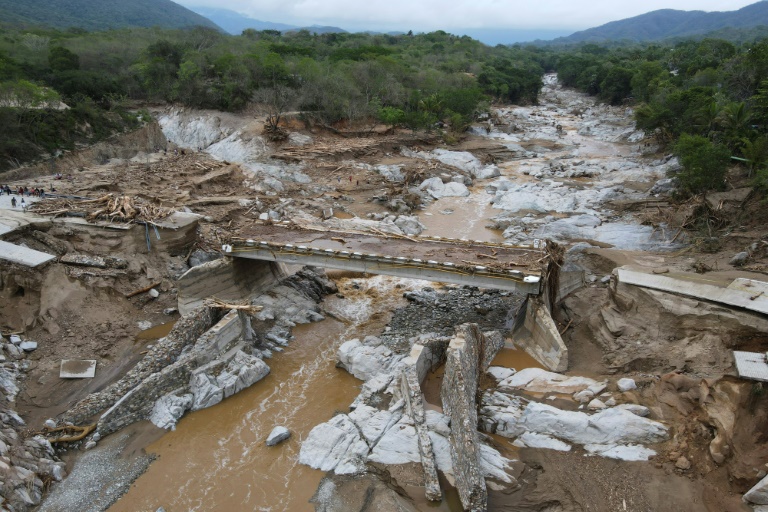
The strongest hurricane on record to hit Mexico’s Pacific coast in May left at least 11 people dead and 33 missing after triggering landslides and flooding, officials said Wednesday.

Authorities were struggling to reach remote mountain communities worst affected by Hurricane Agatha, after rockfalls and mudslides cut off roads.

“I embrace the relatives of those who have lost their lives,” President Andres Manuel Lopez Obrador said at his daily news conference.

“I hope that we find those who have disappeared when all the communities can be reached,” he added.

On Wednesday 33 people remained missing and the death toll stood at 11, the governor of the southern state of Oaxaca, Alejandro Murat, told reporters.

In the coastal community of Huatulco, residents whose homes were damaged or destroyed recounted fleeing before they could gather their belongings.

“When we were told to leave, we wanted to take something but we couldn’t,” said Emilia Rios.

“I didn’t take a single plate, a cup, a change of clothes. Not even sheets or towels. Nothing,” she said.

A helicopter was on stand-by to fly to isolated communities when weather conditions allow, officials said.

Troops were deployed to the region — one of the poorest in Mexico — to clear roads.

“Highways have been affected by landslides, fallen trees, increased river flows as well as the collapse of two bridges,” said civil protection coordinator Laura Velazquez.

– Deadly start to season –

The victims included two people aged 18 and 21 years old who died when part of a hill collapsed in the community of Santa Catarina Xanaguia, according to the Oaxaca civil protection office.

Another woman died and her son was injured in a landslide in Llano del Chillar, it said.

Agatha was the first hurricane of the Pacific season and unusually powerful for the time of year.

The storm was the strongest to make landfall along Mexico’s Pacific coast in May since record keeping began in 1949, according to the US National Hurricane Center (NHC).

Scientists say that as oceans’ surface layers warm due to climate change, tropical storms are becoming more powerful and carry more water, posing an increasing threat to the world’s coastal communities.

Agatha barreled ashore near Puerto Angel in Oaxaca as a Category Two hurricane — the second lowest on a scale of five — with winds of 165 kilometers (105 miles) per hour.

The storm weakened as it moved inland after lashing coastal tourist towns, but its remnants continued to bring downpours to parts of southern Mexico.

The country’s meteorological service sees an 80 percent chance that in five days the remnants of Agatha will head out into the Atlantic with the potential for another storm formation.

Mexico is regularly lashed by tropical storms on both its Pacific and Atlantic coasts, generally between the months of May and November.

The deadliest storm to hit Mexico last year was a Category 3 hurricane called Grace that killed 11 people in the eastern states of Veracruz and Puebla in August.

In October 1997, Hurricane Pauline hit the country’s Pacific coast as a Category 4 storm, leaving more than 200 dead, with Oaxaca and neighboring Guerrero state the worst hit.

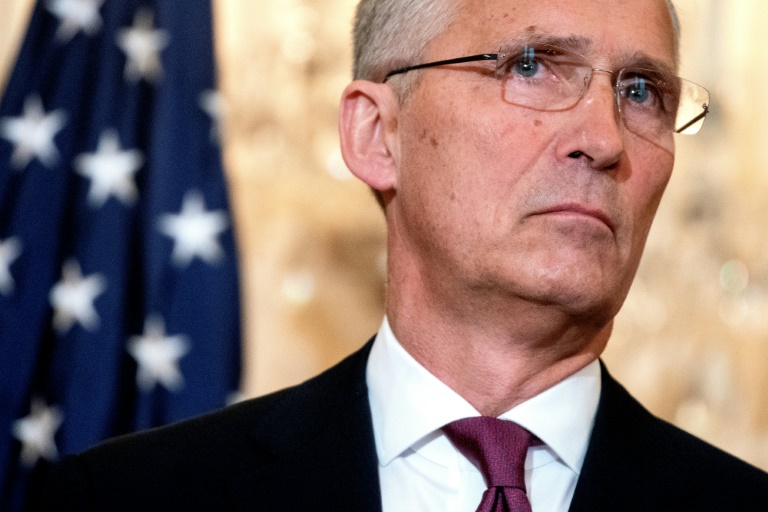
Sweden, Finland to meet Turkey at NATO in new bid for progress

NATO said Wednesday it will hold talks involving Turkey, Finland and Sweden in hopes of ending Ankara’s opposition to the Nordic nations joining the alliance ahead of a summit this month.

Secretary-General Jens Stoltenberg said he would convene senior officials from the three nations in Brussels in the coming days “to ensure that we make progress on the applications of Finland and Sweden to join NATO.”

“My intention is to have this in place before the NATO summit” in Madrid starting on June 28, Stoltenberg said on a visit to Washington.

“Finland and Sweden have made it clear that they are ready to sit down and to address the concerns expressed by Turkey,” Stoltenberg told a joint news conference with US Secretary of State Antony Blinken.

Sweden and Finland have historically tried to steer clear of angering nearby Russia but shed their reluctance to join NATO after Moscow’s invasion of Ukraine — which had unsuccessfully sought to join the alliance.

Russian President Vladimir Putin “wanted less NATO. He is getting more NATO,” Stoltenberg said.

But all 30 NATO members need to agree to admit a new member and Turkey has voiced objections, citing the presence in the two Nordic nations of militants from the PKK, the Kurdish separatist group considered terrorists by Ankara.

Stoltenberg said that the two nations and NATO took the PKK issue “very seriously.”

“We know that no other NATO ally has had suffered more terrorist attacks than Turkey,” Stoltenberg said.

Blinken reiterated that he remained “very confident” that NATO will “move forward” with the membership of the two nations.

He appeared to play down linking the membership to Turkey’s desire to buy F-16 fighter jets, as some pundits believe Ankara is holding out for concessions.

“These are separate questions. We have a longstanding and ongoing defense relationship with Turkey as a NATO ally,” Blinken said.

“We’ll continue to work through cases as they as they arise with regard to systems that Turkey seeks to acquire,” Blinken said.

The United State expelled Turkey in 2019 from development of the state-of-the-art F-35 in retaliation for Ankara’s purchase of an advanced air defense system from Russia.

But Turkey’s image has risen in the United States through its drones that it has sold to Ukraine, even as Ankara avoids sanctions on Russia.

New York subway shooting victim sues Glock

One of the victims of a New York subway shooting is suing Glock, the manufacturer of the firearm used in the attack, saying its marketing efforts appeal to criminals.

Ilene Steur, 49, was one of 10 people shot on April 12 as a crowded subway train pulled into a Brooklyn station. The shooter used a Glock 17 9mm pistol that was purchased in the state of Ohio in 2011.

Steur’s civil suit — which was filed in federal court on Tuesday — accuses Austria-based Glock of employing “marketing that emphasizes firearm characteristics such as their high capacity and ease of concealment, that appeal to prospective purchasers with criminal intent.”

It also says the company intentionally supplied “more firearms than the legitimate market could bear in order to induce sales in the secondary market,” and failed to train dealers on how to avoid illegal firearms purchases.

Mark Shirian, one of Steur’s attorneys, said: “Gun manufacturers do not live in a bubble.

“They are aware that their marketing strategies are empowering purchasers with ill intent and endangering the lives of innocent people. This lawsuit seeks to hold the gun industry accountable,” Shirian said in a statement.

Glock’s US subsidiary did not respond to a request for comment on Wednesday.

The suit was filed as America reels from two high-profile mass shootings this month: one at a Buffalo, New York supermarket that killed 10 people, and another at an elementary school in Uvalde, Texas that left 21 dead.

Steur’s lawsuit echoes the legal battle that followed the 2012 Sandy Hook school shooting, which killed 26 students and teachers.

US gun manufacturer Remington — a subsidiary of which made the rifle used in that attack — agreed to a $73 million settlement with the families of nine of the victims earlier this year.

The lawsuit had alleged that Remington and the other two defendants were culpable because they knowingly marketed a military grade weapon that is “grossly unsuited” for civilian use, yet had become the gun most used in mass shootings.

New York subway shooting victim sues Glock

One of the victims of a New York subway shooting is suing Glock, the manufacturer of the firearm used in the attack, saying its marketing efforts appeal to criminals.

Ilene Steur, 49, was one of 10 people shot on April 12 as a crowded subway train pulled into a Brooklyn station. The shooter used a Glock 17 9mm pistol that was purchased in the state of Ohio in 2011.

Steur’s civil suit — which was filed in federal court on Tuesday — accuses Austria-based Glock of employing “marketing that emphasizes firearm characteristics such as their high capacity and ease of concealment, that appeal to prospective purchasers with criminal intent.”

It also says the company intentionally supplied “more firearms than the legitimate market could bear in order to induce sales in the secondary market,” and failed to train dealers on how to avoid illegal firearms purchases.

Mark Shirian, one of Steur’s attorneys, said: “Gun manufacturers do not live in a bubble.

“They are aware that their marketing strategies are empowering purchasers with ill intent and endangering the lives of innocent people. This lawsuit seeks to hold the gun industry accountable,” Shirian said in a statement.

Glock’s US subsidiary did not respond to a request for comment on Wednesday.

The suit was filed as America reels from two high-profile mass shootings this month: one at a Buffalo, New York supermarket that killed 10 people, and another at an elementary school in Uvalde, Texas that left 21 dead.

Steur’s lawsuit echoes the legal battle that followed the 2012 Sandy Hook school shooting, which killed 26 students and teachers.

US gun manufacturer Remington — a subsidiary of which made the rifle used in that attack — agreed to a $73 million settlement with the families of nine of the victims earlier this year.

The lawsuit had alleged that Remington and the other two defendants were culpable because they knowingly marketed a military grade weapon that is “grossly unsuited” for civilian use, yet had become the gun most used in mass shootings.

Close Bitnami banner
Bitnami