AFP

Markets slide on inflation worry; oil rebounds

European and US stocks slipped on Wednesday, as traders digested data showing that runaway inflation shows no sign of easing.

Oil rallied after a sharp fall following a report that OPEC was considering suspending Russia from an output deal, which observers said could allow producers to pump more.

Shares in Frankfurt, Paris and London were all in the red at closing.

Wall Street stocks began June on a high note, rising early in the session before following suit.  

“The quick reversal is a reminder that we are still in a bear market and investors continue to face significant risks with inflation still showing no signs of easing in a meaningful way, and central banks are continuing to tighten their belts,” Fawad Razaqzada, analyst at City Index and FOREX.com said.

Equities have enjoyed a largely healthy run of late on hopes that inflation could be nearing a peak and a sell-off across markets may have run its course.

The easing of some lockdown measures in China added to the optimism.

But investors were brought down to earth with a bump Tuesday after data showed that eurozone inflation hit a record high in May on rocketing energy costs.

The news puts extra pressure on the European Central Bank to act faster to rein in prices by hiking interest rates, along with the Bank of England and the US Federal Reserve.

“Investors took a pause for breath after the recent rally as the spectre of inflation continues to loom large,” said Richard Hunter, an analyst at investment platform interactive investor.

Markets remain fearful as the Ukraine conflict fuels massive price gains for energy and food, translating into spiking inflation — and damaging the post-pandemic global economic recovery.

“There are heightened concerns around inflation and where central banks are likely to go trying to combat inflation,” Kristina Hooper of Invesco Advisers told Bloomberg Radio.

“This has gone from just an inflation scare to a growth scare. Uncertainty has grown.”

– Oil rebounds – 

Equities were mixed in Asia, with traders shrugging off a further easing of lockdown restrictions in China that many hope will give a much-needed boost to the world’s number two economy.

Hong Kong and Shanghai slipped, though Tokyo, Sydney, Singapore and Wellington rose.

The oil market rebounded after tanking by more than four percent late Tuesday in reaction to a Wall Street Journal report that OPEC was considering removing Russia from an agreement that has locked producers into limited output increases.

Moscow’s removal would mean an early end to the pact and allow major crude nations such as Saudi Arabia to open the taps, analysts said.

“If there’s any confirmation from OPEC+ members that the absence of Russia is being discussed, then prices can drop to as low as $100,” said Will Sungchil Yun, at VI Investment Corp. 

During a visit to Saudi Arabia Wednesday, Russian Foreign Minister Sergei Lavrov reaffirmed Moscow’s commitment to OPEC+ agreements.

On Thursday, the 13 members of the Organization of the Petroleum Exporting Countries and their 10 partners — who make up OPEC+ — are due to hold their monthly talks on output increases.

– Key figures at around 1550 GMT –

London – FTSE 100: DOWN 0.98 percent at 7,532.95  points (close)

Frankfurt – DAX: DOWN 0.3 percent at 14,340.47 points  (close)

Paris – CAC 40: DOWN 0.8 percent at 6,418.89 points (close)

EURO STOXX 50: DOWN 0.8 percent at 3,759.54 points

New York – Dow: DOWN 1.0 percent at 32,651.66 points 

Tokyo – Nikkei 225: UP 0.7 percent at 27,457.89 (close)

Hong Kong – Hang Seng Index: DOWN 0.6 percent at 21,294.94 (close)

Shanghai – Composite: DOWN 0.1 percent at 3,182.16 (close)

Euro/dollar: DOWN at $1.0632 from $1.0734 on Tuesday

Pound/dollar: DOWN at $1.2461 from $1.2602

Euro/pound: UP at 85.34 pence from 85.18 pence

Dollar/yen: UP at 130.11 yen from 128.67 yen

Brent North Sea crude: UP 1.4 percent at $117.17 per barrel

West Texas Intermediate: UP 1.3 percent at $116.11
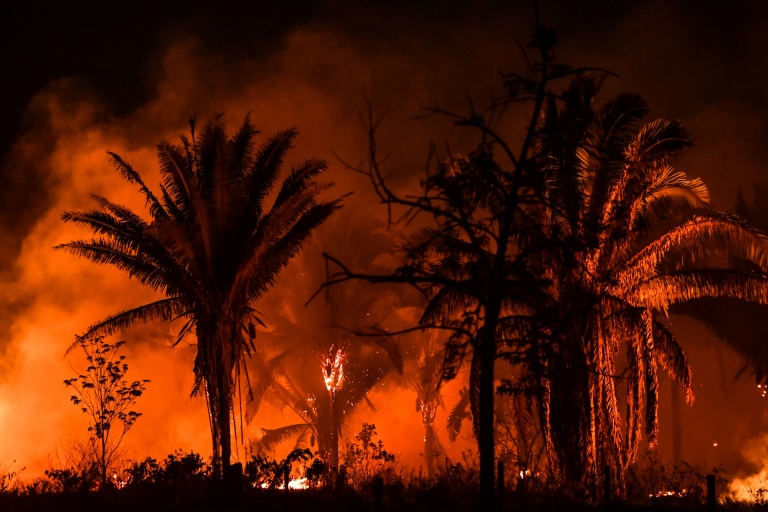
Fires surge in May in Brazilian Amazon, Cerrado

Brazil registered the highest number of fires in the Amazon for the month of May since 2004, and the highest ever for the Cerrado savanna region last month, according to official figures released Wednesday.

Fueling fears over the future of the world’s biggest rainforest, the national space agency, INPE, said satellite data showed a total of 2,287 fires in the Brazilian Amazon basin in May, an increase of 96 percent from May 2021.

It is the second-highest number on record for the month, after 2004, when there were 3,131.

In the Cerrado, a biodiverse tropical savanna to the south of the Amazon, there were 3,578 fires, according to INPE figures, an increase of 35 percent from May 2021.

It was the highest figure for May in the region since records began in June 1998.

Environmentalists called the numbers further evidence of a surge in fires and deforestation under far-right President Jair Bolsonaro.

“These numbers are not a fluke data point, they are part of a constant upward trend in environmental destruction in the past three years — the result of an intentional government policy,” the executive director of the World Wildlife Fund (WWF) Brazil office, Mauricio Voivodic, told reporters.

“Science is being ignored, and the future will make Brazil pay a high price for it.”

Experts say fires in the Amazon, a key buffer against climate change, are nearly all set intentionally to clear land for activities such as farming and ranching.

May typically sees fewer fires than the peak of the dry season in August and September. The high numbers early in the year raised fears 2022 could be particularly destructive.

Bolsonaro, who is closely allied with Brazil’s powerful agribusiness sector, has faced international criticism over a sharp increase in deforestation in the Amazon and other ecosystems on his watch.

Since he took office in 2019, average annual deforestation in the Brazilian Amazon has increased by 75 percent from the previous decade, according to official figures.

There is also alarm over the Atlantic Forest on Brazil’s eastern coast, where deforestation increased by 66 percent last year, according to a report last week by environmental group SOS Mata Atlantica.

UK airlines under fire for jubilee and summer getaway chaos

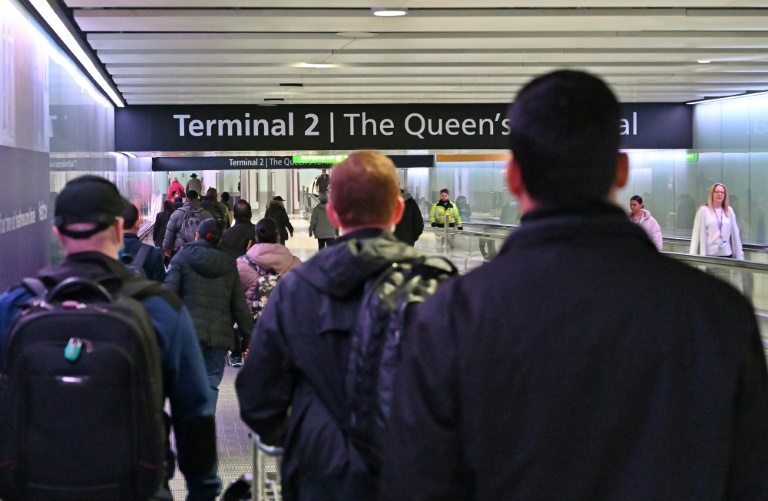
Britain’s airports are coming under fire for failing to prepare for this week’s jubilee getaway and the busy summer season, as passengers face long delays and cancelled flights.

“The UK’s airports are in crisis because thousands of jobs have been slashed,” Sharon Graham, head of the country’s biggest trade union Unite, said on Wednesday.

The airline industry was one of the hardest-hit sectors during the Covid-19 pandemic. Flights were grounded by lockdowns and travel restrictions.

Carriers and airports laid off thousands of employees.

But deputy prime minister Dominic Raab accused airlines of a “lack of preparation” in the run-up to the holiday surge now restrictions have been lifted.

“Throughout the pandemic, the government provided £8 billion ($10 billion, 9.3 billion euros) of support,” he told Sky News television. 

“There’s been some tweaks to the regulation to make it easier for the airline industry to hire. 

“I don’t think the airline operators have done the recruitment that they should have done, and taken the advice that the transport secretary gave them.” 

Thursday and Friday are public holidays in Britain as part of four days of celebrations for Queen Elizabeth II’s Platinum Jubilee.

Airlines for Europe, which represents EU airlines, predicted the problem would continue “for a good chunk of the summer season”.

– ‘Carnage’ –

In response, the industry organisation representing UK-registered carriers, Airlines UK, said the sector was still emerging from “the worst crisis in the history of aviation”.

“Airlines were grounded for almost two years as a result of one of the most restrictive travel regimes in the world and with this in mind, the sector has had only a matter of weeks to recover and prepare for one of the busiest summers we’ve seen in many years. 

“Despite this, and without the ability to know when restrictions would be completely removed or predict how much flying would be possible over the summer, the vast majority of the many tens of thousands of UK-departing flights a week will be operating as scheduled.”

The group called for a collaborative effort between airports, airlines and the government to ensure flights take off.

Manchester Airport in northwest England has seen increasing numbers of disgruntled travellers complaining about long waits to go through security or to collect their luggage.

Some missed their flights altogether, if they were not cancelled.

One passenger posted a photo on Twitter at about 4:00 am (0300 GMT) on Wednesday showing a queue stretching out of the terminal.

“Carnage once again this morning (4am) at @manairport T1… I haven’t even made it in the building this time around!” the post read.

The airport responded: “We are aware of challenges being faced by a number of airlines and handling agents, which is leading to delays at check-in and baggage reclaim for some passengers,” the airport responded.

– Challenging –

Susannah Streeter, an analyst at Hargreaves Lansdown, said mass flight cancellations were expected to increase, further heaping pressure on airlines.

“Pent up demand is colliding with a severe labour crunch for the industry as companies struggle to recruit workers for key ground roles in particular, following mass pandemic lay-offs,” she said.

In Manchester but also at London Heathrow and Gatwick, and elsewhere, there have been hundreds of cancellations this week, affecting companies such as tour operator Tui, British Airways and easyJet.

To make matters worse, low-cost airline easyJet was also hit by computer problems, which forced them to ground some 200 additional flights.

British Airways acknowledged it had been a “challenging period” but it was looking to recruit massively

Schedules have been cut “to provide certainty for our customers”, and passengers were being given “maximum flexibility” to rebook or receive a full refund, it told AFP in a statement.

Unite also warned that Ryanair flights out of London Stansted could face “serious disruption” in the coming months.

Struggling workers were calling for better pay after seeing a 10 percent cut in their wages in 2020, the union added.

Jury resumes deliberations in Depp vs Heard trial

The jury in the defamation trial between Johnny Depp and his ex-wife Amber Heard resumed deliberations Wednesday, working painstakingly through a special verdict form that contains dozens of questions.

The seven-person jury met for a full day on Tuesday and returned Wednesday morning to Fairfax County Circuit Court in Virginia, near the US capital, to continue their discussions.

Closing arguments in the high-profile case were held on Friday at the end of a six-week trial riding on claims and counterclaims of domestic abuse between the Hollywood celebrities.

The 58-year-old “Pirates of the Caribbean” star filed suit against Heard over statements in an op-ed she wrote for The Washington Post in December 2018 in which she described herself as a “public figure representing domestic abuse.”

The Texas-born Heard, who had a starring role in “Aquaman,” did not name Depp in the piece, but he sued her for implying he was a domestic abuser and is seeking $50 million in damages.

The 36-year-old Heard countersued for $100 million, saying she was defamed by statements made by Depp’s lawyer, Adam Waldman, who told the Daily Mail her abuse claims were a “hoax.”

The jury is working through an eight-page verdict form that contains 24 questions relating to Depp’s suit against Heard and 18 questions relating to her countersuit against him.

Both need to prove the statements were defamatory, and to win compensatory or punitive damages, the jury needs to find they were made with actual malice — with knowledge that they were false or with “reckless disregard” for whether they were false or not.

Depp flew to England over the Memorial Day weekend and made surprise appearances at concerts by Jeff Beck in Sheffield on Sunday and at the Royal Albert Hall in London on Monday and Tuesday.

Depp, a guitarist, has his own band, the Hollywood Vampires, with Alice Cooper and Joe Perry of Aerosmith.

Dozens of witnesses testified during the trial, including bodyguards, Hollywood executives, agents, entertainment industry experts, doctors, friends and relatives.

Depp and Heard each spent days on the witness stand during the televised trial, which was attended by hundreds of fans of the “Pirates” star and accompanied by a #JusticeForJohnnyDepp campaign on social media.

– ‘Monster’ –

Video and audio recordings of heated, profanity-laced arguments between the couple were played for the jury, which was also shown photographs of injuries allegedly suffered by Heard during their volatile relationship.

Hours of testimony were devoted to a grisly finger injury that Depp suffered while filming an installment of “Pirates” in Australia in March 2015.

Depp claimed the tip of a finger was severed when Heard threw a vodka bottle at him. Heard said she did not know how the injury occurred.

Both agreed that Depp went on to scrawl messages on walls, lampshades and mirrors using the bloody digit.

Heard said Depp would become a physically and sexually abusive “monster” during alcohol- and drug-fueled binges and resisted her repeated efforts to curb his drinking and drug use.

Depp testified that it was Heard who was frequently violent and said it has been “brutal” to listen to “outlandish” accusations of domestic abuse made against him.

“No human being is perfect, certainly not, none of us, but I have never in my life committed sexual battery, physical abuse,” he said.

Heard, who was married to Depp from 2015 to 2017, obtained a restraining order against him in May 2016, citing domestic violence.

Depp, a three-time Oscar nominee, filed a libel suit in London against the British tabloid The Sun for calling him a “wife-beater.” He lost that case in November 2020.

Both sides have claimed damage to their Hollywood careers.

Scientists produce chimp genetic map to combat trafficking

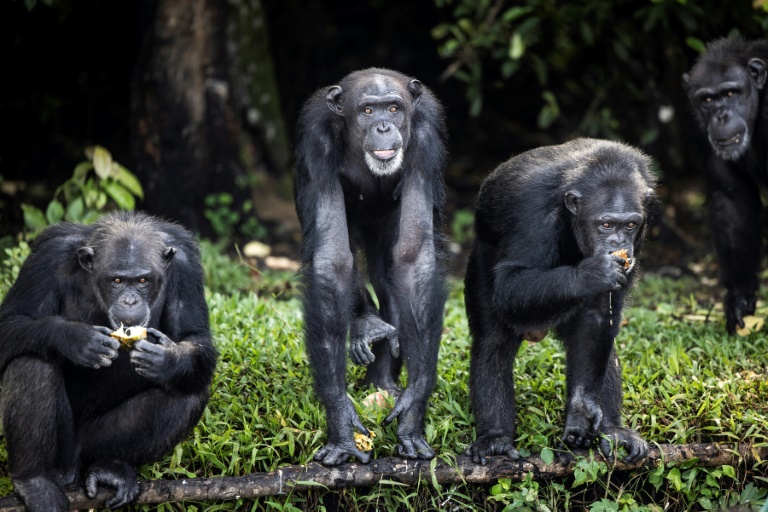
Scientists have produced the first genetic map of chimpanzees in the wild, offering a detailed reconstruction of the endangered species’ past migrations, and a new tool to combat illegal trafficking.

The genomic catalogue, which includes 828 individuals from across their vast African range, can now be used to link kidnapped chimpanzees — or their meat and body parts — to their place of origin within 100 kilometers.

The results of the years-long research project was published Wednesday in the journal Cell Genomics.

First author Claudia Fontsere of the Institute of Evolutionary Biology in Spain told AFP: “If we can know the genetic diversity of this endangered species, and its past demographic history…this can help design a better conservation plan.”

DNA samples were collected from thousands of chimp droppings as part of the Pan African Program at 48 locations across central and western Africa.

Fecal samples are a useful way to study endangered species because they allow for extensive collection with minimal interference to the animals. 

But they also present technical challenges because they contain only trace amounts of host DNA.

To overcome these constraints, the team applied a new DNA sequencing technique called “target capture” that was first used to study Neanderthals whose remains have been degraded over thousands of years.

This allowed them to discover 50 percent more variants on a particular chromosome — number 21 — than had previously been found, and from this infer past gene flow between chimpanzee populations, plugging gaps in scientific understanding.

Previously, only 59 whole chimpanzee genomes had been sequenced, mainly from captive animals with limited information about their origin.

– Complex migrations –

Just like humans, chimps have complex migration histories, and the new research allowed the scientists to peer back over the past 100,000 years at a new level of detail.

“There has been a lot of debate on whether the four chimpanzee subspecies truly diverged from one another or whether there has been persistent gene-flow between them,” co-lead author Mimi Arandjelovic of the Max Planck Institute for Evolutionary Anthropology told AFP.

“We were able to show, using different analyses methods that look at very old and more recent variation, that the history is complex, much like that of our own species.”

The team learned that the chimpanzee subspecies were separated in the past, but also experienced periods of genetic exchange — helping explain why past studies that tried to reconstruct chimps’ evolutionary history came to differing conclusions.

They found geographical barriers like lakes and rivers also created genetic barriers between subspecies as well as between communities, and discovered new insights about periods when chimps cross bred with bonobos.

Importantly, they confirmed there was a high level of connectivity between Western chimpanzees, underscoring the need to preserve connections between forests across Western Africa, said Arandjelovic.

Fontsere explained the genetic map could help pinpoint where illegally trafficked chimps had come from.

Though reintroducing the chimps to the wild is a fraught task because of the animals’ complex social structure, research has shown they do better when placed in a sanctuary near their place of origin.

“It can help law enforcement to look at the more probable routes, we can trace it back,” said Fontsere.

They next hope to improve the genetic map with more samples, and, having proved that fecal DNA is a viable option, extend its use to study other primates.

11 dead, over 30 missing after Hurricane Agatha hits Mexico: officials

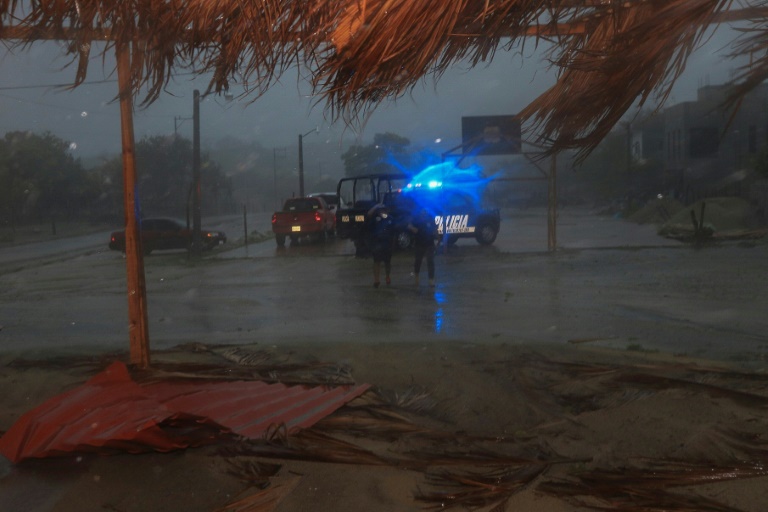
At least 33 people remained missing and 11 were confirmed dead Wednesday after Hurricane Agatha swept through Mexico, local officials said.

The storm was the strongest to hit Mexico’s Pacific coast in May since record keeping began in 1949, according to the US National Hurricane Center (NHC).

It triggered heavy rains and deadly flooding after making landfall on Monday.

“There are 33 (people) missing and 11 deaths basically in the upper area of the coast,” Oaxaca state governor Alejandro Murat said in a video call Wednesday.

Two people aged 18 and 21 years old died when part of a hill collapsed in the community of Santa Catarina Xanaguia, according to the Oaxaca civil protection office.

Another woman died and her son was injured in a landslide in Llano del Chillar, the office said.

Agatha made landfall near Puerto Angel in Oaxaca as a Category Two hurricane — the second lowest on a scale of five — with winds of 165 kilometers (105 miles) per hour.

Mexico is regularly lashed by tropical storms on both its Pacific and Atlantic coasts, generally between the months of May and November.

The deadliest storm to hit Mexico last year was a Category 3 hurricane called Grace that killed 11 people in the eastern states of Veracruz and Puebla in August.

Ukraine braces for Severodonetsk fall, awaits new US weapons

Ukraine looked close to losing the key eastern city of Severodonetsk to Russian forces but was boosted Wednesday by the US decision to send more advanced rocket systems to help with its defence.

“The Russians control 70 percent of Severodonetsk,” Lugansk region governor Sergiy Gaiday announced on Telegram, adding that Ukrainian forces were withdrawing to prepared positions.

“If in two or three days, the Russians take control of Severodonetsk, they will install artillery and mortars and will bombard more intensely Lysychansk,” the city across the river, which Gaiday said remained under Kyiv’s control.

One of the industrial hubs on Russia’s path to taking the eastern Lugansk region, Severodonetsk has become a target of massive Russian firepower since the failed attempt to capture Kyiv.

But in a boost for the outgunned Ukrainian military, President Joe Biden confirmed that more US weaponry was on the way to allow them to “more precisely strike key targets” in Ukraine.

The new weapon is the Himars multiple launch rocket system, or MLRS: a mobile unit that can simultaneously launch multiple precision-guided missiles.

They are the centrepiece of a $700 million package being unveiled Wednesday that also includes air-surveillance radar, more Javelin short-range anti-tank rockets, artillery ammunition, helicopters, vehicles and spare parts, a US official said.

With a range of about 50 miles (80 kilometres), they will allow Ukrainian forces to strike further behind Russian lines.

– ‘Fuel to the fire’ –

Kremlin spokesman Dmitry Peskov accused Washington of “adding fuel to the fire”, saying “such supplies” did not encourage Kyiv to resume peace talks.

In an article in the New York Times, Biden insisted: “We are not encouraging or enabling Ukraine to strike beyond its borders.”

He wrote: “We do not seek a war between NATO and Russia. 

“As much as I disagree with Mr. (President Vladimir) Putin, and find his actions an outrage, the United States will not try to bring about his ouster in Moscow.”

While some analysts have suggested the Himars could be a “game-changer”, others caution they should not be expected to suddenly turn the tables, not least because Ukrainian troops need time to learn how to use them effectively.

What they may do is improve morale.

“If you know you have a heavy weapon behind you, everyone’s spirits rise,” one Ukrainian fighter on the frontline told AFP before the announcement.

– ‘Negative consequences’ –

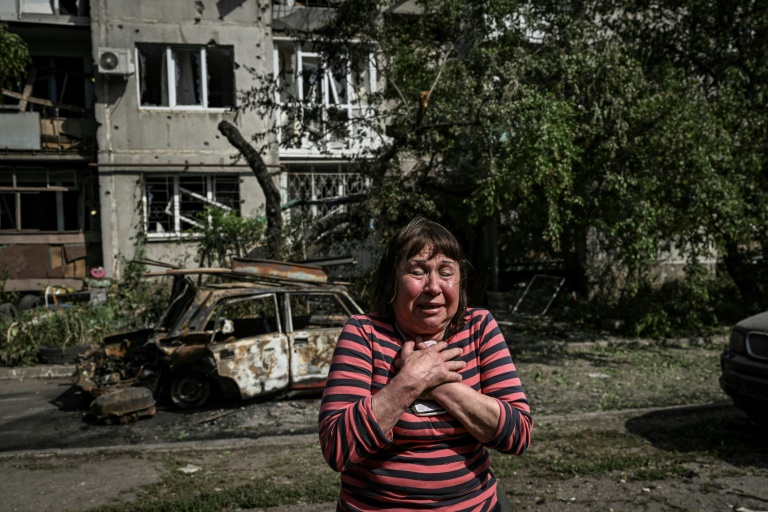
On the eastern frontline in Donbas, Ukrainian towns are being subjected to near-constant shelling from Russian forces.

Moscow said Wednesday it had no information on the death of a French journalist killed this week while covering the evacuation of civilians in the east of the country.

West of Severodonetsk, in the city of Sloviansk, AFP journalists saw buildings destroyed by a rocket attack in which three people died and six others were hurt.

And on Wednesday, at least one person died and two others were injured in Soledar, between Sloviansk and Severodonetsk, AFP saw.

The European Union has also sent weapons and cash for Ukraine, while levelling unprecedented economic sanctions on Moscow.

Germany said Wednesday it would deliver an air defence system capable of shielding a major city from Russian air raids, although it will take months to get to the frontline.

EU leaders agreed this week to ban most Russian oil imports but played down the prospects of shutting off Russian gas on which many member states are hugely dependent.

Moscow said a “reorientation” was under way to find alternative destinations for the oil, to “minimise the negative consequences” of the move.

Separately, Russian energy giant Gazprom said its gas exports to countries outside the former Soviet Union dropped by more than a quarter year-on-year between January and May after losing several European clients.

Russia has sought to get around sanctions by demanding payment for gas in rubles, cutting off countries that refuse. 

Denmark was set to become the latest target Wednesday, after the Netherlands, Finland, Poland and Bulgaria.

Danes meanwhile were voting on whether to overturn the country’s opt-out on the EU’s common defence policy.

The referendum came just weeks after neighbouring Finland and Sweden abandoned decades of military non-alignment by applying to join NATO as a defence against Russian aggression.

– Grain as weapon –

Ukraine’s prosecutor general Iryna Venediktova said authorities had identified a “few thousand” cases of war crimes in the Donbas, including murder, torture and the forced displacement of children.

The key aide of ukraine President Volodymyr Zelensky, who met international counterparts in The Hague on Tuesday, said Kyiv was already set to prosecute 80 suspects for alleged war crimes on Ukrainian soil.

A Ukrainian court on Tuesday jailed two Russian soldiers for 11 and a half years for shelling two villages in the northeastern Kharkiv region.

Earlier this month, another was jailed for life for murdering a civilian, although he has appealed.

Russia’s invasion of its pro-Western neighbour is also threatening a global food crisis, with Ukraine’s huge grain harvest effectively taken off the world market. 

UN Secretary General Antonio Guterres warned Wednesday the most vulnerable would suffer as the war “inflames a three-dimensional global crisis in food, energy and finance”.

Earlier Pope Francis pleaded against the use of grain as a “weapon of war”, and appealed for “every effort to be made” to “guarantee the universal right to food”.

The leaders of France, Germany and Italy have all urged Putin in recent days to end Russia’s blockade of the port of Odessa.

But Russian Foreign Minister Sergei Lavrov said it was up to the West and Kyiv to resolve the crisis, starting with the lifting of sanctions.

In Kyiv, meanwhile, Ukrainian football fans were set to watch their national side play its first official match since Russia’s invasion, facing Scotland in a World Cup qualifier later Wednesday in Glasgow.

“I am hoping for victory,” 44-year-old army serviceman, Andriy Veres, told AFP. 

“These days it is very important for the country, for all people, for all those who are fans and even for those who are not.”  

burs-ar/pvh

Jubilee boost then brake predicted for UK economy

Queen Elizabeth II’s Platinum Jubilee should provide a boost to Britain’s beleaguered retail and tourism sectors, but could also then slow the stuttering economy, analysts said on Wednesday.

Thursday sees the start of four days of festivities to mark the 96-year-old monarch’s record-breaking 70 years on the throne.

With two public holidays on Thursday and Friday, then the weekend, supermarket chain Co-op predicted “a bigger sales period than Christmas”.

“Sales are set to be booming in the run-up to the bank holiday weekend, with shoppers set to flock to the stores on Wednesday,” it added.

It forecast a 10-percent increase in wine sales alone, and was expecting to sell 500,000 bottles of sparkling wine and 30,000 bottles of Champagne.

Double the amount of English fizz was also predicted to fly off the shelves, as people look to toast the occasion with a taste of patriotism.

The UK government said more than 200,000 local events and street parties were expected to be held across the country over the four days.

VisitBritain, which promotes British tourism, said the celebrations could bring in some £1.2 billion ($1.5 billion, 1.4 billion euros) to the economy.

Some 5.3 million Britons are likely to take time off work, it added.

Co-op is expecting to sell 500,000 sausages and 400,000 packets of crisps and other snacks — 25 percent more than normal.

“The key lines such as bunting and flags have done very well this week along with beers, spirits and crisps,” the Morrisons chain said.

“Jubilee-themed products” such as corgi-shaped cakes, cupcakes and pies were also proving popular, a spokeswoman told AFP.

– ‘Hangover’ –

Susannah Streeter, an analyst at Hargreaves Lansdown, said grocers were “set to get a mini-boost in sales”.

At the same time, hotels and restaurants as well as tourist activities that were hit badly during the pandemic will benefit, she added.

VisitBritain estimates that Covid cost the UK tourism sector up to £97.1 billion in 2020 and 2021, mostly due to a lack of foreign visitors.

But Streeter said the extra-long weekend would likely see a “drop in productivity, as flag-waving, parties and barbecues replace hours punching keyboards and on factory floors”.

The Golden Jubilee celebrations in 2002 saw production fall by 5.4 percent, and it dipped again in 2012 for the queen’s 60th anniversary, she added.

“So don’t be surprised if a hangover comes in the form of a knock to economic output in June’s GDP (gross domestic product) snapshot after all the fun.”

But Michael Hewson, an analyst at CMC Markets, said historical data showed that any retraction would be temporary and productivity would bounce back.

In 2002 and 2012, he said, “we saw a strong rebound the following month”.

“If, as seems likely, the UK economy contracts in Q2 (second quarter) this year, the jubilee bank holiday is unlikely to be the primary reason,” he added.

Greater blame should be attached to consumers spending and travelling less in the midst of a cost-of-living crisis, as government taxes also go up, Hewson said.

11 dead, over 30 missing after Hurricane Agatha hits Mexico: officials

At least 33 people remained missing and 11 were confirmed dead Wednesday after Hurricane Agatha swept through Mexico, local officials said.

The storm made landfall along Mexico’s Pacific coast Monday, the strongest since record keeping began in 1949, according to the US National Hurricane Center (NHC).

It triggered heavy rains and deadly flooding.

“There are 33 (people) missing and 11 deaths basically in the upper area of the coast,” Oaxaca state governor Alejandro Murat said in a video call Wednesday.

Two people aged 18 and 21 years old died when part of a hill collapsed in the community of Santa Catarina Xanaguia, according to the Oaxaca civil protection office.

Another woman died and her son was injured in a landslide in Llano del Chillar, the office said.

Agatha made landfall near Puerto Angel in Oaxaca as a Category Two hurricane — the second lowest on a scale of five — with winds of 165 kilometers (105 miles) per hour.

Mexico is regularly lashed by tropical storms on both its Pacific and Atlantic coasts, generally between the months of May and November.

The deadliest storm to hit Mexico last year was a Category 3 hurricane called Grace that killed 11 people in the eastern states of Veracruz and Puebla in August.

US, Taiwan launch trade talks in challenge to China

The United States and Taiwan launched talks on Wednesday aimed at deepening their trade ties, in a clear challenge to Beijing.

The process, labeled the US-Taiwan Initiative on 21st-Century Trade, follows an agreement President Joe Biden announced last week with 12 Asian economies, which excluded Taiwan.

Like that effort, the discussions with Taiwan will not involve tariffs or market access — items that would require congressional approval, officials said.

“Both sides will work at pace… to develop an ambitious roadmap for negotiations for reaching agreements with high-standard commitments and economically meaningful outcomes,” the US Trade Representative said in a statement.

Despite the limited scope of the talks, which a senior administration official said was in keeping with the “unofficial” relationship with Taipei, they are likely to anger Beijing which bristles at any sign Washington is treating the self-governing democracy as an independent nation.

China claims sovereignty over Taiwan and opposes its participation in international fora including a Pacific trade pact.

Beijing has engaged in frequent saber rattling to show its displeasure: China on Monday made the second largest incursion into Taiwan’s air defense zone this year with Taipei reporting 30 jets entering the area, including more than 20 fighters.

US Secretary of State Antony Blinken accused China of “increasingly provocative rhetoric and activity.” 

Biden also is under pressure to deepen ties with the island after a bipartisan group of 52 senators urged him to include Taiwan in the Indo-Pacific Economic Framework (IPEF) launched last week, which includes about 40 percent of the global economy.

They argued in a letter to Biden that leaving an important trading partner out would “allow the Chinese government to claim that the international community does not in fact support meaningful engagement with Taiwan.”

– ‘Robust’ relationship –

A senior official said there is still time to add Taiwan to that effort.

“We didn’t include Taiwan in the initial launch. However, going forward, we intend to take a flexible and adaptable approach to IPEF participation,” the official told reporters.

The official reiterated Washington’s “long-standing one China policy,” but said the Biden administration also maintains a “robust unofficial relationship with Taiwan and… is committed to deepening it.”

Deputy USTR Sarah Bianchi and Taiwan’s lead trade negotiator John Deng met on Wednesday to launch the new initiative, which the trade agency said “is intended to develop concrete ways to deepen the economic and trade relationship, advance mutual trade priorities based on shared values, and promote innovation and inclusive economic growth for our workers and businesses.”

The first meeting under the initiative will be held in Washington later in June, and will cover customs procedures and regulations, including rules governing agriculture trade, worker rights and the fight against “harmful non-market policies” — a clear reference to China.

Another administration official said the goal is to produce a “high framework, binding agreement,” but gave no timeframe for reaching a deal.

Taiwan is the 10th largest export market for the United States as well as a vital source of semiconductors which are seeing a global shortage, hitting industries that rely on them from autos to smartphones and pushing inflation higher.

The US Commerce Department has launched a separate dialogue with Taipei on technology and investment — two other areas covered by IPEF.

Close Bitnami banner
Bitnami