AFP

Rare saiga antelope population now over a million in Kazakhstan

The population of endangered Saiga antelopes in Kazakhstan is now over 1.3 million, the ecology ministry said Tuesday, in the latest boost to a species threatened by poaching and disease.  

In 2015, around 200,000 of the antelopes — well over half the total global population at the time — were wiped out by what scientists later determined was a nasal bacterium that spread in unusually warm and humid conditions.

But last year brought good news as the numbers rebounded from 334,000 in 2019 to 842,000 across the centre, west and northwest of the vast Central Asian state. 

The April aerial count ahead of this year’s spring calving took the population to 1,318,000, according to a dataset shared with AFP by the ecology ministry.  

The former Soviet country’s vast steppe is home to a majority of the world’s Saiga with Russia’s Kalmykia region and Mongolia hosting smaller numbers.

Poaching is a persistent threat to the Saiga, known for its distinctive bulbous nose, and is fuelled by demand for their horn in traditional Chinese medicine.

Kazakhstan’s leaders pledged to intensify their crackdown on poaching after two state rangers were killed by poachers in 2019.

But the success of conservation efforts have raised fears that Kazakhstan will once again allow hunting, with a ban introduced in the late 1990s running out in 2023. 

Jury resumes deliberations in Depp vs Heard trial

The jury resumed deliberations on Tuesday in the bitter defamation trial between “Pirates of the Caribbean” star Johnny Depp and his ex-wife Amber Heard.

The seven-person jury met for about two hours on Friday after closing arguments and resumed their consideration of the high-profile case on Tuesday morning after a three-day holiday weekend.

The 58-year-old Depp flew to England over the Memorial Day weekend and made surprise appearances at concerts in Sheffield and London by Jeff Beck.

“Well… what a surprise we got last night when Johnny Depp joined @jeffbeckmusic on stage,” Sheffield City Hall tweeted.

Depp, a guitarist, has his own band, the Hollywood Vampires, with Alice Cooper and Joe Perry of Aerosmith.

Depp filed suit against Heard over an op-ed she wrote for The Washington Post in December 2018 in which she described herself as a “public figure representing domestic abuse.”

The Texas-born Heard, who had a starring role in “Aquaman,” did not name Depp in the piece, but he sued her for implying he was a domestic abuser and is seeking $50 million in damages.

The 36-year-old Heard countersued for $100 million, claiming that she suffered “rampant physical violence and abuse” at his hands.

Dozens of witnesses testified during the trial, including bodyguards, Hollywood executives, agents, entertainment industry experts, doctors, friends and relatives.

Depp and Heard each spent days on the witness stand during the televised trial, attended by hundreds of fans of the “Pirates” star and accompanied by a #JusticeForJohnnyDepp campaign on social media.

Video and audio recordings of heated, profanity-laced arguments between the couple were played for the jury, which was also shown photographs of injuries allegedly suffered by Heard during their volatile relationship.

Hours of testimony was devoted to a grisly finger injury that Depp suffered while filming an installment of “Pirates” in Australia in March 2015.

Depp claimed the tip of a finger was severed when Heard threw a vodka bottle at him. Heard said she did not know how the injury occurred.

Both agreed that Depp went on to scrawl messages on walls, lampshades and mirrors using the bloody digit.

– ‘Monster’ –

Heard said Depp would become a physically and sexually abusive “monster” during alcohol- and drug-fueled binges and resisted her repeated efforts to curb his drinking and drug use.

Depp testified that it was Heard who was frequently violent and said it has been “brutal” to listen to “outlandish” accusations of domestic abuse made against him.

“No human being is perfect, certainly not, none of us, but I have never in my life committed sexual battery, physical abuse,” he said.

Heard, who was married to Depp from 2015 to 2017, obtained a restraining order against him in May 2016, citing domestic violence.

Depp, a three-time Oscar nominee, filed a libel suit in London against the British tabloid The Sun for calling him a “wife-beater.” He lost that case in November 2020.

Both sides have claimed damage to their Hollywood careers.

Time to put monetary value on conservation, says Gabon

A key UN summit this year must give biodiversity the same priority as climate change and press ahead with putting a financial value on natural resources, Gabon’s environment minister says.

British-born Lee White, an ecologist who has helped make Gabon a powerful voice for the environment in central Africa, said Earth’s climate and biodiversity crises went hand in hand.

COP15 — an eagerly awaited conservation conference due to take place in Kunming, China, in the last quarter of 2022 — must give biodiversity “the same level of priority as climate change”, White said in an interview with AFP.

“We’re looking at much higher ambition for conservation,” he said.

“One of our priorities is the 30 by 30 target — 30 percent protected areas across the planet by 2030 — and moving the agenda forward on biodiversity credits, biodiversity financing.”

Carbon credits, which have been around for more than two decades, offer financial incentives to reduce or avoid emissions of greenhouse gases.

Biodiversity credits would offer similar incentives to nurture conservation hotspots, which scientists say play a hugely under-estimated role in human survival.

“The Congo Basin stabilises Africa, it’s the heart and lungs of Africa,” said White, the author of dozens of research papers.

“Without the Congo Basin… we lose the rainfall in the Sahel, and you have hundreds of millions of climate refugees moving south,” he said.

“We should be able to calculate that cost and then attribute it to the biodiversity services that the Congo Basin is providing. But today, biodiversity is worth zero.”

Born in Manchester in northern England, White, 56, began his career in the African rain forests before he managed the activities of the Wildlife Conservation Society in Gabon for 15 years and in 2002 became an advisor to President Omar Bongo Ondimba for national parks and eco-tourism. In 2009, he was appointed minister for water, forests, the sea and environment.

– Gabon success –

White pointed to Gabon’s own record in sequestering carbon by preserving its lush tropical forests.

In 2002, Gabon set up a network of 13 national parks covering 11 percent of its territory. Today, 22 percent of the land is protected.

In 2017, the country created 20 marine sanctuaries covering 53,000 square kilometres (20,500 square miles) — the biggest ocean haven in Africa, and equivalent to 27 percent of its territorial waters.

“Since the Earth summit in Rio we have absorbed three billion tonnes of CO2,” said White.

“I think if we find ways to give a value to all of that progress, if we find a way to find a value to our net sequestration of carbon, then other countries will maybe take a look at the Gabon example and potentially do something similar themselves.”

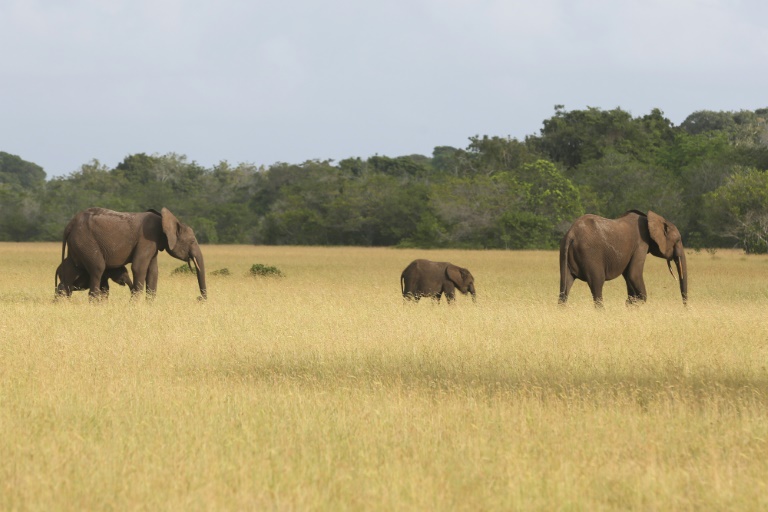
Habitat conservation has helped Gabon’s population of forest elephants grow from 60,000 to 95,000 animals, while across Africa numbers of this species have fallen by three-quarters.

This success story has a downside in conflict between elephants and humans, in which climate change also plays a part, said White.

– Hungry elephants –

Research at one of the forest sites, he said, has found that over 40 years, temperatures have risen by one degree Celsius (1.8 degrees Fahrenheit) and annual rainfall has fallen by 200 millimetres (7.9 inches), leading to a crash of 80 percent in rainforest fruits, which are a key part of the elephants’ diet.

“The elephants are hungry — we’ve actually proved scientifically that they are thinner,” said White. 

“So they are coming out of the forest as well because of climate change to eat people’s fields, looking for food.”

White said he had much sympathy for poor farmers who were exasperated by elephants which ate or trampled on their crops.

“The world loves elephants,” he said.

“I would bet there are more elephants in Paris or London than there are in the whole of Africa. But those elephants are cuddly elephants — they’re toy elephants in children’s bedrooms.

“Because for the West, the elephant is this wonderful lovely cuddly thing, and for rural African children, an elephant is a big scary thing that might have just killed their father or destroyed the food that they were going to eat in the next few months.”

White said it was essential to resolve poaching in remote areas so that elephants could move away from areas inhabited by humans and back into their old habitat.

“We (also) have to protect rural people’s crops, ideally using electric fences and other methods, rather than killing the elephants,” he said.

“But we absolutely have to protect rural people’s livelihoods and safety and quality of life.”

This year, for the first time, the government has provided funds to help ease the elephant-human conflict, he said.

The equivalent of $5 million has been included in the 2022 budget for compensation for farmers whose crops have been damaged by tuskers.


Uvalde lays first school shooting victims to rest

The small, traumatized Texan town of Uvalde begins Tuesday to bury its dead from an elementary school shooting that killed 19 young children and left the tightly-knit community united in grief and anger.

Amerie Jo Garza and Maite Yuleana Rodriguez, both 10, are expected to be laid to rest, with further funerals scheduled over the coming weeks. 

As the community mourned, anger has seethed over the response of police, who came under intense criticism since the May 24 tragedy over why it took well over an hour to neutralize the gunman — the “wrong decision,” Texas Department of Public Safety director Steven McCraw has admitted. 

The great-grandfather of one of the young victims berated police near the memorial of white crosses surrounded by wreaths and bouquets of flowers.

“They could tell me ‘Oh, we made a mistake. We made the wrong decision’. But my great-granddaughter is not coming back to me,” said a distraught 78-year-old Ruben Mata Montemayor.

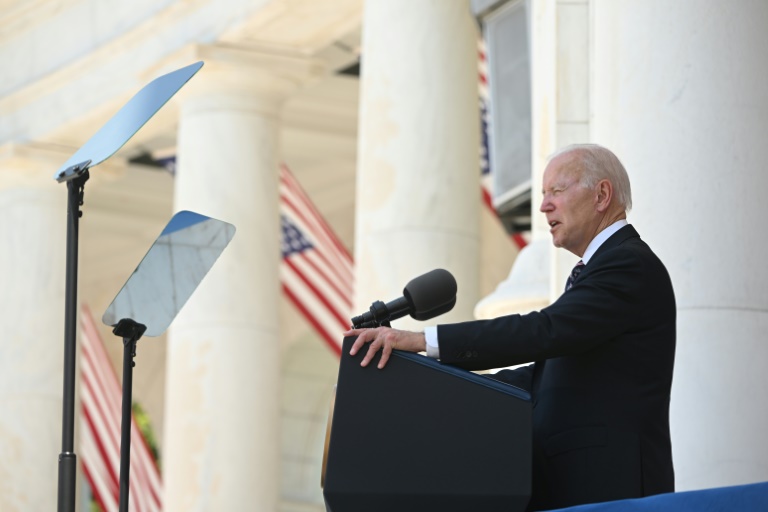
When US President Joe Biden visited the town, about an hour’s drive from the Mexico border, over the weekend, shouts of “do something!” rang out from the crowd.

The shooting — the latest in an epidemic of gun violence in the United States that came less than two weeks after 10 people died in the attack at a Buffalo grocery store by a young gunman targeting African Americans — has spurred desperate calls for gun reform.

“There’s no words to describe (it),” said Esther Rubio, who traveled from nearby San Antonio to attend the wake on Monday for Amerie Jo.

Her pictures decorated the funeral home where friends and family gathered, just across the street from Robb Elementary School, where a local 18-year-old gunned down 19 children and two teachers before he was killed by police.

– A dozen more mass shootings –

While mass shootings draw anguished attention and spur momentary demands for change, gun regulation faces deep resistance from most Republicans and some rural-state Democrats.

Biden on Monday vowed to “continue to push” for reform, saying, “I think things have gotten so bad that everybody is getting more rational about it.”

Some key lawmakers have also voiced cautious optimism and a bipartisan group of lawmakers worked through the weekend to pursue possible areas of compromise. 

They reportedly were focusing on laws to raise the age for gun purchases or to allow police to remove guns from people deemed at risk — but not on an outright ban on high-powered rifles like the weapon used in both Uvalde and Buffalo, New York.

With the country still reeling over the Uvalde massacre — the deadliest school attack since 20 children and six staff were killed in Newtown, Connecticut in 2012 — US media reported the country was hit by a dozen more mass shootings over the three-day Memorial Day weekend.

The United States generally counts mass shootings as involving four or more deaths.

At least 132 gun deaths and 329 injuries were recorded nationwide from Saturday to Monday evening, according to the Gun Violence Archive website.

Mourners in Uvalde — a mostly Latino town of 15,000 — have echoed calls for change.

“At the end of the day, if this child cannot even sip a glass of wine because he’s too young, then guess what? He’s too young to purchase a firearm,” said Pamela Ellis, who traveled from Houston to pay her respects.

US consumer confidence deteriorated in May: survey

Americans’ feelings about the economy deteriorated in May amid concerns about job prospects, but remained relatively strong even as high inflation bites, according to a survey released Tuesday.

Amid the fastest increase in US consumer prices in more than four decades, made worse by the war in Ukraine, consumer confidence dipped slightly after a modest increase in April, falling to 106.4 from 108.6, according to The Conference Board’s monthly survey.

Consumers flush with savings and government support money have been a key driver of the recovery of the world’s largest economy, spending freely on big-ticket purchases like homes, cars and appliances.

But supply chain snarls, made worse by Covid-19 lockdowns in China, meant demand has outstripped supply, and that dynamic has fueled inflation.

Feelings about the present situation dropped for the second month, falling more than three points to 149.6, caused by the deterioration in views on the labor market, with an increasing share of respondents saying jobs are “hard to get,” according to the report.

Expectations for six months ahead retreated slightly to 77.5 after gaining in the prior month.

Lynn Franco, the institution’s senior director of economic indicators, noted that the readings are still relatively high despite the declines.

“Overall, the Present Situation Index remains at strong levels, suggesting growth did not contract further in Q2,” Franco said in a statement, referring to the current April-June quarter. 

“That said, with the Expectations Index weakening further, consumers also do not foresee the economy picking up steam in the months ahead. They do expect labor market conditions to remain relatively strong, which should continue to support confidence in the short run.”

The Federal Reserve has launched an aggressive cycle of interest rate increases to tamp down inflation by cooling demand, which Franco said “pose continued downside risks to consumer spending this year.”

The survey also measures consumers’ spending plans in the next six months, and shows a slowdown in intentions to purchase high-dollar items like homes and cars.

“Vacation plans have also softened due to rising prices. Indeed, inflation remains top of mind for consumers,” Franco said.

Ian Shepherdson of Pantheon Economics noted that households still have a stockpile of cash and “So far, they have been willing to dip into these savings despite reporting that they feel less positive. It’s not called retail therapy for nothing, but we just don’t know how long it will continue.”

US consumer confidence deteriorated in May: survey

Americans’ feelings about the economy deteriorated in May amid concerns about job prospects, but remained relatively strong even as high inflation bites, according to a survey released Tuesday.

Amid the fastest increase in US consumer prices in more than four decades, made worse by the war in Ukraine, consumer confidence dipped slightly after a modest increase in April, falling to 106.4 from 108.6, according to The Conference Board’s monthly survey.

Consumers flush with savings and government support money have been a key driver of the recovery of the world’s largest economy, spending freely on big-ticket purchases like homes, cars and appliances.

But supply chain snarls, made worse by Covid-19 lockdowns in China, meant demand has outstripped supply, and that dynamic has fueled inflation.

Feelings about the present situation dropped for the second month, falling more than three points to 149.6, caused by the deterioration in views on the labor market, with an increasing share of respondents saying jobs are “hard to get,” according to the report.

Expectations for six months ahead retreated slightly to 77.5 after gaining in the prior month.

Lynn Franco, the institution’s senior director of economic indicators, noted that the readings are still relatively high despite the declines.

“Overall, the Present Situation Index remains at strong levels, suggesting growth did not contract further in Q2,” Franco said in a statement, referring to the current April-June quarter. 

“That said, with the Expectations Index weakening further, consumers also do not foresee the economy picking up steam in the months ahead. They do expect labor market conditions to remain relatively strong, which should continue to support confidence in the short run.”

The Federal Reserve has launched an aggressive cycle of interest rate increases to tamp down inflation by cooling demand, which Franco said “pose continued downside risks to consumer spending this year.”

The survey also measures consumers’ spending plans in the next six months, and shows a slowdown in intentions to purchase high-dollar items like homes and cars.

“Vacation plans have also softened due to rising prices. Indeed, inflation remains top of mind for consumers,” Franco said.

Ian Shepherdson of Pantheon Economics noted that households still have a stockpile of cash and “So far, they have been willing to dip into these savings despite reporting that they feel less positive. It’s not called retail therapy for nothing, but we just don’t know how long it will continue.”

Biden, Fed chair discuss US inflation at White House

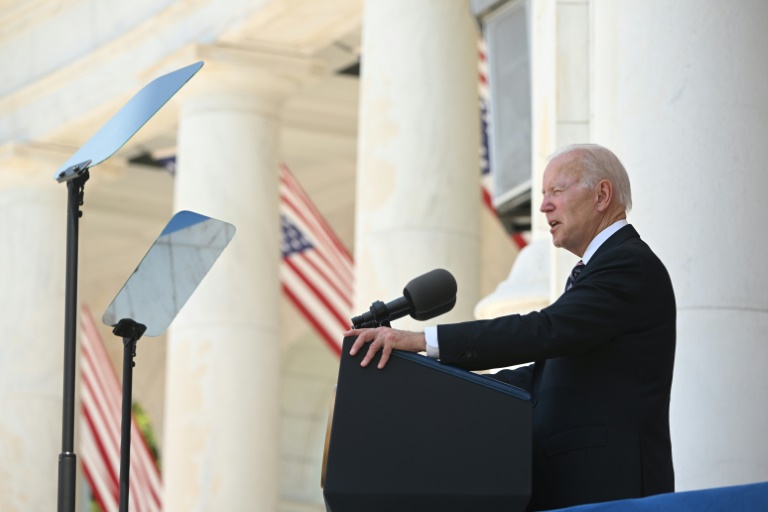
President Joe Biden on Tuesday holds a rare White House meeting with the head of the Federal Reserve, Jerome Powell, to discuss soaring inflation and White House attempts to tame the politically damaging price surge ahead of midterm elections.

In their first such meeting this year, Biden and Powell will “discuss the state of the American and global economy,” the White House said, with an emphasis on inflation.

This is Biden’s “top economic priority,” the White House said, “as we transition from a historic economic recovery to stable, steady growth that works for working families.”

Inflation of more than eight percent is casting a heavy shadow on Biden’s claims to be steering the US economy back to health after the Covid-19-induced crash.

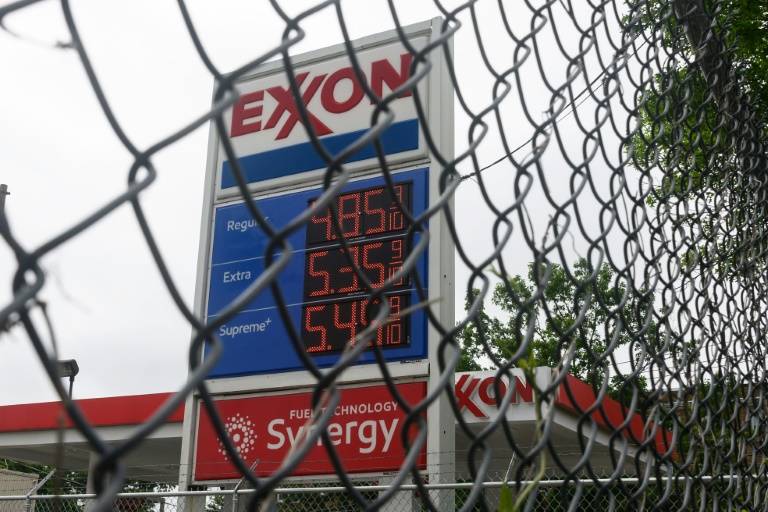
Employment is back near pre-pandemic levels and growth is strong, but savage price increases for essentials including food and fuel are driving growing public dissatisfaction.

The Fed has raised rates three quarters of a percentage point, kicking off what central bank officials say could be a series of hikes aimed at calming down the economy, although there are fears that the unintended result may be recession.

Federal Reserve Governor Christopher Waller said Monday that he backs several more half-point rate hikes — “until I see inflation coming down closer to our two percent target.”

Biden is scrambling to ease the pressure on American consumers ahead of November midterm elections in which his Democrats are forecast to lose control of Congress to the Republicans.

Biden’s own approval ratings are barely in the 40 percent range, reflecting his inability to sell voters on his upbeat message of US economic recovery.

As the election approaches, Biden has pivoted to more aggressively trying to explain the inflation phenomenon as a byproduct of forces beyond his control.

These include the Russian invasion of Ukraine, which triggered Western sanctions disrupting the huge Russian energy industry. President Vladimir Putin’s invading forces, meanwhile, have all but put a halt to Ukraine’s important wheat exports.

Biden calls the effect “Putin’s price hike.”

Writing in the Wall Street Journal on Monday, Biden underlined the independence of the Federal Reserve, but noted that the central bank has “a primary responsibility to control inflation.”

Biden recalled that his predecessor Donald Trump frequently launched political attacks on the Fed and that other presidents had also “sought to influence its decisions inappropriately during periods of elevated inflation.”

“I won’t do this,” he pledged.

In the op-ed, Biden said his longterm plan for economic health includes easing the pace of post-Covid recovery to more sustainable levels, boosting economic productivity and reducing the federal budget deficit.

Biden, Fed chair discuss US inflation at White House

President Joe Biden on Tuesday holds a rare White House meeting with the head of the Federal Reserve, Jerome Powell, to discuss soaring inflation and White House attempts to tame the politically damaging price surge ahead of midterm elections.

In their first such meeting this year, Biden and Powell will “discuss the state of the American and global economy,” the White House said, with an emphasis on inflation.

This is Biden’s “top economic priority,” the White House said, “as we transition from a historic economic recovery to stable, steady growth that works for working families.”

Inflation of more than eight percent is casting a heavy shadow on Biden’s claims to be steering the US economy back to health after the Covid-19-induced crash.

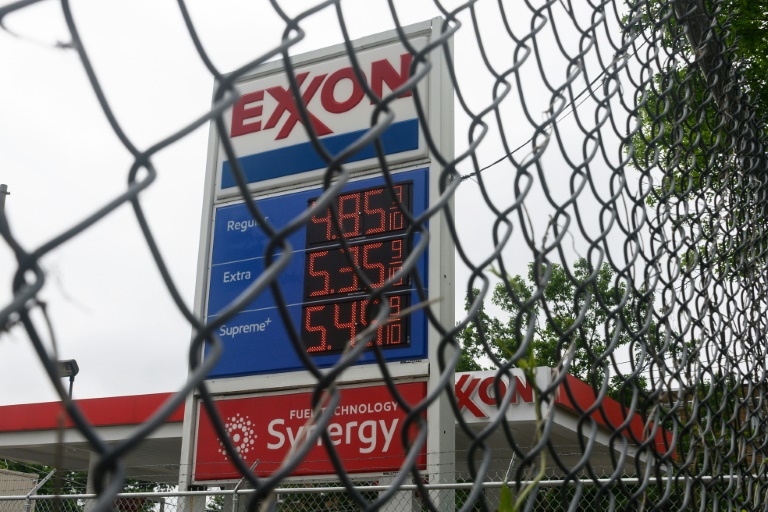
Employment is back near pre-pandemic levels and growth is strong, but savage price increases for essentials including food and fuel are driving growing public dissatisfaction.

The Fed has raised rates three quarters of a percentage point, kicking off what central bank officials say could be a series of hikes aimed at calming down the economy, although there are fears that the unintended result may be recession.

Federal Reserve Governor Christopher Waller said Monday that he backs several more half-point rate hikes — “until I see inflation coming down closer to our two percent target.”

Biden is scrambling to ease the pressure on American consumers ahead of November midterm elections in which his Democrats are forecast to lose control of Congress to the Republicans.

Biden’s own approval ratings are barely in the 40 percent range, reflecting his inability to sell voters on his upbeat message of US economic recovery.

As the election approaches, Biden has pivoted to more aggressively trying to explain the inflation phenomenon as a byproduct of forces beyond his control.

These include the Russian invasion of Ukraine, which triggered Western sanctions disrupting the huge Russian energy industry. President Vladimir Putin’s invading forces, meanwhile, have all but put a halt to Ukraine’s important wheat exports.

Biden calls the effect “Putin’s price hike.”

Writing in the Wall Street Journal on Monday, Biden underlined the independence of the Federal Reserve, but noted that the central bank has “a primary responsibility to control inflation.”

Biden recalled that his predecessor Donald Trump frequently launched political attacks on the Fed and that other presidents had also “sought to influence its decisions inappropriately during periods of elevated inflation.”

“I won’t do this,” he pledged.

In the op-ed, Biden said his longterm plan for economic health includes easing the pace of post-Covid recovery to more sustainable levels, boosting economic productivity and reducing the federal budget deficit.

New Apple museum opens in former Warsaw factory

A new museum opening in a former metalworking factory in Warsaw brings together 1,600 exhibits linked to Apple — the result of years of painstaking efforts by a determined Polish collector.

“It is the biggest and most complete Apple collection in the world,” boasted Jacek Lupina, a 56-year-old architect, who amassed the collection spanning the entire history of the US tech giant.

The museum is housed in Fabryka Norblina, a red-brick factory from the early 19th century in central Warsaw which has been turned into a retail and entertainment space.

At the entrance is a replica of the Apple 1, released in 1976, was the first personal computer sold by the founders of the company, Steve Jobs and Steve Wozniak.

Two hundred models of the Apple 1 were produced and sold at the time for $666.66 (620 euros) each.

“My aim is for visitors to be able to see what the beginning was like — how primitive and very simple it was. The case for the Apple 1 was made of wood! Nothing like what we have today,” Lupina said.

The collector used components from the time to assemble the model and the motherboard was signed by Wozniak himself during a visit to Poland in 2018.

“He scrutinised all the soldering, the components and really appreciated the work. He also showed me the parts that he and Steve Jobs had wanted to change but never got round to,” Lupina said.

– ‘Sold the furniture’ –

The museum includes dozens of computers such as the Apple II, Lisa, iMac, Power Mac, Macbook, Mac Pro, as well as iPhones, iPods, iPads, instruction booklets, software and other objects from the Apple universe.

The walls are decorated with original advertising posters, including those from the famous “Think Different” campaign from 1997 featuring images of Bob Dylan, Pablo Picasso and Albert Einstein.

Lupina said he started collecting “just for the pleasure of seeing them” and because the products would previously have been “too expensive for a resident of post-Communist Europe”.

After some time, the collection began taking over his house on the outskirts of Warsaw — starting with his office and then the living room.

“I sold the furniture in the living room, the table, the chairs and I just left some armchairs,” he said.

In 2017, he turned his house into a museum. When he ran out of space, he found fresh premises and the new museum opened last weekend.

Lupina spent all his free time on the collection, sometimes passing entire nights following online auctions happening in different parts of the world.

It is a costly hobby, he said, adding: “I don’t have any savings or a pension, just my collection.”

2TK, Canada's migratory bird that fell for Uruguayan resort

The first cold winds announce the arrival of winter in Uruguay’s jet setters’ playground, Punta del Este.

It’s time for “2TK” to set flight from the plush seaside resort and return to Canada, a feat of endurance that fascinates scientists and delights local birdwatchers.

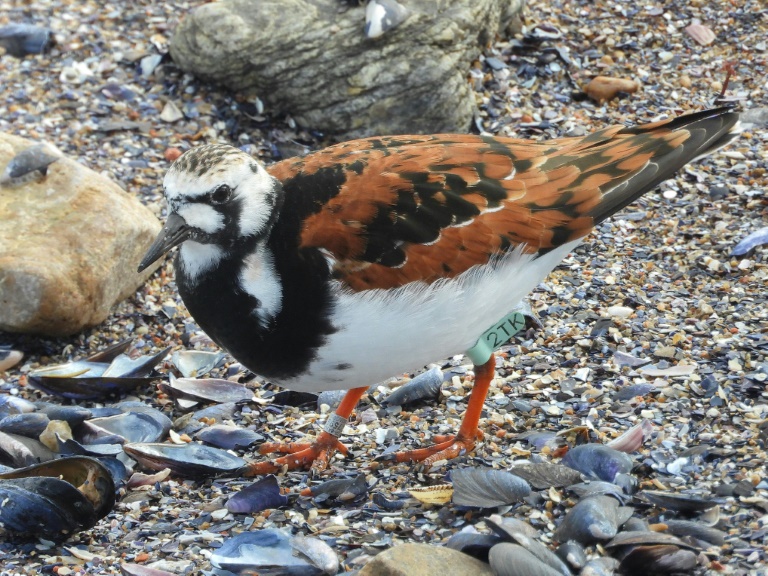
Identifiable by a plastic band on one ankle bearing the name 2TK and a metal one with nine digits on the other, this ruddy turnstone (Arenaria interpres) has spent the southern hemisphere summer on the rocks off Uruguay’s Atlantic coast feeding off mussels, alongside oystercatchers and other birds.

When the food became scarce in Canada’s artic tundra as winter swept in, the turnstone migrated 15,000 kilometers (9,300 miles) to South America.

By April, 2TK had become “fatter” and ditched his grey plumage for one tinged with brown and orange ahead of his return to his native lands to reproduce, said Alvaro Perez Tort, 48, an amateur photographer and member of the Punta del Este birdwatching society that has been documenting the bird’s trips to Uruguay since 2016.

“2TK stole my heart,” Perez told AFP.

Every year he waits for the male turnstone’s return to document him “as much as possible” to share on reportband.gov — the continental database for observing banded birds run by the United States Geological Survey.

“What’s interesting is that a banded bird has a history: there’s a city, a country or faraway place, a journey and people,” said Perez.

By photographing the bird “we feel like we’re a part” of that history, he added, noting he has seen 2TK eight times at Uruguay’s southernmost tip.

– Bird ‘jigsaw puzzle’ –

2TK is around 14 years old, according to the Bird Banding Laboratory, which organises the banding of one million birds annually in North America for conservation purposes.

He was banded in 2012 in Delaware Bay on the US Atlantic coast, an important stopover for many migratory species.

For laboratory chief Antonio Celis-Murillo, information provided by amateur birdwatchers is vital to “build the jigsaw puzzle” of each bird’s movements.

“Our work is successful thanks to the general public — every person who reports a banded bird,” he told AFP. 

“The reported information is so simple but valuable, because scientifically it tells us a lot.

“Especially those reports from South America that we lack,” he added.

These details allow scientists to plot the behavior of every species: their migration routes, where they stop, how long they stay there, how they live.

It all helps to refine conservation projects.

According to a 2019 study published in Science magazine, some three billion wild birds have disappeared from North America since 1970.

– ‘Lots of food’ –

Loss of habitat affecting all biodiversity “clearly shows its impact on migratory birds,” who face ever-greater difficulties in their extraordinary journeys, said Adrian Azpiroz, a biologist and ornithologist who promotes ecotourism initiatives.

And while turnstones are not threatened like other waders, their population is nonetheless shrinking.

Of the estimated 300,000 on the continent, only several hundred or thousand winter on the Uruguayan coast. Others prefer southern Brazil or Argentina.

Scientists believe these long-distance migratory birds have favorite winter retreats and are remarkably loyal, returning year after year — just like 2TK.

Uruguay’s many coastal lagunas are “very productive from a nourishment point of view” for waders, said Azpiroz.

That is why 2TK is likely to have traveled some 350,000 kilometers in his life — the equivalent of nine times around the planet.

That’s a truly staggering accomplishment for a bird measuring little more than 20 centimeters (eight inches).

Experts are still studying the sophisticated physiological and neurological mechanisms that allow him to recognize a location with such precision following a weeks-long air journey of thousands of kilometers.

Many Uruguayan birdwatchers like to think the same thing that attracts them to return time and again to Punta del Este is what also caught 2TK’s attention.

Close Bitnami banner
Bitnami