AFP

Harrowing new accounts emerge from Uvalde's young survivors

Fresh harrowing accounts emerged Saturday of the ordeal faced by survivors of the school shooting in Uvalde, Texas, fanning public fury over the massacre ahead of a visit Sunday by US President Joe Biden.

As residents gathered Saturday in a central square to pay homage to the victims, haunting stories told by young students who played dead while a gunman killed 19 classmates and two teachers were underscored by accounts of the slow reaction to the spree by police. 

Ten-year-old Samuel Salinas was sitting in his fourth-grade classroom when the shooter, later identified as Salvador Ramos, 18, barged in with a chilling announcement: “You’re all going to die.”

Then “he just started shooting,” Salinas told ABC News.

Texas authorities belatedly admitted Friday that as many as 19 police officers were in the school hallway for more than an hour without acting, thinking the shooter had ended his killing, calling it the “wrong decision.”

Ramos, who carried two assault-style rifles, was finally killed by police.

Uvalde survivors have described making desperate, whispered pleas for help in 911 phone calls during his assault. Many played dead to avoid drawing the shooter’s attention.

Eleven-year-old Miah Cerrillo even smeared the blood of a dead friend on herself as she feigned death. 

Samuel Salinas said he thinks Ramos fired at him, but the bullet struck a chair, sending shrapnel into the boy’s leg. “I played dead so he wouldn’t shoot me,” he said.

Another student, Daniel, whose mother would not provide his last name, said he saw Ramos fire through the glass in the classroom door, striking his teacher.

The bullets were “hot,” he told the Washington Post, and when another bullet ricocheted and struck a fellow student in the nose, he said he could hear the sickening sound it made.

Though his teacher lay on the floor bleeding, she repeatedly told the students, “‘Stay calm. Stay where you are. Don’t move,'” Daniel recalled.

He was finally rescued by police who broke the windows of his classroom. Since then, he has had recurrent nightmares.

By mid-morning Saturday, several dozen people had gathered at Uvalde’s courthouse square, which has become a somber place of homage to victims and survivors. 

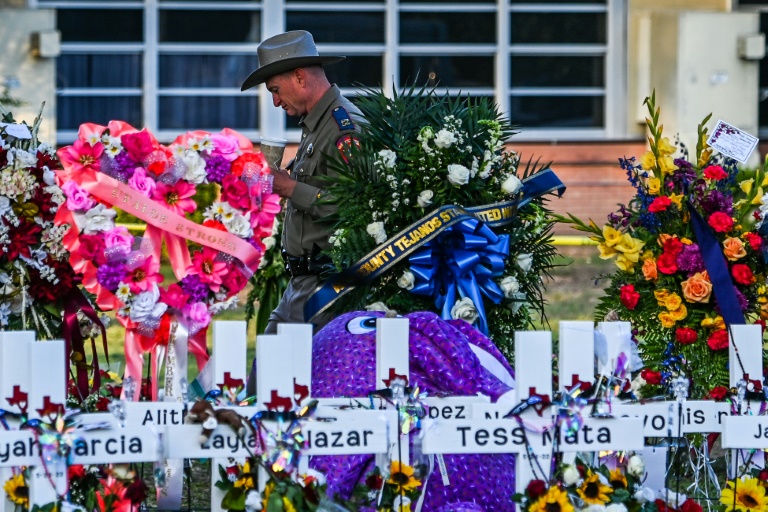
Twenty-one simple white crosses have been erected around a fountain — one for each victim. 

People have left growing piles of stuffed animals and flowers, as well as heart-rending messages: “Love you” and “You will be missed.”

Local resident Humberto Renovato, 33, asked those present to hold hands, form a circle around the crosses, and pray. 

– ‘Too much fear. Too much grief’ –

President Joe Biden will visit Uvalde on Sunday to again make the case for gun control, as activists set about galvanizing voters on the issue in the run-up to November’s midterm election.

Despite the scourge of mass shootings, efforts at nationwide gun control have repeatedly failed, though polls show broad support from Americans.

Speaking at a University of Delaware commencement on Saturday, Biden — himself a grieving father twice over — evoked the image of parents preparing to bury their children in Texas, and lamented “too much violence. Too much fear. Too much grief.”

“We have to stand stronger,” he told the graduates at his alma mater. 

Biden’s deputy, Vice President Kamala Harris, issued a similar call Saturday as she attended the funeral of another mass shooting victim — Ruth Whitfield, who was among the 10 killed when a white supremacist opened fire in a supermarket in Buffalo on May 14.

“We will not let those people who are motivated by hate to separate us or make us feal fear,” Harris said at the funeral for the 86-year-old.

Back in Texas, the state Senate Democratic caucus issued a call Saturday for Governor Greg Abbott to convene an emergency session of the state legislature to pass legislation to raise the minimum age for firearm purchases, among other measures. 

Chances of substantive change there appeared slim, however. Texas has long been one of the most gun-friendly states.

The Uvalde shooting was the deadliest school attack since 20 children and six staff were killed at the Sandy Hook school in Newtown, Connecticut in 2012.

Texas public safety department director Steven McCraw on Friday revealed a series of emergency calls — including by a child begging for police help — that were made from two adjoining classrooms where the gunman was barricaded.

But, explaining the delayed reaction by law enforcement, he said the on-scene commander believed at the time that Ramos was in there alone, with no survivors, after his initial assault.

McCraw separately told reporters, however, that a 911 call received at 12:16 pm reported eight or nine children still alive. 

As many as 19 officers were outside the classroom door at that time, according to McCraw’s timeline.

McCraw said one caller — a child who dialed 911 multiple times — begged for police to come. Her final call was cut off as she made it outside.

Meantime in Uvalde, Humberto Renovato urged those gathered at the courthouse square to help survivors overcome “the trauma, the pain, the suffering” they had endured.

“As a community,” he said, “we have to develop strategies of how we’re going to help these kids to get out of that trauma, to get out of that pain.”
Mexico confirms its first monkeypox case

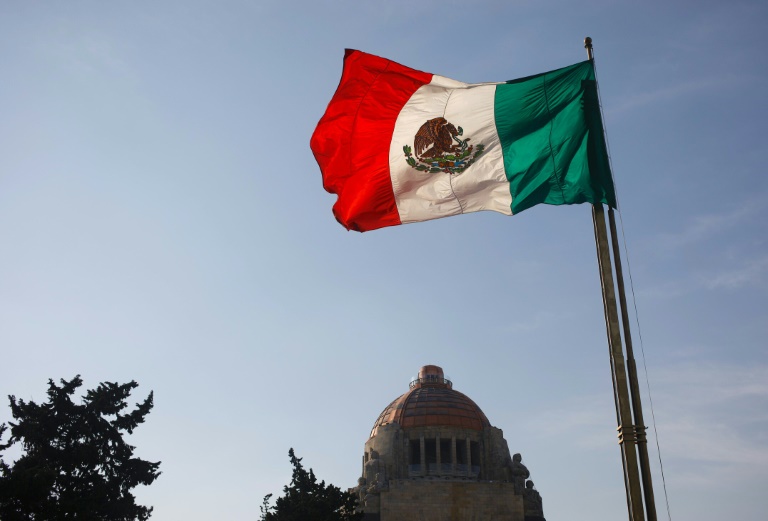
Health officials in Mexico confirmed Saturday the country’s first known case of monkeypox, in a 50-year-old US resident being treated in Mexico City. 

The man, a permanent resident of New York City, “was probably infected in the Netherlands,” Hugo Lopez-Gatell, an undersecretary of health, said on Twitter.

“Fortunately, he is stable and in preventive isolation,” Lopez-Gatell said. “We hope he will recover without complications.”

He provided no information on the patient’s possible contacts with other people.

On Friday, health authorities in Argentina confirmed the first two known cases of the disease anywhere in Latin America — those of a 40-year-old man who had returned to Argentina from Spain, and of a Spaniard who was visiting Buenos Aires.

The two cases apparently were unconnected.

The monkeypox virus can be transmitted to humans by infected animals. Person-to-person transmission is possible but rare.

Monkeypox is related to smallpox but is much less severe. Initial symptoms include a high fever, swollen lymph nodes and a chickenpox-like rash. 

There is no specific treatment but vaccination against smallpox has been found to be about 85 percent effective in preventing monkeypox.

Monkeypox was first detected in the Democratic Republic of Congo in 1970 and is considered endemic in around a dozen African countries.

Its appearance in non-endemic countries has worried experts, although those cases reported so far have been mostly mild and there have been no deaths.

There have been at least a half-dozen confirmed or suspected cases in the US.

Cash-strapped Sri Lanka gets Russian oil to ease shortages

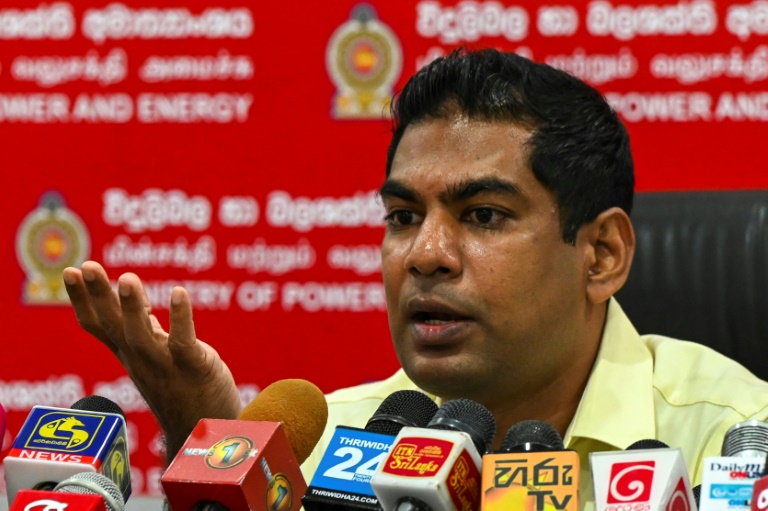
Cash-strapped Sri Lanka took delivery Saturday of Russian oil — which could soon be subject to a European embargo — to restart operations at the country’s only refinery, the energy minister said.

The island nation is suffering its worst economic meltdown since independence, with shortages of fuel and other essentials making life miserable for its 22 million people. 

The state-run Ceylon Petroleum Corporation (CPC) refinery was shuttered in March following Sri Lanka’s foreign exchange crunch, which left the government unable to finance imports, including crude. 

The Russian crude delivery had been waiting offshore of the capital Colombo’s port for over a month as the country was unable to raise $75 million to pay for it, energy minister Kanchana Wijesekera said.

Colombo is also in talks with Moscow to arrange direct supplies of crude, coal, diesel and petrol despite US-led sanctions on Russian banks and a diplomatic outcry over Russia’s invasion of Ukraine.

“I have made an official request to the Russian ambassador for direct supplies of Russian oil,” Wijesekera told reporters in Colombo. 

“Crude alone will not fulfil our requirement, we need other refined (petroleum) products as well.”

Around 90,000 tonnes of Siberian light crude will be sent to Sri Lanka’s refinery after the shipment was acquired on credit from Dubai-based intermediary Coral Energy.

Wijesekera said Ceylon Petroleum Corporation (CPC) was already in arrears of $735 million to suppliers and no one came forward to even bid for its oil tenders.

He added that the Siberian grade was not an ideal match for the refinery, which is optimised for Iranian light crude, but no other supplier was willing to extend credit. 

Sri Lanka will nonetheless call for fresh supply tenders in two weeks before the stock of Siberian light runs out, Wijesekera said.

The Sapugaskanda refinery on Colombo’s outskirts will resume work in about two days to produce about 1,000 tonnes of diesel daily to meet an acute shortage.

European Union leaders are meeting on Monday in an effort to negotiate a fresh round of sanctions against Russia over the Ukraine conflict, including an oil embargo.

Russian oil is already subject to a US embargo and its barrels have traded at a steep discount from international benchmarks, which have risen substantially since the conflict began. 

– Protest milestone –

Sri Lanka’s economic crisis has seen long queues of motorists outside gas stations, waiting hours and sometimes even days for scant supplies of petrol and cooking gas. 

Its people are also grappling with a serious lack of imported food and pharmaceuticals, along with record inflation and lengthy daily blackouts.

Anti-government protests erupted into riots earlier this month, leaving nine people dead and many more wounded.

A demonstration outside President Gotabaya Rajapaksa’s office in Colombo demanding his resignation over the government’s economic mismanagement entered its 50th day Saturday.

Meanwhile thousands of activists led by university students marched through the streets of Colombo and clashed with police guarding access roads to Rajapaksa’s official residence.

Police fired tear gas and water cannon to disperse the protesters who pulled down yellow-painted iron barricades.

Two people were briefly detained by police and later released, according to witnesses.

There were no reports of serious casualties, but ambulances were seen ferrying some people affected by tear gas.

Russia steps up battle for eastern Ukraine

Russia pressed its onslaught on eastern Ukraine Saturday, saying it had captured the strategic town of Lyman and had successfully tested hypersonic missiles in the Arctic.

Ukrainian forces battled to repel Russian forces from the outskirts of the key city of Severodonetsk, a Ukrainian official said, however denying claims it had been surrounded.

Russia is waging all-out war for the eastern Donbas region — Ukraine’s industrial heartland where President Volodymyr Zelensky has accused Moscow of carrying out a “genocide”.

“The town of Krasny Liman has been entirely liberated from Ukrainian nationalists,” the Russian defence ministry said, using the Russian name for Lyman and confirming an announcement made a day earlier by pro-Moscow separatists.

Lyman lies on the road to the urban centres of Severodonetsk and Kramatorsk.

Russian forces have been closing in on Severodonetsk and nearby Lysychansk in Lugansk province, with conflicting reports about the extent of their advance.

Regional governor Sergiy Gaiday said Russian shelling continued on Severodonetsk as Ukrainian soldiers fought to oust the invading forces from a hotel on its edges, but rejected claims the city had been  encircled.

“Severodonetsk has not been cut off… there is still the possibility to deliver humanitarian aid,” he told Ukrainian television.

A Lugansk police official, cited by Russia’s state news agency RIA Novosti, late Friday said Severodonetsk was “now surrounded” and Ukrainian troops could no longer leave the city.

– France, Germany urge talks –

Three months after Russia launched its invasion on February 24, leaving thousands dead on both sides and forcing 6.6 million people out of the country, Moscow has gained control over swathes of eastern and southern Ukraine, including port cities Kherson and Mariupol.

Other Ukrainian ports have been cut off from the world by Russian warships, preventing key grain supplies from being transported out.

Russia and Ukraine supply about 30 percent of the wheat traded on global markets.

Russia has tightened its own exports and Ukraine has vast amounts stuck in storage, driving up prices and cutting availability for importers across the globe.

President Vladimir Putin has repeatedly rejected any responsibility, instead blaming Western sanctions.

But on Saturday he told French President Emmanuel Macron and German Chancellor Olaf Scholz in a phone call Russia was “ready” to look for ways to allow more wheat onto the global market.

“Russia is ready to help find options for the unhindered export of grain, including the export of Ukrainian grain from the Black Sea ports,” the Kremlin reported him as saying.

He called for the lifting of sanctions to allow “an increase in the supply of Russian fertilisers and agricultural products” onto the global market.

Macron and Scholz urged Putin to hold “direct serious negotiations” with Zelensky, the German chancellor’s office said.

And they demanded Russia free 2,500 Ukrainian fighters taken as prisoners of war after surrendering earlier this month at a sprawling steelworks in the ravaged port city of Mariupol.

– More weapons ‘dangerous’ –

Zelensky late Friday said his country was doing everything to defend the Donbas from intense artillery and missile strikes.

“We are protecting our land in the way that our current defence resources allow. We are doing everything to increase them,” he added. 

To further help the Ukrainians, Washington was preparing to send advanced long-range rocket systems, US media reports said.

Pentagon spokesman John Kirby did not confirm the plans to deliver the M270 Multiple Launch Rocket System, highly mobile equipment capable of firing up to 300 kilometres (186 miles) that Kyiv has said it badly needs.

But he said Washington was “still committed to helping them succeed on the battlefield”.

British Prime Minister Boris Johnson pledged his country’s continued support “including helping provide the equipment they need” in a call Saturday with Zelensky, his office said.

But Putin warned Macron and Scholz that ramping up arms supplies to Ukraine would be “dangerous” and risk “further destabilisation”.

He spoke after his army said it had successfully fired one of its Zircon hypersonic cruise missiles some 1,000 kilometres (625 miles) across the Arctic.

– Ship docks in Mariupol –

As he seeks to ramp up international pressure on Moscow, Zelensky will speak to EU leaders at an emergency summit Monday as they try to agree on an embargo on Russian oil, which is being held up by Hungary, whose Prime Minister Viktor Orban has close relations with Putin.

“We need to act until they stop their policy of aggression,” Zelensky told a think tank in Indonesia.

But Moscow said Russia expects to receive one trillion rubles ($15 billion) in additional oil and gas revenues this year, a windfall from the sharp rise in oil prices caused in part by its invasion of Ukraine.

In Ukraine, a spokesman for the Russian-controlled Mariupol port said a first ship had docked there on Saturday.

“It will be loaded up with 2.7 tonnes of steel,” he told Russian state news agency TASS.

There was however no official announcement from either the Russian or separatist authorities.

burs-ah/ach 

Harrowing new accounts emerge from Uvalde's young survivors

Fresh harrowing accounts emerged Saturday of the ordeal faced by survivors of the school shooting in Uvalde, Texas, fanning public fury over the massacre even as the deeply traumatized town prepared for a visit Sunday by US President Joe Biden.

The haunting stories told by young students who were forced to play dead as a heavily armed gunman continued a methodical spree — killing 19 students and two teachers — have been underscored by accounts of the slow reaction by police during the drama. 

Ten-year-old Samuel Salinas was sitting in his fourth-grade classroom when the shooter, later identified as Salvador Ramos, 18, barged in with a chilling announcement: “You’re all going to die.”

Then “he just started shooting,” Salinas told ABC News.

Texas authorities belatedly admitted Friday that as many as 19 police officers were in the school hallway for more than an hour without acting, thinking the shooter had ended his killing.

“From the benefit of hindsight… it was the wrong decision, period,” said Texas Department of Public Safety director Steven McCraw.

Ramos, who carried two assault-style rifles, was finally killed by police.

Uvalde survivors have described making desperate, whispered pleas for help in 911 phone calls during his assault. Many played dead to avoid drawing the shooter’s attention.

Eleven-year-old Miah Cerrillo even smeared the blood of a dead friend on herself as she feigned death. 

Samuel Salinas said he thinks Ramos fired at him, but the bullet struck a chair, sending shrapnel into the boy’s leg. “I played dead so he wouldn’t shoot me,” he said.

Another student, Daniel, whose mother would not provide his last name, said he saw Ramos fire through the glass in the classroom door, striking his teacher.

The bullets were “hot,” he told the Washington Post, and when another bullet ricocheted and struck a fellow student in the nose, he said he could hear the sickening sound it made.

Though his teacher lay on the floor bleeding, she repeatedly told the students, “‘Stay calm. Stay where you are. Don’t move,'” Daniel recalled.

He was finally rescued by police who broke the windows of his classroom. Since then, he has had recurrent nightmares.

– A troubling timeline –

President Joe Biden will visit Uvalde on Sunday to again make the case for gun control, as activists set about galvanizing voters on the issue in the run-up to November’s midterm election.

Despite the scourge of mass shootings, efforts at nationwide gun control have repeatedly failed, though polls show broad support from Americans.

Speaking at a University of Delaware commencement on Saturday, Biden — himself a grieving father twice over — evoked the image of parents preparing to bury their children in Texas, and lamented “too much violence. Too much fear. Too much grief.”

“We have to stand stronger,” he told the graduates at his alma mater. 

The Uvalde shooting was the deadliest since 20 children and six staff were killed at the Sandy Hook school in Newtown, Connecticut in 2012.

McCraw revealed a series of emergency calls — including by a child begging for police help — that were made from two adjoining classrooms where the gunman was barricaded.

But he said the on-scene commander believed at the time that Ramos was in there alone, with no survivors, after his initial assault.

“I’m not defending anything, but you go back in the timeline, there was a barrage, hundreds of rounds were pumped in in four minutes, okay, into those two classrooms,” McCraw said.

“Any firing afterwards was sporadic and it was at the door. So the belief is that there may not be anybody living anymore.”

McCraw separately told reporters, however, that a 911 call received at 12:16 pm reported eight or nine children still alive. 

As many as 19 officers were outside the classroom door at that time, according to McCraw’s timeline.

McCraw said one caller — a child who dialed 911 multiple times — begged for police to come. Her final call was cut off as she made it outside.

Texas Governor Gregg Abbott told journalists who grilled him during a testy news conference Friday that he was given inaccurate information in the wake of the massacre.

“I was misled,” Abbott said. “The information that I was given turned out in part to be inaccurate, and I’m absolutely livid about that.”

Russia steps up battle for eastern Ukraine

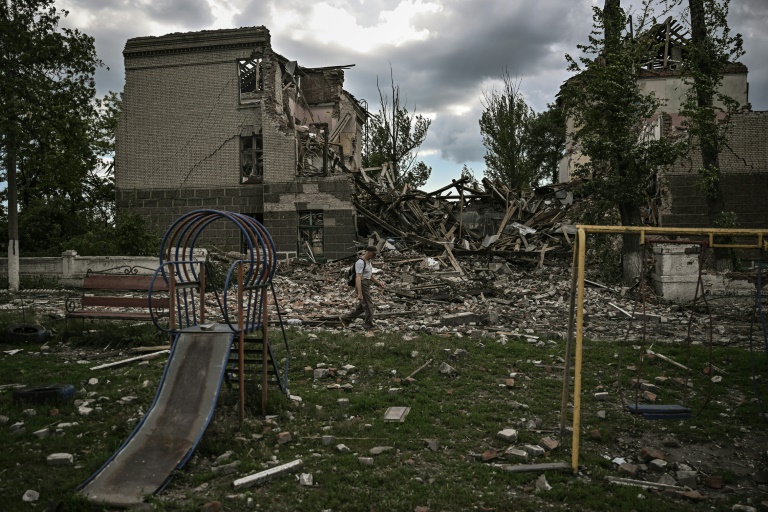
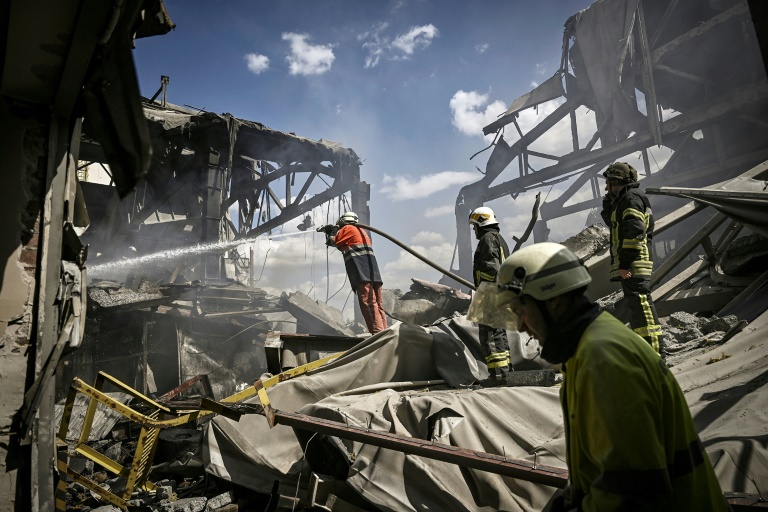
Russia pressed its onslaught on eastern Ukraine Saturday, saying it had captured the strategic town of Lyman and had succesfully tested hypersonic missiles in the Arctic.

Ukrainian forces down the road battled to repel Russian forces from the outskirts of the key city of Severodonetsk, a Ukrainian official said, however denying claims it had been surrounded.

Russia is waging all-out war for the eastern Donbas region — Ukraine’s industrial heartland where President Volodymyr Zelensky has accused Moscow of carrying out a “genocide”.

“The town of Krasny Liman has been entirely liberated from Ukrainian nationalists,” the Russian defence ministry said, using the Russian name for Lyman and confirming an announcement a day earlier by pro-Moscow separatists.

Lyman lies on the road to the urban centres of Severodonetsk and Kramatorsk still in Moscow’s sights.

Russian forces have been closing in on Severodonetsk and nearby Lysychansk in Lugansk province, with conflicting reports about the extent of their advance.

Regional governor Sergiy Gaiday said Russian shelling continued on Severodonetsk as Ukrainian soldiers fought to oust invading forces from a hotel on its edges, but rejected claims the city had been completely encircled.

“Severodonetsk has not been cut off… there is still the possibility to deliver humanitarian aid,” he told Ukrainian television.

A Lugansk police official, cited by Russia’s state news agency RIA Novosti, late Friday said Severodonetsk was “now surrounded” and Ukrainian troops could no longer leave the city.

But Zelensky late Friday said his country was doing everything to defend the Donbas from intense artillery fire, “missile strikes and aircraft attacks”.

“We are protecting our land in the way that our current defence resources allow,” he added. 

“We are doing everything to increase them.”

– Australian killed –

As the country faces an increasingly desperate humanitarian situation, an Australian man was on Saturday reported to have been killed this week while supplying aid. 

Tasmania’s Mercury newspaper identified the man as Michael Charles O’Neill, 47, with a tribute on Facebook saying he had been “driving the wounded and injured from the front line”. An Australian official confirmed the death.

Three months after Russia launched its invasion on February 24, leaving thousands dead on both sides and forcing 6.6 million people out of the country, Moscow has gained control over swathes of eastern and southern Ukraine, including port cities Kherson and Mariupol.

Russia Saturday announced the latest test of its Zircon hypersonic cruise missile, which it said had dashed across some 1,000 kilometres (625 miles) and “successfully hit” a target in the Arctic.

To further help Ukraine fight back, Washington was preparing to send advanced long-range rocket systems, according to US media reports.

Pentagon spokesman John Kirby did not confirm the plans to deliver the M270 Multiple Launch Rocket System, a highly mobile system capable of firing up to 300 kilometres (186 miles) that Kyiv has said it badly needs.

But he said Washington was “still committed to helping them succeed on the battlefield”.

Mykhaylo Podolyak, an adviser to President Zelensky, said on Twitter that some of Ukraine’s partners “avoid giving the necessary weapons because of fear of the escalation. Escalation, really?”

– Russian ship in Mariupol –

Seeking to increase international pressure on Russia, Zelensky will speak with EU leaders at an emergency summit Monday as they try to agree on an embargo on Russian oil, which is being held up by Hungary, whose Prime Minister Viktor Orban has close relations with Russian President Vladimir Putin.

“Rather than continue trading with (Russia), we need to act until they stop their policy of aggression,” Zelensky told a think tank in Indonesia.

But in Moscow, Finance Minister Anton Siluanov said Russia expects to receive one trillion rubles ($15 billion) in additional oil and gas revenues this year, a windfall from the sharp rise in oil prices caused in part by its invasion of Ukraine.

As his navy blockades Ukrainian ports, Putin also rejected claims he was disrupting food supplies worldwide.

Russia and Ukraine supply about 30 percent of the wheat traded on global markets.

Russia has tightened its own exports and Ukraine has vast amounts stuck in storage, driving up prices and cutting availability for importers across the globe.

But a spokesman for the Russian-controlled port of Mariupol said a first ship had docked there on Saturday, barely a week after the last Ukrainian fighters surrendered and left the city.

“It will be loaded up with 2.7 tonnes of steel,” he told Russian state news agency TASS.

A correspondent for staunchly pro-Kremlin Russian newspaper Izvestia said it was accompanied by two warships.

There was however no official announcement from either the Russian or separatist authorities.

Russian forces battered the port city for months before the last Ukrainian fighters at its sprawling steelworks finally laid down their weapons last week.

burs-ah/lc

Ukraine says doing 'everything' to defend Donbas from Russian onslaught

Ukraine said it is doing “everything” to defend the eastern Donbas region, where Russia confirmed Saturday it had captured a strategic town in its intensifying offensive.

Russia is waging all-out war for the Donetsk and Lugansk regions that make up Donbas — Ukraine’s industrial heartland where President Volodymyr Zelensky has accused Moscow of carrying out a “genocide”.

Zelensky said late Friday the Russians had “concentrated maximum artillery, maximum reserves in Donbas”.

“There are missile strikes and aircraft attacks — everything,” he said. 

“We are protecting our land in the way that our current defence resources allow,” he added. 

“We are doing everything to increase them.”

Moscow’s army said Saturday it had seized control of Lyman town, on the road to the two key cities of Severodonetsk and Kramatorsk still under Kyiv’s control, confirming an announcement a day earlier by pro-Moscow separatists. 

Russian forces are also closing in on Severodonetsk and Lysychansk in Lugansk province, with conflicting reports about the extent of their advance.

Regional governor Sergiy Gaiday insisted Ukrainian forces would be able to resist for at least another two or three days — but said troops may have to withdraw from some areas to avoid being surrounded.

“Most probably they (Russian troops) will not seize (Lugansk), because there’s enough strength and means to hold the defence,” he said on Telegram.

“Maybe even to avoid encircling there might be a command to our troops to retreat.”

– ‘No longer scared’ –

A Lugansk police official, cited by Russia’s state news agency RIA Novosti, said Severodonetsk was “now surrounded” and Ukrainian troops could no longer leave the city.

That was denied by senior city official Oleksandr Stryuk, though he acknowledged the situation was “very difficult” with incessant bombing.

“People are willing to risk everything to get food and water,” said the head of the main aid distribution centre in Lysychansk, Oleksandr Kozyr.

“They are so psychologically depressed that they are no longer scared. All they care about is finding food.” 

As the country faces an increasingly desperate humanitarian situation, an Australian man was on Saturday reported to have been killed this week while supplying aid. 

Tasmania’s Mercury newspaper identified the man as Michael Charles O’Neill, 47, with a tribute on Facebook saying he had been “driving the wounded and injured from the front line”.

An Australian foreign affairs department spokesperson confirmed the death.

Three months after Russia launched its invasion on February 24, leaving thousands dead on both sides and forcing 6.6 million people out of the country, Moscow has gained control over swathes of eastern and southern Ukraine, including port cities Kherson and Mariupol.

“Russian forces have made steady, incremental gains in heavy fighting in eastern Ukraine in the past several days, though Ukrainian defences remain effective overall,” said the US-based Institute for the Study of War.

To further help Ukraine fight back, Washington was preparing to send advanced long-range rocket systems, according to US media reports.

Pentagon spokesman John Kirby did not confirm the plans to deliver the M270 Multiple Launch Rocket System, a highly mobile system capable of firing up to 300 kilometres (186 miles) that Kyiv has said it badly needs.

“We are still committed to helping them succeed on the battlefield,” Kirby said.

Mykhaylo Podolyak, an adviser to President Zelensky, said on Twitter that some of Ukraine’s partners “avoid giving the necessary weapons because of fear of the escalation. Escalation, really?” 

– ‘Suffering’ –

In a historic move against Russia’s spiritual authorities, the Moscow branch of Kyiv’s Orthodox Church said Friday it was cutting ties with Russia over its invasion of Ukraine.

Ukraine has been under Moscow’s spiritual leadership since at least the 17th century, but part of its Orthodox Church broke with Moscow in 2019 over Russia’s annexation of Crimea and support for separatists in Donbas.

Seeking to increase international pressure on Russia, Zelensky will speak with EU leaders at an emergency summit Monday as they try to agree on an embargo on Russian oil, which is being held up by Hungary, whose Prime Minister Viktor Orban has close relations with Russian President Vladimir Putin.

“Rather than continue trading with (Russia), we need to act until they stop their policy of aggression,” Zelensky told a think tank in Indonesia.

But in Moscow, Finance Minister Anton Siluanov said Russia expects to receive one trillion rubles ($15 billion) in additional oil and gas revenues this year, a windfall from the sharp rise in oil prices caused in part by its invasion of Ukraine.

As his navy blockades Ukrainian ports, Putin also rejected claims he was disrupting food supplies worldwide. Russia and Ukraine supply about 30 percent of the wheat traded on global markets.

Russia has tightened its own exports and Ukraine has vast amounts stuck in storage, driving up prices and cutting availability for importers across the globe.

In a call Friday with Austrian Chancellor Karl Nehammer, Putin put the blame on “anti-Russian sanctions by the United States and the European Union, among other things”, the Kremlin said.

He also accused Kyiv of “sabotaging” negotiations and urged Ukraine to de-mine ports “as soon as possible” to allow the passage of grain-carrying vessels, the Kremlin said.

burs-ah/jv

Climate change effect on Peruvian glaciers debated in German court

German judges and experts have arrived at the edge of a melting glacier high up in the Peruvian Andes to examine a complaint made by a local farmer who accuses energy giant RWE of threatening his home by contributing to global warming.

The visit by the nine-member delegation to the region is the latest stage in a case the plaintiffs hope will set a new worldwide precedent.

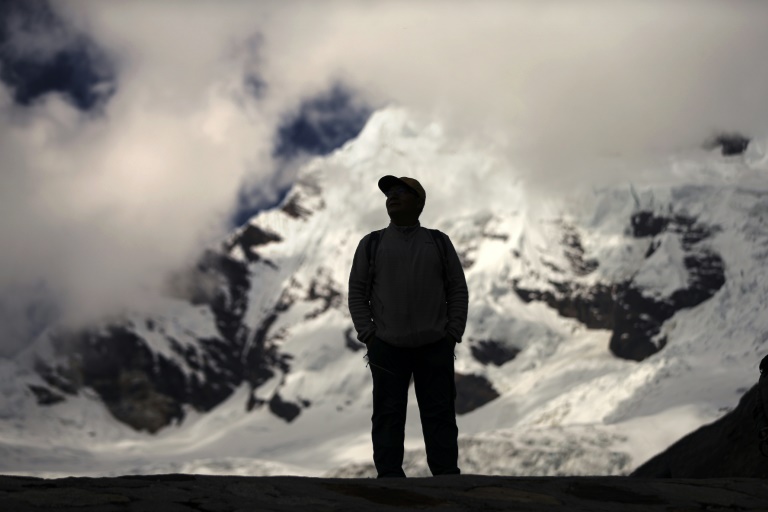
Leading the demand for “climate justice” is 41-year-old Peruvian farmer Saul Luciano Lliuya, who lives in the mountains close to the city of Huaraz.

He has filed suit against the German firm RWE, saying its greenhouse gas emissions are responsible for the melting of nearby glaciers.

The trip was ordered by the Higher Regional Court in the northern German city of Hamm, where Lliuya submitted his claim against RWE, having previously had his case dismissed by another court in Essen.

The delegation must determine what risk the melting glaciers pose to the city of Huaraz and its 120,000 inhabitants below the Palcacocha glacier.

“We want the RWE company to be held responsible for environmental damages,” Lliuya, a farmer and tourist guide supported by the German environmental NGO Germanwatch, told AFP.

“In general they have polluted all over the world and with this claim we are trying to do something,” added Lliuya.

RWE operates in 27 countries in the world, including Chile and Brazil, but not Peru.

The claim “was rejected in the first instance because it did not have any legal basis and did not respect German civil law,” RWE spokesman Guido Steffen told AFP.

“We are confident this will happen again with the appeal.” 

RWE insists that “according to law, individual emitters are not responsible for universal processes, that are effectively global, such as climate change.”

Lliuya and Germanwatch met during the COP20 climate change conference in Lima in 2014, after which the German NGO’s activists traveled to Huaraz to discuss a potential claim in Germany.

– Feeling ‘impotent’ –

Lliuya says his greatest fear is that the melting glaciers result in the Palcacocha lake overflowing.

At an altitude of 4,650 meters (15,000 feet), the huge blue-turquoise lake sits below the Palcaraju and Pucaranra glaciers in the Huascaran national park, and could flood Huaraz below if it bursts its banks.

“As a farmer and citizen I don’t want these glaciers to disappear, they’re important,” said Lliuya.

But he says he feels “impotent” because “you know you’re in a risk zone and there are businesses and industries that have caused this.”

Lliuya owns a half hectare “chacra” — the Quechua word for a small farmstead — on the slopes of the mountain.

He owns chickens and sheep and grows corn and quinoa.

Lliuya lives a modest life with his wife and two children. Their kitchen has few utensils and a wide tree trunk that serves as the dining table.

He is also afraid that a drought in the underground aquifers could threaten local agriculture and Huaraz’s water provisions.

– Battle in German courts –

The case against RWE was brought in 2015 and the German company won at the first instance the following year. But in 2017, the court in Hamm agreed to hear the case.

The visit by experts, which was ordered in 2019, was delayed by the Covid-19 pandemic.

Germanwatch and Lliuya want RWE to pay for the costs to protect Huaraz from any eventual flooding.

“This case refers to our historic emissions of greenhouse gases, and we have always complied with governmental limits, including our carbon dioxide emissions,” says RWE, which has stated a goal of becoming carbon neutral by 2040.

Peru has lost 51 percent of its glaciers over the last 50 years, the national water authority said in 2020.

Noah Walker-Crawford, a climate change researcher at University College London (UCL) and Germanwatch analyst, told AFP that 1,800 people died in 1941 when Palcacocha flooded Huaraz due to a glacial avalanche.

Since then, the volume of Palcacocha dropped by 96 percent over three decades. 

“But then, due to the rapid recession of the glaciers due to global warming, the lake has grown rapidly,” said Walker-Crawford.

Country music stars distance themselves from NRA after school massacre

Country music has long been closely linked to America’s pro-gun lobby, but several stars have distanced themselves from the National Rifle Association following the mass shooting at a Texas school.

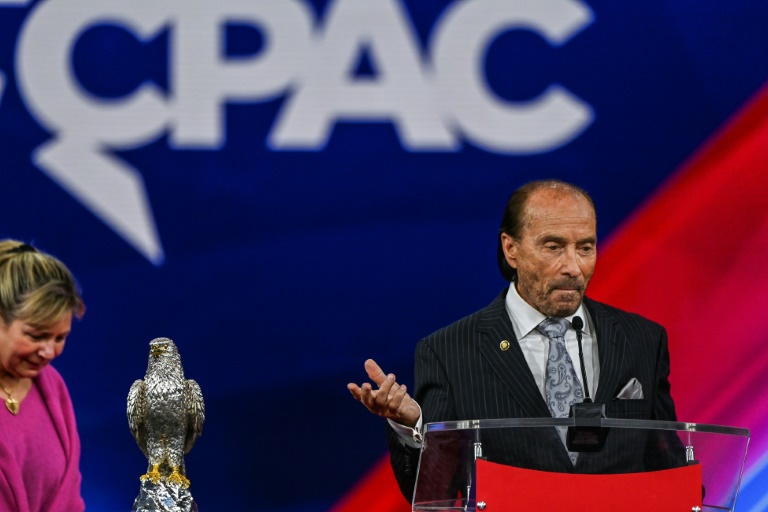
At least five country musicians, including “God Bless the USA” performer Lee Greenwood, pulled out of the NRA’s annual convention that opened Friday in Texas. “American Pie” singer-songwriter Don McLean also withdrew.

Their initial billing highlights the close links between country music and the gun-supporting right in the United States, but experts say their withdrawal is indicative of shifting attitudes.

McLean, 76, said it would be “disrespectful and hurtful” to perform at the convention’s “Grand Ole Night of Freedom” concert scheduled for Saturday after 19 students and two teachers were killed at an elementary school in the small town of Uvalde.

Greenwood, whose patriotic signature song regularly rings out at Donald Trump rallies, said he canceled “out of respect” for those mourning, while Larry Gatlin said he couldn’t perform “in good conscience.”

T. Graham Brown and Larry Stewart, lead singer of country band Restless Heart, also withdrew, according to statements carried by USA Today.

– ‘Not monolithic’ –

Conjuring up images of stetson hats, cowboy boots and the Stars and Stripes flag, country has traditionally been the favorite music of conservative white Americans.

Its fan base is predominantly white, with roots in the largely Republican southern US states.

“Country music is not monolithic by any means,” Professor Mark Brewer, who teaches a class on music and American politics at the University of Maine, told AFP.

“But I think it’s safe to say that the predominant themes over the years have been more conservative, maybe with a hint of libertarian populism mixed in.”

Brewer says there have been “longstanding connections” between country music, conservative politics, and gun culture. One of the reasons is geography.

“There’s a big regional overlap. Country music has its origins in the American south and southern American politics have always been conservative.

“The United States as a whole has a pretty prevalent gun culture, but it’s even more pronounced in the south,” he added.

Professor Joel Schwindt, who teaches country music history at the Boston Conservatory at Berklee, said the genre was “very specifically marketed” to white America from the start.

Adding to its appeal amongst white working class groups was a “firm support for the military.”

-2017 Las Vegas shooting –

Unlike Hollywood and the US pop music industry, which lean left, country music has plenty of conservative artists.

The musicians who withdrew from the NRA convention were careful not to criticize the gun body in their statements.

Stewart praised it as a “great organization” as he defended the US constitution’s famous Second Amendment right to bear arms.

Numerous country musicians have called for more gun regulations though, including Eric Church, Jason Isbell, Maren Morris and Kacey Musgraves.

Several spoke out after a man opened fire from his hotel on a Las Vegas country music festival in 2017, killing 60 people in the deadliest mass shooting in modern US history.

Rosanne Cash, singer-songwriter and daughter of late country musician Johnny Cash, wrote an Op-Ed in the New York Times later that year calling on country musicians to stand up to the NRA.

“I think we’ve had more genuinely progressive stands in the last decade than we’ve probably ever had before,” including on LGBTQ issues, said Brewer.

Although there are no conclusive studies, he thinks this might be because younger performers tend to be more progressive, as are the fans they are trying to attract.

Schwindt notes that while country music’s fan base is primarily white, “regular listenership among non-white listeners, Black listeners and Hispanic listeners in particular, has grown pretty significantly over the past 10 to 20 years.”

Could that lead to more country stars taking progressive stances in the future?

“It’s something we’re seeing more of,” said Brewer. “I don’t know if I’d say that’s the dominant position still by any means. But it’s becoming more and more visible,” he added.

Vanuatu declares climate emergency

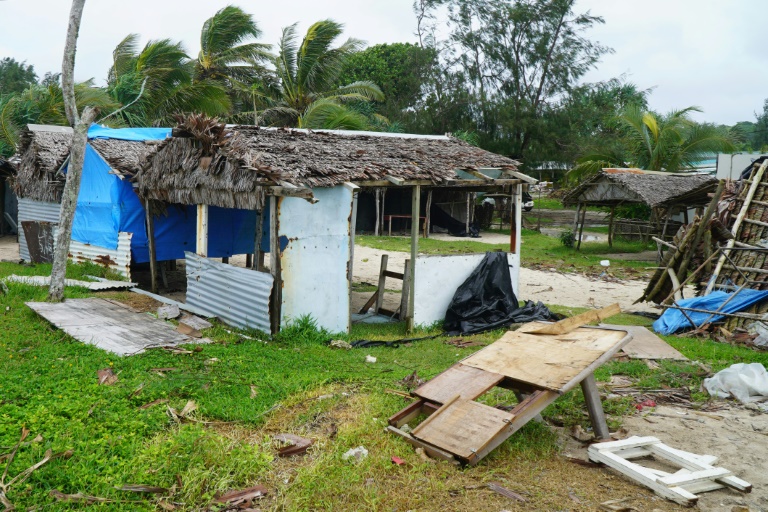
Vanuatu’s parliament has declared a climate emergency, with the low-lying island nation’s prime minister flagging a US$1.2 billion cost to cushion climate change’s impacts on his country.

Speaking to parliament in Port Vila on Friday, Prime Minister Bob Loughman said rising sea levels and severe weather were already disproportionately affecting the Pacific — highlighting two devastating tropical cyclones and a hard-hitting drought in the last decade.

“The Earth is already too hot and unsafe,” Loughman said. 

“We are in danger now, not just in the future.”

The parliament unanimously supported the motion, and it follows similar declarations by dozens of other countries, including Britain, Canada and South Pacific neighbour Fiji. 

“Vanuatu’s responsibility is to push responsible nations to match action to the size and urgency of the crisis,” the leader said.

“The use of the term emergency is a way of signalling the need to go beyond reform as usual.”

The declaration was part of a “climate diplomacy push” ahead of a UN vote on his government’s application to have the International Court of Justice move to protect vulnerable nations from climate change. 

Last year, the nation of around 300,000 said it would seek a legal opinion from one of the world’s highest judicial authorities to weigh in on the climate crisis.

Though a legal opinion by the court would not be binding, Vanuatu hopes it would shape international law for generations to come on the damage, loss and human rights implications of climate change.

He also outlined the country’s enhanced commitment to the Paris agreement to be reached by 2030 at the cost of at least US$1.2 billion — in a draft plan primarily focused on adapting to climate change, mitigating its impacts and covering damages. 

Most of the funding would need to be from donor countries, he said.

This week, Australia’s new Foreign Minister Penny Wong used a trip to Fiji to promise Pacific nations a reset on climate policy after a “lost decade” under conservative rule.

“We will end the climate wars in our country; this is a different Australian government and a different Australia. And we will stand shoulder to shoulder with you, our Pacific family, in response to this crisis,” Wong told a Pacific Island Forum event.

Close Bitnami banner
Bitnami