AFP

Two years after Floyd murder, Biden a spectator to US tragedies

President Joe Biden marked the second anniversary of the murder of George Floyd on Wednesday, on day after a school shooting that came as a cruel reminder of his powerlessness to rein in America’s violent demons.

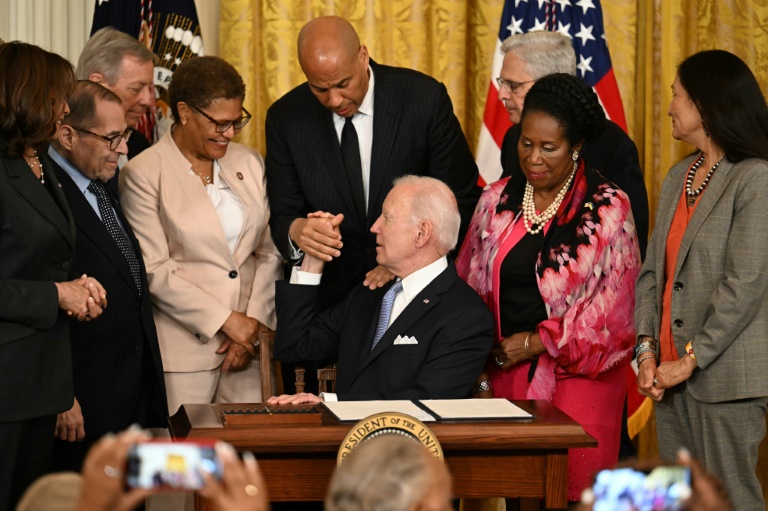
It was to be a ceremony symbolizing reconciliation, in one of the White House’s state rooms, with families of victims of police violence alongside police representatives.

But the school massacre in Uvalde, Texas — in which 19 schoolchildren and two teachers died — was on everyone’s mind when Biden signed a decree described as historic by his administration, aimed at promoting accountability and tightening standards among federal law enforcement.

It came two years to the day after the death of Floyd in Minneapolis, which sparked protests against racism and police brutality that spread across the United States and globally.

The executive order is proof of “what we can do together to heal the very soul of this nation,” Biden said, repeating one of his favorite expressions.

Floyd, an African-American, was murdered by a police officer who knelt on his neck for nearly 10 minutes during an arrest.

Biden told Floyd’s seven-year-old daughter, Gianna, she was “getting so big” during the ceremony, surrounded by elected officials, members of the African-American community and the families of other victims of police violence.

He also reminded the crowd that the United States was a “great nation” made up of a vast majority of “good people” — remarks that rang slightly hollow following the massacre in Uvalde.

The president also announced he and his wife, Jill, will soon travel to Texas.

But the anniversary of Floyd’s death, the massacre in the school in Texas and the recent racist massacre in Buffalo are all cruel reminders of Biden’s failure to keep his promises to curtail the violence.

– Healing –

The executive order, which took months to thrash out, provides for a series of measures related to federal law enforcement: it establishes a national database of police misconduct, mandates the use of body cams and largely bans the use of chokeholds and carotid restraints.

But these restrictions will not be imposed on state and local authorities: that would require legislation, which the Democratic president has failed to push through Congress. 

Nor has Biden managed to toughen gun laws, from banning assault rifles to mandating mental health and criminal background checks on clients when buying weapons.

As with police reform, the administration has been limited in its efforts on curbing firearms to ruling by decree — for example, increasing restrictions on so-called “ghost guns.”

– Institutional paralysis –

Biden’s inability to curb the violence is partly due to the institutional landscape: despite an image of enormous power, an American president has to count on alignment with the legislative branch and the judiciary to assure his vision.

The Democratic Party has only a very slim majority in Congress and some of its senators are reluctant to blow up the procedural rules that would allow them to override Republican stonewalling on a host of issues.

In addition, Biden faces a Supreme Court which now has a resolutely right-leaning slant thanks to his predecessor Donald Trump, who appointed three conservative justices during his one term in office. 

Add to all this the personality of the 79-year-old Democrat, a centrist at heart who would like to govern by consensus, which in today’s America seems impossible.

While the United States has experienced a surge in the number of shootings since the beginning of the year, the president has still not succeeded in appointing a director to the Bureau of Alcohol, Tobacco, Firearms and Explosives.

The agency in fact hasn’t had a permanent leader since 2015.

A first nomination attempt by the White House — a candidate known as a fierce supporter of firearms regulation — was withdrawn after a fierce backlash.

Biden has put forward a new candidate, former prosecutor Steve Dettelbach, who will undertake the Senate confirmation hearing process this week, where he is likely to face unanimous Republican opposition.
'How to murder your husband' writer found guilty of killing spouse

A US romance novelist who wrote an essay entitled “How To Murder Your Husband” has been convicted of killing her spouse. 

A jury in Portland, Oregon, took just eight hours on Wednesday to return a guilty verdict against Nancy Crampton Brophy for shooting dead Daniel Brophy.

Prosecutors said the writer, whose “Wrong Never Felt So Right” series of novels include “The Wrong Husband” and “The Wrong Lover,” had been struggling financially before she shot her husband twice through the heart in June 2018 at a culinary institute where he worked.

Crampton Brophy, 71, had denied the charge, insisting security camera footage that put her at the scene of the crime merely showed her scouting for writerly inspiration.

She also claimed a missing gun police believe was the murder weapon had been bought as part of research for a novel, and denied the hundreds of thousands of dollars in life assurance she stood to gain were a motive for murder.

Crampton Brophy’s lawyers said they would appeal the second-degree murder conviction, The Oregonian newspaper reported.

“Nancy Brophy loved her husband,” attorney Kristen Winemiller told the jury at the trial. “You can see that in her eyes every time she talked about him. Her eyes lit up, they absolutely twinkled.”

Crampton Brophy was arrested in September 2018, and has been in custody ever since.

Prosecutor Shawn Overstreet laid out reams of evidence showing how Crampton Brophy had plotted to kill her husband, who was 63.

“It’s not just about the money. It’s about the lifestyle Nancy desired that Dan could not give her,” he said during the trial.

Crampton Brophy had rejected claims of penury when she took to the stand last week, insisting her monetary woes had long been resolved.

“I do better with Dan alive financially than I do with Dan dead,” she said.

“Where is the motivation I would ask you? An editor would laugh and say, ‘I think you need to work harder on this story, you have a big hole in it.’”

Crampton Brophy, who faces life in prison, will be sentenced at a later date.

The blog post “How to kill your husband,” which is still readily available online, discusses methods and motivations for dispatching an unwanted spouse.

These include financial gain and the use of a firearm, although it notes guns are “loud, messy, require some skill.”

“But the thing I know about murder is that every one of us have it in him/her when pushed far enough,” the essay says.

US securities regulators unveil proposal to fight 'greenwashing'

US securities regulators unveiled Wednesday a proposed rule to tighten disclosure requirements on the rising number of investments that tout their commitment to environmental, social and governance (ESG) goals.

Seeking to address the problem of “greenwashing,” where financial investments may fall short of marketing statements, the Securities and Exchange Commission said the measure was meant to standardize disclosure and avoid cases where a fund “could exaggerate its actual consideration of ESG factors.”

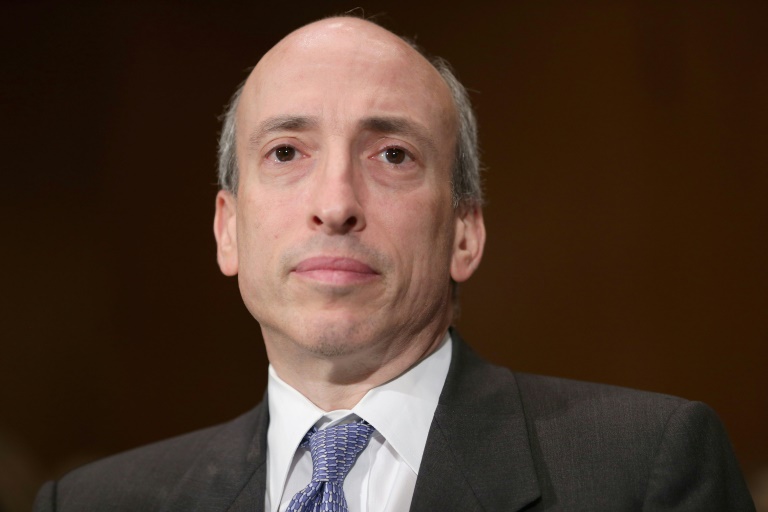
SEC Chairman Gary Gensler said the rule was needed as the scale of the so-called “US sustainable investment universe” has grown to $17.1 trillion, according to one estimate.

“When an investor reads current disclosures, though, it can be very difficult to understand what some funds mean when they say they’re an ESG fund,” Gensler said. “There also is a risk that funds and investment advisers mislead investors by overstating their ESG focus.”

Funds that integrate ESG factors alongside non-ESG factors would be required to say how ESG is incorporated into the investment process, while ESG impact funds would need to say how they measure progress, the SEC said of the proposed rule.

Funds that emphasize the environment would need to disclose the carbon footprint of their investments.

Opposing the proposal was SEC Commissioner Hester Peirce, a Republican commissioner who said she supported the idea of tightening standards but that the new rules did not adequately define ESG.

The proposal “avoids explicitly defining E, S and G, yet implicitly uses disclosure requirements to induce substantive changes in funds’ and advisers’ ESG practices,” she said. “Investors will pick up the tab for our latest ESG exploits without seeing much benefit.”

The SEC plans a 60-day public comment period on the proposal.

Zelensky rebukes West as Russia closes in on key Ukraine city

Fierce battles raged in eastern Ukraine on Wednesday, with Russian troops on the verge of encircling a key industrial city, as President Volodymyr Zelensky issued a bitter rebuke of the West for not doing enough to help Kyiv win the war.

Lugansk regional governor Sergiy Gaiday described fighting outside of the industrial city of Severodonetsk, a key military goal for Russia, as “very difficult,” saying Russian troops were shelling the city from the outskirts with mortars.

“The coming week will be decisive,” Gaiday said in a video posted on Telegram, adding he believes Russia’s goal is to “capture the Lugansk region no matter what cost”.

“There is a colossal amount of shelling,” he added. 

Earlier in the day, addressing the World Economic Forum in Davos, Ukraine’s Foreign Ministry Dmytro Kuleba compared the battle for Donbass to the epic battles fought in World War II and said his country “badly” needs multiple launch rocket systems to match Russian firepower.

In Kyiv, Zelensky echoed that plea.

“We need the help of our partners — above all, weapons for Ukraine. Full help, without exceptions, without limits, enough to win,” Zelensky said in his daily address to the nation.

And he called out the international community for paying too much attention to Russia’s interests and too little to Ukraine’s.

The Ukrainian president blasted a recent New York Times editorial and other similar statements by influential Western figures suggesting that Ukraine might have to sacrifice some territory to end the conflict.

“We must do everything in our power so that the world develops a firm habit to take Ukraine into consideration, so that the interests of Ukrainians don’t get overtaken by the interests of those rushing to yet another meeting with the dictator,” Zelensky said.

– ‘Clear blackmail’ –

Russia’s February 24 invasion of its pro-Western neighbour has caused global shockwaves, with the latest being fears of food shortages, particularly in Africa.

Moscow blamed the international sanctions imposed after the invasion, while the West says the shortage is mainly down to Russia’s blockade of Ukrainian ports.

“Solving the food problem requires a comprehensive approach, including the removal of sanctions that have been imposed on Russian exports and financial transactions,” said Russian deputy foreign minister Andrey Rudenko.

But Kuleba urged the West not to give in.

“This is clear blackmail. You could not find a better example of blackmail in international relations,” Kuleba said in Davos.

Kuleba also slammed the western military alliance NATO for “doing literally nothing” to stop Russia.

– ‘Extremely heavy shelling’ –

Moscow’s army has plotted a slow but steady course deeper into Ukraine’s eastern Donbas region since withdrawing forces from central and northern regions.

In the eastern town of Soledar, Ukraine’s salt manufacturing hub, the ground shook moments after Natalia Timofeyenko climbed out of her bunker.

“I go outside just to see people. I know that there is shelling out there but I go,” the 47-year-old said after a thundering blast smashed apart a chunk of a salt mine where she worked with most of her friends and neighbours.

Ghostly frontline towns like Soledar are being hammered by Russian artillery as they sit along the crucial road that leads out of besieged Severodonetsk and its sister city Lysychansk.

Twelve people were killed by “extremely heavy shelling and attacks” in the neighbouring region of Donetsk, which also forms part of Donbas, the Ukrainian presidency said.

In a sign that the rest of the country remains at risk, Russian cruise missiles struck the major southern rail hub of Zaporizhzhia, killing one person and damaging dozens of houses, the presidency added.

– ‘It is just war’ –

Russia also sought to tighten its grip over the parts of southern Ukraine that it occupies.

President Vladimir Putin on Wednesday signed a decree simplifying a procedure to obtain a Russian passport for residents of the southern Ukrainian regions of Kherson, under the full control of Russian troops, and partly-occupied Zaporizhzhia.

Kyiv said the plan was a “flagrant violation” of Ukraine’s sovereignty.

Moscow-backed officials are pushing for formal annexation by Russia.

“People are very apprehensive,” Kherson trolleybus driver Alexander Loginov, 47, told AFP from the cabin of his vehicle, during a press trip organised by the Russian defence ministry. 

Day-to-day life remains marked by uncertainty, especially over payment of salaries as “Ukrainian banks are closing,” he said. “To be honest, it is just war.”

Underlining the human cost, about 200 bodies were found in the basement of a destroyed building of the port city of Mariupol, which fell to Moscow recently after a devastating siege, Ukrainian authorities said.

“It is impossible to be within the area due to the corpse smell,” Ukrainian ombudswoman Lyudmyla Denisova wrote on Telegram Wednesday. “The occupiers turned the entire Mariupol into a cemetery.”

burs-dk/spm/md/bgs

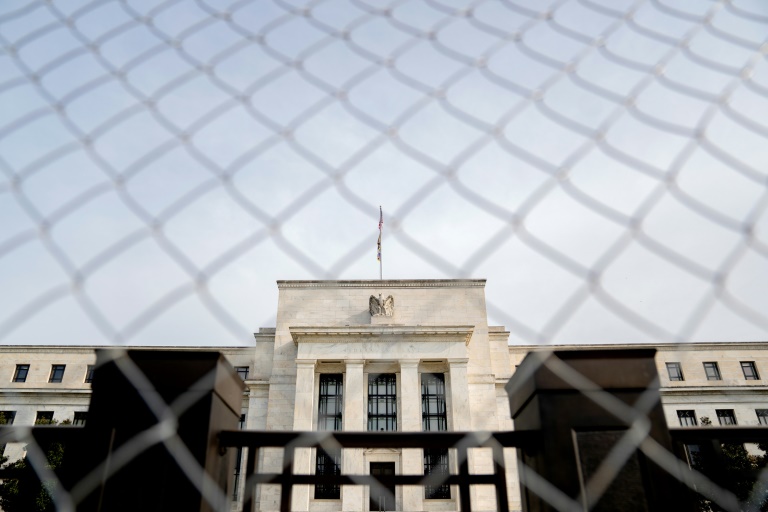
Fed officials stressed 'determination' to bring down inflation

US central bankers stressed their “strong commitment and determination” to bring raging inflation under control including with more big interest rate increases, according to the minutes of the latest policy meeting released Wednesday.

With US inflation rising at the fastest pace in nearly four decades, the Fed’s policy committee early this month hiked the key rate by a half point — the biggest increase since 2000 — and most members said similar increases “would likely be appropriate at the next couple of meetings.”

The comments solidify expectations raised after Fed chair Jerome Powell said additional big moves should be “on the table” in coming discussions, and could help quiet critics who have been sounding the alarm about the inflation threat.

But the minutes show members of the Federal Reserve’s policy committee are fully aware of the danger of rising prices, which erodes incomes, and say they must move “expeditiously” to increase the benchmark borrowing rate and offload the massive bond holdings to tamp down inflation, which they said was “too high.”

While the pace of consumer price increases slowed slightly last month, jumping 8.3 percent compared to April 2021 after hitting 8.5 percent the prior month, Fed officials warned that “price pressures remained elevated and that it was too early to be confident that inflation had peaked.”

The Fed slashed interest rates to zero at the start of the pandemic to prevent a severe economic downturn and also ramped up bond purchases to pump liquidity into the financial system, but began to reel in those measures as prices accelerated as the economy recovered.

The process started in March with a quarter-point rate increase, and starting June 1, it will start to reduce its asset holdings. The next policy meeting is June 14-15.

The minutes confirm central bankers are committed to a series of moves to remove stimulus to the economy but said they may have to go even further and hit the brakes on the economy depending on how the outlook evolves.

– Less hawkish? –

“All participants reaffirmed their strong commitment and determination to take the measures necessary to restore price stability,” the minutes said.

However, there was no mention of the possibility of an even more aggressive three-quarter-point rate hike.

In fact, Ian Shepherdson of Pantheon Macroeconomics said he expects “a less hawkish tone to emerge in June” and sees potential for a smaller rate hike at the July meeting, especially amid the slowdown in the US housing market in response to rising borrowing costs and high prices.

“We can’t stress enough that the housing data are nowhere near bottom yet, and we doubt policymakers have the stomach” to continue with big rate hikes, he said.

But others said the Fed is ready to do whatever it takes to rein in the price increases.

“The Fed is focused on derailing the inflation… they know it will require heavy lifting and some ‘pain,'” Grant Thornton chief economist Diane Swonk said on Twitter.

While Fed officials say the world’s largest economy is in a solid position, they cautioned that the outlook is highly uncertain.

Russia’s invasion of Ukraine and the Covid-19 lockdowns in China “posed heightened risks for both the United States and economies around the world,” including worsening supply chain snarls and fanning inflation flames, notably prices for energy and other commodities, the minutes said.

They said “supply constraints overall were still significant and would likely take some time to be resolved.”

The current goal is to quickly move the benchmark rate to neutral, where it is neither stimulating nor restricting the economy; however, the officials said “a restrictive stance of policy may well become appropriate.”

'Horror and pain' as Texas town mourns school victims

Aida Hernandez shed bitter tears as she left mass at the Sacred Heart church in the Texas town of Uvalde, a simple gray building where dozens gathered Wednesday to mourn the 21 lives lost in a horrific school shooting.

In the small church off main street, the largely Hispanic congregation sought to process the “horror” of what happened, and pray for the victims of America’s worst school shooting in a decade.

“My experience was of horror and pain. I knew the victims. I’m still in shock,” said Hernandez, in her sixties, who taught at Robb Elementary School until she retired two years ago.

The town of just 15,000 inhabitants, located 50 miles (80 kilometers) from the border with Mexico, was until 24 hours ago like every other small US town: a grid of streets dotted with shopping malls, gas stations and fast food chains.

But on Tuesday everything changed, when an 18-year-old named Salvador Ramos sowed carnage at Robb Elementary School.

Armed with an assault rifle, he made his way to two adjoining classrooms and opened fire, killing two teachers and 19 of their young students — until he was shot dead by police. 

The massacre shook the quiet town to its core and plunged residents into both incomprehension and despair.

“When you teach and you’re in the classroom, that’s your job to protect them,” Hernandez said of the teachers who died.

“They did more beyond what they were supposed to do.” 

– ‘Too many times’ –

A few feet away, Rosie Buantel was equally grief-stricken — but she was outraged, too.

“I’m sad and I’m angry at our government, for not doing more about gun control,” the woman in her fifties told AFP.

“We’ve gone through this one too many times. And still there’s nothing done. They’re still debating.”

Eddie, a local resident in his sixties who declined to give his last name, was also feeling angry.

“I came to show my respects and also to put pressure for a change of laws so guns don’t get in the hands of children,” he said after laying flowers near the elementary school, which was still surrounded by police.

Throughout the day, people in Uvalde made their way to a municipal center, where they could receive psychological support.

On the day of the shooting, many relatives and friends of the victims faced hours of anguished waiting to find out what happened to their loved ones.

In front of the municipal center, in the blazing midday Texas heat, groups of adults and children chatted, coming and going under the watchful gaze of police officers.

Volunteer psychologist Iveth Pacheco traveled from San Antonio, to the east of Uvalde, to provide support to those in need.

“It’s just one of those situations where you just have to be present,” she said. “We have to be ready for the child whatever questions they have, and it’s the same thing with the adults right now.”

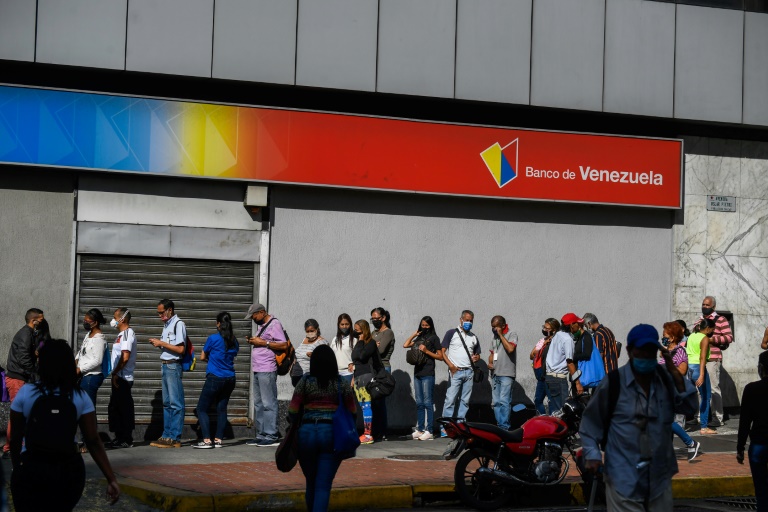
Venezuela's state bank announces partial share sale

Venezuela’s state bank said on Wednesday it would sell up to 10 percent of its shares as part of the government’s plan to inject capital into public companies struggling due to a lack of investment.

Two weeks ago, Venezuela President Nicolas Maduro announced a plan to sell off parts of public companies.

The Bank of Venezuela is the only state firm so far to have declared a share sale, although it gave no details as to when that would be.

It said in a statement shared on social media that it would “begin the public offer of 5 percent progressively up to 10 percent of its social capital.”

“It is the first step by Venezuelan public companies to offer on the stock market the possibility for citizens, and national and international private economic actors, to take part in the country’s development through instruments of economic democratization.”

The first share sale was supposed to take place on May 16 with the CANTV telephone company, but it never happened and no explanation was ever given.

The Bank of Venezuela is the largest in the country with 15 million customers and was nationalized under the presidency of the late Hugo Chavez (1999-2013.)

It was under the control of the Spanish Santander Group from 1994 until the transfer of its shares to the state in 2009.

Since last year, several NGOs such as Transparency Venezuela have claimed that the government has been negotiating with the private sector with regards to state companies in fields such as farming, tourism and manufacturing.

With the collapse of Venezuela’s vital oil industry and the punishing effects of US sanctions aimed at forcing Maduro from power, the government has been forced to relax various state controls imposed under Chavez.

US files formal trade complaint against Canada over dairy

The United States on Wednesday filed a second formal trade complaint against Canada over Ottawa’s dairy import policies, which Washington says harms American producers.

Washington has requested dispute settlement consultations under the US-Mexico-Canada Agreement, saying the changes to the dairy quota system which Ottawa announced last week do not resolve the long-standing complaints and violate the trade agreement.

The policy continues to “prevent US workers, producers, farmers, and exporters from getting the full benefit of the market access that Canada committed to under the USMCA,” US Trade Representative Katherine Tai said in a statement.

Canada’s policies limit a large share of American dairy exports — including milk, butter, yogurt and ice cream — to Canadian processors under a system known as tariff rate quotas (TRQs), which US officials say restrict market access for US producers.

“I am deeply troubled by Canada’s decision to expand its dairy tariff-rate quota restrictions,” Tai said.

A TRQ applies a preferential tariff to a set volume or quota of product, and a higher duty for amounts above that level. Canada was permitted to use the system for 14 dairy product lines under USMCA — known in Canada as CUSMA — which came into force July 1, 2020, replacing the 1994 North American Free Trade Agreement.

Washington filed a first complaint in December 2020 and said it prevailed in the panel ruling released in late December 2021.

However, Ottawa says the changes announced last week fulfill the panel’s findings.

“Canada has met its obligations under CUSMA to ensure our TRQ system is compliant,” Canada’s trade minister Mary Ng said in a statement.

She said her government “will actively participate in CUSMA’s consultation process and standby our position to administer our TRQs in a manner that supports our dairy supply management system.”

If the disagreement cannot be resolved through consultations, Washington can request another dispute settlement panel to arbitrate, and potentially authorize the United States to retaliate if Canada fails to comply.

American dairy groups have called for the administration to impose punitive tariffs on Canadian goods, saying it is required by the USMCA trade pact.

US Agriculture Secretary Tom Vilsack said Canada’s “protectionist dairy policies are a top concern.” 

“Canada has failed to honor and implement its USMCA commitments by removing the trade restrictions that disadvantage and deter US dairy producers and exporters from enjoying real and meaningful access to the Canadian market,” he said in the statement.

US files formal trade complaint against Canada over dairy

The United States on Wednesday filed a second formal trade complaint against Canada over Ottawa’s dairy import policies, which Washington says harms American producers.

Washington has requested dispute settlement consultations under the US-Mexico-Canada Agreement, saying the changes to the dairy quota system announced last week do not resolve the long-standing complaints and violate the trade agreement.

The policy continues to “prevent US workers, producers, farmers, and exporters from getting the full benefit of the market access that Canada committed to under the USMCA,” US Trade Representative Katherine Tai said in a statement.

Canada’s policies limit a large share of American dairy exports — including milk, butter, yogurt and ice cream — to Canadian processors under a system known as tariff rate quotas (TRQs), which US officials say restrict market access for US producers.

“I am deeply troubled by Canada’s decision to expand its dairy tariff-rate quota restrictions,” Tai said.

A TRQ applies a preferential tariff to a set volume or quota of product, and a higher duty for amounts above that level. Canada was permitted to use the system for 14 dairy product lines under USMCA — known in Canada as CUSMA — which came into force July 1, 2020, replacing the 1994 North American Free Trade Agreement.

Washington filed a first complaint in December 2020 and said it prevailed in the panel ruling in January.

Ottawa says the changes announced last week “fully comply with the panel’s findings.”

US Agriculture Secretary Tom Vilsack said Canada’s “protectionist dairy policies are a top concern.” 

“Canada has failed to honor and implement its USMCA commitments by removing the trade restrictions that disadvantage and deter US dairy producers and exporters from enjoying real and meaningful access to the Canadian market,” he said in the statement.

After wheat, India caps sugar exports

India said it has capped sugar exports to safeguard its own supplies and ease inflation, days after a ban on wheat shipments sent global prices soaring in the wake of the Ukraine war.

India — which according to the International Sugar Organization is the world’s second-largest sugar producer and exporter after Brazil — said on Tuesday that shipments would be limited to 10 million tonnes for the current marketing year to September.

The decision was taken “with a view to maintain the domestic availability and price stability during the sugar season,” the food ministry said in a statement.

Sugar exports are forecast to hit a record high this marketing year, with contracts signed for around nine million tonnes, and 7.8 million tonnes already shipped, it said.

Citing inflation and its own food security needs, in mid-May India banned any new wheat exports without government approval after the hottest March on record — blamed on climate change — hit harvests.

Although India is a marginal player on the global market, the move sparked a further surge in already-soaring global food prices since Russia’s February invasion of agricultural powerhouse Ukraine, which previously accounted for 12 percent of global exports.

The decision also stoked fears of growing protectionism in the wake of the conflict. 

The export ban also left hundreds of thousands of tonnes of wheat stranded at a major port in western India, with long lines of thousands of trucks waiting to unload.

Authorities stressed that government-to-government requests for wheat from other countries reeling from record high prices would be permitted.

Elsewhere in Asia, Indonesia temporarily halted palm oil exports and Malaysia banned chicken exports.

Close Bitnami banner
Bitnami