AFP

Ukraine's Zelensky calls for Western unity as Russia advances

Ukrainian President Volodymyr Zelensky blasted the West for lacking unity on Wednesday, as the Russian invasion entered its fourth month and Moscow’s troops advanced in eastern Ukraine.

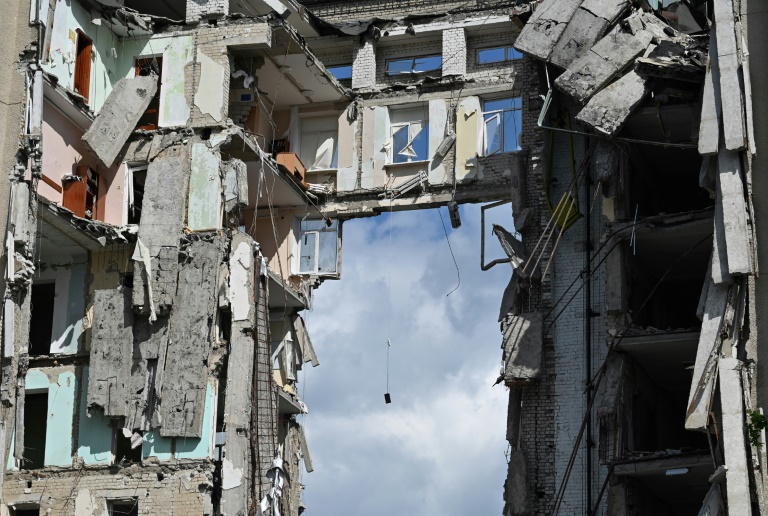
Fighting reached the edge of the industrial city of Severodonetsk, which is under fierce bombardment by Russian forces who are trying to encircle it in one of their key goals in Ukraine’s Donbas region.

An unrepentant Moscow told the West to lift sanctions to stave off a global food crisis sparked by the war between two countries that together produce nearly a third of the world’s wheat. 

Zelensky renewed calls for heavy weapons from foreign partners, saying the billions of dollars’ worth already put up were not enough to help Ukraine’s outgunned forces.

“Unity is about weapons. My question is, is there this unity in practice? I can’t see it. Our huge advantage over Russia would be when we are truly united,” Zelensky said via videolink to an event on the sidelines of the World Economic Forum in Davos.

Zelensky said Ukraine was grateful for US support, but urged Europe to step up, specifically naming neighbouring Hungary which is blocking an EU-wide embargo on Russian oil.

The Ukrainian president said hours earlier in his daily address to the nation that Russian forces “want to destroy everything” in eastern Ukraine.

Western funds and weapons have helped Ukraine hold off its neighbour’s advances in many areas, including the capital Kyiv.

Russia is now focused on expanding its gains in eastern Donbas, home to pro-Russian separatists, as well as the southern coast.

– ‘Completely destroy’ –

The governor of the eastern region of Lugansk, Sergiy Gaiday, said fighting had reached the “outskirts” of Severodonetsk, which was being hammered by air strikes, rockets, artillery and mortars.

“Russian troops have advanced far enough that they can already fire mortars,” Gaiday said in a statement on social media, adding that, “yesterday there was already fighting on the outskirts of the city.” 

“The Russian army has decided to completely destroy Severodonetsk. They are simply erasing Severodonetsk from the face of the earth,” the governor said in a separate video on Telegram. 

“I think that the next week will be decisive.”

In the town of Soledar, Ukraine’s salt manufacturing hub, the ground shook moments after Natalia Timofeyenko climbed out of her bunker to reassure herself that she was not alone.

“I go outside just to see people. I know that there is shelling out there but I go,” the 47-year-old said after a thundering blast smashed apart a chunk of a mammoth salt mine where she worked with most of her friends and neighbours.

Ghostly frontline towns like Soledar are being hammered by Russian artillery as they sit along the crucial road that leads out of besieged Severodonetsk and its sister city Lysychansk.

Twelve people were killed by “extremely heavy shelling and attacks” in the neighbouring region of Donetsk, which also forms part of Donbas, the Ukrainian presidency said.

In a sign that the rest of the country remains at risk, Russian cruise missiles struck the major southern rail hub of Zaporizhzhia, killing one person and damaging dozens of houses, the presidency added.

– ‘Solving the food problem’ –

In Moscow, authorities made it clear Russia was settling in for a long conflict, with parliament scrapping the upper age limit for soldiers.

“We will continue the special military operation until all the objectives have been achieved,” Defence Minister Sergei Shoigu said, using President Vladimir Putin’s name for the war.

Tough sanctions imposed after Russia’s February 24 invasion of its pro-Western neighbour are causing food shortages around the world, Moscow added.

“Solving the food problem requires a comprehensive approach, including the removal of sanctions that have been imposed on Russian exports and financial transactions,” said Russian deputy foreign minister, Andrey Rudenko.

He also demanded that Ukraine de-mine its ports.

The West argues it is Russia’s offensive in Ukraine and blockade of Ukraine’s ports that has pushed global food prices to an all-time high — sparking fears of worsening hunger, particularly in Africa.

With its unity questioned by Zelensky, EU chief Charles Michel said he was “confident” of an oil deal embargo before a Brussels summit on Monday despite Hungary’s resistance.

NATO’s unity has also been called into question with Turkey threatening to block Sweden and Finland from joining in the wake of the Ukraine invasion. 

Swedish Prime Minister Magdalena Andersson said her country was “not sending money to terrorist organisations”, rejecting Turkish claims over alleged support for Kurdish militant groups.

– ‘It is just war’ –

A swathe of southern Ukraine meanwhile is living under Russian occupation.

President Vladimir Putin on Wednesday signed a decree simplifying a procedure to obtain a Russian passport for residents of the southern Ukrainian regions of Kherson, under the full control of Russian troops, and partly-occupied Zaporizhzhia.

Residents expressed concerns about the future in Kherson. Moscow-backed officials are pushing for formal annexation by Russia.

“People are very apprehensive,” trolleybus driver Alexander Loginov, 47, told AFP from the cabin of his vehicle, during a press trip organised by the Russian defence ministry. 

Day-to-day life remains marked by uncertainty, especially over payment of salaries as “Ukrainian banks are closing”.

“To be honest, it is just war,” Loginov added.

And 200 bodies were found in the basement of a destroyed building of the port city of Mariupol, which fell to Moscow recently after a devastating siege, Ukrainian authorities said.

As the locals refused to collect and pack the heavily decomposed bodies, the Russian emergency workers just left the scene, Ukrainian ombudswoman Lyudmyla Denisova said on Telegram Wednesday.

“It is impossible to be within the area due to the corpse smell,” she wrote. “The occupiers turned the entire Mariupol into a cemetery.”

burs-dk/spm
French green activists block TotalEnergies' annual meeting

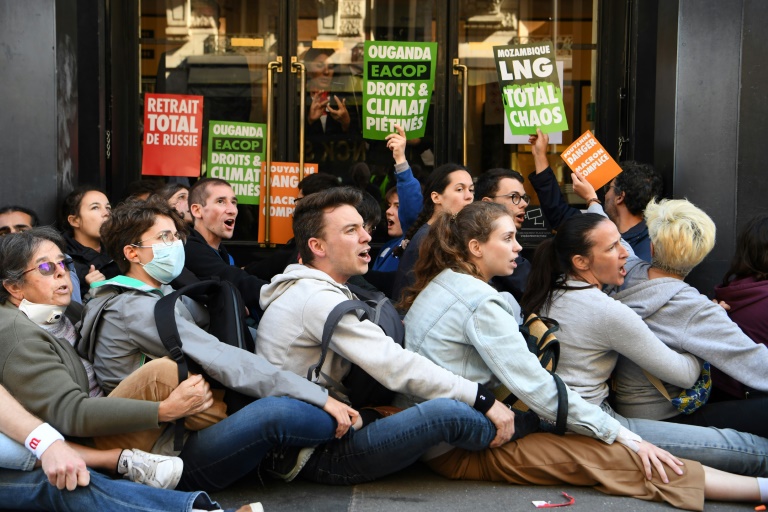
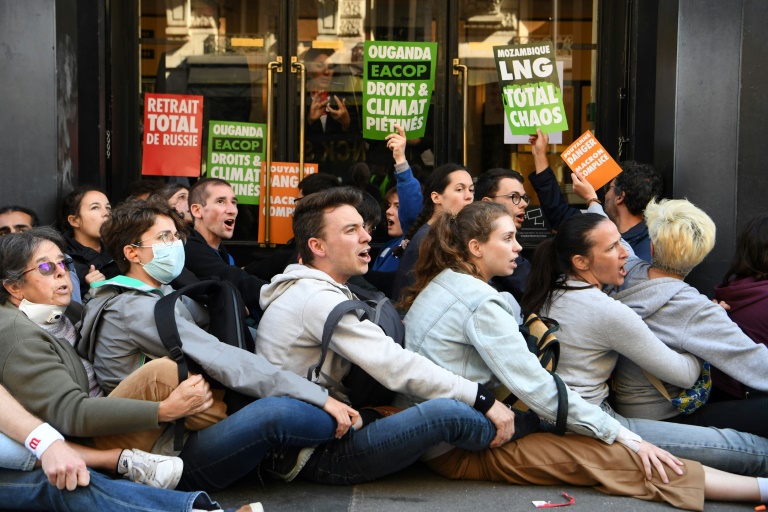
More than 100 activists sought to block oil giant TotalEnergies’ annual general meeting in central Paris on Wednesday to protest the energy firm’s climate policies and continued presence in Russia following the invasion of Ukraine. 

Greenpeace, Friends of the Earth and Alternatiba protesters handcuffed themselves to each other and impeded shareholders’ access to the building, claiming that TotalEnergies is not doing enough to fight climate change.

“It is no longer possible for the old world to serenely meet to validate projects that are destructive to the climate, human rights and peace,” the French branch of Friends of the Earth said on Twitter. 

Activists unfurled a five-metre (16-foot) long banner saying, “no retreat, no general assembly”, a reference to the energy firm’s presence in Russia, where it runs liquefied natural gas projects. 

The meeting at the Salle Pleyel concert hall in central Paris was eventually declared open by TotalEnergies chief executive Patrick Pouyanne, but with the venue almost empty as so few shareholders had been able to enter.

He said that the AGM could go ahead “as a certain number of shareholders are present”.

TotalEnergies is aiming for net-zero carbon emissions by mid-century and has pledged to reduce emissions of its petroleum products by 30 percent compared to 2015.

Pouyanne said, however, during the AGM that a goal outlined by the International Energy Agency (IEA) for a 30-percent drop in the consumption of petroleum products within a decade was not tenable.

“We deviate from the IEA scenario, the fall in demand for oil and gas will not be linear, it will not fall by 30 percent over the next 10 years,” he said in response to a question from a shareholder.

Shareholders at TotalEnergies’ AGM overwhelmingly approved a report outlining the company’s climate plans.

Detailing its goals through 2030, several shareholders had said in advance that they would vote against it as it was not ambitious enough.

A group of shareholders representing 0.78 percent of the giant’s capital had also deposited a resolution — that was rejected — asking for the group to respect the Paris climate deal, which seeks to limit global warming to 2 degrees Celsius and if possible 1.5 degrees.

“There are shareholders who recognise the climate emergency but on the whole they are still too passive,” Greenpeace France campaigner Edina Ifticene told AFP. 

On Tuesday, oil giant Shell’s general assembly in central London was suspended for two hours due to disruption from climate change activists.

Earlier on Wednesday, TotalEnergies announced it had bought a 50-percent stake in the US renewables producer Clearway Energy Group, as it seeks to expand its portfolio in the sector in the United States.

els-mto-cdc-ech/sjw-kjm/rl

French green activists block TotalEnergies' annual meeting

More than 100 activists sought to block oil giant TotalEnergies’ annual general meeting in central Paris on Wednesday to protest the energy firm’s climate policies and continued presence in Russia following the invasion of Ukraine. 

Greenpeace, Friends of the Earth and Alternatiba protesters handcuffed themselves to each other and impeded shareholders’ access to the building, claiming that TotalEnergies is not doing enough to fight climate change.

“It is no longer possible for the old world to serenely meet to validate projects that are destructive to the climate, human rights and peace,” the French branch of Friends of the Earth said on Twitter. 

Activists unfurled a five-metre (16-foot) long banner saying, “no retreat, no general assembly”, a reference to the energy firm’s presence in Russia, where it runs liquefied natural gas projects. 

The meeting at the Salle Pleyel concert hall in central Paris was eventually declared open by TotalEnergies chief executive Patrick Pouyanne, but with the venue almost empty as so few shareholders had been able to enter.

He said that the AGM could go ahead “as a certain number of shareholders are present”.

TotalEnergies is aiming for net-zero carbon emissions by mid-century and has pledged to reduce emissions of its petroleum products by 30 percent compared to 2015.

Pouyanne said, however, during the AGM that a goal outlined by the International Energy Agency (IEA) for a 30-percent drop in the consumption of petroleum products within a decade was not tenable.

“We deviate from the IEA scenario, the fall in demand for oil and gas will not be linear, it will not fall by 30 percent over the next 10 years,” he said in response to a question from a shareholder.

Shareholders at TotalEnergies’ AGM overwhelmingly approved a report outlining the company’s climate plans.

Detailing its goals through 2030, several shareholders had said in advance that they would vote against it as it was not ambitious enough.

A group of shareholders representing 0.78 percent of the giant’s capital had also deposited a resolution — that was rejected — asking for the group to respect the Paris climate deal, which seeks to limit global warming to 2 degrees Celsius and if possible 1.5 degrees.

“There are shareholders who recognise the climate emergency but on the whole they are still too passive,” Greenpeace France campaigner Edina Ifticene told AFP. 

On Tuesday, oil giant Shell’s general assembly in central London was suspended for two hours due to disruption from climate change activists.

Earlier on Wednesday, TotalEnergies announced it had bought a 50-percent stake in the US renewables producer Clearway Energy Group, as it seeks to expand its portfolio in the sector in the United States.

els-mto-cdc-ech/sjw-kjm/rl

Kerry tells Davos climate coalition swelling

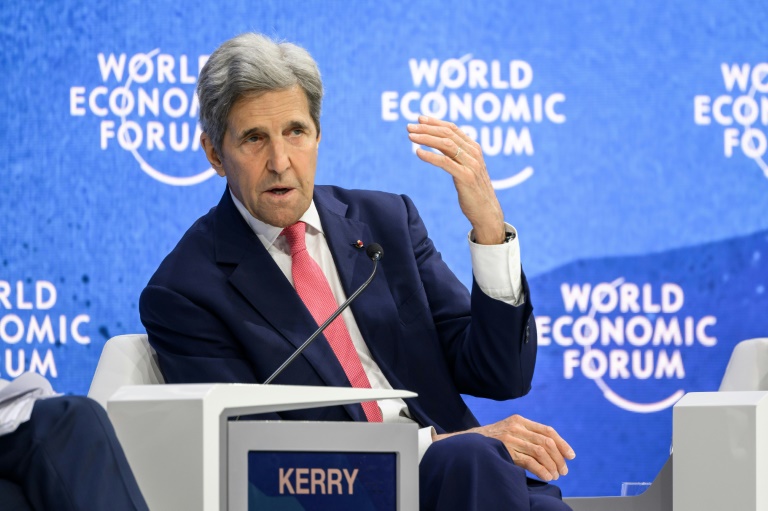
US climate envoy John Kerry said Wednesday more countries and companies are swinging behind a bid to combat climate change by jump-starting markets for technologies with massive investments.

They have joined a group known as the “First Movers Coalition”.

“Today the First Movers Coalition initiative leaps from the 35 initial companies that came to the table to 55 companies, with the additions of major corporations: FedEx, Ford Motor Company, and others,” Kerry told reporters at the World Economic Forum in Davos, Switzerland.

“The First Movers Coalition is mobilizing enormous purchasing power now to induce investment in brand-new technologies that could come to market,” he added.

Kerry likened the strategy to US government procurement schemes he said had boosted development of Covid-19 vaccines and private spaceflight.

He also listed a number of new countries to join the group, naming Britain, Denmark, Italy, India, Japan, Norway, Singapore and Sweden, and saying government policy could accelerate the transition in areas like green manufacturing and carbon capture and storage.

Billionaire philanthropist and Microsoft founder Bill Gates said that at present “so many of the green products carry a price premium, and the way you get rid of that is you scale up the production”, citing the examples of solar panels, wind power and lithium-ion batteries.

Other technologies could achieve large-scale adoption in the same way, Gates said, pointing especially to hydrogen power.

“A combination of policies, including tax credits, private sector demand, teaming up the small companies that have great ideas with these companies that are willing to buy… that is the path forward,” he added.

Google Chief Financial Officer Ruth Porat said that the firm had committed $200 million to carbon dioxide removal, forming the core of over $900 million in pledges from other firms for the coming decade.

“We have seen that having clarity and certainty about demand does catalyse growth in markets,” Porat added.

Meanwhile Sweden’s Finance Minister Mikael Damberg said the Nordic country “wants to be the first fossil-free welfare nation on the planet,” highlighting especially a pilot plant for fossil-free steel production using hydrogen.

Kerry tells Davos climate coalition swelling

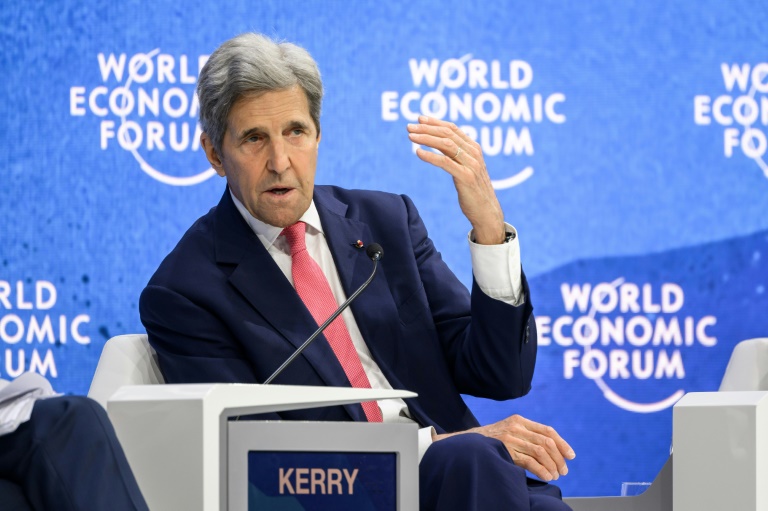
US climate envoy John Kerry said Wednesday more countries and companies are swinging behind a bid to combat climate change by jump-starting markets for technologies with massive investments.

They have joined a group known as the “First Movers Coalition”.

“Today the First Movers Coalition initiative leaps from the 35 initial companies that came to the table to 55 companies, with the additions of major corporations: FedEx, Ford Motor Company, and others,” Kerry told reporters at the World Economic Forum in Davos, Switzerland.

“The First Movers Coalition is mobilizing enormous purchasing power now to induce investment in brand-new technologies that could come to market,” he added.

Kerry likened the strategy to US government procurement schemes he said had boosted development of Covid-19 vaccines and private spaceflight.

He also listed a number of new countries to join the group, naming Britain, Denmark, Italy, India, Japan, Norway, Singapore and Sweden, and saying government policy could accelerate the transition in areas like green manufacturing and carbon capture and storage.

Billionaire philanthropist and Microsoft founder Bill Gates said that at present “so many of the green products carry a price premium, and the way you get rid of that is you scale up the production”, citing the examples of solar panels, wind power and lithium-ion batteries.

Other technologies could achieve large-scale adoption in the same way, Gates said, pointing especially to hydrogen power.

“A combination of policies, including tax credits, private sector demand, teaming up the small companies that have great ideas with these companies that are willing to buy… that is the path forward,” he added.

Google Chief Financial Officer Ruth Porat said that the firm had committed $200 million to carbon dioxide removal, forming the core of over $900 million in pledges from other firms for the coming decade.

“We have seen that having clarity and certainty about demand does catalyse growth in markets,” Porat added.

Meanwhile Sweden’s Finance Minister Mikael Damberg said the Nordic country “wants to be the first fossil-free welfare nation on the planet,” highlighting especially a pilot plant for fossil-free steel production using hydrogen.

Elvis fever set to shake Cannes

Cannes is set to be shaken, rattled and rolled on Wednesday as the world premiere of “Elvis” rocks the film festival on the French Riviera, in what is proving a vintage year for music-lovers.

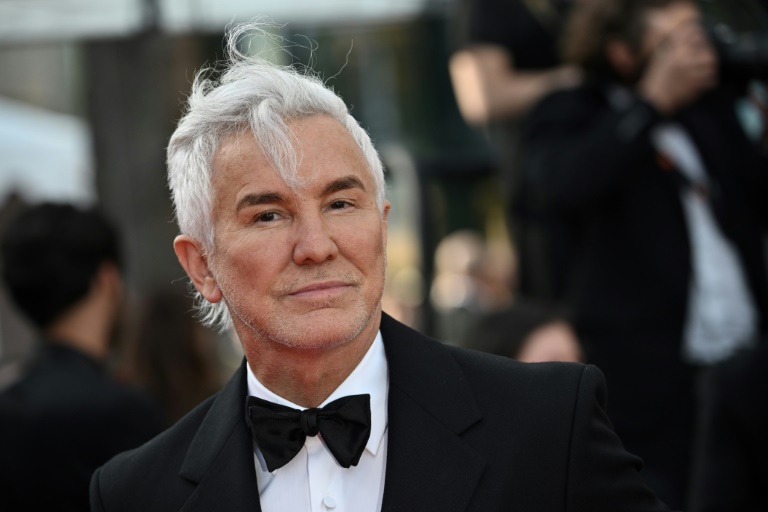
The highly anticipated new film is the latest from Australia’s Baz Luhrmann, the technicolour genius behind “Romeo and Juliet” and “Moulin Rouge!”. 

Rising star Austin Butler, 30, steps into the blue suede shoes of Elvis Presley, and whispers around the Cannes Film Festival suggest it will rocket him into the A-list. 

The film also features Tom Hanks as The King’s infamous manager, Colonel Tom Parker.

It has been warmly welcomed by the family of Presley, who died in 1977 at the age of 42 after a descent into drug addiction.  

His granddaughter Riley Keough, who happened to be at Cannes with her directorial debut “War Pony” last week, said she had watched the film with her mother, Lisa Marie Presley, and grandmother, Priscilla Presley. 

“There’s a lot of family trauma and generational trauma that started around there. It was a very intense experience,” she told reporters.

Luhrmann has become a favourite at Cannes, having wowed critics with his debut “Strictly Ballroom” in 1992, and opening the festival twice, with “Moulin Rouge!” and “Gatsby”.

– Kaleidoscopic –

Celebrating its 75th edition, the festival has been a feast for music lovers this year. 

There were rave reviews for a new documentary about David Bowie, “Moonage Daydream” — part of a recent wave of innovative films about music legends. 

“It’s not a biography,” its director, Brett Morgen, told AFP. “The film is meant to be sublime, and kaleidoscopic, and kind of wash over you.”

Ethan Coen, one half of the beloved Coen brothers film-making duo, was also in Cannes to present a documentary about another rock’n’roll pioneer, Jerry Lee Lewis. 

Both docs eschew expert talking heads in favour of a more immersive experience. 

“I don’t care what experts say,” Coen told AFP at the festival. “Jerry Lee is a performer so I want to see the performance — not what some expert thinks about it.”

– Divided contest –

As arguably the world’s leading film festival, Cannes seeks a line-up that balances hard-hitting dramas, arthouse experimentation and blockbuster spectacles. 

This year has seen plenty of Hollywood glamour, with “Elvis” preceded by last week’s launch of “Top Gun: Maverick”, which brought Tom Cruise and a French Air Force display team to the red carpet. 

While they are playing out of the competition, the race for the top prize Palme d’Or has been a very mixed affair so far. 

No clear frontrunner has emerged from the 21 films in competition, with critics deeply divided over almost every entry. 

Perhaps the best reception up to now has been for “Decision to Leave” by Korean director Park Chan-wook, known for his 2003 thriller “Oldboy”. 

But the awards, to be presented on Saturday, are decided by a jury of film professionals — this year including Indian superstar Deepika Padukone, Iran’s two-time Oscar winner Asghar Farhadi and led by French actor Vincent Lindon. 

Pfizer offers to sell medicines at cost to poorest countries

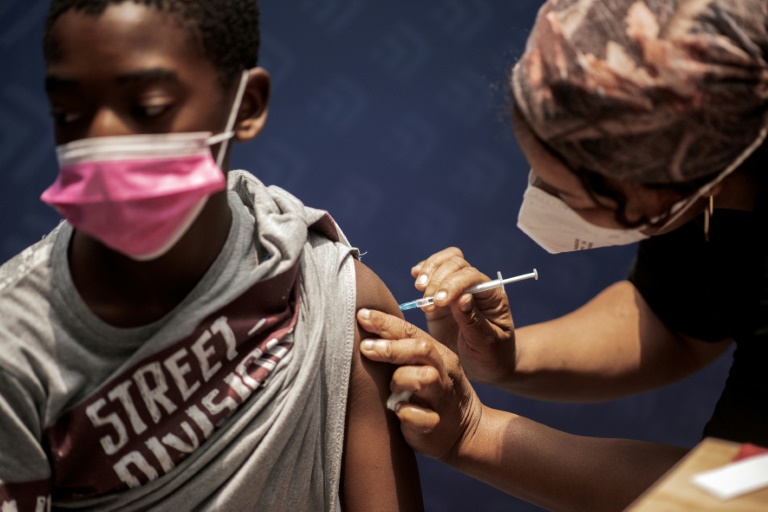
US pharmaceutical giant Pfizer on Wednesday said it would sell its patented drugs on a not-for-profit basis to the world’s poorest countries, as part of a new initiative announced at the World Economic Forum in Davos.

“The time is now to begin closing this gap” between people with access to the latest treatments and those going without, chief executive Albert Bourla told attendees at the exclusive Swiss mountain resort gathering.

“An Accord for a Healthier World” focuses on five areas: infectious diseases, cancer, inflammation, rare diseases and women’s health — where Pfizer currently holds 23 patents, including the likes of Comirnaty and Paxlovid, its Covid vaccine and oral treatment.

“This transformational commitment will increase access to Pfizer-patented medicines and vaccines available in the United States and the European Union to nearly 1.2 billion people,” Angela Hwang, group president of the Pfizer Biopharmaceuticals Group, told AFP.

Five countries: Rwanda, Ghana, Malawi, Senegal and Uganda have committed to joining, with a further 40 countries — 27 low-income and 18 lower-middle-income — eligible to sign bilateral agreements to participate.

“Pfizer’s commitment sets a new standard, which we hope to see emulated by others,” Rwanda’s President Paul Kagame said.

But he added that “additional investments and strengthening of Africa’s health systems and pharmaceutical regulators” would also be needed.

– Seven years behind –

Developing countries experience 70 percent of the world’s disease burden but receive only 15 percent of global health spending, leading to devastating outcomes.

Across sub-Saharan Africa, one child in 13 dies before their fifth birthday, compared to one in 199 in high-income countries.

Cancer-related mortality rates are also far higher in low and middle-income countries — causing more fatalities in Africa every year than malaria.

All this is set to a backdrop of limited access to the latest drugs. 

Essential medicines and vaccines typically take four to seven years longer to reach the poorest countries, and supply chain issues and poorly resourced health systems make it difficult for patients to receive them once approved. 

“The Covid-19 pandemic further highlighted the complexities of access to quality healthcare and the resulting inequities,” said Hwang.

“We know there are a number of hurdles that countries have to overcome to gain access to our medicines. That is why we have initially selected five pilot countries to identify and come up with operational solutions and then share those learnings with the remaining countries.”

– ‘Very good model’ –

Specifically, the focus will be on overcoming regulatory and procurement challenges in the countries, while ensuring adequate levels of supply from Pfizer’s side.

The “not-for-profit” price tag takes into account the cost to manufacture and transport of each product to an agreed upon port of entry, with Pfizer charging only manufacturing and minimum distribution costs.

If a country already has access to a product at a lower price tier, for example vaccines supplied by GAVI, a public-private global partnership, that lower price will be maintained.

Hwang acknowledged that even an at-cost approach could be challenging for the most cash-strapped countries, and “this is why we have reached out to financial institutions to brief them on the Accord and ask them to help support country level financing.”

Pfizer will also reach out to other stakeholders — including governments, multilateral organizations, NGOs and even other pharmaceuticals — to ask them to join the Accord.

It is also using funding from the Bill & Melinda Gates Foundation to advance work on a vaccine against Group B Streptococcus (GBS), the leading cause of stillbirth and newborn mortality in low-income countries.

“This type of accord is a very good model, it’s going to help get medicines out,” Gates told the Davos conference, adding that “partnerships with companies like Pfizer have been key to the progress we have made” on efforts like vaccines.

British retailer Marks and Spencer exits Russia

British clothing-to-food retailer Marks and Spencer on Wednesday announced a full exit from Russia following the country’s invasion of Ukraine.

After halting product shipments to Russia at the start of March, Marks and Spencer said it had decided “to fully exit” its Russian franchise run by Turkish conglomerate Fiba Group.

The exit, plus disruption to M&S operations in Ukraine run also by franchisee Fiba, is costing the British company £31 million ($39 million, 36 million euros).

“Unfortunately, our Ukrainian business has also been partially closed as a result of war impacts, and we are working with our partner to reopen as and when possible,” the company added in a statement.

An M&S spokeswoman confirmed to AFP that the group’s “brand will no longer be used in Russia”.

Its exit from Russia comes also after Marks and Spencer last year shut more than half its stores in France as Brexit affected supplies of fresh and chilled products.

M&S on Wednesday said it had taken a charge of £10.3 million following the French shakeup.

It had blamed the move on “supply chain complexities” following Britain’s formal exit from the European Union at the start of 2021.

M&S on Wednesday added that the group swung back into profit during its last financial year, or 12 months to the start of April.

It was heavily boosted by strong sales online in Britain and abroad.

Ahead, M&S pointed to “difficult and unpredictable headwinds” owing to ongoing fallout from the pandemic in addition to geopolitical and economic uncertainties.

The company said a cost-of-living crisis caused by soaring inflation would hit sales growth.

The update also marked the end of Steve Rowe’s time as chief executive.

The group had already announced that he would step down after six years, making way for a new joint CEO team of current M&S executives Stuart Machin and Katie Bickerstaffe.

Gunman kills 19 children, two teachers at Texas elementary school

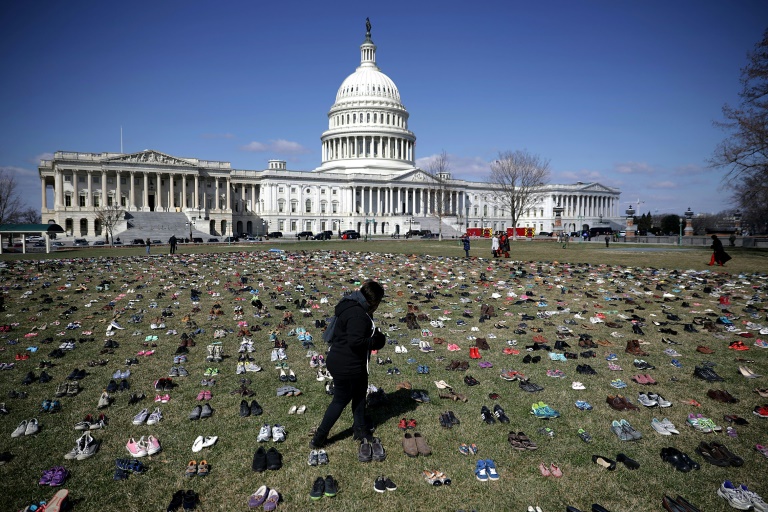
A teenage gunman killed at least 19 young children and two teachers at an elementary school in Texas on Tuesday, prompting a furious President Joe Biden to denounce the US gun lobby and vow to end the nation’s cycle of mass shootings.

The attack in Uvalde — a small community about an hour from the Mexican border — was the deadliest US school shooting in years, and the latest in a spree of bloody gun violence across America.

“It’s time to turn this pain into action for every parent, for every citizen of this country,” Biden said, his voice heavy with emotion.

“It’s time for those who obstruct or delay or block common-sense gun laws — we need to let you know that we will not forget,” he said.

“As a nation, we have to ask when in God’s name are we going to stand up to the gun lobby? When in God’s name will we do what we all know in our gut needs to be done?”

Texas Governor Greg Abbott named the suspect as Salvador Ramos, an 18-year-old local resident and a US citizen.

“He shot and killed, horrifically and incomprehensibly,” Abbott said.

Texas Department of Public Safety (DPS) officials told CNN the gunman was believed to have shot his grandmother before heading to Robb Elementary School around noon where he abandoned his vehicle and entered with a handgun and a rifle, wearing body armor.

– Over a dozen children wounded –

The gunman was killed by responding officers, the officials said, adding later two teachers also died in the attack.

“Right now there’s 19 children that were killed by this evil gunman, as well as two teachers from this school,” DPS spokesman Lieutenant Chris Olivarez told NBC News.

Fourth-grade teacher Eva Mireles was shot and killed while trying to protect her students, her aunt Lydia Martinez Delgado told the New York Times.

“I’m furious that these shootings continue, these children are innocent, rifles should not be easily available to all,” she said in a separate statement to US media.

More than a dozen children were also wounded in the attack at the school, which teaches more than 500 students aged around seven to 10 years old, mostly Hispanic and economically disadvantaged.

Uvalde Memorial Hospital said on Facebook it had received 13 children while University Health hospital in San Antonio said on Twitter it had received a 66-year-old woman and a 10-year-old girl, both in critical condition, and two other girls aged nine and 10.

At least one Border Patrol agent responding to the incident was wounded in an exchange of gunfire with the shooter, Department of Homeland Security spokeswoman Marsha Espinosa tweeted.

It was the deadliest such incident since the 2012 Sandy Hook shooting in Connecticut, in which 20 children and six staff were killed.

– ‘Happens nowhere else’ –

Ted Cruz, a pro-gun rights Republican senator from Texas, tweeted that he and his wife were “lifting up in prayer the children and families in the horrific shooting in Uvalde.”

But Senator Chris Murphy, a Democrat from Connecticut, where the Sandy Hook shooting took place, made an impassioned appeal for concrete action to prevent further violence.

“This isn’t inevitable, these kids weren’t unlucky. This only happens in this country and nowhere else. Nowhere else do little kids go to school thinking that they might be shot that day,” Murphy said on the Senate floor in Washington.

“I’m here on this floor to beg, to literally get down on my hands and knees and beg my colleagues: Find a path forward here. Work with us to find a way to pass laws that make this less likely.”

Among the international leaders reacting, Pope Francis was “heartbroken by the massacre” while Ukrainian President Volodymyr Zelensky said it was “terrible to have victims of shooters in peaceful times.”

President Emmanuel Macron said France shared “the shock and grief of the American people, and the rage of those who are fighting to end the violence.”

Spanish Prime Minister Pedro Sanchez tweeted: “We have to stop this daily horror in the US.”

And German Chancellor Olaf Scholz said his thoughts were with “the injured and the bereaved of the victims of this inconceivable massacre for which hardly any words can be found.”

The deadly assault in Texas follows a series of mass shootings in the United States this month.

On May 14, an 18-year-old self-declared white supremacist shot 10 people dead at a Buffalo, New York grocery store.

The following day, a man blocked the door of a church in Laguna Woods, California and opened fire on its Taiwanese-American congregation, killing one person and wounding five.

Despite recurring mass-casualty shootings, multiple initiatives to reform gun regulations have failed in the US Congress, leaving states and local councils to strengthen — or weaken — their own restrictions.

The National Rifle Association has been instrumental in fighting against stricter US gun laws.

The United States suffered 19,350 firearm homicides in 2020, up nearly 35 percent on 2019, the Centers for Disease Control and Prevention said in its latest data.

Another mass shooting, another US gun control debate

A mass shooting that left 19 schoolchildren and two teachers dead in the deeply pro-gun state of Texas on Tuesday increased pressure on US politicians to take action over the ubiquity of firearms — but also brought the grim expectation of little or no change.

It was the eighth mass shooting this year, according to the Everytown gun control group, and came 10 days after another 18-year-old murdered 10 African Americans at a supermarket in New York.

But nearly 10 years after a man slaughtered 20 children and six others in an attack on the Sandy Hook elementary school in Newtown, Connecticut, and four years after 17 were killed at a Florida high school, restrictions on gun purchases and ownership have not significantly changed.

“I had hoped, when I became president, I would not have to do this, again,” a distraught President Joe Biden said as he led national mourning, vowing to overcome the US gun lobby and find a way to tighten gun ownership laws.

“Another massacre… an elementary school. Beautiful, innocent, second, third, fourth graders,” he said. “I am sick and tired of it. We have to act. And don’t tell me we can’t have an impact on this carnage.”

But guns of all kinds, especially high-powered assault rifles and semi-automatic pistols are cheaper and more widely available than ever across the United States.

And the all-too-familiar arguments over guns, public safety and rights re-opened immediately on the news of Tuesday’s mass shooting.

– Gun massacres ‘politicized’? –

The debate is set to intensify going into the weekend when Houston, Texas hosts the annual convention of the country’s leading pro-gun lobby, the National Rifle Association.

Scheduled to speak at the convention is former president Donald Trump, Texas Governor Greg Abbott, Texas Senator Ted Cruz and other prominent Republicans.

Senator Chris Murphy, who represents Connecticut, made an emotional call on the Senate floor on Tuesday for lawmakers to take action.

“Nowhere else does that happen except here in the United States of America and it is a choice. It is our choice to let it continue,” he said.

But Cruz quickly pushed back, saying people will use the shooting to attack the right of people under the US Constitution’s 2nd Amendment to own guns.

“When there’s a crime of this kind, it almost immediately gets politicized,” Cruz said.

Attacking constitutional gun rights “is not effective in stopping these sort of crimes,” he added.

– More guns, more shootings –

Yet data shows the grim national cost of gun crime.

Last week, the Centers for Disease Control and Prevention said the number of gun deaths in the United States underwent a “historic” increase in 2020.

And the US racked up 19,350 firearm homicides in 2020, up nearly 35 percent over 2019, and 24,245 gun suicides, up 1.5 percent.

At 6.1 deaths per 100,000 inhabitants in 2020, the firearm homicide rate was the highest in a quarter century. 

Mass shootings have also risen, according to Everytown.

“Since 2009, there have been 274 mass shootings in the United States, resulting in 1,536 people shot and killed and 983 people shot and wounded,” the group says.

The country is swamped with guns. US firearms makers produced more than 139 million guns for the commercial market over the two decades from 2000, and the country imported another 71 million.

That includes high-powered assault rifles, which can be found for $500, and 9 millimeter pistols that combine ease of use, high accuracy and semi-automatic triggers with prices as low as $200.

– Gun laws eased in Texas –

But at every incident, proposals by state and federal lawmakers to tighten laws are rebuffed by conservative colleagues, who count on voter support from a sizeable portion of the public opposed to gun control.

Last year, a Pew poll said just 53 percent of Americans want stricter gun laws, and only 49 percent think tougher laws would decrease mass shootings.

Politicians like Abbott have instead moved to ease controls. Last year, the Texas governor signed a law allowing anyone in the state over 18 to openly carry a handgun without a license or training.

Shannon Watts, the founder of Moms Demand, an activist arm of Everytown, pointed out that Texas is one of the country’s largest gun markets and has a high firearms death rate.

“If more guns and fewer laws made Texas safer, it would be the safest state with declining rates of gun violence,” Watts wrote on Twitter.

“But it has high rates of gun suicide and homicide, and is home to four of the 10 deadliest mass shootings.”

Close Bitnami banner
Bitnami