AFP

Pfizer Covid vaccine for under-fives effective with three doses

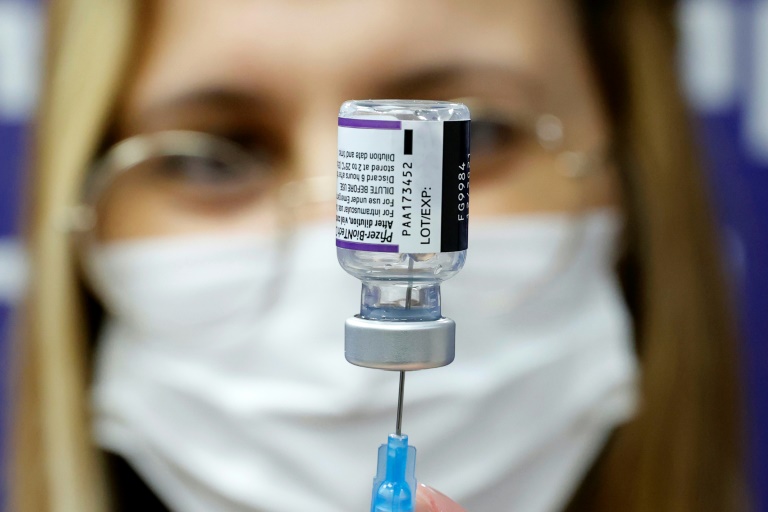
The Pfizer-BioNTech Covid vaccine is safe and effective when given as three doses to children under five years, the companies said Monday, welcome news for parents of the only age group not yet eligible for immunization in most countries.

The announcement comes as the US Food and Drug Administration (FDA) is planning highly-anticipated meetings in the coming weeks to weigh authorization. 

In a clinical trial, Pfizer-BioNTech evaluated three doses, given at three micrograms, and found the vaccine evoked a strong immune response in children aged from six months through four years.

Side effects were similar in the vaccine and placebo groups.

Vaccine efficacy was 80.3 percent, according to a preliminary estimate — though this was based on very low numbers and may change significantly by the time of the final estimate.

“We are pleased that our formulation for the youngest children, which we carefully selected to be one-tenth of the dose strength for adults, was well tolerated and produced a strong immune response,” said Pfizer CEO Albert Bourla in a statement.

“We look forward to soon completing our submissions to regulators globally with the hope of making this vaccine available to younger children as quickly as possible, subject to regulatory authorization,” he added.

The FDA has tentatively scheduled three dates in June where experts will meet and likely decide whether to authorize the Pfizer Covid vaccine for under-fives and the Moderna vaccine for under-sixes, which is given as two shots of 25 micrograms.

The agency was originally set to evaluate the Pfizer vaccine given as two doses in February, but data showed it did not provoke a strong enough immune response in children aged two to four. The FDA then asked to see data for a third shot.

– Results welcomed –

In the latest study, 1,678 children received a third dose at a time when Omicron was the predominant variant.

An analysis of a subset of participants showed antibody levels were similar to 16- to 25-year-olds who were given the full strength vaccine at two doses.

No new adverse events were identified, and the majority of side effects were mild or moderate.

Three doses of the vaccine “appear to be very safe and highly effective in preventing not only severe disease, hospitalization, and death from Covid, but even symptomatic Covid at a time when Omicron was the dominant variant,” Celine Gounder, editor-at-large for public health at Kaiser Health News told AFP.

“However, we know that protection against SARS-CoV-2 infection and milder symptomatic disease wanes over time,” added Gounder, an infectious disease specialist and epidemiologist.

“Pfizer is reporting follow-up data only out to seven days after the third dose of vaccine. It’s too early to say how the three-dose series would perform out to several months or a year.”

Jeremy Faust, of Brigham and Women’s Hospital Department of Emergency Medicine, told AFP: “My first impression is very positive. These numbers are exactly the kinds of signals we wanted to see.”

“I wish the two-dose series had worked for Pfizer-BioNTech. It didn’t. But the three-dose series appears to have given these very young children the protection we want them to have,” the doctor added. 

If and when both Pfizer’s and Moderna’s vaccines are authorized, parents will have to consider whether they want their children to receive Moderna’s two dose vaccine — which will offer faster protection — or Pfizer’s three doses — which will take longer to be effective but may ultimately be more protective.

As with adults, the first two doses of Pfizer’s vaccine are given to under-fives three weeks apart, but then the third is given two months after the second. 

Severe disease from Covid is very rare among under-fives but can occur, with 477 US deaths in this age group since the start of the pandemic, or about 0.1 percent of all deaths.

Children can also contract a rare post-viral condition called multisystem inflammatory syndrome in children (MIS-C), which has affected some 8,210 US children and killed 68. 

Like adults, some children who get Covid may go on to develop long Covid, with new, ongoing or returning symptoms, including brain fog and fatigue.
Four million people hit by floods in Bangladesh: UN

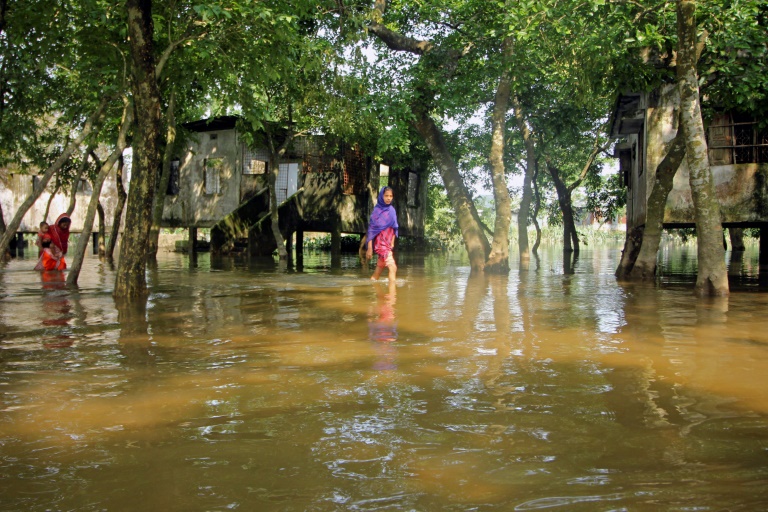
At least four million people have been affected by the worst floods in Bangladesh’s northeast for nearly two decades, the United Nations said Monday.

The Bangladeshi government said the floods, which began last week, had submerged 70 percent of Sylhet district in the northeast and 60 percent of Sunamganj district, leaving at least 10 people dead and about two million marooned.

Heavy rains and a rush of water from upstream in India’s northeast swelled rivers in Bangladesh, with two main border rivers, the Surma and Kushiara, breaching a major embankment and inundating hundreds of villages.

Arifuzzaman Bhuiyan, the head of the state-run Flood Forecasting and Warning Centre, said the two rivers hit their highest levels since records began in the 1970s. 

“It is one of the worst floods in the history of the country’s northeast,” he said. “The water level in the two rivers hit some 1.75 metres (5.7 feet) above their danger level at the height of the floods last week.”

The United Nations Children Fund put the extent of the damage even higher with “over four million people” in five districts in the country’s northeast affected by the floods.  

“The damage to lives, homes and schools is heartbreaking. In this disaster, as in most others, children are the most vulnerable,” said Sheldon Yett, UNICEF Representative to Bangladesh. 

Bangladesh has shut all schools and colleges in the region. 

At least 350 schools have been turned into shelters with more than 8,500 flood-hit people seeking refuge in them, along with their cattle and goats.

But Netai De Sarker, a senior disaster management official, said the flood situation had improved, with water receding from the northern areas, although 1.23 million people were still stranded as of Monday. 

He said the government has sent 140 medical teams to treat flood-affected people and to help prevent any outbreak of water-borne diseases.

Floods are a regular menace to millions of people in low-lying Bangladesh and neighbouring northeast India, but many experts say that climate change is increasing their frequency, ferocity and unpredictability.

Euro rallies as ECB signals end to negative rates

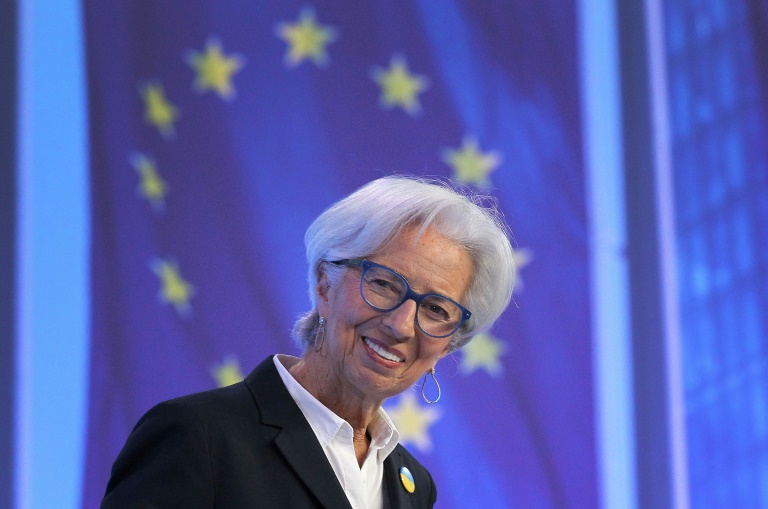
The euro jumped one percent versus the dollar Monday after European Central Bank chief Christine Lagarde signalled the end of negative interest rates.

The euro struck a one-month high at $1.0688 after Lagarde said the central bank would probably draw a line under the era of negative interest rates by September owing to soaring eurozone inflation.

“That’s something that we were waiting for, for so long,” noted Swissquote analyst Ipek Ozkardeskaya.

“Lagarde is finally showing that the (inflation) situation is serious in Europe as well,” she told AFP.

Central banks around the world are increasing interest rates to tackle the highest inflation in decades but so far, the ECB has refused to follow the likes of the Federal Reserve and Bank of England in hiking borrowing costs from record-low levels.

Eurozone inflation soared by an all-time high 7.5 percent in April. 

The surge has been driven by soaring energy and food prices, as economies reopen from pandemic lockdowns and following Russia’s invasion of Ukraine.

Investors will be looking to the release on Wednesday of minutes from the last Federal Reserve meeting for clues on the pace of future interest rate hikes by the US central bank.

Oil prices jumped more than one percent Monday before turning lower.

Elsewhere, stock markets mostly climbed after US President Joe Biden said he was considering lifting some trade tariffs imposed on China by predecessor Donald Trump.

Tariffs on hundreds of billions of dollars of Chinese imports are due to expire in July, and Biden has faced growing calls to get rid of the punitive duties to help combat the highest US inflation in more than four decades.

Biden’s comments Monday came during a visit to Tokyo.

The president added that while a US recession was not inevitable, he acknowledged the economic pain felt by American consumers over soaring inflation.

Ending the tariffs could help cut roaring US inflation by making imports cheaper.

Biden also announced that 13 countries had joined a new, US-led Asia-Pacific trade initiative.

– Key figures at around 1330 GMT –

Euro/dollar: UP at $1.0654 from $1.0564

Pound/dollar: UP at $1.2561 from $1.2497

Euro/pound: UP at 84.79 pence from 84.50 pence

Dollar/yen: DOWN at 127.71 yen from 127.86 yen on Friday

London – FTSE 100: UP 1.2 percent at 7,478.11 points

Frankfurt – DAX: UP 0.7 percent at 14,074.94

Paris – CAC 40: UP less than 0.1 percent at 6,286.99

EURO STOXX 50: UP 0.6 percent at 3,585.50

New York – Dow: UP 0.9 percent at 31,535.75

Tokyo – Nikkei 225: UP 1.0 percent at 27,001.52 (close)

Hong Kong – Hang Seng Index: DOWN 1.2 percent at 20,470.06 (close)

Shanghai – Composite: FLAT at 3,146.86 (close)

Brent North Sea crude: DOWN 0.2 percent at $112.32 per barrel

West Texas Intermediate: DOWN 0.3 percent at $109.96 per barrel

burs-rl/jj

Euro rallies as ECB signals end to negative rates

The euro jumped one percent versus the dollar Monday after European Central Bank chief Christine Lagarde signalled the end of negative interest rates.

The euro struck a one-month high at $1.0688 after Lagarde said the central bank would probably draw a line under the era of negative interest rates by September owing to soaring eurozone inflation.

“That’s something that we were waiting for, for so long,” noted Swissquote analyst Ipek Ozkardeskaya.

“Lagarde is finally showing that the (inflation) situation is serious in Europe as well,” she told AFP.

Central banks around the world are increasing interest rates to tackle the highest inflation in decades but so far, the ECB has refused to follow the likes of the Federal Reserve and Bank of England in hiking borrowing costs from record-low levels.

Eurozone inflation soared by an all-time high 7.5 percent in April. 

The surge has been driven by soaring energy and food prices, as economies reopen from pandemic lockdowns and following Russia’s invasion of Ukraine.

Investors will be looking to the release on Wednesday of minutes from the last Federal Reserve meeting for clues on the pace of future interest rate hikes by the US central bank.

Oil prices jumped more than one percent Monday before turning lower.

Elsewhere, stock markets mostly climbed after US President Joe Biden said he was considering lifting some trade tariffs imposed on China by predecessor Donald Trump.

Tariffs on hundreds of billions of dollars of Chinese imports are due to expire in July, and Biden has faced growing calls to get rid of the punitive duties to help combat the highest US inflation in more than four decades.

Biden’s comments Monday came during a visit to Tokyo.

The president added that while a US recession was not inevitable, he acknowledged the economic pain felt by American consumers over soaring inflation.

Ending the tariffs could help cut roaring US inflation by making imports cheaper.

Biden also announced that 13 countries had joined a new, US-led Asia-Pacific trade initiative.

– Key figures at around 1330 GMT –

Euro/dollar: UP at $1.0654 from $1.0564

Pound/dollar: UP at $1.2561 from $1.2497

Euro/pound: UP at 84.79 pence from 84.50 pence

Dollar/yen: DOWN at 127.71 yen from 127.86 yen on Friday

London – FTSE 100: UP 1.2 percent at 7,478.11 points

Frankfurt – DAX: UP 0.7 percent at 14,074.94

Paris – CAC 40: UP less than 0.1 percent at 6,286.99

EURO STOXX 50: UP 0.6 percent at 3,585.50

New York – Dow: UP 0.9 percent at 31,535.75

Tokyo – Nikkei 225: UP 1.0 percent at 27,001.52 (close)

Hong Kong – Hang Seng Index: DOWN 1.2 percent at 20,470.06 (close)

Shanghai – Composite: FLAT at 3,146.86 (close)

Brent North Sea crude: DOWN 0.2 percent at $112.32 per barrel

West Texas Intermediate: DOWN 0.3 percent at $109.96 per barrel

burs-rl/jj

Iraq sandstorm grounds flights, sends 1,000 to hospitals

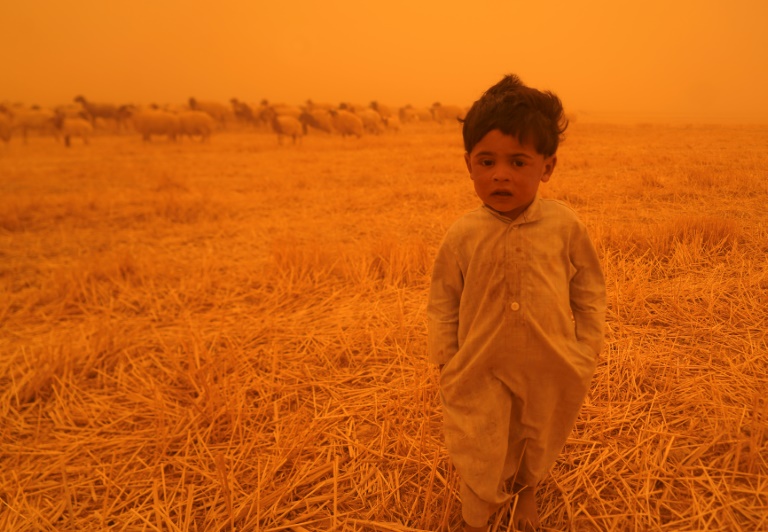
Iraq closed public buildings and temporarily shut airports Monday as another sandstorm — the ninth since mid-April — hit the country.

More than 1,000 people were hospitalised across the nation with respiratory problems, health ministry spokesman Seif al-Badr told AFP.

Flights were also grounded in neighbouring Kuwait for a second time this month, as the region grapples with the increasingly frequent weather phenomenon.

The Iraqi capital Baghdad was enveloped in a giant dust cloud that left usually traffic-choked streets largely deserted and bathed in an eery orange light, AFP correspondents said.

Prime Minister Mustafa al-Kadhemi ordered all work to cease in state-run institutions, except for health and security services, citing “poor climatic conditions and the arrival of violent sandstorms”. 

Air traffic was suspended at the international airports in Baghdad, Arbil and Najaf, before flights resumed at Baghdad and Arbil.

Iraq is ranked as one of the world’s five most vulnerable nations to climate change and desertification.  

The environment ministry has warned that over the next two decades Iraq could endure an average of 272 days of sandstorms per year, rising to above 300 by 2050. 

Iraq’s previous two sandstorms sent nearly 10,000 people to hospital with respiratory problems and killed one person.

– More trees needed –

The Middle East has always been battered by sandstorms, but they have become more frequent and intense in recent years.

The trend is associated with rising temperatures and water scarcity, the overuse and damming of rivers as well as overgrazing and deforestation.

Oil-rich Iraq is known in Arabic as the land of the two rivers, the Tigris and Euphrates, where the ancient civilisations of Mesopotamia flourished.

Iraq’s environment ministry has said the increased sandstorms could be countered with more vegetation cover including trees that act as windbreaks.

A major duststorm last week swept across the region, reaching Saudi Arabia, Kuwait, Iran and the United Arab Emirates.

It left more than 1,200 people hospitalised in Riyadh alone. In Dubai, the world’s tallest building was engulfed in a cloud of dust.

Experts predict the phenomenon will worsen as climate change warps regional weather patterns, further dries out and degrades soils and speeds up desertification across much of the Middle East.

lk/tgg/jsa/fz

Pfizer Covid vaccine for under-fives effective with three doses

The Pfizer/BioNTech Covid vaccine is safe and effective for children aged six months to under five years when given in three doses, the companies said in a statement Monday.

The announcement comes as the US Food and Drug Administration (FDA) is planning meetings in the coming weeks to weigh authorizing Covid vaccines among the youngest children, the only age group who are not yet eligible in most countries, a source of concern to many parents.

Pfizer/BioNTech evaluated three doses, given at three micrograms, in a clinical trial and found the vaccine evoked a strong immune response. Side effects were similar in the vaccine and placebo groups.

Vaccine efficacy was 80.3 percent, according to a preliminary estimate.

“We are pleased that our formulation for the youngest children, which we carefully selected to be one-tenth of the dose strength for adults, was well tolerated and produced a strong immune response,” said Pfizer CEO Albert Bourla in a statement.

“We look forward to soon completing our submissions to regulators globally with the hope of making this vaccine available to younger children as quickly as possible, subject to regulatory authorization,” he added.

The FDA has tentatively scheduled three dates in June where experts will meet and likely decide whether to authorize the Pfizer Covid vaccine for under-fives and the Moderna vaccine for under-sixes, which is given as two shots of 25 micrograms.

The agency was originally set to evaluate the Pfizer vaccine given as two doses in February, but data showed it did not provoke a strong enough immune response in children aged two to four. The FDA then asked to see data for a third shot.

– Data welcomed –

According to the new data, 1,678 children received a third dose at least two months after the second dose, at a time when Omicron was the predominant variant.

An analysis of a subset of participants showed antibody levels were similar to 16- to 25-year-olds who were given the full strength vaccine at two doses.

No new adverse events were identified, and the majority of side effects were mild or moderate.

“Three doses of (Pfizer’s) Covid vaccine appear to be very safe and highly effective in preventing not only severe disease, hospitalization, and death from Covid, but even symptomatic Covid at a time when Omicron was the dominant variant,” Celine Gounder, editor-at-large for public health at Kaiser Health News told AFP.

“However, we know that protection against SARS-CoV-2 infection and milder symptomatic disease wanes over time,” added Gounder, an infectious disease specialist and epidemiologist.

“Pfizer is reporting follow-up data only out to seven days after the third dose of vaccine. It’s too early to say how the three-dose series would perform out to several months or a year.”

Jeremy Faust, of Brigham and Women’s Hospital Department of Emergency Medicine, told AFP: “My first impression is very positive. These numbers are exactly the kinds of signals we wanted to see.”

“I wish the two-dose series had worked for Pfizer/BioNTech. It didn’t. But the three-dose series appears to have given these very young children the protection we want them to have,” the doctor added. 

If and when both Pfizer’s and Moderna’s vaccines are authorized, US parents will have to consider whether they want their children to receive Moderna’s two dose vaccine — which will offer faster protection — or Pfizer’s three doses — which will take longer to be effective but may ultimately be more protective.

Pfizer’s announcement comes one week after US health authorities gave the green light for the company’s Covid booster shots to be administered to children age five to 11.

Severe disease from Covid is very rare among under-fives but can occur, with 477 US deaths in this age group since the start of the pandemic, or about 0.1 percent of all deaths.

Children can also contract a rare post-viral condition called multisystem inflammatory syndrome in children (MIS-C), which has affected some 8,210 US children and killed 68. 

Like adults, some children who get Covid may go on to develop long Covid, with new, ongoing or returning symptoms, including brain fog and fatigue.
Zelensky tells Davos: send us weapons, stop Russia trade

Ukrainian President Volodymyr Zelensky used the Davos summit Monday to appeal for more weapons and “maximum” sanctions against Russia, lamenting that tens of thousands of lives would have been saved had countries acted faster.

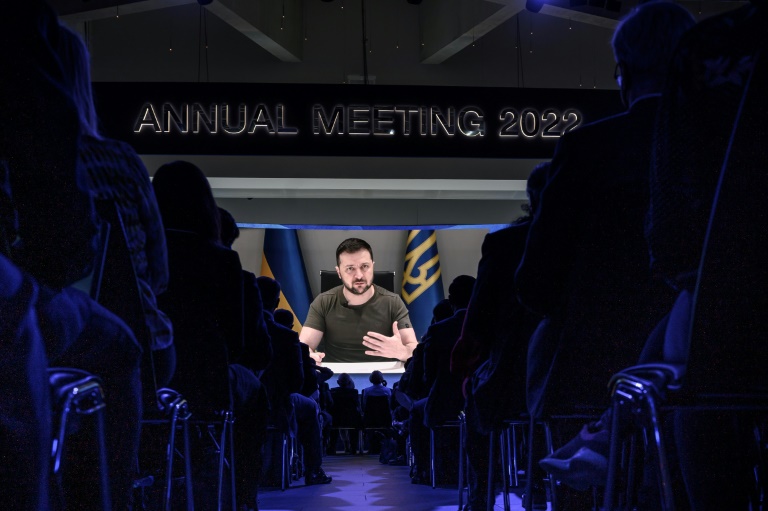
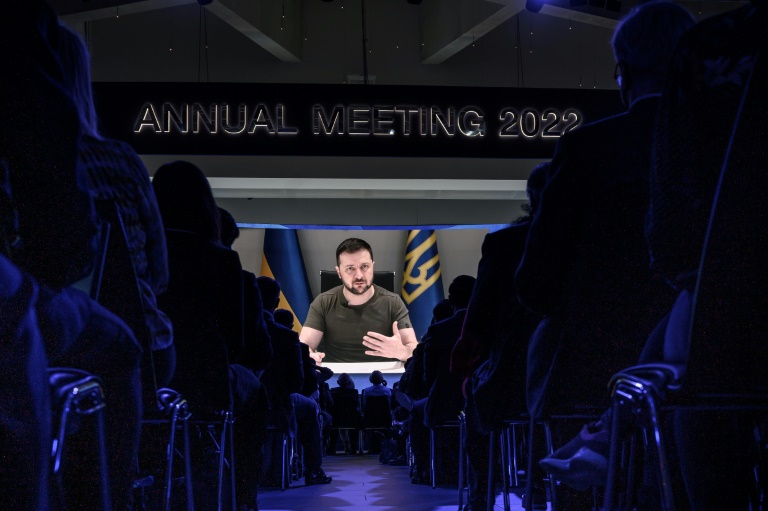
Appearing by video link, Zelensky delivered the headline speech to the first World Economic Forum to be held in the Swiss Alps in more than two years after the Covid pandemic derailed the event.

The conflict shows “that support to the country under attack is more valuable the sooner it is provided: weapons, funding, political support and sanctions against Russia,” said Zelensky, who received a standing ovation.

“If we would have received them by 100 percent of ours needs at once back in February, the result would have been tens of thousands of lives saved,” said Zelensky, flanked by Ukrainian flags and wearing an olive-green T-shirt.

“This is why Ukraine needs all the weapons that we ask for, not just the ones that have been provided,” he said, adding that 87 people were killed in a May 17 Russian strike on a military base in northern Ukraine.

Anastasia Radina, a Ukrainian lawmaker, told AFP that her country needs “NATO-style” weapons including tanks and ground-based air defence systems.

“What we are looking for most importantly are fighter jets and this has been the most difficult discussion,” she said. 

“Three months into the war, and tens of thousands lives lost, we are still at the point of discussing if we need fighter jets. Frankly speaking this is outrageous.”

Ukraine is receiving howitzers “but that is not yet enough,” she said.

– End all Russia trade –

Zelensky called for an oil embargo on Russia, punitive measures against all its banks and the shunning of its IT sector, adding that all foreign companies should leave the country.

“There should not be any trade with Russia,” he told the gathering.

“I believe there are still no such sanctions against Russia — and there should be.”

While the United States, Britain and Canada have moved to ban Russian oil and gas, the European Union has been divided over imposing similar measures. EU members such as Germany and Hungary are heavily dependent on energy supplies from Russia.

WEF Klaus Schwab praised Zelensky for his “courageous leadership” and said Davos participants were eager to hear how they could assist Ukraine “because everybody is affected by what’s happening in your country.”

The war is dominating the four-day meeting of the world’s business and political elites, with Ukraine sending a strong contingent of officials, including the foreign minister, to plead for more aid.

Russian business and political leaders, who used to participate in debates and mingle with other A-listers at champagne parties, were barred by organisers from attending this year’s gathering over the war.

The Ukrainians have transformed the “Russia House” in Davos –- normally used by the Russian delegation — into the “Russia War Crimes House” to promote their cause.

More than 50 heads of state or government are among the 2,500 delegates at the WEF under the title “History at a Turning Point”.

Some of the biggest names include Germany’s new chancellor, Olaf Scholz, European Union chief Ursula von der Leyen, NATO head Jens Stoltenberg and US climate envoy John Kerry.

– ‘Bonanza’ for billionaires –

When the WEF last took place in Davos in January 2020, the coronavirus was just brewing in China before morphing into a devastating pandemic.

A Davos forum took place virtually last year, with Russian President Vladimir Putin among the speakers.

While the summit is back, it lacks its usual snowy backdrop after the Omicron variant forced this year’s January meeting to be postponed until now. Instead, rain is forecast all week.

Climate change and concerns about the economic recovery from the pandemic are also at the forefront of the Davos talks.

Inflation has become a major concern as energy and food prices have soared further since Russia invaded Ukraine, raising fears of hunger in countries dependent on wheat from the region.

Global charity Oxfam warned that 263 million people could sink into extreme poverty this year, at a rate of one million every 33 hours.

By contrast, 573 new billionaires have emerged during the pandemic, or one every 30 hours.

“Billionaires are arriving in Davos to celebrate an incredible surge in their fortunes,” Oxfam executive director Gabriela Bucher said in a statement.

“The pandemic and now the steep increases in food and energy prices have, simply put, been a bonanza for them,” Bucher said.

Zelensky tells Davos: send us weapons, stop Russia trade

Ukrainian President Volodymyr Zelensky used the Davos summit Monday to appeal for more weapons and “maximum” sanctions against Russia, lamenting that tens of thousands of lives would have been saved had countries acted faster.

Appearing by video link, Zelensky delivered the headline speech to the first World Economic Forum to be held in the Swiss Alps in more than two years after the Covid pandemic derailed the event.

The conflict shows “that support to the country under attack is more valuable the sooner it is provided: weapons, funding, political support and sanctions against Russia,” said Zelensky, who received a standing ovation.

“If we would have received them by 100 percent of ours needs at once back in February, the result would have been tens of thousands of lives saved,” said Zelensky, flanked by Ukrainian flags and wearing an olive-green T-shirt.

“This is why Ukraine needs all the weapons that we ask for, not just the ones that have been provided,” he said, adding that 87 people were killed in a May 17 Russian strike on a military base in northern Ukraine.

Anastasia Radina, a Ukrainian lawmaker, told AFP that her country needs “NATO-style” weapons including tanks and ground-based air defence systems.

“What we are looking for most importantly are fighter jets and this has been the most difficult discussion,” she said. 

“Three months into the war, and tens of thousands lives lost, we are still at the point of discussing if we need fighter jets. Frankly speaking this is outrageous.”

Ukraine is receiving howitzers “but that is not yet enough,” she said.

– End all Russia trade –

Zelensky called for an oil embargo on Russia, punitive measures against all its banks and the shunning of its IT sector, adding that all foreign companies should leave the country.

“There should not be any trade with Russia,” he told the gathering.

“I believe there are still no such sanctions against Russia — and there should be.”

While the United States, Britain and Canada have moved to ban Russian oil and gas, the European Union has been divided over imposing similar measures. EU members such as Germany and Hungary are heavily dependent on energy supplies from Russia.

WEF Klaus Schwab praised Zelensky for his “courageous leadership” and said Davos participants were eager to hear how they could assist Ukraine “because everybody is affected by what’s happening in your country.”

The war is dominating the four-day meeting of the world’s business and political elites, with Ukraine sending a strong contingent of officials, including the foreign minister, to plead for more aid.

Russian business and political leaders, who used to participate in debates and mingle with other A-listers at champagne parties, were barred by organisers from attending this year’s gathering over the war.

The Ukrainians have transformed the “Russia House” in Davos –- normally used by the Russian delegation — into the “Russia War Crimes House” to promote their cause.

More than 50 heads of state or government are among the 2,500 delegates at the WEF under the title “History at a Turning Point”.

Some of the biggest names include Germany’s new chancellor, Olaf Scholz, European Union chief Ursula von der Leyen, NATO head Jens Stoltenberg and US climate envoy John Kerry.

– ‘Bonanza’ for billionaires –

When the WEF last took place in Davos in January 2020, the coronavirus was just brewing in China before morphing into a devastating pandemic.

A Davos forum took place virtually last year, with Russian President Vladimir Putin among the speakers.

While the summit is back, it lacks its usual snowy backdrop after the Omicron variant forced this year’s January meeting to be postponed until now. Instead, rain is forecast all week.

Climate change and concerns about the economic recovery from the pandemic are also at the forefront of the Davos talks.

Inflation has become a major concern as energy and food prices have soared further since Russia invaded Ukraine, raising fears of hunger in countries dependent on wheat from the region.

Global charity Oxfam warned that 263 million people could sink into extreme poverty this year, at a rate of one million every 33 hours.

By contrast, 573 new billionaires have emerged during the pandemic, or one every 30 hours.

“Billionaires are arriving in Davos to celebrate an incredible surge in their fortunes,” Oxfam executive director Gabriela Bucher said in a statement.

“The pandemic and now the steep increases in food and energy prices have, simply put, been a bonanza for them,” Bucher said.

Kyiv court convicts Russian of war crimes as Zelensky woos Davos

A Ukrainian court found a young Russian soldier guilty of war crimes Monday for killing a civilian and handed him a life sentence, in the first verdict of its kind since Russia’s invasion three months ago.

The judgement came in as President Volodymyr Zelensky took to the virtual stage in Davos, urging political and business elites at the World Economic Forum to end all trade with Russia and keep supplying his country with weapons.

Russian attacks are pummelling eastern Ukraine, but all eyes Monday were on the capital Kyiv, in the landmark trial against 21-year-old Russian serviceman Vadim Shishimarin.

Shishimarin, a shaven-headed sergeant from Siberia, had admitted in court to killing a 62-year-old civilian, Oleksandr Shelipov, in the village of Chupakhivka in northeast Ukraine.

He claimed he shot Shelipov under pressure from another soldier as they tried to retreat and escape back into Russia in a stolen car on February 28, the fourth day of Moscow’s invasion.

Shishimarin had apologised and asked Shelipov’s widow for forgiveness, adding: “I was nervous about what was going on. I didn’t want to kill.”

But prosecutors claimed he shot between three and four bullets with the intention of killing the civilian.

“The court has found that Shishimarin is guilty (of war crimes) and sentences him to life imprisonment,” Judge Sergiy Agafonov announced on Monday, as the Russian looked on from the glass defence box.

He was also found guilty of premeditated murder, which Agafonov said was “committed with direct intent.”

– Stop Russia trade –

Shishimarin’s lawyer Viktor Ovsyannikov said he will appeal the verdict, calling it “most severe”, adding that “you can feel societal pressure” on the decision.

The landmark ruling is expected to be followed by others, with Ukraine opening thousands of war crimes cases since Moscow’s invasion.

International institutions are simultaneously investigating abuses allegedly committed by Russian forces in cities like Bucha and Mariupol, which have become emblematic of the destruction and suffering of the three-month-old war.

As the verdict was read out in Kyiv, Zelensky continued his attempts to maintain Western support with a video address at the Davos summit, which this year is dominated by the fall-out of the war — and from which Russians have been barred.

He highlighted the cost to his people of the war, revealing that 87 people were killed in a Russian attack earlier this month on a military base in northern Ukraine.

Zelensky insisted that tens of thousands of lives would have been saved if Kyiv had received “100 percent of our needs at once back in February”, when Russia invaded.

“This is why Ukraine needs all the weapons that we ask (for), not just the ones that have been provided,” said Zelensky, flanked by Ukrainian flags and wearing an olive-green T-shirt.

He also called for an oil embargo on Russia, punitive measures against all its banks and the shunning of its IT sector, adding that all foreign companies should leave the country.

– ‘Scorched-earth tactics’ –

Shishimarin’s lawyer Viktor Ovsyannikov said he will appeal the verdict, calling it “most severe”, adding that “you can feel societal pressure” on the decision.

The landmark ruling is expected to be followed by others, with Ukraine opening thousands of war crimes cases since Moscow’s invasion.

International institutions are simultaneously investigating abuses allegedly committed by Russian forces in cities like Bucha and Mariupol, which have become emblematic of the destruction and suffering of the three-month-old war.

After failing in its initial goal of capturing Kyiv, Moscow’s forces are now squarely focused on securing and expanding their gains in the Donbas region and on Ukraine’s southern coast.

In the eastern city of Severodonetsk, a focus of recent fighting, regional governor Sergiy Gaiday accused Russian forces of “using scorched-earth tactics, deliberately destroying” the city.

Gaiday said Russia was repositioning forces from the Kharkiv region, others involved in Mariupol’s siege, pro-Russian separatist militias, and even troops freshly mobilised from Siberia to concentrate their firepower on the Donetsk and Lugansk regions.

– ‘Savagery’ –

More than six million people have fled Ukraine and eight million have been internally displaced since the war broke out, according to the United Nations.

For the civilians left behind near the front, prayer is often the only comfort left.

Southwest of Severodonetsk, in the city of Bakhmut, Maria Mayashlapak scanned the devastation of her home, where a missile imploded her kitchen and cratered her vegetable garden.

“I was reciting my morning prayer for God to keep me from getting hurt,” the 82-year-old recalled, as the family’s kitten mewed from somewhere in the rubble.

Sunday’s bombardment of the Donetsk region killed at least seven civilians and wounded eight others, according to the Ukrainian army.

Shelling and missile strikes also continued to pound Kharkiv in the north, as well as Mykolaiv and Zaporizhzhia in the south, Ukrainian officials said.

The effects of the war are also being felt far beyond Ukraine, particularly the impact of a Russian blockade that has left one of the world’s breadbaskets unable to export its grain.

“It’s savagery for one country to have food spoiling like this and for other people to be left poor and hungry,” said Dmitriy Matulyak, a farmer near the Black Sea port of Odessa.

UN Secretary-General Antonio Guterres has been unequivocal on the matter, saying last week that the war “threatens to tip tens of millions of people over the edge into food insecurity”.

burs-ar/jm

Hundreds of endangered baby giant turtles released into Cambodian river

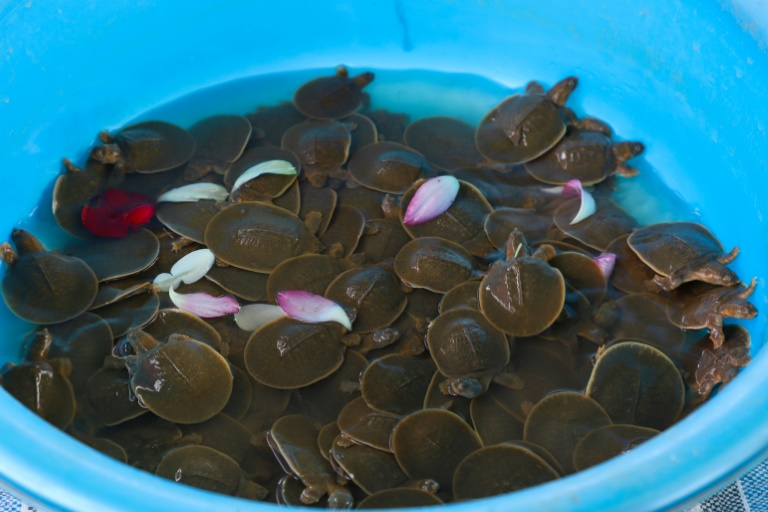
Hundreds of critically endangered baby giant turtles were released into Cambodia’s Mekong River to mark World Turtle Day on Monday.

Cantor’s giant softshell turtles have all but vanished across their former territory in Vietnam and Thailand thanks to poaching and illegal trade, and were only rediscovered in the Southeast Asian country in 2007.

The Wildlife Conservation Society coordinated the release of 580 hatchlings, which can grow to a length of up to 200cm (78 inches) and mainly live buried in the sand and the water, surfacing only twice a day to breathe.

Monks blessed the baby reptiles — also known as “frog-faced turtles” for their distinctive appearance — before helping conservationists and eager children send the stout-nosed snappers into the Mekong’s muddy waters.

The creatures are among a batch of 982 turtles rescued as eggs — to protect them from the dangers which threaten the species’ numbers — carefully incubated, hatched, and then released.

Ken Sereyrotha, country program director for WCS Cambodia, said significant progress had been made in protecting the animal in the country but more work was needed.

“This species is being threatened by illegal hunting and trafficking,” he said.

The WCS and Cambodia’s department of fisheries conservation of fisheries administration has found and rescued more than 2,000 eggs this year — with the teams hopeful the remainder will eventually hatch.

Ouk Vibol, director of the fisheries department, urged local stakeholders to continue the conversation work, and promised that “those who still trade protected species will face legal action.”

Last year, the teams managed to nurture and then release around 1,300 hatchlings into the wild.

Close Bitnami banner
Bitnami