AFP

Cars swapping vroom for volts in London garage

Tucked away in a workshop under a London Underground line, cars are undergoing a green metamorphosis as they shed their cylinders, spark plugs and pistons for electric engines. 

“We don’t create the associated CO2 that comes from creating a new car and we’re not scrapping a perfectly valid old car. It’s win-win,” said Matthew Quitter, founder of London Electric Cars.

London Electric Cars is one of the companies capitalising on the UK’s flexible regulatory environment and special affection for cars to help grow the fledgling sector. 

In the workshop, all kinds of cars have come to be reborn: Minis, Bentleys, old ones — such as a 20-year-old Volvo station wagon — and some not so old, including a platypus-like Fiat Multipla. 

Some families are turning to Quitter to save their beloved vehicles from the crusher, with places such as London expanding road charges for older and more polluting vehicles.

“They’re just keen that they don’t scrap this car because they have an emotional attachment,” he said. 

“The kids grew up in it and instead want to see it reborn as an electric vehicle.”

The cost of a conversion starts at £30,000 ($37,500, 35,000 euros) — the equivalent of a new entry-level electric car.

The renovated vehicles have a range of between 80 and 300 kilometres (50 to 186 miles), depending on the batteries. 

This is more than enough when “90 percent to 95 percent of journeys inside London are under six miles”, said Quitter.

The old engines can be kept, resold or destroyed. 

– Stinking disaster –

Most of the vehicles are fitted with Nissan Leaf or Tesla engines, with the aim to stick as close as possible to the car’s original performance and helping to avoid having to adapt the brakes or transmission. 

The garage has converted seven cars since it opened its doors in 2017, and hopes to convert 10 by 2022.

“People realise that combustion engines are a disaster, they stink, they’re full of fumes, they make a lot noise and they’re responsible partly for climate breakdown,” said Quitting.

“I think… we will look back on classic car ownership with petrol engines as a sort of anachronism,” he predicted.

But the umbrella body for historic automobile clubs, the Federation Internationale des Vehicules Anciens (FIVA), argued in 2019 that such conversions take away from the character of older cars and called for reversible modifications instead. 

For purists, the noise, vibrations and smell of petrol are all part of the pleasure of an old car. 

But Quitter’s clients “aren’t interested in that at all”, he said, adding they want the “reliability” of electric cars without the smell and exhaust fumes of a petrol vehicle.

He also dismissed objections of those who say such modifications of classic cars are a desecration, saying no one complains about old houses being fitted with modern comforts. 

– National heritage –

“At the end of the day, it’s a very personal question in terms of what cars, for you, would be sacrilegious to convert,” he said, adding it would be unlikely he’d ever convert an Aston Martin. 

He is joined on this point by Garry Wilson, head of the Historic & Classic Vehicles Alliance (HCVA), which works to preserve vintage vehicles, who cited the Aston DB5, James Bond’s famous car. 

Changing engines is something that has been done almost since the beginning of automotive history, but classic cars must be treated with respect, said Wilson.

“There’s an awful lot of vehicles out there where we should class them as part of our national heritage, and therefore should in theory treated like a grade I listed building, and shouldn’t be modified,” he added.

“We’d be horrified if someone fitted new PVC windows in Blenheim Palace.

“Frankly, the Houses of Parliament would be better off being knocked down and rebuilt in modern materials. But it’s got Big Ben attached to it, it’s one of our national treasures.”

Wilson is also sceptical about the environmental benefits of such conversions for collector cars that travel only a few hundred miles a year on average, compared with 7,200 miles a year for contemporary cars. 

This is especially true if parts for the batteries and engines come from the other side of the world, he said. 

Instead, he thinks the solution rests with synthetic fuels, which emit CO2 but are manufactured by absorbing it, and which he believes would enable the sector to achieve carbon neutrality in 2050. 
China cuts key mortgage reference rate as Covid bites

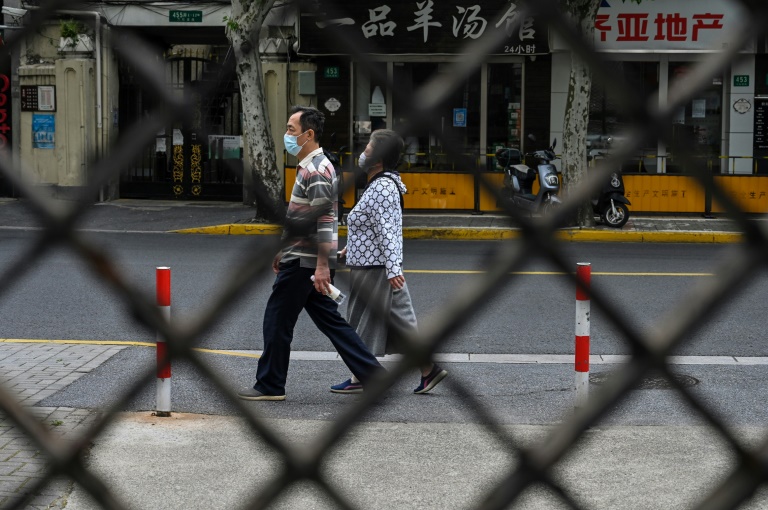
China on Friday announced it would cut a key interest rate in a boost to home buyers and debt-mired developers as the country’s economy is slowed by Covid-19 restrictions ripping across major cities.

Prolonged virus lockdowns have constricted supply chains, quelled demand and stalled manufacturing in the last major economy welded to a zero-Covid approach to the pandemic.

The five-year loan prime rate (LPR) — which many lenders base their mortgage rates — was trimmed to 4.45 percent from 4.6 percent, China’s central bank said on Friday.

Since the rate is “the benchmark for pricing most mortgages, we think the move is aimed at supporting housing demand,” Julian Evans-Pritchard, an analyst at Capital Economics, said. 

The cut “should help drive a revival in housing sales.”

The one-year loan prime rate, which guides how much interest commercial banks charge to corporate borrowers, remained unchanged at 3.7 percent.

The reduction in the mortgage reference rate comes as a wave of defaults ripples through the country’s real estate sector, with developers sagging under massive debts and struggling with a slump in demand.

Sunac, one of China’s largest developers to default on payments in recent months, said last week that sales in major cities had fallen dramatically in March and April due to the coronavirus wave.

Economic data this week highlighted the stark impact of Covid-19 restrictions and lockdowns in many major Chinese cities.

Figures on Monday showed retail sales and factory output last month slumped the most since the start of the pandemic, while unemployment edged back toward its February 2020 peak.

The haircut to the LPR was greater than the market expected, analysts said, as China’s planners try to inject life into a slowing economy.

“Monthly economic indicators published recently suggest severe growth pressure,” according to Chaoping Zhu, global market strategist at JP Morgan Asset Management.

“Aside from weakness in consumption, industrial production and investment activities, the sharp decline in bank loans reveals a more fundamental challenge –- a lack of confidence among both corporate and household sectors.”

Beijing’s unrelenting approach to Covid-19 outbreaks has snarled supply chains and locked down tens of millions of people, hitting major financial, industrial and tourist hubs.

Borders remain closed to most foreigners and a slew of international sports events have been scrapped over pandemic concerns.

China’s premier Li Keqiang on Wednesday called for government departments to “step up their sense of urgency” and said “new measures that can be used should be used” to prop up the world’s second-largest economy.

China has targeted full-year growth of around 5.5 percent, but data published in April showed that first-quarter growth slowed to 4.8 percent after its economy lost steam in the latter half of last year.

Finland brews up NATO-themed beer

When Finland decided to seek NATO membership on Sunday, the owner of a small brewery in Savonlinna, Petteri Vanttinen, 42, decided to celebrate by launching a new beer in honour of the military alliance.

Savonlinna, which lies only 50 kilometres (31 miles) from the Russian border, has always been a battleground between East and West.

Vanttinen holds his beer and points out the surrounding areas which were bombed during World War II, when Finland fought two bloody wars with its powerful eastern neighbour.

The lager has a blue and white picture of a knight with a NATO star on his chest, and tastes of “security, with a hint of freedom”, Vanttinen says.

A steady stream of customers enter his shop, located in a red brick building built when Finland was still part of the Russian Empire in 1909.

“We came to buy the famous NATO beer. We wanted to see how it tastes,” Susanna Hakkinen, 24, and Emilia Mykkala, 28, both tell AFP.

When Vanttinen went to bed on Sunday evening, he still wondered whether the beer was a stupid idea.

But the next day, while Finnish parliament debated the bid to join the alliance, the “OTAN beer”, the French acronym for NATO, went viral on social media, with even some MPs sharing his Tweet.

The acronym is also a play on words in Finnish, meaning “I’ll have a beer”.

“It’s just exploded. I have been getting calls from all over the world, the US, Japan, Germany, too many to remember,” Vanttinen says.

Vanttinen’s phone has been ringing around the clock for four days, with no end in sight.

“Normally we sell around a hundred cans of beer a day. Now the number is over two thousand,” Vanttinen says.

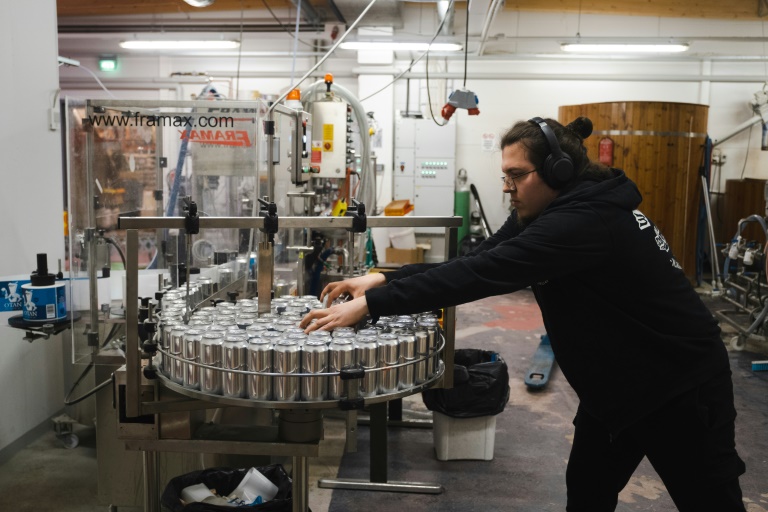
His small brewery, which employs eight people, is now struggling to meet the demand, and the beer gets sold as soon as it leaves the conveyor belt.

“We’re a small brewery, we do our best, but right now can’t meet the demand, it’s too much,” Vanttinen says.

Less than three months after Russia invaded Ukraine, Finland submitted its application to join NATO on Wednesday, a stunning reversal of the Nordic country’s policy of military non-alignment, dating back more than 75 years.

Biden leaves for Asia under Ukraine, N.Korea nuclear shadows

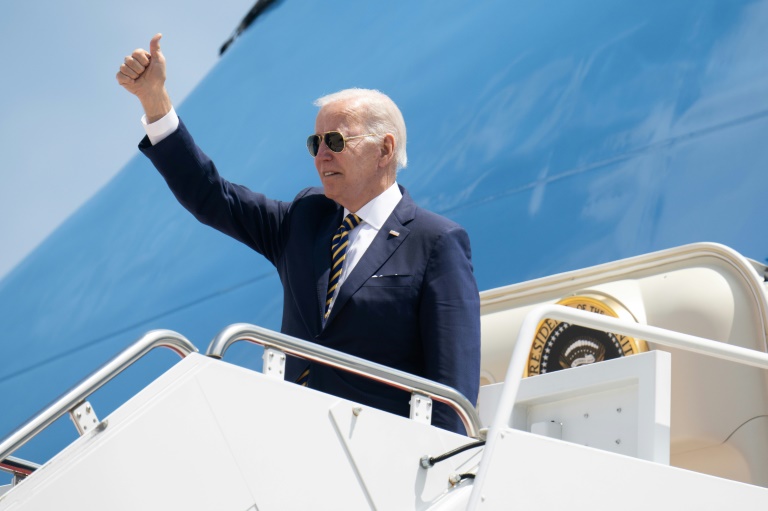
President Joe Biden left Thursday for South Korea and Japan to cement US leadership in Asia at a time when the White House’s attention has been pulled back to Russia and Europe — and amid fears of a North Korean nuclear test during his trip.

Biden wants the trip to build on recent moves accelerating a years-long US pivot to Asia, where rising Chinese commercial and military power is undercutting Washington’s dominance.

But highlighting competing demands from Europe, Biden met right before his departure with the leaders of Finland and Sweden to celebrate their applications for joining NATO — a seismic development sparked by Russia’s invasion of Ukraine.

In another sign of growing US involvement in the conflict, the White House said that while Biden was in Asia he would put his signature on a massive, $40 billion Ukraine weapons and aid package passed Thursday by Congress.

Signing the bill “expeditiously” will ensure no gap in the funding flow, National Security Advisor Jake Sullivan told reporters aboard Air Force One en route to Seoul.

A separate crisis awaits Biden on arrival, however — jitters that North Korea’s unpredictable leadership will choose his trip as the moment to test a nuclear capable missile or even conduct a test nuclear explosion.

Despite a spiraling Covid outbreak, Pyongyang’s “preparations for a nuclear test have been completed and they are only looking for the right time,” South Korean lawmaker Ha Tae-keung said after being briefed by Seoul’s spy agency.

Sullivan said there was “real risk of some kind of provocation while we’re in the region, whether in South Korea or Japan.”

“We know what we will do to respond to them. We have communicated with not just our allies, but also with China,” he said.

Biden heads to Japan from South Korea on Sunday. He will hold talks with the leaders of both countries, as well as joining a regional summit of the Quad — a grouping of Australia, India, Japan and the United States — while in Tokyo.

Hours ahead of Biden arriving, South Korea’s newly elected, strongly pro-US President Yoon Suk-yeol issued a warm welcome. 

“I am confident the ROK-US alliance that seeks to uphold the values of democracy and human rights shall only elevate in the future,” he wrote on Twitter.

Yoon has pledged to give South Korea a more “robust” foreign policy, and has repeatedly called for stronger ties with the US, including ramping up joint military exercises.

Early Friday, he told reporters in Seoul that Biden’s trip was an opportunity for the US-South Korea relationship to become “stronger and more inclusive”.

– Taiwan lessons? –

Sullivan said ahead of the trip that Biden is bound for Asia with “the wind at our back” after successful US leadership in the Western response to President Vladimir Putin’s now almost three-month-long invasion of Ukraine.

The high military, diplomatic and economic cost imposed on Russia is seen in Washington as a cautionary tale for China, given Beijing’s stated ambitions to gain control over democratic-ruled Taiwan, even if that means going to war.

Earlier this month, CIA Director William Burns said Beijing is watching “carefully.”

“I think they’ve been struck by the way in which particularly the transatlantic alliance has come together to impose economic costs on Russia as a result of that aggression,” he said.

Sullivan said the administration wants not so much to confront China on the trip as to use Biden’s diplomacy to show that the West and its Asian partners will not be divided and weakened.

He pointed to cooperation from South Korea and Japan, among others, in the sanctions regime against Russia led by European powers and the United States. He also referred to Britain’s role in the recently created security partnership AUKUS.

This “powerful message” will be “heard in Beijing,” Sullivan said, “but it’s not a negative message and it’s not targeted at any one country.”

– North Korean wild card –

Sullivan said the United States is braced for North Korea to again defy UN sanctions by conducting a nuclear test.

The US response — which will be coordinated with South Korea and Japan — could include “adjustments to the way that our military is postured in the region,” Sullivan said.

The US has nearly 30,000 troops in South Korea — some of whom Biden will visit on the trip — and about 55,000 US military personnel in Japan.

Sullivan denied that a North Korean nuclear test would be seen as a setback for Biden’s diplomacy.

“It would underscore one of the main messages that we are sending on this trip, which is that the United States is here for our allies and partners.”

Asian markets up after Wall Street battering over recession fears

Asian markets opened higher Friday, as bargain-hunters capitalised on the battering Wall Street took the day before after decades-high inflation sparked recession fears.

Downcast earning reports from retailers have heightened uncertainty in the world markets at a time of rising interest rates, surging energy prices, China’s Covid lockdowns and Russia’s ongoing war in Ukraine.

Leading indices have see-sawed at even the slightest anticipation of volatility — or relief — and the risk of a global recession is “top-of-mind” for investors, said Stephen Innes of SPI Asset Management.

“But as the procession to recession shortens, growth concerns are rising, leaving equities vulnerable to the negative feedback loop,” he added.

“What would typically be met with a shoulder shrug, incrementally weaker data can now amplify downside move. And with few positive developments of late, the market remains vulnerable to the prevailing narrative, with the negative feedback loop only growing louder in recent sessions.”

Wall Street had a tough run this week, thanks to back-to-back earnings misses from Walmart and Target which revealed difficulties managing rising costs, as well as weaker-than-expected Chinese economic data. 

– China cuts key interest rate –

On Friday morning, China announced it would lower its five-year loan prime rate — a key interest rate governing how lenders base their mortgage rates — from 4.6 percent to 4.45 percent.

The move will help reduce mortgage costs, serving as a boost for demand as China undergoes a property slump and its economy bleeds from stopped ports and factories due to Covid lockdowns.

But Chaoping Zhu, a Shanghai-based global market strategist with JP Morgan Asset Management, said that strong fiscal stimulus “is also expected” given persistent headwinds to growth. 

“In addition to the conventional approaches including infrastructure investment and tax deduction, direct subsidies or cash payout to consumers may be adopted to stabilize domestic demand and employment,” he said. 

Data released this week from China showed the extent of economic pain inflicted by Beijing’s strict zero-Covid policy, with retail sales and factory production slumping to its lowest in over two years.

The unemployment rate also climbed in April to 6.1 percent — the highest in more than two years.

Asian markets opened up Friday, with Seoul, Hong Kong, Tokyo, and Singapore all seeing a one percent boost.

– Key figures at around 0230 GMT –

Hong Kong – Hang Seng Index: UP 2 percent at 20,523.61

Shanghai – Composite: UP 0.9 percent at 3,126.56 

Tokyo – Nikkei 225: UP 1.2 percent at 26,712.36 (break)

Brent North Sea crude: DOWN 1.1 percent at $110.86 per barrel

West Texas Intermediate: DOWN 1.1 percent at $110.98 per barrel

Euro/dollar: DOWN at $1.0562 from $1.0586 at 2030 GMT Thursday

Pound/dollar: DOWN at $1.2451 from $1.2473

Euro/pound: DOWN at 84.83 pence from 84.84 pence

Dollar/yen: UP at 128.10 yen from 127.80

New York – Dow: DOWN 0.8 percent at 31,253.13 (close)

London – FTSE 100: DOWN 1.8 percent at 7,302.74 (close)

Higher wall, Covid policy make US border more deadly

Horrific fractures, punctured lungs and a traumatic miscarriage: Jay Doucet has seen the severity of his patients’ injuries worsen as more migrants fall from a growing border wall in their bid to evade a pandemic-imposed legal blockade.

To the already imposing obstacles for people trying to enter the United States on its southern border, the Covid crisis added another: a quick-fix health rule called Title 42 that allows authorities to remove anyone simply because they might be carrying the disease.

And with no legal route into the country, migrants have been taking their lives in their hands.

“You and I wouldn’t jump (from) a 30-foot wall, but they would,” says Doucet, head of trauma at UC San Diego Health. 

In 2019, the wall that straddles parts of the border between the United States and Mexico was raised in several places, fulfilling a campaign promise of then-president Donald Trump.

The increase, from 18 feet (5.4 meters) to 30 feet, was almost instantly noticeable for Doucet and his colleagues.

In the two years before the height increase, they saw 67 significant injuries; in the two years since, that figure has hit 375.

They have dealt with sixteen people who have died after falling from the wall in that time.

– ‘We couldn’t go back’ – 

“We have clear empirical evidence that these higher walls do not stop or divert migratory flows, but they do cause more serious injuries,” says Carlos González Gutiérrez, Mexican consul in San Diego, who has been called to help hundreds of Mexicans hospitalized in the city.

The “wall” — which for the most part is a fence — runs through hills and dunes, out into the waters of the Pacific.

If it is imposing from afar, up close it seems enormous.

“I don’t know how I got up, it was all very fast,” said one migrant. 

The woman, who spoke to AFP on condition of anonymity, fled Colombia with her family because of threats of violence.

Her terrifying climb over the wall was a success. 

Her daughter was not so lucky, falling and badly fracturing her ankle.

Even if they had known what would happen, they would still have climbed.

“We couldn’t go back,” she told AFP.

– Desperate –

“During the pandemic, many asylum seekers became very desperate and frustrated that they didn’t have a method of presenting themselves at the port of entry,” says Pedro Rios of the NGO American Friends Service Committee.

“And so this meant that many of them were crossing through very dangerous areas.”

President Joe Biden’s administration announced it would rescind Title 42 on May 23, but opposition from Republican-dominated states has tied the issue up in legal knots.

A judge is expected to rule on its fate this weekend.

For migration reform campaigners, Title 42 has been a failure: an immigration policy dressed up as a health policy — and not fit for either purpose.

“Title 42 has created enormous human suffering,” says Aaron Reichlin-Melnick, senior policy adviser for the American Council on Migration, who points out that 2021 and 2022 will be the deadliest years on record.

A total 557 people died at the border in 2021, more than double the 283 deaths in 2018, before Title 42 and the wall’s elevation. 

Those deaths include dehydration and starvation from desert crossings, as well as people who drowned in rivers.

– Health –

Perversely, Title 42 may even have increased the number of people trying to cross illegally.

It provides for immediate removal with no legal consequences, so migrants who are caught and sent back can try to cross again without fear of imperiling a future asylum application.

US border patrol logged a record 1.73 million encounters with migrants in the 12 months to September 2021.

They are on track to surpass that figure this year.

“Many of these (are) the same individual crossing the border multiple times,” says Reichlin-Melnick.

With the world’s worst official death toll and a high domestic infection rate, the US is not keeping Covid at bay by refusing entry to Latin Americans, he says.

Opening the doors to Ukrainians fleeing Russia’s invasion proves that Title 42 is not about health.

“There is no reason to admit thousands of Ukrainians and block Nicaraguans, Venezuelans or Haitians seeking asylum.” 

In his hospital office in San Diego, Doucet pauses at the sound of a helicopter bringing in another patient.

“I think we were very hopeful that a simple solution like a wall would make the problem go away,” he says. “It’s made things worse.

“People don’t understand how desperate they are to come.” 

Bolsonaro to meet Elon Musk in Brazil: government source

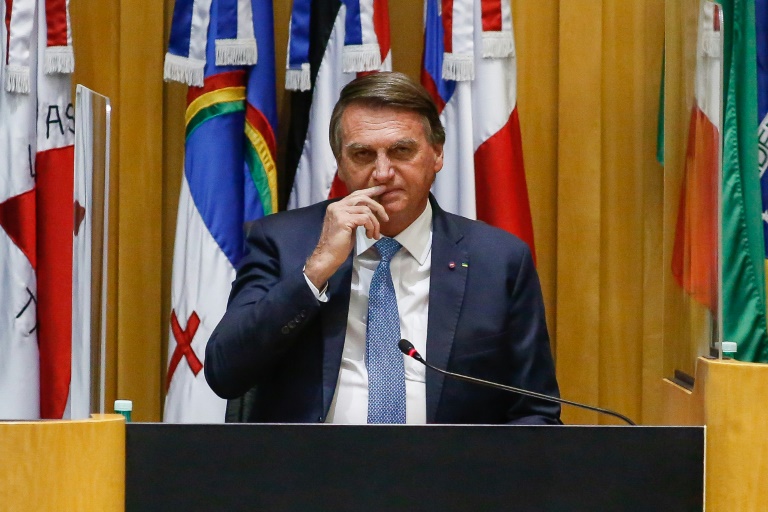
Brazilian President Jair Bolsonaro is set to meet with billionaire Elon Musk on Friday, according to a government source.

The meeting will be held in Sao Paulo, a source with the Brazilian president’s office told AFP, without giving any details on what will be on the agenda.

Earlier, Bolsonaro said that he had planned a private meeting in Sao Paulo “with a very important person who is recognized throughout the world.”

“He is coming to offer his help for our Amazon,” the president said in his weekly social media broadcast, without naming Musk.

Currently the CEO of both SpaceX and Tesla, Musk is the richest person in the world, with a fortune estimated at $220 billion, according to Forbes magazine.

The entrepreneur attracted worldwide attention when he announced last month that he planned to buy Twitter in a deal worth $44 billion dollars.

The Brazilian government said in November that they were negotiating with SpaceX to secure satellite internet in the Amazon rainforest and to get help in detecting illegal deforestation.

In a bid to provide high-speed internet around the world, especially to underserved areas, SpaceX has launched thousands of its own Starlink satellites orbit, with many more launches already planned.

Bolsonaro to meet Elon Musk in Brazil: government source

Brazilian President Jair Bolsonaro is set to meet with billionaire Elon Musk on Friday, according to a government source.

The meeting will be held in Sao Paulo, a source with the Brazilian president’s office told AFP, without giving any details on what will be on the agenda.

Earlier, Bolsonaro said that he had planned a private meeting in Sao Paulo “with a very important person who is recognized throughout the world.”

“He is coming to offer his help for our Amazon,” the president said in his weekly social media broadcast, without naming Musk.

Currently the CEO of both SpaceX and Tesla, Musk is the richest person in the world, with a fortune estimated at $220 billion, according to Forbes magazine.

The entrepreneur attracted worldwide attention when he announced last month that he planned to buy Twitter in a deal worth $44 billion dollars.

The Brazilian government said in November that they were negotiating with SpaceX to secure satellite internet in the Amazon rainforest and to get help in detecting illegal deforestation.

In a bid to provide high-speed internet around the world, especially to underserved areas, SpaceX has launched thousands of its own Starlink satellites orbit, with many more launches already planned.

Davos returns under Ukraine cloud after Covid break

The world’s political and business elite will hobnob in Davos next week after a two-year break caused by Covid, with the Ukraine war set to dominate the exclusive Swiss mountain summit.

The world has changed drastically since the last time the World Economic Forum took place in person at the ski resort in January 2020.

At the time, US President Donald Trump and climate campaigner Greta Thunberg headlined the show and the coronavirus had yet to spread widely outside China.

Since then, the outbreak in China turned into a pandemic that rocked the global economy, Trump lost the US election to Joe Biden, countries have endured climate change-driven weather disasters, inflation has surged and Russia invaded Ukraine.

After a virtual forum in 2021 and the postponement of this year’s in-person event due to the Omicron variant, the WEF returns to its Davos den on Monday under the theme “History at a Turning Point”.

But the hub of cheerleaders of capitalism and globalisation will lack its usual scenic snowy backdrop — and the usual Russian contingent.

President Vladimir Putin spoke at the online meeting last year, but organisers decided to exclude Russians this time as Western powers have imposed sanctions on Moscow over the Ukraine conflict.

Instead, Ukrainian President Volodymyr Zelensky will address the summit via video link while around a dozen officials from his country will attend in person.

WEF founder Klaus Schwab said it would be “the most timely and consequential” meeting since the creation of the forum more than 50 years ago.

“Russia’s aggression on the country will be seen in future history books as the breakdown of the post-World War II and post-Cold War order,” Schwab said in a pre-summit briefing, adding that Davos will do what it can to support Ukraine and its recovery.

WEF president Borge Brende said that excluding the Russians from the forum was “the right decision”.

“We do hope, though, that Russia will follow a different path … in the years to come to start to stick to the UN charter and to their international obligations,” Brende said.

– Few stars –

More than 50 heads of state or government will be among the 2,500 delegates ranging from business leaders to academics and civil society figures attending the four-day gathering.

Some of the biggest names include Germany’s new chancellor, Olaf Scholz, European Union chief Ursula von der Leyen, NATO head Jens Stoltenberg and US climate envoy John Kerry.

While war will overshadow the meeting, the forum will also have panels on everything from climate change to rising energy prices, global supply chain problems, gender inequality, poverty, football and the metaverse.

This year’s meeting, though, lacks some of the star power of the past. Some, such as Chinese President Xi Jinping, spoke in a virtual version in January.

“I am sure that this is kind of a disappointment,” said Adrienne Sorbom, co-author of “Discreet Power”, a book on the World Economic Forum.

“I think that the discreet diplomacy that the… forum arranges for is one of the things that is truly to the heart of the forum and what Klaus Schwab sees as his greatest achievement,” said Sorbom, a sociology professor at Stockholm University.

While the forum’s relevance is questioned every year, it keeps attracting titans of industry and government leaders — as well as some of its biggest critics.

When Sorbom attended Davos in 2014, “business leaders were saying, ‘if you’re not here you do not exist”.

“Everyone that wants to be someone needs to go there,” she said.

– ‘Festival of wealth’ –

The forum has produced some consequential moments.

It hosted the first ministerial meetings between North and South Korea in 1989 as well as talks between South Africa’s apartheid-era president F. W. de Klerk and then dissident Nelson Mandela in 1992.

The forum, however, regularly faces criticism as evidence of the cozy relationship between the political and corporate elite.

“At this Davos, at this festival of wealth, I think we’re going to see just how profoundly unequal our world has become,” said Nabil Ahmed, head of strategy at global charity Oxfam.

But Oxfam, which is pushing for taxes on the rich, is also among Davos regulars.

“I think it’s important to go to Davos to challenge power, to put forward hard facts, to talk directly to these governments and corporations and amplify the voices they’re not listening to,” Ahmed said.

“That’s why we go.”

Boeing's Starliner encounters propulsion problems on way to ISS

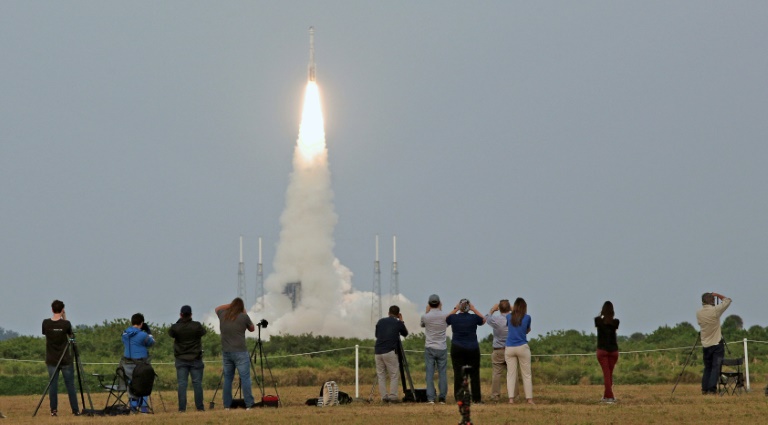
American aerospace giant Boeing’s Starliner capsule was heading for the International Space Station Thursday, in a critical uncrewed test flight that followed years of failures and false starts.

The spacecraft encountered some propulsion troubles early in its journey, with two thrusters responsible for orbital maneuvering failing for unclear reasons — but NASA officials said the mission remained on track.

The Orbital Test Flight 2 (OFT-2) mission blasted off at 6:54 pm Eastern Time (2254 GMT) from the Kennedy Space Center in Florida, with the spaceship fixed atop a United Launch Alliance Atlas V rocket.

Its success is key to repairing Boeing’s frayed reputation after the first bid, back in 2019, failed to dock with the ISS due to software bugs — one that led to it burning too much fuel to reach its destination, and another that could have destroyed the vehicle during re-entry. 

A second try was scheduled in August of last year, but Starliner was rolled back from the launchpad to address sticky valves that weren’t opening as they should, and the capsule was eventually sent back to the factory for fixes.

At a post-launch press conference, senior NASA official Steve Sitch said: “Overall, the spacecraft is doing really well,” but he also flagged two anomalies that engineers were now working to understand.

The first was that two out of 12 orbital maneuvering and attitude control (OMAC) thrusters located on Starliner’s aft side had initially fired but then shut down, forcing a third to take up their slack.

The second issue was that a device known as a sublimator responsible for cooling the spacecraft was initially slow to get started.

NASA is looking to certify Starliner as a second “taxi” service for its astronauts to the space station — a role that Elon Musk’s SpaceX has provided since succeeding in a test mission for its Dragon capsule in 2020.

– Seeking redemption –

Both companies were awarded fixed-price contracts — $4.2 billion to Boeing, and $2.6 billion to SpaceX — in 2014, shortly after the end of the Space Shuttle program, during a time when the United States was left reliant on Russian Soyuz rockets for rides to the orbital outpost. 

Boeing, with its hundred-year history, was considered by many as the sure shot, while then-upstart SpaceX was less proven. 

In reality, it was SpaceX that rocketed ahead, and recently sent its fourth routine crew to the research platform — while Boeing’s development delays have cost the company hundreds of millions of dollars.

Starliner should dock with the ISS about 24 hours after launch, and deliver more than 500 pounds (226 kilograms) of cargo, including food and provisions such as clothes and sleeping bags for the current crew on the station.

Its sole passenger is a mannequin named Rosie the Rocketeer — a play on the World War II campaign icon Rosie the Riveter — whose job is to collect flight data with her sensors in order to learn what human astronauts would experience.

“We are a little jealous of Rosie,” said NASA astronaut Mike Fincke, who is expected to be among the first crew selected for a manned demonstration mission should OFT-2 succeed.

The gumdrop-shaped capsule will spend about five to ten days in space, then undock and return to Earth, using giant parachutes to land in the desert of the western United States. 

NASA sees a second provider to low Earth orbit as a vital backup, should SpaceX encounter problems. 

“It’s a really critical step for us and moving towards having two routinely flying crewed vehicles who can bring our crew to and from ISS,” Dana Weigel, deputy program manager for the ISS, told reporters this week. 

Close Bitnami banner
Bitnami