AFP

Boeing's Starliner encounters propulsion problems on way to ISS

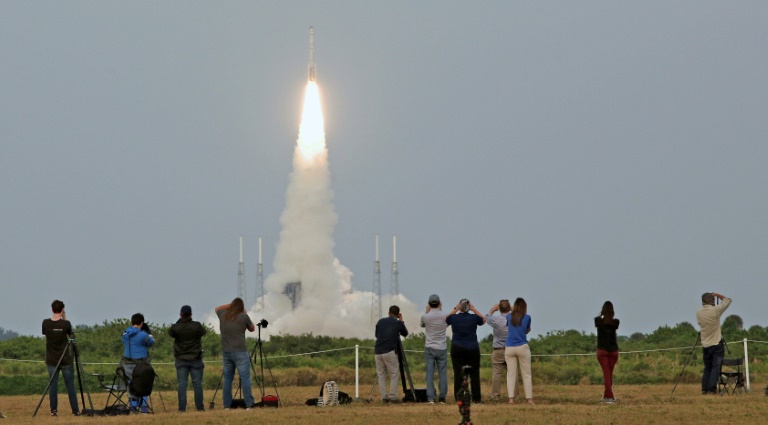
American aerospace giant Boeing’s Starliner capsule was heading for the International Space Station Thursday, in a critical uncrewed test flight that followed years of failures and false starts.

The spacecraft encountered some propulsion troubles early in its journey, with two thrusters responsible for orbital maneuvering failing for unclear reasons — but NASA officials said the mission remained on track.

The Orbital Test Flight 2 (OFT-2) mission blasted off at 6:54 pm Eastern Time (2254 GMT) from the Kennedy Space Center in Florida, with the spaceship fixed atop a United Launch Alliance Atlas V rocket.

Its success is key to repairing Boeing’s frayed reputation after the first bid, back in 2019, failed to dock with the ISS due to software bugs — one that led to it burning too much fuel to reach its destination, and another that could have destroyed the vehicle during re-entry. 

A second try was scheduled in August of last year, but Starliner was rolled back from the launchpad to address sticky valves that weren’t opening as they should, and the capsule was eventually sent back to the factory for fixes.

At a post-launch press conference, senior NASA official Steve Sitch said: “Overall, the spacecraft is doing really well,” but he also flagged two anomalies that engineers were now working to understand.

The first was that two out of 12 orbital maneuvering and attitude control (OMAC) thrusters located on Starliner’s aft side had initially fired but then shut down, forcing a third to take up their slack.

The second issue was that a device known as a sublimator responsible for cooling the spacecraft was initially slow to get started.

NASA is looking to certify Starliner as a second “taxi” service for its astronauts to the space station — a role that Elon Musk’s SpaceX has provided since succeeding in a test mission for its Dragon capsule in 2020.

– Seeking redemption –

Both companies were awarded fixed-price contracts — $4.2 billion to Boeing, and $2.6 billion to SpaceX — in 2014, shortly after the end of the Space Shuttle program, during a time when the United States was left reliant on Russian Soyuz rockets for rides to the orbital outpost. 

Boeing, with its hundred-year history, was considered by many as the sure shot, while then-upstart SpaceX was less proven. 

In reality, it was SpaceX that rocketed ahead, and recently sent its fourth routine crew to the research platform — while Boeing’s development delays have cost the company hundreds of millions of dollars.

Starliner should dock with the ISS about 24 hours after launch, and deliver more than 500 pounds (226 kilograms) of cargo, including food and provisions such as clothes and sleeping bags for the current crew on the station.

Its sole passenger is a mannequin named Rosie the Rocketeer — a play on the World War II campaign icon Rosie the Riveter — whose job is to collect flight data with her sensors in order to learn what human astronauts would experience.

“We are a little jealous of Rosie,” said NASA astronaut Mike Fincke, who is expected to be among the first crew selected for a manned demonstration mission should OFT-2 succeed.

The gumdrop-shaped capsule will spend about five to ten days in space, then undock and return to Earth, using giant parachutes to land in the desert of the western United States. 

NASA sees a second provider to low Earth orbit as a vital backup, should SpaceX encounter problems. 

“It’s a really critical step for us and moving towards having two routinely flying crewed vehicles who can bring our crew to and from ISS,” Dana Weigel, deputy program manager for the ISS, told reporters this week. 
Boeing's Starliner encounters propulsion problems on way to ISS

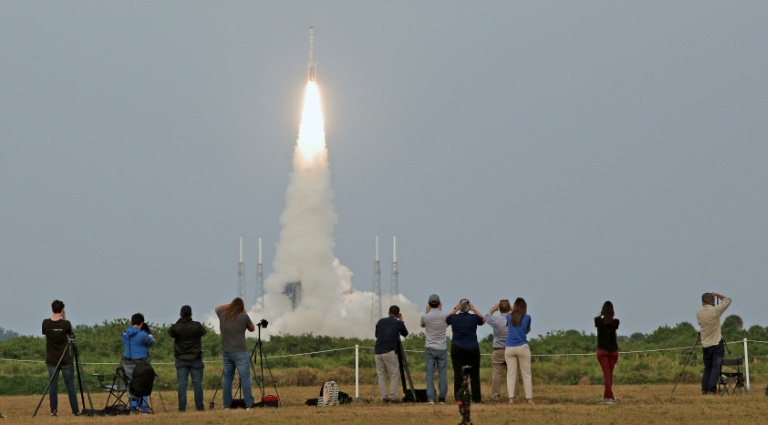
American aerospace giant Boeing’s Starliner capsule was heading for the International Space Station Thursday, in a critical uncrewed test flight that followed years of failures and false starts.

The spacecraft encountered some propulsion troubles early in its journey, with two thrusters responsible for orbital maneuvering failing for unclear reasons — but NASA officials said the mission remained on track.

The Orbital Test Flight 2 (OFT-2) mission blasted off at 6:54 pm Eastern Time (2254 GMT) from the Kennedy Space Center in Florida, with the spaceship fixed atop a United Launch Alliance Atlas V rocket.

Its success is key to repairing Boeing’s frayed reputation after the first bid, back in 2019, failed to dock with the ISS due to software bugs — one that led to it burning too much fuel to reach its destination, and another that could have destroyed the vehicle during re-entry. 

A second try was scheduled in August of last year, but Starliner was rolled back from the launchpad to address sticky valves that weren’t opening as they should, and the capsule was eventually sent back to the factory for fixes.

At a post-launch press conference, senior NASA official Steve Sitch said: “Overall, the spacecraft is doing really well,” but he also flagged two anomalies that engineers were now working to understand.

The first was that two out of 12 orbital maneuvering and attitude control (OMAC) thrusters located on Starliner’s aft side had initially fired but then shut down, forcing a third to take up their slack.

The second issue was that a device known as a sublimator responsible for cooling the spacecraft was initially slow to get started.

NASA is looking to certify Starliner as a second “taxi” service for its astronauts to the space station — a role that Elon Musk’s SpaceX has provided since succeeding in a test mission for its Dragon capsule in 2020.

– Seeking redemption –

Both companies were awarded fixed-price contracts — $4.2 billion to Boeing, and $2.6 billion to SpaceX — in 2014, shortly after the end of the Space Shuttle program, during a time when the United States was left reliant on Russian Soyuz rockets for rides to the orbital outpost. 

Boeing, with its hundred-year history, was considered by many as the sure shot, while then-upstart SpaceX was less proven. 

In reality, it was SpaceX that rocketed ahead, and recently sent its fourth routine crew to the research platform — while Boeing’s development delays have cost the company hundreds of millions of dollars.

Starliner should dock with the ISS about 24 hours after launch, and deliver more than 500 pounds (226 kilograms) of cargo, including food and provisions such as clothes and sleeping bags for the current crew on the station.

Its sole passenger is a mannequin named Rosie the Rocketeer — a play on the World War II campaign icon Rosie the Riveter — whose job is to collect flight data with her sensors in order to learn what human astronauts would experience.

“We are a little jealous of Rosie,” said NASA astronaut Mike Fincke, who is expected to be among the first crew selected for a manned demonstration mission should OFT-2 succeed.

The gumdrop-shaped capsule will spend about five to ten days in space, then undock and return to Earth, using giant parachutes to land in the desert of the western United States. 

NASA sees a second provider to low Earth orbit as a vital backup, should SpaceX encounter problems. 

“It’s a really critical step for us and moving towards having two routinely flying crewed vehicles who can bring our crew to and from ISS,” Dana Weigel, deputy program manager for the ISS, told reporters this week. 

Hive mind: Tunisia beekeepers abuzz over early warning system

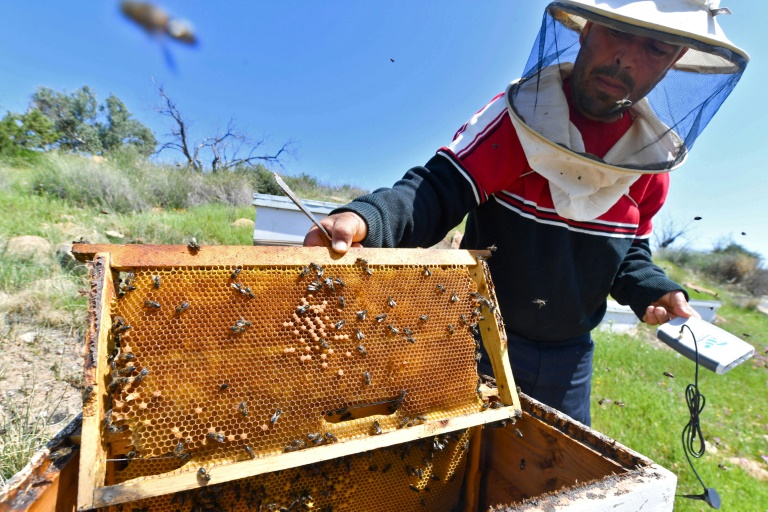
Elias Chebbi inspected a beehive in a field in Tunisia, minutes after a buzz on his phone warned him of a potential problem.

The 39-year-old beekeeper opened a flap in the hive to reveal a low-cost, locally made sensor dedicated to measuring key environmental variables. An app on his phone then warns him if action needs to be taken.

“Thanks to this, I can relax,” he said. “It tells me remotely everything that’s happening.”

Chebbi has two of the sensors, entirely produced in Tunisia by the only company of its kind in North Africa.

He periodically places one in each of the 100 or so hives he keeps, on a grassy hillside an hour’s drive from the capital Tunis.

The devices, each costing under 300 Tunisian dinars (around 92 euros), send live updates on temperature, humidity and the weight of the hive to a central computer.

It then analyses the data and helps him react quickly to potential problems — as well as selecting the most resilient, productive queens for breeding.

That is a major asset as bee colonies face multiple threats, including climate change and increasingly common collapses of entire hives.

– Key role of bees –

Chebbi remembers being stung by a sudden heatwave in 2013, before he started using the system, when he lost around a quarter of his hives.

“I had big losses, 26 hives, because of humidity and the sudden change in temperature,” he said.

But since he started using the SmartBee system — developed in 2020 by a group of young Tunisian engineering graduates — his losses have dropped dramatically, to under 10 percent of his hives in a given year.

He has also boosted his honey production by 30-40 percent.

Today, Khaled Bouchoucha, 34-year-old CEO of manufacturer Beekeeper Tech, says the sensors gather “a huge amount of information on the bees’ yield and the threats they face”. 

The gadgets “gather reliable data in real time, so beekeepers can make good decisions and avoid collapse of their hives”, he said.

This data is then fed wirelessly to the company’s cloud computing system, which analyses it to identify potential problems.

If it does, it sends a warning to the beekeeper to intervene — by cooling overheating hives, adding insulation to those that are dangerously cold, or providing sugar solution to those whose weight shows that they have not produced enough honey to survive the winter.

Beekeeper Tech has sold over 1,000 of the systems, mostly in Tunisia and neighbouring countries.

Bouchoucha says customers are swarming to the app and the firm’s workers are preparing another 1,500 orders for customers in Libya, Algeria, Saudi Arabia and even New Zealand.

– Boosting food security –

Bee populations around the world are facing disaster from overuse of pesticides, mites and temperature extremes due to climate change.

That also spells catastrophe for humans, as we depend on pollination by bees for over a quarter of all the food we consume. 

According to the UN’s Food and Agriculture Organization, three quarters of the world’s main crops depend on pollinators — but the insects are in decline worldwide, mostly due to human activities.

Beekeeping itself is also a vital livelihood for many.

In Tunisia, with its population of 11 million, the sector employs some 13,000 people and produces some 2,800 tonnes of honey every year, according to its agricultural union.

The FAO marks a World Bee Day every year on May 20 to raise awareness about “the essential role bees and other pollinators play in keeping people and the planet healthy.”

The SmartBee app offers more than an early warning system.

The data it collects also tells beekeepers about the health and productivity of each hive, its resistance to changes in climate.

Mnaouer Djemali, chief scientific officer at the National Agronomic Institute of Tunisia and a co-founder of Beekeeper Tech, said data from the hives “enables us to measure the profitability of each queen” and to select the best for breeding.

“That can help us boost our food security and sovereignty,” he said. “We are sorely in need of that in a world full of diseases and wars.”

Hive mind: Tunisia beekeepers abuzz over early warning system

Elias Chebbi inspected a beehive in a field in Tunisia, minutes after a buzz on his phone warned him of a potential problem.

The 39-year-old beekeeper opened a flap in the hive to reveal a low-cost, locally made sensor dedicated to measuring key environmental variables. An app on his phone then warns him if action needs to be taken.

“Thanks to this, I can relax,” he said. “It tells me remotely everything that’s happening.”

Chebbi has two of the sensors, entirely produced in Tunisia by the only company of its kind in North Africa.

He periodically places one in each of the 100 or so hives he keeps, on a grassy hillside an hour’s drive from the capital Tunis.

The devices, each costing under 300 Tunisian dinars (around 92 euros), send live updates on temperature, humidity and the weight of the hive to a central computer.

It then analyses the data and helps him react quickly to potential problems — as well as selecting the most resilient, productive queens for breeding.

That is a major asset as bee colonies face multiple threats, including climate change and increasingly common collapses of entire hives.

– Key role of bees –

Chebbi remembers being stung by a sudden heatwave in 2013, before he started using the system, when he lost around a quarter of his hives.

“I had big losses, 26 hives, because of humidity and the sudden change in temperature,” he said.

But since he started using the SmartBee system — developed in 2020 by a group of young Tunisian engineering graduates — his losses have dropped dramatically, to under 10 percent of his hives in a given year.

He has also boosted his honey production by 30-40 percent.

Today, Khaled Bouchoucha, 34-year-old CEO of manufacturer Beekeeper Tech, says the sensors gather “a huge amount of information on the bees’ yield and the threats they face”. 

The gadgets “gather reliable data in real time, so beekeepers can make good decisions and avoid collapse of their hives”, he said.

This data is then fed wirelessly to the company’s cloud computing system, which analyses it to identify potential problems.

If it does, it sends a warning to the beekeeper to intervene — by cooling overheating hives, adding insulation to those that are dangerously cold, or providing sugar solution to those whose weight shows that they have not produced enough honey to survive the winter.

Beekeeper Tech has sold over 1,000 of the systems, mostly in Tunisia and neighbouring countries.

Bouchoucha says customers are swarming to the app and the firm’s workers are preparing another 1,500 orders for customers in Libya, Algeria, Saudi Arabia and even New Zealand.

– Boosting food security –

Bee populations around the world are facing disaster from overuse of pesticides, mites and temperature extremes due to climate change.

That also spells catastrophe for humans, as we depend on pollination by bees for over a quarter of all the food we consume. 

According to the UN’s Food and Agriculture Organization, three quarters of the world’s main crops depend on pollinators — but the insects are in decline worldwide, mostly due to human activities.

Beekeeping itself is also a vital livelihood for many.

In Tunisia, with its population of 11 million, the sector employs some 13,000 people and produces some 2,800 tonnes of honey every year, according to its agricultural union.

The FAO marks a World Bee Day every year on May 20 to raise awareness about “the essential role bees and other pollinators play in keeping people and the planet healthy.”

The SmartBee app offers more than an early warning system.

The data it collects also tells beekeepers about the health and productivity of each hive, its resistance to changes in climate.

Mnaouer Djemali, chief scientific officer at the National Agronomic Institute of Tunisia and a co-founder of Beekeeper Tech, said data from the hives “enables us to measure the profitability of each queen” and to select the best for breeding.

“That can help us boost our food security and sovereignty,” he said. “We are sorely in need of that in a world full of diseases and wars.”

Japan's Quad summit eyes unity on China, if not Ukraine

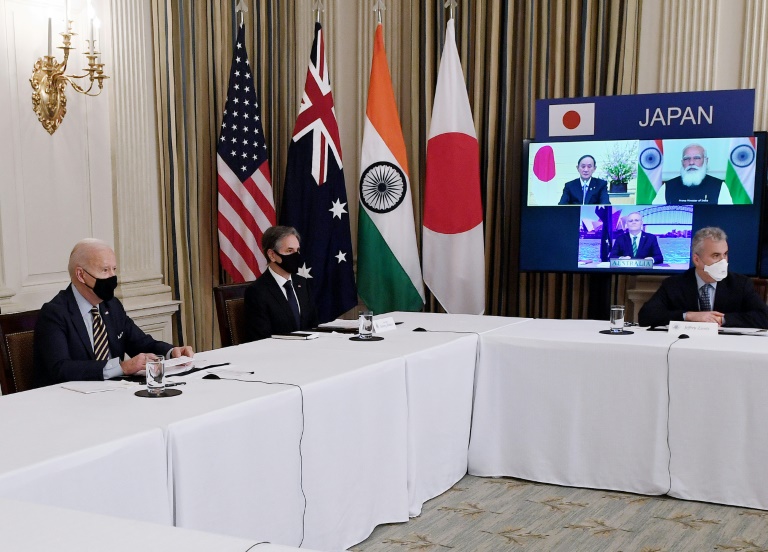
The leaders of Japan, India, Australia and the United States meet in Tokyo next week seeking common ground on countering China, despite differences over Russia’s invasion of Ukraine.

The loosely organised “Quad” grouping is united by its desire for a counterweight to China’s expanding economic, military and technological influence.

But it is divided on Ukraine, with India the only member not to have explicitly criticised or imposed sanctions on Moscow, instead increasing its imports of Russian oil.

Many observers are convinced that Beijing is eyeing the international response to the war in Ukraine as it considers its options for “reunifying” Taiwan with the mainland.

Quad leaders “will be talking about ways they can increase deterrence and military cooperation” concerning China, said Robert Dujarric, co-director of Institute of Contemporary Asian Studies at Temple University.

The May 24 forum “will show Beijing that they are working together to contain, to deter, against China,” he told AFP.

US President Joe Biden will be in Japan for the first time since taking office and is expected to use bilateral talks with Japanese Prime Minister Fumio Kishida to hammer home concerns about Beijing.

Reports suggest the pair will issue a joint statement warning they are ready to “respond” to actions by China that undermine regional stability.

But the tone of any Quad statement is likely to be softer, echoing past calls for a “free and open Indo-Pacific” and warnings against “unilateral” moves in the region — without directly naming China.

The mood is already tense, and the entire summit could yet be overshadowed by North Korea, which is believed to be preparing fresh missile launches or even a nuclear test.

Elsewhere, Japan has regularly raised concern about increasing Chinese patrols around disputed islands and there is growing talk about how the United States and allies should respond to threats to Taiwan.

– ‘Not a negative message’ –

Japan’s foreign minister this week held his first talks with his Chinese counterpart in six months, calling on Beijing to play “a responsible role” internationally and warning that public opinion in Japan is “extremely severe to China.”

Beijing’s rhetoric has been sharp, with warnings that reports “the US and Japan would join forces against China” were “clouding the air.”

China’s top diplomat Yang Jiechi also explicitly put Washington on notice over Taiwan, saying if it “goes further and further down the wrong road, it will certainly lead the situation to a dangerous point.”

Washington has appeared to be trying to tamp down tensions, with National Security Advisor Jake Sullivan insisting Biden’s focus was “not a negative message and it’s not targeted at any one country.”

Biden and Kishida, along with Indian Prime Minister Narendra Modi and the winner of Australia’s May 21 elections, are seeking to find common ground on economic cooperation, including fixing supply chain disruptions and securing semiconductor supplies.

The United States will unveil its Indo-Pacific Economic Framework, a new economic grouping seen as a bid by Washington to build supply chains without China.

It comes after Washington under then-president Donald Trump abruptly pulled out of the Trans-Pacific Partnership that groups countries surrounding China.

But behind the common front will be lingering differences with India on Ukraine.

“The difference of attitudes over the Ukraine war have prompted a question in the minds of the United States and Europe as to whether India is a nation that shares the same values,” said Michito Tsuruoka, an associate professor at Keio University who studies defence issues and European politics.

“The Quad started as a security framework, but now we are seeing more of an economic agenda” partly due to difficulties with India on defence subjects, he added.

And the summit is unlikely to change that, said Jitendra Nath Mishra, a former ambassador and adjunct professor at O.P. Jindal Global University.

Washington and its allies “have shown understanding of India’s need to protect its strategic and military ties with Russia to develop China-facing capabilities,” he said.

“Pressurising India does not advance the West’s need to build a coalition to counter an aggressive China.”

hih-burs/sah/oho

Sandstorms pose serious risk to human health

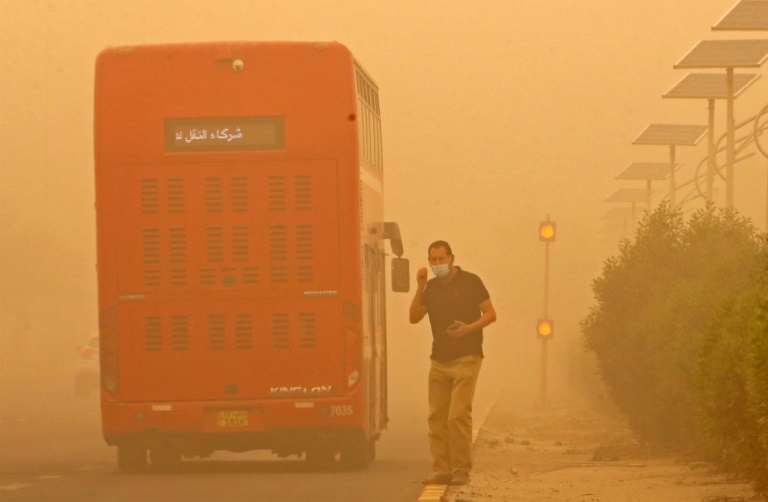
Sandstorms have engulfed the Middle East in recent days, in a phenomenon experts warn could proliferate because of climate change, putting human health at grave risk.

At least 4,000 people went to hospital Monday for respiratory issues in Iraq where eight sandstorms have blanketed the country since mid-April.

That was on top of the more than 5,000 treated in Iraqi hospitals for similar respiratory ailments earlier this month.

The phenomenon has also smothered Iran, Kuwait, Saudi Arabia and the United Arab Emirates with more feared in the coming days.

Strong winds lift large amounts of sand and dust into the atmosphere, that can then travel hundreds, even thousands, of kilometres (miles).

Sandstorms have affected a total of 150 countries and regions, adversely impacting on the environment, health and the economy, the World Meteorological Organization (WMO) said.

“It’s a phenomenon that is both local and global, with a stronger intensity in areas of origin,” said Carlos Perez Garcia-Pando, a sand and dust storm expert at the Barcelona Supercomputing Center and the Catalan Institution for Research and Advanced Studies.

The storms originate in dry or semi-dry regions of North Africa, the Arabian Peninsula, Central Asia and China.

Other less affected areas include Australia, the Americas and South Africa.

The UN agency WMO has warned of the “serious risks” posed by airborne dust.

The fine dust particles can cause health problems such as asthma and cardiovascular ailments, and also spread bacteria and viruses as well as pesticides and other toxins.

“Dust particle size is a key determinant of potential hazard to human health,” the WMO said.

Small particles that can be smaller than 10 micrometres can often become trapped in the nose, mouth and upper respiratory tract, and as a result it is associated with respiratory disorders such as asthma and pneumonia.

– ‘Unbreathable’ –

The most at-risk are the oldest and youngest as well as those struggling with respiratory and cardiac problems.

And the most affected are residents in countries regularly battered by sandstorms, unlike in Europe where dust coming from the Sahara is rare, like the incident in March.

Depending on the weather and climate conditions, sand dust can remain in the atmosphere for several days and travel great distances, at times picking up bacteria, pollen, fungi and viruses.

“However, the seriousness is less than with ultrafine particles, for example from road traffic, which can penetrate the brain or the blood system,” says Thomas Bourdrel, a radiologist, researcher at the University of Strasbourg and a member of Air Health Climate collective.

Even if the sand particles are less toxic than particles produced by combustion, their “extreme density during storms causes a fairly significant increase in cardio-respiratory mortality, especially among the most vulnerable,” he said.

With “a concentration of thousands of cubic micrometres in the air, it’s almost unbreathable”, said Garcia-Pando.

The sandstorms’ frequency and intensity could worsen because of climate change, say some scientists.

But the complex phenomenon is “full of uncertainties” and is affected by a cocktail of factors like heat, wind and agricultural practices, Garcia-Pando told AFP.

“In some areas, climate change could reduce the winds that cause storms, but extreme events could persist, even rise,” he said.

With global temperatures rising, it is very likely that more and more parts of the Earth will become drier.

“This year, a significant temperature anomaly was observed in East Africa, in the Middle East, in East Asia, and this drought affects plants, a factor that can increase sandstorms,” the Spanish researcher said.

New one year delay at UK Hinkley Point nuclear plant: EDF

An already-delayed giant nuclear plant in southwest England will open a year later than planned and cost up to £3 billion more than previously thought, French electricity giant EDF said Thursday.

The total cost of Hinkley Point C, which aims to provide seven percent of Britain’s total power needs, had already swelled to as much as £23 billion and had been due to begin generation in June 2026, already well behind schedule.

Hinkley Point is Britain’s first new nuclear power plant in more than two decades.

“The start of electricity generation for Unit 1 is targeted for June 2027, the risk of further delay of the two units is assessed at 15 months, assuming the absence of a new pandemic wave and no additional effects of the war in Ukraine,” EDF said in a statement adding that costs were now estimated between £25 billion ($31 billion, 30 billion euros) and £26 billion. 

EDF said in its statement that there would be no additional cost to British consumers.

“During more than two years of the Covid-19 pandemic, the project continued without stopping. This protected the integrity of the supply chain and allowed the completion of major milestones. However, people, resources and supply chain have been severely constrained and their efficiency has been restricted. 

“In addition, the quantities of materials and engineering as well as the cost of such activities, including, in particular marine works have risen,” it added.

– ‘Risky and expensive’ –

Britain has a total of 15 nuclear reactors at eight sites around the country, but many of them are now approaching the end of their lifespan.

However, the government wants to maintain the 20 percent of electricity it generates from nuclear to help meet its pledge to reduce carbon emissions to net zero by 2050 and tackle climate change.

Critics have focused on the proposed design, which uses a new European Pressurised Reactor (EPR) system that has been beset by huge cost overruns and delays at sites in France and Finland.

Britain’s National Audit Office has long criticised the scheme, with the watchdog saying the government has “locked consumers into a risky and expensive project with uncertain strategic and economic benefits”.

Launched in 1992 as the pinnacle of French nuclear technology, the EPR was originally developed by Areva in a joint venture with Germany’s Siemens, which later withdrew.

Later taken over by EDF, the project called for a plant able to operate for 60 years using pressurised water technology, the most widely-used in reactors around the world.

Similar problems to those at Hinkley have hit EDF’s project at Flamanville in western France, although the firm has successfully launched two reactors with Chinese partners in Taishan, China.

New one year delay at UK Hinkley Point nuclear plant: EDF

An already-delayed giant nuclear plant in southwest England will open a year later than planned and cost up to £3 billion more than previously thought, French electricity giant EDF said Thursday.

The total cost of Hinkley Point C, which aims to provide seven percent of Britain’s total power needs, had already swelled to as much as £23 billion and had been due to begin generation in June 2026, already well behind schedule.

Hinkley Point is Britain’s first new nuclear power plant in more than two decades.

“The start of electricity generation for Unit 1 is targeted for June 2027, the risk of further delay of the two units is assessed at 15 months, assuming the absence of a new pandemic wave and no additional effects of the war in Ukraine,” EDF said in a statement adding that costs were now estimated between £25 billion ($31 billion, 30 billion euros) and £26 billion. 

EDF said in its statement that there would be no additional cost to British consumers.

“During more than two years of the Covid-19 pandemic, the project continued without stopping. This protected the integrity of the supply chain and allowed the completion of major milestones. However, people, resources and supply chain have been severely constrained and their efficiency has been restricted. 

“In addition, the quantities of materials and engineering as well as the cost of such activities, including, in particular marine works have risen,” it added.

– ‘Risky and expensive’ –

Britain has a total of 15 nuclear reactors at eight sites around the country, but many of them are now approaching the end of their lifespan.

However, the government wants to maintain the 20 percent of electricity it generates from nuclear to help meet its pledge to reduce carbon emissions to net zero by 2050 and tackle climate change.

Critics have focused on the proposed design, which uses a new European Pressurised Reactor (EPR) system that has been beset by huge cost overruns and delays at sites in France and Finland.

Britain’s National Audit Office has long criticised the scheme, with the watchdog saying the government has “locked consumers into a risky and expensive project with uncertain strategic and economic benefits”.

Launched in 1992 as the pinnacle of French nuclear technology, the EPR was originally developed by Areva in a joint venture with Germany’s Siemens, which later withdrew.

Later taken over by EDF, the project called for a plant able to operate for 60 years using pressurised water technology, the most widely-used in reactors around the world.

Similar problems to those at Hinkley have hit EDF’s project at Flamanville in western France, although the firm has successfully launched two reactors with Chinese partners in Taishan, China.

Rihanna welcomes first child after high-fashion, self-affirming pregnancy

Superstar Rihanna and rapper A$AP Rocky have reportedly welcomed their first child, after a pregnancy the singer flaunted in a radical revamp of normally covered-up maternity style.

The entertainment and fashion mogul behind the hits “Diamonds” and “Umbrella” gave birth to a boy on May 13 in Los Angeles, according to TMZ, which first reported the news. 

People Magazine confirmed the celebrity birth, citing a source close to the couple who said they are at home with the baby and that “Rihanna is doing well. They are very excited to be parents.”

Representatives for the couple did not immediately respond to an AFP request for confirmation.

No other details, including the child’s name, have been made public.

The Barbadian-born Robyn Rihanna Fenty, 34, in recent years has become a billionaire, parlaying her music achievements into successful makeup, lingerie and high-fashion brands.

Rumors that she and A$AP Rocky, 33, were dating swirled for years before the pair confirmed last year that their romance was official.

The pair announced they were expecting in January with a set of glamorous snow-dusted images taken in Harlem, the mother-to-be sporting a long pink jacket buttoned only at the top, paired with a long bejeweled necklace over her bare belly.  

Since then, Rihanna has triggered a paparazzi frenzy and left the fashion industry in awe, appearing in barely-there maternity looks that showcased her growing baby bump, no holds barred.

Weeks after announcing her pregnancy, the pop icon dazzled the fashion week circuit in look after look, notably arriving in Paris in a completely see-through Dior lace cocktail dress, under which she donned lingerie from her own Savage X Fenty line.

Paired with spiky heeled knee-high boots, a leather trench coat, and silver necklaces, the star walked with such grace and confidence she appeared to float.

“You’re late!” shouted someone off-camera in a viral clip.

Rihanna slowly turned her head, held her bump and narrowed her piercing eyes: “No shit.”

– ‘Rewriting’ pregnancy rules –

It’s a quip that’s come to encapsulate the artist’s embrace of her changing body — Rihanna didn’t just bare her belly, she boasted of it, adorning herself in jewels, sequined bras, and low-slung miniskirts.

“She’s changed something profound in fashion — single-handedly rewriting the rules of pregnancy dressing with one jaw-dropping style maneuver after another,” wrote Vogue, which featured Rihanna on its May cover.

“I’m hoping that we were able to redefine what’s considered ‘decent’ for pregnant women,” the performer told the magazine.

“My body is doing incredible things right now, and I’m not going to be ashamed of that. This time should feel celebratory.”

She’s far from the first celebrity to show off her pregnant belly: Demi Moore posed nude while expecting on Vanity Fair’s cover in 1991, a stunning move for the time.

Since then, Britney Spears, Cindy Crawford and Serena Williams have all sat for similar glossy pregnancy portraits. Beyonce meanwhile announced her twins with a highly polished, belly-baring Instagram post chock full of art-world references including Botticelli’s Venus.

But Rihanna’s scantily clad looks have been far less calculated and far more frequent, a statement on maternity that goes beyond the magazine cover to be an everyday celebration of self.

“Right now I’m really into pushing the idea of sexy,” she told the lifestyle website Refinery29 in February. “When women get pregnant, society tends to make it feel like you hide, hide your sexy.”

“I don’t believe in that shit,” she continued. “So I’m trying stuff that I might not have even had the confidence to try before I was pregnant.”

“The strappiest, the thinnest, and the more cut-outs — the better for me.”

Canada bans Huawei and ZTE from 5G networks

Canada will ban Chinese telecommunications giants Huawei and ZTE from its 5G wireless networks due to national security concerns, officials said Thursday.

The long-awaited move follows the United States and other key allies, and comes on the heels of a diplomatic row between Ottawa and Beijing over the detention of a senior Huawei executive on a US warrant, which has now been resolved.

The United States has warned of the security implications of giving Chinese tech companies access to telecommunications infrastructure that could be used for state espionage.

Both Huawei and Beijing have rejected the allegations, while Beijing warned of repercussions for nations placing restrictions on the telecoms equipment provider.

The company did not immediately respond to an AFP request for comment on Canada’s ban.

Canadian Industry Minister Francois-Philippe Champagne and Public Safety Minister Marco Mendicino made the announcement at a news conference.

“Today, we’re announcing our intention to prohibit the inclusion of Huawei and ZTE products and services in Canada’s telecommunication systems,” Champagne said.

“This follows a full review by our security agencies and in consultation with our closest allies.”

Canada had been reviewing the 5G technology and network access for several years, repeatedly delaying a decision that was first expected in 2019.

It remained silent on the telecoms issue after China jailed two Canadians — diplomat Michael Kovrig and businessman Michael Spavor — in what observers believed was in retaliation for the arrest of Huawei chief financial officer Meng Wangzhou in Vancouver in December 2018 at the request of the United States.

All three were released in September 2021 after Meng reached a deal with US prosecutors on the fraud charges, ending her extradition fight.

Champagne said Canadian telecommunications companies “will not be permitted to include in their networks products or services that put our national security at risk.”

“Providers who already have this equipment installed will be required to cease its use and remove it,” he said.

– ‘Hostile actors’ –

Huawei already supplies some Canadian telecommunications firms with 4G equipment.

Most, if not all, had held off using Huawei in their fifth-generation (5G) wirelesss networks that deliver speedier online connections with greater data capacity, or looked to other suppliers while Ottawa hemmed and hawed.

Mendicino said 5G innovation “represents a major opportunity for competition and growth” but “also comes risks.”

“There are many hostile actors who are ready to exploit vulnerabilities” in telecom networks, he said.

The United States, Australia, Britain, New Zealand, Japan and Sweden have already blocked or restricted the use of Huawei technology in their 5G networks.

The US government considers Huawei a potential security threat due to the background of its founder and CEO Ren Zhengfei, a former Chinese army engineer who is Meng’s father.

The concern escalated as Huawei rose to become the world leader in telecoms networking equipment and one of the top smartphone manufacturers, and following Beijing’s passage of a 2017 law obliging Chinese companies to assist the government in matters of national security.

Canada’s two spy agencies had reportedly been divided initially over whether or not to ban Huawei from Canada’s 5G networks — one favouring a ban while the other argued risks could be mitigated.

The Canadian Security Intelligence Service and the Communications Security Establishment had been tasked with conducting a cybersecurity review to evaluate the risks as well as the economic costs to Canadian telecoms and consumers of blacklisting the equipment supplier.

Huawei was already prohibited from bidding on Canadian government contracts and core network equipment such as routers and switches.

Close Bitnami banner
Bitnami