AFP

UN chief warns of famine, urges Russia to free Ukrainian grain

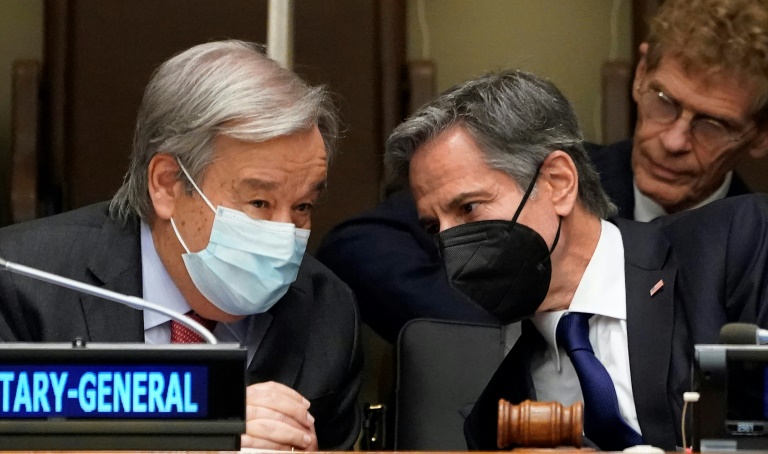
UN chief Antonio Guterres warned Wednesday of years of mass hunger and famine if a growing global food crisis goes unchecked as he urged Russia to release Ukrainian grain.

Speaking at a major United Nations summit in New York, Guterres said the war in Ukraine was compounding global food insecurity already worsened by warming temperatures and the coronavirus pandemic.

Guterres said that in just two years, the number of severely food insecure people has doubled — from 135 million pre-pandemic to 276 million today.

He added that more than half a million people are living in famine conditions, an increase of more than 500 percent since 2016.

“Now the war in Ukraine is amplifying and accelerating all these factors: climate change, Covid-19 and inequality,” he told the meeting on the growing food crisis chaired by US Secretary of State Antony Blinken.

“It threatens to tip tens of millions of people over the edge into food insecurity, followed by malnutrition, mass hunger and famine, in a crisis that could last for years,” Guterres added.

Before Russia’s invasion of its neighbor in February, Ukraine was seen as the world’s bread basket, exporting 4.5 million tonnes of agricultural produce per month through its ports -– 12 percent of the planet’s wheat, 15 percent of its corn and half of its sunflower oil.

But with the ports of Odessa, Chornomorsk and others cut off from the world by Russian warships, the supply can only travel on congested land routes that are far less efficient.

Guterres called on Russia to free up Ukrainian exports of grain.

“Let’s be clear: there is no effective solution to the food crisis without reintegrating Ukraine’s food production,” he said.

“Russia must permit the safe and secure export of grain stored in Ukrainian ports.

“Alternative transportation routes can be explored — even if we know that by itself, this will not be enough to solve the problem,” Guterres added.

The UN chief also said that Russian food and fertilizers “must have full and unrestricted access to world markets.”

Russia is the world’s top supplier of key fertilizers and gas.

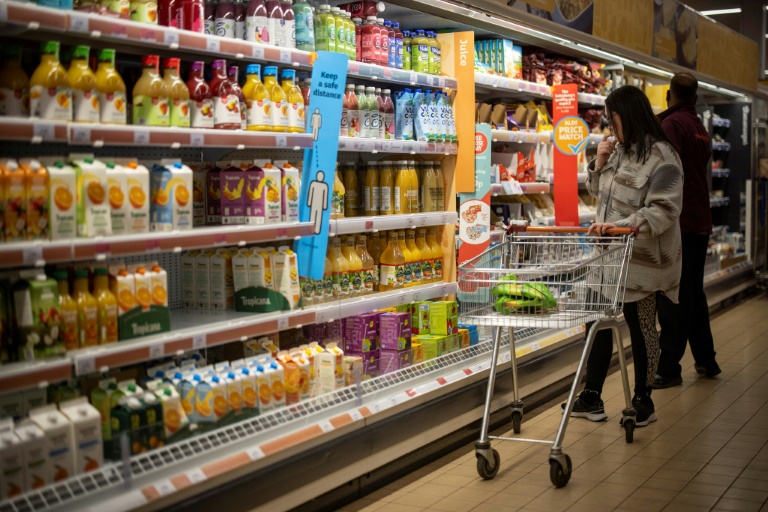
The war and international economic sanctions on Moscow have disrupted supplies of fertilizer, wheat and other commodities from both countries, pushing up prices for food and fuel, especially in developing nations.

The fertilizers are not subject to the Western sanctions but sales have been disrupted by measures taken against the Russian financial system, diplomats say.
Pee pals: Dolphins use taste of urine to recognize friends

Think about people you know, and how you could tell they were around even if you couldn’t see them: their voice, perhaps, or even a favored deodorant.

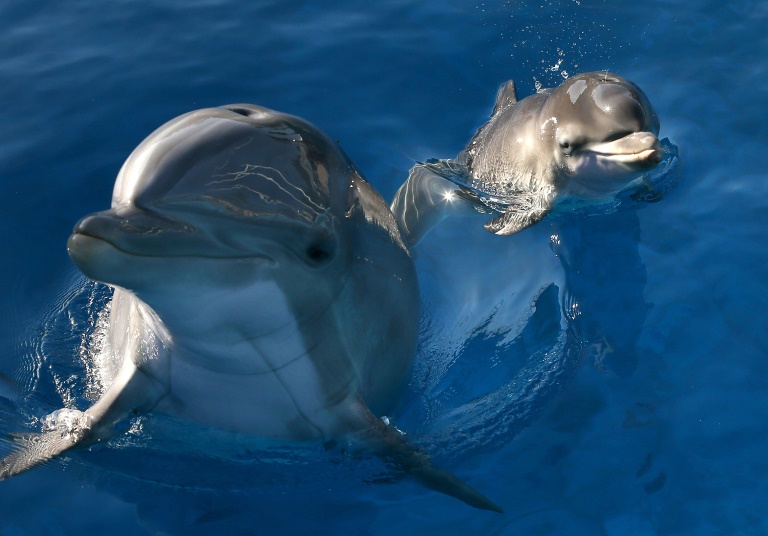
For bottlenose dolphins, it’s the taste of urine and signature whistles that allow them to recognize their friends at a distance, according to a study published Wednesday in Science Advances. 

“The use of taste is highly beneficial in the open ocean because urine plumes will persist for a while after an animal has left,” wrote the team, led by Jason Bruck at the University of St Andrews.

“By recognizing who caused a plume, dolphins would be alerted to the recent presence of that individual even if it had not signaled its presence vocally.”

The question of whether animals can attach “labels” to their friends in their minds has been difficult to answer. Prior research has focused on lab-based experiments, leaving it unclear whether animals use labeling when communicating naturally.

Bottlenose dolphins, which use “signature whistles” to selectively address specific individuals, and can remember these for over 20 years, were thus an interesting test case to study.

To investigate, the team presented eight dolphins with urine samples from familiar and unfamiliar individuals, finding they spent around three times as long sampling urine from those they knew.

Genital inspection, in which a dolphin uses its jaw to touch the genitals of another individual, is common in their social interactions, providing a good opportunity to learn the taste of others’ urine. 

For the purposes of this study, the dolphins were trained to provide urine samples on demand in exchange for food.

Dolphins do not have olfactory bulbs, and the corresponding nerve is underdeveloped, leaving the team certain it was taste and not smell at play.

Next, the team paired urine samples with recordings of signature whistles played via underwater speakers, corresponding to either the same dolphin that provided the urine sample, or a mismatched sample.

Dolphins remained close to the speaker longer when the vocalizations matched the urine samples — indicating that the two lines of evidence together evoked more interest.

The team suggested that major urinary proteins, as well as lipids, were likely responsible for individual chemical signatures.

“Given the recognition skills revealed in our study, we think that it is likely that dolphins can also extract other information from urine, such as reproductive state, or use pheromones to influence each other’s behavior,” they said.

Most automakers fall short on climate goals: report

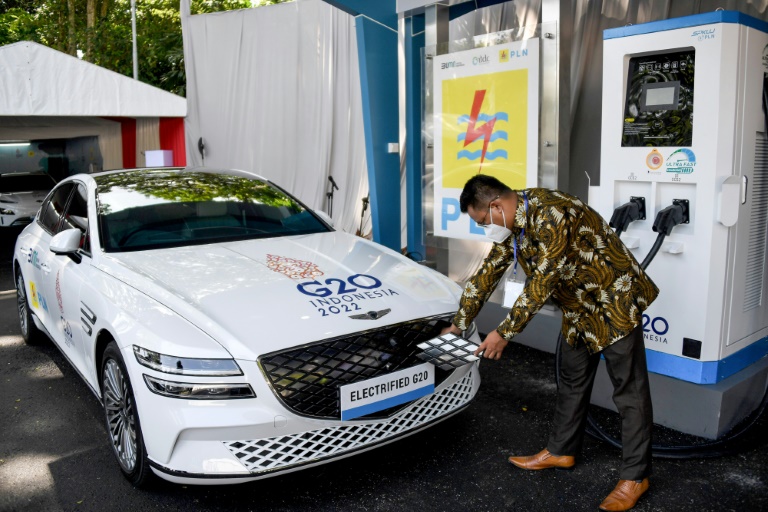
Only two of the world’s 12 top automakers plan to make enough electric vehicles by 2030 to stay in step with Paris Agreement climate goals, experts said Wednesday.

Globally, more than half of all new vehicles coming off of production lines in 2029 would need to be electric for the sector to be compliant with the goal of capping global warming at 1.5 degrees Celsius above preindustrial levels, according to Influence Map, a research NGO that evaluates corporate climate goals and policies.

At the same time, 11 of the 12 carmakers — while publicly supporting the Paris Agreement — have actively opposed government policies to accelerate the shift to electric vehicles, especially the phase-out internal combustion engines, Influence Map said.

Japanese auto giants Toyota, Honda and Nissan are especially far off the mark, with non-polluting cars accounting for only 14, 18 and 22 percent, respectively, of their planned production in 2029, the report said. 

South Korea’s Hyundai, US manufacturer Ford and France’s Renault — with 27, 28 and 31 percent of their global fleets projected to be electric in seven years — were only marginally more on track.

The standout exception is US-based Tesla, a “pure player” manufacturer that has only ever made electric cars and trucks.

– Lagging behind –

“Almost all automakers are failing to keep pace with the transition to zero emissions,” said Influence Map program Manager Ben Youriev.

“Those lagging the furthest behind are also the most negative when it comes to climate policy advocacy.”

Ford, Stellantis, Volkswagen and BMW come closer to the 52 percent threshold for compatibility with Paris temperature target, with 36 to 46 percent of their fleets planned to be electric in 2029.

Besides Tesla, only Mercedes-Benz — at 56 percent — is projecting a transition in keeping with that target.

To evaluate automaker trajectories, Influence Map cross-references different datasets.

Researchers used the International Energy Agency’s (IEA) scenario for decarbonising the transport sector rapidly enough to not jeopardise the 1.5C goal, which would need 57.5 percent of all cars produced in 2030 to be electric.

The IEA’s Net Zero by 2050 report also assumes the share of renewables in global electricity generation would be about 60 percent in 2030.

The Influence Map report then compared this goal with IHS Markit production forecasts to 2029, corresponding to a 52 percent share of electric vehicles in the IEA schema. 

Collectively, the combined global production of battery electric vehicles by all automakers is forecast to only reach 32 percent by 2029.

That means the auto industry would need to boost production of zero-emission cars by 80 percent in order to hit the IEA 2030 production target.

– Impact of government policy –

The report findings reveal the critical impact of government policy on the pace of the transition away from internal combustion engines, which account for around 16 percent of global energy-related CO2 emissions, according to the UN’s Intergovernmental Panel on Climate Change (IPCC).

In the European Union, which aims to cut greenhouse gas emissions to 55 percent below 1990 levels by 2030, Toyota’s produced fleet is projected to be 50 percent electric by 2029. 

But in the United States, where fuel emissions standards are less stringent, that figure is only four percent.

Similarly, Ford’s EU-based production is forecast to be 65 percent electric by 2029 — nearly double it’s global average.

One pension fund with shares in Toyota and Volkswagen expressed concern about the Influence of the Map findings.

“As investors, we are concerned with the picture painted which confirms that some companies in the auto industry are placing themselves on the wrong side of history when actively opposing much needed climate change-related rules and regulations,” Anders Schelde, CIO of Denmark’s AkademikerPension, with $20 billion of assets under management, told AFP.

“We are also worried about Toyota scoring worst among peers on climate lobbying as the company is jeopardizing its valuable brand.”

Most automakers fall short on climate goals: report

Only two of the world’s 12 top automakers plan to make enough electric vehicles by 2030 to stay in step with Paris Agreement climate goals, experts said Wednesday.

Globally, more than half of all new vehicles coming off of production lines in 2029 would need to be electric for the sector to be compliant with the goal of capping global warming at 1.5 degrees Celsius above preindustrial levels, according to Influence Map, a research NGO that evaluates corporate climate goals and policies.

At the same time, 11 of the 12 carmakers — while publicly supporting the Paris Agreement — have actively opposed government policies to accelerate the shift to electric vehicles, especially the phase-out internal combustion engines, Influence Map said.

Japanese auto giants Toyota, Honda and Nissan are especially far off the mark, with non-polluting cars accounting for only 14, 18 and 22 percent, respectively, of their planned production in 2029, the report said. 

South Korea’s Hyundai, US manufacturer Ford and France’s Renault — with 27, 28 and 31 percent of their global fleets projected to be electric in seven years — were only marginally more on track.

The standout exception is US-based Tesla, a “pure player” manufacturer that has only ever made electric cars and trucks.

– Lagging behind –

“Almost all automakers are failing to keep pace with the transition to zero emissions,” said Influence Map program Manager Ben Youriev.

“Those lagging the furthest behind are also the most negative when it comes to climate policy advocacy.”

Ford, Stellantis, Volkswagen and BMW come closer to the 52 percent threshold for compatibility with Paris temperature target, with 36 to 46 percent of their fleets planned to be electric in 2029.

Besides Tesla, only Mercedes-Benz — at 56 percent — is projecting a transition in keeping with that target.

To evaluate automaker trajectories, Influence Map cross-references different datasets.

Researchers used the International Energy Agency’s (IEA) scenario for decarbonising the transport sector rapidly enough to not jeopardise the 1.5C goal, which would need 57.5 percent of all cars produced in 2030 to be electric.

The IEA’s Net Zero by 2050 report also assumes the share of renewables in global electricity generation would be about 60 percent in 2030.

The Influence Map report then compared this goal with IHS Markit production forecasts to 2029, corresponding to a 52 percent share of electric vehicles in the IEA schema. 

Collectively, the combined global production of battery electric vehicles by all automakers is forecast to only reach 32 percent by 2029.

That means the auto industry would need to boost production of zero-emission cars by 80 percent in order to hit the IEA 2030 production target.

– Impact of government policy –

The report findings reveal the critical impact of government policy on the pace of the transition away from internal combustion engines, which account for around 16 percent of global energy-related CO2 emissions, according to the UN’s Intergovernmental Panel on Climate Change (IPCC).

In the European Union, which aims to cut greenhouse gas emissions to 55 percent below 1990 levels by 2030, Toyota’s produced fleet is projected to be 50 percent electric by 2029. 

But in the United States, where fuel emissions standards are less stringent, that figure is only four percent.

Similarly, Ford’s EU-based production is forecast to be 65 percent electric by 2029 — nearly double it’s global average.

One pension fund with shares in Toyota and Volkswagen expressed concern about the Influence of the Map findings.

“As investors, we are concerned with the picture painted which confirms that some companies in the auto industry are placing themselves on the wrong side of history when actively opposing much needed climate change-related rules and regulations,” Anders Schelde, CIO of Denmark’s AkademikerPension, with $20 billion of assets under management, told AFP.

“We are also worried about Toyota scoring worst among peers on climate lobbying as the company is jeopardizing its valuable brand.”

French towns sweat in record May heat

Several southern French towns sizzled in record high temperatures for May on Wednesday, while the month as whole is on track to be the hottest since records began, the national weather service said. 

Towns such as Albi, Toulouse and Montelimar in southern France set records of between 33.4-33.9 degrees Celsius (92.1-93.0 degrees Fahrenheit) on Wednesday, while areas on the west and northern coasts also logged unprecedented highs, Meteo-France said.

The country has been in the grip of an extraordinary warm spell for this time of year, with the last 37 days in a row featuring temperatures above the average.

It was “highly probable” that May 2022 would be the hottest since records began, surpassing the previous high set in May 2011, Meteo-France said.

“It’s a warm period, long-lasting, wide-reaching and intense, that is exceptional for this time of year,” meteorologist Matthieu Sorel from Meteo-France told AFP.

The warm spell did not meet the technical definition of a heatwave — when average nation-wide temperatures need to surpass 25.3C for three consecutive days.

But it is causing major problems for farmers and warnings that it might affect France’s wheat crop which enters a crucial growth stage in May.

Wheat prices are at record levels globally, mostly due to the war in Ukraine, which was a major exporter of the cereal before Russia’s attack began in February.

All heatwaves today bear the unmistakable and measurable fingerprint of global warming, a new academic report from experts in the World Weather Attribution (WWA) consortium said last week.

Temperatures in India and Pakistan have hit records recently, while Spain has also issued warnings about extreme heat in some southern areas this week.

New York agency accuses Amazon of workforce discrimination

New York state accused Amazon Wednesday of discriminating against pregnant workers and staff with disabilities by refusing to make reasonable accommodations.

The New York State Division of Human Rights’ complaint faulted Amazon for allowing worksite managers to override accommodations consultants when they urged flexibility for workers protected under human rights law. 

“My administration will hold any employer accountable, regardless of how big or small, if they do not treat their workers with the dignity and respect they deserve,” said New York Governor Kathy Hochul in a news release that described Amazon as having 23 worksites in New York with more than 39,000 workers total.

In one case, a pregnant worker asked not to be required to lift packages over 25 pounds. The worksite manager refused to make the accommodation, resulting in an injury that forced the employee into “indefinite unpaid leave,” the agency said.

In another case, a worksite manager denied a request from a worker with a documented disability who presented medical documentation justifying the need for a specific sleep schedule. 

After initially recommending the accommodation, the consultant reversed position after the site manager refused to grant the change, the agency said.

“Since the 1970s — years before the (federal) Americans with Disabilities Act — New York State has prohibited discrimination against pregnant employees in the workplace,” said Melissa Franco, deputy commissioner for enforcement at the agency. “The division will work to ensure that everyone in our state is fully afforded the rights and dignities that the law requires.”

The agency is seeking an administrative order requiring Amazon to cease the current conduct, train managers on how to handle requests for reasonable accommodation and pay civil fines.

Amazon did not immediately reply to an AFP request for comment.

Tom Cruise: 'I make movies for the big screen'

Tom Cruise made it clear there was no chance “Top Gun: Maverick” would be released first on a streaming platform despite multiple pandemic delays, as he visited Cannes on Wednesday. 

“I make movies for the big screen… I love this experience and I want other filmmakers to have that experience,” Cruise told an audience at the Cannes Film Festival. 

He was speaking ahead of the European premiere of the much-anticipated sequel to his 1986 blockbuster. 

The film was supposed to have its first big screening in Cannes way back in 2020 before the festival was cancelled by the Covid pandemic, which was followed by a series of postponements to the film’s release. 

Asked if he had considered debuting “Top Gun: Maverick” on a streaming platform — as happened with several big productions in 2020 and 2021 — Cruise was emphatic: “That was not going to happen, ever.”

“Look at us all together, we’re all united, we all speak different languages, different cultures… but we’re able to come together around a shared experience,” he said of his love for movie theatres. 

“Cinema is my love, my passion. I always go to movies when they come out. I’ll put my cap on and sit in the audience with everyone. I’ve spent a lot of time with theatre owners.” 

Cruise has become an ambassador for cinemas — even sneaking into a screening of Christopher Nolan’s “Tenet” at the height of the pandemic in summer 2020 in a bid to boost sales.

With “Top Gun” out worldwide next week, and two “Mission: Impossible” sequels due in 2023 and 2024, Cruise hopes to play a key role in helping theatres recover from the ongoing slump triggered by the pandemic.

“I go to cinemas and there’s people there who are serving the popcorn and running these theatres. I tell them: ‘I know what you’re going through, just know we’re making ‘Mission: Impossible’, ‘Top Gun’ is coming out…” 

World Bank to provide additional $12 bn to address 'devastating' global food crisis

The World Bank announced Wednesday an additional $12 billion in funding to mitigate the “devastating effects” of severe growing global food insecurity driven by climate change and Russia’s invasion of Ukraine.

The move, which will bring total available funding for projects over the next 15 months to $30 billion, was unveiled hours before a major United Nations meeting on global food security.

Amid the growing shortages intensified by the war in Ukraine, a key grain producer, the new funding will help boost food and fertilizer production, facilitate greater trade and support vulnerable households and producers, the World Bank said.

“Food price increases are having devastating effects on the poorest and most vulnerable,” World Bank President David Malpass said in a statement. 

“It is critical that countries make clear statements now of future output increases in response to Russia’s invasion of Ukraine.”

The bank previously announced $18.7 billion in funding for projects linked to “food and nutrition security issues” for Africa and the Middle East, Eastern Europe and Central Asia, and South Asia.

Russia’s invasion of Ukraine and international economic sanctions on Moscow have disrupted supplies of fertilizer, wheat and other commodities from both countries, pushing up prices for food and fuel, especially in developing nations.

And India over the weekend banned wheat exports, which sent prices for the grain soaring.

“Countries should make concerted efforts to increase the supply of energy and fertilizer, help farmers increase plantings and crop yields, and remove policies that block exports and imports, divert food to biofuel, or encourage unnecessary storage,” Malpass said.

– Ukraine only ‘latest shock’ –

Washington welcomed the decision, which is part of a joint action plan by multilateral lenders and regional development banks to address the food crisis.

“The Russian war against Ukraine is the latest global shock that is exacerbating the sharp increase in both acute and chronic food insecurity in recent years driven by conflict, climate change and economic downturns, such as those associated with the Covid-19 pandemic,” the Treasury Department said, applauding the institutions for working swiftly to address the issues.

The situation will only grow worse because of the Ukrainian war, experts warn, as Russia and Ukraine alone produce 30 percent of the global wheat supply.

Secretary of State Antony Blinken is due in New York on Wednesday to chair a UN meeting on global food security.

Vellamvelly Muraleedharan, India’s minister of state for external affairs, also is due to participate in the meeting.

Washington’s UN ambassador, Linda Thomas-Greenfield, on Monday urged New Delhi to revoke the ban announced Saturday in the face of falling production caused primarily by an extreme heatwave.

She said Wednesday’s session aims to “bring countries together to look at what countries might be able to help fill the gap” in wheat supplies caused by the Russian invasion of Ukraine.

But food insecurity had begun to spike even before Moscow invaded its neighbor on February 24.

UN data showed that 193 million people in 53 countries were acutely food insecure last year, meaning they needed urgent assistance to survive.

European and US stocks slide on inflation worries

US and European stock markets slumped Wednesday as inflation data and corporate reports stoked investor fears about recession and earnings.

News that UK inflation has spiked to a 40-year peak of nine percent in April helped push London stocks down 1.1 percent.

The figure also sent the pound sliding on worries that the cost-of-living crisis will spark a recession in Britain, in line with the Bank of England’s recent forecast.

In the eurozone, Frankfurt fell 1.3 percent and Paris shed 1.2 percent in value.

On Wall Street, the Dow was down 2.3 percent in late morning trading on worries high inflation will erode corporate earnings.

The tech-heavy Nasdaq Composite fell by 3.1 percent.

– Recession ‘increasingly inevitable’ –

“A recession is looking increasingly inevitable in the UK and other countries… if the inflation data does not improve,” OANDA analyst Craig Erlam told AFP.

“That does not bode well for equity markets.”

The technical definition of a recession is two quarters of economic contraction in a row.

Investors remain on red alert over decades-high inflation, which has surged around the world as Russia’s invasion of Ukraine fuels spiking energy and food prices.

That in turn has sparked interest rate hikes from major central banks including the Bank of England and the US Federal Reserve, as they seek to contain runaway prices.

Concerns that companies will have trouble were reignited by the latest earnings from US retailer Target, which saw its profits fail to meet analyst expectations despite higher-than-expected sales.

Target’s “report is a stark example of the profit margin pressures most companies are facing due to high inflation and it has stoked concerns about being stuck in a stagflation environment,” said market analyst Patrick O’Hare at Briefing.com.

Stagflation is when an economy experiences high inflation and little or no growth.

Target’s shares plunged by around a quarter.

The miss by Target follows a similar performance by rival Walmart and online retail giant Amazon, which suffered its first quarterly loss since 2015 at the start of this year.

“The big falls in shares of these retails … highlights the damage inflation is inflicting on the sector’s profit margins,” said Fawad Razaqzada at City Index.

“What’s more, consumers are getting squeezed as well and if they now start to cut back on spending then retailers could suffer even further,” he added.

Asian equities traded mixed on Wednesday, despite strong Wall Street gains after brisk US retail sales data, although strong data is likely to invite further interest rate hikes by the Federal Reserve.

The Fed’s monetary policy tightening has sent jolts through markets this year, deepening the apprehension of investors already roiled by China’s Covid-19 lockdowns and Russia’s invasion of Ukraine.

– Key figures at around 1530 GMT –

New York – Dow: DOWN 2.3 percent at 31,898.48  points

EURO STOXX 50: DOWN 1.1 percent at 3,598.84

London – FTSE 100: DOWN 1.1 percent at 7,438.09 (close)

Frankfurt – DAX: DOWN 1.3 percent at 14,007.76 (close)

Paris – CAC 40: DOWN 1.2 percent at 6,352.94 (close)

Hong Kong – Hang Seng Index: UP 0.2 percent at 20,644.28 (close)

Shanghai – Composite: DOWN 0.3 percent at 3,085.98 (close)

Tokyo – Nikkei 225: UP 0.9 percent at 26,911.20 (close)

Brent North Sea crude: DOWN 1.9 percent at $109.81 per barrel

West Texas Intermediate: DOWN 1.9 percent at $110.28 per barrel

Euro/dollar: DOWN at $1.0502 from $1.0550 at 2100 GMT Tuesday

Pound/dollar: DOWN at $1.2403 from $1.2493

Euro/pound: UP at 84.64 pence from 84.45 pence

Dollar/yen: DOWN at 128.19 yen from 129.38 yen

burs-rl/lc

China calls for urgent boost to virus-hit economy

China’s premier called for greater “urgency” in rolling out measures to support the virus-battered economy, state media reported Wednesday, days after data highlighted the stark impact of Covid-19 restrictions.

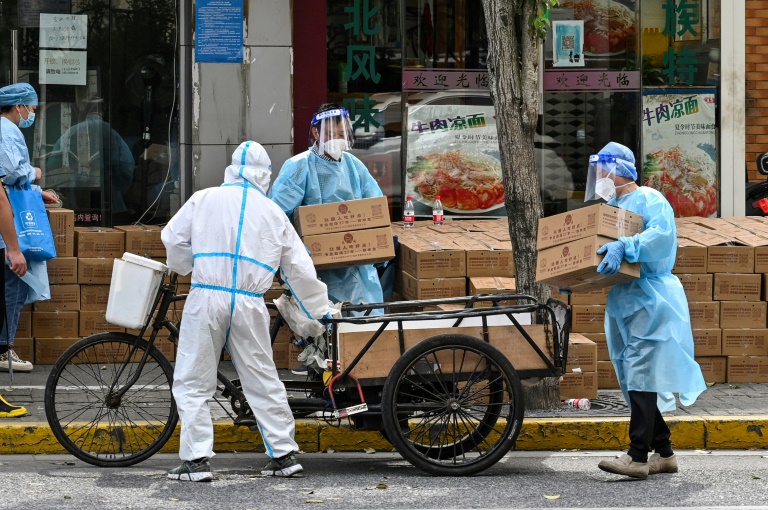
China — the last major global economy sticking to a rigid zero-Covid policy — is battling an economic slump due to prolonged virus lockdowns that have constricted supply chains, quelled demand and stalled manufacturing.

“All localities and departments should step up their sense of urgency, and new measures that can be used should be used,” Li Keqiang said at a symposium on Wednesday, according to state broadcaster CCTV.

He added that efforts to support the economy should bring it “back to normal quickly” after admitting that indicators have “weakened significantly” since March, with a particular dip in April.

Data on Monday showed retail sales and factory output last month had slumped the most since the start of the pandemic, while unemployment edged back toward its February 2020 peak.

Beijing’s unrelenting approach to Covid-19 outbreaks has snarled supply chains and locked down tens of millions of people, hitting major financial, industrial and tourist hubs.

Borders remain closed to most foreigners and a slew of international sports events have been scrapped over pandemic concerns.

But Chinese leader Xi Jinping pledged Wednesday to keep his country open to the world, just days after immigration authorities doubled down on border restrictions.

“China’s resolve to open up at a high standard will not change, and… the door of China will open still wider to the world,” Xi told a conference on global trade, according to a readout from the foreign ministry.

Beijing has significantly tightened border controls since last year and has said it will only issue new Chinese passports if travel is considered essential.

China has targeted full-year growth of around 5.5 percent, but data published in April showed that first-quarter growth slowed to 4.8 percent after the world’s second-biggest economy lost steam in the latter half of last year.

And the economic targets hold a political dimension for Xi, who is eyeing another term in power.

Xi has pinned his legacy on China’s strong economic growth and winning the “battle” against Covid-19.

But the current outbreak is the country’s worst since the virus emerged in Wuhan in late 2019, and the economy is beginning to weaken. 

– Tech support –

Li also called for backing Chinese tech companies’ bids to list domestically and abroad, a day after Communist Party leaders doubled down on support for the tech sector in a rare meeting with executives.

China’s economic slowdown appears to have motivated a softer approach toward the vast, money-spinning tech sector, after an 18-month clampdown driven by fears massive internet companies control too much data and expanded too quickly.

Vice Premier Liu He and other Communist leaders addressed executives and offered support for “the sustainable and healthy development of the platform economy and the private economy,” state broadcaster CCTV said Tuesday.

During the tech crackdown, IPOs from Alibaba’s Ant Group and Didi Chuxing — China’s Uber — were spiked, while millions of dollars of fines over anti-trust and data breaches were ladled out to tech giants. 

Chinese tech shares surged late April after officials pledged support for internet firms at a Politburo meeting.

Tech giants including Alibaba, Tencent and Baidu were marginally lower Wednesday morning, with e-commerce behemoth JD slumping over 4 percent after it recorded a 3 billion yuan ($444 million) loss in first-quarter earnings. 

On Wednesday, Tencent reported record-low quarterly revenue growth at nearly zero, reaching the slowest pace since the company went public in 2004.

Close Bitnami banner
Bitnami