AFP

Allianz to pay $6bn to settle US securities fraud cases

Insurance giant Allianz will pay $6 billion in restitution and fines over a multi-billion fraudulent scheme that hit American teachers, clergy and other investors, US regulators announced Tuesday.

Allianz Global Investors US, a US unit of the German financial firm, admitted to violating US securities laws with its “Structured Alpha” scheme which dates to at least January 2016 and was exposed with the stock market downturn in March 2020, said the US Securities and Exchange Commission.

Allianz Global, as well as two of three portfolio managers named in the complaint, also agreed to plead guilty in a parallel criminal case, the SEC said.

The agency said Allianz and the three portfolio managers doctored key financial figures to make losses look smaller than they were. 

But when Covid-19 struck the United States in March 2020, the pandemic-induced market crash showed Allianz had misled investors about risk, and “the fund suffered catastrophic losses and investors lost billions,” the SEC said.

Allianz Global agreed to pay about $1 billion in penalties and disgorgement, while the company and its German parent will pay over $5 billion in restitution to victims, the statement said.

“The victims of this misconduct include teachers, clergy, bus drivers, and engineers, whose pensions are invested in institutional funds to support their retirement,” said SEC Chair Gary Gensler, who lamented “a recent string of cases in which derivatives and complex products have harmed investors across market sectors.”

Two of the three Allianz Global officials named in the case, co-lead portfolio manager Trevor Taylor and portfolio manager Stephen Bond-Nelson, have agreed to plead guilty in the case. The government is also charging lead portfolio manager Gregoire Tournant. 

Stocks rally as Shanghai reopening cheers markets

Hong Kong led a rally across stock markets Tuesday on hopes that China’s economic hub Shanghai will ease its weeks-long lockdown and gradually reopen businesses.

European exchanges were all strongly higher in afternoon trading and Wall Street’s main indices also snapped higher at the open.

“Hopes that the Shanghai lockdowns will ease, along with the ensuing supply chain disruptions, have been enough to lift” equities, said OANDA analyst Jeffrey Halley.

Much of the city of 25 million has been under lockdown since April as Beijing attempts to stamp out an Omicron-fuelled virus surge under its strict zero-Covid policy.

Tuesday’s rally coincides with the third day in a row that Shanghai has recorded no Covid-19 cases outside of its quarantine facilities.

The impact of Beijing’s zero-Covid strategy on the world’s second-largest economy was revealed Monday when official data showed that retail sales and industrial production in April on-year had slumped to their lowest levels in more than two years.

World markets have also been roiled by surging inflation, surging oil and wheat prices and Russia’s war in Ukraine — leaving investors jittery.

Wheat prices hit a record high in the European market Tuesday at 434.25 euros after the world’s second producer India announced an export ban due to falling output caused by climate change. 

Oil was another area of concern. 

“Oil prices have hit their highest levels since early March as Europe continues to work towards a Russian embargo and China looks to ease Covid restrictions,” said Craig Erlam, another market analyst at Oanda. 

“The question becomes just how much further they’ll go and how uncomfortable it’s going to get,” he said, adding that this was “both from an economic and monetary policy standpoint”.

Analyst Fawad Razaqzada was bullish on the demand for oil despite rising prices.

“Demand did fall briefly when China went into a lockdown but now with Shanghai emerging from lockdowns and other cities are likely to follow suit, demand should remain elevated,” he said.

“Unless the OPEC and its allies ramp up production and fast, it is difficult to see how prices can go down meaningfully,” he added.

The British pound on Tuesday rallied more than one percent versus the dollar as traders bet that soaring UK inflation, lifted in part by wage rises, will see more monetary policy tightening by the Bank of England.

There are rising concerns that ongoing rapid interest rate rises by the BoE and other central banks including the Federal Reserve to curb decades-high inflation will push the economy into a downturn.

On the corporate front Tuesday, India’s insurance giant LIC slumped on its market debut following the country’s biggest-ever initial public offering, closing nearly eight percent below the IPO price.

Prime Minister Narendra Modi’s government raised $2.7 billion by selling 3.5 percent of Life Insurance Corporation of India as his administration seeks to sell off state assets to bolster tattered public finances.

But it was forced to cut back the offer from a planned five percent after markets turned volatile following Russia’s invasion of Ukraine and China’s Covid lockdowns.

Elsewhere, Elon Musk said his planned purchase of Twitter would not go ahead unless he was assured that fewer than five percent of accounts on the platform were fake.

The Tesla owner has bid $44 billion for the social media platform.

– Key figures at around 1330 GMT –

London – FTSE 100: UP 0.9 percent at 7,532.96 points

Frankfurt – DAX: UP 1.5 percent at 14,179.21

Paris – CAC 40: UP 1.3 percent at 6,427.49 

EURO STOXX 50: UP 1.5 percent at 3,741.44

New York – Dow: UP 1.1 percent at 32,569.43 

Hong Kong – Hang Seng Index: UP 3.3 percent at 20,602.52 (close) 

Shanghai – Composite: UP 0.7 percent at 3,093.70 (close)

Tokyo – Nikkei 225: UP 0.4 percent at 26,659.75 (close)

Brent North Sea crude: UP 0.2 percent at $114.50 per barrel

West Texas Intermediate: UP 0.2 percent at $ 114.47 per barrel

Euro/dollar: UP at $1.0532 from $1.0436 at 2030 GMT Monday

Pound/dollar: DOWN at $1.262 from $1.2323

Euro/pound: DOWN at 84.52 pence from 84.67 pence

Dollar/yen: UP at 129.66 from 129.08 yen

UK unveils radical overhaul of EU trade deal in N. Ireland

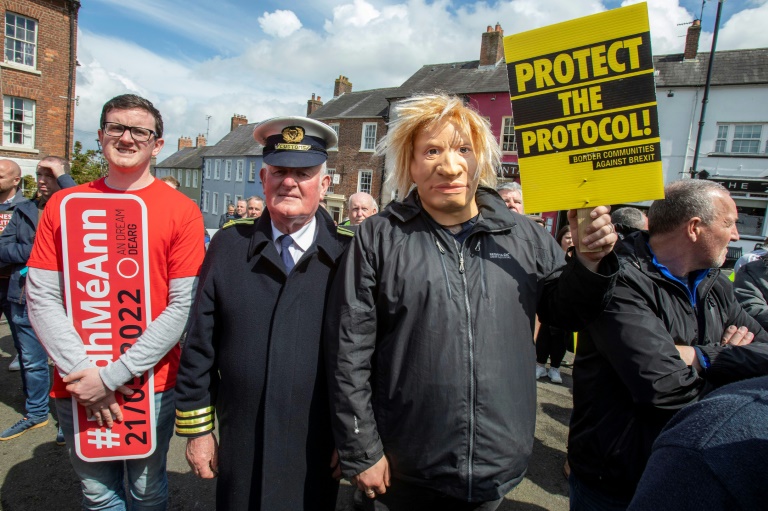
The UK government on Tuesday announced its intention to drastically overhaul post-Brexit trade rules in Northern Ireland, arguing the plan was needed to end political paralysis in the territory but risking a trade war with the EU.

The government said it would introduce legislation reforming the so-called Northern Ireland Protocol “in the coming weeks” — unless Brussels caves on its insistence that the pact cannot be rewritten.

The protocol was agreed as part of Britain’s Brexit divorce deal with the European Union, recognising Northern Ireland’s status as a fragile, post-conflict territory that shared the UK’s new land border with an EU member.

Its requirement for checks on goods arriving from England, Scotland and Wales has infuriated pro-UK unionists in Northern Ireland. 

They claim the protocol is undermining their place within the UK and are refusing to join a new post-election power-sharing government in Belfast.

The UK plan would scrap most of the checks, but the government denied it was trashing international law by effectively abrogating a key element of the Brexit deal agreed by Prime Minister Boris Johnson in 2019.

“I think the higher duty of the UK government in international law is to the (1998) Good Friday Agreement and the peace process,” Johnson told reporters.

“We don’t want to nix it (the protocol), we want to fix it, and we will work with our EU partners to do it,” he said.

– ‘Rogue state’ –

But the EU issued no hint that renegotiating the protocol was in the offing, after warning that any UK violation of the Brexit pact could see it hit back with swingeing tariffs.

“The protocol is an international agreement signed by the EU and the UK. Unilateral actions contradicting an international agreement are not acceptable,” European Commission Vice-President Maros Sefcovic said.

The UK plan “raises significant concerns”, he added, warning that the EU “will need to respond with all measures at its disposal” if London goes ahead.

Irish Foreign Minister Simon Coveney said he “deeply” regretted the UK step, which he called “damaging to trust”.

Johnson, however, said a trade war was unlikely at a time when the UK public was grappling with the worst inflationary crisis in a generation.

“But what we have to fix is the problems with the Northern Ireland political situation, where you can’t get the executive up and running,” he said, a day after visiting Belfast for talks with Northern Ireland’s main parties.

The largest pro-British party, the Democratic Unionist Party (DUP), says it will not share power with pro-Irish rivals Sinn Fein until the protocol is reworked.

Its hard line came nearly two weeks after Sinn Fein won a historic victory in elections to the Northern Ireland Assembly, which entitled the party to the role of first minister in a joint regional government with the DUP. 

In the London parliament, DUP leader Jeffrey Donaldson said the UK government’s announcement was a “good start” that could help restore the Belfast executive. But he insisted progress on an actual bill was needed in “days, not weeks”.

For her part, Sinn Fein leader Mary Lou McDonald accused Britain of acting like a “rogue state”. 

– Green or red – 

Keeping the border open with neighbouring Ireland, an EU member, was mandated in the Good Friday Agreement, given the frontier was a frequent flashpoint during three decades of violence in Northern Ireland until 1998.

But it means checks on have to be done elsewhere, to prevent goods getting into the EU single market and customs union by the back door via Northern Ireland.

Under the new plan, the UK intends unilaterally to create a “green channel” for British traders to send goods to Northern Ireland without making any customs declaration to the EU.

The EU would have access to more real-time UK data on the flow of goods, and only businesses intending to trade into the single market via Ireland would be required to make declarations.

The EU would need to trust the UK to monitor the flow, and UK Foreign Secretary Liz Truss vowed “robust penalties” for any companies seeking to abuse the new system. 

The UK plan would also harmonise tax policy between Great Britain and Northern Ireland, which has been unable to benefit from recent tax breaks announced in London given its position in the EU single market.

And it would seek to end oversight of the protocol by the European Court of Justice — another red line for Brussels.

The bill would remove regulatory barriers to goods made to UK standards being sold in Northern Ireland, with businesses able to choose between meeting UK or EU standards in a new “dual regulatory regime”.

Walmart profits hit by costs as some consumers shift behavior

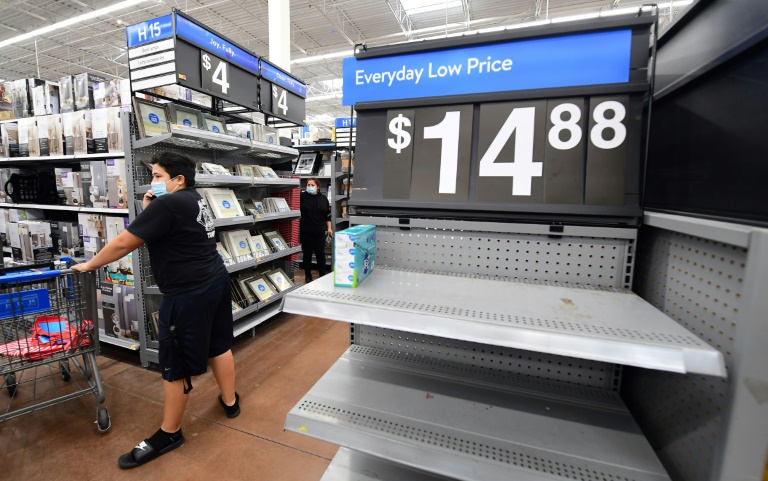
Walmart reported a drop in profits Tuesday due to higher costs for labor, food and fuel as it pointed to some consumers shifting away from discretionary items amid high inflation.

Shares tumbled following the report, with profits lagging expectations as Walmart executives described a series of cost hits that converged during the period.

The company was overstaffed for part of the quarter due to the unexpectedly speedy return of workers who were afflicted by the Omicron variant of Covid-19, resulting in higher labor costs.

Walmart was also affected by a spike in energy costs when the Russian invasion of Ukraine sent oil prices soaring.

Another obstacle was a March fire that destroyed a warehouse in Indianapolis, Indiana that employed more than 1,000 people. Nobody was injured in the episode, but Walmart had to replace goods and route items through neighboring infrastructure, adding cost.

Walmart reported a 25 percent drop in profits to $2.1 billion for the quarter ending April 30. That translated into $1.30 per share, below the $1.48 expected by analysts.

Revenues rose 2.4 percent to $141.6 billion.

Walmart raised its full-year sales forecast slightly but lowered its profit forecast. It now expects earnings per share to fall one percent after previously projecting an increase in the mid-single digits.

Chief Executive Doug McMillon acknowledged on a conference call with analysts that the results were “a disappointment to us,” but said, “We’re looking forward to putting it behind us and having a strong year.”

Walmart’s revenue at its massive US namesake stores rose on average just three percent, versus a 5.6 percent jump in the quarter that ended in January, a benchmark known as comparable sales. E-commerce sales growth has also leveled off compared with earlier in the pandemic.

Executives said strong demand for pricey items such as game consoles suggest that some consumers are not cutting back due to inflation.

But other shoppers have shifted behavior as rising prices for gasoline and other necessities pressure consumers, resulting in some people steering more money to staples such as groceries and away from discretionary items such as apparel. 

As a result, Walmart has been adding more promotions in general merchandise, where inventories have risen significantly from a year ago.

Another shift is in the move away from brands for lunch meats, dairy and other goods in favor of Walmart’s own branded goods, which are lower-priced. 

Walmart US President John Furner said the company planned to redouble efforts with food suppliers to limit future price increases.

“We need to do more to control costs, to make sure we can provide good value for our customers,” Furner said on the call.

Walmart shares fell 8.0 percent to $136.32 in early trading.

Mideast sandstorms snarl traffic, close schools, harm health

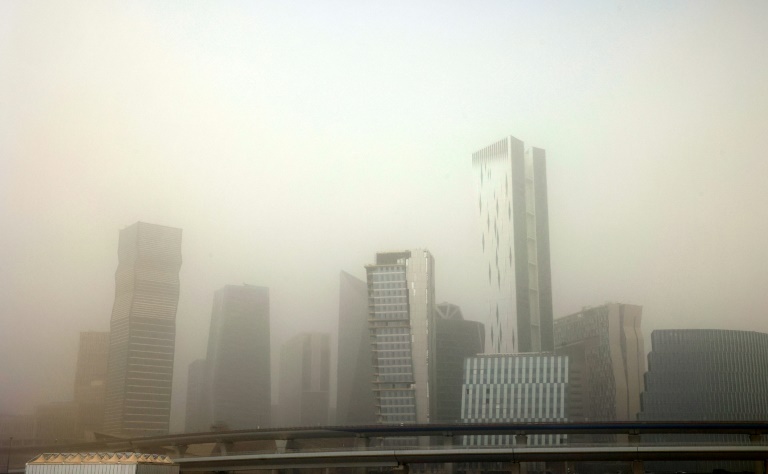
Sandstorms across the Middle East have delayed flights, closed schools and hospitalised thousands — a phenomenon experts say could worsen as climate change warps regional weather patterns. 

Saudi Arabia on Tuesday became the latest country blanketed with dust that slowed traffic and made iconic towers in the capital difficult to see from more than a few hundred metres (yards) away.

Electronic signs along Riyadh’s highways warned drivers to reduce their speed because of the lower visibility, even as life largely went on as usual in the kingdom. 

The national meteorology centre predicted that “surface dusty winds” originating in the east and bringing a thick grey haze would continue west towards the Muslim holy cities of Mecca and Medina.

Other countries have been grappling with the problem for longer: Neighbouring Iraq has experienced eight sandstorms since mid-April, fuelled by soil degradation, intense droughts and low rainfall linked to climate change. 

The country’s latest sandstorm on Monday enveloped the capital Baghdad in an orange glow, sent at least 4,000 people to hospital with breathing problems and led to the closure of airports, schools and public offices across the country. 

Iran announced that it, too, was closing government offices and schools Tuesday, citing “unhealthy weather” conditions and sandstorms. 

Average airborne concentration of the finest and most hazardous particles (PM2.5) was at 163 microgrammes per cubic metre Tuesday in Tehran, according to a government website.

That is more than six times the World Health Organisation’s recommended maximum of 25 microgrammes per cubic metre.

In Kuwait, meanwhile, air traffic at the main airport was suspended for an hour and a half due to a dust storm Monday, and marine traffic in all three ports remained suspended as of Tuesday afternoon. 

Kuwait’s ministry of education said classes were suspended on Tuesday but would resume the following day. 

– Response needed ‘urgently’ –

The Middle East has always been battered by dust and sandstorms, but they have become more frequent and intense in recent years. 

The trend is associated with overgrazing and deforestation, overuse of river water and more dams. 

Unseasonable masses of dry, cold air help explain the recent proliferation of sandstorms in eastern Syria and Iraq and “their transmission to the Arabian Peninsula”, Hassan Abdallah from the WASM meteorological centre in Jordan told AFP. 

By the time the sandstorms reach Saudi Arabia they tend to be less intense, he added. 

Sandstorms are worsening regionally because of factors including low water levels in the Tigris and Euphrates rivers, large fluctuations in annual rainfall and disintegrating soil, he said. 

As for how to mitigate them, Abdallah advised planting more trees and “addressing the low level of the Tigris and Euphrates rivers urgently”.

In central Riyadh on Tuesday, sand layered cars and buildings, and residents struggled to keep it out of their homes. 

“Working outside is very difficult because of the dirt,” a Pakistani construction worker who gave his name as Kalimullah told AFP as he installed tiles. 

“I try to wash my face from time to time,” the 30-year-old added, wrapping a piece of cloth around his face to block the sand. 

Saudi office worker Abdullah Al-Otaibi, 39, said he was grateful he works indoors. 

“Dust storms are part of our culture and we are used to it, but some of them are severe,” he said, rubbing his eyes as he hurried inside.

bur-ht-rcb/dm/fz 

Musk says no Twitter deal without clarity on spam accounts

Billionaire Elon Musk said Tuesday that his purchase of Twitter would not go ahead unless he was given assurances on the bots he says plague the platform, further complicating his acrimonious bid for the social media giant.

The chief of SpaceX as well as Tesla, Musk is currently listed by Forbes as the world’s wealthiest person, with a fortune of about $230 billion, much of it in Tesla stock.

Seen by his champions as an iconoclastic genius and by his critics as erratic and power-hungry, Musk surprised many investors in April with news that he wanted to purchase Twitter.

But his $44 billion bid for the company is now “temporarily on hold,” pending questions over its estimates of the number of fake accounts, or bots.

“Yesterday, Twitter’s CEO publicly refused to show proof of <5%,” tweeted Musk, who has almost 94 million followers on the social network. 

“This deal cannot move forward until he does.”

Twitter chief executive Parag Agrawal has said the platform suspends more than a half-million seemingly bogus accounts daily, usually before they are even seen, and locks millions more weekly that fail checks to make sure they are controlled by humans and not by software.

Internal measures show that fewer than five percent of accounts active on any given day at Twitter are spam, but that analysis cannot be replicated externally due to the need to keep user data private, Agrawal contended.

Musk — who posted that the real number of bots may be four times what Twitter claims and “could be *much* higher,” and has said he would make getting rid of them a priority if he owned the platform — responded to that tweet by Agrawal with a poo emoji.

“So how do advertisers know what they’re getting for their money?” Musk tweeted in a subsequent response about the need to prove Twitter users are real people.

“This is fundamental to the financial health of Twitter.”

– ‘Under pressure’ –

The process used to estimate how many accounts are bots has been shared with Musk, Agrawal insisted.

According to an estimate published Friday by software firm SparkToro, 19.42 percent of Twitter accounts are fake or spam, but the company acknowledges its methodology for determining bots is likely different from that used by Twitter. 

SparkToro has a tool on its website that shows more than 70 percent of Musk’s followers are fake accounts. 

“It appears the spam/bot issue is cascading and clearly making the Twitter deal a confusing one,” Wedbush analyst Dan Ives said in a note to investors.

“The bot issue at the end of the day was known by the New York City cab driver and feels more to us like the ‘dog ate the homework’ excuse to bail on the Twitter deal or talk down a lower price.”

Twitter shares “will be under pressure this morning again as the chances of a deal ultimately getting done is not looking good now,” Ives said, adding it is “likely a 60%+ chance from our view Musk ultimately walks from the deal and pays the breakup fee.”

Shares of Twitter were down roughly 2.4 percent early Tuesday in pre-market trading.

Meanwhile, in a filing to Wall Street regulator the Securities and Exchange Commission, Twitter urged its shareholders to vote in favor of Musk’s buyout for $54.20 per share in cash, at an upcoming special meeting.

Musk has described his motivation as stemming from a desire to ensure freedom of speech on the platform and to boost monetization of a website that is massively influential but has struggled to attain profitable growth.

He has also said he favored lifting the ban on Donald Trump, who was kicked off the platform in January 2021 shortly after the then-US president’s efforts to overturn his election defeat led to the January 6 assault on the US Capitol.

burs-oho/mlm/wd

Vodafone calls up surging annual profit

British telecoms giant Vodafone on Tuesday logged surging annual net profit on rising sales and sliding tax, one day after revealing that an Emirati firm has become its biggest investor.

Profit after tax jumped to almost 2.1 billion euros ($2.2 billion) in the financial year to March, Vodafone said in a results statement.

That compared with a profit of 112 million euros in its previous annual report, when its performance was severely disrupted by fallout from the Covid pandemic.

Revenues swelled four percent to 45.6 billion euros this time around on strong growth in Africa and Europe.

“We delivered a good financial performance in the year with growth in revenues, profits and cash flows,” said chief executive Nick Read.

“Whilst we are not immune to the macroeconomic challenges in Europe and Africa, we are positioned well to manage them and we expect to deliver a resilient financial performance in the year ahead.”

Vodafone shares flatlined at 120 pence in London midday deals.

The stock had rallied Monday on news that state-controlled Emirates Telecommunications Group Company had become its biggest shareholder.

The group — known also as Etisalat or “e&” and whose majority stake holder is the United Arab Emirates government — has bought almost ten percent of Vodafone for $4.4 billion.

It stressed it would not launch a takeover.

The UAE group decided to invest in Vodafone to gain significant exposure to a global leader in connectivity and digital services.

Read, Vodafone’s CEO since 2018, is reportedly faces increasing criticism over his leadership.

British media reports suggest that activist investor fund Cevian Capital has built up a Vodafone stake and wants to force a sale of assets.

Vodafone in 2021 floated its European mast division Vantage Towers in Frankfurt, in a partial initial public offering that enabled it to slash debt.

Indian insurance giant slumps after country's biggest-ever IPO

Indian state-owned insurance giant LIC slumped on its market debut Tuesday following the country’s biggest-ever initial public offering, closing nearly eight percent below the IPO price.

Prime Minister Narendra Modi’s government raised $2.7 billion by selling 3.5 percent of Life Insurance Corporation of India as his administration seeks to sell off state assets to bolster tattered public finances.

But it was forced to cut back the offer from a planned five percent after markets turned volatile following Russia’s invasion of Ukraine and China’s Covid lockdowns.

The offer price of 949 rupees ($12.22) had valued LIC at $77 billion, but the stock traded under pressure all day, closing 7.75 percent lower at 875.45 rupees a share.

The muted debut could test market appetite as Modi seeks to privatise more shares in nationalised companies to plug an estimated 16.6 trillion rupee ($214 billion) fiscal deficit.

Market analyst Arun Kejriwal said the slump on LIC’s first day of trading was a “learning” experience, adding that the government will have to do more to convince investors if it wants to sell more of its stake.

But the IPO saw enthusiastic participation from small investors — including many first-timers — and was oversubscribed nearly three times.

“I knew it won’t be a great listing but it doesn’t matter to me,” said 30-year-old Ayush, a recent market entrant, who was unbowed by the decrease in share price.  

“I bought the shares for the long-term.”

Global equities have been tumultuous for most of 2022. Foreign investors have withdrawn a net 1.71 trillion rupees ($22 billion) from Indian markets so far this year, stock exchange data showed, as US monetary policy tightening further roiled sentiment.

– Synonymous with life insurance –

India was heavily regulated for decades after independence, and the state still retains an outsize role in the economy.

Hundreds of companies are owned by national or lower-level governments, operating in fields ranging from mining and resources to electricity and construction.

Modi has pledged to “monetise and modernise” the sometimes moribund sector, and the insurance giant’s IPO followed a years-long effort by bankers and bureaucrats to appraise the mammoth firm and prepare it for listing.

Founded in 1956 by nationalising and combining more than 240 firms, LIC was a monopoly until private companies were allowed to enter the market in 2000.

It continues to lead the pack with a 61 percent market share and an army of 1.3 million “LIC agents” giving it huge reach, particularly in remote rural areas.

But its dominance has declined steadily in the face of competition from net-savvy private insurers offering specialised products.

The firm warned in its regulatory filing that “there can be no assurance that our corporation will not lose further market share” to private companies.

– ‘Enormous’ potential –

In a country where only three percent of the 1.4 billion population has life insurance, analyst Kejriwal said LIC’s potential remains “enormous”. 

“It has actually bounced back in the last two-three years. And Covid has seen a turnaround in the fortunes of LIC,” he told AFP, pointing to its digitisation efforts.

Going public will also force more transparency on the insurance behemoth.

“The IPO is going to galvanise LIC into being much more effective than it was,” Kejriwal added.

LIC is also India’s largest asset manager, with 39.55 trillion rupees under management as of September 30, including significant stakes in Indian blue chips such as Reliance and Infosys.

LIC’s real estate assets include vast offices at prime urban Indian locations, including a 15-storey office in Chennai that was once the country’s tallest building.

The firm is also believed to own a large collection of rare and valuable artwork that includes paintings by MF Husain — known as the Pablo Picasso of India — although the value of these holdings has not been made public.

Togo reopens its borders after two years

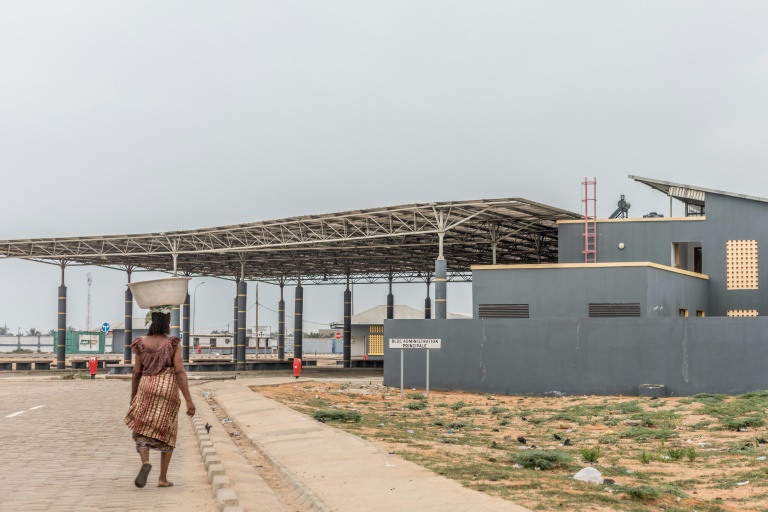
The West African state of Togo said it would reopen its land borders on Tuesday after closing them more than two years ago to help prevent the spread of coronavirus. 

The country recorded only 32 cases so far this month, with zero deaths. 

“Considering the slowdown in cases of Covid-19, all of our land borders will reopen starting on Tuesday 17 May at 00:00 GMT,” the government said in a statement late on Monday.

“Free movement can resume as long as travellers present a proof of vaccination,” it added. 

Togo’s neighbours are Burkina Faso to the north, Ghana to the west and Benin to the east.

The authorities called however for “vigilance” and “continued adherence to preventive measures.”

The government also said the vaccination campaign, which started in March last year, should continue.

At the end of April, 32 percent of the country’s adult population was fully vaccinated according to official data.

Civil society groups and opposition parties had been calling for a relaxation of measures in recent months, as the number of Covid-19 cases plummeted. 

Togo’s land and air borders were closed in March 2020, although the air borders reopened in August that year. The sea borders were never closed.

Last August, some youths protested at the border with Ghana, asking for borders to reopen and trade to resume. 

Since the start of the pandemic, Togo has recorded 37,023 cases of which 273 were fatal. 

Asian stocks rally on hopes of Shanghai gradually reopening

Hong Kong led a rally across Asian markets Tuesday on hopes that China’s economic engine Shanghai will ease its weeks-long lockdown and gradually reopen businesses, though analysts cautioned there may be little long-term relief. 

Much of the city of 25 million has been under stay-at-home orders since April as Beijing attempts to stamp out an Omicron-fuelled virus surge under its strict zero-Covid policy.

Shanghai Vice Mayor Chen Tong said Sunday that the city would gradually reopen businesses starting this week. 

Though no details were given and residents were still in their homes on Tuesday, Asian markets cheered the announcement.

“Hopes that the Shanghai lockdowns will ease, along with the ensuing supply chain disruptions, have been enough to lift Asian equities as well, which are staging a modest bounce,” said Jeffrey Halley of OANDA.

Tuesday’s rally coincided with the third day in a row that Shanghai recorded no Covid-19 cases outside of its quarantine facilities, he said. 

“We should continue watching the headline ticker for daily Omicron cases. Most especially, in Shanghai, where if literally one case appears again, any relief rally in Chinese markets could disappear in a puff of smoke.”

The impact of Beijing’s zero-Covid strategy on the world’s second-largest economy was revealed Monday when official data showed retail sales and industrial production in April on-year had slumped to their lowest levels in more than two years.

World markets have also been roiled by surging inflation and Russia’s war in Ukraine — leaving investors jittery.

“Markets remain in fight or flight mode while rolling the dice on recession odds,” Stephen Innes of SPI Asset Management said.

“Investors’ hopes remain elevated that yesterday’s worse than expected Chinese outruns could prove to be a ‘whatever it takes’ moment, and local policymakers will step hard on the stimulus pedal.”

China has announced measures to help young people find jobs, with the urban unemployment rate at its highest in over two years, and officials have lowered the mortgage rate for first-time homebuyers.

On Tuesday Hong Kong closed higher by more than three percent, while mainland China’s two indices — the Shanghai Composite Index and Shenzhen Composite Index — also saw a bounce.

Manila, Singapore, Seoul, and Sydney were also in positive territory all day.

European markets followed the lead, with Frankfurt, Paris and London all trading up at opening. 

– Commodities concerns –

In commodities trade, wheat prices soared to a record after major producer India banned exports because of a heatwave hitting production.

New Delhi said the move was needed to protect the food security of its 1.4 billion people in the face of lower production and steep global prices.

Worldwide wheat prices had already surged on supply concerns after Russia’s February invasion of agricultural powerhouse Ukraine, which previously accounted for 12 percent of global exports.

By Monday’s close of the Euronext market, the price of wheat had jumped to 438.25 euros ($456.68) per tonne, breaking the previous closing record of 422.40 struck on March 7, according to trader Damien Vercambre at grains brokerage Inter-Courtage.

Oil also jumped overnight, and by Tuesday US crude benchmark WTI hovered around $114 a barrel. 

“The EU’s rising tensions with Russia and the resulting uncertainties over the bloc’s oil and gas supply remain front and centre,” Vandana Hari, founder of Vanda Insights in Singapore, told Bloomberg.

“Having said that, with a $10 jump since last Tuesday, it’s hard to see much more upside in crude unless events take a sudden turn for the worse.”

– Key figures at around 0900 GMT –

Hong Kong – Hang Seng Index: UP 3.3 percent at 20,602.52 (close) 

Shanghai – Composite: UP 0.7 percent at 3,093.70 (close)

London – FTSE 100: UP 0.6 percent at 7,509.81

Tokyo – Nikkei 225: UP 0.4 percent at 26,659.75 (close)

West Texas Intermediate: UP 0.2 percent at $114.44 per barrel

Brent North Sea crude: UP 0.3 percent at $114.60 per barrel

Euro/dollar: UP at $1.0479 from $1.0436 at 2030 GMT Monday

Pound/dollar: UP at $1.2481 from $1.2323

Euro/pound: DOWN at 83.97 pence from 84.67 pence

Dollar/yen: UP at 129.26 yen from 129.08 yen

New York – Dow: UP 0.1 percent at 32,223.42 (close)

— Bloomberg News contributed to this story —

Close Bitnami banner
Bitnami