AFP

EasyJet tackles Covid staff shortage by removing seats

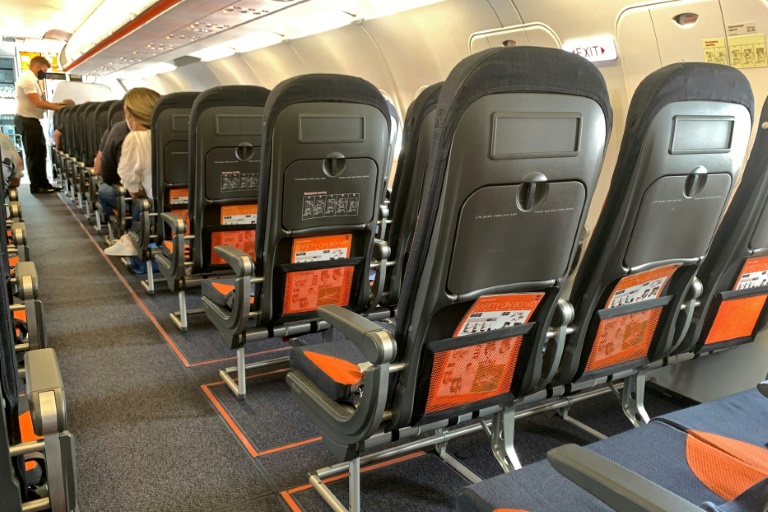
EasyJet plans to remove seats from Airbus aircraft this summer, allowing the British airline to fly with fewer cabin crew as it struggles with Covid absences and staff recruitment.

The carrier over the weekend revealed that during the upcoming peak flying season, it will cut the number of passenger seats on its A319 jets to 150 from 156.

This will allow it to fly with three cabin crew instead of four, under regulations imposed by the Civil Aviation Authority watchdog in Britain.

EasyJet said in a statement that its seat reduction “is an effective way of… building additional resilience and flexibility into our operation this summer”.

While the global aviation sector was ravaged by the coronavirus outbreak that grounded planes and slashed thousands of jobs, demand is recovering strongly after travel curbs were lifted.

This is turn has caused a rush for new staff.

EasyJet said only its UK fleet of A319 planes would be affected by the removal of seats.  

This numbers 60 jets, or slightly half of its A319 fleet.

The announcement comes after EasyJet cancelled a large number of flights over Easter as the sector faced a high level of absences owing to Covid.

Also last month, the no-frills carrier forecast its flight bookings to return to pre-Covid levels this summer, guiding it towards a lower-than-expected loss.

Global stocks deepen losses on rising rates, China lockdowns

World stock markets mostly sank Monday on stubborn fears over the impact of rising US interest rates, surging inflation and China’s Covid lockdowns.

Frankfurt, London and Paris each shed more than one percent nearing the half-way stage after Tokyo closed down 2.5 percent.

On Wall Street, all three major indices fell by more than one percent at the start of trading. 

Shanghai edged higher and Hong Kong was shut for a holiday.

Oil prices lost two percent on demand worries and the haven dollar rose, while bitcoin plunged to a 2022 low below $33,000 as investors shunned the volatile cryptocurrency.

Stock markets had dived last week after the Federal Reserve ramped up interest rates by a half-percentage point and flagged more hikes to tackle decades-high inflation.

“Elevated inflation pressures continue to cloud conviction, with the Fed and other central banks beginning to tighten monetary policy,” said analysts at Charles Schwab brokerage. 

“Meanwhile, inflation concerns continue to be exacerbated by the war in Ukraine and ongoing supply chain challenges,” they added.

– Anxiety spreads –

“Anxiety is stemming from the Fed’s next moves, with uncertainty creeping in about the scale and speed of interest rate hikes,” said Hargreaves Lansdown analyst Sophie Lund-Yates.

“All this comes at the same time as China grapples with ongoing lockdowns and the prevailing economic storm these entail.”

Millions of people in Beijing stayed home on Monday as China’s capital tries to fend off a Covid-19 outbreak with creeping restrictions on movement.

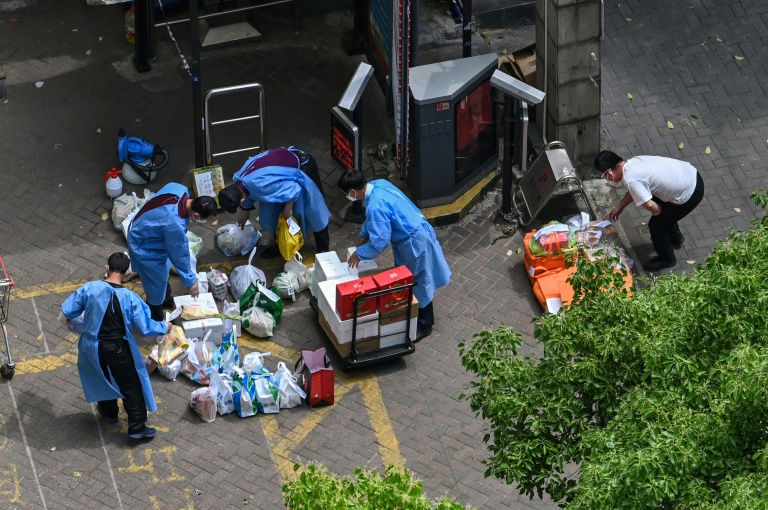
Beijing residents fear they may soon find themselves in the grip of the same draconian measures that have trapped most of Shanghai’s 25 million people at home for weeks.

Lockdowns across dozens of Chinese cities — from the manufacturing hubs of Shenzhen and Shanghai to the breadbasket of Jilin — have wreaked havoc on supply chains over recent months and further stoked global inflationary pressures.

Investors were given more bad news on Monday as China’s April exports slumped to their lowest level in almost two years, due to the nation’s strict zero-Covid policy.

Exports plunged to 3.9 percent on-year, while imports were stagnant for April.

Global markets have also taken a beating this year from Russia’s invasion of Ukraine.

President Vladimir Putin on Monday defended Russia’s offensive in Ukraine and blamed Kyiv and the West, as he looked to use grand Victory Day celebrations to mobilise patriotic support for the campaign.

However, investors were relieved that Putin made no major announcements, despite reports he could use the anniversary to announce an escalation of the conflict or a general mobilisation.

“Putin has not declared a war on Ukraine to enable full mobilisation which is obviously a relief,” noted Markets.com analyst Neil Wilson.

– Key figures at around 1330 GMT –

London – FTSE 100: DOWN 1.5 percent at 7,272.51 points

Frankfurt – DAX: DOWN 1.3 percent at 13,499.06

Paris – CAC 40: DOWN 1.7 percent at 6,151.30

EURO STOXX 50: DOWN 1.5 percent at 3,520.86

New York – Dow: DOWN 1.3 percent at 32,460.23

Shanghai – Composite: UP 0.09 percent at 3,004.14 (close)

Tokyo – Nikkei 225: DOWN 2.5 percent at 26,319.34 (close)

Hong Kong – Hang Seng Index: Closed for a holiday  

Brent North Sea crude: DOWN 2.2 percent at $110.18 per barrel

West Texas Intermediate: DOWN 2.4 percent at $107.42 per barrel

Euro/dollar: DOWN at $1.0543 from $1.0551 on Friday

Pound/dollar: UP at $1.2350 from $1.2348

Euro/pound: DOWN at 85.38 pence from 85.45 pence

Dollar/yen: UP at 130.73 yen from 130.56 yen

burs-rl/lcm

Western multinationals congratulate Hong Kong's new leader

Western multinationals and local tycoons published newspaper adverts congratulating John Lee on becoming Hong Kong’s next leader, following a rubber-stamp selection process decried as anti-democratic by many major economies Monday.

Lee, 64, a former security chief who oversaw the crackdown on Hong Kong’s democracy movement, was anointed the business hub’s new leader on Sunday in a near-unanimous vote by a small committee of Beijing loyalists.

He was the sole candidate in the race to succeed outgoing leader Carrie Lam at a time when Hong Kong is being remoulded in China’s authoritarian image.

Canada, France, Germany, Italy, Japan, the UK and the United States on Monday joined the European Union in voicing alarm.

“We… underscore our grave concern over the selection process for the Chief Executive in Hong Kong as part of a continued assault on political pluralism and fundamental freedoms,” the G7 group said in a joint statement with the EU.

Beijing hailed the process as “a real demonstration of democratic spirit” and said it was the culmination of a strategy to ensure only “patriots” run Hong Kong.

– Corporate congratulations –

Ta Kung Pao and Wen Wei Po, two newspapers that answer to the office which sets Beijing’s Hong Kong policy, were filled with adverts on Monday from leading companies and business figures praising Lee’s selection.

Most were from Chinese and Hong Kong businesses as well as community organisations. 

The “Big Four” accountancy firms — KPMG, Deloitte, EY and PwC — were among Western multinationals placing adverts, as were city airline Cathay Pacific and conglomerates Swire and Jardine Matheson.

Messages were also carried by Hong Kong’s family tycoon-dominated property giants, including Sun Hung Kai and Henderson Land Development.

Western businesses have found themselves in an increasingly precarious position in Hong Kong, especially as tensions have risen with China.

Many have embraced progressive political causes in Western markets, such as the anti-racism Black Lives Matter movement, same-sex equality and ridding supply chains of labour abuses.

But they usually steer clear of any criticism of China’s policies towards hotspots such as Hong Kong, Xinjiang, Tibet and Taiwan.

Some companies such as HSBC, Standard Chartered, Swire and Jardine Matheson publicly backed Beijing’s national security law, which was imposed on Hong Kong after 2019’s democracy protests to curb dissent.

– Can Hong Kong reopen? –

The elevation of Lee, who is under US sanctions, places a security official in Hong Kong’s top job for the first time after a tumultuous few years for a city battered by political unrest and economically debilitating pandemic controls.

Despite the city’s mini-constitution promising universal suffrage, Hong Kong has never been a democracy, the source of years of protests since the 1997 handover from Britain to China.

Lee won 99 percent of the votes cast by the 1,461-strong committee that picks the city’s leader.

The former police officer has vowed to strengthen Hong Kong’s national security and integrate the city further with the mainland.

He wants to reboot the city’s economy and slowly reopen its pandemic-sealed borders at a time when its rivals have moved to living with the coronavirus.

But it is unclear how he can do that given China has doubled down on its strict zero-Covid strategy.

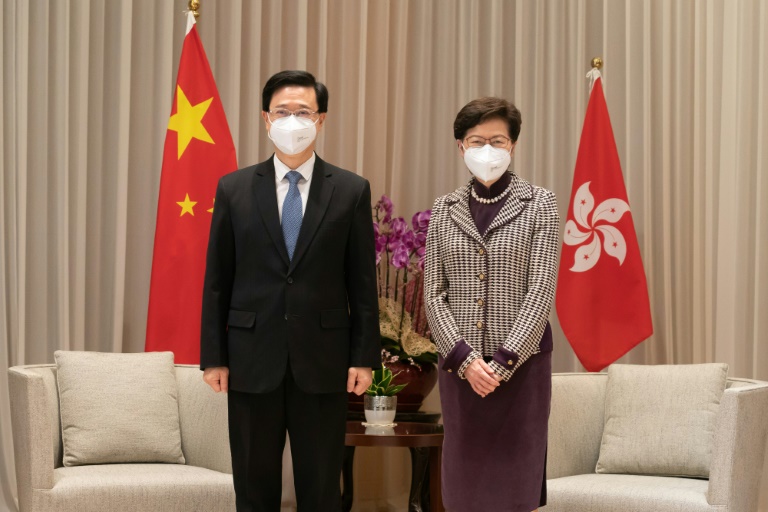
On Monday morning, Lam met her successor and both gave short speeches stressing that they would prepare for an orderly transition.

Lee, who takes over on July 1, was Lam’s security chief and then her deputy.

He was asked by reporters whether Hong Kongers could criticise his administration or risk being arrested for “speech crimes” like dozens of democracy activists in recent years. 

Lee took umbrage at that description.

“I think you are very wrong to describe that people are now charged simply because of their expressed opinions,” he said.

“People are brought to court because of the suspicion against them and their actions contravening the law,” he added. “It is their action.”

Lee said his first port of call would be China’s top agencies in Hong Kong — the Liaison Office, the national security committee, the foreign ministry’s office and the People’s Liberation Army garrison.

Global stocks deepen losses on rising rates, China lockdowns

World stock markets mostly sank Monday on stubborn fears over the impact of rising US interest rates, surging inflation and China’s Covid lockdowns.

Frankfurt, London and Paris each shed more than one percent nearing the half-way stage after Tokyo closed down 2.5 percent.

Shanghai edged higher and Hong Kong was shut for a holiday.

Oil prices lost two percent on demand worries and the haven dollar rose, while bitcoin plunged to a 2022 low below $34,000 as investors shunned the volatile cryptocurrency.

Stock markets had dived last week after the Federal Reserve ramped up interest rates by a half-percentage point and flagged more hikes to tackle decades-high inflation.

– Anxiety spreads –

“Anxiety is stemming from the Fed’s next moves, with uncertainty creeping in about the scale and speed of interest rate hikes,” said Hargreaves Lansdown analyst Sophie Lund-Yates.

“All this comes at the same time as China grapples with ongoing lockdowns and the prevailing economic storm these entail.”

Millions of people in Beijing stayed home on Monday as China’s capital tries to fend off a Covid-19 outbreak with creeping restrictions on movement.

Beijing residents fear they may soon find themselves in the grip of the same draconian measures that have trapped most of Shanghai’s 25 million people at home for weeks.

Lockdowns across dozens of Chinese cities — from the manufacturing hubs of Shenzhen and Shanghai to the breadbasket of Jilin — have wreaked havoc on supply chains over recent months and further stoked global inflationary pressures.

Investors were given more bad news on Monday as China’s April exports slumped to their lowest level in almost two years, due to the nation’s strict zero-Covid policy.

Exports plunged to 3.9 percent on-year, while imports were stagnant for April.

Global markets have also taken a beating this year from Russia’s invasion of Ukraine.

President Vladimir Putin on Monday defended Russia’s offensive in Ukraine and blamed Kyiv and the West, as he looked to use grand Victory Day celebrations to mobilise patriotic support for the campaign.

However, investors were relieved that Putin made no major announcements, despite reports he could use the anniversary to announce an escalation of the conflict or a general mobilisation.

“Putin has not declared a war on Ukraine to enable full mobilisation which is obviously a relief,” noted Markets.com analyst Neil Wilson.

– Key figures at around 1015 GMT –

London – FTSE 100: DOWN 1.3 percent at 7,291.71 points

Frankfurt – DAX: DOWN 1.1 percent at 13,531.25

Paris – CAC 40: DOWN 1.4 percent at 6,167.96

EURO STOXX 50: DOWN 1.6 percent at 3,572.92

Shanghai – Composite: UP 0.09 percent at 3,004.14 (close)

Tokyo – Nikkei 225: DOWN 2.5 percent at 26,319.34 (close)

Hong Kong – Hang Seng Index: Closed for a holiday  

New York – Dow: DOWN 0.3 percent at 32,899.37 (close)

Brent North Sea crude: DOWN 2.1 percent at $110.02 per barrel

West Texas Intermediate: DOWN 2.3 percent at $107.30 per barrel

Euro/dollar: DOWN at $1.0538 from $1.0551 on Friday

Pound/dollar: DOWN at $1.2319 from $1.2348

Euro/pound: UP at 85.57 pence from 85.45 pence

Dollar/yen: UP at 131.16 yen from 130.56 yen

burs-rfj/bcp/lth

Indian rupee falls to new low on Fed action, inflation fears

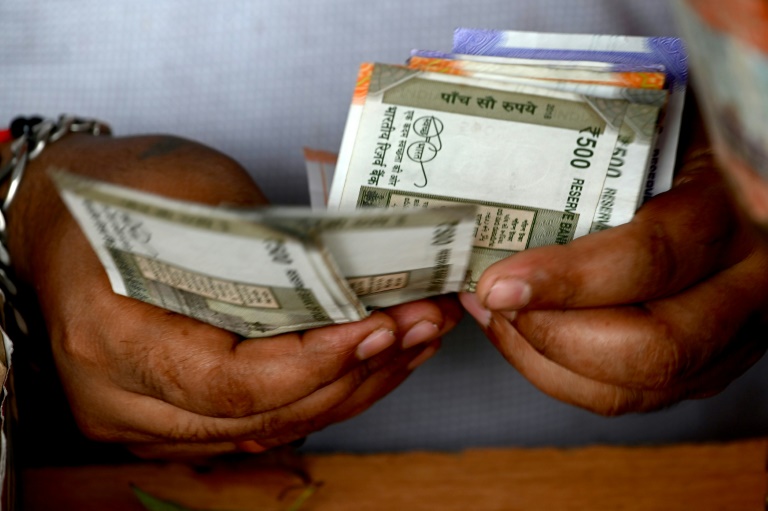
The Indian rupee plunged to an all-time low against the greenback on Monday, as US monetary policy tightening roiled sentiment and foreign investors continued to dump domestic stocks.

Rising oil prices and a strengthening US dollar have weighed heavy on the rupee with a surprise rate hike by the Reserve Bank of India (RBI) last week doing little to stem capital outflows.

The rupee fell past its previous record low of 76.98 against the US dollar in March to 77.56 on Monday.

The fall came as Indian stocks on the benchmark Sensex and Nifty50 indices extended losses for a fourth day, falling more than one percent each on Monday before recovering ground later in the day.

Banks, metals and oil and gas stocks declined the most, with market heavyweight, the conglomerate Reliance, losing more than 3.0 percent following its quarterly results reported late on Friday.

Foreign investors have withdrawn a net 1.34 trillion rupees ($17.3 billion) from Indian equities so far this year, stock exchange data showed.

The war in Ukraine and resurgence of Covid-19 restrictions in China have exacerbated outflows from emerging markets like India as foreign funds turn risk-averse.

Inflation worries on the back of rising commodity prices have also soured sentiment in Asia’s third-largest economy, which imports more than 80 percent of its oil needs.

Consumer price inflation in India hit a 17-month high of 6.95 percent year-on-year in March, and economists expect data to be released later this week to show that number rising beyond seven percent in April.

The US Federal Reserve last week hiked the key lending rates by half a percentage point, but also held off on signalling more aggressive measures.

“After an unscheduled rate hike by the Reserve Bank of India, if India’s inflation moves higher than 7.0 percent… the pressure will be on for the RBI to act again,” forex firm OANDA’s Jeffrey Halley said in a note.

“That may give some strength to the rupee but is unlikely to be bullish for local equities.”

India’s forex reserves declined for an eighth consecutive week, slipping below $600 billion in the week ending April 29 as the central bank sold foreign currency in an effort to stabilise the rupee.

Indonesia maintains steady growth in first quarter thanks to exports

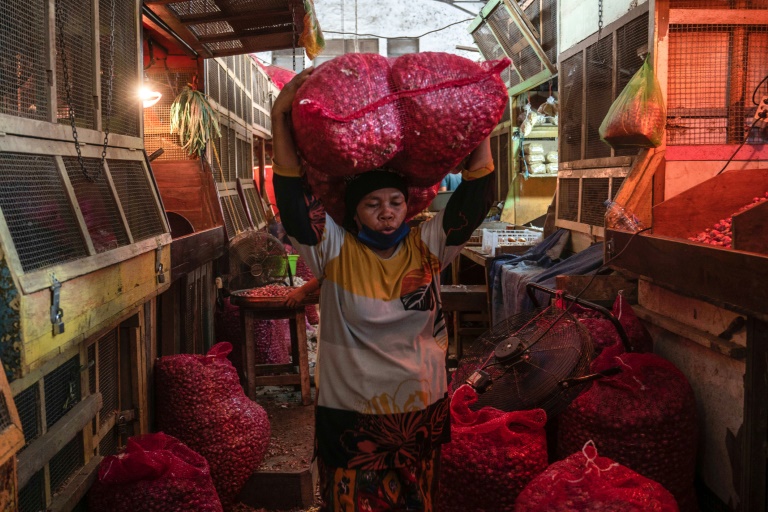
Indonesia’s economy maintained steady growth in the first quarter of 2022 despite global tensions, official data showed on Monday, as the nation reaped the benefits of soaring commodities prices and an easing of Covid restrictions.

Indonesia was badly affected by the coronavirus pandemic, with its exports and tourism-reliant economy taking a massive hit in 2020 as GDP shrunk by 2.07 percent — its first recession since the 1997 Asian financial crisis. 

But Southeast Asia’s largest economy has picked up in recent months, and the Central Statistics Agency (BPS) on Monday reported an on-year expansion of 5.01 percent in January-March. 

“The high economic growth for the first quarter of 2022 is caused by the recovery of public activities,” head of the bureau Margo Yuwono said during a press conference. 

“Public mobility in the first quarter of 2022 has been really good.”

Exports showed an especially impressive growth of 16.22 percent in the first quarter of 2022 as prices for Indonesia’s palm oil, nickel and tin soared on the global market. 

Moody’s Analytics said Indonesia’s first-quarter showing exceeded their forecast. 

“The result indicates that Southeast Asia’s largest economy is on track to achieve the government’s full-year growth target of 4.5 percent to 5.3 percent,” it said in a note released Monday.

Indonesia in March had dropped quarantine requirements for all travellers with a negative PCR test. 

It has also seen a tripling of foreign tourist arrivals between January to March this year, compared to the same period in 2021. 

The country’s economy expanded 3.69 percent in 2021 as coronavirus cases started to decline and export prices for key commodities like palm oil, coal and nickel rose significantly. 

But while Indonesia — the world’s top palm oil producer accounting for 35 percent of global trade — has reaped the benefits of the high prices in recent months, in April it suspended exports in the face of domestic shortages. 

Western multinationals congratulate Hong Kong's new leader

Western multinationals and local tycoons published newspaper adverts on Monday congratulating John Lee on becoming Hong Kong’s next leader, following a rubber-stamp selection process condemned by critics as anti-democratic.

Lee, 64, a former security chief who oversaw the crackdown on Hong Kong’s democracy movement, was anointed the business hub’s new leader on Sunday in a near-unanimous vote by a small committee of Beijing loyalists.

He was the sole candidate in the race to succeed outgoing leader Carrie Lam at a time when Hong Kong is being remoulded in China’s authoritarian image. 

Ta Kung Pao and Wen Wei Po, two newspapers that answer to the office which sets Beijing’s Hong Kong policy, were filled with adverts on Monday from leading companies and business figures praising Lee’s selection.

The majority were from Chinese and Hong Kong businesses as well as community organisations. 

The “Big Four” accountancy firms — KPMG, Deloitte, EY and PwC — were among western multinationals placing adverts, as were city carrier Cathay Pacific and conglomerates Swire and Jardine Matheson.

Messages were also carried by Hong Kong’s family tycoon-dominated property giants, including Sun Hung Kai and Henderson Land Development. 

Western businesses have found themselves in an increasingly precarious position in Hong Kong, especially as geopolitical tensions have risen with China.

Many have embraced progressive political causes in western markets, such as the anti-racism Black Lives Matter movement, same-sex equality and ridding supply chains of labour abuses. 

But they usually steer clear of any criticism of China’s policies towards hotspots like Hong Kong, Xinjiang, Tibet and Taiwan.

Some companies such as HSBC, Standard Chartered, Swire and Jardine Matheson publicly backed Beijing’s national security law, which was imposed on Hong Kong after 2019’s democracy protests to curb dissent.

– Can Hong Kong reopen? –

The elevation of Lee, who is under US sanctions, places a security official in Hong Kong’s top job for the first time after a tumultuous few years for a city battered by political unrest and economically debilitating pandemic controls.

Despite the city’s mini-constitution promising universal suffrage, Hong Kong has never been a democracy, the source of years of protests since the 1997 handover to China.

After the 2019 rallies, Beijing responded with a crackdown and a new “patriots only” political vetting system that eradicated the city’s once outspoken political opposition.

Lee faced no rivals and won 99 percent of the votes cast by the 1,461-strong committee that picks the city’s leader — roughly 0.02 percent of the city’s population. 

Beijing hailed the process as “a real demonstration of democratic spirit”.

European Union foreign policy chief Josep Borrell countered that the selection process was a “violation of democratic principles and political pluralism”. 

Lee, a former police officer, has vowed to strengthen Hong Kong’s national security and integrate the city further with the mainland. 

He wants to reboot the city’s economy and slowly reopen its pandemic sealed borders at a time when rivals have moved to living with the coronavirus. 

But it is unclear how he can do that given China has doubled down on its strict zero-Covid strategy.

On Monday morning, Lam met her successor Lee and both gave short speeches stressing that they would prepare for an orderly transition between their administrations. 

Lee, who takes over on July 1, was Lam’s security chief and then her deputy.

He was asked by reporters whether Hong Kongers could criticise his administration or risk being arrested for “speech crimes” like dozens of democracy activists in recent years. 

Lee took umbrage to that description. 

“I think you are very wrong to describe that people are now charged simply because of their expressed opinions,” he said. 

“People are brought to court because of the suspicion against them and their actions contravening the law,” he added. “It is their action.”

Lee said his first port of call would be China’s top agencies in Hong Kong — the Liaison Office, the national security committee, the foreign ministry’s office and the People’s Liberation Army garrison.

China's April exports slump to lowest in two years as virus bites

China’s export growth slumped in April to its lowest level in almost two years, customs data showed Monday, as a Covid resurgence shuttered factories, sparked transport curbs and caused congestion at key ports.

The data shows the extent of growing damage to the world’s second largest economy as millions are confined to their homes — particularly in key business hub Shanghai — to stamp out its worst Covid resurgence since the early days of the pandemic.

Beijing has persisted with a strict zero-Covid policy involving lockdowns and mass testing, but the economic costs are mounting as manufacturing hubs and supply chains atrophy under gruelling restrictions.

Export growth plunged to 3.9 percent on-year last month, the Customs Administration said Monday.

While this was above analysts’ expectations of 2.7 percent growth according to a Bloomberg poll, it marked the lowest rate since June 2020.

Import growth was flat in April, an improvement from a 0.1 percent contraction in March, as Chinese consumers remain hesitant under a welter of restrictions across the country.

Customs spokesman Li Kuiwen tried to strike an upbeat note on  Monday saying the economy still has room to make a turnaround and that its “positive fundamentals” remain unchanged.

But analysts are less optimistic.

“Export growth could get worse in the next couple of months due to the pandemic and China’s stringent Covid containment measures, falling external demand, and loss of orders to other regions,” Nomura chief China economist Ting Lu told AFP.

Export growth was among the key economic drivers of the last several quarters but could turn into a “drag” on the economy, he warned

Last month, China’s trade surplus came in at $51.1 billion, according to official data.

– ‘A dilemma’ –

In April, China’s biggest city Shanghai was almost entirely sealed off as it became the epicentre of the country’s worst coronavirus surge, with many factories halting production and trucker shortage causing goods to pile up at its port.

Restrictions also appear to be looming in other cities, including the capital Beijing.

“Lockdowns in large cities like Shanghai and rising input costs are major reasons” behind the underwhelming trade figures, analyst Zhaopeng Xing of ANZ Research said.

While top leaders have offered words of reassurance for tech, infrastructure and jobs, experts warn that Beijing’s unswerving adherence to its zero-Covid strategy will continue to hack into growth.

“China faces a dilemma: how to contain Omicron outbreaks without causing too much damage to the economic activities,” said Zhiwei Zhang, chief economist at Pinpoint Asset Management.

Asian stocks tumble on global anxieties over inflation

Asian stocks fell Monday as investors remained anxious over inflation and the ongoing impact of China’s Covid lockdown policies, despite an initial Wall Street bounce thanks to a solid US jobs report.

Global markets have taken a beating over a series of crises including surging inflation, rising interest rates, China’s economic slowdown and the war in Ukraine.

Wall Street on Friday saw a brief lift in equities after the US Labor Department reported that the world’s largest economy added a better-than-expected 428,000 jobs in April, with the unemployment rate remaining at a low 3.6 percent.

But it still finished lower, with the S&P 500 dropping 0.6 percent, while the other two US indices also dipped at the close of Friday — with the Nasdaq suffering the most at 1.5 percent.

The losses globally capped a volatile week, though markets were briefly lifted due to temporary relief after the Federal Reserve hiked borrowing costs 50 basis points — the most since 2000.

Any short-term outlook is bound to be “messy”, said Diana Mousina, a senior economist at AMP Investments. 

“There may be more downside as markets worry about a significant economic slowdown or ‘hard landing’ and aggressive interest-rate hikes,” she wrote in a note according to Bloomberg.

The United States’ fierce monetary tightening — combined with the news of more restrictions in China — has continued to send traders running for the hills.

Lockdowns across dozens of Chinese cities — from the manufacturing hubs of Shenzhen and Shanghai to the breadbasket of Jilin — have wreaked havoc on supply chains over recent months, crushing small businesses and trapping consumers at home.

Equities fell in Australia, Singapore, Seoul and Tokyo on Monday, while China’s two mainland indices — Shanghai and Shenzhen — were also lower. Hong Kong’s stock exchange was closed for a public holiday.

“Given the unsettled backdrop of the Ukraine War and China’s economic woes, it is challenging for the Fed to aggressively raise interest rates without dropping the US economy into a sinkhole,” said Stephen Innes of SPI Asset Management.

“Questioning the ability of central banks to lean against inflation effectively remains a significant source of angst… The longer this goes on, it will drive even higher investor anxiety levels and pressure stocks lower.”

Crude prices rebounded Friday after key producers led by Saudi Arabia and Russia refused to lift output more than their planned marginal increase as they weighed tight supply concerns caused by Moscow’s invasion of Ukraine.

But by Monday, it had lowered slightly — likely due to “broader market anxieties suggesting recessionary concerns”, Innes said. 

– Key figures at around 0230 GMT –

Tokyo – Nikkei 225: DOWN 2.2 percent at 26,410.30 (break)

Hong Kong – Hang Seng Index: Closed for a holiday 

Shanghai – Composite: DOWN 0.6 percent at 2,999.67

Brent North Sea crude: DOWN 0.4 percent at $111.92 per barrel

West Texas Intermediate: DOWN 0.5 percent at $109.18 per barrel

Euro/dollar: DOWN at $1.0512 from $1.0556 on Friday 

Pound/dollar: DOWN at $1.2295 from $1.2339 

Euro/pound: DOWN at 85.51 pence from 85.52 pence 

Dollar/yen: UP at 130.88 yen from 130.56 yen 

New York – Dow: DOWN 0.3 percent at 32,899.37 (close) 

London – FTSE 100: DOWN 1.5 percent at 7,387.94 (close) 

Canadian offices going to the dogs as work-from-home ending

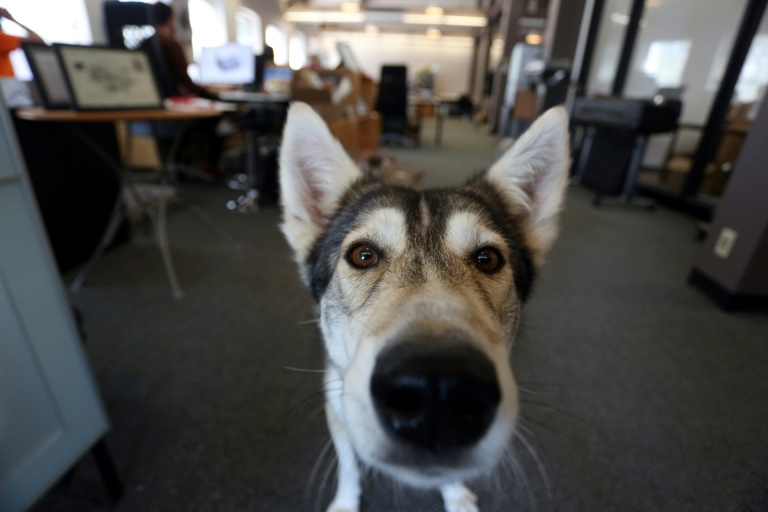
Daisy moseys over to greet visitors, her tail wagging. She’s listed as chief morale officer on Tungsten Collaborative’s website, and is among the many pets joining their owners returning to Canadian offices after working from home through the pandemic.

The 12-year-old Lab sniffs for treats. Before long, a Basset Hound named Delilah waddles over, offering up her belly for a rub, along with other four-legged colleagues Eevee the Greyhound and German Shepherd puppy Hudson, who lets out a bark.

Daisy’s proficiencies include “stress management” and “client engagement,” according to her biography, which notes that many of the industrial design studio’s “greatest innovations can be traced back to a long walk” with her.

“We encourage people if they have pets to bring them (to work),” Tungsten president Bill Dicke, 47, said in an interview with AFP.

“You develop this relationship being at home with your pet on a day-to-day basis and all of a sudden you go back to work, so now they have to be crated for the day or roam the house alone, it’s not fair to them,” he opined.

“The tolerance for pets (at work) during the pandemic has increased,” he added.

These dogs sleep under desks or in the boardroom throughout the day, chase balls down a hallway or chew squeaky toys. There’s a row of water bowls in the office kitchen, if they get thirsty.

The Ottawa company is listed by the Humane Society as dog-friendly, and it’s actually helped drum up business, Dicke said, as well as increased staff productivity.

Workers are forced to take regular breaks for dog walks instead of “eating lunch at their desk,” for example, and are not fretting about their pet being left alone at home, he explained.

According to a recent Leger survey for PetSafe, 51 percent of Canadians support bringing dogs to the office.

Younger workers were the most supportive, with 18 percent of those aged 18 to 24 years saying they would change jobs if their employer refused to allow them to bring their pet to work.

With an estimated 200,000 Canadians adopting a dog or cat since the start of the pandemic in 2020, bringing the nationwide total to 3.25 million, it could force employers now pressing staff to return to the office to consider this option.

– ‘Going to w-o-r-k’ –

Johan Van Hulle, 29, joined Tungsten last year. Its dog policy, he said, “was a key part of the decision” to take the job, after working from home with Eevee.

“Allowing dogs is a good indicator” of a company’s culture, he said, and the kind of “not too corporate” workplace that appeals to him.

Across town at construction joint venture Chandos Bird, people designing a nuclear research laboratory are visibly smitten by 10-year-old Samson.

His owner Trevor Watt didn’t want to leave the Yorkshire Terrier alone after moving into a new house and starting work in a new office in January.

It was supposed to be a temporary arrangement until Samson got used to his new surroundings, but he endeared himself with colleagues and staff in neighboring offices, who take turns walking him.

“He loves going to work,” Watt said. “When I say I’m going to w-o-r-k, he’s ready to jump in the car.”

Watt likes it, too. “I don’t have to worry about him.” 

“Dogs in new environments get very anxious, when left alone,” he explained. “I think a lot of new owners know that now that they’ve had their puppies through Covid.”

If Samson needs to go out, he just puts a paw on Watt’s leg. He has toys and a bed at the office, and wanders from desk to desk.

Petting him is a great way to “decompress after a tough meeting,” commented Watt’s boss Byron Williams.

Dogs in the workplace, however, can also create challenges, he said, such as “if somebody is scared of dogs” or allergic to dander.

One of Watt’s coworkers is terrified of dogs. It was agreed with her that Samson would be leashed the days she comes to the office.

At other offices, workers surveyed by AFP lamented carpet stains, disruptive barking and pet hair or drool on clothes — not a great look for impressing clients.

Downtown, many stores and cafes have water bowls for dogs, and several shopkeepers such as Emma Inns of the Adorit fashion boutique bring their dogs to work.

“If they’re home alone, they get into trouble,” she said of Rosie, Oscar and Camilla.

As store mascots, however, they’re great for business.

“Everyone knows their names,” Inns said. “Some people come just to see them, but then buy something.”

Close Bitnami banner
Bitnami