AFP

G7 countries pledge to stop Russia oil imports

The G7 club of wealthy nations committed Sunday to phasing out its dependency on Russian oil and issued a scathing statement accusing President Vladimir Putin of bringing “shame” on Russia with his invasion of Ukraine.

The statement from the Group of Seven — France, Canada, Germany, Italy, Japan, Britain and the United States — did not specify exactly what commitments each country will make to move away from Russian energy.

But it was an important development in the ongoing campaign to pressure Putin by crippling Russia’s economy, and underscores the unity of the international community against Moscow’s actions.

“We commit to phase out our dependency on Russian energy, including by phasing out or banning the import of Russian oil. We will ensure that we do so in a timely and orderly fashion, and in ways that provide time for the world to secure alternative supplies,” the joint statement said.

“This will hit hard at the main artery of Putin’s economy and deny him the revenue he needs to fund his war,” the White House said. 

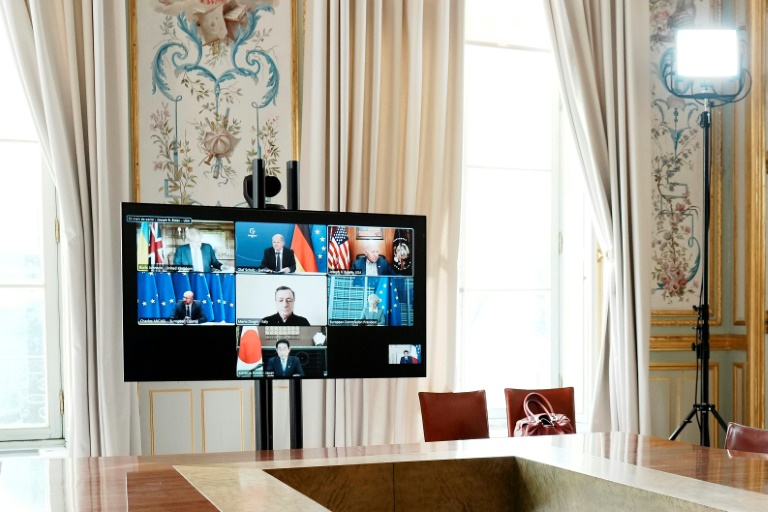
The announcement came as the G7 held its third meeting of the year on Sunday via video conference, with Ukrainian President Volodymyr Zelensky participating. 

The West has so far displayed close coordination in its announcements of sanctions against Russia, but has not moved at the same pace when it comes to Russian oil and gas.

The United States, which was not a major consumer of Russian hydrocarbons, has already banned their import.

But Europe is far more reliant on Russian oil. The European Union has already said it is aiming to cut its reliance on Russian gas by two-thirds this year, though Germany has opposed calls for a full boycott, with member states continuing intense negotiations Sunday. 

The G7 also slammed Putin personally for his actions in Ukraine.

The Russian president’s “unprovoked war of aggression” against its Eastern European neighbor has brought “shame on Russia and the historic sacrifices of its people,” the group said in its statement.

“Russia has violated the international rules-based order, particularly the UN Charter, conceived after the Second World War to spare successive generations from the scourge of war,” the statement continued.

– Fresh US sanctions –

The date of Sunday’s G7 meeting is highly symbolic: Europeans commemorate the end of World War II in Europe on May 8. 

Sunday’s meeting also comes on the eve of the May 9 military parade in Russia, which marks the Soviet Union’s victory over Nazi Germany. 

Washington also announced a new round of sanctions against Russia in a White House statement on Sunday, focusing on two major areas: the media, and access by Russian companies and wealthy individuals to world-leading US accounting and consulting services.

The US will sanction Joint Stock Company Channel One Russia, Television Station Russia-1, and Joint Stock Company NTV Broadcasting Company. Any US company will be prohibited from financing them through advertising or selling them equipment.

“US companies should not be in the business of funding Russian propaganda,” said a senior White House official who requested anonymity, stressing that these media were directly or indirectly controlled by the Kremlin.

Another line of attack by Washington: banning the provision of “accounting, trust and corporate formation, and management consulting services to any person in the Russian Federation,” according to the White House.

Those services are used to run multinational companies, but also potentially to circumvent sanctions or hide ill-gotten wealth, the White House official said. 

The official stressed that while the Europeans had the closest industrial links with Russia, the United States and the United Kingdom dominated the world of accounting and consulting, notably through the “Big Four” — the four global audit and consulting giants Deloitte, EY, KPMG and PwC.

Washington has also announced new bans on the export of American products to Russia, covering a range of capital goods from bulldozers to ventilation systems and boilers. 

The United States announced on Sunday that it would impose visa restrictions on 2,600 Russian and Belarusian officials, as well as sanctions against officials of Sberbank and Gazprombank.
G7 countries pledge to stop Russia oil imports

The G7 club of wealthy nations committed Sunday to phasing out its dependency on Russian oil and issued a scathing statement accusing President Vladimir Putin of bringing “shame” on Russia with his invasion of Ukraine.

The statement from the Group of Seven — France, Canada, Germany, Italy, Japan, Britain and the United States — did not specify exactly what commitments each country will make to move away from Russian energy.

But it was an important development in the ongoing campaign to pressure Putin by crippling Russia’s economy, and underscores the unity of the international community against Moscow’s actions.

“We commit to phase out our dependency on Russian energy, including by phasing out or banning the import of Russian oil. We will ensure that we do so in a timely and orderly fashion, and in ways that provide time for the world to secure alternative supplies,” the joint statement said.

“This will hit hard at the main artery of Putin’s economy and deny him the revenue he needs to fund his war,” the White House said. 

The announcement came as the G7 held its third meeting of the year on Sunday via video conference, with Ukrainian President Volodymyr Zelensky participating. 

The West has so far displayed close coordination in its announcements of sanctions against Russia, but has not moved at the same pace when it comes to Russian oil and gas.

The United States, which was not a major consumer of Russian hydrocarbons, has already banned their import.

But Europe is far more reliant on Russian oil. The European Union has already said it is aiming to cut its reliance on Russian gas by two-thirds this year, though Germany has opposed calls for a full boycott, with member states continuing intense negotiations Sunday. 

The G7 also slammed Putin personally for his actions in Ukraine.

The Russian president’s “unprovoked war of aggression” against its Eastern European neighbor has brought “shame on Russia and the historic sacrifices of its people,” the group said in its statement.

“Russia has violated the international rules-based order, particularly the UN Charter, conceived after the Second World War to spare successive generations from the scourge of war,” the statement continued.

– Fresh US sanctions –

The date of Sunday’s G7 meeting is highly symbolic: Europeans commemorate the end of World War II in Europe on May 8. 

Sunday’s meeting also comes on the eve of the May 9 military parade in Russia, which marks the Soviet Union’s victory over Nazi Germany. 

Washington also announced a new round of sanctions against Russia in a White House statement on Sunday, focusing on two major areas: the media, and access by Russian companies and wealthy individuals to world-leading US accounting and consulting services.

The US will sanction Joint Stock Company Channel One Russia, Television Station Russia-1, and Joint Stock Company NTV Broadcasting Company. Any US company will be prohibited from financing them through advertising or selling them equipment.

“US companies should not be in the business of funding Russian propaganda,” said a senior White House official who requested anonymity, stressing that these media were directly or indirectly controlled by the Kremlin.

Another line of attack by Washington: banning the provision of “accounting, trust and corporate formation, and management consulting services to any person in the Russian Federation,” according to the White House.

Those services are used to run multinational companies, but also potentially to circumvent sanctions or hide ill-gotten wealth, the White House official said. 

The official stressed that while the Europeans had the closest industrial links with Russia, the United States and the United Kingdom dominated the world of accounting and consulting, notably through the “Big Four” — the four global audit and consulting giants Deloitte, EY, KPMG and PwC.

Washington has also announced new bans on the export of American products to Russia, covering a range of capital goods from bulldozers to ventilation systems and boilers. 

The United States announced on Sunday that it would impose visa restrictions on 2,600 Russian and Belarusian officials, as well as sanctions against officials of Sberbank and Gazprombank.
Xi warms up China's economy, but virus narrows options

President Xi Jinping has offered state backing for tech, infrastructure and jobs to revive China’s economy, but analysts warn growth will continue to wilt until Beijing drops its rigid virus controls.

Two and a half years since the coronavirus first emerged in Wuhan, China is the last major economy still closed off to the world, despite its relatively low death toll.

Lockdowns across dozens of cities — from the manufacturing hubs of Shenzhen and Shanghai to the breadbasket of Jilin — have wreaked havoc on supply chains over recent months, crushing small businesses and trapping consumers at home.

That has imperilled Beijing’s full-year growth target of about 5.5 percent, with forecasters anticipating that around one percentage point may be shaved off that figure.

“We remain deeply concerned about growth,” Nomura analysts said this week. “We believe the Omicron variant and zero-Covid strategy represent the dominant challenges to growth stability.” 

Yet China’s Communist leadership insisted Thursday that the country will stick “unswervingly” to zero-Covid, with a meeting chaired by Xi declaring that “persistence is victory”.

To curtail the growing economic damage, Beijing has offered words of respite to the tech sector from rolling regulatory crackdowns and promised to pump prime the economy with an “all-out” infrastructure campaign.

But observers say rallies may be temporary as long as the state’s reflex remains to hammer down the virus caseload at all costs.

“(The measures are) all very welcome… but how many more bridges and how many more sports stadiums are going to help us in creating an environment of predictable growth?” European Chamber president Joerg Wuttke told reporters on Thursday.

While many cities have bounced back after short, targeted lockdowns, other areas such as agricultural base Jilin province have been slow to recover from waves of restrictions. 

“That precedent (Jilin) could mean a longer-lasting impact from Shanghai’s highly disruptive lockdown,” said Ernan Cui of Gavekal Dragonomics in a report Friday.

– Devil in the detail –

Analysts are waiting for details of the delivery behind sweeping promises of support from Beijing’s policymakers.

China’s tech firms have been under the state’s microscope on concerns over data misuse and monopoly.

But shares of major tech firms soared as the government called for “healthy development” of the sector and shifted its language on completing its “rectification”.

It is unclear if that signals an end to a punishing round of regulatory scrutiny.  

Markets also cheered on as the government announced support for real estate and an infrastructure push to buoy economic and social development.

But China “does not have much room for further infrastructure building, (or) government borrowing on the local level,” said Dan Wang, chief economist at Hang Seng Bank China.

“In reality, there’s not much room to grow.”

While it harks back to Beijing’s four trillion yuan ($600 billion at today’s rates) stimulus package after the 2008 financial crisis — which included massive infrastructure investment — Zhaopeng Xing of ANZ Research said “we doubt the authorities will carry it forward at the cost of rising debts”.

– Fading confidence –

China’s State Council has also said it would give cash handouts to jobless migrant workers and urged stronger support for small firms harried by lockdowns and shrivelling consumer demand.

But re-inflating the economy is a big task made more complicated by each new level of virus control, experts say.

“Those easing measures, even on a large scale, may not achieve their intended impact due to lockdowns and logistics disruptions,” Nomura added in its note.

A path of regular mass testing — which China appears to be embarking on — may also come with a hefty bill.

It would cost between 0.9 percent and 2.3 percent of GDP for a regular testing mandate to expand across China, according to Nomura.

With the economy flagging, an effective bounce could be given by lowering the interest rate, while authorities could also turn up the spending to drive the infrastructure push.

But optimism is fading five months into a year already defined by the battle with the pandemic, with business activity collapsing and consumers afraid of what is to come.

“People had high hopes for this year,” Wang said.

C.Africa's leap into bitcoin leaves its people bemused

In the Central African Republic (CAR), nine out of 10 people do not have internet, and only one in seven has electricity — that is, when there are no power cuts.

Yet the CAR has just followed El Salvador in adopting bitcoin as legal tender, a currency that requires access to the net to be bought, sold or used.

Foreign experts and CAR citizens themselves are struggling to understand why the world’s second least developed economy has announced this leap into monetary hyperspace.

Among people queueing at one of the rare automatic teller machines (ATMs) in the capital Bangui, the word “bitcoin” stirred befuddlement.

“What is it?” asked Sylvain, a man in his 30s, waiting for his turn at the cash machine, which was operating thanks to a generator.

“I don’t know what cryptocurrencies are — I don’t even have internet,” said Joelle, a vegetable hawker nearby.

On April 28, President Faustin Archange Touadera announced that lawmakers had unanimously approved a bill that legalised the use of bitcoin alongside the CFA franc.

All transactions using the cryptocurrency, including payment of taxes, are being authorised.

Government spokesman Serge Ghislain Djorie told AFP: “We are going to launch an awareness campaign and shortly introduce fibre optic cable — a low internet connection is enough to buy cryptocurrency.”

But even among CAR’s business community, which in theory is best placed to use bitcoin and other cryptocurrencies regulated by the new law, scepticism runs deep.

“I’m not interested in having bitcoin here — we have no infrastructure and no knowledge for getting involved in this adventure and there’s no cybercrime unit to ensure security,” said an entrepreneur, who spoke on the condition of anonymity.

“There are other priorities, like security, energy, access to water, the internet, building roads…”

– Sickly economy –

Technical hurdles are just one of the questions raised by the bitcoin move.

Foreign analysts have been pondering why this deeply troubled economy should adopt a novel and volatile currency rather than a time-honoured stable unit such as the US dollar.

Just this week, Economy Minister Herve Ndoba said a shortfall in government income was so severe that without foreign help, spending cuts of up to 60 percent loomed for some ministries.

“CAR has many problems. Adding another currency like bitcoin as legal tender will unlikely meaningfully address those,” said Ousmene Jacques Mandeng, a visiting fellow at the London School of Economics (LSE).

Bitcoin’s “excess volatility… translates to fluctuations in household savings, consumption and wealth,” warned Ganesh Viswanath-Nastraj, an assistant professor of finance at Warwick Business School in England.

Locked in a nine-year-old civil conflict, the CAR is heavily dependent on mineral extraction, much of which is informal, for its economy.

In a report in December 2020, a US watchdog called The Sentry said the CAR had become “a breeding ground for transnational criminal networks.”

“Money laundering and the trafficking of natural resources, drugs, weapons, and diplomatic passports are rampant,” it said.

The CFA franc that until now was the CAR’s sole legal tender is a regional currency backed by France and pegged to the euro.

Other members of the currency are Cameroon, Chad, the Republic of Congo, Gabon and Equatorial Guinea.

Didier Loukakou, regulatory chief at the Central African Financial Market Surveillance Commission, said the six had been discussing plans to regulate crypto-currencies.

But, he said, “we were not warned by Bangui about its decision.”

– Russian factor? –

Some experts see a possible explanation for Touadera’s announcement in his entwinement with Russia, perceived as desperate for currency after Western countries imposed sanctions over its invasion of Ukraine.

In 2020, Russia sent paramilitaries to shore up Touadera as armed groups advanced on the capital.

France and rights campaigners describe these operatives as mercenaries from the Wagner group, which reputedly receives mineral wealth in exchange for their services.

“The context, given systemic corruption and a Russian partner facing international sanctions, does encourage suspicion,” said Thierry Vircoulon, a specialist on Central Africa at the French Institute of International Relations (IFRI) think tank. 

“Russia’s search for ways to get around international sanctions is an invitation to be cautious.”

But some voices, including the head of the International Monetary Fund, Kristalina Georgieva, have voiced doubts that digital currencies can be an effective tool for bypassing sanctions.

Blooming shame: Pandemic, Ukraine war hurts Thai orchid industry

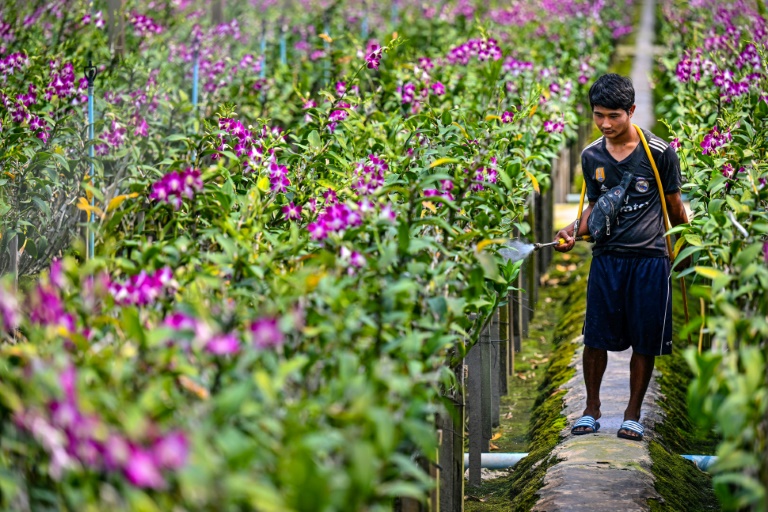
Thailand’s orchid growers, already weary after two years of being battered by the pandemic, are bracing for fresh blows to their livelihood as the war in Ukraine and changing weather patterns further cloud their futures.

Once considered a popular pastime among the elite in Thailand, orchid growing has developed into a multi-million dollar industry, and the kingdom is the world’s biggest producer and exporter of cut orchids.

But the pandemic has seen one in five farms shut recently, according to the Thai Orchid Exporter Association.

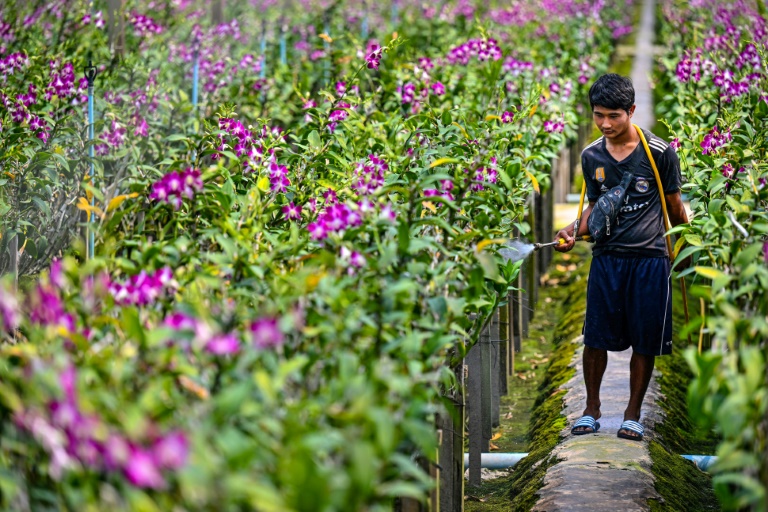
“No one has the heart to buy flowers, and transportation is very complicated,” said Somchai Lerdrungwitayachai as he stares in despair at the sea of purple at his orchid farm west of Bangkok.

He grows Dendrobium Sonia orchids — a hybrid variety with delicate white and purple petals. Popular in Japan, China and the United States, they are used for anything from religious ceremonies to college graduations.

At his 20-hectare property, workers treat the cut flowers with a special solution before trimming the stems and fitting them with a small vial, containing vitamins and nutrients, to preserve their fresh appearance for up to two weeks.

But times are tough: Somchai has been dipping into his savings for two years to keep paying his 50-odd employees.

Covid-19 and Russia’s invasion of Ukraine have sent the price of fertilisers and pesticides up by 30 percent, he said.

Adding to his woes are dramatically falling sales: pre-pandemic China bought 270 million orchid stems annually from Thailand — a figure that dropped to 170 million last year.

Once accounting for 80 percent of Somchai’s export income, China has been hit with coronavirus lockdowns in a number of cities, including its biggest: Shanghai.

Transporting orchids to the key market by road used to take up to three days, but the same journey can now take between eight and 10 days.

In the flower business, time is money, and wilted orchids are frequently discarded before they can ever reach a Shanghai customer’s home to be admired.

– ‘Time is running out’ –

While Somchai delivers his produce directly overseas, the majority of orchid growers in Thailand use large exporters based in Bangkok.

Air-freight costs have tripled or quadrupled in recent months, depending on the destination, said Wuthichai Pipatmanomai, vice-president of the Thai Orchid Exporter Association and co-owner of Sun International Flower, a major exporter.

Before the pandemic, the company was delivering 3.6 million orchids a month to China, Japan, Vietnam and the United States.

Now, only 1.2 million flowers leave the warehouse, and he has had to let go of half of his staff.

“We have asked the authorities for financial support, but we have not received anything,” Wuthichai said. “Time is running out.”

Increasing his selling price by 20 percent has resulted in several importers — particularly those in Europe — dropping him to concentrate on more local flowers.

The only hope is that sales to Japan remain stable and those to the United States increase with the start of the wedding season, he said.

However, in the long term, changing weather patterns are also troubling for growers.

“We are increasingly experiencing the effects of climate change,” Wutachai said, pointing to a recent surprise cold snap at the start of April in which the temperature dropped sharply from 36 Celsius (97 Fahrenheit) to 21C in just 24 hours, affecting orchid production.

“We are worried that these situations will occur more and more frequently.”

– Wilting fortunes –

Thailand’s coronavirus restrictions have also hit domestic sales — a lack of tourists meant restaurants and hotels scaled back orders, and bans on gatherings affected Thai Buddhist ceremonies.

And despite the kingdom’s international reopening, local demand remains lukewarm.

While Bangkok’s biggest flower market appears busy — wholesalers can be seen scurrying through colourful aisles laden with large woven baskets containing flowers — vendors tell a different story.

Than Tha Win, waiting patiently at her orchid stall for customers, said her income is down 70 percent.

“Everyone is still afraid to come to the market because of Covid-19,” the 21-year-old said.

Meanwhile, 45-year-old vendor Waew said she now has about 600 unsold orchids left over daily and tries to stem her losses by plucking off the petals and selling them as a separate product.

“Stop working with orchids? Impossible, I don’t know how to do anything else,” she said.

Blooming shame: Pandemic, Ukraine war hurts Thai orchid industry

Thailand’s orchid growers, already weary after two years of being battered by the pandemic, are bracing for fresh blows to their livelihood as the war in Ukraine and changing weather patterns further cloud their futures.

Once considered a popular pastime among the elite in Thailand, orchid growing has developed into a multi-million dollar industry, and the kingdom is the world’s biggest producer and exporter of cut orchids.

But the pandemic has seen one in five farms shut recently, according to the Thai Orchid Exporter Association.

“No one has the heart to buy flowers, and transportation is very complicated,” said Somchai Lerdrungwitayachai as he stares in despair at the sea of purple at his orchid farm west of Bangkok.

He grows Dendrobium Sonia orchids — a hybrid variety with delicate white and purple petals. Popular in Japan, China and the United States, they are used for anything from religious ceremonies to college graduations.

At his 20-hectare property, workers treat the cut flowers with a special solution before trimming the stems and fitting them with a small vial, containing vitamins and nutrients, to preserve their fresh appearance for up to two weeks.

But times are tough: Somchai has been dipping into his savings for two years to keep paying his 50-odd employees.

Covid-19 and Russia’s invasion of Ukraine have sent the price of fertilisers and pesticides up by 30 percent, he said.

Adding to his woes are dramatically falling sales: pre-pandemic China bought 270 million orchid stems annually from Thailand — a figure that dropped to 170 million last year.

Once accounting for 80 percent of Somchai’s export income, China has been hit with coronavirus lockdowns in a number of cities, including its biggest: Shanghai.

Transporting orchids to the key market by road used to take up to three days, but the same journey can now take between eight and 10 days.

In the flower business, time is money, and wilted orchids are frequently discarded before they can ever reach a Shanghai customer’s home to be admired.

– ‘Time is running out’ –

While Somchai delivers his produce directly overseas, the majority of orchid growers in Thailand use large exporters based in Bangkok.

Air-freight costs have tripled or quadrupled in recent months, depending on the destination, said Wuthichai Pipatmanomai, vice-president of the Thai Orchid Exporter Association and co-owner of Sun International Flower, a major exporter.

Before the pandemic, the company was delivering 3.6 million orchids a month to China, Japan, Vietnam and the United States.

Now, only 1.2 million flowers leave the warehouse, and he has had to let go of half of his staff.

“We have asked the authorities for financial support, but we have not received anything,” Wuthichai said. “Time is running out.”

Increasing his selling price by 20 percent has resulted in several importers — particularly those in Europe — dropping him to concentrate on more local flowers.

The only hope is that sales to Japan remain stable and those to the United States increase with the start of the wedding season, he said.

However, in the long term, changing weather patterns are also troubling for growers.

“We are increasingly experiencing the effects of climate change,” Wutachai said, pointing to a recent surprise cold snap at the start of April in which the temperature dropped sharply from 36 Celsius (97 Fahrenheit) to 21C in just 24 hours, affecting orchid production.

“We are worried that these situations will occur more and more frequently.”

– Wilting fortunes –

Thailand’s coronavirus restrictions have also hit domestic sales — a lack of tourists meant restaurants and hotels scaled back orders, and bans on gatherings affected Thai Buddhist ceremonies.

And despite the kingdom’s international reopening, local demand remains lukewarm.

While Bangkok’s biggest flower market appears busy — wholesalers can be seen scurrying through colourful aisles laden with large woven baskets containing flowers — vendors tell a different story.

Than Tha Win, waiting patiently at her orchid stall for customers, said her income is down 70 percent.

“Everyone is still afraid to come to the market because of Covid-19,” the 21-year-old said.

Meanwhile, 45-year-old vendor Waew said she now has about 600 unsold orchids left over daily and tries to stem her losses by plucking off the petals and selling them as a separate product.

“Stop working with orchids? Impossible, I don’t know how to do anything else,” she said.

How Portugal became Europe's accidental 'bitcoin heaven'

As governments slowly shackle the crypto industry with regulations and obligations, Portugal is increasingly isolated in Europe — a place with few rules that investors describe as a crypto paradise.

“You don’t need to do anything else because you already have a perfect system, with zero percent tax on bitcoin,” said Didi Taihuttu, a prominent crypto enthusiast who shifted his family to Portugal from the Netherlands. 

“For bitcoiners, it’s heaven,” he added.

Financial authorities across the globe are grappling with fundamental questions about cryptocurrencies.

Firstly, are they currencies or assets? If they are assets, how do you categorise and tax them? 

Right now, Portugal is one of the last countries in Europe to regard them as currencies from a tax point of view, meaning profits from trading are not taxed.

The finance ministry told AFP it was reviewing the situation and wanted a common European framework, but pressure is building for quick action. 

Mariana Mortagua, a far-left MP, called recently for urgent regulation and summed up the situation bluntly: “Portugal has become a tax haven.”

Even those in the crypto industry accept that things will have to change.

“It’s hard to justify other financial assets being taxed at around 28 percent but not cryptocurrencies,” said Pedro Borges of Criptoloja, the first crypto exchange registered in Portugal.

– ‘Legal vacuum’ –

Portugal has long sought foreign cash by giving tax breaks and special visas to foreign investors and so-called digital nomads — those who work online without the need for a fixed business location.

And the tax regime is not the only appeal — beaches, climate and cuisine all figure, particularly for people from northern Europe.

“Portugal has the sun, amazing food and amazing people,” said Taihuttu, who has set up in the Algarve in the country’s heavily touristed south. 

“Portugal can become one of the best countries in Europe for living, for investing.”

But while the lifestyle is likely to remain unchanged, the same cannot be said of the tax regime.

One London-based tax lawyer, who asked to remain anonymous, said he would not advise his clients to put their money into Portugal despite its “very lenient” tax system.

“It’s not a long-term strategy of the government to attract companies in the sector, rather it is a legal vacuum,” he said.

“I bet that in 10 years, the City (of London) will be more lenient than Portugal.”

Britain is one of many countries attempting to market itself as a “crypto hub”.

– Bubble warning –

If internal pressures don’t force the Portuguese government’s hand, then intervention could come from outside.

Fabio Panetta of the European Central Bank sounded the alarm on crypto late last month when he said the ecosystem showed “strikingly similar dynamics” to the sub-prime mortgage bubble that helped tank the world economy in 2007.

Crypto-assets now have a far higher market capitalisation than the $1.3 trillion of bad loans that sparked the global financial crisis.

“We must not repeat the same mistakes by waiting for the bubble to burst,” he said, arguing for strong regulation.

He accused “crypto evangelists” of promising “heaven on Earth” while hawking a glorified Ponzi scheme — because crypto-assets are generally not backed by any streams of revenue, they rely on money from new investors to keep prices high.

If new investors dry up, the asset price tanks.

Those already in the market need to attract new money, which explains high-profile advertising at the Super Bowl, celebrity endorsements and armies of boosters on social media.

Taihuttu’s Instagram account plays like a scrolling advertisement for a luxury lifestyle of beaches, skiing, travel and adventure — all apparently funded by crypto.

Like other crypto entrepreneurs he has dazzling plans — after pushing his “crypto family” he is now proposing a “crypto village” somewhere in Portugal, selling plots of land with proof of ownership stored on blockchains.

To him, at least, the country should welcome these ideas with open arms.

“Portugal needs more jobs and economic growth,” he said. “So why stop the evolution of technology and money?”

Between searing drought and Ukraine war, Iraq watchful over wheat

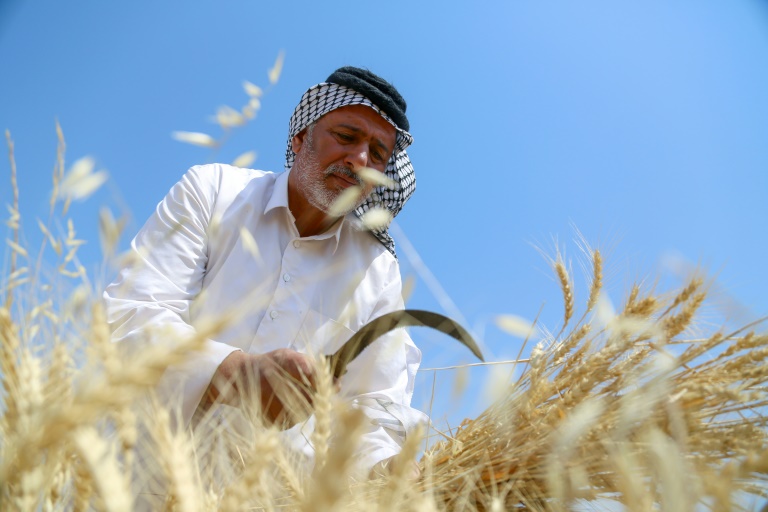
Iraqi farmer Kamel Hamed looks at the golden ears of wheat waving in the wind, unable to hide his anguish over the baking heat that is decimating his harvest.

“The drought is unbelievable,” said the 53-year-old in a white dishdasha robe and keffiyeh head covering at his farm in Jaliha village of central Diwaniya province.

“Even the well water can’t be used, it’s salt water.”

Searing heat and a lack of rain were already threatening his harvest. Then came Russia’s invasion of Ukraine in February, driving up the cost of fuel, seeds and fertiliser.

Like all farmers in Iraq, Hamed must follow the instructions of the state authorities who are the main grain buyers.

They determine the areas to be planted and the level of irrigation, depending on rain and water reserves. This year, due to water shortages, Iraq has reduced the area under cultivation by half.

As a result, Hamed has planted just one quarter of his 100 donums (10 hectares), where the combine harvester was now throwing grain into a truck bed.

“This year we didn’t even get 500 kilograms (1,100 pounds) of wheat from one donum” — less than half the usual harvest — he said.

The war in Ukraine has “pushed up the price of motor oil and of high-yield seeds”, he added — yet “another financial burden for farmers”.

“I don’t know how to support my family. No salary, no job, where can I go?”

– ‘Abandon the land’ – 

After decades of war and insurgency, Iraq faces another huge challenge: severe water scarcity driven by climate change.

It is highly sensitive issue for Iraq and its 41 million people, who feel the impacts on a daily basis, from depleted rivers to rapid desertification and more intense sandstorms.

Iraq’s big rivers, the Tigris and Euphrates, and their tributaries originate in Turkey and Syria as well as Iran, which dam them upstream, reducing the flow as they enter Iraq.

Irrigated by the Euphrates, Diwaniya province, where Jaliha is located, normally receives 180 cubic metres of water per second.

This year the volume has been at least halved to “80 to 90 cubic metres”, said Hani Shaer, who heads a farmers’ collective responsible for distributing the water.

The result can be seen in the stagnant water in the main irrigation canal, which serves the 200,000 donums of surrounding land, with some gullies now completely dry.

Shaer denounced a lack of support from authorities, charging that the agriculture ministry provided just five kilos of fertiliser this season, down from 40 kilos in previous years.

“The farmer will leave, abandon the land and head to the city to look for any kind of work,” he said.

– Collapsed harvest –

Agriculture ministry spokesman Hamid al-Nayef said the state was helping by raising the purchase price in order to pay producers around $500 per tonne of wheat.

In 2019 and 2020, wheat harvests had reached five million tonnes, enough to guarantee “self-sufficiency” for Iraq, he told AFP.

This season, Iraq may only grow 2.5-3 million tonnes of wheat, “not enough for a whole year for the Iraqis,” Nayef acknowledged.

“We will have to import,” he said.

Iraq will be confronted with the vagaries of the world market and prices driven up by the conflict in Ukraine, even though Baghdad imports its cereals mainly from Canada, Australia and the United States.

“With the interplay of supply and demand, prices are rising even in the United States and other countries,” Nayef said.

Back in Jaliha, another farmer, Ahmed al-Jelhawi, was questioning his life choices. He said he used to harvest 500 tonnes of wheat, but this year expects just 50-75 tonnes.

“I gave up my studies to devote myself to agriculture,” he lamented. “But this year, agriculture is zero.”

“Between the low production and the rising prices, we probably won’t be able to plant next year.”

Between searing drought and Ukraine war, Iraq watchful over wheat

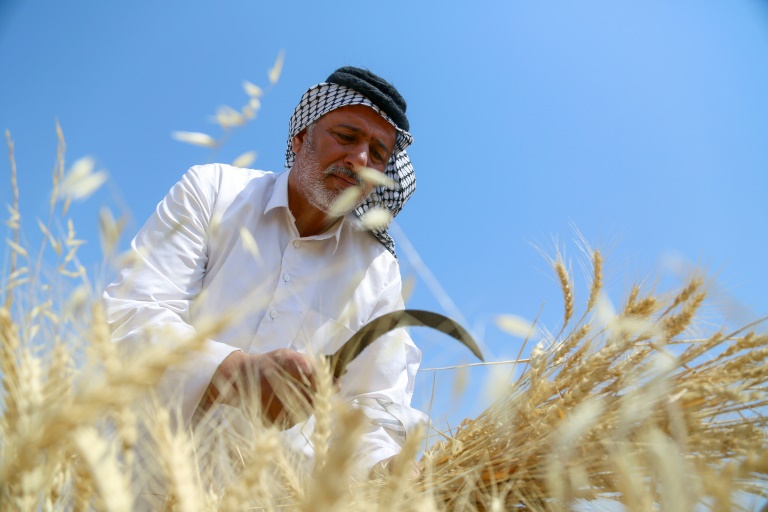
Iraqi farmer Kamel Hamed looks at the golden ears of wheat waving in the wind, unable to hide his anguish over the baking heat that is decimating his harvest.

“The drought is unbelievable,” said the 53-year-old in a white dishdasha robe and keffiyeh head covering at his farm in Jaliha village of central Diwaniya province.

“Even the well water can’t be used, it’s salt water.”

Searing heat and a lack of rain were already threatening his harvest. Then came Russia’s invasion of Ukraine in February, driving up the cost of fuel, seeds and fertiliser.

Like all farmers in Iraq, Hamed must follow the instructions of the state authorities who are the main grain buyers.

They determine the areas to be planted and the level of irrigation, depending on rain and water reserves. This year, due to water shortages, Iraq has reduced the area under cultivation by half.

As a result, Hamed has planted just one quarter of his 100 donums (10 hectares), where the combine harvester was now throwing grain into a truck bed.

“This year we didn’t even get 500 kilograms (1,100 pounds) of wheat from one donum” — less than half the usual harvest — he said.

The war in Ukraine has “pushed up the price of motor oil and of high-yield seeds”, he added — yet “another financial burden for farmers”.

“I don’t know how to support my family. No salary, no job, where can I go?”

– ‘Abandon the land’ – 

After decades of war and insurgency, Iraq faces another huge challenge: severe water scarcity driven by climate change.

It is highly sensitive issue for Iraq and its 41 million people, who feel the impacts on a daily basis, from depleted rivers to rapid desertification and more intense sandstorms.

Iraq’s big rivers, the Tigris and Euphrates, and their tributaries originate in Turkey and Syria as well as Iran, which dam them upstream, reducing the flow as they enter Iraq.

Irrigated by the Euphrates, Diwaniya province, where Jaliha is located, normally receives 180 cubic metres of water per second.

This year the volume has been at least halved to “80 to 90 cubic metres”, said Hani Shaer, who heads a farmers’ collective responsible for distributing the water.

The result can be seen in the stagnant water in the main irrigation canal, which serves the 200,000 donums of surrounding land, with some gullies now completely dry.

Shaer denounced a lack of support from authorities, charging that the agriculture ministry provided just five kilos of fertiliser this season, down from 40 kilos in previous years.

“The farmer will leave, abandon the land and head to the city to look for any kind of work,” he said.

– Collapsed harvest –

Agriculture ministry spokesman Hamid al-Nayef said the state was helping by raising the purchase price in order to pay producers around $500 per tonne of wheat.

In 2019 and 2020, wheat harvests had reached five million tonnes, enough to guarantee “self-sufficiency” for Iraq, he told AFP.

This season, Iraq may only grow 2.5-3 million tonnes of wheat, “not enough for a whole year for the Iraqis,” Nayef acknowledged.

“We will have to import,” he said.

Iraq will be confronted with the vagaries of the world market and prices driven up by the conflict in Ukraine, even though Baghdad imports its cereals mainly from Canada, Australia and the United States.

“With the interplay of supply and demand, prices are rising even in the United States and other countries,” Nayef said.

Back in Jaliha, another farmer, Ahmed al-Jelhawi, was questioning his life choices. He said he used to harvest 500 tonnes of wheat, but this year expects just 50-75 tonnes.

“I gave up my studies to devote myself to agriculture,” he lamented. “But this year, agriculture is zero.”

“Between the low production and the rising prices, we probably won’t be able to plant next year.”

Nigerian airlines suspend flights over soaring fuel prices

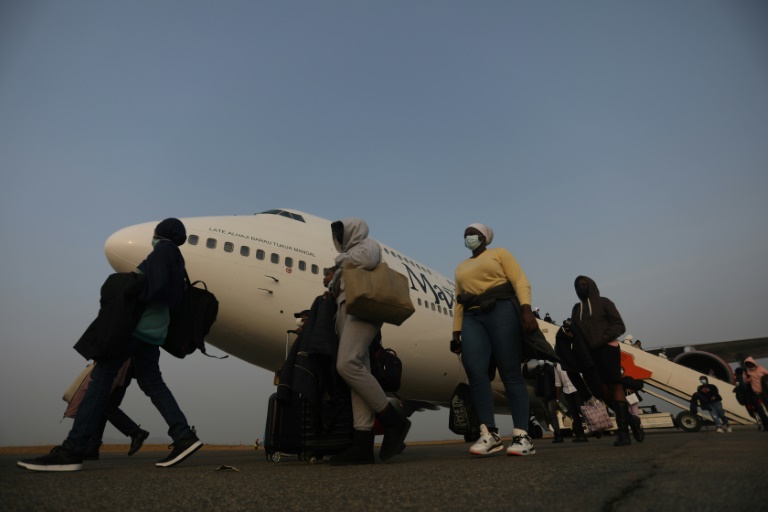
Nigerian airlines are to suspend all flights from Monday over rising jet fuel prices, an umbrella organisation of operators said on Saturday.

The cost of fuel has soared worldwide since Russia invaded its neighbour Ukraine in February and the West responded by slapping sanctions on Moscow.

The Airline Operators of Nigeria said the price of jet fuel had jumped from 190 to 700 Nigerian naira per litre (from $0.45 to almost $1.70).

“No airline in the world can absorb this kind of sudden shock from such an astronomical rise over a short period,” the AON said.

The group said it would now cost a customer 120,000 naira ($289) for a one-hour flight, a sum unaffordable for Nigerians “already experiencing a lot of difficulties”.

The AON therefore wished “to regrettably inform the general public that member airlines will discontinue operations nationwide with effect from Monday May 9, 2022 until further notice,” it said.

The aviation ministry responded by urging airlines to “consider the multiplier effect of shutting down operations, on Nigerians and global travellers”.

The Nigerian consumer protection agency also implored “domestic airlines to consider the effect of the proposed shutdown on passengers and the magnitude of difficulties and hardship associated with such an action”.

It added it was “concerned with rising consumer feedback that airlines have continued to sell tickets beyond the date announced for the proposed service shutdown.”

Social media users made fun of the airlines suggesting customers find alternative means of travel.

“Airlines in Nigeria will shut down their services to passengers from Monday,” one tweeted to more than 110,000 followers.

“I hope you can trek from Lagos to Abuja?” they wrote, of the journey of more than 700 kilometres (more than 400 miles) by road between the country’s largest city and its capital — one that normally takes just over an hour on an airplane.

“If you use the roads, I hope you have your ransom money?” they added, making light of abductions in other parts of the oil-rich country.

Nigeria produces 1.4 million barrels of crude a day, but it refines little. It relies almost completely on fuel imports, making the local market vulnerable to disruptions.

The rising price of fuel has caused prolonged power blackouts in recent weeks.

Close Bitnami banner
Bitnami