AFP

Bulgaria industry on tenterhooks after Russia gas cut

The halt of Russian gas supplies to Bulgaria last week has left companies big and small scrambling as they fear cuts to deliveries and rising prices.

“We are already on the brink. We’ll have to raise our prices further,” said Valery Krastev, who owns a bread factory in the northern town of Montana.

“How will people pay for this bread?” he worried.

The government has insisted Bulgaria has “alternative choices” to Russian gas and won’t reduce supplies to consumers, calling Moscow’s move to halt deliveries “blackmail”.

While natural gas supplies had escaped punishing European sanctions on Russia over its invasion of Ukraine, Moscow sought to sow division among European nations by exploiting their dependence on its gas.

Russia demanded that Gazprom customers have to pay in rubles rather than US dollars or euros, which would be a violation of Western sanctions.

The Russian energy giant cut deliveries to Bulgaria and Poland on April 27.

Since then, Bulgaria’s neighbours have stepped in, shoring up deliveries to the country, which has received more than 90 percent of its gas from Russia for decades.

– Diversification –

But the lack of a long-term solution to secure the Balkan EU member’s annual needs of about 3.0 billion cubic metres of gas is keeping large industrial consumers as well as smaller businesses on tenterhooks.

Many people living in Sofia still remember January 2009 when a Russia-Ukraine gas spat cut deliveries to Europe for days on end, leaving their homes without heating in the dead of winter and prompting rationing for industry.

So far supplies to Sofia’s municipal utility Toplofikacia are uninterrupted, according to its head Alexander Alexandrov.

The utility gets close to 40 percent of all gas in the country to supply 1.5 million people, or a fourth of Bulgaria’s population, with heat and hot water. 

“We cannot keep operating for more than 24 hours in the event of a complete cut in gas supply,” Alexandrov told AFP in an interview, adding that switching back to using fuel oil if gas were cut would have a “grave environmental impact”.

“I am optimistic that there are enough options to secure gas by this autumn to guarantee a normal heating season.”

Bulgaria already pays 10 percent more for its gas now, Energy Minister Alexander Nikolov confirmed after securing deliveries for May through an intermediary gas trading company.

“I can’t believe that someone is trying to convince us that… this is good for us. No it is not,” said Konstantin Stamenov, head of the BFIEC federation of industrial energy consumers and a senior executive at a steel manufacturer, on public radio BNR.

To keep prices contained and secure energy supplies, the government has vowed to diversify suppliers.

It plans to wrap up construction of another major pipeline linking its gas network with that of Greece by the end of June.

This will allow the state gas operator Bulgargaz to negotiate an increase of supplies on an existing contract with Azerbaijan to an annual 1.0 bcm and receive more gas from liquefied natural gas (LNG) terminals in Greece. 

Prime Minister Kiril Petkov also said that the government is in talks to buy LNG from the United States and Egypt.

Analysts say prices may even fall if the country manages to secure long-term contracts for LNG deliveries.

“We have here a huge opportunity to achieve stable diversification of gas deliveries,” energy expert Martin Vladimirov from the Sofia-based think tank Centre for the Study of Democracy told AFP.

However, Open Society economist Georgy Angelov warned: “But that won’t happen in a day.”

– Business as usual – 

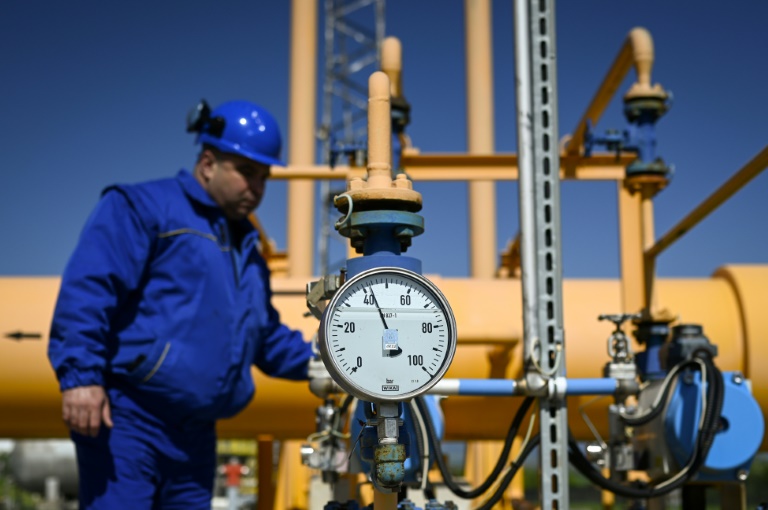
For now, it’s business as usual at a Bulgartransgaz compressor station near Ihtiman, where Russian natural gas is still flowing through the bright yellow pipes.

But Bulgargaz is no longer allowed to use any of this gas — most of it being destined for Greece and North Macedonia.

For its own supply, Bulgaria is currently relying on swap operations with its neighbours, who supply it with Russian gas or LNG through reverse flow pipelines from Greece and Romania. 

Expert Vladimirov cautioned, however, against a suspected scheme by Russia to abandon its direct contract with Bulgargaz and instead make the country buy gas at higher prices through intermediaries such as Hungarian gas trader MET, known to be close to Gazprom, which already helped secure the deliveries for May.

“This, in the end, might lead to higher dependency on Russia under worse contractual conditions,” he warned.

Ukraine wheat harvest set to drop by third: satellite imagery

Ukraine’s wheat production is likely to be down by at least a third from last year due to the Russian invasion, a data analysis firm that uses satellite imagery said Friday.

Ukraine is a major producer and exporter of wheat, but the invasion has disrupted planting, which is still underway, both due a lack of fuel for equipment and farmers having to deal bombardments and unexploded ordnance.

French firm Kayrros said near-infrared and infrared imagery allows for determination of crop coverage and can accurately predict wheat production.

“Production this year is expected to be at least 35 percent lower than last year,” analysis of the latest data showed, Kayrros said. 

It forecast that at this stage Ukraine will be capable of producing 21 million tonnes of wheat this year, a drop of 12 million tonnes from 2021, and a 23 percent drop from the average harvest over the past five years. 

“Given that the fighting is ongoing and that a large part of the country’s wheat production comes from areas of eastern Ukraine where the conflict is most intense, the real production figures are likely to be lower than the current crop cover might suggest,” the firm added. 

Kayrros analysed images taken by the US space agency NASA between April 14 and 22, less than two months after the start of the conflict. 

Even if Ukrainian farmers manage to grow and harvest their wheat they face difficulties getting it to market given that Russia has destroyed transportation infrastructure and blockaded the port of Odessa from which most grain was exported. 

Before the war Ukraine accounted for about 12 percent of the world’s wheat exports, and the conflict has sent the prices of food commodities soaring. 

China troubles mar Adidas's first-quarter result

German sportswear giant Adidas reported a drop in its profits in the first quarter on Friday, as widespread coronavirus lockdowns hurt business in key market China.

The group’s net profit from its continuing operations fell to 310 million euros ($326 million), from 502 million euros in the same quarter last year. 

The fall came off the back of a three-percent drop in sales, felt particularly strongly in Asia, the group said in a statement. 

First-quarter revenues in China fell by 35 percent and 16 percent in the rest of the Asia-Pacific region, as a series of coronavirus-related lockdowns limited demand for the company’s products.

Drastic health restrictions added to a “challenging market environment” for Adidas in China, the group said.

Adidas has been facing a consumer boycott in China over its refusal to use cotton from Xinjiang in response to accusations of forced Uyghur labour.

The German sports outfitter “will return to growth” in the Asia-Pacific market region, Adidas CEO Kasper Rorsted said in the statement.

The group’s difficulties in China were however due “to continue”, he added.

Adidas expected revenues in the key market to decline by a figure in “lower double-digit territory”, chief financial officer Harm Ohlmeyer said at a press conference.

– ‘Supply constraints’ –

The struggles in Asia contrasted with Adidas’s stronger revenue growth elsewhere, with sales in North America up 12.8 percent. 

“Supply constraints as a result of last year’s lockdowns in Vietnam”, where the group has production facilities, suppressed as much as 400 million euros in revenues in the first quarter, Adidas said.

Markets in Europe, the Middle East and Africa were “most impacted by the supply shortages”, the group said, limiting sales growth in the region to 9.1 percent.

The kit-maker also had to fight a “significant increase” in costs for the transport and sourcing of its materials, which put pressure on its profit margins.

Adidas maintained its guidance for 2022, but said the “severe impact” of coronavirus lockdowns in China would keep revenue growth towards the lower end of its 11-to-13-percent range. 

The same went for the group’s net income for the year, now expected to sit closer to 1.8 billion euros than 1.9 billion euros.

Shares in Adidas were down by over six percent at 1:30 p.m. (1130 GMT) trading on the Frankfurt Stock Exchange.

India to reopen abandoned coal mines as heatwave hits supply

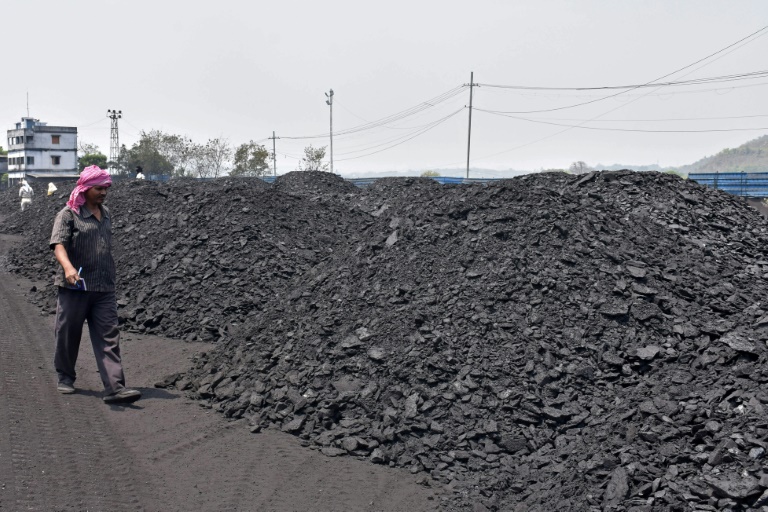
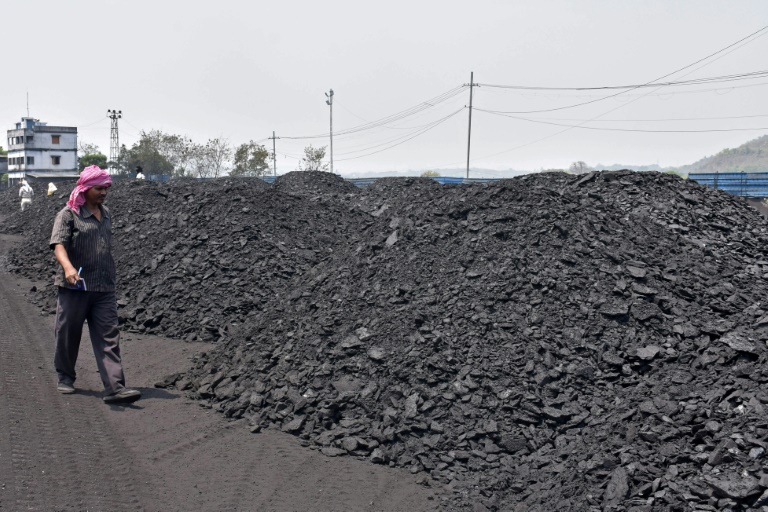
India plans to lease abandoned coal pits to private mining companies, a government official said Friday, in an effort to ramp up production as power outages exacerbate a sweltering heatwave.

Coal supplies more than two-thirds of India’s energy needs and the country has baulked at the cost of transitioning to renewables — even as unseasonably hot weather illustrates the threat from climate change caused by burning fossil fuels. 

Soaring temperatures have prompted higher energy demand in recent weeks and left India facing a 25 million tonne shortfall at a time when coal spot prices have skyrocketed since the start of the year. 

“We’ve always believed that coal is a much-maligned sector,” coal ministry official Anil Kumar Jain said at an industry event.

“Earlier we were hailed as bad boys because we were promoting fossil fuel and now we are in the news (because) we are not supplying enough of it.”

The government plans to lease more than 100 dormant state-owned coal mines to private miners on a revenue-sharing basis.

Officials said they will “cut out the red tape” to encourage bids from mining giants Vedanta, Adani and others.

India needs a billion tonnes of coal to meet domestic demand each year. 

Most of its needs are met by domestic producers, with a record 777 million tonnes of coal mined in the year to the end of March.

The government says it plans to increase domestic coal production to 1.2 billion tonnes in the next two years to support the country’s post-pandemic economic recovery.

“We are very happy that the economy is on the rebound and power is being demanded. The malls are full, restaurants are full,” Jain said.

Despite a commitment to increase its renewable energy capacity to 175 gigawatts by 2022 and 500 gigawatts by 2030, India’s coal minister Pralhad Joshi said coal needs are set to double by 2040.

“There has never been as much demand for electricity as there is today. There has never been as much heat from the sun as there is today,” Joshi said.

The scheme announced Friday is the government’s latest step towards liberalising India’s mining industry and inviting private companies to profit from the world’s fifth-largest coal reserves.

“This is going to lead the country in the way the mineral-rich countries like Brazil, Canada, Australia, South Africa have been creating wealth and generating employment,” Vedanta mining chief V. Shrikant said.

India to reopen abandoned coal mines as heatwave hits supply

India plans to lease abandoned coal pits to private mining companies, a government official said Friday, in an effort to ramp up production as power outages exacerbate a sweltering heatwave.

Coal supplies more than two-thirds of India’s energy needs and the country has baulked at the cost of transitioning to renewables — even as unseasonably hot weather illustrates the threat from climate change caused by burning fossil fuels. 

Soaring temperatures have prompted higher energy demand in recent weeks and left India facing a 25 million tonne shortfall at a time when coal spot prices have skyrocketed since the start of the year. 

“We’ve always believed that coal is a much-maligned sector,” coal ministry official Anil Kumar Jain said at an industry event.

“Earlier we were hailed as bad boys because we were promoting fossil fuel and now we are in the news (because) we are not supplying enough of it.”

The government plans to lease more than 100 dormant state-owned coal mines to private miners on a revenue-sharing basis.

Officials said they will “cut out the red tape” to encourage bids from mining giants Vedanta, Adani and others.

India needs a billion tonnes of coal to meet domestic demand each year. 

Most of its needs are met by domestic producers, with a record 777 million tonnes of coal mined in the year to the end of March.

The government says it plans to increase domestic coal production to 1.2 billion tonnes in the next two years to support the country’s post-pandemic economic recovery.

“We are very happy that the economy is on the rebound and power is being demanded. The malls are full, restaurants are full,” Jain said.

Despite a commitment to increase its renewable energy capacity to 175 gigawatts by 2022 and 500 gigawatts by 2030, India’s coal minister Pralhad Joshi said coal needs are set to double by 2040.

“There has never been as much demand for electricity as there is today. There has never been as much heat from the sun as there is today,” Joshi said.

The scheme announced Friday is the government’s latest step towards liberalising India’s mining industry and inviting private companies to profit from the world’s fifth-largest coal reserves.

“This is going to lead the country in the way the mineral-rich countries like Brazil, Canada, Australia, South Africa have been creating wealth and generating employment,” Vedanta mining chief V. Shrikant said.

Biden heads to Ohio to tout industrial renewal plan

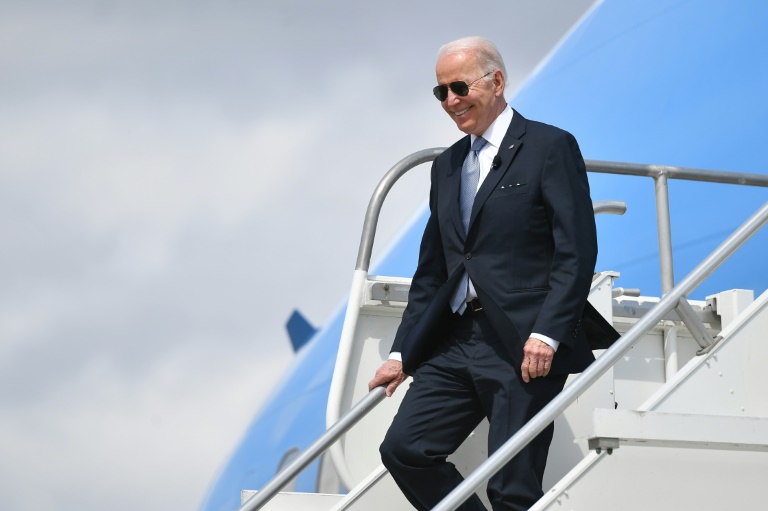
US President Joe Biden will travel to political battleground state Ohio on Friday to announce the launch of a new industrial renewal plan that his administration hopes will revive the country’s manufacturing sector.

The initiative, dubbed “AM Forward” (Additive Manufacturing Forward), is aimed at increasing the use of 3D printing and other next-generation production technologies among US companies, a White House statement said.

Several top US firms, including GE Aviation, Honeywell, Lockheed Martin, Raytheon and Siemens Energy, have committed to a voluntary pact to support US-based suppliers in adopting new parts manufacturing technologies, the statement said.

Small and medium enterprises that choose to take up the initiative will be able to avail the support of federal programs to boost their competitiveness in the sector, the administration promised.

Biden will announce the plan in the US midwestern state of Ohio — a political battleground that has often been a bellwether in US presidential polls — ahead of a general election in November. 

The president’s Democratic Party will be seeking to build on its slim majority in the US Congress at the polls.

The election for Ohio’s next senator, a position previously held by a Republican considered moderate, is one that will be closely watched. 

It will pit Democrat Tim Ryan against newcomer J.D. Vance, a 37-year-old former marine and author known for his bestselling memoir “Hillbilly Elegy.”

Vance won the race for the Republican nomination this week after being endorsed by former US president Donald Trump.

He graduated from the Ivy League Yale Law School and was previously opposed to Trump — famously dubbing him “America’s Hitler” — but later became an ardent supporter.

Vance’s victory in the hotly contested Ohio Republican primary has been seen as an indication of the sway that Trump still holds over Republican party voters. 

Asian, European markets track Wall St rout as pound falls further

Asian and European equities tumbled Friday following a rout on Wall Street fuelled by worries over rising interest rates and surging inflation, while the pound extended losses the day after taking a beating on fears of a UK recession. 

Global markets have been battered this year by a series of crises including surging inflation, rising interest rates, China’s economic slowdown and the war in Ukraine.

There was some relief after the Federal Reserve on Wednesday lifted borrowing costs 50 basis points — the most since 2000 — but suggested a feared 75-point lift was not on the agenda for now.

However, US traders ran for the hills Thursday as they contemplated a period of fierce monetary tightening by the US central bank as it struggles to contain inflation running at a more than 40-year high.

The Nasdaq — dominated by tech firms particularly sensitive to higher rates — lost five percent, while the Dow and S&P 500 fell more than three percent. 

“Valuations become even more sensitive, very sensitive, when rates are going up and that is what we are experiencing,” Kristina Hooper, at Invesco, told Bloomberg Television. 

“It’s just getting exacerbated as we get into the thick of monetary-policy tightening in the US.”

That sell-off filtered through to Asia, where Hong Kong tanked 3.8 percent as tech firms took a hit. Meanwhile, the European Chamber of Commerce in the city called the finance hub’s stringent pandemic travel restrictions and frequent flight bans a “nightmare” for businesses. 

The remarks come a week after the Australian Chamber of Commerce recommended that Hong Kong follow the lead of Singapore or Japan by lowering quarantine requirements for business travellers.

Shanghai, Sydney, Seoul, Mumbai, Bangkok, Singapore, Wellington, Taipei and Manila also tanked, while London, Paris and Frankfurt were in the red in early trade.

However, Tokyo closed higher Friday on bargain-hunting, though gains were limited as investors remained cautious ahead of the release of US jobs data later in the day.

Adding to the angst was ongoing weakness in China’s economy caused by strict lockdowns and other containment measures as officials struggle to bring a virus flare-up under control by sticking to a zero-Covid policy.

Various districts in Beijing told residents on Thursday to work from home, while Shanghai, the biggest city in the country, remains essentially shut down.

– China’s policy ‘a drag’ –

Analysts at Nomura on Friday predicted that mass testing mandates alone could cost up to 2.3 percent of annual gross domestic product, while Fitch Ratings cut its forecast for China’s full-year economic growth to 4.3 percent from 4.8 percent.

Despite the predicted bloodletting, China’s top brass have continued to pledge to “unwaveringly adhere” to zero-Covid and “fight against” criticism of the policy. 

“The zero-Covid policy is likely to remain a drag on domestic demand for the foreseeable future,” said senior economist Silvia Dall’Angelo of Federated Hermes Limited. 

“China also faces headwinds coming from high commodity prices, the war in Ukraine and the potential for secondary sanctions, and a possible sharp slowdown in Europe.”

On currency markets the pound continued to struggle a day after plunging more than two percent in reaction to the Bank of England’s updated forecast that warned annual inflation would top 10 percent and the economy would contract later this year.

Crude rose after key oil producers led by Saudi Arabia and Russia refused to lift output more than their planned marginal increase as they weighed tight supply concerns caused by the Ukraine war. 

“The prospect of EU sanctions on Russian oil threatens to make an already-tight situation worse,” Howie Lee, at Oversea-Chinese Banking Corp, said.

“With OPEC+ not hitting their monthly quotas as well, the supply shortage issue appears to overshadow the demand loss from China.”

– Key figures at around 0810 GMT –

Hong Kong – Hang Seng Index: DOWN 3.8 percent at 20,001.96 (close)

Shanghai – Composite: DOWN 2.2 percent at 3,001.56 (close)

London – FTSE 100: DOWN 0.5 percent at 7,461.80

Tokyo – Nikkei 225: UP 0.7 percent at 27,003.56 (close)

West Texas Intermediate: UP 0.4 percent at $108.70 per barrel

Brent North Sea crude: UP 0.4 percent at $111.39 per barrel

Euro/dollar: DOWN at $1.0535 from $1.0540 on Thursday

Pound/dollar: DOWN at $1.2318 from $1.2353

Euro/pound: UP at 85.53 pence from 84.13 pence

Dollar/yen: UP at 130.55 yen from 129.23 yen

New York – Dow: DOWN 3.1 percent at 32,997.97 (close)

Asian, European markets track Wall St rout as pound falls further

Asian and European equities tumbled Friday following a rout on Wall Street fuelled by worries over rising interest rates and surging inflation, while the pound extended losses the day after taking a beating on fears of a UK recession. 

Global markets have been battered this year by a series of crises including surging inflation, rising interest rates, China’s economic slowdown and the war in Ukraine.

There was some relief after the Federal Reserve on Wednesday lifted borrowing costs 50 basis points — the most since 2000 — but suggested a feared 75-point lift was not on the agenda for now.

However, US traders ran for the hills Thursday as they contemplated a period of fierce monetary tightening by the US central bank as it struggles to contain inflation running at a more than 40-year high.

The Nasdaq — dominated by tech firms particularly sensitive to higher rates — lost five percent, while the Dow and S&P 500 fell more than three percent. 

“Valuations become even more sensitive, very sensitive, when rates are going up and that is what we are experiencing,” Kristina Hooper, at Invesco, told Bloomberg Television. 

“It’s just getting exacerbated as we get into the thick of monetary-policy tightening in the US.”

That sell-off filtered through to Asia, where Hong Kong tanked more than three percent as tech firms took a hit. Meanwhile, the European Chamber of Commerce in the city called the finance hub’s stringent pandemic travel restrictions and frequent flight bans a “nightmare” for businesses. 

The remarks come a week after the Australian Chamber of Commerce recommended that Hong Kong follow the lead of Singapore or Japan by lowering quarantine requirements for business travellers.

Shanghai, Sydney, Seoul, Mumbai, Bangkok, Singapore, Wellington, Taipei and Manila also tanked. London, Paris and Frankfurt fell at the open.

However, Tokyo closed higher Friday on bargain-hunting, though gains were limited as investors remained cautious ahead of the release of US jobs data later in the day.

Adding to the angst was ongoing weakness in China’s economy caused by strict lockdowns and other containment measures as officials struggle to bring a virus flare-up under control by sticking to a zero-Covid policy.

Various districts in Beijing told residents on Thursday to work from home, while Shanghai, the biggest city in the country, remains essentially shut down.

– China’s policy ‘a drag’ –

Analysts at Nomura on Friday predicted that mass testing mandates alone could cost up to 2.3 percent of annual gross domestic product, while Fitch Ratings cut its forecast for China’s full-year economic growth to 4.3 percent from 4.8 percent.

Despite the predicted bloodletting, China’s top brass have continued to pledge to “unwaveringly adhere” to zero-Covid and “fight against” criticism of the policy. 

“The zero-Covid policy is likely to remain a drag on domestic demand for the foreseeable future,” said senior economist Silvia Dall’Angelo of Federated Hermes Limited. 

“China also faces headwinds coming from high commodity prices, the war in Ukraine and the potential for secondary sanctions, and a possible sharp slowdown in Europe.”

On currency markets the pound continued to struggle a day after plunging more than two percent in reaction to the Bank of England’s updated forecast that warned annual inflation would top 10 percent and the economy would contract later this year.

Crude rose after key oil producers led by Saudi Arabia and Russia refused to lift output more than their planned marginal increase as they weighed tight supply concerns caused by the Ukraine war. 

“The prospect of EU sanctions on Russian oil threatens to make an already-tight situation worse,” Howie Lee, at Oversea-Chinese Banking Corp, said.

“With OPEC+ not hitting their monthly quotas as well, the supply shortage issue appears to overshadow the demand loss from China.”

– Key figures at around 0720 GMT –

Hong Kong – Hang Seng Index: DOWN 3.6 percent at 20,037.72 

Shanghai – Composite: DOWN 2.2 percent at 3,001.56 (close)

London – FTSE 100: DOWN 0.2 percent at 7,489.97 

Tokyo – Nikkei 225: UP 0.7 percent at 27,003.56 (close)

West Texas Intermediate: UP 0.7 percent at $109.01 per barrel

Brent North Sea crude: UP 0.7 percent at $111.66 per barrel

Euro/dollar: DOWN at $1.0495 from $1.0540 on Thursday

Pound/dollar: DOWN at $1.2300 from $1.2353

Euro/pound: UP at 85.33 pence from 84.13 pence

Dollar/yen: UP at 130.43 yen from 129.23 yen

New York – Dow: DOWN 3.1 percent at 32,997.97 (close)

Closing the 'escape valve': Venezuela pursues de-dollarization

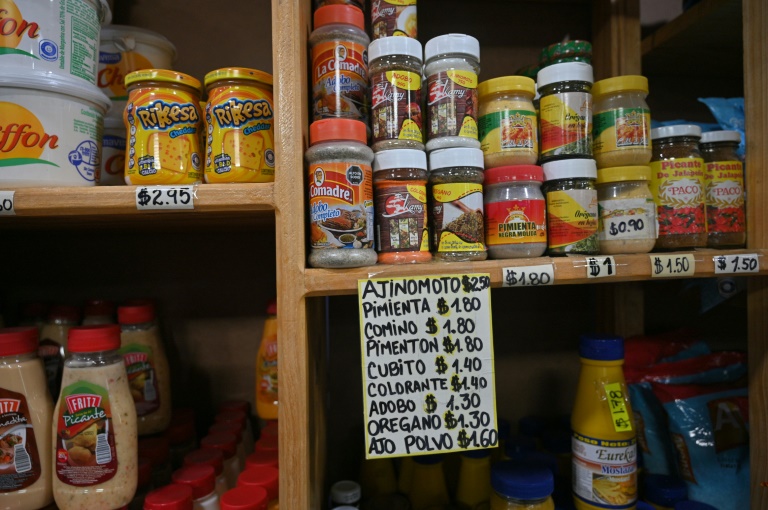
Having opened its arms to the US dollar as an “escape valve” Venezuela is now trying to re-energize its own currency, which has been crippled by devaluation in recent years.

The aim is to incorporate $3 billion circulating on the streets of the South American country into its financial system, but experts warn it is a risky gamble.

Distrust in the bolivar due to severe devaluations, demonetization and four years of hyperinflation persists, despite a slow down in price rises and economic recovery following seven years of recession in which GDP fell by 80 percent.

The dollarization, described by President Nicolas Maduro as an “escape valve”, alongside an easing of price controls brought an end to the scarcity of bare essentials and the interminable queues for what little was available, such as a bag of rice.

“It’s a risky bet with bad timing because the recovery is very weak and the economy is still suffering from chronic inflation. Not hyperinflation but still chronic inflation,” Asdrubal Oliveros, director of consultancy Ecoanalitica, told AFP.

“(Inflation is) very high for you … (to be able) to re-establish confidence in the currency from one day to the next.”

The latest move, applied at the end of March, was to impose a tax ranging from three to 20 percent on transactions using foreign currencies.

The government hopes to encourage use of the bolivar, which was also boosted by a massive injection of foreign currency into the market to stabilize the exchange rate.

The official exchange rate has only fallen from 4.18 bolivars to the dollar in October to 4.43, a depreciation of 6.7 percent, compared 76 percent last year and more than 95 percent in each of the three previous years.

Inflation ended 2021 at 686 percent, according to the Central Bank — the highest in the world but an enormous improvement on the preceding three years: 130,000 percent in 2018, 9,500 percent in 2019 and just under 3,000 percent in 2020.

– ‘Different dynamic’ –

The government has recorded some successes in its policy to boost use of the bolivar.

The Superintendency of Banks said that since the imposition of the new foreign currency tax, online bolivar payments were up 21 percent and debit card payments increased 22 percent.

“We’re entering a different dynamic,” Henkel Garcia, director at consultants Econometrica, told AFP.

“Venezuela is currently a demonetized country. They are trying to remonetize it and to do so with bolivars …. Having your own currency gives you a scope to maneuver.”

Outlawed for 15 years by state currency controls, the dollar became a refuge for Venezuelans during the economic crisis in 2019.

The dollar started being widely used when frequent nationwide power cuts made card payments and bank transfers impossible, as the bolivar’s depreciation left the local currency in scarce supply.

Now, Ecoanalitica says almost 45 percent of urban commerce is done in dollars and 8.5 percent in Colombian pesos, a popular currency in border areas.

In 2021, foreign currencies made up 70 percent of the market.

“Four in every five (dollars) are outside the banks, the people have them in their hands, in businesses, in their homes. We’re talking about around $3 billion in circulation,” said Oliveros.

If that money was put into banks it could boost depressed credit.

There are risks, however, not least the possibility of “slowing the advance of economic activity” given that dollarization gave “certainty” to the private sector, said Oliveros.

– ‘Tax? Bye-bye’ –

“They charged me the three percent in two places. I paid in dollars and they charged me the taxes in bolivars,” said Maria Isabel Marcano, 48, after a shopping run.

Although the tax was implemented a little over a month ago, many Caracas businesses are still not applying it to foreign currency transactions, insisting they are still updating their systems. As an incentive, the government has offered loans to buy tax machines. 

Not everyone is convinced, however.

“There are people who come and say to you: are you going to charge me the tax? If you charge me, bye-bye,” said one merchant.

But others, like the popular Arturo’s chain of fried chicken restaurants, say the new system is up and running.

The company has around 70 restaurants in the country, and says it only had to suspend trading for a few hours at the end of March.

“Now, everything is working normally,” Laura Decena, the company’s marketing director, told AFP.

Thirsty birds struggle to survive in scorching Indian heat

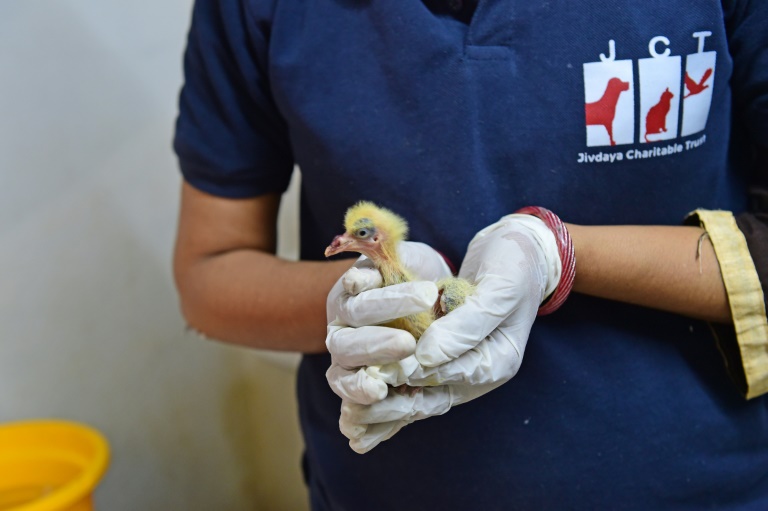
A volunteer scoops up a fledgling kite lying nearly immobile on a scorching Indian sidewalk as the relentless sun beats down on its feathers — one of countless birds struggling to endure an unbearable heatwave.

An early start to summer has brought record temperatures and made life a misery for human and animal alike, with experts warning that climate change is making such conditions more intense and more frequent.

One animal hospital in the western city of Ahmedabad has treated around 2,000 birds over the past month, many weak and severely dehydrated, with some suffering from broken wings after falling from trees.

“We receive daily at least 50 to 60 dehydrated birds,” Gira Shah, co-founder of the Jivdaya Charitable Trust that manages the hospital, told AFP, adding that temperatures have soared up to 46 degrees Celsius (115 degrees Fahrenheit).

The bird hospital is one of the biggest of its kind in India and was established by members of the Jain faith — an ancient Indian religion that preaches non-violence and love for all creatures, great and small.

The hellish heat has coincided with the end of the breeding season for some bird species, resulting in large numbers of chicks and fledglings being treated in the facility.

A regular stream of volunteer rescuers and members of the public bring the birds in cardboard boxes or baskets every day, where they are logged, weighed, tagged and examined by a veterinarian.

The birds are treated, but around one in four do not survive due to the severity of their dehydration or from the resulting complications.

Those that recover are kept in an aviary until they are ready to be released back into the wild.

Others that have been too severely disabled by their injuries are sent to zoos or educational institutions.

– ‘Pretty dire’ –

Veterinarian Nidhi Sharma had already treated a parakeet and a babbler chick before the fledgling kite rescued from the road was brought to her for examination.

“It’s severely dehydrated,” the 29-year-old said as she injected it with replenishing fluids.

The rescuers believe the kite, weakened by the heat, fell to the ground from its nest in a tree nearly 15 metres (50 feet) above.

Hospital curator Sherwin Everett has worked at Jivdaya — “compassionate life” in the local Gujarati language — since 2010.

He says this year’s heatwave has been among the worst for local birds he has ever seen.

Heatwaves have killed more than 6,500 people in India since 2010, but Shah and Everett are also calling on the public to also be considerate of the welfare of any wildlife they come across.

“We are expecting until July to have multiple heatwaves and the temperature will get worse,” Everett said.

“Right now we have received quite a lot of birds that have been dehydrated,” he added. “But the upcoming months seem to be pretty dire for us as well.”

Close Bitnami banner
Bitnami