AFP

Bulgaria industry on tenterhooks after Russia gas cut

The halt of Russian gas supplies to Bulgaria last week has left companies big and small scrambling as they fear halts in deliveries and rising prices.

“We are already on the brink. We’ll have to raise our prices further,” said Valery Krastev, who owns a bread factory in the northern town of Montana.

“How will people pay for this bread?” he worried.

The government has insisted Bulgaria has “alternative choices” to Russian gas and won’t reduce supplies to consumers, calling Moscow’s move to halt deliveries “blackmail”.

While natural gas supplies had escaped punishing European sanctions on Russia over its invasion of Ukraine, Moscow sought to sow division among European nations by exploiting their dependence on its gas.

Russia demanded that Gazprom customers have to pay in rubles rather than US dollars or euros, which would be a violation of Western sanctions.

The Russian energy giant cut deliveries to Bulgaria and Poland on April 27.

Since then, Bulgaria’s neighbours have stepped in, shoring up deliveries to the country, which has received more than 90 percent of its gas from Russia for decades.

– Diversification –

But the lack of a long-term solution to secure the Balkan EU member’s annual needs of about 3.0 billion cubic metres of gas is keeping large industrial consumers as well as smaller businesses on tenterhooks.

Many people living in Sofia still remember January 2009 when a Russia-Ukraine gas spat cut deliveries to Europe for days on end, leaving their homes without heating in the dead of winter and prompting rationing for industry.

Bulgaria already pays 10 percent more for its gas, Energy Minister Alexander Nikolov confirmed after securing deliveries for May through an intermediary gas trading company.

“I can’t believe that someone is trying to convince us that… this is good for us. No it is not,” said Konstantin Stamenov, head of the BFIEC federation of industrial energy consumers and a senior executive at a steel manufacturer, on public radio BNR.

To keep prices contained and secure energy supplies, the government has vowed to diversify suppliers.

It plans to wrap up construction of another major pipeline linking its gas network with that of Greece by the end of June.

This will allow the state gas operator Bulgargaz to negotiate an increase of supplies on an existing contract with Azerbaijan to an annual 1.0 bcm and receive more gas from liquefied natural gas (LNG) terminals in Greece. 

Prime Minister Kiril Petkov also said that the government is in talks to buy LNG from the United States and Egypt.

Analysts say prices may even fall if the country manages to secure long-term contracts for LNG deliveries.

“We have here a huge opportunity to achieve stable diversification of gas deliveries,” energy expert Martin Vladimirov from the Sofia-based think tank Centre for the Study of Democracy told AFP.

However, Open Society economist Georgy Angelov warned: “But that won’t happen in a day.”

– Business as usual – 

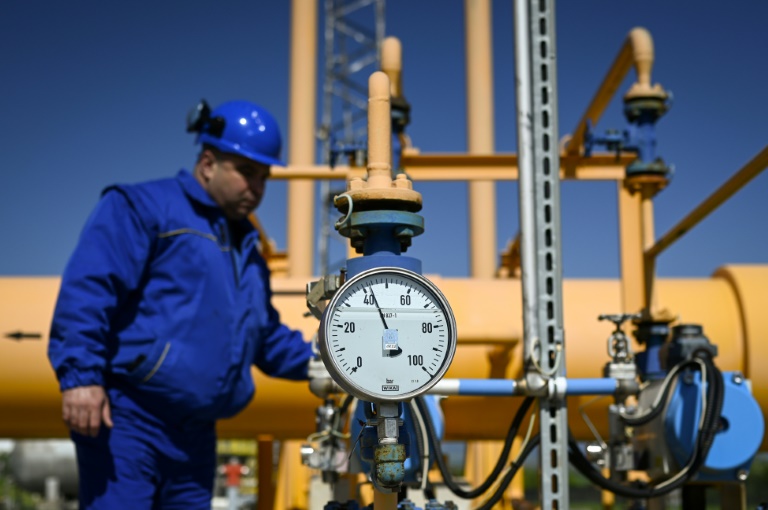
For now, it’s business as usual at a Bulgartransgaz compressor station near Ihtiman, where Russian natural gas is still flowing through the bright yellow pipes.

But Bulgargaz is no longer allowed to use any of this gas — most of it being destined for Greece and North Macedonia.

For its own supply, Bulgaria is currently relying on swap operations with its neighbours, who supply it with Russian gas or LNG through reverse flow pipelines from Greece and Romania. 

Expert Vladimirov cautioned, however, against a suspected scheme by Russia to abandon its direct contract with Bulgargaz and instead make the country buy gas at higher prices through intermediaries such as Hungarian gas trader MET, known to be close to Gazprom, which already helped secure the deliveries for May.

“This, in the end, might lead to higher dependency on Russia under worse contractual conditions,” he warned.

Some industry players are putting on a brave face as they have already started to convert their equipment to be able to use alternative sources of fuel, fearing a crisis in deliveries.

“Yes, it will become more expensive. But it will not be impossible to work,” Krasen Kyurkchiev, owner of home care product maker Ficosota, told AFP.


Fears mount for China's economy as leaders dig in on zero-Covid

Mass testing of China’s vast population could bring fresh misery to the economy, experts warned Friday, after Beijing vowed to regain control of the narrative around a zero-Covid policy that has strangled growth and fanned anger across the country.

Leaders have taken a hardline approach to stamping out virus outbreaks, locking down Shanghai — the country’s economic dynamo and biggest city — and slowly restricting movement in Beijing over dozens of new cases. 

Authorities have refused to bend to mounting public outcry at food shortages and spartan quarantine conditions in Shanghai, with top officials on Thursday pledging to “unwaveringly adhere” to zero-Covid and “fight against” criticism of the policy.

China’s government has brandished the strategy as proof that it values human life above material concerns and can avert the public health crises seen in other countries.

But the approach is hammering the economy and posing a sharp political challenge to President Xi Jinping.

He now has to convince an increasingly unsettled public, which has cascaded its anger at lockdowns onto social media, that the trade-off between the economy and lives is sustainable.

At Thursday’s meeting — attended by Xi — the nation’s top brass pledged to “resolutely fight against all words and deeds that distort, question or reject our nation’s disease control policies”.

Experts fear Beijing’s game plan will weigh heavily on the world’s second-largest economy.

Analysts at Nomura on Friday predicted that mass testing mandates alone could cost up to 2.3 percent of annual gross domestic product.

Shanghai’s 25 million residents have been tested several times, while some of Beijing’s 21 million people have also undergone repeated rounds of checks — a policy the government has hinted may be extended across the country to combat the highly transmissible Omicron variant.

Nomura said a requirement that half of the world’s most populous nation took one test every three days would cost around 0.9 percent of GDP, while any demand that 90 percent of the population takes a test every two days would cost 2.3 percent.

The restrictions could carry “quite high” costs if expanded nationwide, while offering only “limited” benefits as the hard-to-contain Omicron strain may trigger lockdowns in more cities, said Ting Lu, Nomura’s chief China economist.

The grim prediction follows a Fitch Ratings cut to its forecast for China’s full-year economic growth to 4.3 percent, from 4.8 percent.

That is well off the government’s official target of 5.5 percent. 

A key index of service sector activity slumped to 36.2 in April, the second-lowest on record, in what some experts said is a stark pointer of a country in recession.

Astronaut crew returns to Earth after six months on ISS

NASA’s Crew-3 mission returned home to Earth on Friday after six months aboard the International Space Station.

The SpaceX Dragon Endurance spacecraft with NASA astronauts Kayla Barron, Raja Chari and Tom Marshburn, as well as European Space Agency astronaut Matthias Maurer, undocked from the orbital laboratory a day earlier.

Their 23.5 hour journey back saw them splash down off the coast of Florida at 12:43 am (0443 GMT).

“On behalf of the entire SpaceX team, welcome home,” a SpaceX official said to the crew moments after the capsule splashed down.

They left behind the one Italian and three American astronauts of Crew-4, and three Russian cosmonauts. Ahead of departure, Marshburn handed command of the station over to Russian Oleg Artemyev.

During their mission, Crew-3 carried out hundreds of scientific experiments, including growing chiles in space to add to knowledge of cultivating crops on long-term missions, exploring how concrete hardens in space, and Earth monitoring.

“Every day on @Space_Station is #EarthDay for @NASA_Astronauts since we see how thin the precious layer is that protects everything we know & love as a human race,” Crew-3 commander Chari tweeted on Thursday.

“Hopefully, @NASA research will help w/ H20 purification & carbon dioxide reductions but the rest is up to us.”

Chancellor Olaf Scholz wished Maurer, the 12th German in space, “a good and safe journey back with a soft landing,” thanking him on Twitter Thursday for “all the new discoveries in space that are so important for us here on Earth.”

Crew-3’s expedition came at an increasingly busy time for commercial space. 

They welcomed aboard a private crew that included three wealthy businessmen that came and went on another SpaceX Crew Dragon, as well as a Japanese mission that flew on a Soyuz aircraft to the Russian segment.

The ISS now awaits docking with an uncrewed Boeing Starliner capsule, which is set to launch from Florida on May 19. 

NASA is looking to certify a second company to ferry astronauts to the region of space called Low Earth Orbit, leaving it to develop its super heavy space launch system (SLS) rocket for missions to the Moon, and eventually Mars.

Fears mount for China's economy as leaders dig in on zero-Covid

Mass testing of China’s vast population could bring fresh misery to the economy, experts warned Friday, after Beijing vowed to regain control of the narrative around a zero-Covid policy that has strangled growth and fanned anger across the country.

Leaders have taken a hardline approach to stamping out virus outbreaks, locking down Shanghai — the country’s economic dynamo and biggest city — and slowly restricting movement in Beijing over dozens of new cases. 

Authorities have refused to bend to mounting public outcry at food shortages and spartan quarantine conditions in Shanghai, with top officials on Thursday pledging to “unwaveringly adhere” to zero-Covid and “fight against” criticism of the policy.

China’s government has brandished the strategy as proof that it values human life above material concerns and can avert the public health crises seen in other countries.

But the approach is hammering the economy and posing a sharp political challenge to President Xi Jinping.

He now has to convince an increasingly unsettled public, which has cascaded its anger at lockdowns onto social media, that the trade-off between the economy and lives is sustainable.

At Thursday’s meeting — attended by Xi — the nation’s top brass pledged to “resolutely fight against all words and deeds that distort, question or reject our nation’s disease control policies”.

Experts fear Beijing’s game plan will weigh heavily on the world’s second-largest economy.

Analysts at Nomura on Friday predicted that mass testing mandates alone could cost up to 2.3 percent of annual gross domestic product.

Shanghai’s 25 million residents have been tested several times, while some of Beijing’s 21 million people have also undergone repeated rounds of checks — a policy the government has hinted may be extended across the country to combat the highly transmissible Omicron variant.

Nomura said a requirement that half of the world’s most populous nation took one test every three days would cost around 0.9 percent of GDP, while any demand that 90 percent of the population takes a test every two days would cost 2.3 percent.

The restrictions could carry “quite high” costs if expanded nationwide, while offering only “limited” benefits as the hard-to-contain Omicron strain may trigger lockdowns in more cities, said Ting Lu, Nomura’s chief China economist.

The grim prediction follows a Fitch Ratings cut to its forecast for China’s full-year economic growth to 4.3 percent, from 4.8 percent.

That is well off the government’s official target of 5.5 percent. 

A key index of service sector activity slumped to 36.2 in April, the second-lowest on record, in what some experts said is a stark pointer of a country in recession.

Inbreeding won't doom the last of the vaquitas, but fishing might: study

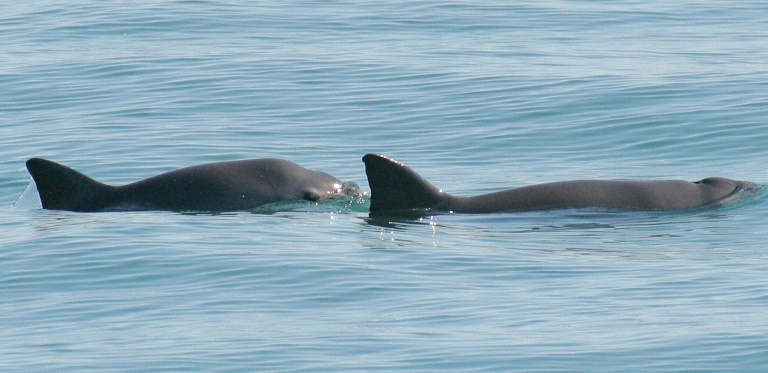
Vaquita porpoises are on the edge of extinction, with just 10 left in their sole habitat within Mexico’s Gulf of California.

However, a new study published Thursday in the journal Science offers some hope: the world’s rarest marine mammals aren’t doomed by a lack of genetic diversity, and can recover if illegal “gillnet” fishing ceases immediately. 

“We’re trying to push back on this idea that there’s no hope, that nothing we do could save them at this point. It’s just not an accurate assumption,” lead author Jacqueline Robinson of the University of California San Francisco told AFP.

Porpoises are closely related to dolphins, and share many things in common including great intelligence. 

The vaquita, whose name means “little cow” in Spanish, measures four to five feet (about 1.5 meters) in length, making it the smallest of all cetaceans.

Shy and elusive, they are known for distinctive dark circles around their eyes, and relatively large dorsal fins, which are thought to help them dissipate heat in their warm habitat.

Vaquita numbers were decimated in the 20th century as a result of being accidentally trapped and drowning in gillnets: long walls of nets hanging in open water that are used to catch fish and shrimp. 

Fishermen sought in particular the totoaba, a large fish about the size of the vaquita, whose swim-bladder is prized in traditional Chinese medicine.

The totoaba itself is endangered and its fishing is illegal, but the ban isn’t always respected.

The vaquita’s historical abundance was unknown, but by the time of the first survey, in 1997, only around 570 remained.

There were fears that harmful mutations among the surviving vaquitas could seal the species’ fate due to inevitable inbreeding.

To find out whether that was the case, the researchers analyzed the genomes of 20 vaquitas that lived between 1985 and 2017, and discovered that over the past 250,000 years their population had never exceeded a few thousand.

They also learned that their genetic diversity had always been low, relative to other cetacean species such as dolphins, orcas, and other whales. 

– Benefits to low genetic diversity –

“Generally, we would think of low genetic diversity as being a bad thing. But in this case, it is somewhat advantageous for the vaquitas for their possibility of future recovery,” said Robinson. 

Inbreeding increases the chances offspring will inherit two copies of harmful mutations, leading to genetic disorders.

But it turned out that the frequency of these mutations are very low in vaquitas to begin with, because the population has always been small.

“So those mutations were historically weeded out much more effectively, than in a larger population, where those mutations could persist and remain hidden from natural selection,” explained Robinson.

There are other species that appear more resistant to so-called “inbreeding depression,” including mountain gorillas and narwhals, for similar reasons.

The team then carried out simulations to forecast the species’ future. 

Encouragingly, there is only a six percent chance of vaquitas’ extinction if gillnet fishing is eliminated.

But if such fishing is only reduced, then the extinction risk rises drastically. 

Even with an 80 percent reduction in fishing, the porpoises have a 62 percent chance of disappearing.

“While we now know that the species’ ability to recover is not limited by their genetics, vaquitas have very little time left,” said co-author Christopher Kyriazis of the University of California, Los Angeles, in a statement.

“If we lose them, it would be the result of our human choices, not inherent genetic factors.”

Asian markets tumble on Wall street rout, pound slumps

Asian equities tumbled Friday following a rout on Wall Street fuelled by worries over rising interest rates and surging inflation, while the pound extended losses the day after taking a beating on fears of a UK recession. 

Global markets have been battered this year by a series of crises including surging inflation, rising interest rates, China’s economic slowdown and the war in Ukraine.

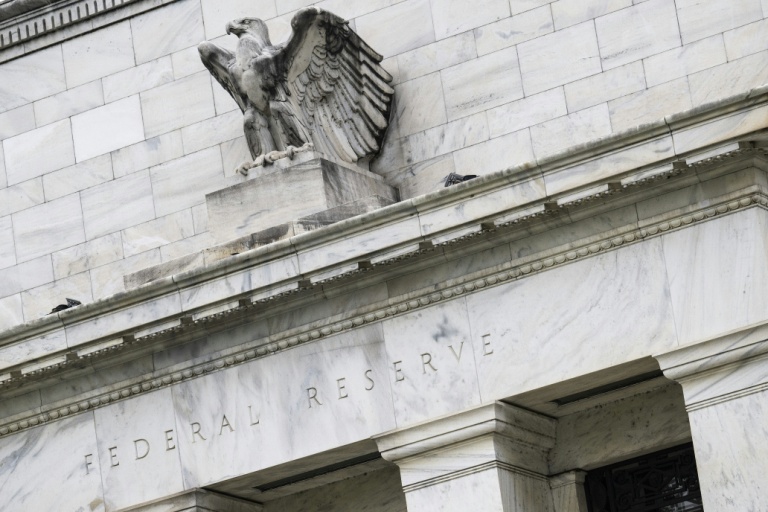
There was some relief after the Federal Reserve on Wednesday lifted borrowing costs 50 basis points — the most since 2000 — but suggested a feared 75-point lift was not on the agenda for now.

However, US traders ran for the hills Thursday as they contemplated a period of fierce monetary tightening by the US central bank as it struggles to contain inflation running at a more than 40-year high.

The Nasdaq — dominated by tech firms particularly sensitive to higher rates — lost five percent, while the Dow and S&P 500 fell more than three percent. 

“Valuations become even more sensitive, very sensitive, when rates are going up and that is what we are experiencing,” Kristina Hooper, at Invesco, told Bloomberg Television. 

“It’s just getting exacerbated as we get into the thick of monetary-policy tightening in the US.”

That sell-off filtered through to Asia, where Hong Kong tanked more than three percent as tech firms took a hit. Meanwhile, the European Chamber of Commerce in the city called the finance hub’s stringent pandemic travel restrictions and frequent flight bans a “nightmare” for businesses. 

The remarks come a week after the Australian Chamber of Commerce recommended that Hong Kong follow the lead of Singapore or Japan by lowering quarantine requirements for business travellers.

Shanghai, Sydney, Seoul, Singapore, Wellington, Taipei and Manila also tanked. However, Tokyo ended the morning slightly higher.

Adding to the selling pressure was ongoing weakness in China’s economy caused by strict lockdowns and other containment measures as officials struggle to bring a Covid flare-up under control by sticking to a zero-Covid policy.

Various districts in Beijing told residents on Thursday to work from home, while Shanghai, the biggest city in the country, remains essentially shut down.

On currency markets the pound continued to struggle a day after plunging more than two percent in reaction to the Bank of England’s updated forecast that warned annual inflation would top 10 percent and the economy would contract later this year.

Crude rose after key oil producers led by Saudi Arabia and Russia refused to lift output more than their planned marginal increase as they weighed tight supply concerns caused by the Ukraine war. 

“OPEC’s inability to ramp up production when desperately needed by the market is compounding an already dangerous supply deficit,” said Stephen Innes, of SPI Asset Management

“This means geopolitical tensions will remain high, and while there are some demand-side risks at the moment, it seems likely that the threat of supply disruption will be the dominant driver at this time,” he said. 

– Key figures at around 0230 GMT –

Tokyo – Nikkei 225: UP 0.1 percent at 26,850.53 (break)

Hong Kong – Hang Seng Index: DOWN 3.3 percent at 20,102.87 

Shanghai – Composite: DOWN 1.5 percent at 3,020.33

Brent North Sea crude: UP 0.5 percent at $111.46 per barrel

West Texas Intermediate: UP 0.4 percent at $108.74 per barrel

Euro/dollar: DOWN at $1.0525 from $1.0540 on Thursday

Pound/dollar: DOWN at $1.2348 from $1.2353

Euro/pound: UP at 85.23 pence from 84.13 pence

Dollar/yen: UP at 130.68 yen from 129.23 yen

New York – Dow: UP 2.8 percent at 34,061.06 (close)

London – FTSE 100: UP 0.1 percent at 7,503.27 (close)

Will Hong Kong reopen for business under new leader Lee?

Hong Kong’s next leader John Lee is inheriting a once vibrant Asian business hub mired in its third year of pandemic isolation but he may prioritise security over an economic reboot, business leaders and observers say.

Lee, a former security chief, is expected to be confirmed Hong Kong’s next chief executive on Sunday by a committee of 1,463 elites after running uncontested with Beijing’s blessing.

He has promised a “results-oriented” government and a new chapter for the southern Chinese city — although his manifesto announced few major policy shifts. 

Business leaders have expressed concern over Lee’s lack of details on how he might kickstart the city’s fortunes, including moving beyond Chinese-style travel curbs that have left the city cut off and sparked an exodus of talent.

“In order to reboot Hong Kong’s reputation as a business hub, we need a Covid exit plan,” Kristian Odebjer, head of the Swedish Chamber of Commerce in Hong Kong, told AFP.

Tara Joseph, former head of the city’s American Chamber of Commerce, said travel connectivity was a key first step for Hong Kong to regain its international stature after “so much reputation damage”.

But Lee appeared to brush aside those concerns last week, saying that he will instead prioritise reopening the border with mainland China — signalling any immediate policy U-turn is unlikely.

– ‘Stuck in the middle’ –

Lawmaker and businessman Michael Tien said the coronavirus has trapped Hong Kong’s leader between a rock and a hard place, no matter who fills that seat.

“Our country is going for zero-Covid while the rest of the world is living with the virus,” Tien told AFP.

“Hong Kong is stuck in the middle.”

The city was slammed by an Omicron-fuelled outbreak which killed more than 9,000 people and contributed to a four percent drop in economic output for the first quarter.

Siddharth Sridhar, a microbiologist at the University of Hong Kong, said Hong Kong was enjoying a “grace period between waves” and that Lee must waste no time in getting the elderly vaccinated.

In recent weeks outgoing leader Carrie Lam has eased some pandemic restrictions, including reducing quarantine to seven days and allowing non-residents in for the first time in some two years.

Last week Lee told reporters he would continue “a good balancing act” between keeping the virus out and the economy afloat.

His 44-page manifesto did not specifically address the coronavirus, aside from vowing to learn from the pandemic and set up a new emergency procedure to deal with future threats.

– Security background –

Lee spent some four decades within Hong Kong’s security services, prompting questions over his business acumen in a city that markets itself as the financial gateway between China and the world.

“The choice of John Lee illustrates Beijing’s priorities of security and control in Hong Kong,” former US chamber head Joseph said. 

“He will be the first HK leader with no business background.” 

Lawmaker Tien said Lee would be receptive to outside opinions — a compliment echoed by many of Lee’s supporters.

“Lee won’t listen in matters of security, but in other areas he has no choice, he must listen and consider opinions,” Tien said.

Discussing his own governance style, Lee said he was a pragmatist eager to streamline procedures for greater efficiency.

Pro-Beijing business mogul Allan Zeman, who praised Lee’s policy ideas, said “(Lee) came from the police and police used to make things happen”.

– Democrats shut out –

Lee was among 11 top Hong Kong and Beijing officials sanctioned by the US Treasury in 2020 in the wake of China’s imposition of a sweeping security law aimed at snuffing out dissent.

Last month, YouTube suspended Lee’s campaign channel citing the need to comply with sanctions.

Lee has defended his role in crushing the 2019 democracy protests and recently said his government will prioritise livelihood issues over democratisation.

He has presented himself as a no-nonsense leader who can get things done and cut through red tape. 

Kenneth Chan, a political scientist from Baptist University, warned that style could lead to even less public say and participation in how the city is governed.

Lee has also shown little appetite so far in reaching across political lines to heal social divisions. 

“He’s determined… to shut out democrats, to put pressure on civil society and to basically kill the entire issue of democratic reform in the coming five years,” Chan said.

“This is going to be a door shut very tightly.”

Ukraine's farmers risk death in bomb-strewn fields

It’s spring planting season in Ukraine, but this year farmers require more than fuel and fertiliser –- they also need flak jackets and deminers to destroy the bombs that have already killed or maimed others in their fields.

One of the unexploded rockets lay on an island of undisturbed black soil in Igor Tsiapa’s field in the nation’s southwest and posed a deadly threat to getting his corn crop planted on land that was otherwise ploughed and waiting.

“We first spotted the projectile a week and a half ago but just didn’t touch this part of the field and continued on getting ready for planting,” he told AFP on Thursday, a few metres from the deminers prepping the device for destruction.

“Everything has to be done on schedule if you want to have a more or less proper harvest… We had to keep working,” the nearly 60-year-old added in the area of the village of Grygorivka.

Farmers in Ukraine have found themselves on the front line of a Russian invasion that has tainted swathes of the country with undetonated mines, shells and rockets.

That’s because they face a unique risk of setting off one of the devices while working the soil, one more piece of worrying news for next year’s harvest in Europe’s breadbasket.

Police said the latest injury was in the Kyiv area where a farmer in the village of Gogoliv hit a mine on his tractor while in the fields on Wednesday.

Maria Kolesnyk, with analytics firm ProAgro Group, told AFP that about 20 incidents had been recorded of farmers being struck by accidental explosions of war ordnance, but it wasn’t clear how many instances were fatal.

“In the agro community today the most sought-after profession is the sappers,” she said. “We desperately need the help of the international community because Ukrainian professionals are working 24/7.”

– Improvised bomb markers –

In Tsiapa’s field the rocket was left where it landed, and the blue-helmeted sappers placed orange fist-sized blocks of explosives along its explosive payload before shovelling a mound of dirt over it.

“Every day since the start of the war we have been finding and destroying unexploded ammunition,” Dmytro Polishchuk, one of the deminers, told AFP before heading into the field.

“After farmers began working in the fields, we started getting regular calls from people alerting us to new devices,” he said, noting the team destroyed up to three per day.

He added people have not always waited for overstretched demining crews to arrive, noting some farmers have marked the explosives with sticks bearing plastic bottles or bags as warning and went on ploughing.

Leaving the unexploded missiles untouched is not a guarantee that they won’t explode, Polishchuk said, noting some have a self-destruct setting where they can go off at any time.

For Tsiapa, farmers in areas that haven’t been occupied have to pick up some of the slack, despite the risks, for places where planting could be disrupted by Russia’s invasion.

“So we here have double responsibility and double pressure to grow a good harvest. Things are that way because we don’t have active combat here, so we can work,” he added.

Ukraine is the world’s top producer of sunflower oil and a major exporter of wheat, yet the war’s disruption of labour and displacement of farmers from their land as well as fuel shortages have all raised worries.

Before the war, Ukraine was the world’s fourth largest exporter of corn and was set to become the third biggest exporter of wheat after Russia and the United States.

Russia and Ukraine alone account for 30 percent of global wheat exports.

In Tsiapa’s field, the deminers’ work came to an abrupt end with a controlled blast that sent up a puff of black smoke and thudded through the valley, where spring weather has begun to turn trees and grass back to green.

When the blast was over with, Tsiapa hopped into his red van and drove off. He had to get back to work.

Xbox makes 'Fortnite' game free to play on iPhones

Microsoft’s video game unit Xbox on Thursday said it will tap into cloud computing to make “Fortnite” free to play on mobile devices powered by Apple or Android software.

The popular battle royale title from Epic Games will be the first free-to-play game available through an Xbox Cloud Gaming service available in 26 countries, head of product Catherine Gluckstein said in a blog post.

Fortnite’s return to iPhones and iPads comes after the game was booted from Apple’s App Store for trying to bypass its payment system in violation of the iPhone maker’s rules.

Apple has clashed in court with Epic, which has accused the iPhone maker of operating a monopoly of its App Store shop for digital goods and services.

A US federal judge in November ordered Apple to loosen control of its App Store payment options, but said Epic had failed to prove that antitrust violations had taken place.

“Fortnite” will be free at Xbox Cloud Gaming as a result of a partnership with Epic.

Fans of the game can play on Apple iOS-powered devices, Android phones or tablets, as well as on Windows computers through web browsers, Gluckstein said.

Apple and Google dominate the market, with their operating systems running on the majority of the world’s smartphones.

“This is just the beginning for us,” Gluckstein said.

“We’re going to learn, implement feedback, and in time look to bring even more free-to-play titles to players through the cloud.”

Microsoft has courted the favor of antitrust regulators scrutinizing its plan to buy video game maker Activision Blizzard, promising that any app store it builds will treat developers fairly.

Microsoft’s $69 billion deal to buy the video game powerhouse needs to pass muster with regulators in Europe and the United States intent on reining in tech titans.

Principles outlined by Microsoft included allowing all developers access to its app store and not requiring them to use the technology firm’s payment system for in-app transactions.

Wall Street tumbles on Fed worries, pound slumps

After breathing a sigh of relief when the Federal Reserve held off on signaling more aggressive measures ahead to fight inflation, Wall Street tumbled on Thursday amid renewed anxiety over rising interest rates, while the pound slumped on fears of a UK recession.

The sell-off was New York’s worst since 2020, and saw the Nasdaq — dominated by tech firms that are particularly sensitive to higher rates — lose five percent, while the Dow and S&P 500 fell more than three percent.

With US inflation at levels not seen since the 1980s, the Fed on Wednesday hiked the key lending rates by half a percentage point, but cheered markets, at least at first, by saying a three-quarter point increase was not in the cards.

That message was not as hawkish as feared, but the Fed still is engaged in “one of the most aggressive tightening cycles that we have seen in decades,” said Angelo Kourkafas, investment strategist at Edward Jones. 

“It didn’t necessarily change the narrative that economic growth is slowing, while the Fed will tighten monetary policy” at a fast pace, he said.

In Britain, the pound suffered after the Bank of England released an updated forecast, predicting annual inflation would rise above 10 percent and the economy would contract later this year, while hiking its main rate by an as-expected quarter-point.

The pound plunged more than two percent due to “the changes in the economic forecasts, which pointed to a potential recession by year end, and the warnings that rates may not rise as high as markets had been expecting in the months ahead,” said market analyst Michael Hewson at CMC Markets UK.

The BoE said UK output was expected to contract in the final quarter of the year when inflation is likely to enter double digits as household energy prices rise sharply, although the central bank does not forecast a full-blown recession for the moment.

“Uncertainty over inflation and growth puts rate setters in a tricky dilemma,” City Index analyst Fawad Razaqzada said.

“The key risk facing the UK is not necessarily tighter policy, but uncertainty over monetary policy and, more to the point, stagflation,” he added.

Central banks worldwide are raising interest rates to fight inflation that is sitting at the highest levels in decades as economies ease pandemic restrictions while dealing with the war in Ukraine, which increased already high energy costs.

News that Turkish inflation soared to 70 percent in April highlighted the battle policymakers face in controlling prices.

In European trading, London managed to hold onto a marginal gain but both Frankfurt and Paris fell.

– OPEC+ decision –

As expected, Saudi Arabia, Russia and other key oil producers in the OPEC+ group agreed to another marginal increase in output as they weighed tight supply concerns caused by the Ukraine war against the risk pandemic restrictions in China pose to demand.

That sent oil prices jumping by more than three percent to firmly above $110 per barrel, but they later gave up most of their gains.

Traders on Thursday also digested earnings updates from some of the world’s biggest companies.

Shares in Airbus soared around six percent in Paris after the European aircraft maker said late Wednesday that its net profit more than tripled in the first quarter to 1.2 billion euros ($1.3 billion), despite the impact of sanctions against Russia.

The results confirm the company’s recovery after the Covid-19 pandemic slammed the air travel industry in 2020.

– Key figures at around 2035 GMT –

New York – Dow: DOWN 3.1 percent at 32,997.97 (close)

New York – S&P 500: DOWN 3.6 percent at 4,146.87 (close)

New York – Nasdaq: DOWN 5.0 percent at 12,317.69 (close)

EURO STOXX 50: DOWN 0.8 percent at 3,696.63 (close)

London – FTSE 100: UP 0.1 percent at 7,503.27 (close)

Frankfurt – DAX: DOWN 0.5 percent at 13,902.52 (close)

Paris – CAC 40: DOWN 0.4 percent at 6,368.40 (close)

Hong Kong – Hang Seng Index: DOWN 0.4 percent at 20,793.40 (close)

Shanghai – Composite: UP 0.7 percent at 3,067.76 (close)

Tokyo – Nikkei 225: Closed for a holiday

Brent North Sea crude: UP 0.8 percent at $111.03 per barrel

West Texas Intermediate: UP 0.6 percent at $108.46 per barrel

Euro/dollar: DOWN at $1.0540 from $1.0625 on Wednesday

Pound/dollar: DOWN at $1.2353 from $1.2632

Euro/pound: UP at 85.29 pence from 84.06 pence

Dollar/yen: UP at 130.20 yen from 129.05 yen

burs-rl/lc/cs/hs

Close Bitnami banner
Bitnami