AFP

Boeing will move its headquarters to Washington area

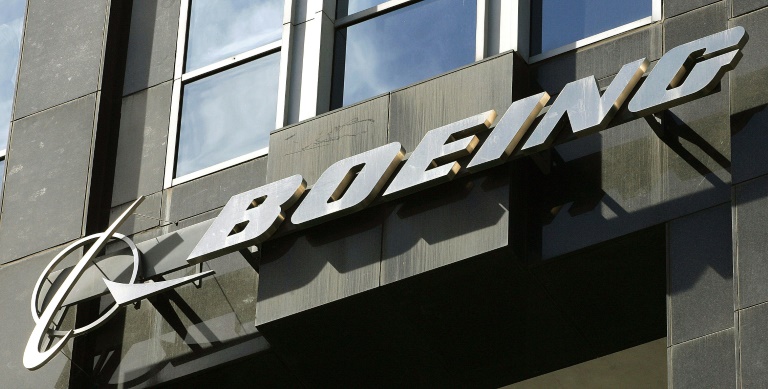
Boeing announced Thursday it will relocate its headquarters from Chicago to the Washington suburb of Arlington, Virginia, moving the airplane maker and defense contractor closer to government decision-makers.

The big aerospace company, which has struggled of late with production difficulties that have weighed on profitability, said its Virginia campus that already houses its defense, space and security business will now also comprise its corporate headquarters.

“We are excited to build on our foundation here in Northern Virginia,” said Chief Executive Dave Calhoun. 

“The region makes strategic sense for our global headquarters given its proximity to our customers and stakeholders, and its access to world-class engineering and technical talent.”

Boeing also plans to establish a “research and technology” hub at the Virginia locale, part of an effort to enhance digital innovation, the company said.

In 2001, Boeing opted to move its headquarters from its original home in the Seattle area to Chicago following its acquisition of McDonnell Douglas. 

The company “will maintain a significant presence at its Chicago location and surrounding region,” Boeing said in a news release.

The Washington area is home to other leading defense contractors and has proximity to key officials at the Pentagon.

In October 2020, Boeing announced that it was consolidating production of the 787 Dreamliner to South Carolina after previously splitting manufacturing of the jet between that facility and Washington state.

But the 787 has been one of Boeing’s major trouble spots over the last year. 

While Boeing has resumed deliveries on the 737 MAX after a lengthy grounding following two fatal crashes, the company has halted deliveries of the 787 since May 2021 while it works through production problems.

The travails of the 787 were among the factors weighing down the company as Boeing reported a first-quarter loss of $1.2 billion.

Inbreeding won't doom the last of the vaquitas, but fishing might: study

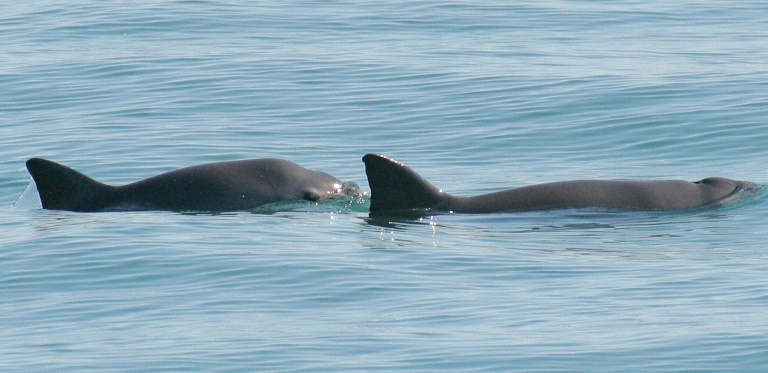
Vaquita porpoises are on the edge of extinction, with just 10 left in their sole habibat within Mexico’s Gulf of California.

However, a new study published Thursday in the journal Science offers some hope: the world’s rarest marine mammals aren’t doomed by a lack of genetic diversity, and can recover if illegal “gillnet” fishing ceases immediately. 

“We’re trying to push back on this idea that there’s no hope, that nothing we do could save them at this point. It’s just not an accurate assumption,” lead author Jacqueline Robinson of the University of California San Francisco told AFP.

Porpoises are closely related to dolphins, and share many things in common including great intelligence. 

The vaquita, whose name means “little cow” in Spanish, measures four to five feet (about 1.5 meters) in length, making it the smallest of all cetaceans.

Shy and elusive, they are known for distinctive dark circles around their eyes, and relatively large dorsal fins, which are thought to help them dissipate heat in their warm habitat.

Vaquita numbers were decimated in the 20th century as a result of being accidentally trapped and drowning in gillnets: long walls of nets hanging in open water that are used to catch fish and shrimp. 

Fishermen sought in particular the totoaba, a large fish about the size of the vaquita, whose swim-bladder is prized in traditional Chinese medicine.

The totoaba itself is endangered and its fishing is illegal, but the ban isn’t always respected.

The vaquita’s historical abundance was unknown, but by the time of the first survey, in 1997, only around 570 remained.

There were fears that harmful mutations among the surviving vaquitas could seal the species’ fate due to inevitable inbreeding.

To find out whether that was the case, the researchers analyzed the genomes of 20 vaquitas that lived between 1985 and 2017, and discovered that over the past 250,000 years their population had never exceeded a few thousand.

They also learned that their genetic diversity had always been low, relative to other cetacean species such as dolphins, orcas, and other whales. 

– Benefits to low genetic diversity –

“Generally, we would think of low genetic diversity as being a bad thing. But in this case, it is somewhat advantageous for the vaquitas for their possibility of future recovery,” said Robinson. 

Inbreeding increases the chances offspring will inherit two copies of harmful mutations, leading to genetic disorders.

But it turned out that the frequency of these mutations are very low in vaquitas to begin with, because the population has always been small.

“So those mutations were historically weeded out much more effectively, than in a larger population, where those mutations could persist and remain hidden from natural selection,” explained Robinson.

There are other species that appear more resistant to so-called “inbreeding depression,” including mountain gorillas and narwhals, for similar reasons.

The team then carried out simulations to forecast the species’ future. 

Encouragingly, there is only a six percent chance of vaquitas’ extinction if gillnet fishing is eliminated.

But if such fishing is only reduced, then the extinction risk rises drastically. 

Even with an 80 percent reduction in fishing, the porpoises have a 62 percent chance of disappearing.

“While we now know that the species’ ability to recover is not limited by their genetics, vaquitas have very little time left,” said co-author Christopher Kyriazis of the University of California, Los Angeles, in a statement.

“If we lose them, it would be the result of our human choices, not inherent genetic factors.”

US tech titans look to ditch passwords

Apple, Google and Microsoft said Thursday they are looking to get rid of passwords and replace them with a more secure way to access accounts or devices.

The US tech titans jointly announced support for a common standard that will let people sign in by unlocking their mobile phones, say, with fingerprint or face recognition.

“The complete shift to a passwordless world will begin with consumers making it a natural part of their lives,” said Microsoft vice president Alex Simons.

“By working together as a community across platforms, we can at last achieve this vision and make significant progress toward eliminating passwords.”

Reliance on passwords alone is decried as a major security flaw on the internet, with people keeping them overly simple or using the same one repeatedly to make it easier to manage many accounts.

Adopting standards created by the FIDO Alliance and the Word Wide Web Consortium will let websites and device makers build secure, passwordless options into their offerings, the groups said in a release.

Using secure keys instead of passwords would stymy phishing scams that trick people into disclosing log-in credentials and hackers that steal such data.

“Today is an important milestone in the security journey to encourage built-in security best practices and help us move beyond passwords,” US cybersecurity and infrastructure security agency director Jen Easterly said.

Support for password-free log-ins will be woven into Android and Chrome software over the course of the coming year, said Google product manager and FIDO Alliance president Sampath Srinivas.

Apple and Microsoft announced plans to do likewise with their software.

“This will simplify sign-ins across devices, websites, and applications no matter the platform – without the need for a single password,” Srinivas said in a blog post.

“When you sign into a website or app on your phone, you will simply unlock your phone.”

Mobile phones will store a FIDO credential referred to as a “passkey” that will be used to unlock online accounts, Srinivas explained.

“To sign into a website on your computer, you’ll just need your phone nearby and you’ll simply be prompted to unlock it for access,” Srinivas said.

Eliminating passwords was billed as more secure than two-factor authentication that involves getting one-time passcodes texted or emailed as secondary confirmation when logging into sites or services.

World needs food system 'transformation' to tackle climate: expert

Food is fundamental to the efforts to tackle climate change, according to a scientist who has spent decades tracing the interactions between global warming and what we eat. 

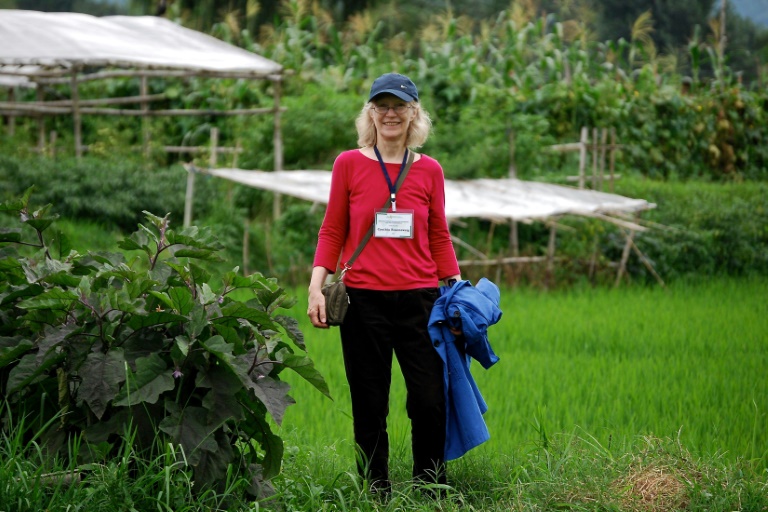
Cynthia Rosenzweig, head of the Climate Impacts Group at NASA Goddard Institute for Space Studies, was Thursday awarded the prestigious World Food Prize for her research. 

That includes stark warnings about the potential effect climate change will have on food. 

Her comments to AFP have been slightly edited: 

– How do food systems drive climate change? 

Climate change cannot be restrained without attention to greenhouse gas emissions from food systems. Our work, among others, shows that those food system emissions are approximately one third of total human emissions. We’re not going to be able to solve climate change unless these are taken into account. 

At the same time, food security for all is dependent on the changing climate. 

As we move into this crucial decade of action on climate change, food needs to be at the table.

– What are the climate impacts on food?

High temperatures in general are detrimental to crops, because they speed them through their growing period, so they have less time to make the grain. So this is a very big downward pressure on yield. Then we have extreme events affecting the critical growth stages, for example, a heatwave happening during pollination in maize. Those extreme events are already increasing in frequency, duration and intensity in many farming regions around the world. 

Then of course water is absolutely critical for food production. Climate change is projected to change — and is already changing — the hydrological cycle in many agricultural areas, with increased drought as well as heavier downpours because the warmer air holds more water vapour. 

We can already see tremendous impacts of drought in the developed world, for example, in California since the 2000s. In the developing world, there isn’t as much breeding for heat and drought tolerance in farming, there isn’t as much work on pests. This increases tremendously the vulnerability of the world’s 500 million smallholder farmers.

– You founded the Agricultural Model Intercomparison and Improvement Project. What does it do?

There used to be different modelling groups around the world, all working very diligently to develop different crop models. But people would be using different climate scenarios to test climate change impacts — and the results weren’t comparable. So at the heart of AgMIP is improving the rigour of the projections by developing common protocols so that the results from agricultural models can be compared. We do crop modelling, livestock modelling, pest modelling and economic modelling and we always bring in the latest climate scenarios.

Therefore we are able to say in a very clear way: here’s the mean of the model results and here’s the range of the projections. Then decision makers, both at the global scale but also in individual countries, have the evidence base that they need to respond to climate change effectively. 

With the latest climate scenarios, AgMIP’s Global Gridded Crop Modelling Team found that the emergence of impacts on some of the agricultural regions around the world is now projected to be felt earlier, to really start biting even in the 2030s. That’s really soon.

Some of the key areas with these earlier impacts are parts of the US Midwest, Western Africa and East Asia. In West Africa, crop yields are projected to fall by 20 to 40 percent, and potentially more.

– What changes could help cut emissions?

Increasing carbon storage can help to fight climate change. We need to increase efficiency for crop production and reduce food loss and waste — it’s a rough figure but around a third of all food produced is lost or wasted. If we don’t waste as much food, we don’t have to grow as much food — thereby reducing greenhouse gas emissions from agricultural production. 

In developed countries, there’s definitely the potential for dietary choices to make an impact, because animal-based emissions, especially from beef and dairy, are significant. But as we think about consumption, we have to start by saying that all solutions are context specific and they have to take into account equity issues. There are many people in the world who don’t have food choices. 

– Are perceptions changing? 

Yes. I interact with so many different groups in all different parts of the food system, from the production side, supply chain side, retail, packaging, everything. There is definitely a movement towards transformation going on in the food system. 

Food is the fundamental climate impact sector and connects everyone on the planet to climate change. We need to transform the food system, so that it delivers food security for all, as well as a healthy and sustainable planet.

Turkey inflation spirals to nearly 70 percent

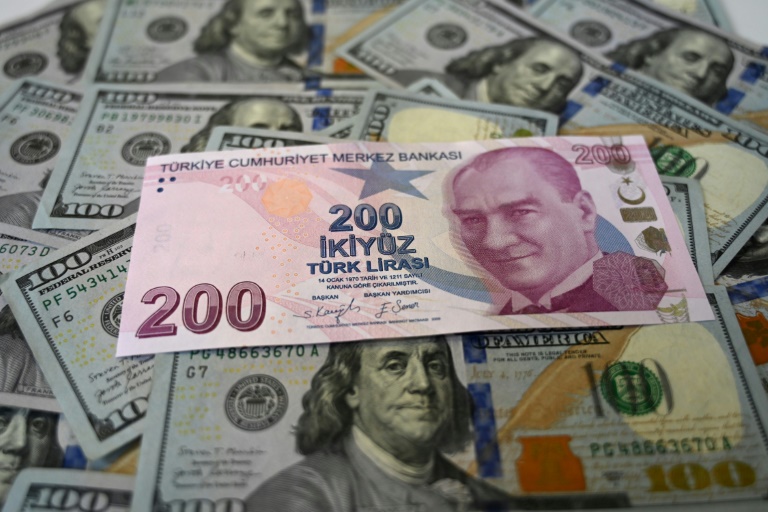
Turkey’s official inflation rate spiralled to nearly 70 percent in April, data showed on Thursday, posing a huge challenge to President Recep Tayyip Erdogan, whose unconventional economic policies are often blamed for the economic turmoil. 

The consumer price index rose by 69.97 percent year-on-year in April compared with 61.14 percent in March, the national statistics agency said.

Erdogan insists that sharp cuts in interest rates are needed to bring down soaring consumer prices, flying in the face of economic orthodoxy. 

The collapse of the lira has pushed up the cost of energy imports and foreign investors are now turning away from the once-promising emerging market. 

Russia’s invasion of Ukraine and the coronavirus pandemic have exacerbated the energy price spikes and production bottlenecks.

Turkey’s annual inflation rate — the highest since Erdogan’s ruling AKP party rose to power in 2002, is largely linked to his unconventional economic thinking, analysts say. 

Erdogan has put pressure on the nominally independent central bank to slash interest rates. 

In April, the bank kept its benchmark interest rate steady for the fourth consecutive month, bowing to the pressure despite high inflation. 

The biggest price increases in April were for the transport sector, standing at 105.9 percent, while the prices of food and non-alcoholic drinks jumped 89.1 percent.

– ‘Spectacular failure’ –

“True it’s about food and energy price increases but also the spectacular failure of monetary policy in Turkey,” Timothy Ash, emerging markets strategist at BlueBay Asset Management, said in a note to clients. 

“Low interest rates cause inflation. Period. Fact. The reality,” he said, accusing Erdogan of “trying to re-write economics to say the opposite which is the economics equivalent of calling the earth flat.”

Treasury and Finance Minister Nureddin Nebati on Monday brushed aside concerns, saying that the current inflationary trend was fleeting and would “not spread over the long term and be permanent”. 

“We will increase the welfare and purchasing power of our citizens over the past level,” he said.

At a bazaar in an Istanbul neighbourhood on the European side, shoppers vented their anger over soaring prices. 

“People are starving! I feel ashamed when I am shopping,” Rita Ezel, a retired woman, told AFP.

“My monthly pension vanishes in 10 days.”

Another retiree, Seckin Gozuyasli, said: “The prices change on a weekly basis. Milk, cheese, meat, everything, detergent, everything you can imagine is so expensive now.”

She blamed the “wrong economic policies” as well as Turkey’s playing home to 3.6 million Syrians who fled the war back home for surging prices. 

-‘We barely make ends meet’-

Turkey has cut taxes on some goods and offered subsidies for electricity bills for vulnerable households but even this has failed to stem inflation.

“I am a seller at the bazaar for 35 years now. In the past, one person in the family would work and we could get by. Now in my home four of us work and we hardly make ends meet,” Yuksel Cinar complained as he was tidying his vegetable stalls. 

The Turkish currency lost 44 percent of its value against the dollar last year and more than 11 percent since the start of January, making the cost of imported goods and fuel very expensive. 

Erdogan’s government has responded by using state banks to buy up liras in a bid to cut the currency’s losses. 

There is also speculation that the central bank sells dollars to stem the lira’s slide. 

The former deputy general manager of Turkey’s state bank Ziraat shared information he received from banking circles, Turkish media reported. 

“The central bank sells $2.5-3 billion a week through public banks,” he was quoted as saying this week. 

Jason Tuvey, emerging markets economist at the London-based Capital Economics, predicted that inflation would hover around the current high rates for much of this year.

He said there were “no signs that policymakers are about to shift tack and hike interest rates as they remain wedded to the ‘new economic model’,” of the government. 

Erdogan, who faces a crucial presidential vote next year, has also shifted policy to mend broken alliances with cash-rich Gulf states to draw financial support. 

Last week, he visited Saudi Arabia in a bid to reset relations that had been strained since the 2018 killing of Riyadh critic journalist Jamal Khashoggi in the kingdom’s consulate in Istanbul. 

Erdogan said his government agreed with Saudi Arabia to “reactivate a big economic potential”. 

Pound slumps, Wall Street tumbles

The pound slumped Thursday after the Bank of England flagged a possible recession and double-digit inflation, while Wall Street tumbled after having jumped the previous day on the Federal Reserve holding back on aggressively raising rates.

Meanwhile oil prices rose after OPEC+ only modestly hiked production targets.

The BoE’s quarter-point hike was widely expected by the market, but the central’s banks updated forecast for annual inflation to rise above 10 percent this year and the economy to contract later this year spooked investors.

The British pound plunged more than two percent after the BoE decision.

The drop in the pound was sparked by “the changes in the economic forecasts, which pointed to a potential recession by year end, and the warnings that rates may not rise as high as markets had been expecting in the months ahead,” said market analyst Michael Hewson at CMC Markets UK.

The BoE said UK output was expected to contract in the final quarter of the year when inflation is set to enter double digits as household energy prices rise sharply, although the central bank doesn’t forecast a full-blown recession for the moment.

“Uncertainty over inflation and growth puts rate setters in a tricky dilemma,” said City Index analyst Fawad Razaqzada as it makes striking the right policy balance very difficult.

“So, the key risk facing the UK is not necessarily tighter policy, but uncertainty over monetary policy and, more to the point, stagflation,” he added.

Central banks worldwide are raising interest rates, with inflation sitting at the highest levels in decades.

Prices are surging as economies reopen from pandemic lockdowns, and in the wake of the Ukraine war that is aggravating already high energy costs.

News that Turkish inflation soared to 70 percent in April highlighted the battle central bankers face in controlling prices.

The BoE’s latest move follows a half percentage point hike Wednesday by the US Fed as inflation soars also in the world’s biggest economy.

Wall Street’s main indices had surged around three percent in response, relieved that the central bank wasn’t moving more aggressively in steps that could cause the economy to slow.

But those gains were reversed on Thursday, with the tech-heavy Nasdaq Composite falling 4.6 percent in late morning trading.

In Europe, London managed to hold onto a marginal gain but both Frankfurt and Paris fell.

– OPEC+ decision –

Inflation has been dragged higher globally in large part owing to surging energy prices.

As expected, Saudi Arabia, Russia and other key oil producers in the OPEC+ group agreed to another marginal increase in output as they weighed tight supply concerns due to the Ukraine war against risks to demand amid coronavirus restrictions in China. 

That sent oil prices jumping by more than three percent to firmly above $110 per barrel, but they later gave up most of their gains.

Traders on Thursday digested also earnings updates from some of the world’s biggest companies.

Shares in Airbus soared around percent in Paris after the European aircraft maker said late Wednesday that its net profit more than tripled in the first quarter to 1.2 billion euros ($1.3 billion), despite the impact of sanctions against Russia.

The results confirm the company’s recovery after the Covid-19 pandemic slammed the air travel industry in 2020.

– Key figures at around 1530 GMT –

New York – Dow: DOWN 2.9 percent at 33,073.60 points

EURO STOXX 50: DOWN 0.8 percent at 3,696.63

London – FTSE 100: UP 0.1 percent at 7,503.27 (close)

Frankfurt – DAX: DOWN 0.5 percent at 13,902.52 (close)

Paris – CAC 40: DOWN 0.4 percent at 6,368.40 (close)

Hong Kong – Hang Seng Index: DOWN 0.4 percent at 20,793.40 (close)

Shanghai – Composite: UP 0.7 percent at 3,067.76 (close)

Tokyo – Nikkei 225: Closed for a holiday

Brent North Sea crude: UP 0.7 percent at $110.87 per barrel

West Texas Intermediate: UP 0.3 percent at $108.12 per barrel

Euro/dollar: DOWN at $1.0506 from $1.0625 on Wednesday

Pound/dollar: DOWN at $1.2337 from $1.2632

Euro/pound: UP at 85.12 pence from 84.06 pence

Dollar/yen: UP at 130.39 yen from 129.05 yen

burs-rl/lc

Disgraced surgeon defends windpipe transplants at Swedish trial

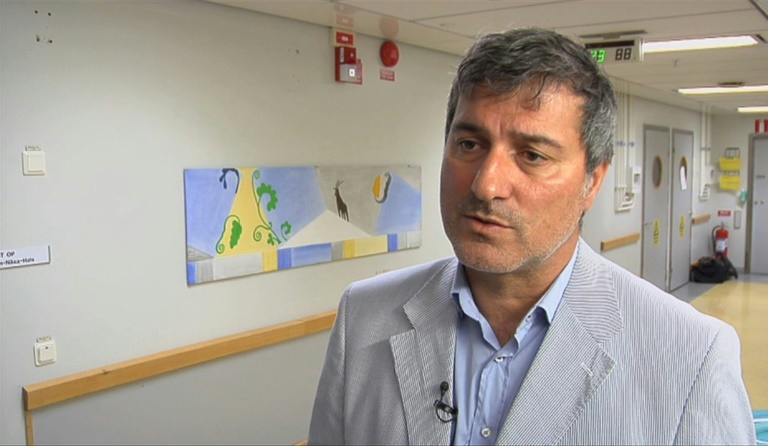
An Italian surgeon once hailed for pioneering windpipe surgery but now charged with assault told a Swedish court Thursday the experimental procedures were the result of “teamwork” and that he just wanted to save lives.

Paolo Macchiarini won praise in 2011 after claiming to have performed the world’s first synthetic trachea transplants using stem cells, while he was a surgeon at Stockholm’s Karolinska University Hospital.

The experimental procedure was hailed as a breakthrough in regenerative medicine.

But allegations soon emerged that the procedure had been carried out on at least one person who had not been critically ill at the time of the surgery.

Together with his colleagues, Macchiarini, 63, performed a total of eight such transplants between 2011 and 2014 — three in Sweden in 2011 and 2012, and five in Russia.

The three patients in Sweden died, though the deaths have not been directly linked to the surgeries.

Last week, prosecutors spent three days arguing that the surgeries in Sweden constituted assault, or alternatively bodily harm due to negligence, as Macchiarini disregarded “science and proven experience.”

The surgeon addressed the court for the first time on Thursday.

“I have been silent all these years, and it’s because my lawyers said to do so. Because we believe that the only judgement that is right should come from a legal court,” Macchiarini said in an opening statement.

– ‘Not alone’ –

Macchiarini insisted several times that the transplants were an alternative decided upon after all other options had been excluded — what he referred to as a “Plan B”.

Macchiarini’s lawyer, Bjorn Hurtig, meanwhile insisted that the surgeries were the result of “teamwork” and had been discussed with other senior colleagues.

“Paolo Macchiarini was not alone in planning and making decisions,” Hurtig told the court, presenting medical notes and references to conferences where the transplants were discussed.

Chief prosecutor Jim Westerberg told AFP on Wednesday he believed that Macchiarini had acted with “reckless intent”, arguing that he had continued performing the surgeries even though complications arose with earlier ones.

Defence lawyer Hurtig pointed however to emails from Macchiarini to colleagues, where he stressed the serious nature of his patients’ conditions and his desire to try and save their lives.

In one case, of a 37-year-old man from Eritrea studying in Iceland, other doctors had suggested treatments such as palliative care.

Hurtig presented an email where Macchiarini argued that “we should at least try to save the life of this student”.

Hurtig also presented emails that appeared to show one patient’s symptoms improving following the surgery.

Paolo Macchiarini “had but one intent, and that was to do good,” the lawyer said.

In 2013, the Karolinska Hospital suspended all trachea transplants and refused to extend Macchiarini’s contract as a surgeon.

A year later, several surgeons at the hospital filed a complaint alleging that Macchiarini had downplayed the risks of the procedure.

– Reopened investigation –

Macchiarini was also employed by the Karolinska Institute research facility, which awards the Nobel Medicine Prize. An external review in 2015 found Macchiarini guilty of research misconduct. 

Even though the Institute sacked him in 2016, it repeatedly defended him until 2018, when its own review found him and several other researchers guilty of scientific misconduct.

The university’s principal and several others stepped down over the scandal.

Medical journal The Lancet in 2018 retracted two papers authored by Macchiarini.

A criminal investigation was closed in 2017, only to be reopened in December of 2018 and charges were finally filed in September of 2020.

The trial, held in the Solna district court near the Karolinska Institute, is scheduled to conclude on May 23.

Astronaut crew returning to Earth after six months on ISS

NASA’s Crew-3 mission was returning home to Earth on Thursday after six months aboard the International Space Station.

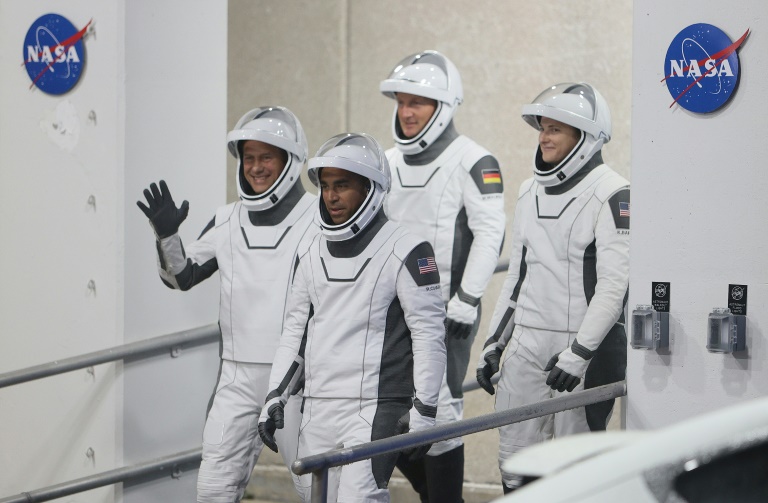
The SpaceX Dragon Endurance spacecraft with NASA astronauts Kayla Barron, Raja Chari, and Tom Marshburn, as well as European Space Agency astronaut Matthias Maurer undocked from the orbital laboratory overnight.

Their 23.5 hour journey back should see them splash down off the coast of Florida at 12:43 am on Friday (0443 GMT).

They leave behind the one Italian and three American astronauts of Crew-4, and three Russian cosmonauts. Ahead of departure, Marshburn handed command of the station over to Russian Oleg Artemyev.

During their mission, Crew-3 carried out hundreds of scientific experiments, including growing chiles in space to add to knowledge of cultivating crops on long term missions, exploring how concrete hardens in space, and Earth monitoring.

“Every day on @Space_Station is #EarthDay for @NASA_Astronauts since we see how thin the precious layer is that protects everything we know & love as a human race,” Crew-3 commander Chari wrote in a tweet.

“Hopefully, @NASA research will help w/ H20 purification & carbon dioxide reductions but the rest is up to us.”

Chancellor Olaf Scholz wished Maurer, the 12th German in space, “a good and safe journey back with a soft landing,” thanking him on Twitter for “all the new discoveries in space that are so important for us here on Earth.”

Crew-3’s expedition came at an increasingly busy time for commercial space. 

They welcomed aboard a private crew that included three wealthy businessmen that came and went on another SpaceX Crew Dragon, as well as a Japanese mission that flew on a Soyuz aircraft to the Russian segment.

The ISS now awaits docking with an uncrewed Boeing Starliner capsule, which is set to launch from Florida on May 19. 

NASA is looking to certify a second company to ferry astronauts to the region of space called Low Earth Orbit, leaving it to develop its super heavy space launch system (SLS) rocket for missions to the Moon, and eventually Mars.

Sri Lanka police tear gas student protesters outside parliament

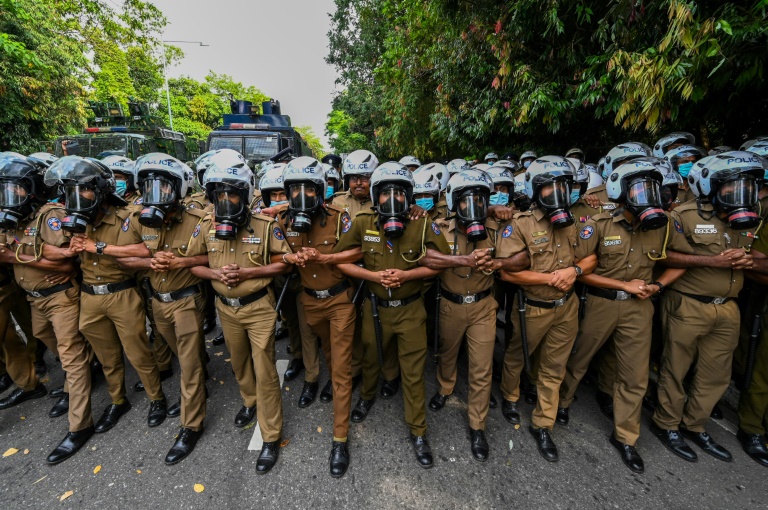
Police fired tear gas on students attempting to storm Sri Lanka’s parliament Thursday as the protesters demanded the resignation of President Gotabaya Rajapaksa over the country’s worst-ever economic crisis.

Protesters led by the Inter University Students’ Federation were about to pull down the yellow-painted iron barricades on the main drive leading to the legislature when riot police unleashed a barrage of tear gas.

The students had marched from a nearby university and closed in on the parliament building located on a man-made lake island when police moved in.

Even as the crowds dispersed, police kept firing tear gas canisters that hit shops in the nearby Diyatha Uyana park, witnesses said.

Police had earlier set up barricades around the sprawling parliament complex where a vacancy for the deputy speaker was being filled unopposed. 

Sri Lanka’s 22-million population has been facing acute shortages of food, fuel and medicines for months, bringing tens of thousands onto the streets to demand the resignation of Rajapaksa and other members of his powerful ruling family. 

The president and his family have made it clear that they will not step down despite escalating demonstrations across the island.

– Trade unions –

Sri Lanka’s trade unions have announced a one-day work stoppage on Friday.

The organisers of the strike have asked temples and churches to ring their bells for an hour on Friday morning in a show of solidarity.

Finance minister Ali Sabry warned on Wednesday that the country will have to endure its unprecedented economic hardships for at least two more years.

Sabry said the country now has less than $50 million in usable foreign exchange reserves, needed to finance essential goods to keep Sri Lanka’s import-dependent economy ticking over.

Official data shows reserves at $1.7 billion, but most of that figure includes a Chinese currency swap which cannot be used to pay for imports from other countries.

Sabry said the government faltered by delaying an approach to the International Monetary Fund for a bailout.

Sri Lanka’s economic crisis took hold after the coronavirus pandemic hammered income from tourism and remittances.

Last month, Colombo announced it was defaulting on its $51 billion foreign debt.

Musk secures $7.1 bn to finance Twitter deal

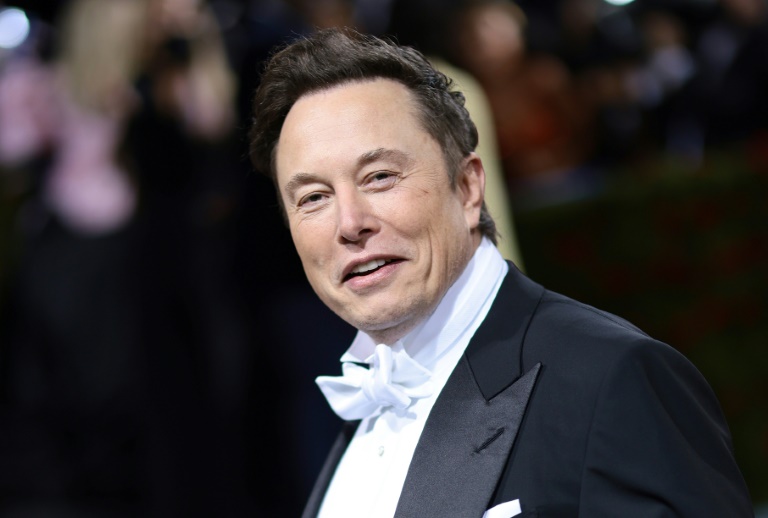
Elon Musk has raised $7.1 billion for his Twitter acquisition from investors that include Oracle founder Larry Ellison and Saudi Prince Alwaleed bin Talal, according to a securities filing Thursday.

Musk, chief executive of Tesla and SpaceX, listed 18 investors who agreed to cash investments including Ellison ($1 billion), Sequoia Capital ($800 million) and Vy Capital ($700 million). 

The Saudi prince, the head of the Kingdom Holding Company conglomerate, agreed to contribute about 35 million Twitter shares worth $1.9 billion so as to retain a stake in the company post-acquisition, the filing said.

Alwaleed had previously balked at Musk’s $54.20 per share offer as too low, but praised Musk on Twitter on Thursday, saying “I look forward to roll our ~$1.9bn in the ‘new’ @Twitter and join you on this exciting journey.”

The investments will reduce a $12.5 billion margin loan organized through Morgan Stanley and other banks to $6.25 billion, the filing said.

The new financing means less of Musk’s Tesla shares will be used as collateral under the margin loan. 

Musk “may receive additional financing commitments to fund additional portions of the total Merger Consideration,” the filing said, adding that the Tesla chief is in talks with former Twitter Chief Executive Jack Dorsey and others who may contribute shares to maintain an equity stake.

The Twitter takeover is expected to close later in 2022. 

CNBC reported that upon completion of the deal, Musk is expected to serve as temporary CEO of Twitter for a few months, the network said, citing unnamed sources.

Close Bitnami banner
Bitnami