AFP

NASA, Boeing say Starliner on track for May 19 launch

Boeing’s Starliner capsule is finally ready to reattempt a key test launch to the International Space Station on May 19, officials said Tuesday.

The uncrewed flight, named OFT-2, is a vital step towards certifying the spaceship for eventually carrying passengers, giving NASA a second taxi provider alongside SpaceX.

Aerospace giant Boeing, which was awarded a $4.2 billion contract for the purpose in 2014, initially attempted the test in 2019, but failed to rendezvous with the ISS after experiencing software glitches that caused flight anomalies.

The program has since experienced several delays. It was last supposed to fly in August 2021, but the mission was aborted just hours before launch because high humidity led to corrosion within Starliner’s valves.

“It’s been a hard eight months I would say, but very fulfilling that we’ve resolved the problem,” said Steve Stich, manager of NASA’s Commercial Crew Program on a call with reporters.

NASA is targeting 6:54 pm (2254 GMT) for lift-off from the Kennedy Space Center in Florida.

If OFT-2 succeeds, Boeing will have to complete another crewed test before it is officially certified, with the company aiming for the end of 2022 for this mission, Boeing’s Mark Nappi said.

In the meantime, Elon Musk’s SpaceX has already ferried more than 20 people to the ISS on its Crew Dragon capsule since its first crewed flight in 2020.

Activists urge ad boycott if Musk turns Twitter toxic

Activist groups called on Twitter advertisers Tuesday to boycott the service if it opens the gates to abusive and misinformative posts with billionaire Elon Musk as its owner.

The Tesla chief’s $44-billion deal to buy the global messaging platform must still get the backing of shareholders and regulators, but he has voiced enthusiasm for dialing back content moderation to a legal minimum and no longer banning people for using the platform to instigate real-world harm.

“Your brand risks association with a platform amplifying hate, extremism, health misinformation, and conspiracy theorists,” said an open letter signed by more than two dozen groups including Media Matters, Access Now and Ultraviolet.

“Under Musk’s management, Twitter risks becoming a cesspool of misinformation, with your brand attached.”

The groups urged advertisers to require that Twitter maintain its content moderation policies as a non-negotiable term of doing business with the platform.

Twitter makes most of its revenue from ads, and that could be jeopardized by advertisers’ reaction to content posted on the platform, the San Francisco-based tech firm said in a filing with US regulators.

Ad revenue at Twitter increased 16 percent to $1.2 billion in the recently ended quarter, while revenue from subscriptions and other means decreased to $94.4 million, the company said in the filing.

While Musk has not revealed nitty-gritty details of how he would run the business side of Twitter, he has expressed a preference for making money from subscriptions.

Analysts doubt that Twitter users would flock to pay for premium content or features such as retweeting posts when social media platforms such as Facebook are free of charge.

As of the end of March, an average 229 million people used Twitter daily, an increase of nearly 16 percent from the first three months of last year, Twitter said in the filing.

The user growth was driven in part by the war in Ukraine, with people using the service to find news and support, the company told regulators.

“We believe that our long-term success depends on our ability to improve the health of the public conversation on Twitter,” the company said in the filing.

Efforts toward that goal include fighting abuse, harassment, spam and “malicious automation,” or when software instead of people manages accounts, Twitter told regulators.

Musk has said he would make fighting such automated “bots” at Twitter a priority.

Twitter estimated that false or spam accounts made up less than five percent of its daily active users in the first quarter of this year, the filing said.

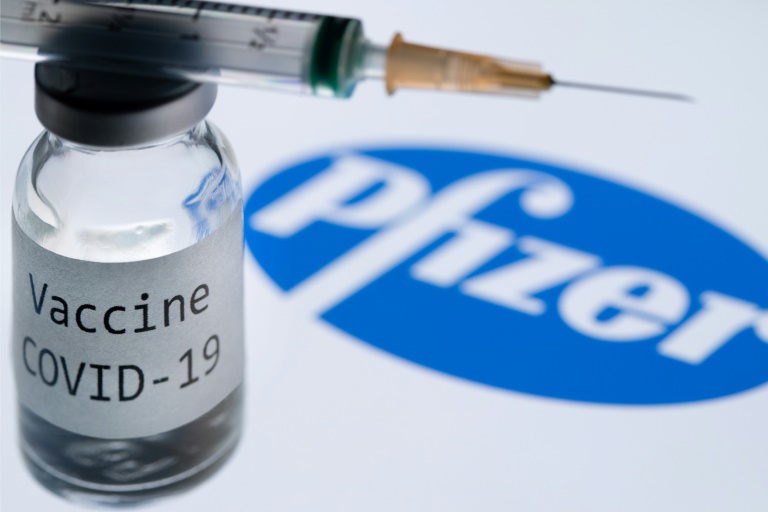
Pfizer sees high demand for Covid-19 pill as profits jump

Pfizer executives said Tuesday they are confident of strong demand for the company’s Covid-19 antiviral treatment amid easing pandemic rules as the big drugmaker reported another round of strong earnings.

The US pharmaceutical giant, reporting surging first-quarter profits based on a big jump in revenues from its Covid-19 vaccine, said its Paxlovid treatment for the virus would be a valuable means for governments to limit the severity of outbreaks as they ease social distancing and masking rules.

Pfizer Chief Executive Albert Bourla said the company is seeing “very strong signs of increasing demand for Paxlovid as it remains one of the best tools we have.” 

Citing rising vaccine fatigue, Bourla said the company is also focused on a Covid-19 vaccine booster that provides immunity for a year. 

“People are tired of the repeated booster, so it is extremely important to come to a vaccine that could be a yearly vaccine,” Bourla told analysts on a conference call, adding that while the company has made progress on this front, “it’s not technically easy to achieve.”

“There’s a tremendous pressure across the world to get our lives back,” Bourla said of the social and political impetus to ease pandemic rules. “As a result of these things it’s very clear that we will have waves” of Covid-19.

– ‘Rebound’ risk –

The US drugmaker reported first-quarter profits of $7.9 billion, up 61 percent, based on a 77 percent surge in revenues to $25.7 billion.

Pfizer lowered its full-year adjusted profits by 10 cents to $6.25 to $6.45 a share, due in part to currency movements.

But the company confirmed its full-year revenue forecast of about $100 billion, which is an approximately 23 percent increase on the 2021 level. More than half the revenues are expected to come from the Covid-19 vaccine and therapeutic.

Pfizer, which has shipped some 3.4 billion doses of vaccine to 179 countries, has won regulatory approval for its shot in most age groups, but continues to study its use in children younger than five.

In the first quarter, Paxlovid took in $1.5 billion in global sales. But Pfizer expects 2022 sales of the medicine of $22 billion as it ramps up production and distribution.

The company expects to produce 120 million courses of the Paxlovid oral pills in 2022, with distribution programs scaling up in the United States and other markets.

The treatment has received emergency or conditional approval in 40 countries so far, the company said.

“What we are seeing is… there is demand for this product,” said Pfizer biopharmaceuticals group president Angela Hwang, citing the removal of mask mandates as a factor in spreading cases. 

“What we’re also seeing is that we don’t have any inventory on hand,” Hwang said. “Every dose that we produce is being shipped out.”

Pfizer executives said they were researching “rebound” Covid-19 cases in which some patients who took Paxlovid have reported renewed symptoms. 

But company officials said the data thus far suggests that the amount of cases is small and may have to do with unusual patient characteristic rather than the drug itself. 

The World Health Organization last month “strongly recommended” the antiviral pill Paxlovid for patients with milder forms of the disease who were still at a high risk of hospitalization. 

But WHO said it was “extremely concerned” that low- and middle-income countries would be “pushed to the end of the queue” amid tight global supplies.

Shares of Pfizer rose 1.7 percent to $49.17 in afternoon trading.

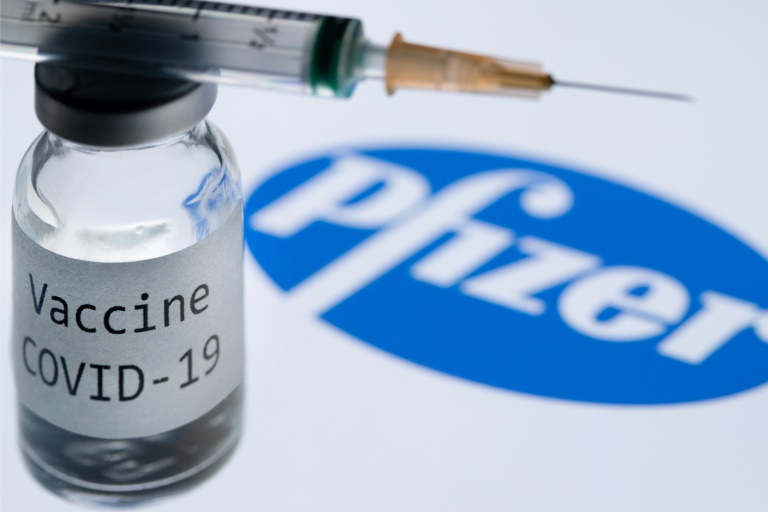
Pfizer sees high demand for Covid-19 pill as profits jump

Pfizer executives said Tuesday they are confident of strong demand for the company’s Covid-19 antiviral treatment amid easing pandemic rules as the big drugmaker reported another round of strong earnings.

The US pharmaceutical giant, reporting surging first-quarter profits based on a big jump in revenues from its Covid-19 vaccine, said its Paxlovid treatment for the virus would be a valuable means for governments to limit the severity of outbreaks as they ease social distancing and masking rules.

Pfizer Chief Executive Albert Bourla said the company is seeing “very strong signs of increasing demand for Paxlovid as it remains one of the best tools we have.” 

Citing rising vaccine fatigue, Bourla said the company is also focused on a Covid-19 vaccine booster that provides immunity for a year. 

“People are tired of the repeated booster, so it is extremely important to come to a vaccine that could be a yearly vaccine,” Bourla told analysts on a conference call, adding that while the company has made progress on this front, “it’s not technically easy to achieve.”

“There’s a tremendous pressure across the world to get our lives back,” Bourla said of the social and political impetus to ease pandemic rules. “As a result of these things it’s very clear that we will have waves” of Covid-19.

– ‘Rebound’ risk –

The US drugmaker reported first-quarter profits of $7.9 billion, up 61 percent, based on a 77 percent surge in revenues to $25.7 billion.

Pfizer lowered its full-year adjusted profits by 10 cents to $6.25 to $6.45 a share, due in part to currency movements.

But the company confirmed its full-year revenue forecast of about $100 billion, which is an approximately 23 percent increase on the 2021 level. More than half the revenues are expected to come from the Covid-19 vaccine and therapeutic.

Pfizer, which has shipped some 3.4 billion doses of vaccine to 179 countries, has won regulatory approval for its shot in most age groups, but continues to study its use in children younger than five.

In the first quarter, Paxlovid took in $1.5 billion in global sales. But Pfizer expects 2022 sales of the medicine of $22 billion as it ramps up production and distribution.

The company expects to produce 120 million courses of the Paxlovid oral pills in 2022, with distribution programs scaling up in the United States and other markets.

The treatment has received emergency or conditional approval in 40 countries so far, the company said.

“What we are seeing is… there is demand for this product,” said Pfizer biopharmaceuticals group president Angela Hwang, citing the removal of mask mandates as a factor in spreading cases. 

“What we’re also seeing is that we don’t have any inventory on hand,” Hwang said. “Every dose that we produce is being shipped out.”

Pfizer executives said they were researching “rebound” Covid-19 cases in which some patients who took Paxlovid have reported renewed symptoms. 

But company officials said the data thus far suggests that the amount of cases is small and may have to do with unusual patient characteristic rather than the drug itself. 

The World Health Organization last month “strongly recommended” the antiviral pill Paxlovid for patients with milder forms of the disease who were still at a high risk of hospitalization. 

But WHO said it was “extremely concerned” that low- and middle-income countries would be “pushed to the end of the queue” amid tight global supplies.

Shares of Pfizer rose 1.7 percent to $49.17 in afternoon trading.

Rio to host top tech conference Web Summit

The head of Web Summit, the huge technology conference dubbed the “Davos for geeks,” announced Tuesday that Rio de Janeiro will host the first edition of the event outside Europe.

The iconic Brazilian beach city will host the conference from May 1 to 4, 2023 — supplementing, not replacing, the annual event currently held in Lisbon, Portugal, said Web Summit chief executive Paddy Cosgrave.

“We are delighted to bring a brand new Web Summit event to one of the most iconic cities in the world,” the Irish tech guru told an online news conference.

“Rio is widely seen as one of the hottest destinations for the tech industry. International investors are looking at Latin America, and Brazil, in particular, attracted by some of the hottest startups in the region.”

Under Rio’s contract with organizers, the city will host the event for the next three years, with an option to extend, he said.

The Lisbon event will continue to be held at least through 2028.

Rio Mayor Eduardo Paes said the 2023 event alone was forecast to draw 10,000 participants and generate an economic impact of at least one billion reais ($200 million) for the city.

“But it’s much, much bigger than that,” he told the news conference.

“This positions Rio as the innovation hub of Latin America.”

Launched in 2009, Web Summit was first held in Dublin, Ireland, then moved to Lisbon in 2016.

Organizers have launched spinoff events in other parts of the world, such as Collision in Toronto and RISE in Hong Kong.

Web Summit speakers typically include tech titans such as Tesla and SpaceX chief executive Elon Musk and celebrities such as U2 frontman Bono.

Cosgrave said the idea behind the Rio event was to leverage the breakneck growth of startups in Latin America.

He cited a Miami Herald article reporting the region received $19.5 billion in investments in startups in 2021, triple the previous year.

Nearly half went to Brazil, home to 27 “unicorns,” or startups valued at $1 billion or more.

Flamingo massacre: Fox kills dozens of birds at US National Zoo

A wild fox that breached an enclosure at Washington’s National Zoo killed 25 flamingos and one duck before escaping, the facility said Tuesday, one month after a rabid fox went on a biting spree near the Capitol.

Birdkeepers arrived early Monday to discover the carnage and spotted a fox inside the flamingo yard, the Smithsonian National Zoo said.

Staff “are devastated and mourning the loss of 25 American flamingos and one Northern pintail duck killed by a wild fox yesterday in the Zoo’s outdoor flamingo habitat,” it added.

Three flamingos were additionally injured and are being treated at the zoo’s veterinary hospital.

“This is a heartbreaking loss for us and everyone who cares about our animals,” zoo director Brandie Smith said.

The remaining flock, whittled down from 74 flamingos before the attack, has been moved to an indoor barn while the ducks have been relocated to a covered outdoor space, the zoo said.

According to zoo officials, a softball-sized hole in the metal mesh surrounding the flamingo yard was discovered, but the dig barrier around the enclosure remained intact.

“The barrier we used passed inspection and is used by other accredited zoos across the country,” Smith said. “Our focus now is on the well-being of the remaining flock and fortifying our habitats.”

In early April, a fox was put down after biting at least nine people including a congressman at the US Capitol and testing positive for rabies.

Stock markets rise as Fed set to hike rate

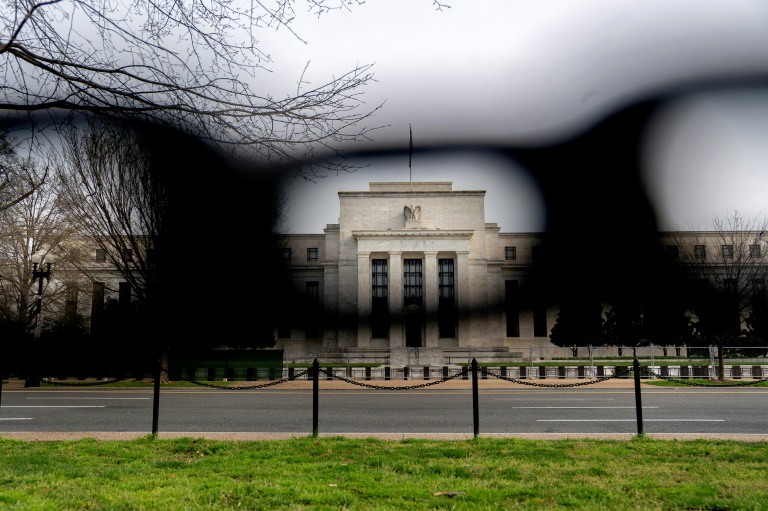
Stock markets rose on Tuesday as the US Federal Reserve began a two-day meeting that is expected to conclude with a big rate increase to tame decades-high inflation.

Central banks worldwide are tightening borrowing costs despite concerns such action could hamper financial recovery from the pandemic and even push major economies into recession.

The US central bank is expected to lift borrowing costs by half a percentage point for the first time since 2000.

With the increase widely forecast, investors will be closely looking for clues on the outlook for futures rate rises after consumer prices accelerated to 8.5 percent in March, the highest level in more than 40 years.

“The markets remain edgy, as the Fed is expected to be aggressive in this monetary policy tightening cycle,” said analysts at Charles Schwab investment firm.

“Moreover, sentiment continues to be hampered by the ongoing war in Ukraine, the recent jump in interest rates, the continued rally in the US dollar, and the economic impact of the covid lockdowns in China,” they wrote.

On Tuesday, the Reserve Bank of Australia lifted interest rates 25 basis points, the first hike since 2010 and by more than expected. Officials also indicated further increases were in the pipeline.

The move sent the Australian dollar briefly rallying more than one percent against the greenback before settling back slightly. 

Victoria Scholar, head of investment at Interactive Investor, said the Bank of England is expected to announce another rate hike on Thursday to its highest level since 2009.

Wall Street was up in midday trading, with the Dow Jones Industrial Average 0.7 percent higher, the S&P 500 gaining one percent and the tech-heavy Nasdaq rising by 0.6 percent.

European markets finished higher, with London up 0.2 percent, Paris adding 0.8 percent and Frankfurt gaining 07 percent following sharp losses Monday.

Traders continued to pore over earnings results from some of the world’s biggest companies.

US drug maker Pfizer reported a 77-percent jump in first quarter revenue thanks to its Covid vaccine, though it lowered its full-year profit forecast due in part of shifts in foreign exchange.

– Oil down –

British energy giant BP said its decision to pull out of Russia as a result of the war in Ukraine pushed it deep into the red in the first three months of this year.

But its underlying performance was strong thanks to a recent surge in oil and gas prices.

On Tuesday, crude futures declined ahead of a regular meeting this week of OPEC+.

The body comprising the Organization of Petroleum Exporting Countries plus Russia and other oil-producing nations must decide on output policy amid tight supply fears triggered by the Ukraine war.

The European Union is preparing a Russian oil embargo but some countries highly dependent on Moscow’s crude are seeking opt-outs from the possible ban.

China’s strict Covid lockdown has weighed on crude prices due to concerns about demand in the world’s top importer of oil.

– Key figures at around 1600 GMT –

New York – Dow: UP 0.7 percent at 33,306.99 points

London – FTSE 100: UP 0.2 percent at 7,561.33 (close)

Frankfurt – DAX: UP 0.7 percent at 14,039.47 (close)

Paris – CAC 40: UP 0.8 percent at 6,476.18 (close)

EURO STOXX 50: UP 0.8 percent at 3,761.19

Hong Kong – Hang Seng Index: UP 0.1 percent at 21,101.89 (close)

Tokyo – Nikkei 225: Closed for a holiday

Shanghai – Composite: Closed for a holiday

Euro/dollar: UP at $1.0519 from $1.0506 on Monday

Pound/dollar: UP at $1.2498 from $1.2489

Euro/pound: UP at 84.16 pence from 84.09 pence

Dollar/yen: UP at 130.17 yen from 130.16 yen

Brent North Sea crude: DOWN 1.1 percent at $106.37 per barrel

West Texas Intermediate: DOWN 1.3 percent at $103.82 per barrel

US reviewing tariffs on Chinese goods set to end in July

American tariffs on hundreds of billions of dollars of Chinese imports are due to expire in July, but could be extended if enough industries ask for it, US officials said Tuesday.

With Americans facing the highest inflation in more than four decades and companies struggling to find key supplies, President Joe Biden has faced increasing calls to get rid of the punitive duties imposed during the trade war launched by his predecessor Donald Trump.

The tariffs were first imposed in 2018, eventually ramping up to cover about $350 billion in annual imports from China in retaliation for Beijing’s theft of American intellectual property and forced transfer of technology.

The measures will lapse July 6 unless there is a request to continue them, at which point they would be subject to review.

US trade officials said Tuesday they are officially reaching out to the public to seek comment on whether to extend the tariffs, including sending letters to 600 firms that expressed support for the measures.

“Under the statute, the tariffs would expire at the four-year anniversary unless we go through this process and get a request for the continuation of action,” a senior official with the office of the US Trade Representative (USTR) told reporters.

The official declined to say whether high prices would be a consideration, but said any review will look at “the effects of such actions on the United States economy, including consumers.”

Foreign companies have long complained about Beijing’s failure to protect know-how and patents, and in some cases forcing firms to share information with domestic partners as the price for doing business in the massive Chinese market.

Prior to Trump, US administrations had sought to resolve the issues through dialogue and gentle pressure, but Trump pulled out all the stops, sparking retaliation from Beijing on US goods.

And despite a “phase one” trade pact that took effect in February 2020, USTR Katherine Tai said the hardline measures have not “incentivized” Beijing to alter its practices.

USTR will look at input from “all stakeholders on how they view the tariffs whether they want to be increased, decreased (or) modified,” another official said.

Much-maligned rats unlikely to spark next pandemic: study

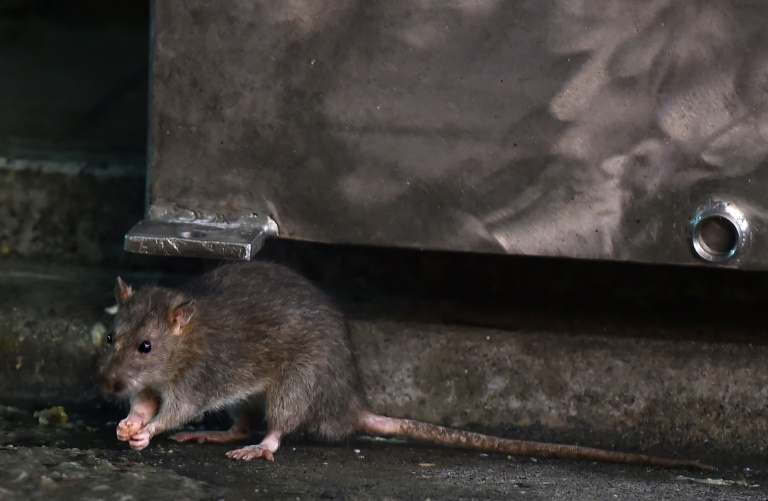
Rats have been seen as filthy disease-spreaders since at least the time of the plague, but new research shows that rodents and other city-dwelling animals are less likely to cause the next pandemic than previously thought.

Researchers at Georgetown University in Washington DC studied data on about nearly 3,000 mammals, expecting to find that those living in urban environments hosted more viruses that could be caught by humans, because they were in such close contact.

They found that urban animals did in fact carry 10 times as many kinds of disease — but also that more than 100 times as many studies had been published about them. 

When the researchers corrected for this massive bias — a long-standing scientific preference to study animals scuttling under our feet rather than hiding in rainforests — they were surprised to find that rats were no more likely to be the source of a new human disease than other animals.

However, “it’s still not good idea to get too close and friendly to urban wildlife,” said Greg Albery, a disease ecologist who led the study published in the Nature Ecology and Evolution journal on Monday. 

“These urban animals are unlikely to be the source of the next ‘Disease X’, but they’re still often a source of well-known important diseases,” he told AFP, giving the example of leptospirosis, a bacterial disease commonly spread by rats.

The threat from another common target of city disdain — the pigeon — was “almost certainly” also exaggerated due to research bias, he said.

Because we have been studying animals living in cities for so long, “we know so much about their parasites that there are relatively few unknowns there; rural wildlife is much more uncertain and more likely to provide us with the next ‘Big Threat’.”

Jonathan Richardson, a professor of urban ecology at the University of Richmond, said it was an important study because the authors “rightfully highlight the over-representation of data coming from urban mammal research”.

But he told AFP that it is still fair to describe rats as “disease sponges” because humans are in such regular contact with them.

Richardson said his research has found that urban rats harbour more than 200 pathogens and parasites that could jump over to humans, while nearly 80 percent of rats in some cities carry leptospirosis.

– ‘Important pathway into humans’ – 

Albery and his study co-author Colin Carlson published research last week showing climate change could increase the risk of new epidemics.

They found that as animals like bats flee to cooler areas, they will mingle with other species for the first time and create new opportunities for diseases that could later infect humans.

Albery said urban mammals could play a role in that process.

“If a bat meets a rat and gives it a novel disease, and then if that rat has greater access to human areas, that provides an important pathway into humans,” he said.

His global warming research also showed that new opportunities for viruses to jump between animals would now take place closer to populated areas, rather in forests.

“The host-pathogen network is about to change substantially, so what we know now about urban parasites is likely to become outdated quickly,” Albery said.

“We need improved surveillance both in urban and wild animals so that we can identify when a pathogen has jumped from one species to another — and if the receiving host is urban or in close proximity to humans, we should get particularly concerned.”

Pressure on OPEC+ eases amid oil demand fears

Major oil producers led by Saudi Arabia and Russia meet Thursday with less pressure to open tabs more widely than planned as China’s Covid lockdown threatens demand.

The meeting on Thursday also comes as the European Union is eyeing a ban on Russian oil imports, following similar moves by the United States, Britain and Canada.

The alliance known as OPEC+ slashed output in 2020 when oil prices crashed due to the pandemic.

When demand picked up again last year as countries emerged from lockdowns, the coalition began to modestly increase production each month.

But the United States has led calls for OPEC+ to raise output even further as prices soared to new heights earlier this year.

Russia’s invasion of Ukraine sent prices rocketing higher and they have mostly remained above $100 a barrel.

Despite the pressure, analysts expect the group to stick to the usual increase of around 400,000 barrels per day.

– Covid and inflation –

Oil prices fell on Tuesday but are still high with Brent above $106.

“The price slide was sparked by concerns that the ongoing coronavirus lockdowns in China could seriously dampen oil demand there,” said Carsten Fritsch, commodities analyst at Commerzbank.

The world’s second-largest oil consumer and biggest oil importer is facing its worst coronavirus outbreak since spring 2020 and has imposed a lockdown in Shanghai, forcing most of its 25 million inhabitants to stay home for weeks.

Also weighing on the market are fears of a global economic slowdown caused by Russia’s invasion of Ukraine, which began in late February.

Amid skyrocketing inflation, the International Monetary Fund (IMF) has sharply lowered its forecasts for global growth for 2022.

OPEC+ also has revised down its forecasts for global oil demand.

– Oil embargo? –

As the market remains tense, OPEC+ members are continuing to struggle to meet even the modest output increase, according to John Plassard, analyst at banking group Mirabaud.

Production in Libya, a key player in Africa, has fallen by about 600,000 barrels a day, Oil and Gas Minister Mohammed Aoun told AFP late last month.

Since mid-April, Libya’s two major export terminals and several oil fields have been held hostage to the country’s latest political schism.

Russian supply could also take a hit as the EU prepares to ban imports from the country.

EU ambassadors are expected to meet Wednesday to review a European Commission proposal for a phased ban on oil imports from Russia over six to eight months, with Hungary and Slovakia allowed to take a few months longer, EU officials told AFP.

In 2021, Russia supplied the bloc’s 27 members with 30 percent of their crude oil and 15 percent of their petroleum products.

“With an EU ban on Russian oil imports growing likelier than a further ramp-up in OPEC+ output, tightening supply conditions should keep oil prices well supported,” said Han Tan, an analyst for Exinity Group.

Close Bitnami banner
Bitnami