AFP

Fed convenes to launch new salvo against record US inflation

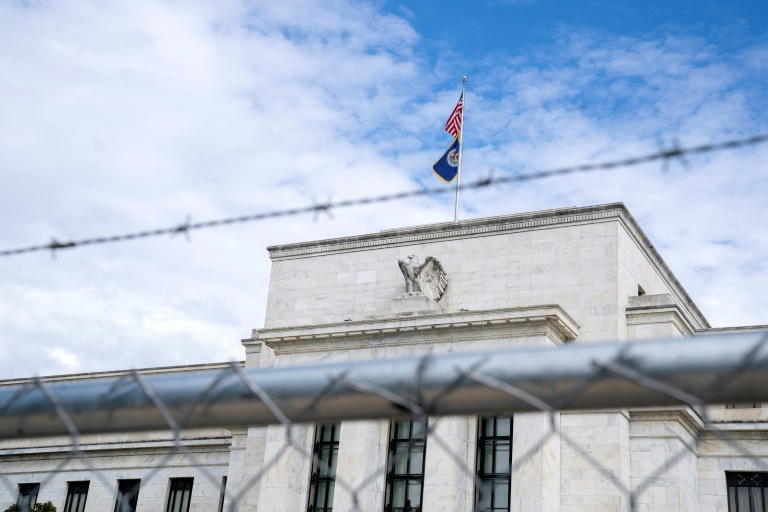
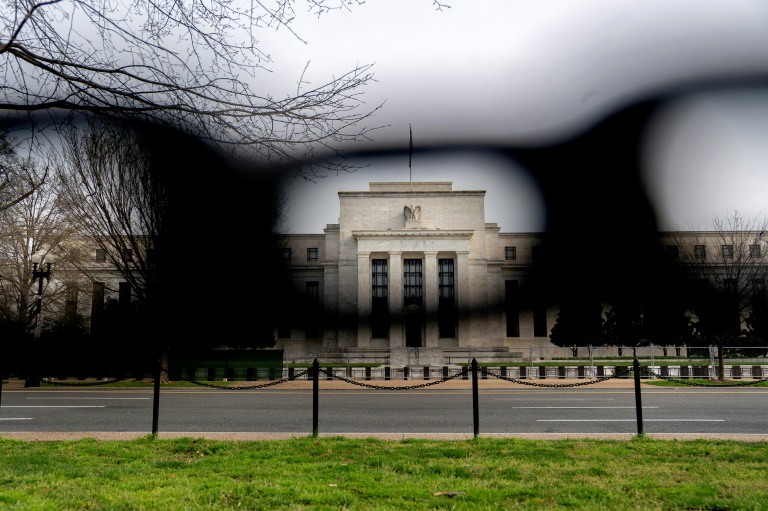
The US central bank opened its policy meeting Tuesday, which is expected to produce a big rate hike as policymakers go on the attack against record high inflation.

Following a quarter-point increase in the benchmark lending rate in March, Federal Reserve Chair Jerome Powell and other central bankers have said a half-point increase could be announced when the two-day meeting concludes Wednesday.

The challenge for the policy-setting Federal Open Market Committee (FOMC) is to tame price pressures without tipping the world’s largest economy into a recession.

The Fed is “behind the curve on inflation and ready to move aggressively,” Grant Thornton’s Diane Swonk said in an analysis.

Consumer prices rose 8.5 percent in March compared to the year prior, the highest level in more than 40 years, and while the economy has recovered strongly from the pandemic, growth contracted 1.4 percent in the first three months of the year. 

A second quarter of negative growth would constitute a recession.

Analysts argue that avoiding a downturn during an aggressive tightening cycle is difficult to achieve, especially since the price increases are partially being driven by factors outside the Fed’s control, such as the war in Ukraine and Covid-19 lockdowns in China. 

Nor can the Fed impact the number of workers available in the US labor market to ease hiring challenges that have driven wages higher — fueling fears of a possible wage-price spiral.

“Many within the Fed have voiced their skepticism about achieving a soft landing at this late stage of the game. Even Powell has said the landing could be ‘soft-ish’ instead of ‘soft,'” Swonk said.

Powell has acknowledged the central bank will move quickly and front-load rate hikes, including with multiple half-point increases, if necessary.

The FOMC is at this meeting also set to begin the process of shedding its massive holdings of bonds built up during the pandemic as the institution sought to keep credit flowing through the economy. 

That also could unsettle financial markets and act as a brake on activity.

Kathy Bostjancic of Oxford Economics expects another half-point hike in June, and predicts the lending rate will end the year at 2.13 percent then rise to 2.63 percent by mid-2023.

“We look for the combination of slower aggregate demand and some easing of supply chain stresses in 2023 to relieve inflationary pressures,” she said in an analysis.

“Labor force participation should continue to recover, helping to temper wage growth.”

For the moment, the signals point to “relatively low but rising odds of a recession in the next 12 months” but Bostjancic warned the chances will increase if the factors driving inflation worsen.
Stock markets steady awaiting start of Fed meet

Major stock markets mostly steadied Tuesday, with traders braced for a sharp US interest rate hike to curb soaring inflation.

All eyes are on the conclusion Wednesday of the US Federal Reserve’s two-day policy meeting, where it is expected to lift borrowing costs by half a percentage point for the first time since 2000.

With the increase widely forecast, investors will be closely looking for clues on the outlook for futures rate rises.

Central banks worldwide are tightening borrowing costs despite concerns such action could hamper financial recovery from the pandemic and even push major economies into recession.

“The markets remain edgy, as the Fed is expected to be aggressive in this monetary policy tightening cycle,” said analysts at Charles Schwab investment firm.

“Moreover, sentiment continues to be hampered by the ongoing war in Ukraine, the recent jump in interest rates, the continued rally in the US dollar, and the economic impact of the covid lockdowns in China,” they wrote.

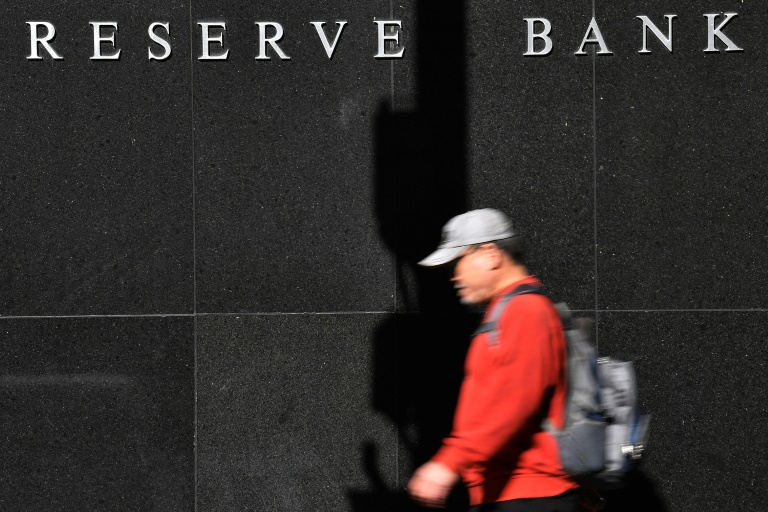
On Tuesday, the Reserve Bank of Australia lifted interest rates 25 basis points, the first hike since 2010 and by more than expected. Officials also indicated further increases were in the pipeline.

The move sent the Australian dollar briefly rallying more than one percent against the greenback before settling back slightly. 

Victoria Scholar, head of investment at Interactive Investor, said the Bank of England is expected to announce another rate hike on Thursday to its highest level since 2009.

Wall Street opened mixed, with the Dow Jones Industrial Average and S&P 500 flat while the tech-heavy Nasdaq was down 0.4 percent.

In Europe, Paris was up 0.1 percent in afternoon trading while Frankfurt was flat following sharp losses Monday.

London fell after a long holiday weekend, with investors catching up with losses elsewhere on Monday.

Traders continued to pore over earnings results from some of the world’s biggest companies.

US drug maker Pfizer reported a 77-percent jump in first quarter revenue thanks to its Covid vaccine, though it lowered its full-year profit forecast due in part of shifts in foreign exchange.

– Oil down –

British energy giant BP said its decision to pull out of Russia as a result of the war in Ukraine pushed it deep into the red in the first three months of this year.

But its underlying performance was strong thanks to a recent surge in oil and gas prices.

On Tuesday, crude futures declined ahead of a regular meeting this week of OPEC+.

The body comprising the Organization of Petroleum Exporting Countries plus Russia and other oil-producing nations must decide on output policy amid tight supply fears triggered by the Ukraine war.

The European Union is preparing a Russian oil embargo but some countries highly dependent on Moscow’s crude are seeking opt-outs from the possible ban.

China’s strict Covid lockdown has weighed on crude prices due to concerns about demand in the world’s top importer of oil.

– Key figures at around 1345 GMT –

New York – Dow: FLAT at 33,040.06 points

London – FTSE 100: DOWN 0.3 percent at 7,524.08 

Frankfurt – DAX: FLAT at 13,947.26

Paris – CAC 40: FLAT at 6,431.18

EURO STOXX 50: FLAT at 3,734.17

Hong Kong – Hang Seng Index: UP 0.1 percent at 21,101.89 (close)

Tokyo – Nikkei 225: Closed for a holiday

Shanghai – Composite: Closed for a holiday

Euro/dollar: UP at $1.0565 from $1.0506 on Monday

Pound/dollar: UP at $1.2550 from $1.2489

Euro/pound: UP at 84.18 pence from 84.09 pence

Dollar/yen: DOWN at 129.82 yen from 130.16 yen

Brent North Sea crude: DOWN 1.4 percent at $106.12 per barrel

West Texas Intermediate: DOWN 1.4 percent at $103.74 per barrel

EU members seek opt-outs from Russian oil embargo

European officials were preparing a new package of sanctions Tuesday to punish Russia for its invasion of Ukraine, but some members are jockeying to opt out of an oil embargo.

Several EU officials and European diplomats in Brussels told AFP that they expected the European Commission to hand over the draft plan to member states later Tuesday.

After that, ambassadors from the 27 EU countries will meet on Wednesday to give the plan a once-over, and it will need unanimous approval before going into effect.

The commission’s proposal would phase in a ban on oil imports from Russia over six to eight months, with Hungary and Slovakia allowed to take a few months longer, EU officials told AFP.

But Slovakia, which like Hungary is almost 100 percent dependent for fuel on Russian crude coming through the Druzbha pipeline, has said it will need several years.

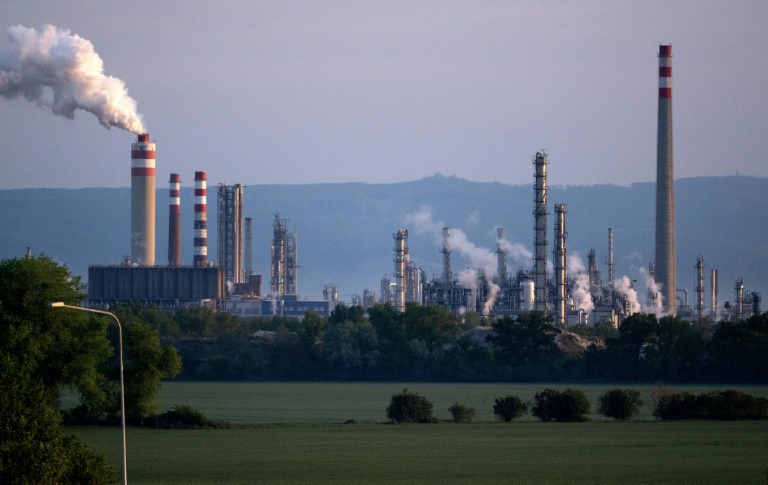
Slovakia’s refinery is designed to work with Russian oil and would need to be thoroughly overhauled or replaced to deal with imports from elsewhere — an expensive and lengthy process.

Other officials, speaking on condition of anonymity during the legally and diplomatically fraught negotiation, said Bulgaria and the Czech Republic could also seek sanctions opt-outs.

One European diplomat warned that granting exemptions to one or two highly-dependent states could trigger a domino effect of exemption demands that would undermine the embargo.

The European Commission is not planning to unveil the draft in public before its president, Ursula von der Leyen, addresses the European Parliament on Wednesday. 

But member state missions were expected to receive the plan later Tuesday.

Pfizer Q1 revenues jump 77% to $25.7 bn on Covid-19 vaccine

Pfizer reported another quarter of huge revenues growth because of its Covid-19 vaccine on Tuesday, but lowered the company’s full-year profit forecast due in part to shifts in foreign exchange.

The major American drugmaker reported revenues of $25.7 billion for the first quarter, up 77 percent from the year-ago period, with the Covid vaccine taking in $13.2 billion.

Net income jumped 61 percent to $7.9 billion.

Pfizer confirmed its full-year revenues forecast, in which about just over half of total sales stem from the Covid-19 innoculation and from Paxlovid, the company’s therapeutic to treat the coronavirus.

Pfizer, which has shipped some 3.4 billion doses of vaccine to 179 countries, has won regulatory approval for its shot in most age groups, but continues to study its use in children younger than five.

The company is also exploring “potential next-generation vaccines, including variant vaccines” for the fall season, Chief Executive Albert Bourla said in prepared remarks.

In the first quarter, Paxlovid took in $1.5 billion in global sales. But Pfizer expects 2022 sales of the medicine of $22 billion as it ramps up production and distribution.

The World Health Organization last month “strongly recommended” the antiviral pill Paxlovid for patients with milder forms of the disease who were still at a high risk of hospitalization. 

But WHO said it was “extremely concerned” that low- and middle-income countries would be “pushed to the end of the queue” amid tight global supplies.

Pfizer now sees full-year adjusted profits of $6.25 to $6.45 a share, down 10 cents from the previous range.

The company attributed the lowered forecast to an accounting change in research and development expenses and to changes in the foreign exchange market that have seen the dollar rise compared with other major currencies.

Shares of Pfizer dipped 1.2 percent to $47.77 in pre-market trading.

Fossils dating back 66 million years found outside Bangkok mall

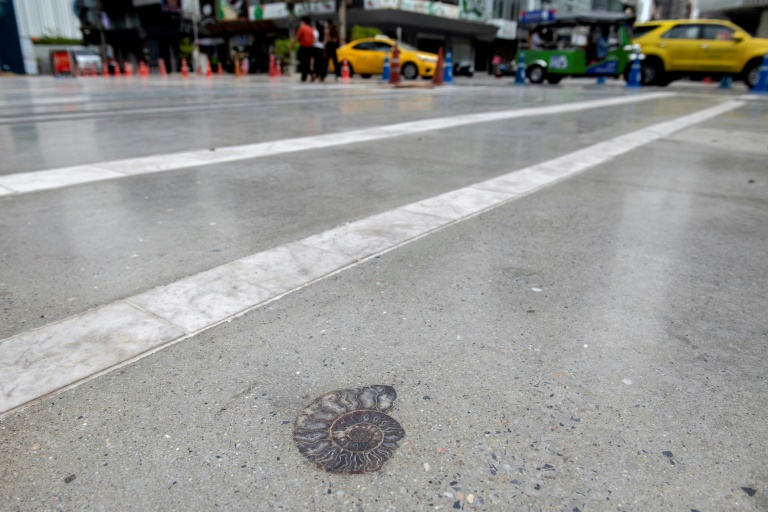
More than 70 shells embedded in a footpath outside a Bangkok shopping mall have been found to be the fossils of marine creatures that lived more than 66 million years ago, Thai experts have confirmed.

An eagle-eyed shopper first spotted the snail-shaped fossils, measuring up to 12 centimetres (five inches) across, dotted along a 400-metre stretch of pavement by the Siam Square shopping centre in a major tourist district.

Palaeontologists from the Ministry of Natural Resources and Environment investigated and found 77 ammonite fossils.

Ammonites are marine creatures believed to have died out 66 million years ago, Preecha Saithong, director of the ministry’s fossil protection division, told AFP on Tuesday.

“The ammonites are real,” he said, adding that the fossils differed from ones usually found in Thailand.

Local media reported that the footpath was repaired two years ago and the shells may have been inserted into the concrete as decoration by sub-contractors.

The fossilised ocean-dwelling molluscs, which lived during the Jurassic and Cretaceous periods, are sold as souvenirs in several popular tourist destinations including Madagascar and Morocco.

BP plunges deep into red on pullout from Russia

British energy giant BP said Tuesday that its decision to pull out of Russia as a result of the war in Ukraine pushed it deep into the red in the first three months of this year.

BP said in a statement that it booked its biggest-ever quarterly net loss of $20.4 billion (19.4 billion euros) in the period from January to March, compared with profit of $4.7 billion a year earlier. 

Revenue jumped 40 percent to $51 billion in the three-month period as the war fuels a rise in oil and gas prices.

There have been repeated calls in Britain for a windfall tax on energy majors as consumers endure a cost-of-living crisis caused by the highest rate of inflation in decades, also as economies reopen from pandemic lockdowns.

Nevertheless, Prime Minister Boris Johnson, this week facing a mid-term test in local elections, ruled out such taxes on companies like BP and Shell, arguing it would derail efforts to meet climate goals. 

“If you put a windfall tax on the energy companies, what that means is that you discourage them from making the investments that we want to see” in cleaner energy, Johnson told the television show, Good Morning Britain.

BP booked a pre-tax charge of $25.5 billion after pulling its 19.75-percent stake in energy group Rosneft, ending more than three decades of investment in Russia.

“Our decision in February to exit our shareholding in Rosneft resulted in the material non-cash charges and headline loss,” chief executive Bernard Looney said. 

That wiped out the positive effect of surging energy prices, driven by concerns of tight supplies following the invasion by major oil and gas producer Russia. 

However, at an underlying level, rocketing energy prices enabled BP to record its best three-month performance since 2008 with profit of $6.2 billion. 

Looney said that “in a quarter dominated by the tragic events in Ukraine and volatility in energy markets, BP’s focus has been on supplying the reliable energy our customers need”. 

The European Commission was Tuesday set to propose to member states a new package of sanctions against Russia over President Vladimir Putin’s decision to invade Ukraine, including an embargo on Russian oil.

And the EU has warned member states to prepare for a possible complete breakdown in gas supplies from Russia, insisting it would not cede to Moscow’s demand that imports be paid for in rubles.

– UK investment –

BP also unveiled plans to invest up to £18 billion ($22.5 billion, 21.5 billion euros) in green and fossil fuel operations in the UK by the end of the decade.

While Looney said BP was “fully committed to the UK’s energy transition” to net zero, the company “intends to continue investing in North Sea oil and gas” amid Britain’s near-term energy security needs in the wake of the Ukraine war.

“We’re backing Britain,” Looney said.

“It’s been our home for over 110 years, and we’ve been investing in North Sea oil and gas for more than 50 years.” 

In the North Sea, BP plans to develop “lower emission oil and gas projects to support near term security of supply”.

The company has also proposed new offshore wind projects and plans for hydrogen production facilities.

– Share price boost –

Despite the massive first-quarter loss, BP’s share price jumped 2.9 percent to 403 pence in morning trade on London’s FTSE 100 index, which was down overall.

Investors welcomed BP’s announcement that it will repurchase $2.5 billion in shares.

“The exit from Russia, while bringing with it considerable costs, arguably helps with the transformation of the group and strong cash flow is helping to bring down debt,” said AJ Bell investment director Russ Mould.

“BP has ambitious plans to become cleaner and greener but today’s update is a reminder that fossil fuels, with all the environmental and geopolitical mess they entail, remain central to the company for now.”

Asian markets drop as traders brace for Fed hike

Asia stocks fell Tuesday as markets braced for a sharp US interest rate hike and similar moves by other central banks as they struggle to control inflation, with traders increasingly worried about another possible recession.

Surging prices, moves to tighten monetary policy, China’s Covid lockdowns, the Ukraine war and a stronger dollar have come together in recent weeks to cause a massive headache for investors, sending them running to the hills.

All eyes are on the conclusion Wednesday of the US Federal Reserve’s two-day policy meeting, where it is expected to lift borrowing costs 0.5 percentage points for the first time since 2000.

However, while officials see a hawkish move as necessary to control 40-year high inflation while still allowing for economic growth, there is a growing unease that they could knock the fragile pandemic recovery off course and even cause a recession.

Meanwhile, the policy board is also expected to discuss offloading the trillions of dollars worth of bonds bought to help keep prices subdued in the past, a move known as quantitative easing.

“With a 50 basis point hike… all but certain, the (post meeting) press conference will provide important colour around the prospects of a soft landing, the neutral fed funds rate and balance sheet normalisation,” said SPI Asset Management’s Stephen Innes.

“One question on everyone’s mind: Are 75 basis point increments on the table?”

Forecasts for a swift run-up in rates this year have hammered tech firms who are reliant on debt to fund growth, though dip-buying helped them record a much-needed gain Monday in New York.

– Australia rate hike –

Asian traders were unable to track the positive lead with liquidity thinned by public holidays around the region.

Sydney fell after the Reserve Bank of Australia lifted interest rates 25 basis points, the first hike since 2010 and more than the 15 points expected. Officials also indicated further increases were in the pipeline.

The move sent the Australian dollar briefly rallying more than one percent against the greenback before settling back slightly.

Shares in Seoul, Taipei, Bangkok and Wellington were also down, while London was on the back foot in early trade. Frankfurt and Paris edged up.

Tokyo, Shanghai, Mumbai, Singapore and Jakarta were closed for holidays.

Hong Kong returned from a long weekend break to shed more than two percent in early exchanges before reversing the losses to extend a more than four percent surge Friday.

Alibaba was a key support in the bounce as it recovered from an initial drop of more than nine percent in reaction to a report by Chinese state broadcaster CCTV that officials in Hangzhou, where the firm is based, had imposed curbs on an individual surnamed Ma — raising worries about founder Jack Ma.

The losses were soon erased, however, after police indicated the accused person’s name was spelled with three Chinese characters. Jack Ma’s Chinese name is Ma Yun.

Investors were also reeling from a sharp slowdown in Chinese activity caused by lockdowns in key parts of the country including financial hub Shanghai, and strict containment in Beijing.

The measures, and Chinese leaders’ refusal to shift from their zero-Covid policy, have hamstrung the world’s number two economy and figures in other countries including the United States suggest they are now having a global impact.

The strife in China weighed on oil prices owing to fears about the impact on demand from the biggest crude importer.

Oil prices edged up as European Union chiefs discuss a possible embargo on shipments from Russia linked to its invasion of Ukraine.

A sanctions plan is being put together by the European Commission that could be put to member states Wednesday, sources said, adding that the ban would be introduced over six to eight months to give countries time to diversify their supply.

– Key figures at around 0810 GMT –

Hong Kong – Hang Seng Index: UP 0.1 percent at 21,101.89 (close)

London – FTSE 100: DOWN 0.1 percent at 7,538.33

Tokyo – Nikkei 225: Closed for a holiday

Shanghai – Composite: Closed for a holiday

Euro/dollar: UP at $1.0522 from $1.0506 on Monday

Pound/dollar: UP at $1.2552 from $1.2489

Euro/pound: DOWN at 83.84 pence from 84.09 pence

Dollar/yen: DOWN at 130.15 yen from 130.16 yen

West Texas Intermediate: DOWN 0.5 percent at $104.66 per barrel

Brent North Sea crude: DOWN 0.6 percent at $106.92 per barrel

New York – Dow: UP 0.3 percent at 33,061.50 (close)

Asian markets drop as traders brace for Fed hike

Asia stocks fell Tuesday as markets braced for a sharp US interest rate hike and similar moves by other central banks as they struggle to control inflation, with traders increasingly worried about another possible recession.

Surging prices, moves to tighten monetary policy, China’s Covid lockdowns, the Ukraine war and a stronger dollar have come together in recent weeks to cause a massive headache for investors, sending them running to the hills.

All eyes are on the conclusion Wednesday of the US Federal Reserve’s two-day policy meeting, where it is expected to lift borrowing costs 0.5 percentage points for the first time since 2000.

However, while officials see a hawkish move as necessary to control 40-year high inflation while still allowing for economic growth, there is a growing unease that they could knock the fragile pandemic recovery off course and even cause a recession.

Meanwhile, the policy board is also expected to discuss offloading the trillions of dollars worth of bonds bought to help keep prices subdued in the past, a move known as quantitative easing.

“With a 50 basis point hike… all but certain, the (post meeting) press conference will provide important colour around the prospects of a soft landing, the neutral fed funds rate and balance sheet normalisation,” said SPI Asset Management’s Stephen Innes.

“One question on everyone’s mind: Are 75 basis point increments on the table?”

Forecasts for a swift run-up in rates this year have hammered tech firms who are reliant on debt to fund growth, though dip-buying helped them record a much-needed gain Monday in New York.

– Australia rate hike –

Asian traders were unable to track the positive lead with liquidity thinned by public holidays around the region.

Hong Kong returned from a long weekend break to shed more than two percent in early exchanges before paring these losses following a more than four percent surge Friday.

Alibaba was a key support in the bounce as it recovered from an initial drop of more than nine percent in reaction to a report by state broadcaster CCTV that officials in Hangzhou, where the firm is based, had imposed curbs on an individual surnamed Ma — raising worries about founder Jack Ma.

The losses were soon erased, however, after police indicated the accused person’s name was spelled with three Chinese characters. Jack Ma’s Chinese name is Ma Yun.

Sydney fell after the Reserve Bank of Australia lifted interest rates 25 basis points, the first hike since 2010 and more than the 15 points expected. Officials also indicated further increases were in the pipeline.

The move sent the Australian dollar briefly rallying more than one percent against the greenback before settling back slightly.

Shares in Seoul, Taipei, Bangkok and Wellington were also down, while London opened on the back foot. Frankfurt and Paris edged up.

Tokyo, Shanghai, Mumbai, Singapore and Jakarta were closed for holidays.

Investors were also reeling from a sharp slowdown in Chinese activity caused by lockdowns in key parts of the country including financial hub Shanghai, and strict containment in Beijing.

The measures, and Chinese leaders’ refusal to shift from their zero-Covid policy, have hamstrung the world’s number two economy and figures in other countries including the United States suggest they are now having a global impact.

The strife in China weighed on oil prices owing to fears about the impact on demand from the biggest crude importer.

Oil prices edged up as European Union chiefs discuss a possible embargo on shipments from Russia linked to its invasion of Ukraine.

A sanctions plan is being put together by the European Commission that could be put to member states Wednesday, sources said, adding that the ban would be introduced over six to eight months to give countries time to diversify their supply.

– Key figures at around 0720 GMT –

Hong Kong – Hang Seng Index: DOWN 0.1 percent at 21,066.10

London – FTSE 100: DOWN 0.8 percent at 7,481.02

Tokyo – Nikkei 225: Closed for a holiday

Shanghai – Composite: Closed for a holiday

Euro/dollar: DOWN at $1.0502 from $1.0506 on Monday

Pound/dollar: UP at $1.2518 from $1.2489

Euro/pound: DOWN at 83.84 pence from 84.09 pence

Dollar/yen: DOWN at 130.15 yen from 130.16 yen

West Texas Intermediate: DOWN 0.5 percent at $104.69 per barrel

Brent North Sea crude: DOWN 0.5 percent at $107.08 per barrel

New York – Dow: UP 0.3 percent at 33,061.50 (close)

Australia hikes interest rates for first time since 2010

Australia’s central bank raised interest rates for the first time in more than a decade on Tuesday, a pre-election hike designed to tame soaring consumer prices.

The Reserve Bank of Australia raised the main lending rate by 25 basis points to 0.35 percent, the first increase since November 2010. 

Ending record-low rates, the bank said inflation had “picked up significantly and by more than expected” while signalling that “further increases in interest rates” would come.

The move plunged the bank into the centre of a fierce political debate about the health of Australia’s economy, just weeks before a May 21 election. 

Prime Minister Scott Morrison, who is trailing in the polls, said he sympathised with mortgage borrowers who would now face rising costs.

But he insisted Australia is faring better than its peers and that rising inflation is a result of worldwide trends.

Like consumers around the world, Australians have been hit by soaring prices for food and fuel. Australia’s annual inflation rate is currently at 5.1 percent. 

But house prices have been rising for years even as wages have stagnated. Sydney and Melbourne are among the most expensive cities in the world to live. 

Morrison pointed to the impact of supply chain constraints caused by the pandemic and a war in Ukraine that has caused “the single largest energy shock we’ve seen around the world since the 1970s.”

The opposition Labor party painted the rate rise as evidence of a weakening economy and the conservative government’s economic maladministration.

“If only you could pay your mortgage with Scott Morrison’s excuses,” said opposition economic spokesman Jim Chalmers.

The rate rise is expected to be the first of several, which could have serious implications for Australia’s once-perennially growing economy.

Higher interest rates will spell higher borrowing costs for millions of already heavily indebted Australians, in a country where real estate market speculation is something like a national pastime.

Interest rates of two percent would cost the average homeowner about US$362 a month, according to financial services website RateCity.com.au.

“That’s going to be a lot for many borrowers to swallow, particularly anyone already struggling to make the monthly budget add up,” said RateCity’s Sally Tindall.

Australia’s vast resource wealth has for decades provided insulation from global financial headwinds and underpinned high standards of living.

The country is among the world’s largest producers and exporters of iron ore, gas and coal.

But there are growing concerns that the “lucky country’s” run of good fortune may be coming to an end. 

In early 2020 the economy fell into recession for the first time in almost three decades, largely because of devastating bushfires and the start of the Covid-19 pandemic. 

Climate-fuelled floods, bushfires and droughts are proving increasingly costly.

This year’s east coast floods cost an estimated Aus$3.35 billion (US$2.4 billion) in insured losses, making it the costliest flood in Australia’s history, according to the Insurance Council of Australia.

BP plunges into $20.4-bn loss on Russia exit

British energy giant BP on Tuesday plunged into a huge net loss in the first quarter after it decided to exit Russia over the country’s invasion of neighbour Ukraine.

The loss after tax stood at $20.4 billion (19.4 billion euros) following BP’s decision in February to pull its 19.75-percent stake in energy group Rosneft, ending more than three decades of investment in Russia.

BP had posted a net profit of $4.7 billion in the first quarter of 2021.

“Our decision… to exit our shareholding in Rosneft resulted in the material non-cash charges and headline loss,” BP chief executive Bernard Looney said in a statement.

The group booked a pre-tax charge of $25.5 billion owing to its break with Rosneft.

That wiped out the benefit of surging energy prices, which have been fuelled by fears of tight supplies following the invasion by major oil and gas producer Russia.

BP revenue jumped 40 percent to $51 billion in the first quarter from a year earlier.

“In a quarter dominated by the tragic events in Ukraine and volatility in energy markets, BP’s focus has been on supplying the reliable energy our customers need,” Looney said. 

The European Commission will on Tuesday propose to member states a new package of sanctions to punish President Vladimir Putin’s Kremlin for its invasion of Ukraine, including an embargo on Russian oil, officials said.

It comes after the EU on Monday warned member states to prepare for a possible complete breakdown in gas supplies from Russia, insisting it would not cede to Moscow’s demand that imports be paid for in rubles.

Close Bitnami banner
Bitnami