AFP

Stock markets, oil slip on weak Chinese data, looming US rate hike

Stock markets slipped and oil prices also fell Monday as traders tracked weak Chinese economic data and a looming US interest rate hike that could tame inflation but also thwart growth.

Equities kicked off the month of May on the wrong foot after Wall Street finished a tough April by closing sharply down on Friday following disappointing results from tech giant Amazon.

“The markets remain skittish regarding an expected aggressive Fed monetary policy tightening cycle as the Central Bank is set to hike rates this week,” said analysts at Charles Schwab investment firm.

“Moreover, global sentiment continues to be hampered by the ongoing war in Ukraine, the recent spike in interest rates, the rallying US dollar, and slowing economic activity in China,” they said.

Wall Street see-sawed in early deals. The tech-heavy Nasdaq, having lost more than 13 percent in April for its worst monthly showing in 14 years, was just in the green — but the Dow Jones index was off around 0.4 percent some two hours into trading.

Eurozone markets ended the session down, Paris losing 1.6 percent and Frankfurt tumbling 1.2 percent.

London was closed for a bank holiday.

Tokyo, Seoul, Mumbai, Manila, Sydney and Wellington all finished lower. Hong Kong and mainland Chinese markets were closed along with several other Asian markets.

Data at the weekend showed Chinese manufacturing activity shrank last month at its fastest pace since the start of the pandemic as the government applies Covid-19 lockdowns in the biggest cities of the world’s second biggest economy.

While economic hub Shanghai remains locked down, Beijing has tightened virus controls in the capital, requiring clear Covid tests to visit public spaces.

This followed gloomy economic data in Europe on Friday showing that Russia’s invasion of Ukraine was weighing on growth.

The struggles in China, the world’s biggest crude importer, led to a drop in prices of the commodity on demand concerns, offsetting worries about tighter supply as the EU eyes a ban on Russian oil over its invasion of Ukraine.

Oil prices meanwhile slipped back, though limiting initial losses of more than three percent, with Brent North Sea crude, the benchmark international contract, falling to $103.71 before bouncing back above $106.

The European Commission is preparing a sanctions text that could be put to the 27 member states as early as Wednesday, sources said.

The ban would be introduced over six to eight months to give countries time to diversify their supply, they added.

– Rate hike looms large –

Investors are also looking ahead at the US Federal Reserve’s two-day policy meeting, which starts Tuesday. It is expected to see the central bank hike borrowing costs by half a point — the most since 2000 — to tame soaring consumer prices.

Some analysts are predicting the Fed could even announce a three-quarter-point increase at some point as it battles more than 40-year-high inflation.

With some commentators warning rates could go as high as three percent, there are also worries the Fed could be too heavy handed and tip the US economy into recession.

“The Fed must make up for lost time and act quick and strongly as it faces inflation which keeps surprising as it rises,” said Franck Dixmier, head of fixed income at Allianz Global Investors.

“The challenge in executing the normalisation of its monetary policy is to ensure a soft landing of the US economy… while maintaining a dynamic labour market and above all avoiding triggering a recession,” he said.

– Key figures at around 1600 GMT –

New York – Dow: DOWN 0.4 percent at 32,845.22 points

Frankfurt – DAX: DOWN 1.2 percent at 13,939.07 (close)

Paris – CAC 40: DOWN 1.6 percent at 6,425.61 (close)

EURO STOXX 50: DOWN 2.2 percent at 3,722.97

London – FTSE 100: Closed for a holiday

Tokyo – Nikkei 225: DOWN 0.1 percent at 26,818.53 (close)

Hong Kong – Hang Seng Index: Closed for a holiday

Shanghai – Composite: Closed for a holiday

Euro/dollar: DOWN at $1.0512 from $1.0550 on Friday

Pound/dollar: DOWN at $1.2514 from $1.2578

Euro/pound: UP at 84.00 pence from 83.86 pence

Dollar/yen: UP at 130.03 yen from 129.89 yen

West Texas Intermediate: DOWN 0.3 percent at $104.31 per barrel

Brent North Sea crude: DOWN 0.4 percent at $106.70 per barrel

EU shores up defence against Russia energy threats

European Union ministers met Monday to respond to Russia cutting gas supplies to Poland and Bulgaria — and discuss plans for a possible oil embargo to punish Moscow for invading Ukraine.

The energy ministers from the 27 member states were coordinating efforts to counter what Brussels has branded the Kremlin’s bid to “blackmail” the West with threatened energy shortages.

The EU is also working on a phased ban on Russian oil imports, hoping to cut off funding for its war effort and assert energy independence from Moscow.

“We will support full sanctions on all Russian fossil fuels. We already have coal — now it’s time for oil,” said Anna Moskwa, Poland’s environment minister.

But Poland is among the more hawkish member states. Others, such as Germany, are wary of the economic hurt a wider ban on Russian energy would bring.

So no decision on an oil embargo was expected Monday. Diplomats and European Commission experts are still working towards a proposal for an eventual sixth sanctions package.

Instead, the ministers discussed technical ways to wean their economies off Russian energy supplies. 

They also looked at how to support countries that have provoked the Kremlin’s wrath, such as Bulgaria and Poland, whose gas deliveries were halted last week.

France’s ecological transition minister Barbara Pompili, whose country holds the EU presidency, said she had called the emergency meeting to “ensure our solidarity with our colleagues from Bulgaria and Poland.”

Russia’s President Vladimir Putin has demanded “unfriendly countries” — which includes all EU states — pay for their gas in rubles, which Warsaw and Sofia refused.

Doing so would involve western clients depositing in euros or dollars in a bank run by Russian state energy giant Gazprom, to be converted into rubles and moved to a second Gazprombank account. 

The European Commission says that could breach EU sanctions on Russia. But Germany and Austria have been cautious about rejecting the Kremlin’s payment terms.

“We appeal to countries not to support Putin’s decree, not to support the initiative to pay in rubles,” Moskwa said.  

– Face saver? –

Germany’s minister for economic affairs and climate Robert Habeck said Berlin would follow EU policy even if it imposed costs on its economy.   

But he also suggested the dual Gazprombank accounts plan could be “a face-saving solution for Putin”. 

France’s Pompili said: “We will continue to pay in euros the contracts which were stipulated in euros, or in dollars those which were stipulated in dollars.”

The European commissioner for energy, Kadri Simson, said Russia’s decision to cut off the two EU members showed that Moscow was not a “reliable supplier”.

She denied Russian reports that some EU countries have agreed to make ruble payments.

On Sunday, sources told AFP the EU will propose, perhaps as early as this week, a phased-out ban on imports of Russian oil — but not gas — in a fresh round of sanctions against Russia.

Several diplomats said the ban on oil was made possible after a U-turn by reluctant Germany.

The commission will propose a tapered ban over six to eight months, to give countries time to diversify their supply, the sources said.

The ban requires unanimous backing and could yet be derailed, with Hungary expected to mount strong opposition as it is dependent on Russian oil and close to the Kremlin.

Other countries are worried that a ban on oil would increase prices at the pump when consumer prices are already sharply on the rise because of the war.

“We must be very attentive to market reactions,” one official told AFP on condition of anonymity. “There are solutions and we will get there in the end, but we must act with great care.”

The sixth package of anti-Russian measures will also target the country’s largest bank, Sberbank, which will be excluded from the international SWIFT messaging system, the diplomats said. 

Spirit Airlines favors Frontier deal, rejects JetBlue bid

Spirt Airlines reiterated Monday its support for a merger with Frontier Airlines, saying it concluded a competing offer from JetBlue Airways involved excessive regulatory risk.

Spirit said the Department of Justice’s challenge of JetBlue’s alliance with American Airlines raised the odds that a takeover of Spirit by JetBlue might get blocked.

“After a thorough review and extensive dialogue with JetBlue, the board determined that the JetBlue proposal involves an unacceptable level of closing risk that would be assumed by Sprit shareholders,” said Mac Gardner, chairman of Spirit.

“We believe that our pending merger with Frontier will start an exciting new chapter for Spirit and will deliver many benefits to Spirit shareholders, team members and guests.”

In early February, budget carriers Spirit and Frontier announced they were combining to create a competitive low-cost carrier that aims to test the dominance of larger rivals.

But in April, JetBlue challenged the deal, bidding to buy Spirit for $3.6 billion and offering a similar argument about challenging larger US carriers.

JetBlue announced Monday an “enhanced” offer for Spirit that included a $200 million reverse break-up fee in case the JetBlue-Spirit deal was blocked on antitrust grounds. 

But Spirit, which had pushed for assurances JetBlue would drop the American Airlines venture if needed, said in a letter the carrier’s concessions were insufficient and “imposes on our stockholders a degree of risk no responsible board would accept.”

Shares of Spirit fell 8.9 percent to $21.52 in pre-market trading, while JetBlue gained 0.6 percent to $11.08. Frontier Group fell 1.9 percent to $10.41.

EU targets Apple Pay in latest Big Tech antitrust case

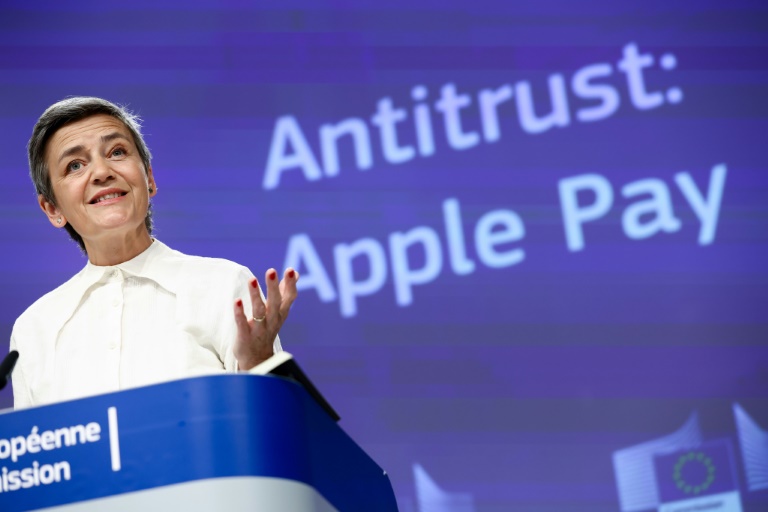
The EU accused Apple on Monday of blocking rivals from its popular “tap-as-you-go” iPhone payment system, opening a fresh battlefront between the US tech giant and Brussels.

“The preliminary conclusion that we reached today relates to mobile payments in shops, by excluding others from the game,” said Margrethe Vestager, the EU’s antitrust chief.

“Apple has unfairly shielded its Apple Pay wallets from competition. If proven this behaviour would amount to abuse of a dominant position, which is illegal under our rules,” Vestager told reporters.

The European Commission, the bloc’s competition watchdog, specifically charged the iPhone maker with preventing competitors trying to enter the contact-less market “from accessing the necessary hardware and software … to the benefit of its own solution, Apple Pay”.

The accusation is the latest salvo against US tech giants by EU regulators, who have also taken aim at Apple’s music streaming and e-book businesses.

The company is also a main target of the Digital Markets Act, a landmark EU law that will prohibit Apple and other US tech giants from privileging their own services in its products and platforms.

The EU’s outline of the case came after the commission launched an investigation in 2020 that was fuelled by complaints from European banks that resist paying a fee to Apple in order to reach their customers via apps.

The battle comes as tech giants eye personal finance as a new moneymaker, with Google, Amazon and Facebook owner Meta also seeking ways to replace credit cards or the need of carrying a wallet.

Launched in 2014, Apple Pay allows iPhone or Apple Watch users to make payments at retailers by touching their devices to the same terminals currently used for credit and debit cards.

– ‘Many options’ –

The technology at the heart of concerns in the Apple Pay case is “near-field communication”, or NFC, which permits devices to communicate within a very short range of each other, usually less than 10 centimetres (four inches).

On iPhones, the use of NFC is blocked for payments except by Apple Pay and any company wanting to use the technology must pass through Apple for a fee.

Vestager said that by restricting the access to the NFC to themselves, “this market is really not developed because it’s not possible for other app developers to get access to the NFC.”

Apple said that its first priority was security and that the Apple Pay system offered a level playing field between all actors using its products.

“Apple Pay is only one of many options available to European consumers for making payments, and has ensured equal access to NFC while setting industry-leading standards for privacy and security,” the company said.

“We will continue to engage with the commission to ensure European consumers have access to the payment option of their choice in a safe and secure environment,” it added.

There is no deadline for the EU’s continued investigation. If found guilty, Apple would have to remedy its practices or face fines that could reach as high as 10 percent of annual sales.

Finnish group scraps nuclear plant deal with Russia's Rosatom

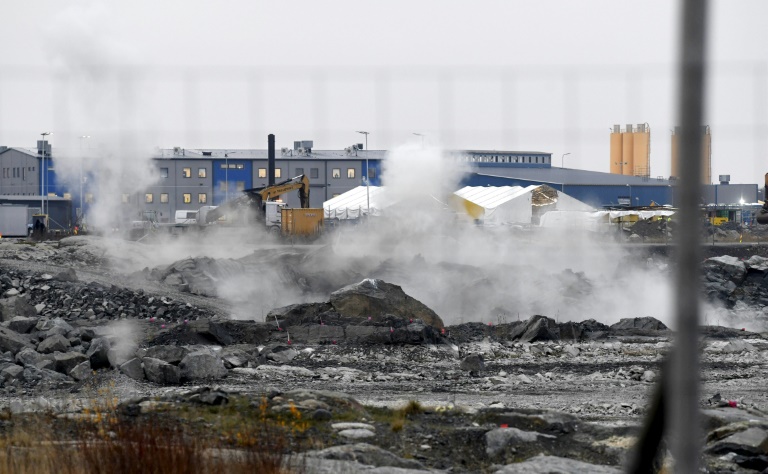
Finnish-led consortium Fennovoima said on Monday it has terminated a contract with Russian group Rosatom to build Finland’s third nuclear power plant, citing risks linked to the Ukraine war.

“The contract has been cancelled due to delays and the inability to deliver, and we have seen that the war has increased these risks,” Fennovoima chairman of the board Esa Harmala told reporters at a press conference.

Rosatom said it was surprised by the announcement.

“The reasons for such a decision are completely incomprehensible,” the group said in a statement, adding that the project had been “progressing” and Fennovoima’s management had not discussed the termination of the contract with shareholders.

Rosatom said it might take the matter to court.

“We reserve the right to defend our interests in accordance with the current contracts and current law”, the firm stated.

The proposed 1,200-megawatt Russian-designed reactor was to be built in Pyhajoki, about 100 kilometres (60 miles) from the port of Oulu in northern Finland.

The Hanhikivi 1 project, in which Rosatom owns a 34-percent stake with the remainder held by a Finnish consortium, had been delayed several times and the construction permit had not yet been granted.

Construction was to have begun in 2023 and electricity production in 2029.

Fennovoima, which had already poured 600-700 million euros into the project, said issues with the delivery had accumulated “years before” and the contract was not terminated solely because of the war.

It was not immediately known whether the Finnish consortium would completely scrap its plans to build a new reactor, or seek out a new partner to replace Rosatom.

“It is too early to speculate on the future of the project”, Harmala told reporters.

“This decision does not have a direct impact on the shareholder agreement between the owners of Fennovoima.”

However, Fennovoima chief executive Joachim Specht added it was “too early” to comment on whether Rosatom would stay on as an owner in Fennovoima.

– ‘Significant complexities’ –

The project, which employed 450 people, had been one of the major industrial projects involving a Russian company in the European Union, though there had been many uncertainties about its future.

Two days before Russia’s invasion of Ukraine, the Finnish government had said it was re-evaluating the security risks for the 7.5-billion-euro deal.

Russian nuclear power groups are currently not subjected to European sanctions over the Ukraine war.

Nevertheless, Fennovoima had said in early April it expected the existing sanctions to have an effect on the project.

Harmala stressed on Monday that “we were not pressured in any way”.

Fennovoima said the decision to cancel the contract was “not made lightly”.

“In a such a large project there are significant complexities and decisions are made only after thorough considerations”, it said in a statement.

Finland currently has five nuclear reactors at two plants, both located on the shores of the Baltic Sea, providing about 30 percent of the country’s electricity.

The fifth reactor, Olkiluoto 3 built by the French-German consortium Areva-Siemens, went online in March and will provide 15 percent of Finland’s electricity when it begins producing at full capacity in September.

Markets, oil fall on weak Chinese data

Stock markets and oil prices fell in holiday-thinned trade Monday as traders digested weak Chinese economic data and a looming US interest rate hike.

Equities kicked off the month of May on the wrong foot after Wall Street finished a tough April by closing sharply down on Friday following disappointing results from tech giant Amazon.

Paris and Frankfurt were down in midday trading while London was closed for a bank holiday.

Tokyo, Seoul, Mumbai, Manila and Wellington all fell. Hong Kong and mainland Chinese markets were closed along with several other Asian markets.

Sydney also retreated, though Qantas shares rose after the airline said it would launch the world’s longest non-stop commercial flight between Sydney and London by the end of 2025.

Data at the weekend showed Chinese manufacturing activity shrank last month at its fastest pace since the start of the pandemic as the government applies Covid-19 lockdowns in the country’s biggest cities.

The government’s refusal to shift from its zero-Covid policy and strict containment measures is fanning fears about the world’s number two economy and key driver of global growth.

“There is a bit of mixed sentiment among traders today,” Naeem Aslam, analyst at AvaTrade, told AFP.

“On one hand you have bargain hunters coming to market but then on the other hand traders are concerned about the weakness on the Chinese economic data,” he said.

– Rate hike looms large –

Investors are also looking ahead at the US Federal Reserve’s two-day policy meeting, which starts Tuesday and is expected to see the central bank hike borrowing costs by half a point — the most since 2000.

Some analysts are predicting the Fed could even announce a three-quarter-point increase at some point as it battles more than 40-year-high inflation.

With some commentators warning rates could go as high as three percent, there are also worries the Fed could be too heavy handed and tip the US economy into recession.

Fed boss Jerome Powell “could cement the view that 50 (basis points) is the new 25, but more worrying for stock pickers, there are lots of QE to unwind”, said SPI Asset Management’s Stephen Innes, referring to the quantitative easing bond-buying programme used by the Fed to keep rates low.

“So, the question is, how much of the impact of the balance sheet runoff” has been priced in.

The struggles in China, the world’s biggest crude importer, led to a drop in prices of the commodity on demand concerns, offsetting worries about tighter supply as the EU eyes a ban on Russian oil over its invasion of Ukraine.

Brent North Sea crude, the international benchmark, was down 2.7 percent at $104.30 per barrel.

The European Commission is currently preparing a sanctions text that could be put to the 27 member states as early as Wednesday, sources said, adding that the ban would be introduced over six to eight months to give countries time to diversify their supply.

– Key figures at around 1040 GMT –

Frankfurt – DAX: DOWN 0.6 percent at 14.014.37 points

Paris – CAC 40: DOWN 1.3 percent at 6.448,41 

EURO STOXX 50: DOWN 1.5 percent at 3.746,88

London – FTSE 100: Closed for a holiday

Tokyo – Nikkei 225: DOWN 0.1 percent at 26,818.53 (close)

Hong Kong – Hang Seng Index: Closed for a holiday

Shanghai – Composite: Closed for a holiday

New York – Dow: DOWN 2.8 percent at 32,977.21 (close)

Euro/dollar: DOWN at $1.0528 from $1.0550 on Friday

Pound/dollar: DOWN at $1.2570 from $1.2578

Euro/pound: DOWN at 83.77 pence from 83.86 pence

Dollar/yen: UNCHANGED at 129.89 yen

West Texas Intermediate: DOWN 3.2 percent at $101.39 per barrel

Brent North Sea crude: DOWN 2.7 percent at $104.30 per barrel

Tanker strike worsens fuel woes in crisis-hit Sri Lanka

A strike by owners of fuel tankers over the weekend renewed Sri Lanka’s long queues for diesel and petrol on Monday as pumps ran dry, compounding the island nation’s economic and energy crisis.

Sri Lanka is in the grip of a pandemic-spurred economic freefall, the worst since independence from Britain in 1948, which has led to shortages of food and other essentials. 

The lack of fuel has been an especially large sticking point for the government, as petrol prices have increased by 90 percent while diesel — commonly used for public transport — has gone up by 138 percent.

Fuel woes eased slightly last week as supplies arrived under a $500 million credit line from India.

But the salve proved temporary as fuel tanker operators have been on strike since late Saturday, demanding an increase to their prices to ferry the petrol across the country.

Energy minister Kanchana Wijesekera said Monday he needed at least three more days to restore the supplies of petrol and diesel. 

“I appeal to the motorists to bear with us for three more days,” he told reporters in Colombo, adding that the government was trying to hire other mobile container owners not affiliated with the protest.

According to Wijesekera, the union representing tanker operators was demanding a 115 percent increase in fees, outstripping an offer of 95 percent more from state-owned Ceylon Petroleum Corp (CPC).

“We are willing to increase, but not by as much as the tanker operators are demanding,” he said.

“If we give in, the CPC will go bankrupt.”

But the operators say running costs are up due to diesel prices being raised 138 percent, while insurance, spare parts and wages have spiked due to the sharp depreciation of Sri Lanka’s currency.

The rupee has dropped by more than 40 percent against the dollar since March.

Tens of thousands have protested for weeks across the country, with demonstrators also camped daily outside the residence of President Gotabaya Rajapaksa calling for his resignation over alleged corruption and mismanagement of the economy.

Sri Lanka has sought about $3 billion from the International Monetary Fund to overcome the balance-of-payments crisis and boost depleted reserves.

The government has also announced a sovereign default on its huge foreign debt.

'Operating normally': Russia shows seized Ukraine nuclear plant

Nearly two months after it was seized by Russian forces, there are few signs of the fighting for the Zaporizhzhia nuclear power plant in Ukraine that sparked global fears of a potential atomic disaster.

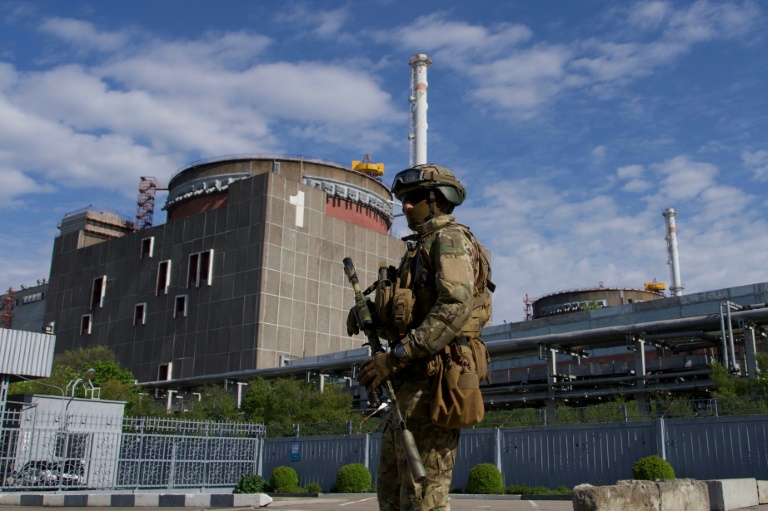
Other than a scorched administrative building, the vast complex in southern Ukraine — Europe’s largest nuclear power plant — appeared largely untouched by the clashes during a visit by AFP this weekend, part of a press tour organised by the Russian military. 

There has been deep international concern over the situation at the plant, which has six of Ukraine’s 15 reactors and can create enough energy for four million homes.

Russian forces seized the site amid fighting in early March that caused a large fire at a training facility at the plant, which sits along the Dnipro river south of the Ukrainian-held city of Zaporizhzhia. 

There was no spike in radiation, but the clashes nonetheless caused deep worries, especially in the country that was the site of the world’s worst nuclear accident at Chernobyl in 1986.

Rafael Grossi, the head of the UN’s nuclear watchdog, the International Atomic Energy Agency, said last week that it was “extremely important” for IAEA monitors to be able to access the site, which was built in the early 1980s but modernised in recent years. 

Russia insists it is taking all necessary precautions at the plant, where its troops now patrol in the shadows of its enormous and heavily reinforced red-domed reactors.

– ‘Everything is good!’ –

“The Zaporizhzhia NPP is operating normally, in compliance with all nuclear, radiation and environmental safety standards,” Valery Vasilyev, a major general with Russia’s Nuclear, Biological and Chemical Protection Troops, told journalists at the site. 

The facade of the training centre that caught fire remains blackened and its windows were blown out, but no other signs of damage at the plant were visible. 

Soldiers on patrol or positioned behind sandbags showed no sign of concern and wore no protective equipment against radiation.

“Everything here is good!” Andrey Shevchik, the new pro-Russian mayor of Energodar, the city of around 50,000 people built in the 1970s to serve local power plants, told journalists at the site.

“Residents and workers of the nuclear power plant are completely safe,” he said.

“All comfortable conditions are being created for them to work, to generate energy, and to keep the nuclear power plant safe.”

Shevchik said the plant was “ready to sell electricity to Europe”, before driving off in a gleaming SUV painted with Russian flags.

He also said residents who had fled were returning to the city, though there was no way to verify the claim.

It is unclear how exactly the plant is now operating, though Ukrainian workers continue to work on site under Russian supervision.

AFP was unable to meet any of the Ukrainian staff at the plant or to speak to residents in Energodar.

The longest non-stop flights in the world

Qantas has revealed plans for the world’s longest-duration commercial flight by the end of 2025, ferrying passengers between Sydney and London on Airbus A350s in just over 19 hours.

Only a handful of airlines fly non-stop over such vast distances, which present a host of challenges including the capability of planes, commercial viability, and even the health of crew and passengers.

Here are some of the longest-duration flights in the world today:

Singapore to New York: 18 hrs 40 min

Singapore Airlines Flight SQ24 to New York’s John F. Kennedy International airport is currently the longest commercial journey in the world, taking passengers more than 15,000 kilometres (9,300 miles) from the city-state to the eastern United States on Airbus A350-900s.

It also operates the second-longest journey — Flight SQ22, also on A350-900s, to Newark in the US state of New Jersey is scheduled at 18 hours and 25 minutes.

Qantas will use the A350-1000 variant for its planned Sydney-London flights.

Darwin to London – 17 hrs 55 min

The longest current Qantas route — QF9 — connects Darwin in northern Australia with London daily, with passengers covering almost 14,000 km on Boeing 787 Dreamliners.

The flights were originally operated between London and the western city of Perth, but were moved to Darwin because of Covid-linked travel restrictions in Australia.

Qantas has said it will resume the Perth-London route this year.

Los Angeles to Singapore – More than 17 hrs

Singapore Airlines Flight SQ35 takes passengers more than 14,000 km over the Pacific Ocean from Los Angeles on the US West Coast to the Asian city-state in 17 hours and 10 minutes.

The carrier’s San Francisco-Singapore flight is scheduled at 16 hours and 40 minutes.

New York-Hong Kong in 16-17 hrs?

Cathay Pacific said in March that it was planning to alter its New York-Hong Kong route over the Atlantic instead of the Pacific Ocean, making it a longer journey than Singapore Airlines Flight SQ24 to JFK.

The flight path will cover “just under 9,000 nautical miles” (10,357 miles) — or 16,668 kilometres — in 16 to 17 hours, the airline told AFP in a statement.

It declined to be drawn why its flight path gave a wide berth to Russia’s airspace, which it has previously flown through, according to Bloomberg.

Many airlines have cancelled routes to Russian cities or are avoiding Russian airspace over Moscow’s invasion of Ukraine.

Cathay Pacific said the decision was taken because “strong seasonal tailwinds” made the new route more favourable.

Can pee help feed the world?

“Go pee on the rhubarb!” 

Engineer Fabien Esculier has never forgotten his grandmother’s unconventional approach to gardening — in fact, it has inspired his career. 

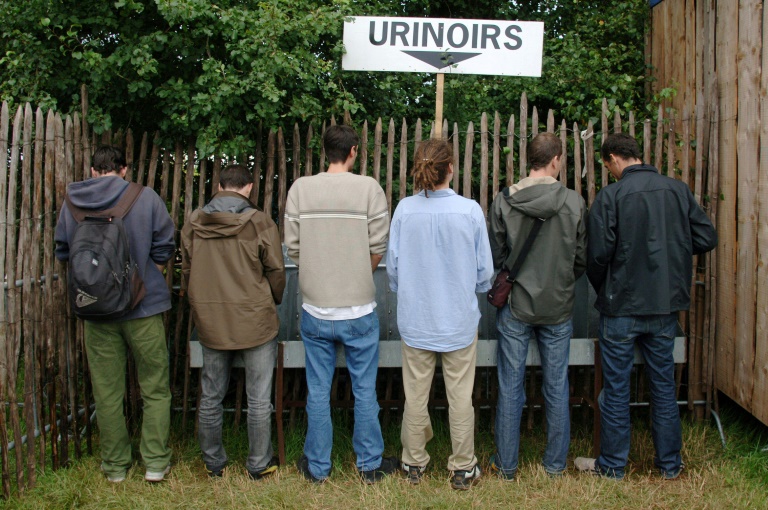
Human urine may seem like a crude way of fertilising plants in the era of industrial agriculture, but as researchers look for ways to reduce reliance on chemicals and cut environmental pollution, some are growing increasingly interested in the potential of pee.    

Plants need nutrients — nitrogen, phosphorus and potassium — and we ingest these through food, before “excreting them, mostly through urine”, said Esculier, who runs the OCAPI research programme in France looking at food systems and human waste management. 

This presents an opportunity, scientists think. 

Fertilisers using synthetic nitrogen, in use for around a century, have helped drive up yields and boost agricultural production to feed a growing human population.

But when they are used in large quantities, they make their way into river systems and other waterways, causing choking blooms of algae that can kill fish and other aquatic life. 

Meanwhile, emissions from this agricultural ammonia can combine with vehicle fumes to create dangerous air pollution, according to the United Nations. 

Chemical fertilisers also create emissions of the potent greenhouse gas nitrous oxide, contributing to climate change. 

But the pollution does not just come directly from the fields. 

“Modern-day sanitation practices represent one of the primary sources of nutrient pollution,” said Julia Cavicchi, of the United States Rich Earth Institute, adding that urine is responsible for around 80 percent of the nitrogen found in wastewater and more than half of the phosphorus.  

To replace chemical fertilisers, you would need many times the weight in treated urine, she said.

But she added: “Since the production of synthetic nitrogen is a significant source of greenhouse gases, and phosphorus is a limited and non-renewable resource, urine diverting systems offer a long-term resilient model for human waste management and agricultural production.” 

One 2020 study by UN researchers found that global wastewater has the theoretical potential to offset 13 percent of the world’s demand for nitrogen, phosphorus and potassium in agriculture.

But pee diversion is easier said than done. 

– ‘Very radical’ – 

In the past, urban excrement was transported to agricultural fields to be used as fertiliser along with animal manure, before chemical alternatives began to displace them.

But now if you want to collect urine at source, you need to rethink toilets and the sewage system itself. 

A pilot project to do just that began in Sweden in the early 1990s in a selection of eco-villages. 

Now there are projects in Switzerland, Germany, the US, South Africa, Ethiopia, India, Mexico and France. 

“It takes a long time to introduce ecological innovations and especially an innovation such as urine separation which is very radical,” said Tove Larsen, a researcher at Switzerland’s Eawag aquatic research institute. 

She said the early urine-diverting toilets were considered unsightly and impractical, or raised concerns about unpleasant odours. 

But she hopes a new model — developed by the Swiss company Laufen and Eawag — should solve these difficulties, with a design that funnels urine into a separate container. 

Once the pee is collected it needs to be processed. 

Urine is not normally a major carrier of disease, so the World Health Organization recommends leaving it for a period of time, although it is also possible to pasteurise it. 

Then there are various techniques for concentrating or even dehydrating the liquid, reducing its volume and the cost of transporting it to the fields. 

– ‘Surprise’ –

Another challenge is overcoming public squeamishness. 

“This subject touches on the intimate,” said Ghislain Mercier, of the publicly-owned planning authority Paris et Metropole Amenagement. 

It is developing an eco-district in the French capital with shops and 600 housing units, which will use urine collection to fertilise green spaces in the city. 

He sees significant potential in large buildings like offices, as well as houses not connected to mains drainage.  

Even restaurants. Also in Paris is the 211 restaurant, equipped with waterless toilets that collect urine. 

“We have had quite positive feedback,” said owner Fabien Gandossi.

“People are a little surprised, but they see little difference compared to a traditional system.”

But are people ready to go to the next level and eat urine-fertilised foods? 

One study on the subject highlighted found differences from country to country. The acceptance rate is very high in China, France and Uganda for example, but low in Portugal and Jordan. 

– Water works – 

Prices of synthetic fertilisers are currently soaring because of shortages caused by Russia’s invasion of Ukraine, which has also spurred countries to consider shoring up their food security.

That could be an opportunity help “make the subject more visible”, said Mercier. 

Marine Legrand, an anthropologist working with Esculier at the OCAPI network, said that there are still “obstacles to overcome”.

But she believes that water shortages and increased awareness of the toll of pollution will help change minds.

“We are beginning to understand how precious water is,” she told AFP.  

“So it becomes unacceptable to defecate in it.” 

Close Bitnami banner
Bitnami