AFP

Qantas to launch longest non-stop passenger flight

Qantas announced on Monday it will launch the world’s longest non-stop commercial flight, with passengers set to spend 19 hours in the air travelling from Sydney to London by the end of 2025.

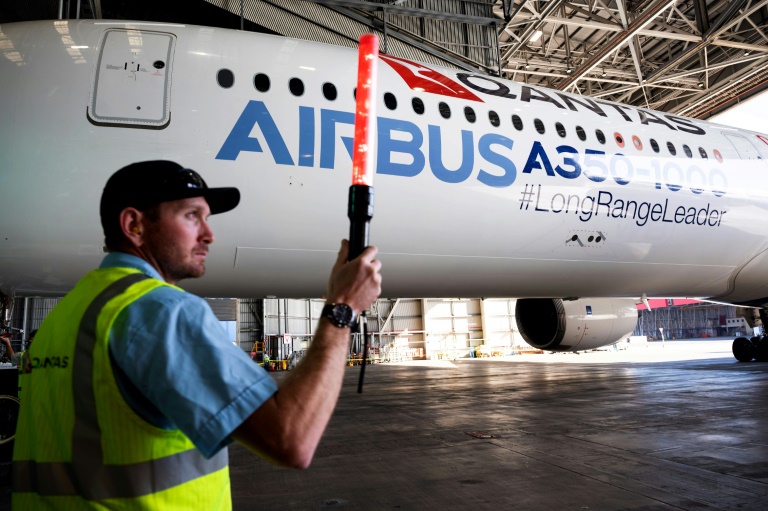
After five years of planning, the airline said it was ordering 12 Airbus A350-1000 aircraft to operate the “Project Sunrise” flights to cities including London and New York.

Non-stop flights will start from Sydney by the end of 2025, it said, with long-haul trips later planned to include Melbourne.

“New types of aircraft make new things possible,” said Qantas chairman Alan Joyce, according to a statement.

“The A350 and Project Sunrise will make any city just one flight away from Australia,” he said.

“It’s the final frontier and the final fix for the tyranny of distance.”

Qantas operated research flights for the long-haul route in 2019, including a trial London-Sydney trek of 17,800 kilometres (11,030 miles), which took 19 hours and 19 minutes.

A trial New York-Sydney flight in the same year covered 16,200 kilometres (10,200 miles) and took a little over 19 hours.

Singapore Airlines currently operates the world’s longest non-stop commercial flight from Singapore to New York, covering 16,700 kilometres (10,400 miles) in a little under 19 hours.

Qantas already operates a 14,498-kilometre Perth-London trip that takes 17 hours.

– ‘Maximum comfort’ –

“As you’d expect, the cabin is being specially designed for maximum comfort for long-haul flying,” Joyce said.

Qantas said the new A350 aircraft would be configured for 238 passengers with first-class suites offering a separate bed, recliner chair and wardrobe.

It promised spacier economy sections and a “wellbeing zone” designed for “movement, stretching and hydration”.

Airbus listed the price of the A350-1000 at US$366.5 million (348 million euros) on its 2018 catalogue, the last one it published.

Qantas said it was also ordering 40 A321 XLR and A220 aircraft from Airbus.

In addition, it bought options for another 94 of these planes until the end of 2034.

The A220 models were listed at between US$81 million and US$91.5 million in 2018. The A321 was unveiled after Airbus stopped publishing catalogue prices.

Qantas said the total cost of the deal was a matter of commercial confidence, though it indicated it had obtained a significant discount on the standard price of the aircraft.

“The A320s and A220s will become the backbone of our domestic fleet for the next 20 years, helping to keep this country moving,” Joyce said.

The newer aircraft would reduce emissions by at least 15 percent if running on fossil fuels, and more if using sustainable aviation fuel, he said.

“We have come through the other side of the pandemic a structurally different company,” the airline boss said.

“Our domestic market share is higher and the demand for direct international flights is even stronger than it was before Covid.”

The A350-1000 planes will be powered by Rolls-Royce Trent XWB-97 turbofan engines, designed to be 25 percent more fuel efficient than the previous generation of aircraft, Qantas said.
'Lungs of the Mediterranean' at risk

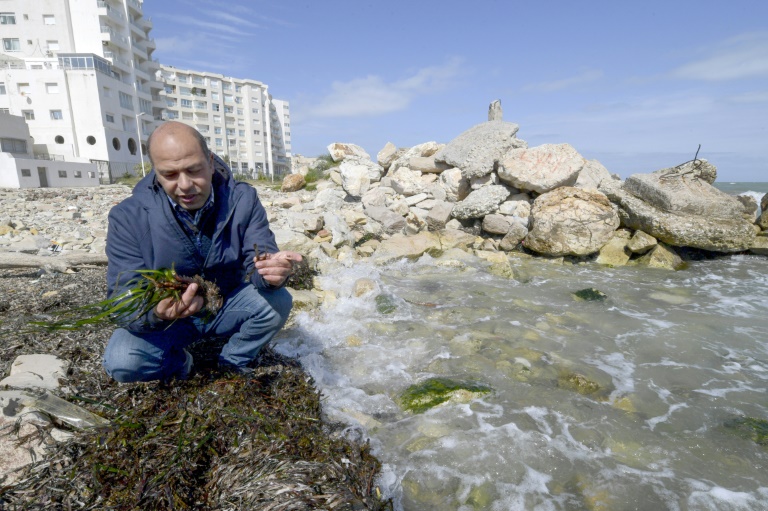
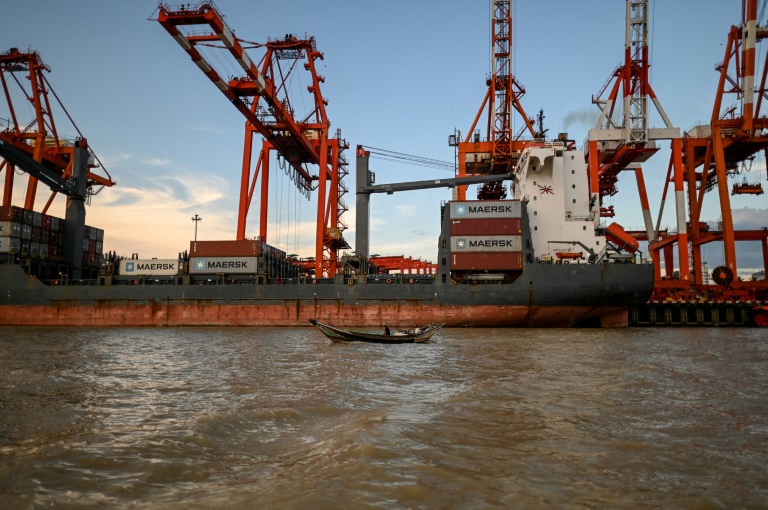
Under the Mediterranean waters off Tunisia, gently waving green seagrass meadows provide vital marine habitats for the fishing fleets and an erosion buffer for the beaches the tourism industry depends on.

Even more importantly, seagrass is such a key store of carbon and producer of oxygen — critical to slowing the devastating impacts of climate change — that the Mediterranean Wetlands Initiative (MedWet) calls it “the lungs” of the sea.

But, just as human actions elsewhere are devastating forests of trees on land, scientists warn that human activity is driving the grass under the sea to destruction at speed — with dire environmental and economic impacts.

Named Posidonia oceanica after the Greek god of the sea Poseidon, seagrass spans the Mediterranean seabed from Cyprus to Spain, sucking in carbon and curbing water acidity.

“Posidonia oceanica… is one of the most important sources of oxygen provided to coastal waters,” MedWet, a 27-member regional intergovernmental network, says.

Tunisia, on the North African coastline, “has the largest meadows” of all — spreading over 10,000 square kilometres (3,900 square miles), marine ecologist Rym Zakhama-Sraieb said, pointing to its key carbon-capture role.

The underwater flowering plants absorb three times more blue carbon — the term used to describe the removal of carbon dioxide from the atmosphere by the ocean and coastal ecosystems — than a forest, and they can store it for thousands of years, she said.

“We need Posidonia to capture a maximum of carbon,” Zakhama-Sraieb said.

But a dangerous cocktail of rampant pollution, illegal fishing using bottom trawling nets that rip up the seagrass, and a failure by people to appreciate its life-giving importance is spelling its demise.

– ‘Sea has been destroyed’ –

Growing at a depth of up to 50 metres (165 feet), seagrass provides shelter for fish and slows the erosion of coastlines by breaking wave swells that would otherwise damage the sandy beaches that tourists like.

Tunisian marine biologist Yassine Ramzi Sghaier said the grass is crucial for a country already gripped by a grinding economic crisis.

“All of Tunisia’s economic activity depends on Posidonia,” Sghaier said.

“It is the largest provider of jobs,” he claimed, noting that at least 150,000 people are directly employed in fishing and tens of thousands in the tourism industry.

Destruction has been swift, and replacement slow. The aquatic plant, also known as Neptune grass, grows less than five centimetres a year.

Areas of seagrass meadows have been slashed by more than half in the Gulf of Gabes, a vast area on Tunisia’s eastern coast, Sghaier said, with a 2010 study blaming excessive fishing and pollution.

Once Posidonia and a wealth of marine species thrived there, but since the 1970s, phosphate factories have poured chemicals into the sea, causing more damage to the ecosystem.

Seagrass serves as a vital shelter for fish to breed, feed and shelter.

Fishing makes up 13 percent of Tunisia’s GDP, and nearly 40 percent of it is done around seagrass meadows — and fisherman describe plummeting stocks.

“The sea has been destroyed,” said Mazen Magdiche, who casts his nets from the port of Monastir. “Chemicals are dumped everywhere.”

Magdiche calculates his catch is three times less than what it was 25 years ago, but said he had little alternative income.

“There are fewer and fewer fish,” he said. 

“You are not looking out for the interests of the sea, but to feed your children,” he added.

– ‘Catastrophe’ –

Nearly 70 percent of the Tunisian population lives on 1,400 kilometres (nearly 900 miles) of coastline, and for many Posidonia is considered mere rubbish.

When seagrass is washed up onshore, it mixes with sand to form large banks, that protect the coastline from swells and waves, experts say.

But sometimes bulldozers are used to “clean” the beaches, contributing to the acceleration of coastal erosion, with some 44 percent of beaches already at risk of being washed away.

“We are helping to make beaches disappear by removing the (seagrass) banks,” said Ahmed Ben Hmida, of Tunisia’s Coastal Protection and Development Agency.

Beaches are a key asset for tourism, which provided Tunisia with a record 14 percent of GDP in 2019, and a living for up to two million people — a sixth of the population. 

The aquatic plant also improves the quality of water, making the beaches more attractive for tourists, said Zakhama-Sraieb.

Ben Hmida said the creation of four protected marine zones could help Posidonia, but that action was needed on a far wider scale.

“If nothing is done to protect the whole Tunisian Posidonia, it will be a catastrophe,” he said.

Markets drop as US rout, China worries hit sentiment

Asian and European markets fell in holiday-thinned trade Monday following another tech-led rout on Wall Street, with focus on the Federal Reserve’s expected interest rate hike this week.

Adding to the dour mood was data showing Chinese manufacturing activity shrank last month at its fastest pace since the start of the pandemic owing to Covid-19 lockdowns in the country’s biggest cities.

The government’s refusal to shift from its zero-Covid policy and strict containment measures is fanning fears about the world’s number two economy and key driver of global growth.

Trading floors around the world have been buffeted for months by a perfect storm of crises including China’s lockdowns, surging inflation, Fed plans to hike rates, elevated oil prices and the war in Ukraine.

All eyes are on the US central bank’s policy meeting this week, which is expected to see it hike borrowing costs by half a point — the most since 2000 — and follow it with several more increases before the end of the year.

And now some analysts are predicting it could even announce a three-quarter-point increase at some point as it battles more than 40-year-high inflation.

However, with some commentators warning rates could go as high as three percent, there are also worries the Fed could be too heavy-handed and tip the US economy into recession.

Fed boss Jerome Powell “could cement the view that 50 (basis points) is the new 25, but more worrying for stock pickers, there are lots of QE to unwind”, said SPI Asset Management’s Stephen Innes, referring to the quantitative easing bond-buying programme used by the Fed to keep rates low.

“So, the question is, how much of the impact of the balance sheet runoff” has been priced in.

The prospect of higher borrowing costs has been compounded by a sharp slowdown in China, with lockdowns in the biggest cities including Shanghai slamming output and snarling supply chains.

Data at the weekend showed the country’s manufacturing activity shrank the most it has since February 2020, and the near future does not look promising as officials shut down cinemas and gyms over the May Day holiday.

Beijing on Friday further flagged plans to provide support to the economy and signalled an easing of a painful tech crackdown. But the announcement follows several other recent pledges and traders are yet to see any concrete measures, with most wanting to see a softer approach to controlling the virus.

“We remain deeply concerned about growth,” Nomura Holdings economists said in a note.

“Despite the raft of policy measures announced by the Politburo meeting (Friday), we still believe markets should remain focused on the development of the pandemic and the corresponding zero-Covid strategy. All other policies are of secondary importance.” 

On equity markets, Tokyo, Seoul, Mumbai, Manila and Wellington all fell.

Sydney also retreated, though Qantas rose more than two percent after saying it would launch the world’s longest non-stop commercial flight between Sydney and London by the end of 2025.

Paris and Frankfurt sank at the open, though US futures were in positive territory.

London, Hong Kong and mainland Chinese markets were closed along with those in Taipei, Singapore, Bangkok and Jakarta.

The struggles in China, the world’s biggest crude importer, led to a drop in prices of the commodity on demand concerns, offsetting worries about supplies from Russia caused by the Ukraine war.

European Union talks to scale back imports of oil from Russia, following embargoes by the United States and Britain, continue to provide support.

“But further gains will be limited to weaker oil demand prospects from China due to the continued expansion of lockdowns and mass testing across the region,” added SPI’s Innes.

– Key figures at around 0720 GMT –

Tokyo – Nikkei 225: DOWN 0.1 percent at 26,818.53 (close)

Hong Kong – Hang Seng Index: Closed for a holiday

Shanghai – Composite: Closed for a holiday

London – FTSE 100: Closed for a holiday

Dollar/yen: UP at 130.30 yen from 129.89 yen on Friday

Euro/dollar: DOWN at $1.0534 from $1.0550

Pound/dollar: DOWN at $1.2557 from $1.2578

Euro/pound: UP at 83.88 pence from 83.86 pence

West Texas Intermediate: DOWN 0.7 percent at $103.95 per barrel

Brent North Sea crude: DOWN 0.7 percent at $106.44 per barrel

New York – Dow: DOWN 2.8 percent at 32,977.21 (close)

Japan's ENEOS withdraws from Myanmar gas project

Japanese energy conglomerate ENEOS Holdings said Monday it will withdraw from a gas project in coup-hit Myanmar, days after its Thai and Malaysian partners announced they would pull out.

ENEOS is the latest energy giant to retreat from the Southeast Asian country, whose military has waged a widespread crackdown on dissent since it ousted and detained civilian leader Aung San Suu Kyi last year.

The company is involved in the Yetagun project off southern Myanmar along with the Japanese government and Mitsubishi Corporation.

Together they hold a 19.3 percent stake in the gas field, which has been operational for two decades.

ENEOS said it had “decided to withdraw after discussions taking into consideration the country’s current situation, including the social issues, and project economics based on the technical evaluation of Yetagun gas fields”.

“This withdrawal will be effective after approval from the Myanmar government,” it added in a statement.

An official at Japan’s natural resources and energy agency told AFP that the government “takes the same position” as ENEOS, noting the Yetagun project has experienced a reduction in output over the past decade.

Malaysia’s Petronas and Thailand’s oil and gas conglomerate PTTEP also announced their withdrawal on Friday. Petronas subsidiary Carigali holds a roughly 41 percent stake in the Yetagun project, while PTTEP owns 19.3 percent.

More than 1,800 civilians have died in Myanmar during the military crackdown and more than 13,000 have been arrested, according to a local monitoring group.

With the economy tanking and pressure mounting from rights groups, companies from France’s TotalEnergies to British American Tobacco and Norway’s Telenor have upped sticks.

Tokyo is a major provider of economic assistance to Myanmar, and the government has long-standing relations with the country’s military.

After the coup, Japan announced it would halt all new aid, though it stopped short of imposing individual sanctions on military and police commanders.

Asian markets drop as US rout, China worries hit sentiment

Asian markets fell in holiday-thinned trade Monday following another tech-led rout on Wall Street, with focus on the Federal Reserve’s expected interest rate hike this week.

Adding to the dour mood was data showing Chinese manufacturing activity shrank last month at its fastest pace since the start of the pandemic owing to Covid lockdowns in the country’s biggest cities.

The government’s refusal to shift from its zero-Covid policy and strict containment measures is fanning fears about the world’s number two economy and key driver of global growth.

Trading floors around the world have been buffeted for months by a perfect storm of crises including China’s lockdowns, surging inflation, Fed plans to hike rates, elevated oil prices and the war in Ukraine.

All eyes are on the US central bank’s policy meeting this week, which is expected to see it hike borrowing costs by half a point — the most since 2000 — and follow it with several more increases before the end of the year.

And now some analysts are predicting it could even announce a three-quarter-point increase at some point as it battles more than 40-year-high inflation.

However, with some commentators warning rates could go as high as three percent, there are also worries the Fed could be too heavy-handed and tip the US economy into recession.

Fed boss Jerome Powell “could cement the view that 50 (basis points) is the new 25, but more worrying for stock pickers, there are lots of QE to unwind”, said SPI Asset Management’s Stephen Innes, referring to the quantitative easing bond-buying programme used by the Fed to keep rates low.

“So, the question is, how much of the impact of the balance sheet runoff” has been priced in.

The prospect of higher borrowing costs has been compounded by a sharp slowdown in China, with lockdowns in the biggest cities including Shanghai slamming output and snarling supply chains.

Data at the weekend showed the country’s manufacturing activity shrank the most it has since February 2020, and the near future does not look promising as officials shut down cinemas and gyms over the May Day holiday.

Beijing on Friday further flagged plans to provide support to the economy and signalled an easing of a painful tech crackdown. But the announcement follows several other recent pledges and traders are yet to see any concrete measures, with most wanting to see a softer approach to controlling the virus.

“We remain deeply concerned about growth,” Nomura Holdings economists said in a note.

“Despite the raft of policy measures announced by the Politburo meeting (Friday), we still believe markets should remain focused on the development of the pandemic and the corresponding zero-Covid strategy. All other policies are of secondary importance.” 

On equity markets, Tokyo, Sydney, Seoul and Wellington all fell, though Manila ticked up.

Hong Kong and mainland Chinese markets were closed along with those in Taipei, Singapore, Bangkok and Jakarta.

The struggles in China, the world’s biggest crude importer, led to a drop in prices of the commodity on demand concerns, offsetting worries about supplies from Russia caused by the Ukraine war.

European Union talks to scale back imports of oil from Russia, following embargoes by the United States and Britain, continue to provide support.

“But further gains will be limited to weaker oil demand prospects from China due to the continued expansion of lockdowns and mass testing across the region,” added SPI’s Innes.

– Key figures at around 0230 GMT –

Tokyo – Nikkei 225: DOWN 0.5 percent at 26,704.60 (close)

Hong Kong – Hang Seng Index: Closed for a holiday

Shanghai – Composite: Closed for a holiday

Dollar/yen: UP at 130.14 yen from 129.89 yen on Friday

Euro/dollar: DOWN at $1.0523 from $1.0550

Pound/dollar: DOWN at $1.2560 from $1.2578

Euro/pound: DOWN at 83.77 pence from 83.86 pence

West Texas Intermediate: DOWN 1.0 percent at $103.62 per barrel

Brent North Sea crude: DOWN 1.1 percent at $105.95 per barrel

New York – Dow: DOWN 2.8 percent at 32,977.21 (close)

London – FTSE 100: UP 0.5 percent at 7,544.55 (close)

'Lungs of the Mediterranean' at risk

Under the Mediterranean waters off Tunisia, gently waving green seagrass meadows provide vital marine habitats for the fishing fleets and an erosion buffer for the beaches the tourism industry depends on.

Even more importantly, seagrass is such a key store of carbon and producer of oxygen — critical to slowing the devastating impacts of climate change — that the Mediterranean Wetlands Initiative (MedWet) calls it “the lungs” of the sea.

But, just as human actions elsewhere are devastating forests of trees on land, scientists warn that human activity is driving the grass under the sea to destruction at speed — with dire environmental and economic impacts.

Named Posidonia oceanica after the Greek god of the sea Poseidon, seagrass spans the Mediterranean seabed from Cyprus to Spain, sucking in carbon and curbing water acidity.

“Posidonia oceanica… is one of the most important sources of oxygen provided to coastal waters,” MedWet, a 27-member regional intergovernmental network, says.

Tunisia, on the North African coastline, “has the largest meadows” of all — spreading over 10,000 square kilometres (3,900 square miles), marine ecologist Rym Zakhama-Sraieb said, pointing to its key carbon-capture role.

The underwater flowering plants absorb three times more blue carbon — the term used to describe the removal of carbon dioxide from the atmosphere by the ocean and coastal ecosystems — than a forest, and they can store it for thousands of years, she said.

“We need Posidonia to capture a maximum of carbon,” Zakhama-Sraieb said.

But a dangerous cocktail of rampant pollution, illegal fishing using bottom trawling nets that rip up the seagrass, and a failure by people to appreciate its life-giving importance is spelling its demise.

– ‘Sea has been destroyed’ –

Growing at a depth of up to 50 metres (165 feet), seagrass provides shelter for fish and slows the erosion of coastlines by breaking wave swells that would otherwise damage the sandy beaches that tourists like.

Tunisian marine biologist Yassine Ramzi Sghaier said the grass is crucial for a country already gripped by a grinding economic crisis.

“All of Tunisia’s economic activity depends on Posidonia,” Sghaier said.

“It is the largest provider of jobs,” he claimed, noting that at least 150,000 people are directly employed in fishing and tens of thousands in the tourism industry.

Destruction has been swift, and replacement slow. The aquatic plant, also known as Neptune grass, grows less than five centimetres a year.

Areas of seagrass meadows have been slashed by more than half in the Gulf of Gabes, a vast area on Tunisia’s eastern coast, Sghaier said, with a 2010 study blaming excessive fishing and pollution.

Once Posidonia and a wealth of marine species thrived there, but since the 1970s, phosphate factories have poured chemicals into the sea, causing more damage to the ecosystem.

Seagrass serves as a vital shelter for fish to breed, feed and shelter.

Fishing makes up 13 percent of Tunisia’s GDP, and nearly 40 percent of it is done around seagrass meadows — and fisherman describe plummeting stocks.

“The sea has been destroyed,” said Mazen Magdiche, who casts his nets from the port of Monastir. “Chemicals are dumped everywhere.”

Magdiche calculates his catch is three times less than what it was 25 years ago, but said he had little alternative income.

“There are fewer and fewer fish,” he said. 

“You are not looking out for the interests of the sea, but to feed your children,” he added.

– ‘Catastrophe’ –

Nearly 70 percent of the Tunisian population lives on 1,400 kilometres (nearly 900 miles) of coastline, and for many Posidonia is considered mere rubbish.

When seagrass is washed up onshore, it mixes with sand to form large banks, that protect the coastline from swells and waves, experts say.

But sometimes bulldozers are used to “clean” the beaches, contributing to the acceleration of coastal erosion, with some 44 percent of beaches already at risk of being washed away.

“We are helping to make beaches disappear by removing the (seagrass) banks,” said Ahmed Ben Hmida, of Tunisia’s Coastal Protection and Development Agency.

Beaches are a key asset for tourism, which provided Tunisia with a record 14 percent of GDP in 2019, and a living for up to two million people — a sixth of the population. 

The aquatic plant also improves the quality of water, making the beaches more attractive for tourists, said Zakhama-Sraieb.

Ben Hmida said the creation of four protected marine zones could help Posidonia, but that action was needed on a far wider scale.

“If nothing is done to protect the whole Tunisian Posidonia, it will be a catastrophe,” he said.

Qantas to launch longest non-stop passenger flight

Qantas announced on Monday it will launch the world’s longest non-stop commercial flight, with passengers set to spend 19 hours in the air traveling from Sydney to London by the end of 2025.

After five years of planning, the airline said it was ordering 12 Airbus A350-1000 aircraft to operate the “Project Sunrise” flights to cities including London and New York.

Non-stop flights will start from Sydney by the end of 2025, it said, with long-haul trips later planned to include Melbourne.

“New types of aircraft make new things possible,” said Qantas chairman Alan Joyce, according to a statement.

“The A350 and Project Sunrise will make any city just one flight away from Australia,” he said.

“It’s the final frontier and the final fix for the tyranny of distance.”

Qantas operated research flights for the long-haul route in 2019, including a trial London-Sydney trek of 17,800 kilometres (11,030 miles), which took 19 hours and 19 minutes.

A trial New York-Sydney flight in the same year covered 16,200 kilometres (10,200 miles) and took a little over 19 hours.

Singapore Airlines currently operates the world’s longest non-stop commercial flight from Singapore to New York, covering 16,700 kilometres (10,400 miles) in a little under 19 hours.

Qantas already operates a 14,498-kilometre Perth-London trip that takes 17 hours.

– ‘Maximum comfort’ –

“As you’d expect, the cabin is being specially designed for maximum comfort for long-haul flying,” Joyce said.

Qantas said the new A350 aircraft would be configured for 238 passengers with first-class suites offering a separate bed, recliner chair and wardrobe.

It promised spacier economy sections and a “wellbeing zone” designed for “movement, stretching and hydration”.

At the same time, Qantas confirmed it was also ordering 40 A321 XLR and A220 aircraft from Airbus. In addition, it bought options for another 94 of these planes until the end of 2034.

“The A320s and A220s will become the backbone of our domestic fleet for the next 20 years, helping to keep this country moving,” Joyce said.

The newer aircraft would reduce emissions by at least 15 percent if running on fossil fuels, and more if using sustainable aviation fuel, he said.

“We have come through the other side of the pandemic a structurally different company,” the airline boss said.

“Our domestic market share is higher and the demand for direct international flights is even stronger than it was before Covid.”

Qantas said the total cost of the deal was a matter of commercial confidence, though it indicated it had obtained a significant discount on the standard price of the aircraft.

The A350-1000 planes will be powered by Rolls-Royce Trent XWB-97 turbofan engines, designed to be 25 percent more fuel efficient than the previous generation of aircraft, Qantas said.
Kenya boosts minimum wage as inflation bites

Kenyan President Uhuru Kenyatta announced Sunday a 12-percent hike in the minimum wage as the country confronts a surge in the cost of living.

Inflation in the East African economic powerhouse jumped to a seven-month high in April, mainly as a result of skyrocketing fuel and food prices, according to official figures.

“As a caring government, we find there is a compelling case to review the minimum wages so as to cushion our workers against further erosions,” Kenyatta said at a Labour Day rally.

He said the 12 percent increase would come into effect from May 1. It takes the minimum monthly wage from 13,500 Kenyan shillings (about $116.5, 110.5 euros) to 15,120 shillings ($130.5, 124 euros).

However the hike falls far short of the 24 percent that had been sought by the Central Organisation of Trade Unions-Kenya (COTU).

Kenyatta said the high cost of living was due to factors “beyond my control like the coronavirus pandemic and the Russia-Ukraine conflict”.

He castigated rival political leaders — including Deputy President William Ruto — for seeking to blame the government for the economic woes, as the country prepares for crucial elections in August.

Kenyatta cannot run again after serving two terms but has endorsed his former arch-rival Raila Odinga for the top job.

The August 9 presidential election is expected to be a two-horse race between Odinga and Ruto, who was initially anointed by Kenyatta as his successor, but found himself frozen out after a shock 2018 pact between Kenyatta and Odinga.

Kenya’s finance minister last month unveiled a $28 billion budget aimed at helping the economy recover after the Covid-19 pandemic threw hundreds of thousands of people out of work.

Kenyans are struggling to cope with rising costs of basic goods such as food and fuel, a crisis exacerbated by the Ukraine war, while several parts of the country are also suffering from a severe drought.

Inflation reached a seven-month high of 6.47 percent last month from 5.56 percent in March and 5.76 percent in April last year, the statistics bureau announced last week.

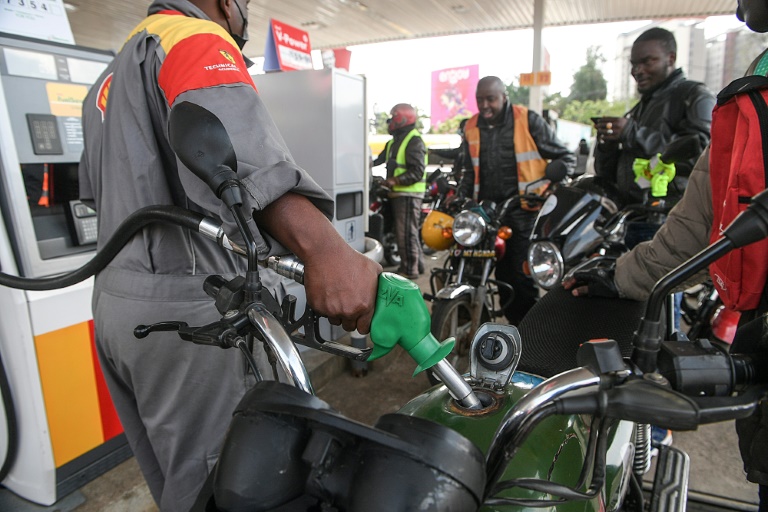
Last month the country was also hit by a fuel shortage that triggered long queues at petrol stations and strict rationing.

Beijing tourist sites empty in Covid-stalked public holiday

Major Beijing tourist venues were virtually deserted Sunday and restaurant traffic ground to a standstill, as a typically bustling public holiday was overshadowed by a Covid outbreak that has shunted millions under lockdown nationwide.

China’s staunch zero-Covid policy has kept the virus at bay for more than two years but it is currently facing its worst outbreak since the start of the pandemic thanks to an Omicron-fuelled wave.

Millions across the country — particularly in economic engine Shanghai — have been pushed to stay at home for weeks, as the lockdowns have dampened economic growth and investor sentiment in the world’s second-largest economy. 

Beijing so far has reported over 300 cases under the current wave, and authorities on Saturday banned city-wide dining services starting Sunday to May 4 — an attempt to curb infections during a holiday that is typically an annual peak consumption period. 

“It will have a definite impact on sales,” a restaurant employee surnamed An told AFP, as she scanned for customers around Beijing’s Dongcheng district — home to historic attractions like the Forbidden City.

Eateries nearby were shuttered, with some only allowing customers to order takeout if they have a negative covid test.

This restriction is the latest measure ordered by Beijing authorities, who say all visitors to public spaces must have a negative test result within the past 48 hours.

“Of course we will abide by the country’s rules,” An said. But “we make less profit through delivery and our sales volume is lower”. 

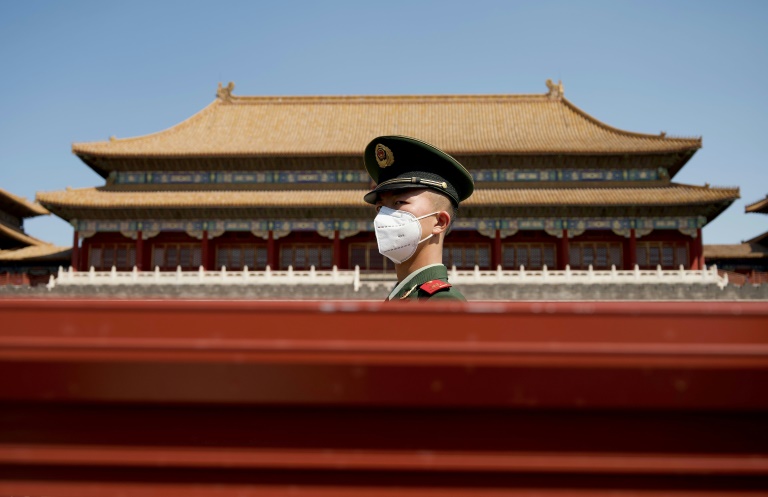
The Temple of Heaven — one of China’s biggest historical attractions — is usually heaving with tens of thousands of visitors a day elbowing each other. But on Sunday, masked families could snap selfies without any interruptions along the imperial complex.

Even the downtown shopping street Wangfujing — a commerce heaven of food stalls and fashionable outlets — was deserted. 

At a restaurant not far from the unusually quiet Forbidden City palace complex, stacks of marinated chicken feet, flatbreads and cold cuts in takeaway containers languished on an outdoor table as staff chatted idly inside. 

“Obviously it’s bad in terms of our own self-interest, but it’s necessary overall for the good of the country,” said a young waiter who did not give his name.

“We would normally sell 10,000 yuan ($1,500) worth of food in a day, but now it’s only 1,000 to 2,000 yuan ($300),” he added.

Instead of entering the Forbidden City, lines of people waited outside the palace complex to get a swab test — a new normal for Beijing residents.

– Universal Studios shuttered –

About 30 kilometres (24 miles) east of the palace on the city’s outskirts, Universal Studios — Beijing’s largest Western theme park boasting a Jurassic World and Harry Potter-themed zones — announced its indefinite closure Sunday. 

It was launched in September and has seen more than two million visitors in five months.

The Labour Day holiday was supposed to be a massive commercial coup for the park — which earlier this week had initially required a negative Covid test within 24 hours of visiting. 

The capital reported 59 new infections Sunday, as officials announced the reopening of a Covid quarantine hospital that has not been mobilised since the pandemic’s first wave in 2020.

All indoor fitness activities — like public gyms and pools — were suspended starting Sunday until May 4, while authorities say about 4,000 makeshift hospital beds had been prepared and larger quarantine centres were being constructed.

“There still exists a small number of hidden infected (patients) found through community screening,” Beijing health official Pang Xinghuo said at a Sunday briefing.

“The epidemic is overall at a high plateau period.”

Meanwhile in Shanghai, officials declared Sunday that “community transmission risk has been effectively curbed” and that daily infections are trending downwards.

The financial hub of 25 million has been locked down for almost a month, with residents complaining of food shortages and lack of timely medical care.

Rare birth of Asiatic cheetah cubs in Iran

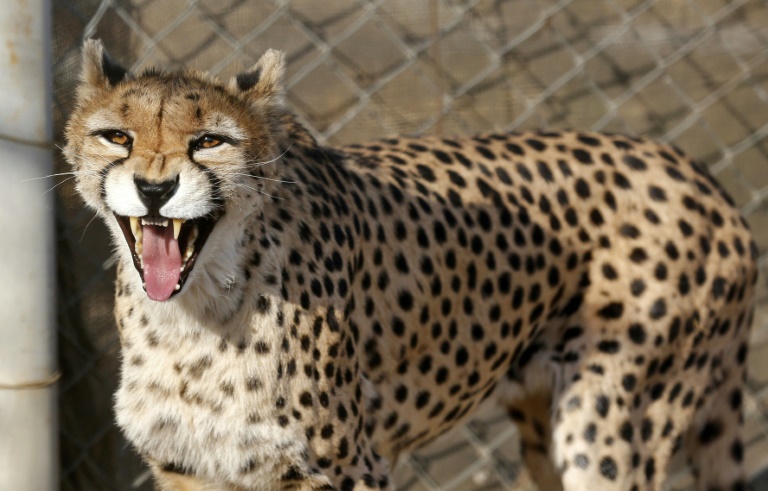
An Asiatic cheetah gave birth to three “healthy” cubs in Iran, the head of the environment department said Sunday, calling it a first in captivity for the endangered species.

“Iran”, one of only a dozen cheetahs found in the Islamic republic, delivered three “healthy” cubs by C-section, Ali Salajegheh told IRNA news agency.

“This is the first birth of an Asiatic cheetah in captivity,” he said.

“By preserving these cubs, we can increase the cheetah population in captivity and then in semi-captivity,” Salajegheh added.

The cubs were born in the Touran Wildlife Refuge in the Semnan province east of Tehran, where the mother and her babies are being monitored in intensive care.

The world’s fastest land animal, capable of reaching speeds of 120 kilometres (74 miles) per hour, cheetahs once stalked habitats from the eastern reaches of India to the Atlantic coast of Senegal and beyond

They are still found in parts of southern Africa, but have practically disappeared from North Africa and Asia.

Iran is one of the last countries in the world where the Asiatic cheetahs live in the wild and began a United Nations-supported protection programme in 2001.

The subspecies “Acinonyx jubatus venaticus”, commonly known as the Asiatic cheetah, is critically endangered, according to the International Union for Conservation of Nature.

In January deputy environment minister Hassan Akbari said Iran is home to only a dozen Asiatic cheetahs — down from an estimated 100 in 2010.

Their situation “is extremely critical”, Akbari said at the time, adding that the animals have been victims of drought, hunters and car accidents.

Close Bitnami banner
Bitnami