AFP

From recession to inflation, how the US Fed has dealt with crises

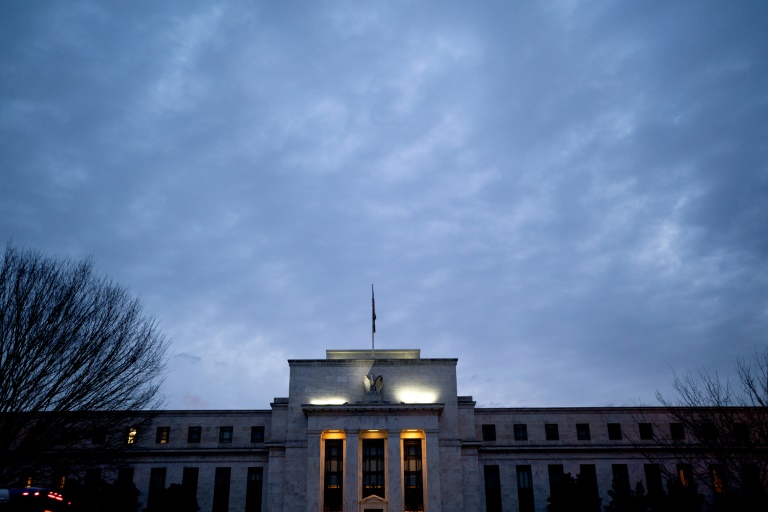
The US Federal Reserve has strongly signaled it will raise interest rates by half a percentage point this week to rein in soaring inflation, and likely continue hiking throughout this year.

The Fed has long played a decisive role when the world’s largest economy faces tough times. Here are some of its major actions since the 2008 global financial crisis:

– The financial crisis and recovery –

November 2008: The Fed began injecting liquidity into financial markets following the collapse of Lehman Brothers investment bank. The central bank launched three such programs before ending asset purchases in June 2014.

December 2008: The central bank cut its lending rate to zero amid the crisis, where it remained until December 2015.

October 2017: The Fed began reducing the holdings on its balance sheet, which had ballooned from less than $900 billion before the crisis to $4.5 trillion.

– Trade war slows growth –

December 2018 to August 2019: Interest rates peaked in the range of 2.25 percent to 2.5 percent.

Fall 2019: The Fed cut rates several times to the 1.5-1.75 percent range as the trade war launched by then-president Donald Trump slowed growth. The Republican leader had criticized the bank for its high rates.

– Support during the pandemic –

March 3, 2020: The Fed cut its lending rate by 50 basis points to between one and 1.25 percent.

March 16, 2020: As Covid-19 spread across the country and the economy shut down, the Fed slashed its lending rate by 100 basis points to zero and resumed its asset purchase policy, which eventually reached $120 billion per month in Treasury bonds and mortgage-backed securities.

– Economy recovers, inflation arrives –

November 3, 2021: The Fed announced it will begin slowing the pace of its asset purchases, with a view towards ending them entirely by the following June, which would set the stage for rate hikes to fight inflation.

December 15, 2021: Recognizing that inflation will not be “transitory,” as top officials had believed, the central bank accelerated the end of its asset purchases to March.

March 16, 2022: The central bank raised interest rates for the first time since 2018 to the 0.25-0.50 percent range.

April 6, 2022: The minutes from the Fed’s March policy meeting are released, showing that many participants see one or more 50-basis point rate hikes as necessary if inflation pressure continues.

April 29, 2022: The Fed’s preferred inflation gauge, the personal consumption expenditures price index, rises 6.6 percent year-on-year and 0.9 percent month-on-month in March, both faster paces than the month prior.
Fed gears up to attack inflation as US recession fears grow

The Federal Reserve this week is set to redouble its assault against record US inflation while facing an array of shocks both internal and external that analysts fear may one day put the world’s largest economy into a recession.

The policy setting Federal Open Market Committee (FOMC) will convene its two-day meeting on Tuesday, and top officials have strongly signaled they will hike interest rates by half a percentage point and announce plans to reduce their massive holdings of debt.

Both moves would further tighten lending conditions in the world’s largest economy and potentially take the steam out of consumer prices that are rising at rates not seen since the 1980s — driven, in part by the Fed’s own policies.

The rate hike is expected to be one of several the Fed makes this year, but with the economy also facing shocks from Russia’s invasion of Ukraine and Covid lockdowns in China, analysts warn the central bank must strike a delicate balance to stop a downturn.

“They’re going to have to be very, very nimble to keep the economy from going into a ditch,” Jay Bryson, managing director and chief economist at Wells Fargo’s Corporate and Investment Bank, said in an interview. 

– No more easy money –

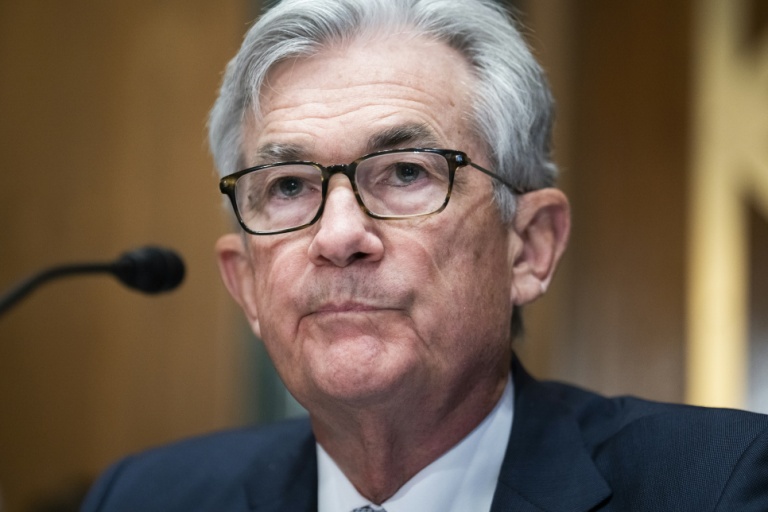
Top Fed officials including Chair Jerome Powell have hinted strongly that a half-percentage point hike will be agreed to at the May 3-4 meeting, twice the amount of the quarter-point hike the FOMC implemented in March.

The central bank is also expected to announce plans to begin offloading the trillions of dollars in Treasury bonds and mortgage-backed securities it bought during the pandemic to support the economy, which would raise borrowing costs.

“They told us everything in advance,” said Roberto Perli, head of global policy at Piper Sandler. “I’d be shocked if they do anything different at this point.”

With consumer prices 8.5 percent higher in March compared to the same month in 2021, raising rates has become an imperative for the Fed, which cut rates to zero as the pandemic began but attracted criticism for keeping them there throughout last year, even as inflation rose.

“Inflation is still very high by all means, so full speed ahead for now with the hawkish rhetoric,” Perli said.

– Beyond their control –

The Fed’s tools are sharpest at pressuring demand, but the US economy is also being battered by shocks emanating from beyond its borders and therefore the central bank’s control, creating fears the Fed will raise rates, inflation will stay high and a downturn will follow.

The war in Ukraine has prompted a global spike in prices for oil as well as other commodities, while the pandemic lockdowns in China could worsen global supply snarls that have bedeviled the US economy in its recovery.

“They’re not very well equipped to deal with these shocks,” Perli said.

A recession is not viewed as imminent, despite last week’s release of government data showing GDP shrank in the first quarter of this year, which economists see as a consequence of trade issues that swamped otherwise healthy consumer and business spending.

The grim scenario could instead arrive next year, and Bryson said a harbinger would be if prices remain elevated even as the Fed tightens its lending rate.

“The probability of a recession is not insignificant at this point,” he said.

“If the inflation numbers continue to come in hot, then I’d say the probability of recession continues to go up.”

Perli sees signs that Powell himself worries about the Fed’s ability to pull off a “soft landing,” as the technique of quelling inflation without causing a recession is known.

In March, the Fed chair told a conference, “My colleagues and I will do our very best to succeed in this challenging task” — words Perli said he found troubling.

“It’s not a way of putting things that denotes a lot of confidence,” he said.

As tobacco burns out, Malawi looks to cannabis

Under a scorching sun at a trading post in Malawi, Chikumbutso Chekeni and his wife head to their tobacco sheds to dry their newly harvested leaf.

Nambuma, 35 kilometres (20 miles) northwest of the capital Lilongwe, used to be a thriving farming town, buoyed by vast tobacco farming businesses.

Today, even during harvest season the town is sleepy, leading some farmers to think about switching from tobacco to the newly legalised marijuana.

Malawi is one of the world’s poorest countries but a major tobacco producer, ranking first in the world for burley and seventh for overall production.

No other economy is more dependent on the leaf. Government statistics say over 70 percent of the nation’s export income comes from tobacco.

“The main challenge we face as farmers is the issue of low pricing, which is really killing us,” said Chekeni, who has been farming tobacco for 22 years.

Returns from tobacco, dubbed the ‘Malawi’s Green Gold’, have dwindled over the past decade due to declining global demands driven by anti-smoking campaigns.

Despite the low prices, he sees no other option but to continue farming. This is the only business he knows.

This year has particularly been bad. Low volumes and low prices at the auction floors in Lilongwe forced the Tobacco Commission to cut trade to three days a week.

Even on those three days, sales last only an hour.

“The future of tobacco farming is bleak,” said grower Yona Mkandawire. “By now we should have a lot of tobacco in the warehouses and more trucks at the receiving bay, but there is a lot of empty space here.”

Despite a sharp decline of tobacco earnings over the years, Malawi’s government still calls it a “strategic crop” and defends the country’s continuing investment in its production.

Last year tobacco earned Malawi $173.5 million, down 27 percent from the year before, the Tobacco Commission said.

– ‘Malawi Gold’ –

Tobacco Commission chief executive officer Joseph Chidanti Malunga told AFP that this year’s harvest will be 50 million kilogrammes short of what the buyers are looking for.

But he insisted Malawi needs tobacco because it’s the only crop earning foreign currency.

“We cannot abandon this no matter how,” he said. “All we do now is to make sure that we produce tobacco that is compliant with what the customers want.”

During the first week of sales, prices were down more than 20 percent from last year, according to local media.

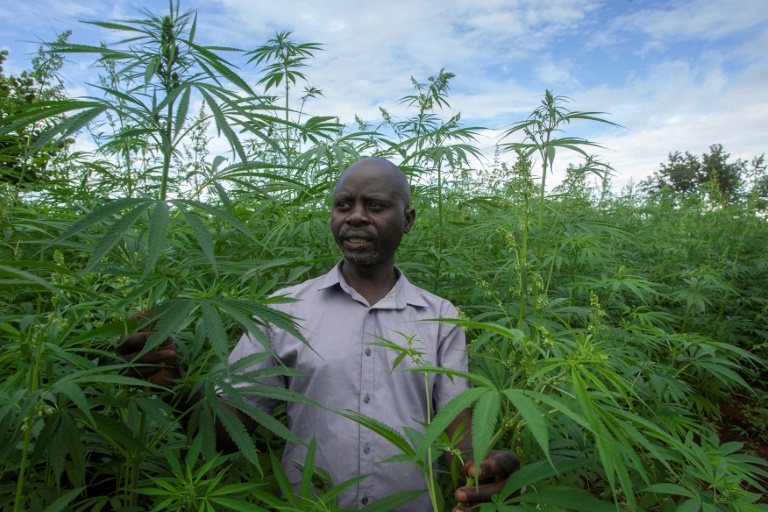
The price drop has seen some farmers try out new crops, including the recently legalised cannabis.

Malawi legalised cannabis farming for medicinal and industrial use in February 2020.  

Falice Nkhoma, who is part of the Tilitonse Cooperative for Cannabis Growers, has dumped tobacco because of falling prices.

“I have been growing burley tobacco from 2014… but with very little benefit because the prices were always low,” said Nkhoma. She has little to show for producing the so-called green gold.

“So this year, when I heard that some people would be growing cannabis, I was really excited. I have bought the seeds, and hopefully cannabis farming will bring me good returns,” she said.

It’s about time Malawi diversified its economy, said Betchani Tchereni, economics professor at the Malawi University of Business and Applied Sciences.

“We just have to restart the economy. If it’s soya, then let’s do soya. If it’s cannabis, then let’s concentrate on cannabis,” he said.

But cultivation licences could be prohibitive for some aspiring farmers.

Growers, who operate in groups of around 30, have on average to cough out $10,000 per collective in farming licence fees alone. 

Easing the process of obtaining cannabis licences would give farmers an immediate boost.

“It takes just about three months to mature, and then boom, we have the forex,” said Tchereni. 

“Licences can’t be this expensive.”

Cannabis growing is not new in Malawi, but has yet to develop to industrial scale.

According to a 2011 World Bank report, Malawi’s hemp, known locally as ‘chamba’ or ‘Malawi Gold’ is among “the best and finest” sativas in the world.

India seizes $725m from China's Xiaomi over 'illegal' remittances

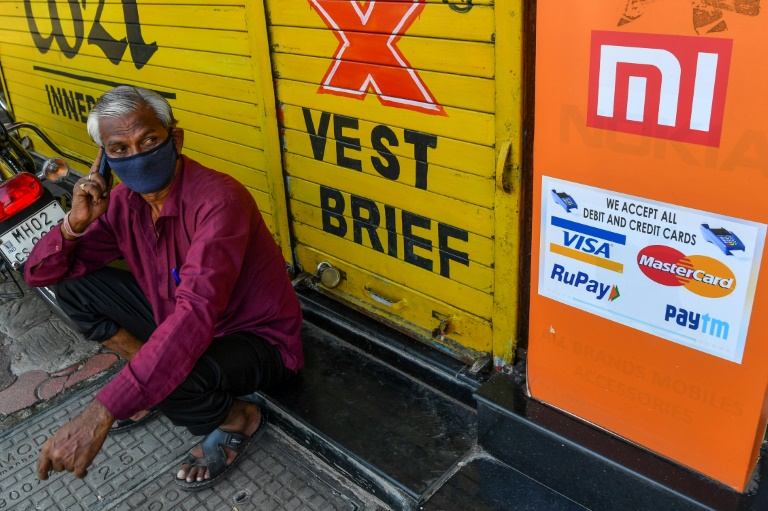
India seized $725 million from the local bank accounts of Xiaomi after a probe found the Chinese smartphone giant unlawfully sent money abroad in the guise of royalty payments, authorities said Saturday.

India’s financial crime investigations agency began investigating the company in February and said it seized the money from the firm’s local arm after discovering it had made remittances to three foreign-based entities.

“Such huge amounts in the name of royalties were remitted on the instructions of their Chinese parent group entities,” the Enforcement Directorate said in a statement.

Xiaomi India has denied the allegations, saying late Saturday that its “operations are firmly compliant with local laws and regulations”.

“We believe our royalty payments and statements to the bank are all legit and truthful,” Xiaomi India tweeted.

“We are committed to working closely with the government authorities to clarify any misunderstandings.”

The firm’s India office was raided in December in a separate investigation over alleged income tax evasion. 

Other Chinese smartphone makers including Huawei also had their Indian offices searched at the time.

Relations between New Delhi and Beijing have been at a low ebb since a deadly Himalayan border clash between soldiers from both countries in 2020. 

In the aftermath, India’s home ministry banned hundreds of mobile applications of Chinese origin, including the popular social media platform Tiktok. 

The government justified the bans on the apps as safeguarding against threats to India’s sovereignty.

Anti-China sentiment has grown in India since the fatal 2020 troop clash, sparking calls for consumer boycotts of Chinese goods.

China continues to be a key economic partner for India, with more than $125 billion in bilateral trade last year according to media reports.

'Right to be forgotten': Israel firm promises to purge digital footprint

Three young Israelis formerly serving in military cyber units have figured out how to locate your digital footprint — and give you the tools to delete it.

The company Mine, co-founded by Gal Ringel, Gal Golan and Kobi Nissan, says it uses artificial intelligence to show users where their information is being stored — like whether an online shoe store kept your data after a sneaker purchase three years ago.

Ringel said Mine’s technology has already been used by one million people worldwide, with over 10 million “right to be forgotten” requests sent to companies using the firm’s platform.

Mine launched after the European Union’s General Data Protection Regulation (GDPR) — now an international reference point — set out key rights for users, including the deletion of personal data that was shared with a site for a limited purpose.

The company’s AI technology scans the subject lines of users’ emails and flags where data is being stored.

Individuals can then decide which information they want deleted and use Mine’s email template to execute their right to be forgotten.

It means they can delete their digital footprint “with a click of a button”, Ringel said.

“We’re not telling people to not use Facebook or Google. We say: go ahead, enjoy, use whatever you want,” he said. 

“But as you enjoy using the internet, we’ll show you who knows what about you, what they know about you… what is the risk” and how to remove it, he added. 

– ‘Challenging’ –

Last year, hackers broke into the database of Atraf, an Israeli LGBTQ dating website, using the personal information there for extortion.

The year before, Shirbit, a major insurance company, was hacked and troves of data stolen.

Despite those and smaller breaches, Naama Matarasso Karpel from advocacy group Privacy Israel said the public was relatively indifferent.

She also criticised Israel’s privacy legislation as inadequate for tackling today’s online challenges.

“Privacy is a bit like health or air — we don’t really feel the need for it until we really see how much we lack it,” she said.

While public awareness on privacy rights has been slow on the uptake, she said many corporations were realising that better privacy practices made for good business.

“Nobody wants to be caught off-guard,” Matarasso Karpel said.

Companies are starting to see privacy “as a value that has to be maintained in order to establish trust with customers”, she added.

Mine’s co-founder Ringel said companies had contacted his firm for help with the “challenging and cumbersome” process of locating and removing information, in line with the right to be forgotten.

“We help companies to automate that process without any human involvement,” he said, reducing their efforts and costs.

But lawyer Omer Tene, co-founder of the Israel Tech Policy Institute, cautioned that deleting specific individual requests was “a complicated technical exercise”.

Some companies and organisations cannot legally delete information like blockchains or records of financial interactions needed for tax purposes.

Even information that can be deleted is often kept in varying degrees of identifiability, Tene said. 

“All of this nuance makes it difficult to deliver on a promise from both the consumer side and the corporate side, to enable deletion by pressing a button,” Tene warned.

Floods heap woes on South Africa trading hub

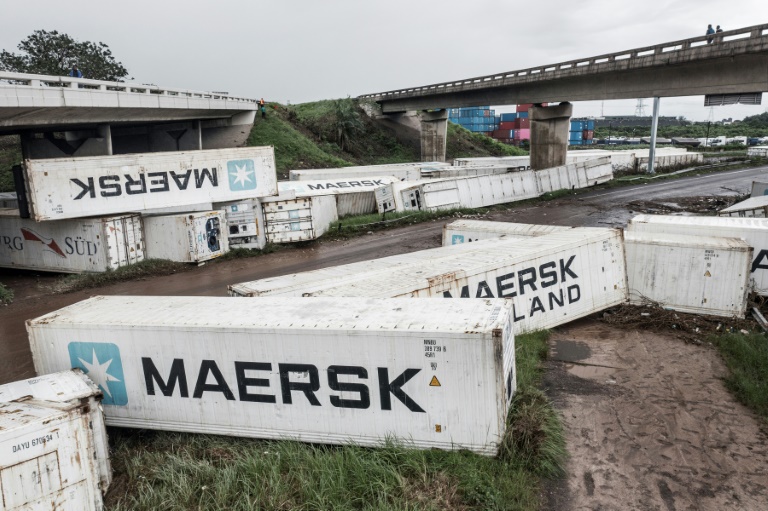
First it was Covid, then riots and now floods: KwaZulu-Natal (NZN) province, South Africa’s gateway to the Indian Ocean, is reeling from a unpredented string of disasters.

Here is factfile on the region:

– Economic giant –

KZN employs 2.4 million out of 14.5 million workers in South Africa’s formal economy and accounts for more than a sixth of national GDP.

It is the second-largest GDP contributor after the economic hub of Gauteng which houses Johannesburg, according to global auditors PwC.

The port of Durban is the country’s biggest trade platform for the agricultural, automotive and mining sectors.

Durban is the largest and busiest harbour in South Africa, handling over 60 percent of its container traffic, says PwC senior economist Christie Viljoen.

– Flood bill – 

Estimates of the cost of the floods that struck KZN this month, fuelled by record-breaking rains, are sketchy.

Many flooded areas remain inaccessible due to road damage.

The mayor of greater Durban, Mxolisi Kaunda says lost production alone will cost 740 million rand ($47.3 million / 44 million euros), according to preliminary estimates.

Most of the region’s 1,150 businesses are located on a flood plain and were badly battered.

But these “operational losses” do not include the cost of fixing roads, railway lines, bridges, power line, water pipes and sewerage, or damage to homes — a bill that will be many billions of rand.

Economists and business leaders say the floods could have a potentially crippling impact on growth in 2022.  

“The city will take about three months to get back to where it was to pre-flood levels and it should reduce the city’s annual GDP by about 1.8 percent,” said Ajiv Maharaj, a senior official in charge of local economic development.

– Pressure on exports – 

Experts say damage to businesses and the port of Durban, adding to the impact on the supply chain from the Ukraine war, will dampen exports.

Durban Chamber of Commerce and Industry CEO Palesa Phili said road freight between Durban and Gauteng was currently at half of normal levels.

“Export shipments and revenues will be under pressure in the short term,” said Viljoen.

“Damaged goods in warehouses and at ports cannot necessarily be replaced and will result in weaker export revenues.”

The Durban region makes food, beverage and tobacco products, textiles and leather goods and petroleum and chemical products.

Its automotive industry is also a big employer. 

Toyota has temporarily suspended operations at its Durban plant, warning of delays in delivering popular models such as the Hilux pickup — or “bakkie,” as these trucks are dubbed here.

– Agriculture hit – 

The province is a key farming region, known chiefly for its sugarcane fields in the Tongaat region. 

Agriculture Minister Thoko Didiza has estimated losses in the agriculture sector to be more than 500 million rand ($32 million).

Around half of those losses will be incurred by cane farmers, although no shortages of sugar are expected.

– Tourism worried – 

Durban is a leading tourism destination, favoured for its warm subtropical climate, idyllic beaches and nearby wildlife sanctuaries.

The region had been hoping for a rebound from the Covid-19 pandemic for the upcoming northern hemisphere summer, but is now bracing for cancellations from both local and international travellers.

A crucial test will come next month when Durban stages an annual trade conference — the Africa Travel Indaba, for which 6,000 people had been expected.

“The show is going ahead as we had planned,” said Themba Khumalo, head of SA Tourism.

“In times of crisis such as this, it is not time to lean back… it’s time for us to show our economic support for Durban,” he said.

UK Covid patient was positive for record 505 days: researchers

British researchers believe they have documented the longest-known Covid-19 infection, in a patient who tested positive for a total of 505 days before their death.

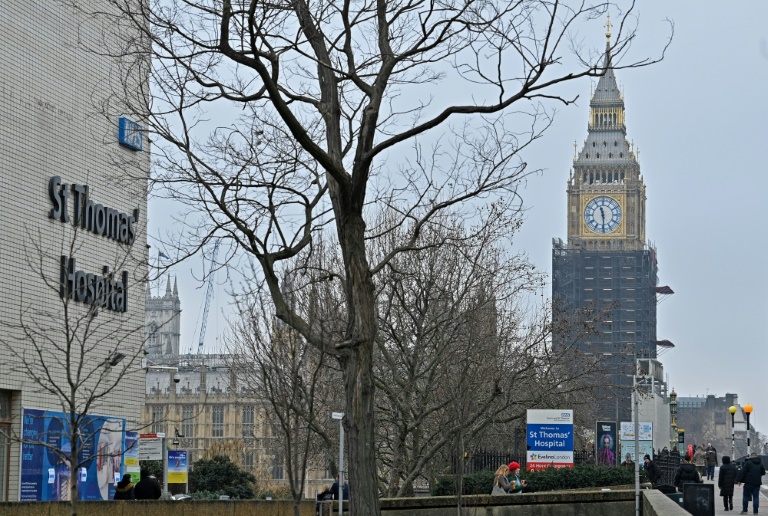
The previous record for persistent infection — rather than repeated bouts of Covid — is thought to be 335 days, the team from King’s College London and Guy’s and St Thomas’ NHS Foundation Trust said.

One of the study’s co-authors, consultant virologist Gaia Nebbia, said the unnamed individual was diagnosed in mid-2020 with respiratory symptoms that later improved.

But they then tested positive about 45 times before attending hospital up to their death.

Nebbia said persistent infection with SARS-CoV-2 — the virus which causes Covid-19 — has been described in patients with weakened immune systems.

She and her team studied how the virus from nine Covid patients in London changed over time, concluding that new variants may occur in immunocompromised patients.

“This is one of the hypotheses for the emergence of variants,” Nebbia told AFP.

“Regular sampling and genetic analysis of the virus showed that five of the nine patients developed at least one mutation seen in variants of concern.  

“Some individuals developed multiple mutations associated with variants of concern, such as the Alpha, Delta and Omicron variants. 

“However, none of the individuals in our work developed new variants that became widespread variants of concern.”

Of the nine immunocompromised patients who tested positive for at least eight weeks, infections persisted on average for 73 days.

But two patients had persistent infections for more than a year.

All the patients had weakened immune systems due to organ transplantation, HIV, cancer or other medical therapies. They were studied between March 2020 and December last year.

Of the nine, five survived. Two of the five recovered without treatment and two others recovered after antibody and antiviral therapy.

The fifth individual was still infected at their last follow-up examination in early 2022, even after treatment, and had Covid for 412 days.

Should they test positive at their next appointment, they will exceed the 505-day record, the researchers said.

Nebbia said the situation demonstrated the urgent need for new treatments to help immunocompromised patients recover.

The findings will be presented at the European Congress of Clinical Microbiology and Infectious Diseases in Lisbon, which begins on Saturday.

Ferrari to recall more than 2,200 cars in China over brake risk

Italian luxury carmaker Ferrari has issued a recall plan with Chinese regulators over potential brake problems in its vehicles, an official notice said Friday.

The recall affects 2,222 vehicles over a brake fluid issue, said a notice by China’s State Administration for Market Regulation (SAMR).

This figure is almost the total number of cars Ferrari sold in mainland China, Hong Kong and Taiwan over the past three years, based on the company’s annual report.

“Vehicles covered by this recall… could see a higher risk of brake fluid leakage, resulting in reduced braking performance or brake failure, posing a safety hazard,” SAMR said.

The recall covers a portion of imported 458 Italia, 458 Speciale, 458 Speciale A, 458 Spider, 488 GTB and 488 Spider series cars that were made between March 2, 2010 and March 12, 2019, the regulator said Friday.

It added that these vehicles should be driven with caution, and should be stopped immediately if a low brake fluid level warning light appears.

Ferrari will replace the problematic car parts free of charge for the cars covered by the recall, the notice said.

The recall starts on May 30.

The state market regulator this month also announced US electric car giant Tesla’s recall of nearly 128,000 vehicles in China over a fault that could raise the risk of vehicle collision.

Revitalised Angkor Wat brings hope for Cambodia tourism recovery

As dawn breaks, foreign tourists gather by the ancient towers of Cambodia’s Angkor Wat, some of the lucky few to see the World Heritage Site with the crowds thin as the country recovers from the coronavirus.

Hopes are high that the temple complex, recently revitalised from repair work, will spearhead a recovery in tourism after the Southeast Asian nation began re-opening to travellers last November.

A handful of overseas visitors are once again roaming the sacred site, with many calling it a unique opportunity.

“I think it’s a once-in-a-lifetime experience to really see it with such few tourists,” Belgian holidaymaker Marjan Colombie told AFP. “It’s so different.”

On previous visits to the 12th-century ruins she had been forced to jostle with others and endure long queues, she said.

Despite the huge economic cost for Cambodia, the pandemic has been a boon for renovations and conservation work at Angkor Wat.

The government agency that manages the UNESCO site says the shutdown allowed extra time and space for repair work, maintenance and gardening.

“Our temples could rest too,” APSARA Authority spokesman Long Kosal said.

Workers fixed crumbling towers and installed a water system to keep the grass green during the dry season.

Local businesses in Siem Reap are now seeing an uptick in bookings after Covid-19 decimated tourism.

Chea Sokhon, general manager of Sarai Resort and Spa — which closed in April 2020 and laid off its 100 employees — is rehiring as foreign tourists return.

“It’s like we are starting from zero,” he said, laying out the challenges he faces.

The businessman, who also sits on the tourism board for Siem Reap, said about 20 percent of hotels in the city have re-opened this year and about 30 percent are preparing.

But he cautioned it would take at least another year for a full recovery.

– ‘Overwhelming’ –

“Our tour guides have hope again,” said local guide Meth Savutha, back on the job after spending the past two years teaching English online to support his family.

Border closures and travel restrictions knocked Cambodia’s income from tourism down to just $184 million last year, a far cry from the nearly $5 billion in 2019.

Foreign tourists nosedived to below 200,000 in 2021 from roughly 6.6 million pre-pandemic.

But a comprehensive vaccine rollout and a retreat of the virus have enabled Phnom Penh to resume issuing visas on arrival.

Numbers are now slowly climbing again but remain a long way from pre-Covid figures.

Officials expect 700,000 international visitors this year, fuelled by new daily flights to Siem Reap from Singapore.

For German tourist Hanna, visiting Cambodia for the first time this month, the renovations to Angkor Wat and lack of crowds made it an “overwhelming” experience.

“It’s absolutely beautiful and stunning,” she told AFP as the sun rose over the historic complex.

“It’s just a very unique experience.”

Gabon counts on visitors to help preserve great apes

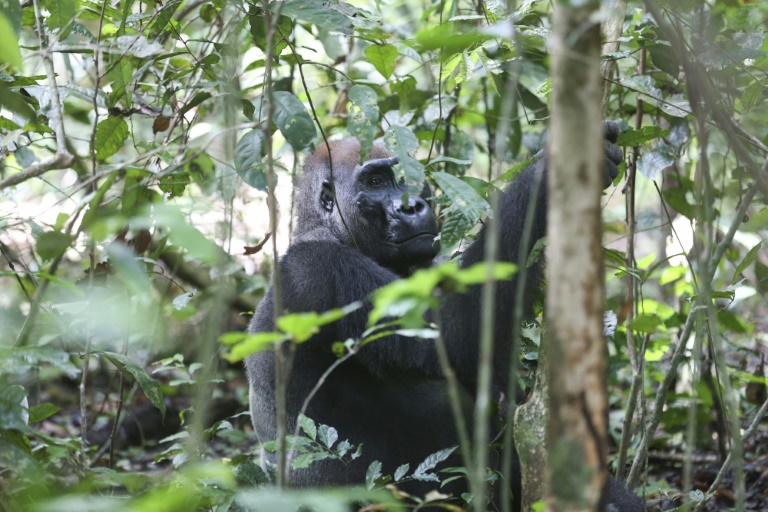
Around a bend on a narrow trail that runs deep into the forest of Gabon’s Loango national park, Kamaya comes into view. The huge silverback gorilla coolly watches visitors arrive, then goes back to his meal.

Perched on a strong branch, the 150-kilo (330-pound) beast greedily pulls more leaves from the tree to his mouth with a slow but powerful movement before lumbering down the trunk. Soon he dozes off calmly.

After two years of a total shutdown due to the Covid-19 pandemic, the executive secretary of the National Parks Agency (ANPN) has decided to resume public observations of Gabon’s gorillas, hoping the iconic species will serve as a “loss leader” to boost niche tourism.

That Kamaya and his family of about 10 individuals are so used to humans is the outcome of long labours by a team of trackers and scientists who also collect data.

They work to win funds to protect a species threatened with extinction and to attract foreign visitors.

Spending one hour with Kamaya and his group costs 300,000 CFA francs, (450 euros, almost 500 dollars), on top of charges for access to the site and accommodation.

Loango Park, which covers more than 155,000 hectares (380,000 acres) of the densely forested country, offers ample reward for a 4-5 hour road journey from Port-Gentil, the second city, followed by the track and a final stage by boat.

Though steep, the price is much lower than that paid to see the mountain gorillas in Uganda or Rwanda. It also generates income to manage protected areas that provide a safe place for the animals.

— ‘Illegal activities’ —

“Tourism is a beneficial conservation strategy for gorillas,” says Koro Vogt, manager of the Gorilla Loango project. The mountain gorillas of Rwanda and Uganda were almost extinct before funds from tourism helped to double their numbers in three decades, attaining a population of about 1,000 individuals today.

The western gorillas are far more numerous. Their total population is estimated at 360,000 individuals across six central African countries, about a quarter of them in Gabon. The Loango park is home to nearly 1,500 gorillas, some 280 kilometres (175 miles) south of the capital Libreville.

However, scientific studies by the Max Planck Institute for Evolutionary Anthropology, which specialises in great apes, indicate that the number of western gorillas is falling by three percent each year due to the destruction of  habitat, poaching and disease.

These threats are heightened by increased access to remote areas occupied by gorillas, the bush meat trade, corruption and lack of law enforcement.

Protected areas such as Loango, which are theoretically perfectly safe for animals, are home to only about 20 percent of the great apes in Gabon.

“To safeguard the gorillas, our guards patrol the national parks to reduce illegal activities and catch poachers,” says Christian Tchemambela, executive secretary of the ANPN.

“This species emblematic of Gabon is also a strong draw for foreign visitors. The development of ecotourism is at the heart of our strategy,” he adds. From June 2016 until the beginning of 2020, 845 tourists were able to observe the gorillas on site.

— ‘Gain their trust’ —

A ray of sunlight pierces the treetops and shines on Mokebo, a 15-year-old female, and the little one she is carrying on her back. Not yet a year old, Etchutchuku stirs, glances at the few people watching him, and hides shyly behind his mother.

Close by, a nearly adult male, Waka, approaches the observers out of curiosity. He is unafraid, shows no signs of aggression and settles peacefully a few metres (feet) away.

“This process is very long, it takes years to gain their trust and we are not sure of succeeding,” says eco-guide Hermann Landry.

“You have to follow them every day, all year round, relentlessly. Sometimes you lose track of them for several days and that’s serious, because they can regain their natural fear of humans,” adds Landry, a former poacher who declares that he “fell in love” with gorillas and conservation work.

During an initial habituation phase, gorillas are afraid of humans and run away when approached. In the next phase, they stop fleeing but may react with aggressive charges.

In the final phase, they react calmly and continue their activities without concern about the human presence.

Today, Gabon is counting on the gorillas to attract new visitors.

There are two family groups in the country accustomed to humans, one in Loango, the other in the Moukalaba Doudou National Park 600 kilometres (370 miles) south of Libreville. However, tourist infrastructure is still almost non-existent.

Close Bitnami banner
Bitnami