AFP

Italy chases African gas to end dependence on Russia

Italian ministers head to central Africa Wednesday in an urgent quest for new energy deals as Italy scrambles to break away from Russian gas over the Ukraine war.

Prime Minister Mario Draghi is looking to add Angola and the Congo Republic to a portfolio of suppliers to substitute Russia, which provides about 45 percent of Italian gas.

“We do not want to depend on Russian gas any longer, because economic dependence must not become political subjection”, he said in an interview with the Corriere della Sera daily published on Sunday.

“Diversification is possible and can be implemented in a relatively short amount of time — quicker than we imagined just a month ago,” he said.

Draghi, who has tested positive for Covid-19, is sending in his stead Foreign Minister Luigi Di Maio and Ecological Transition Minister Roberto Cingolani, who will travel to Luanda on Wednesday and Brazzaville on Thursday.

They will be accompanied by Claudio Descalzi, chief executive of Italian energy giant ENI.

There is also a possible trip to Mozambique on the cards in May.

The foray follows the signing of agreements with Algeria and Egypt in recent weeks.

Algeria is currently Italy’s second-largest supplier, providing around 30 percent of its consumption.

ENI said the deal with Algeria’s Sonatrach would boost deliveries of gas through the Transmed undersea pipeline by “up to nine billion cubic metres per year” by 2023-24.

Transmed only had spare pipeline capacity of 7.8 billion cubic metres per year in 2021 — though it has said it is ready to expand.

– ‘Fanciful’ –

The Egypt accord could result in up to three billion cubic meters of liquefied natural gas (LNG) bound to Europe and Italy in particular this year, ENI said.

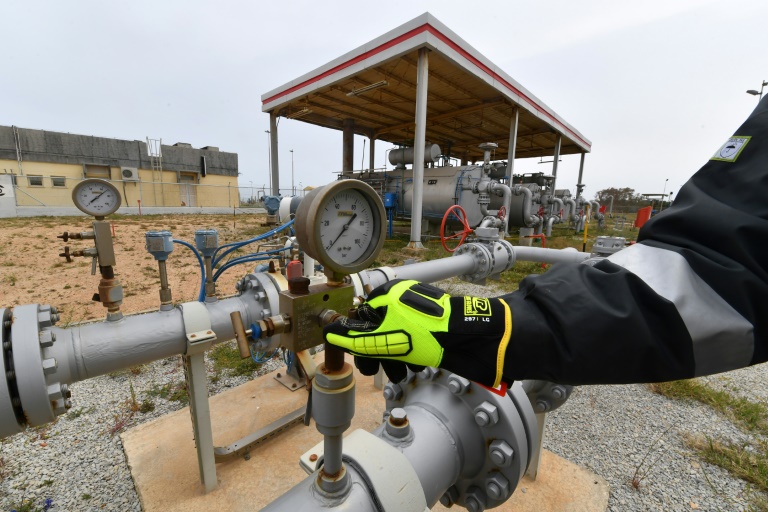
Italy is looking into buying or renting two floating storage and regasification units (FSRU) to allow it to import more LNG.

Diversification will not be cheap, warn experts, who foresee extra taxes passed on to businesses and families.

Davide Tabarelli, head of energy think tank Nomisma Energia, said Rome was rightly exploiting the “excellent relationships” that ENI has built up over 69 years in Africa, where it is the sector leader in terms of production and reserves.

But the idea of replacing Russian gas “in the short term” was “fanciful”, he told AFP. “It will take at least two or three years.”

The government said it expects to get the floating regasification units into place within 18 months.

It has also talked of kick-starting stalled projects for two onshore regasification plants, which would take some four years to build.

“This is a race against time to make sure we stock gas and oil for the next winter season,” said Francesco Galietti, head of Rome-based consultancy Policy Sonar.

Rome should be pulling out all the stops, including boosting production of fossil fuels at home, he said, but the Ecological Transition ministry was instead revoking contracts.

Cingolani’s “snobbery towards (domestic) oil and gas is delaying the phasing out of Russian gas”, he warned.

– ‘Operation thermostat’ –

Italy is one of Europe’s biggest guzzlers of gas, which currently represents 42 percent of its energy consumption, and it imports 95 percent of the gas it uses.

The government hopes to reduce that by accelerating the investment in renewables and has vowed to cut red tape on wind and solar farms.

Draghi has called for a collective sacrifice, asking Italians this month: “Do we want to have peace or do we want to have the air conditioning on?”

His rallying cry was met with some grumbling in a country feeling the effects of global heating, which science shows is driven by human burning of fossil fuels.

Undeterred, the government is readying so-called “operation thermostat”, which could see the public sector turn down heating in schools and offices by one degree, and the equivalent for air conditioning in the summer.

The rule would apply to private households and companies too, though it would be difficult to police.

It could save some four billion metric cubes of natural gas a year — or around 14 percent of the total gas imported from Russia, according to La Stampa newspaper.

Brexit bureaucracy leaves British beet rotting

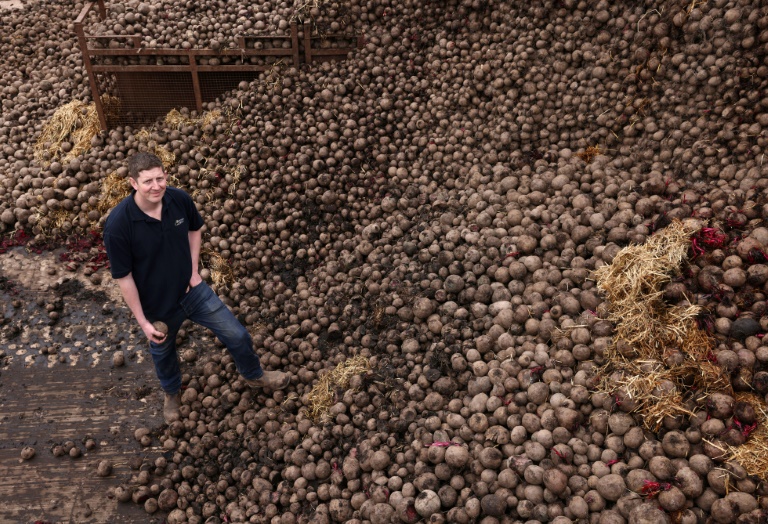
In the heart of the English countryside, Will Woodhall is trying to stay positive, despite standing next to a vast pile of rotting beetroot that would once have been worth tens of thousands of pounds.

“It’s a real shame — a lot of effort has gone into this,” the 35-year-old farm manager told AFP, gesturing to the 15-foot (4.5-metre) high mound of surplus vegetables that has been steadily decomposing on his farm since last October.

“I’ve never… had any crop leftover to this volume. Obviously it’s a large dent to our business. Hopefully we can stomach it, and I’m trying to turn (it) into a positive.”

Woodhall’s beetroot is the latest victim of the UK’s new post-Brexit reality, in which the bureaucracy and complexity of exporting many British goods into the European Union has left them increasingly unwanted.

Woodhall Growers, a 1,900-acre (770-hectare) farm in Staffordshire, central England, has been growing organic beets for nearly a decade, typically sending just under half to EU countries.

Initially, the UK’s formal departure from the now 27-member bloc in early 2020 seemed to have little impact. 

But a year later, following an 11-month transition period, it left the European single market and customs union and traders of all stripes and sizes have struggled to adapt.

– ‘No EU exports’ –

Woodhall soon learned his buyer on the continent would renege on a contract to buy hundreds of tonnes of beets and no longer place future orders. 

“The phrase they used was that they don’t want any more non-EU product,” Woodhall said.

European buyers would typically mix his beets in with others grown on the continent. But now the need to separate them to designate the British crop as non-EU produce was simply too costly and time-consuming.

“It’s a lot of hassle. I can’t blame them,” he added.

The farmer, who usually dispatches his crop over the winter months after harvesting in late autumn, has been left with several hundred tonnes worth around £90,000 ($117,000, 109,000 euros).

“I won’t recoup that, so we’ve taken a massive hit,” he said.

Prime Minister Boris Johnson and other Brexiteers promised that reversing almost five decades of European economic integration would free the country from bureaucracy and open up new trading opportunities for “global Britain”.

But for many like Woodhall involved in trade across the Channel, it has created new red tape and hindered rather than helped exports, leaving them with little choice but to look closer to home.

“It will just solely be for the UK now — no EU exports of our organic beetroot — which is a real shame,” he said.

He is planning to grow more of the other crops — spring onions, cereals, beans, peas — cultivated on the farm for domestic markets, and diversify the business.

“You’ve got to just stride forward and do things,” the farmer added, noting he was exploring everything from hosting glamping to drone racing.

But on the farming front, he conceded British buyers can only replace some of the shortfall from lost EU orders, and short-term growth would undoubtedly be hampered. 

“You can’t beat growing 34 hectares compared to growing 19 hectares,” Woodhall said, explaining his costs would remain similarly high. 

“It is good to grow more and dilute it down really”.

– ‘Heartbreaking’ –

Despite all that, Woodhall, who voted to remain in 2016, is remarkably upbeat about the country’s potential long-term prospects outside the EU — if its promises are properly delivered.

He believes the UK could be capitalising in a decade, but will need that long to adjust and has more questions than answers.

“I firmly believe that in 10 years time we’ll be better off being out, (with) Brexit, being our own market… but it’s just how many people will go bust between now and then? 

“And have we got the support higher up to do that? I don’t know.”

Woodhall argued agriculture is a big industry inside the EU with significant political backing, while British government support “falls short” due to the industry’s smaller size. 

“It’s not worth as much, I suppose, but it is to individuals like myself — it’s a livelihood for thousands of people,” he said.

In the meantime, Woodhall is left ruing the short-term fallout from the UK’s new place outside the EU, left with little choice but to let his unwanted beets rot into compost.

“It is heartbreaking. I come up here every day and look at it and put my head in my hands sometimes. 

“I just have to drive away from it and think about something else.”

IMF asks Sri Lanka to restructure debt before bailout

The International Monetary Fund said on Wednesday that it has asked cash-strapped Sri Lanka to “restructure” its huge foreign debt before a bailout programme could be finalised as anti-government protests escalated across the island.

Sri Lanka opened talks with the IMF in Washington this week after announcing its first ever default on external borrowings.

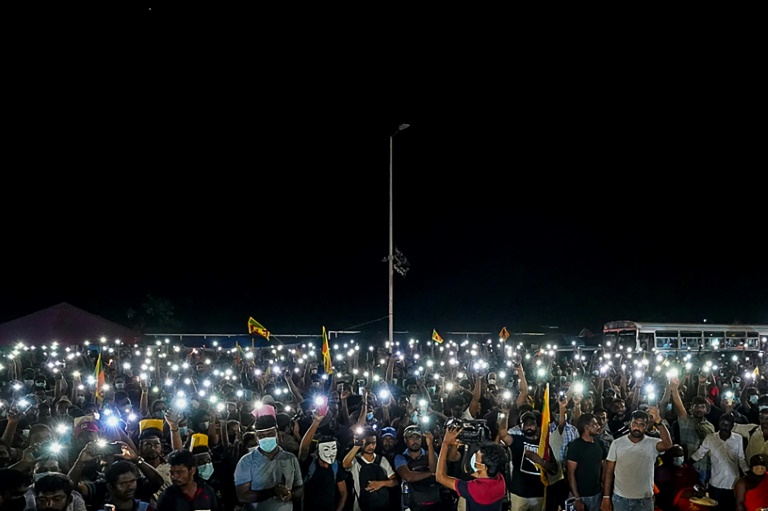
The South Asia country is in the grip of its worst economic crisis since independence in 1948 and has been rocked by a wave of protests over food and fuel shortages.

“When the IMF determines that a country’s debt is not sustainable, the country needs to take steps to restore debt sustainability prior to IMF lending,” the Fund’s country director Masahiro Nozaki said in a statement.

“Approval of an IMF-supported program for Sri Lanka would require adequate assurances that debt sustainability will be restored.”

The IMF said talks with Sri Lanka were still at an “early stage,” but it was “very concerned” about the economic situation and the hardships suffered by people, especially the poor and vulnerable.

Earlier this year, the IMF warned Sri Lanka’s approximately $51 billion foreign debt was unsustainable.

Colombo’s existing debt also means the country cannot apply for emergency financing, the IMF said.

Sources in the country’s finance ministry have made it clear that debt restructuring will require creditors to accept a “haircut” — a reduction in the value of their assets — or agree to longer repayment periods.

Nearly two weeks ago, the government nearly doubled key interest rates and allowed the currency to depreciate faster, hoping the move would encourage foreign currency inflows.

On Monday, President Gotabaya Rajapaksa conceded that Sri Lanka should have gone to the IMF “much earlier”. 

The country is short of dollars to finance even the important essentials, including food, fuel and medicines. Widespread shortages have sparked nationwide protests that turned violent on Tuesday.

One man was shot dead and 29 others were wounded in clashes in a central town, while tens of thousands continued demonstrations outside the president’s office in Colombo demanding his resignation.

Dung power: India taps new energy cash cow

India is tapping a new energy source that promises to help clean up smog-choked cities and is already providing a vital revenue stream for poor Indian farmers: truckloads of bovine manure.

Cows are venerated as sacred creatures by the country’s Hindu majority. They also have pride of place in India’s rural communities, where they are still regularly used as draught animals. 

Rural households have long burned sun-dried cattle droppings to heat stoves, a practice that continues despite government efforts to phase it out with subsidised gas cylinders.

Villages on the outskirts of the central Indian city of Indore are now being handsomely rewarded for handing over their mounds of bovine waste in a pilot project to help meet the city’s power needs.

“We have a very good quality dung, and we keep the dung clean to ensure it fetches the best price,” farmer Suresh Sisodia told AFP.

The 46-year-old has sold nearly a dozen truckloads of fresh manure at the equivalent of $235 per shipment — more than the monthly income of the average Indian farming household. 

Sisodia’s farm has 50 head of cattle and, in the past, occasionally offset costs by selling manure for fertiliser. Now, he is hopeful for a more reliable revenue stream. 

– ‘Dung money’ –

“The farmers pick it up once every six or 12 months and there are seasons when they don’t — but the plant could give us a steady income,” he said, adding that his farm generates enough manure to fill a truck every three weeks. 

His family are one of the many beneficiaries of “Gobardhan” — literally “dung money” in Hindi — since the inauguration of a nearby biomass plant by Prime Minister Narendra Modi in February. 

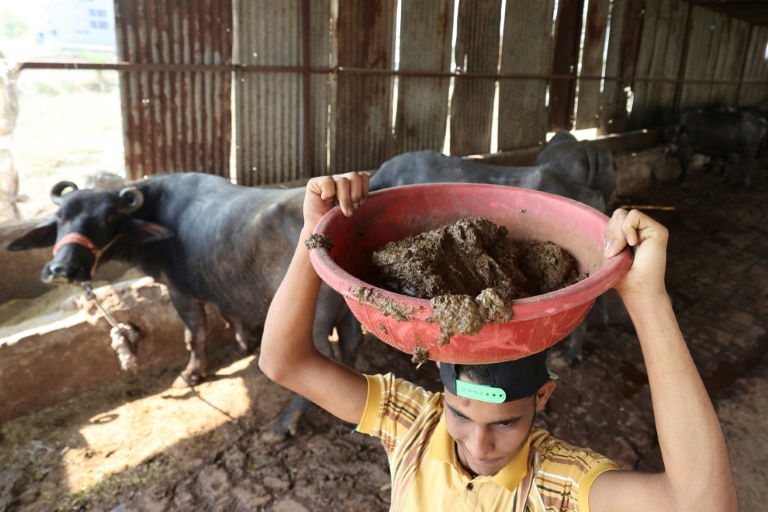
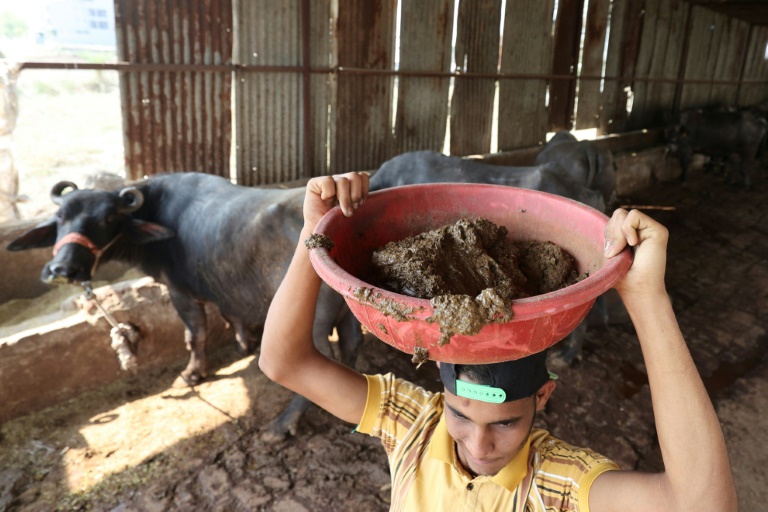
Sisodia’s cattle droppings are carted to the plant, where they are mixed with household waste to produce flammable methane gas and an organic residue that can be used as fertiliser.

Eventually, the plant is slated to work through 500 tonnes of waste, including at least 25 tonnes of bovine faeces, each day — enough to power the city’s public transit system, with plenty left over.

“One half will run Indore buses and the other half will be sold to industrial clients,” plant boss Nitesh Kumar Tripathi told AFP.

The Gobardhan pilot programme has faced its share of logistical hurdles, with decrepit rural roads making it hard for the plant’s dung-carrying trucks to reach farms. 

Farmers have also been sceptical of what appears to be a get-rich-quick scheme and required careful “assurances of quick and regular” payments before signing on, said Ankit Choudhary, who scouts villages for potential suppliers. 

The Indian government, however, has high hopes for the initiative, with Modi pledging waste-to-gas plants in 75 other locations since the Indore facility began operations. 

Cultivating alternative energy sources is an urgent priority in India, which burns coal to meet nearly three-quarters of the energy needs of its 1.4 billion citizens.

Its cities regularly rank among the most smog-choked urban centres in the world as a result. Air pollution is blamed for more than a million deaths in India annually, according to a study published in The Lancet medical journal. 

– Sacred strays –

The project is also guaranteed to appeal to Hindu nationalist groups — Modi’s most important political constituency and vocal advocates of cow protection. 

Under their watch, “cow vigilantes” have run Muslim-owned abattoirs out of business and lynched people accused of involvement in cattle slaughter.

But bovine-centric religious policies have led to unintended consequences, with stray cows now a common sight in villages and even on busy roads in big cities.

Government acolytes such as Malini Laxmansingh Gaur, a former Indore mayor and member of Modi’s party, hope that scaling up the biogas project will incentivise farmers to keep their cows even when they are too old to give milk or help till fields. 

“This extra income will both clean villages and help tackle the strays,” she told AFP.

Dung power: India taps new energy cash cow

India is tapping a new energy source that promises to help clean up smog-choked cities and is already providing a vital revenue stream for poor Indian farmers: truckloads of bovine manure.

Cows are venerated as sacred creatures by the country’s Hindu majority. They also have pride of place in India’s rural communities, where they are still regularly used as draught animals. 

Rural households have long burned sun-dried cattle droppings to heat stoves, a practice that continues despite government efforts to phase it out with subsidised gas cylinders.

Villages on the outskirts of the central Indian city of Indore are now being handsomely rewarded for handing over their mounds of bovine waste in a pilot project to help meet the city’s power needs.

“We have a very good quality dung, and we keep the dung clean to ensure it fetches the best price,” farmer Suresh Sisodia told AFP.

The 46-year-old has sold nearly a dozen truckloads of fresh manure at the equivalent of $235 per shipment — more than the monthly income of the average Indian farming household. 

Sisodia’s farm has 50 head of cattle and, in the past, occasionally offset costs by selling manure for fertiliser. Now, he is hopeful for a more reliable revenue stream. 

– ‘Dung money’ –

“The farmers pick it up once every six or 12 months and there are seasons when they don’t — but the plant could give us a steady income,” he said, adding that his farm generates enough manure to fill a truck every three weeks. 

His family are one of the many beneficiaries of “Gobardhan” — literally “dung money” in Hindi — since the inauguration of a nearby biomass plant by Prime Minister Narendra Modi in February. 

Sisodia’s cattle droppings are carted to the plant, where they are mixed with household waste to produce flammable methane gas and an organic residue that can be used as fertiliser.

Eventually, the plant is slated to work through 500 tonnes of waste, including at least 25 tonnes of bovine faeces, each day — enough to power the city’s public transit system, with plenty left over.

“One half will run Indore buses and the other half will be sold to industrial clients,” plant boss Nitesh Kumar Tripathi told AFP.

The Gobardhan pilot programme has faced its share of logistical hurdles, with decrepit rural roads making it hard for the plant’s dung-carrying trucks to reach farms. 

Farmers have also been sceptical of what appears to be a get-rich-quick scheme and required careful “assurances of quick and regular” payments before signing on, said Ankit Choudhary, who scouts villages for potential suppliers. 

The Indian government, however, has high hopes for the initiative, with Modi pledging waste-to-gas plants in 75 other locations since the Indore facility began operations. 

Cultivating alternative energy sources is an urgent priority in India, which burns coal to meet nearly three-quarters of the energy needs of its 1.4 billion citizens.

Its cities regularly rank among the most smog-choked urban centres in the world as a result. Air pollution is blamed for more than a million deaths in India annually, according to a study published in The Lancet medical journal. 

– Sacred strays –

The project is also guaranteed to appeal to Hindu nationalist groups — Modi’s most important political constituency and vocal advocates of cow protection. 

Under their watch, “cow vigilantes” have run Muslim-owned abattoirs out of business and lynched people accused of involvement in cattle slaughter.

But bovine-centric religious policies have led to unintended consequences, with stray cows now a common sight in villages and even on busy roads in big cities.

Government acolytes such as Malini Laxmansingh Gaur, a former Indore mayor and member of Modi’s party, hope that scaling up the biogas project will incentivise farmers to keep their cows even when they are too old to give milk or help till fields. 

“This extra income will both clean villages and help tackle the strays,” she told AFP.

Brexit bureaucracy leaves British beet rotting

In the heart of the English countryside, Will Woodhall is trying to stay positive, despite standing next to a vast pile of rotting beetroot that would once have been worth tens of thousands of pounds.

“It’s a real shame — a lot of effort has gone into this,” the 35-year-old farm manager told AFP, gesturing to the 15-foot (4.5-metre) high mound of surplus vegetables that has been steadily decomposing on his farm since last October.

“I’ve never… had any crop leftover to this volume. Obviously it’s a large dent to our business. Hopefully we can stomach it, and I’m trying to turn (it) into a positive.”

Woodhall’s beetroot is the latest victim of the UK’s new post-Brexit reality, in which the bureaucracy and complexity of exporting many British goods into the European Union has left them increasingly unwanted.

Woodhall Growers, a 1,900-acre (770-hectare) farm in Staffordshire, central England, has been growing organic beets for nearly a decade, typically sending just under half to EU countries.

Initially, the UK’s formal departure from the now 27-member bloc in early 2020 seemed to have little impact. 

But a year later, following an 11-month transition period, it left the European single market and customs union and traders of all stripes and sizes have struggled to adapt.

– ‘No EU exports’ –

Woodhall soon learned his buyer on the continent would renege on a contract to buy hundreds of tonnes of beets and no longer place future orders. 

“The phrase they used was that they don’t want any more non-EU product,” Woodhall said.

European buyers would typically mix his beets in with others grown on the continent. But now the need to separate them to designate the British crop as non-EU produce was simply too costly and time-consuming.

“It’s a lot of hassle. I can’t blame them,” he added.

The farmer, who usually dispatches his crop over the winter months after harvesting in late autumn, has been left with several hundred tonnes worth around £90,000 ($117,000, 109,000 euros).

“I won’t recoup that, so we’ve taken a massive hit,” he said.

Prime Minister Boris Johnson and other Brexiteers promised that reversing almost five decades of European economic integration would free the country from bureaucracy and open up new trading opportunities for “global Britain”.

But for many like Woodhall involved in trade across the Channel, it has created new red tape and hindered rather than helped exports, leaving them with little choice but to look closer to home.

“It will just solely be for the UK now — no EU exports of our organic beetroot — which is a real shame,” he said.

He is planning to grow more of the other crops — spring onions, cereals, beans, peas — cultivated on the farm for domestic markets, and diversify the business.

“You’ve got to just stride forward and do things,” the farmer added, noting he was exploring everything from hosting glamping to drone racing.

But on the farming front, he conceded British buyers can only replace some of the shortfall from lost EU orders, and short-term growth would undoubtedly be hampered. 

“You can’t beat growing 34 hectares compared to growing 19 hectares,” Woodhall said, explaining his costs would remain similarly high. 

“It is good to grow more and dilute it down really”.

– ‘Heartbreaking’ –

Despite all that, Woodhall, who voted to remain in 2016, is remarkably upbeat about the country’s potential long-term prospects outside the EU — if its promises are properly delivered.

He believes the UK could be capitalising in a decade, but will need that long to adjust and has more questions than answers.

“I firmly believe that in 10 years time we’ll be better off being out, (with) Brexit, being our own market… but it’s just how many people will go bust between now and then? 

“And have we got the support higher up to do that? I don’t know.”

Woodhall argued agriculture is a big industry inside the EU with significant political backing, while British government support “falls short” due to the industry’s smaller size. 

“It’s not worth as much, I suppose, but it is to individuals like myself — it’s a livelihood for thousands of people,” he said.

In the meantime, Woodhall is left ruing the short-term fallout from the UK’s new place outside the EU, left with little choice but to let his unwanted beets rot into compost.

“It is heartbreaking. I come up here every day and look at it and put my head in my hands sometimes. 

“I just have to drive away from it and think about something else.”

Sri Lanka town under curfew, foreign concern over killing

Police kept up a curfew in central Sri Lanka on Wednesday, a day after the killing of an anti-government demonstrator in escalating protests across the island triggered international condemnation.

The government promised investigations into allegations that police used excessive force to disperse people protesting high fuel prices and demanding President Gotabaya Rajapaksa’s resignation over the worsening economic crisis.

Sri Lanka is in the grip of its worst economic downturn since independence in 1948, with regular blackouts, severe shortages of fuel and other goods and record inflation causing widespread misery. 

“I have already initiated an inquiry into the conduct of officers at Rambukkana,” police chief Chandana Wickramaratne said in a statement as he ordered an indefinite curfew in the area.

The crowd was about to set alight a diesel tanker when officers opened fire to disperse in Rambukkana, 95 kilometres (60 miles) east of the capital, police said in an earlier statement.

In the first fatal clash since anti-government protests broke out this month, at least 29 people including 11 policemen were wounded, officials said.

Top Colombo-based envoys, including those from the US, Britain and Canada, expressed concern over the police shooting and called for restraint from all sides as Sri Lanka opens bailout talks with the International Monetary Fund in Washington.

“A full, transparent investigation is essential and the people’s right to peaceful protest must be upheld,” US ambassador Julie Chung said.

The British High Commissioner Sarah Hulton added: “I condemn violence in all forms and call for restraint.”

And her Canadian counterpart David McKinnon said that “those instigating violence must be accountable”.

Within hours, police fired tear gas to break up another protest in the south of the island, but there were no immediate reports of casualties, officials and residents said.

Police moved to disperse people occupying a main road and holding up traffic in Matara, 160 kilometres (100 miles) south of Colombo, residents said.

Across the country, there were protests against Tuesday’s sharp increase in fuel prices and the shortage of diesel and petrol as the government seeks three to four billion dollars from the IMF to overcome its balance-of-payments crisis and boost depleted reserves.

Trade unions have called a general strike on Wednesday to protest rising living costs.

Public transport fares are set to rise by 35 percent on Wednesday after diesel was raised by nearly 65 percent the day before. Bread has gone up nearly 30 percent. 

In the capital Colombo, a large crowd has been camped outside the President’s seafront office since April 9, demanding the leader step down. 

Rajapaksa acknowledged public anger over the ruling family’s mismanagement on Monday, after appointing a new cabinet to try to assuage fury over the crisis.

Sri Lanka’s economic meltdown came after the coronavirus pandemic torpedoed vital revenue from tourism and remittances and the government last week announced a default on huge foreign debt.

New Indian 'sex start-ups' challenge old taboos

The couple behind a new start-up using adult toys and cheeky adverts to challenge long-held taboos say they want to take the “shame, guilt and fear” out of sex in India.

Despite its heritage as the land of the Kama Sutra, open discussions around sexuality and intimacy are often regarded as obscene in the largely conservative country.

MyMuse, founded by Anushka and Sahil Gupta, are tackling this with tongue-in-cheek marketing and creative euphemisms, which they say make the products seem less intimidating and encourage first-time buyers.

“Diwali is coming and so should you! And as always, we’re urging you to save the fireworks for the bedroom,” exclaimed one such advertisement on Facebook before one of India’s biggest religious holidays, and its customary pyrotechnics, last year.

“There’s this shame, guilt and fear associated with buying something that should be used in your intimate areas, and that’s the first thing we wanted to turn around,” Anushka says.

MyMuse is one of a growing number of businesses riding a wave of sexual liberation amongst urban young professionals, already navigating global trends on Instagram and comfortable with dating apps such as Tinder, Bumble and Hinge.

Investors too are betting on this untapped market in the vast country of 1.4 billion: India’s nascent sex toys sector was valued at $91 million by TechSci Research in 2020, and predicted to grow 16 percent annually.

– No sleaze, no misogyny –

The Guptas began shipping out discreetly packaged vibrators — “massagers” in MyMuse’s genteel parlance -– candles, and lubricants from a spare bedroom in their home during last year’s Covid-19 lockdowns.

Benefitting from capital pouring into Indian tech start-ups during the pandemic, the firm received seed funding from venture capitalist firms. They have made more than a dozen hires and now ship to nearly 200 cities nationwide.

Using a targeted social media campaign, they say they are trying to reframe the conversation around sex away from often “sleazy” portrayals in Bollywood movies.

“(We want to) just remove all of that misogyny, sexism from this idea and just make it something that’s beautiful, that’s natural, universal,” Anushka, who left her job at WeWork to become an entrepreneur, explains.

There are a growing number of services for India’s sexually curious: fellow start-up Gizmoswala offers same-day delivery on bondage kits for Mumbai residents, while LoveTreats exhorts online shoppers to discover their “naughty side” with lingerie sets and remote-controlled vibrators. 

But they still need to contend with wider society — particularly older, more conservative generations that idolise female virtue and honour, and a culture where arranged marriages are still the norm.

“There are many Indias when it comes to sexual awareness. While one India has accepted and changed, another is changing slowly and another is still 10 or 20 years behind,” sex education specialist Jaya Aiyappa says.

Vigilante groups have attacked couples they believe are not behaving in line with “Indian values”.

Politicians and the police have also been accused of raiding hotels, nightclubs and attacking young people for public displays of affection, drinking or wearing immodest clothing.

A haul of vibrators and dildos was seized by customs last year -– the result of a boom in online orders during pandemic lockdowns — because Indian law still bans the import of “toys that resemble human body parts”.

– Change the conversation –

The lack of dialogue around sex can lead to misinformation and abuse, Aiyappa warns, adding that even efforts to introduce a broader sex education curriculum in schools have faced a backlash.

Anushka Gupta says she realised things needed to change when she returned from working abroad and struggled to find even basic sexual health products such as contraceptives and lubricants.

“This is a situation that’s fundamentally broken,” she said, adding that Indian women often face a culture of enforced silence around sex.

“It’s the most typically Indian conundrum where they will not talk to a woman about sex at all until she’s married, and the moment she’s married they’ll be like, ‘So when’s the baby coming?'”

But beyond challenging social norms, this new wave of start-ups see an opportunity for a “sexual wellness” industry in India. 

Sahil, who has an MBA from Harvard Business School and previously worked in private equity, says that most young married couples still live with their families –- the bedroom is their only place of real privacy.

“The bedroom in India for a lot of people is one of the few safe spaces that is untouched,” he explains, describing it as a couple’s “oasis”. 

MyMuse already sells bespoke candles and plans to expand into clothing and offer sex counselling services, while Gizmoswala is set to manufacture and export its own-brand toys to other South Asian nations.

Smartphone proliferation and easy access to modern Indian dramas such as Netflix hit Lust Stories are also tackling taboo subjects like same-sex relationships and casual dating, helping to normalise conversations about intimacy. 

Requesting anonymity, one 32-year-old professional, says of the shift in attitudes: “It’s exciting that this is finally happening in India. The conversation around sex is really changing.”

Oil stabilises after big drop on IMF growth cut

Asian markets were flat on Wednesday as oil began clawing its way back up from a big drop after the International Monetary Fund downgraded its global growth forecast for 2022. 

The IMF lowered its outlook to 3.6 percent — a .08 percent slash from its previous estimate released in January — prompting a five-percent dive in oil prices on Tuesday. 

The fund pointed to surging energy prices, rising debt, supply-chain woes, and a series of inflationary crises linked to the war in Ukraine and the coronavirus pandemic.

“The economic effects of the war are spreading far and wide — like seismic waves that emanate from the epicenter of an earthquake,” IMF chief economist Pierre-Olivier Gourinchas said in the report.

While oil prices showed their first sign of susceptibility to global economic trends after the announcement, US stocks rallied on the back of promising housing-starts data and solid corporate earnings.

“In the absence of inventory buffers, there are only two things that can send oil lower, recession and or demand destruction. More folks were more willing to check one or both of those boxes overnight on the back of the IMF economic warning shot and China’s protracted lockdown,” said Stephen Innes at SPI Asset Management.

Tens of millions are still barred from leaving home in China’s economic centre Shanghai and tech hub Shenzhen, where a Covid-19 outbreak has broken down supply lines and shuttered businesses.

Alongside the positive corporate earnings and housing data, much of Wall Street’s strength also stemmed from the positioning of the market.

“It’s a nice reflex rally from an oversold position,” said Art Hogan, strategist at National Securities, who said the dynamics reflected a “pretty oversold market”.

In Tokyo, the Nikkei 225 opened slightly higher, buoyed by a cheaper yen, but the Hang Seng Index in Hong Kong was marginally lower after being battered by China growth concerns and Beijing’s crackdown on the tech sector on Tuesday.

Shanghai and Seoul were also down while Sydney, Jakarta, and Taipei were inching upward.

– Key figures around 0230 GMT –

Tokyo – Nikkei 225: UP 0.56 percent at 27,135.27

Shanghai – Composite: DOWN 0.64 percent at 3,173.65 

Hong Kong – Hang Seng Index: DOWN 0.40 percent at 20,943.35 

Dollar/yen: DOWN at 128.65 yen from 128.89 yen

Euro/dollar: UP at $1.0806 from $1.0796

Pound/dollar: UP at $1.3032 from $1.2998

Euro/pound: DOWN at 82.92 pence from 82.98 pence

Brent North Sea crude: UP 0.50 percent at $107.79 per barrel

West Texas Intermediate: UP 0.67 percent at $103.25 per barrel

New York – Dow: UP 1.5 percent at 34,911.20 (close)

London – FTSE 100: DOWN 0.2 percent at 7,601.28 points (close)

burs-ssy/leg

Under shadow of drought, Santiago ditches exotic plants

With drought casting a constant shadow over Santiago’s 7.1 million residents, there has been a recent rush to replace thirsty, exotic plants with hardier, native ones in the hopes of staving off water rationing.

One of Latin America’s most urbanized cities has experienced more than a decade of drought, and managing water access for its fast-growing population is becoming increasingly difficult.

Last year saw the driest winter — the rainy season in Chile — this century, with 71 percent lower rainfall for Santiago than usual, according to the national meteorological office.

Predictions are equally dire for the southern-hemisphere winter about to start with the Mapocho River at 57 percent of capacity, the Maipo River at 61 percent and the El Yeso reservoir at just over two-thirds full.

City authorities are bracing for tough times ahead.

“We can’t make it rain. That is out of our hands, but we can prepare for… an extreme situation,” said Claudio Orrego, governor of Santiago.

Last week, the municipal government announced a four-step crisis plan that starts with encouraging voluntary water conservation but could end in a “Red Alert” phase of rationing.

If the water runs out, cuts will be rolled out to one sector of the city at a time, for a maximum of 24 hours each, under the plan.

It could affect some 142,000 households supplied by the Mapocho River, which bypasses Santiago from east to west, and another 1.5 million that rely on the Maipo River to the south.

– 100,000 trees –

Every day, agricultural engineer Pablo Lacalle — head of water resources at the Santiago Metropolitan Park (Parquemet) — guages the level of the Mapocho River.

Last year, the water level fell by more than half, according to official data.

“We have to plan… to know how much irrigation capacity we will have,” Lacalle told AFP with a concerned look.

“We have a deficit of about 87 percent of water in the park compared to previous years… Fifteen years ago the park had enough water to irrigate everything.”

Faced with the new reality, the park is rolling out a drought-busting re-planting plan.

“We have replaced exotic forest with native forest,” with 100,000 trees replanted in three years on the park’s northern slope, Parquemet director Eduardo Villalobos said.

Last year, pasture in the park was reduced by 50,000 square meters and replaced with endemic plants.

– Every drop ‘precious’ –

In the city itself, some are starting to take aim at green grass.

Urban architect Joaquin Cerda in 2021 launched a movement against “European-style” grass-lined sidewalks.

His project, “Vereda Nativa” (Native Sidewalk), has so far replaced some 150 square meters (1,600 square feet) of grass in the neighborhood of Pedro de Valdivia Norte with 25 native plant species. 

These were more adept, he said, to the climate of Santiago, “to prolonged drought and to live a long time without water,” he told AFP.

Now, “we water here once a week for half-an-hour using drip irrigation,” said Cerda, reducing water consumption to less than a tenth of what it was before.

“Every drop of water is very precious.”

According to the World Bank, annual precipitation in Chile’s coastal regions has decreased by 15 to 30 percent in the last century, leading to multiple periods of severe drought.

Climate change would likely change the frequency and magnitude of hazards such as wildfires and droughts, with risks for economic growth and public health, it says.

Access to water has become an increasingly contentious point in Chile.

Legally, water is a resource for public use, but the government has granted almost all exploitation rights to the private sector.

Industry accounts for about 20 percent of consumption and agriculture another 70 percent, with avocado — a major Chilean export — a particularly thirsty crop.

This all posed little problem in times of abundance, but drought brought a furious reaction in 2020 when some communities started running out of water.

Protesters occupied a well managed by a copper mining company, demanding it be used to provide water to communities instead.

The Constitutional Convention drafting a proposed new founding law for Chile on Monday approved an article stating that water is an “inalienable public good.”

Close Bitnami banner
Bitnami