AFP

Netflix shares plunge as subscribers drop

Netflix shares lost a quarter of their value Tuesday after the company revealed its ranks of subscribers shrank in the first quarter of this year.

It was the first time in a decade that the leading streaming television service had lost subscribers. The company blamed the quarter-over-quarter erosion to suspension of its service in Russia due to Moscow’s invasion of Ukraine.

Netflix ended the first quarter of this year with 221.6 million subscribers, slightly less than the final quarter of last year. 

The Silicon Valley tech firm reported a net income of $1.6 billion in the recently ended quarter, compared to $1.7 billion in the same period a year earlier. Netflix shares were down more than 25 percent to $259.30 in after-market trades that followed release of the earnings figures.

Netflix believes that factors hampering its growth includes subscribers sharing their accounts with people not living in their homes.

The streaming giant estimated that while it has nearly 222 million households paying for its service, accounts are shared with more than 100 million other households not paying subscription fees.

“When we were growing fast it wasn’t a high priority, and now we’re working super hard on it,” chief executive Reed Hastings said of account sharing during an earnings call.

“These are over a hundred million households that already are choosing to view Netflix; they love the service, we’ve just got to get paid in some degree for them.”

Netflix is testing ways to make money from people sharing accounts, such as by adding a feature that lets subscribers pay slightly more to add other households.

“If you’ve got a sister, let’s say that’s living in a different city, and you want to share Netflix with her – that’s great,” chief product officer Greg Peters said on the earnings call.

“We’re not trying to shut down that sharing, but we’re going to ask you to pay a bit more to be able to share with her.”

Another factor crimping Netflix growth is intense competition from titans such as Apple and Disney.

– Inflation squeeze –

Netflix and its rivals in streaming television are also up against a rate of inflation that has people likely taking stock of how many entertainment subscriptions they have racked up, according to analyst Rob Enderle of Enderle Group.

“With inflation taking hold, people are starting to watch their pennies,” Enderle said. “You get a situation where people are thinking through the subscriptions they have and the subscriptions that they keep.”

A big player in the market like Netflix will find it hard to grow in that kind of economic environment, especially in a market like the United States where it is deeply penetrated, Enderle told AFP.

Netflix recently announced subscription price bumps in the United States, with the basic option now costing $9.99, and the most expensive going up to $19.99. 

Netflix is looking at possibly adding a lower-priced subscription tier subsidized by advertising, a model that Hastings had long snubbed.

“It’s pretty clear that it’s working for Hulu,” Hastings said.

“It you still want the ad-free option, you will be able to have that. If you’d rather pay a lower price and you’re ad-tolerant, we’re going to cater to you also.”

Weaving ads into Netflix for revenue is “inevitable” given the recent earnings figures, said Upholdings portfolio manager Robert Cantwell.

The streaming television race is heating up, with Disney showing earlier this year that it was closing the gap with market leader Netflix, whose stride has slowed.

Like the Prime video streaming service fielded by Amazon, Disney is copying Netflix’s tactic of investing in local content that appeals to the language, culture and tastes in respective international markets.

Netflix has made that approach work, backing original blockbusters such as “Squid Game” from South Korea and France’s “Lupin.”

Florida governor calls to end Disney's self-governing status at theme park

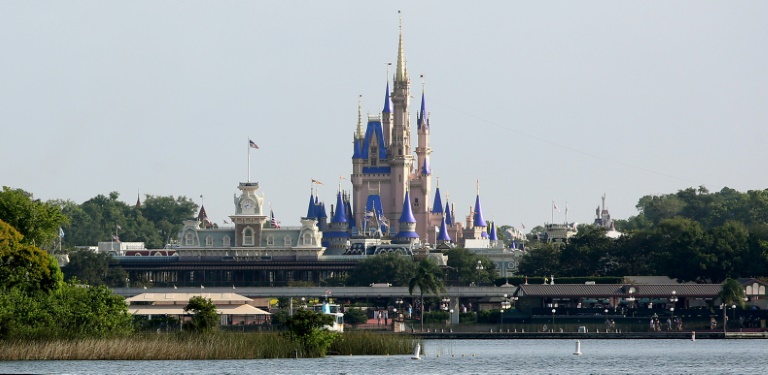
Florida governor Ron DeSantis asked the US state’s congress Tuesday to vote to eliminate a statute that allows entertainment giant Disney to act as a local government in Orlando, where it has its theme park.

The move is the latest episode in a dispute between DeSantis’ administration and Disney, after the company criticized the passage in March of a law banning school lessons on sexual orientation.

The Republican governor demanded the state congress address eliminating Disney’s special status during a congressional session convened to redraw the electoral map.

“Yes, they will be considering the congressional map, but they also will be considering termination of all special districts that were enacted in Florida prior to 1968 — and that includes the Reedy Creek Improvement District,” DeSantis told a press conference.

The Reedy Creek Improvement District was an area created by Florida’s congress in 1967 to facilitate the construction of Disney World in Orlando.

The area is about 38 square miles (100 square kilometers) and includes two cities and land in Orange and Osceola counties, in central Florida.

Under that agreement, Disney runs the district as the entertainment juggernaut were a local government, including collecting taxes and guaranteeing essential public services such as garbage collection and water treatment.

The dispute began after DeSantis in early March signed into law a bill that bans lessons on sexual orientation and gender identity in elementary schools, the latest effort by Republicans in the United States to reshape education policy along conservative lines.

Opponents and LGBTQ rights activists lobbied against what they call the “Don’t Say Gay” law, which will affect kids in kindergarten through third grade, when they are eight or nine years old.

Disney CEO Bob Chapek slammed the law and halted all of Disney’s political donations in Florida — a move that came after weeks of outcry, particularly among LGBTQ staff, over the company not taking a public stand against the legislation.

“Florida’s HB 1557, also known as the ‘Don’t Say Gay’ bill, should never have passed and should never have been signed into law,” Chapek said after DeSantis signed the bill.

The governor responded by calling Disney’s attitude “dishonest” and announcing in late March that his administration could withdraw the company’s special privileges.

Cheers and jeers in US as plane mask mandates are lifted

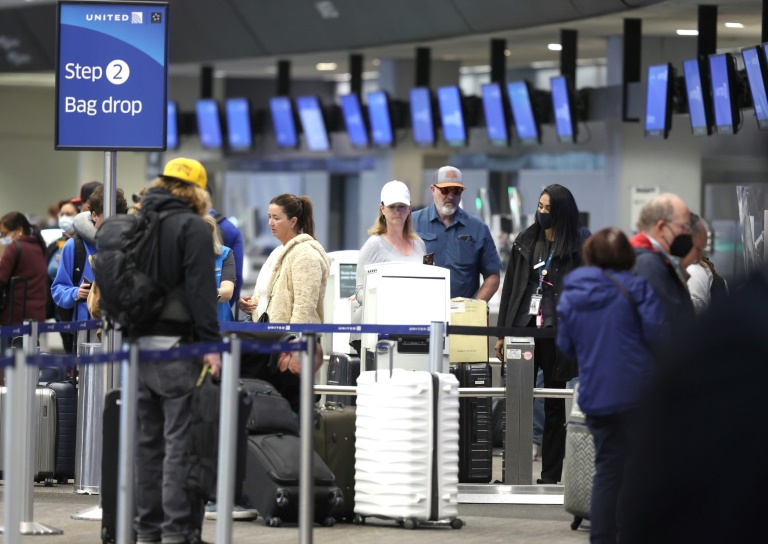
Airlines, subways and bus services across the United States moved quickly Tuesday to remove mask requirements following a federal court ruling that struck down face-covering mandates on public transportation, a hot-button issue throughout the pandemic.

Uber, Lyft and Amtrak were among the firms that announced an end to masking requirements hours after the decision was released, prompting reactions from travelers on social media.

In one clip, a Delta Air Lines pilot announcing the shift mid-flight is greeted by loud cheers. “Finally!” yells one passenger.

Considerably less enthusiastic was Scott Hechinger, an expert in public defender law, who also heard cheers at the airport, but became increasingly alarmed during the flight. 

“There is so much sneezing and coughing. And people just breathing it in. Freedom,” Hechinger tweeted.

Policymakers in Washington had decided last week to extend the federal mask mandate through May 3, but a federal judge struck that down on Monday, prompting an immediate wave of announcements from major airlines, including United Airlines and American Airlines.

On Tuesday, both Uber and Lyft shifted to a policy intended to be respectful of those who wish to continue wearing masks, while no longer requiring it. 

“While mask usage is still recommended, we’ve updated our Covid safety policies,” Uber said. “Let’s move forward, safely together.”

Rail company Amtrak also changed its policy, announcing that while masks were no longer required, “anyone needing or choosing to wear one is encouraged to do so.”

One prominent transportation provider holding firm was New York’s Metropolitan Transit Authority, which will continue to require face coverings on the city’s subways and buses, a spokesman said. In Washington, the Metro bus and rail system lifted its mandate.

– Majority support –

The changes come on the heels of Monday’s ruling from US federal judge Kathryn Kimball Mizelle who found that the mask mandate exceeds the statutory authority of the Centers for Disease Control and Prevention (CDC).

Mizelle, a nominee of Republican former president Donald Trump, issued her ruling in a lawsuit filed in July 2021 by a conservative non-profit organization called the Health Freedom Defense Fund and two individual plaintiffs. 

Although the public has a “strong interest” in combating the spread of Covid-19, the judge said, the mask mandate “exceeded the CDC’s statutory authority,” and the agency “failed to adequately explain its decisions.”

The Justice Department and CDC said late Tuesday that they disagreed with Mizelle’s ruling.

They described the masking order as a “valid exercise of the authority Congress has given CDC to protect public health,” according to a Justice Department statement that said potential next steps depended on a CDC public health assessment.

“If CDC concludes that a mandatory order remains necessary for the public’s health after that assessment, the Department of Justice will appeal the district court’s decision,” the statement added.

Polling suggests continued majority support for indoor mask mandates, but with a clear minority opposed.

A YouGov America poll conducted April 18, shortly before the ruling, found 63 percent “strongly” or “somewhat” support US government requirements for masks on public transport. 

Of the remainder, 19 percent were “strongly” opposed, 10 percent were “somewhat” opposed and nine percent weren’t sure.

Mask requirements have been a contentious topic throughout the pandemic and have proven particularly nettlesome on planes, where there has been a sharp uptick in assaults of flight attendants.

Flight attendants have been divided on whether to maintain the rule, Sara Nelson, president of the Association of Flight Attendants union said on CNBC Tuesday.

“There’s absolutely a sigh of relief from flight crews, but there are also people who are really concerned,” said Nelson, adding that the union did not take a position on whether to extend the mandate.

Representative Sam Graves of Missouri, the senior Republican on the House Transportation Committee, applauded Mizelle’s ruling. 

“It’s about time,” said Graves. “This hypocritical and overreaching mandate was never about health or science, since mask mandates were gone practically everywhere else. It’s time for this mandate to go once and for all.”

But Tatiana Prowell, an oncology professor at Johns Hopkins University School of Medicine, said she was hearing from those who are immunocompromised and others with cancer.

“In addition to wearing N95 masks, I’m advising them to travel on less popular days/times if possible during the pandemic for fewer crowds,” Prowell said on Twitter.

Temporary aid can offset inflation hit to families: IMF official

Faced with surging inflation that is hitting poor families especially hard, which has sparked unrest in some countries, policymakers should take immediate steps to offset the pain with targeted and temporary relief, IMF chief economist Pierre-Olivier Gourinchas said Tuesday.

“We’ve seen already in some countries people protesting when they see the price of food or basic items increasing very rapidly,” the official told AFP in an interview.

Governments can alleviate impact of the price jumps with “targeted measures to try to support vulnerable populations,” which can include steps like utility bill discounts or direct payments to poor families, he said.

Gourinchas earlier Tuesday unveiled the IMF’s latest World Economic Outlook which flags rising inflation as a key risk, made worse by the Russian invasion of Ukraine that has caused a surge in prices of fuel and food.

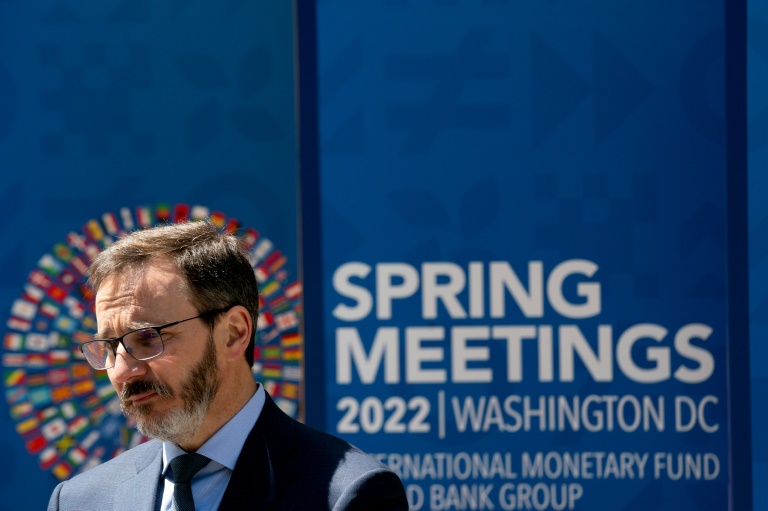
The damage the conflict is wreaking on the world economy, including the highest inflation in decades, is the key focus of global finance officials who are gathered this week for the spring meetings of the IMF and World Bank.

Support also could include “energy price subsidies, as long as they’re clear, they’re transparent and they’re temporary, so that they are not going to affect the budget for too long,” Gourinchas said.

That is an unusual stance for the Washington-based crisis lender, which historically abhorred subsidies and demanded countries eliminate them and tighten spending in exchange for financial support.

The IMF has often been cast as the villain in popular protests against austerity measures imposed by governments seeking to right their economies with the help of a loan package.

In recent weeks, demonstrators have taken to the streets in Peru and Sri Lanka to demand action from their leaders as the conflict in Ukraine and Western sanctions on Russia drove food and fuel prices to soar and created shortages that officials warn could cause a food crisis.  

Sri Lanka defaulted on its $51 billion in debt.

– Faster debt relief –

Gourinchas said some low income countries “with very limited fiscal space and elevated levels of debt,” will need outside help.

“The fund and other organizations are working on trying to address this food insecurity crisis, provide funding and food supplies to affected countries,” he said.

But for other countries the debt will become unsustainable and they will need to restructure those loans, he said, noting that about 60 percent of low income countries already face or are at high risk of debt distress.

During the Covid-19 pandemic, the Group of 20 adopted a Common Framework to provide a path to orderly debt restructuring, but only three countries have even applied for relief.

“It’s not been very successful yet, so we absolutely need to have a more rapid process,” he said, although he acknowledged that the process is complex.

Cheers and jeers in US as plane mask mandates are lifted

Airlines, subways and bus services across the United States moved quickly Tuesday to remove mask requirements following a federal court ruling that struck down face-covering mandates on public transportation, a hot-button issue throughout the pandemic.

Uber, Lyft and Amtrak were among the firms that announced an end to masking requirements hours after the decision was released, prompting reactions from travelers on social media.

In one clip, a Delta Air Lines pilot announcing the shift mid-flight is greeted by loud cheers. “Finally!” yells one passenger.

Less enthusiastic was Scott Hechinger, an expert in public defender law, who also heard cheers at the airport, but became increasingly alarmed during the flight. 

“There is so much sneezing and coughing. And people just breathing it in. Freedom,” Hechinger tweeted.

Policymakers in Washington had decided last week to extend the federal mask mandate through May 3, but a federal judge struck that down on Monday, prompting an immediate wave of announcements from major airlines, including United Airlines and American Airlines.

On Tuesday, both Uber and Lyft shifted to a policy intended to be respectful of those who wish to continue wearing masks, while no longer requiring it. 

“While mask usage is still recommended, we’ve updated our Covid safety policies,” Uber said. “Let’s move forward, safely together.”

Rail company Amtrak also changed its policy, announcing that while masks were no longer required, “anyone needing or choosing to wear one is encouraged to do so.”

One prominent transportation provider holding firm was New York’s Metropolitan Transit Authority, which will continue to require face coverings on the city’s subways and buses, a spokesman said. In Washington, the Metro bus and rail system lifted its mandate.

– Majority support –

The changes come on the heels of Monday’s ruling from US federal judge Kathryn Kimball Mizelle who found that the mask mandate exceeds the statutory authority of the Centers for Disease Control and Prevention (CDC).

Mizelle, a nominee of Republican former president Donald Trump, issued her ruling in a lawsuit filed in July 2021 by a conservative non-profit organization called the Health Freedom Defense Fund and two individual plaintiffs. 

Although the public has a “strong interest” in combating the spread of Covid-19, the judge said, the mask mandate “exceeded the CDC’s statutory authority,” and the agency “failed to adequately explain its decisions.”

White House Press Secretary Jen Psaki called the ruling a “disappointing decision,” but it was unclear whether the Biden administration intended to appeal — as some public health advocates have urged.

Polling suggests continued majority support for indoor mask mandates, but with a clear minority opposed.

A YouGov America poll conducted April 18, shortly before the ruling, found 63 percent “strongly” or “somewhat” support US government requirements for masks on public transport. 

Of the remainder, 19 percent were “strongly” opposed, 10 percent were “somewhat” opposed and nine percent weren’t sure.

Mask requirements have been a contentious topic throughout the pandemic and have proven particularly nettlesome on planes, where there has been a sharp uptick in assaults of flight attendants.

Flight attendants have been divided on whether to maintain the rule, Sara Nelson, president of the Association of Flight Attendants union said on CNBC Tuesday.

“There’s absolutely a sigh of relief from flight crews, but there are also people who are really concerned,” said Nelson, adding that the union did not take a position on whether to extend the mandate.

Representative Sam Graves of Missouri, the senior Republican on the House Transportation Committee, applauded Mizelle’s ruling. 

“It’s about time,” said Graves. “This hypocritical and overreaching mandate was never about health or science, since mask mandates were gone practically everywhere else. It’s time for this mandate to go once and for all.”

But Tatiana Prowell, an oncology professor at Johns Hopkins University School of Medicine, said she was hearing from those who are immunocompromised and others with cancer.

“In addition to wearing N95 masks, I’m advising them to travel on less popular days/times if possible during the pandemic for fewer crowds,” Prowell said on Twitter.

Judge halts work on Mexico president's contentious tourist train

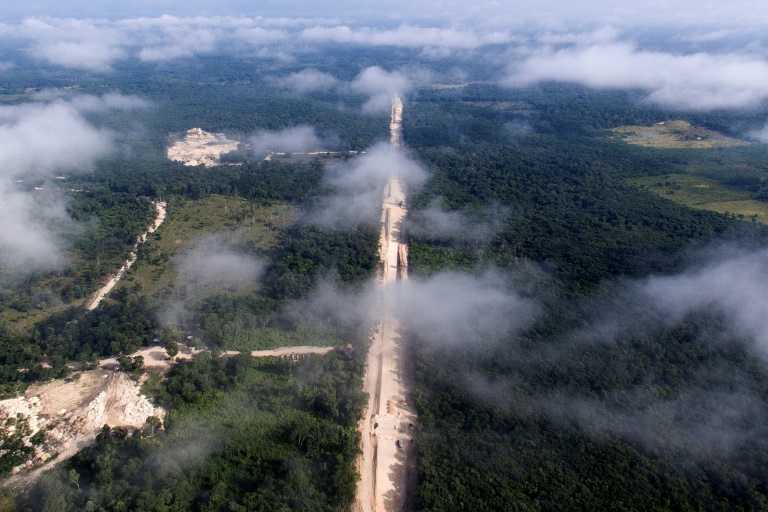
A Mexican judge has suspended construction of part of President Andres Manuel Lopez Obrador’s flagship tourist train project in the Yucatan peninsula due to a lack of environmental impact studies.

The Mayan Train, a roughly 1,500-kilometer (950 mile) rail loop linking popular Caribbean beach resorts and archeological ruins, has met with opposition from environmentalists and indigenous communities.

A court in the southeastern state of Yucatan on Monday ordered the suspension of “works related to its construction, infrastructure… or destruction of biodiversity.”

The halt to work between the resorts of Playa del Carmen and Tulum is temporary, pending resolution of an injunction sought by scuba divers, who are concerned about the impact on water-filled sinkholes known as cenotes.

The original plan for the disputed section was for an overpass over a highway, but the route was modified to go through jungle at ground level.

The change prompted protests from environmental groups, who complained that the line will now pass over underground rivers and cenotes connected to a giant aquifer under the jungle.

Often filled with stunning emerald or turquoise waters illuminated by a shaft of light from above, the sinkholes are a major attraction for tourists and a source of drinking water for indigenous communities.

Lopez Obrador on Tuesday dismissed the criticism of his signature project, which is supported by some residents as a potential source of jobs and economic prosperity.

“There are more and more environmentalists who didn’t exist before,” the president told reporters.

“We’re going to wait to see what they’re claiming now and find a way to defend ourselves legally,” he said.

Shutdown of Libya oil sites spreads to second terminal

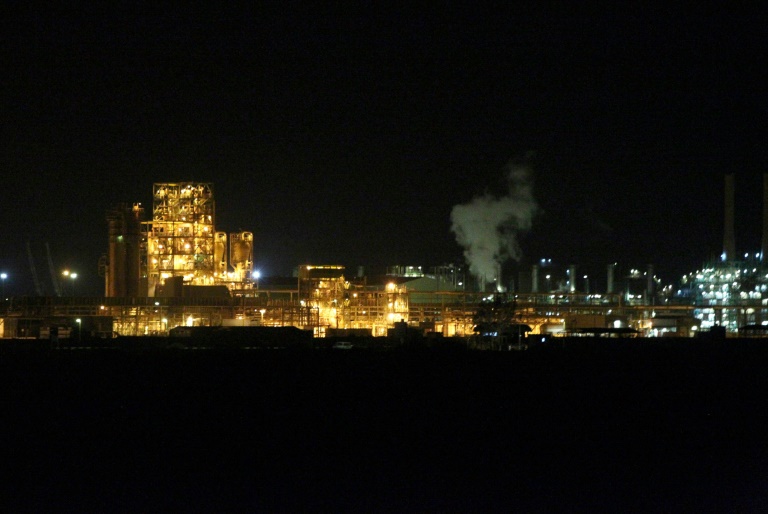
Libya’s National Oil Corporation announced Tuesday the closure of a second export terminal, paralysing the vital energy sector in a North African country gripped by political crisis.

The suspension of operations at Brega terminal, which has an export capacity of 60,000 barrels per day (bpd), follows a force majeur and closure on Monday of Zueitina port and several other major sites in the “Oil Crescent” region of eastern Libya.

The NOC, in a statement, said it “declares a state of force majeure on the oil port of Brega because it is impossible to implement its commitments towards the oil market”.

Force majeure, a legal move, allows parties to free themselves from contractual obligations when factors such as fighting or natural disasters make meeting them impossible.

The NOC made a similar declaration on Monday at another major oil field, Al-Sharara.

“A group of individuals put pressure on workers in the Al-Sharara oil field, which forced them to gradually shut down production,” it said.

Oil installations have often been attacked or blockaded by armed groups who hold sway in Libya.

Libya has had two rival executives since the eastern-based parliament in February appointed a new prime minister in a direct challenge to the UN-brokered government in the capital Tripoli.

The latest standoff pits Prime Minister Abdulhamid Dbeibah’s interim government against that of former interior minister Fathi Bashagha, who was chosen by the parliament.

The groups blocking the oil facilities are demanding “a fair distribution” of income and the transfer of power to Bashagha.

They have led to combined losses in production estimated at 600,000 bpd, about half of Libya’s daily output.

The NOC warned that Libya would pay a high price.

“At a time when oil prices are recovering significantly due to increased global demand… Libyan crude is being subjected to a wave of illegal closures, which will have serious damage to wells, reservoirs and surface equipment… as well as the loss of state treasury opportunities at prices that may not be repeated for decades to come,” it said.

The NOC is one of the few institutions in the troubled country to have stayed intact — and largely neutral — since the 2011 NATO-backed uprising that ousted longtime dictator Moamer Kadhafi.

Oil revenues are vital to the economy of a country sitting on Africa’s largest known reserves.

Oil prices plunge after IMF cuts global growth forecast

Oil prices plunged by more than five percent Tuesday as investors worried about a drop in demand after the International Monetary Fund cut its global growth forecast.

Around 1530 GMT the price of Brent crude, the main international oil contract, was down 5.4 percent to $107.11 per barrel, while the main US oil contract, WTI, fell 5.5 percent to $102.30.

European stocks were all down at close, as traders fretted over the IMF’s pessimistic outlook for 2022.

The IMF sharply downgraded its 2022 global growth forecast to 3.6 percent in its latest outlook report Tuesday, 0.8 percentage points lower than its previous estimate in January.

Energy prices are surging, debt levels are rising and shortages remain acute, the IMF noted, as multiple crises including the Ukraine war and coronavirus pandemic fuel an acceleration of inflation.

“The economic effects of the war are spreading far and wide — like seismic waves that emanate from the epicenter of an earthquake,” IMF chief economist Pierre-Olivier Gourinchas said in the report.

The downgrade was sharper for the eurozone, which is now expected to grow by 2.8 percent instead of 3.9 percent.

Michael Hewson, chief market analyst at CMC Markets UK, said Tuesday’s “sharp decline in oil prices offsets concerns that the start of a renewed Russian offensive on the Donbass region (in the east) could increase the pressure on the EU to look at a complete embargo on Russian oil and gas”.

Wall Street was up in late morning trading, with the three major indices reporting rises of more than one percent, a marked change from Monday when markets were lower over worries about higher interest rates.

Hewson noted that the IMF’s cut to the US growth forecast, from 4.0 percent to 3.7 percent, was more modest than that to the eurozone.

Asian markets diverged as the region weighed the impact of Covid lockdowns in China, analysts at Charles Schwab investment firm said in a note.

China’s economic growth accelerated in the first quarter of the year to 4.8 percent, official data showed Monday, but the government warned of “significant challenges” ahead.

– Key figures around 1530 GMT –

London – FTSE 100: DOWN 0.2 percent at 7,601.28 points (close)

Frankfurt – DAX: DOWN 0.07 percent at 14,153.46 (close)

Paris – CAC 40: DOWN 0.8 percent at 6,534.79 (close)

EURO STOXX 50: DOWN 1.0 percent at 3,744.35 (close)

Tokyo – Nikkei 225: UP 0.69 percent at 26,985.09 (close)

Shanghai – Composite: DOWN 0.05 percent at 3,194.03 (close)

Hong Kong – Hang Seng Index: DOWN 2.28 percent at 21,027.76 (close)

New York – Dow: UP 1.1 percent at 34,812.40

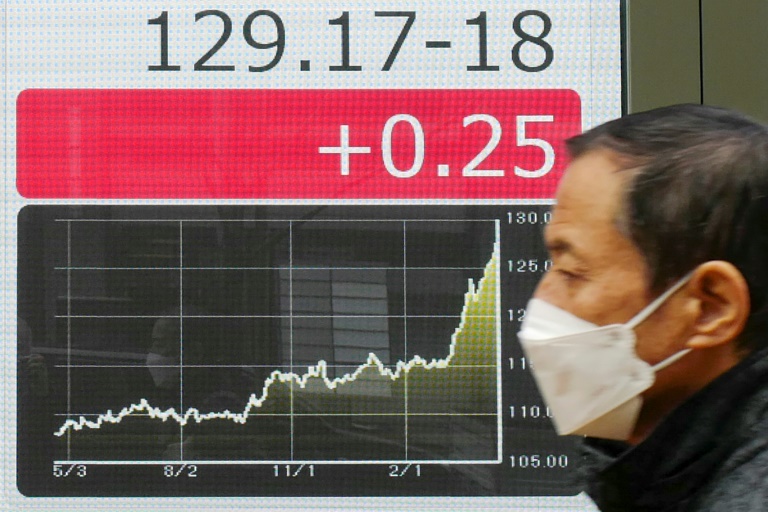
Dollar/yen: UP at 128.55 yen from 126.54 yen

Euro/dollar: DOWN at $1.0793 from $1.0802

Pound/dollar: DOWN at $1.3001 from $1.3023

Euro/pound: UP at 83.01 pence from 82.87 pence

Brent North Sea crude: DOWN 5.4 percent at $107.11 per barrel

West Texas Intermediate: DOWN 5.5 percent at $102.30 per barrel

burs-raz/rl

Fragmentation poses 'serious risk' to global prosperity: IMF

The threat of deglobalization that splits countries into divided blocs could undermine decades of gains in living standards and growth, an IMF official warned Tuesday.

While not an immediate threat “we see this as a serious risk,” IMF chief economist Pierre-Olivier Gourinchas said.

He spoke at the start of the IMF and World Bank Spring meetings, where the Russian invasion of Ukraine hangs over the discussions. The war has reverberated through the global economy, but some officials fear it also could break up years of hard-won gains in integration.

Globalization has “lifted hundreds of millions out of poverty and allowed emerging market economies to see their economies soar in the last 30, 40 years,” Gourinchas told reporters.

“A move towards more fragmentation would undo many of these gains.”

The IMF’s latest World Economic Outlook showed the integrated global supply chain preserved those gains even during the Covid-19 pandemic.

The rise of large emerging markets in the global economy has created a shift towards a “multipolar world,” he said. But splitting into “divided blocs… would be a disaster for the global economy.”

Indigenous lands block Brazil deforestation: study

Brazil’s indigenous reservations have acted as a barrier against deforestation over the past three decades, although destruction of the Amazon rainforest has accelerated recently under President Jair Bolsonaro, according to a study published Tuesday.

Of the 69 million hectares (266,000 square miles) of native vegetation Brazil has lost in the past 30 years, just 1.6 percent was on indigenous lands, said the report from MapBiomas, a joint project among various environmental groups, universities and startups.

Around 70 percent of the deforested area was on private land, it found.

“The satellite images leave no doubt that indigenous peoples are slowing the destruction of the Amazon,” said Tasso Azevedo, the coordinator of the project.

“Without indigenous reservations, the forest would certainly be much closer to the ‘tipping point’ at which it stops providing the ecological services our agriculture, industries and cities depend upon.”

It is the latest of numerous studies to show that protecting indigenous lands is one of the best ways to slow the destruction of native forests, which are vital resources in the race to curb climate change.

Indigenous reservations account for 13.9 percent of Brazil’s territory, covering 109.7 million hectares of native vegetation — nearly one-fourth of the country’s total.

But they face increasing pressure under Bolsonaro, an agribusiness ally who won election vowing not to allow “a single centimeter more” of indigenous reservations to be created.

Since the far-right president took office in 2019, average annual deforestation in the Brazilian Amazon has increased by more than 75 percent from the previous decade, according to official figures.

Close Bitnami banner
Bitnami