AFP

Record low Antarctic sea ice extent could signal shift

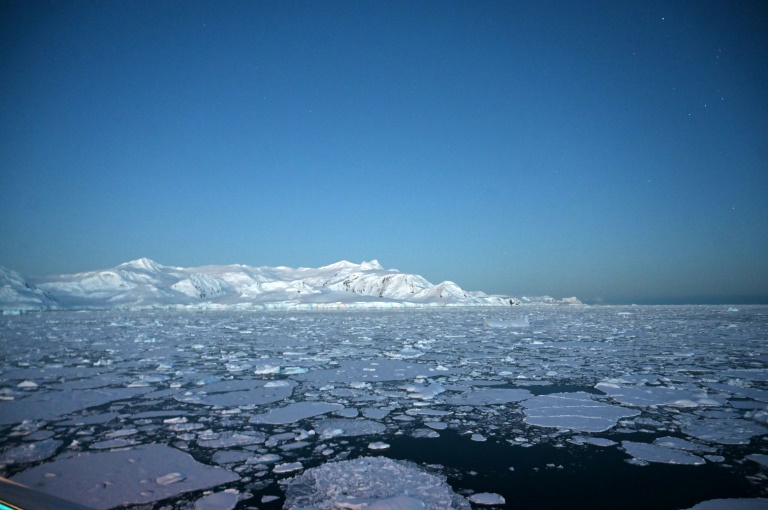
Sea ice around Antarctica shrank to the smallest extent on record in February, five years after the previous record low, researchers said Tuesday, suggesting Earth’s frozen continent may be less impervious to climate change than thought.

In late February, the ocean area covered by ice slipped below the symbolic barrier of two million square kilometres (around 772,000 square miles) for the first time since satellite records began in 1978, according to a study in the journal Advances in Atmospheric Sciences.

Researchers found that the key driver of ice loss was change in temperature, though shifts in ice mass also played a lesser role. 

Both the North and South pole regions have warmed by roughly three degrees Celsius compared to late 19th-century levels, three times the global average.

Antarctica encountered its first recorded heatwave in 2020, with an unprecedented 9.2C above the mean maximum, and in March a research centre in eastern Antarctica saw temperatures soar 30 degrees above normal.

But extreme aberrations of this kind are recent.

Unlike sea ice in the Arctic, which has diminished by three percent a year since the late 1970s, sea ice in Antarctica expanded over the same period by one percent per decade, albeit with large annual variations.

Ice cover during this year’s austral summer shrank most around West Antarctica, which has been more vulnerable to global warming than the far larger East Antarctica. 

– Sea-ice budget –

Melting sea ice has no discernable impact on sea levels because the ice is already in ocean water. 

But diminished ice cover is nonetheless a major concern because it helps accelerate global warming, explained co-author Qinghua Yang, a professor at Sun Yat-sen University in Guangzhou.

When white sea ice — which bounces the Sun’s energy back into space — is replaced by dark, unfrozen sea, “there is less reflection of heat and more absorption,” he said in a statement.

“This in turn melts more sea ice, producing more absorption of heat, in a vicious circle.”

Pristine snow and ice reflect more than 80 percent of the Sun’s energy back into space whereas open ocean absorb the same percentage.

Startlingly, the record low 1.9 million square kilometres on February 25 was 30 percent below the 1981-2010 average. The previous record was just over two million square kilometres in 2017.

Maximum sea ice extent in Antarctica has averaged about 18 million square kilometres in recent years.

To analyse the causes of this year’s record ice loss, researchers examined Antarctica’s “sea-ice budget” — ice added and ice lost, year by year — as well as daily sea-ice drift, or movement. 

“In summer, thermodynamic” — or temperature-related — “processes dominate the sea melting through poleward heat transport,” the study concluded.

The record minimum sea ice extent in the Arctic — 3.4 million square kilometres — occurred in 2012, with the 2nd and 3rd lowest ice-covered areas in 2020 and 2019, respectively. Maximum sea ice extent has averaged about 15 million square kilometres.

Ice sheets atop West Antarctica hold the equivalent of six metres of sea level rise, where as East Antarctica’s massive glaciers would raise global oceans by more than 50 metres.

Water on Jupiter's moon closer to surface than thought: study

Ridges that criss-cross the icy surface of Jupiter’s moon Europa indicate there are shallow pockets of water beneath, boosting hopes in the search for extra-terrestrial life, scientists said Tuesday.

Europa has long been a candidate for finding life in our solar system due to its vast ocean, which is widely thought to contain liquid water — a key ingredient for life.

There is a problem: the ocean is predicted to be buried 25-30 kilometres (15-17 miles) beneath the moon’s icy shell.

However water could be closer to the surface than previously thought, according to new research published in the journal Nature Communications.

The finding came partly by chance, when geophysicists studying an ice sheet in Greenland watched a presentation about Europa and spotted a feature they recognised.

“We were working on something totally different related to climate change and its impact on the surface of Greenland when we saw these tiny double ridges,” said the study’s senior author Dustin Schroeder, a geophysics professor at Stanford University.

They realised that the M-shaped icy crests on Greenland looked like smaller versions of double ridges on Europa, which are the most common feature on the moon.

Europa’s double ridges were first photographed by NASA’s Galileo spacecraft in the 1990s, but little was known about how they were formed.

The scientists used ice-penetrating radar to observe that Greenland’s ridges were formed when water pockets around 30 metres (100 feet) below the ice sheet’s surface refroze and fractured.

“This is particularly exciting, because scientists have been studying double ridges on Europa for more than 20 years and have not yet come to a definitive answer for how double ridges form,” said lead study author Riley Culberg, an electrical engineering PhD student at Stanford.

“This was the first time that we were able to watch something similar happen on Earth and actually observe the subsurface processes that led to the formation of the ridges,” he told AFP.

“If Europa’s double ridges also form in this way, it suggests that shallow water pockets must have been (or maybe still are) extremely common.”

– ‘Life has a shot’ –

Europa’s water pockets could be buried five kilometres beneath the moon’s ice shell — but that would still be much easier to access than the far deeper ocean. 

“Particularly if such water pockets form because ocean water was forced up through fractures into the ice shell, then it’s possible that they would preserve evidence of any life in the ocean itself,” Culberg said.

Water closer to the surface would also contain “interesting chemicals” from space and other moons, increasing the “possibility that life has a shot,” Schroeder said in a statement.

We may not have too long to wait to find out more.

NASA’s Europa Clipper mission, scheduled to launch in 2024 and arrive in 2030, will have ice-penetrating radar equipment similar to that used by the scientists studying Greenland’s double ridges.

The spacecraft is unlikely to find definitive proof of life because it will not land on Europa, instead flying by and analysing it.

But hopes remain high. The moon’s ocean is predicted to have more water than all of Earth’s seas combined, according to the Europa Clipper’s website.

“If there is life in Europa, it almost certainly was completely independent from the origin of life on Earth… that would mean the origin of life must be pretty easy throughout the galaxy and beyond,” project scientist Robert Pappalardo said on the website.

IMF slashes global growth forecasts amid Ukraine war

The “seismic” impact of the war in Ukraine is spreading worldwide, causing the IMF on Tuesday to sharply downgrade its 2022 global growth forecast to 3.6 percent.

That slowdown, 0.8 points lower than its previous estimate released in January, comes amid surging prices, shortages and rising debt levels, the IMF said in its latest World Economic Outlook.

The fallout has been felt most acutely in the poorest nations, threatening to erase recent gains as the world had begun to recover from the Covid-19 pandemic, and the risks and uncertainty remain high, the Washington-based lender warned.

“The economic effects of the war are spreading far and wide — like seismic waves that emanate from the epicenter of an earthquake,” IMF chief economist Pierre-Olivier Gourinchas said in the report.

Russia invaded Ukraine in late February, devastating the country’s infrastructure and ability to produce grain and other goods, while stiff sanctions on Moscow sent fuel prices higher.

The conflict also sparked a flood of refugees into neighboring countries.

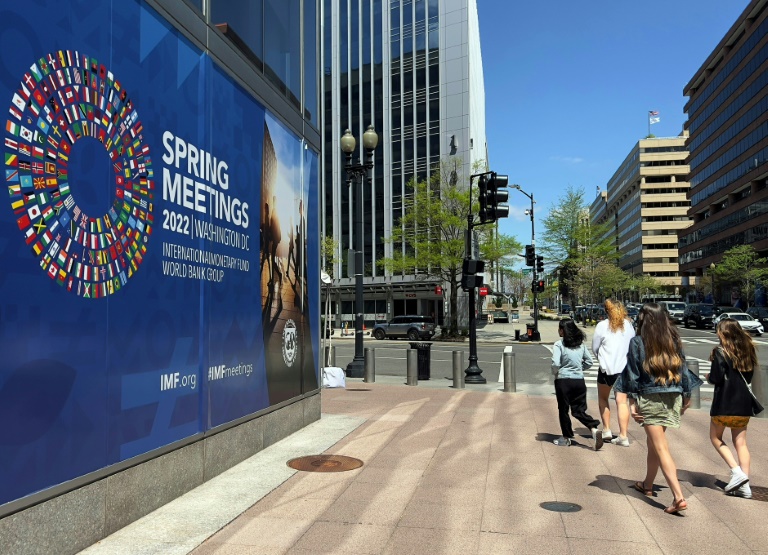
The crisis will be the focus of global finance officials who gather in Washington this week — virtually and in person — for the spring meetings of the International Monetary Fund and World Bank.

The report shows Ukraine suffering a 35 percent collapse of its economy this year, while Russia’s GDP will fall 8.5 percent — more than 11 points below the pre-war expectations.

European nations will see much slower growth as the war drives up fuel and food prices, pushing inflation higher around the world and keeping it high for longer than expected.

The United States and China also will feel the effects of the war and the ongoing impact of the Covid-19 pandemic, with US growth expected to slow to 3.7 percent, and China’s to 4.4 percent.

– Surging inflation –

The official cautioned that the overall outlook is highly uncertain, and things could get drastically worse if the war is prolonged and tougher sanctions imposed on Moscow.

“Growth could slow significantly more while inflation could turn out higher than expected if, for instance, sanctions aimed at ending the war extend to an even broader volume of Russian energy and other exports,” he said.

Meanwhile, the pandemic is continuing, and lockdowns in China to defeat renewed coronavirus outbreaks are slowing activity, including in manufacturing hubs, which “could cause new bottlenecks in global supply chains.”

The latest crisis hit as the global economy “was on a mending path but had not yet fully recovered from the Covid-19 pandemic,” Gourinchas said.

That has fueled an acceleration of inflation — expected to hit 5.7 percent in advanced economies this year and 8.7 percent in developing nations — which endangers the gains of the past two years.

And inflation will be elevated for “much longer” than previously expected the report said.

The price pressures have prompted central banks in many countries to begin to raise interest rates to tamp down inflation, but that will hurt highly indebted developing nations, the report noted.

Rising prices were a concern even before the conflict and now shortages caused by the war “will greatly amplify those pressures, notably through increases in the price of energy, metals and food,” Gourinchas said.

The official dismissed comparisons with the wage-price spiral seen in the 1970s, but “nevertheless, inflation is a serious concern right now in the US and in other countries,” he told reporters during a briefing. 

And if price pressures continue to mount “that would call for much more forceful action” from central banks.

– Debt distress –

That would hit developing nations that have seen debt loads increase with rising interest rates.

Gourinchas added his voice to the call to help countries restructure their debt by improving the G20 Common Framework adopted last year, which was meant to offer a path to restructure large debt loads.

A key hurdle has been the lack of information on the size of debt owed to China, as well as some other lenders, by private companies as well as governments, and the need for private creditors to participate in the debt relief.

It’s in the interest of the borrowing country and the creditors “to have an expeditious process,” he told reporters.

“We need a process that works much faster and much better in dealing with situations of insolvencies.”

World Bank President David Malpass, who has been outspoken on the issue, has said 60 percent of low-income countries already face debt distress or are at high risk.


New York Times names next editor to lead US paper

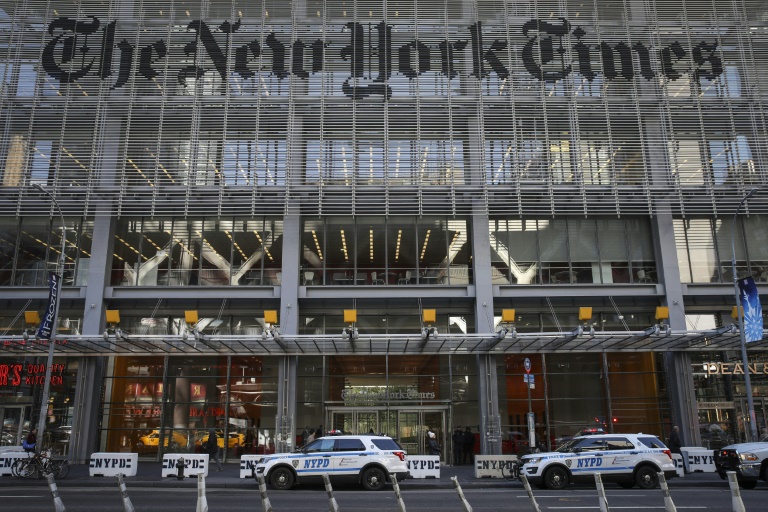
The New York Times on Tuesday announced the appointment of veteran journalist Joe Kahn as its next executive editor, the top newsroom position at the powerful US paper.

Kahn — currently the Times’s number two-ranked editor — will succeed Dean Baquet, whose eight-year reign is due to end in June, the daily said.

The 57-year-old will be tasked with shaping the digital future of the Times, a leading liberal voice in world journalism, as it vies for audiences around the globe.

Kahn said securing readers’ trust “in a time of polarization and partisanship” was one of his top priorities.

“We don’t know where the political zeitgeist will move over time,” the Times quoted Kahn as saying.

“Rather than chase that, we want to commit and recommit to being independent,” he said.

Kahn has been managing editor of the Times since 2016 and has been credited with helping guide the paper into the digital era.

In recent years the Times has moved heavily into podcasts and TV documentaries, while its games section is another key source of revenue.

Kahn previously led the Times’s international coverage and in 2006 shared a Pulitzer Prize for reporting in China.

Baquet was the first Black executive editor of the Times and his tenure brought 18 Pulitzer Prizes.

He oversaw hard-hitting expose pieces on Donald Trump’s finances and the sexual misconduct of disgraced former Hollywood mogul Harvey Weinstein.

But he also grappled with controversies, including an internal investigation which found that the paper’s award-winning podcast “Caliphate” had failed to meet editorial standards.

The Times said Baquet has reached the age when Times executive editors usually step down: 65. The paper said he would stay on “to lead an exciting new venture.”

Uber, Lyft join airlines in ending US mask mandate

Ride-hailing companies Uber and Lyft removed mask requirements on riders and drivers on Tuesday following a federal ruling striking down the mandate.

“You can now ride without a mask and use the front seat if you need to,” Uber announced on Twitter. 

“While mask usage is still recommended, we’ve updated our Covid safety policies. Let’s move forward, safely together.”

Uber’s rival, Lyft, also said it was making masks optional.

The company will also remove a restriction on riders in the front seat, and will no longer include health safety reasons — such as not wearing a mask — as a reason to cancel a ride, Lyft said.

“We know that everyone has different comfort levels, and anyone who wants to continue wearing a mask is encouraged to do so,” Lyft said in a blog post.

On Monday, US federal judge Kathryn Kimball Mizelle said the mask mandate exceeds the statutory authority of the Centers for Disease Control and Prevention.

Several major carriers, including American Airlines, Delta Air Lines and United Airlines, dropped mask mandates on domestic flights and some international flights following the ruling.

Biden restores environmental safeguards dropped by Trump

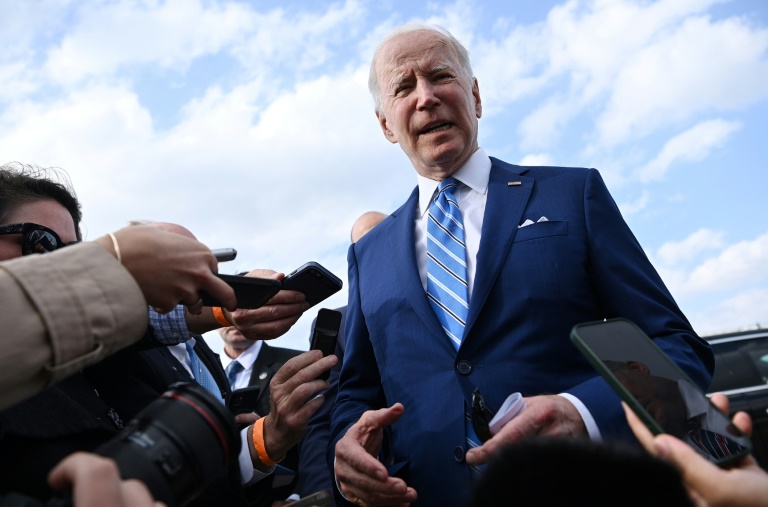
The administration of President Joe Biden on Tuesday announced it would restore safeguards in a cornerstone environmental law weakened under Donald Trump — including a duty to assess the climate impacts of proposed infrastructure projects.

The changes concern the National Environmental Policy Act (NEPA), which was enacted by Congress in 1969. Rules about how it was applied were tweaked in 2020 by the then Republican president, an ardent supporter of the fossil fuel industry.

“Restoring these basic community safeguards will provide regulatory certainty, reduce conflict, and help ensure that projects get built right the first time,” said White House Council on Environmental Quality (CEQ) chair Brenda Mallory in a statement.

“Patching these holes in the environmental review process will help projects get built faster, be more resilient, and provide greater benefits to people who live nearby.”

The restorations include a requirement that federal agencies evaluate both the direct and indirect impacts of projects, including by assessing climate change impacts and the consequences of releasing additional pollution in communities already affected by air pollution and dirty water.

It will also allow agencies to work once more with local communities to devise alternate plans to minimize environmental and health harm, and establish NEPA regulations as the floor, rather than the ceiling, for environmental review standards — paving the way for stricter measures if needed.

The White House said it was also working to further broaden the scope of NEPA and would announce more changes soon.

Reacting to the announcement, Leslie Fields of the environmental group Sierra Club said: “We are encouraged to see the Biden administration take action to restore this bedrock environmental protection.

“NEPA plays a critical role in keeping our communities and our environment healthy and safe, and Donald Trump’s attempts to weaken NEPA were clearly nothing more than a handout to corporate polluters.”

The move comes days after the Biden administration was slammed by critics for announcing a resumption of oil and gas leasing on public lands, violating the Democrat’s campaign promise. 

On Friday, the interior department said it would post notices “for significantly reformed onshore lease sales” across roughly 144,000 acres of land.

Experts say steering clear of new fossil fuel projects is vital to meet the goal of limiting long term warming to 1.5 degrees Celsius and averting a climate catastrophe. 

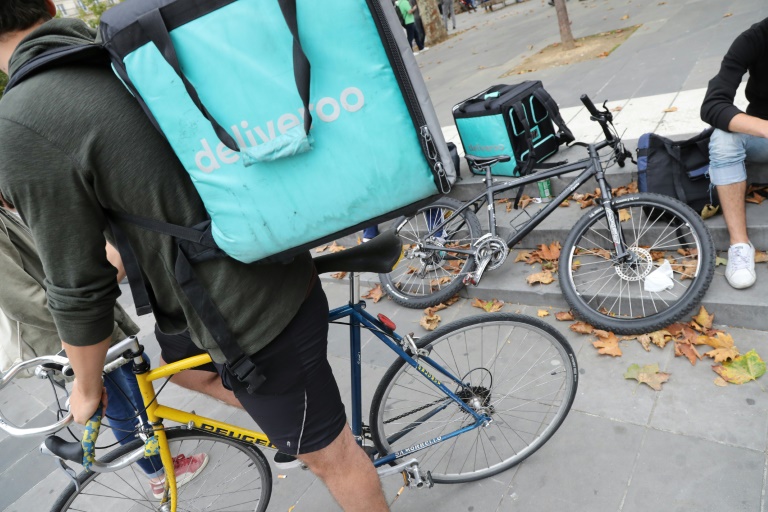
French court fines Deliveroo for 'undeclared labour'

A Paris court on Tuesday fined the British meal delivery group Deliveroo after ruling it was guilty of “undeclared labour” for using freelance riders who should have been classified as employees, depriving the state of millions of euros in payroll taxes.

It was the latest move by European courts to recognise the rights of “gig economy” workers used by start-ups and other firms, which often claim they are simply go-betweens for clients and independent contractors.

The court ordered the maximum fine of 375,000 euros ($405,000) sought by prosecutors and also handed suspended one-year prison sentences and 30,000-euro fines to two former French executives at Deliveroo.

A third executive got a suspended four-month sentence and a 10,000-euro fine for complicity in the system, and Deliveroo was also ordered to pay 50,000 euros each in damages to five labour unions who joined the case as plaintiffs.

State prosecutor Celine Ducournau had sought in vain to question Deliveroo’s American founder and CEO Will Shu over a “fraud” that gave “all the benefits to the employer… without any of the inconveniences.”

“The question is not to determine if the status of independent contractor is appropriate, but to acknowledge that in this instance, Deliveroo used a fake legal arrangement that did not correspond to the reality of how the delivery riders work,” the presiding judge said in her ruling. 

A Deliveroo spokesman said the company “categorically contested” the decision and said it was considering an appeal.

“Our business model offers our deliverers the flexibility they need and which they tell us they appreciate,” he said. 

– Legal gray area –

Over 100 Deliveroo riders were plaintiffs in the case prosecutors opened in 2015 but which got fresh impetus in 2020, when France’s URSSAF agency in charge of employer social security collections demanded millions of euros in back payments.

Several riders told the court they had sought jobs that offered scheduling freedom only to find intense pressure to work at peak meal times, strict oversight of their routes and days off, and penalties if orders weren’t delivered fast enough.

Deliveroo France had already been found guilty of undeclared labour in a civil case in February 2000, when a court sided with a rider seeking to be recognised as an employee and not a contractor.

URSSAF is seeking to recover some 9.7 million euros from Deliveroo, and a court had already ordered in 2020 the seizure of three million euros in Deliveroo’s account while the case was ongoing.

The ruling comes as the European Union is taking aim at the business model of gig economy companies like Deliveroo and the ride-sharing service Uber, with plans that could force them to reclassify their workers as fully-fledged employees.

The companies insist the workers are self-employed, and courts across Europe have issued contradictory decisions — sometimes forcing companies to provide workers with standard contracts, at other times upholding their status as independent contractors.

In December, Deliveroo won a case in Belgium where a court found that riders did not have to be requalified as employees, with the requisite social security and tax obligations.

Shanghai reports more Covid deaths as officials push work resumption

China reported seven more Covid-19 deaths in Shanghai on Tuesday, as major firms such as Tesla forged ahead to resume production after a damaging weeks-long lockdown.

Supply chains have clogged and businesses have been forced to halt production in the metropolis of 25 million, as authorities cling to a zero-Covid approach to combat China’s worst outbreak since the virus first emerged in late 2019.

Beijing’s strategy of eliminating clusters as they surface — through hard lockdowns and mass testing — has kept fatalities low, but the measures are taking a toll on economic growth.

Authorities have called for a “whitelist” of key industries and companies to be drawn up so production can continue, with over 600 firms identified for early work resumption in Shanghai.

US electric car giant Tesla “officially resumed production” on Tuesday, state media reported, after suspending work at its multi-billion-dollar “gigafactory” in the city for over 20 days.

But this will take place in a “closed-loop system”, with staff sleeping on site and being tested for Covid, Bloomberg News reported.

Chinese automaker SAIC Motor said this week it was “launching production resumption stress tests”.

– Seven new deaths –

Tuesday’s fatalities bring Shanghai’s death toll since its lockdown to 10.

Some have cast doubt on official figures in a nation where the vast elderly population has a low vaccination rate. 

By comparison, Hong Kong — which also has a high number of unvaccinated people over the age of 60 — has tallied nearly 9,000 deaths among 1.18 million Covid-19 cases since the Omicron variant surged there in January.

Unverified social media posts have claimed Shanghai’s deaths are going unreported, and the messages have been quickly scrubbed from the internet.

Shanghai health officials said Sunday that less than two-thirds of residents over 60 had received two Covid jabs and under 40 percent had received a booster.

The seven newly reported deaths were all unvaccinated patients, city health official Wu Qianyu told a press conference on Tuesday.

They were aged between 60 and 101, and suffered from underlying conditions such as heart disease and diabetes, according to the Shanghai Municipal Health Commission.

The patients “became severely ill after admission to hospital, and died after ineffective rescue efforts, with the direct cause of death being underlying diseases”, the commission said.

Shanghai logged more than 20,000 new and mostly asymptomatic Covid cases Tuesday, defying officials’ efforts to stamp out the infection.

Many of the city’s residents have been confined to their homes since March, with some flooding social media with complaints of food shortages, spartan quarantine conditions and heavy-handed enforcement.

Protest footage has circulated faster than government censors can delete it.

Chinese officials have scrambled in recent weeks to contain an outbreak spanning multiple regions, largely driven by the fast-spreading Omicron variant.

By one estimate on Monday, at least 44 cities are currently under some form of lockdown in China, affecting around 350 million people.

French court fines Deliveroo for 'undeclared labour'

A Paris court on Tuesday handed the food delivery group Deliveroo a fine of 375,000 euros ($405,000) after finding it guilty of “undeclared labour” by using freelance delivery riders who should have been considered employees.

It was the latest move by courts to recognise the rights of “gig economy” workers who are often classified as independent contractors by start-ups and other firms, and thus ineligible for health insurance and other benefits.

The court ordered the maximum fine sought by prosecutors and also handed suspended one-year prison sentences to two former French executives at the Britain-based Deliveroo.

A third executive got a suspended four-month sentence and a 10,000 euro fine for complicity in the system, and Deliveroo was ordered to pay 50,000 euros each in damages to five labour unions who joined the case as plaintiffs.

State prosecutor Celine Ducournau also sought in vain to question Deliveroo’s American founder and CEO Will Shu over a “fraud” that gave “all the benefits to the employer… without any of the inconveniences.”

Over 100 Deliveroo riders were plaintiffs in the case prosecutors opened in 2015 but which got fresh impetus in 2020, when France’s URSSAF agency in charge of employer social security collections demanded millions of euros in back payments.

Several riders told the court they had sought jobs that offered “flexibility” in terms of scheduling, only to find intense pressure to work at peak meal times, strict oversight of their routes and days off, and penalties if orders weren’t delivered fast enough.

Deliveroo France had already been convicted of undeclared labour in a civil case in February 2000, when a labour court sided with a rider seeking to be recognised as an employee and not a contractor.

URSSAF is seeking to recover some 9.7 million euros from Deliveroo, and a court had already ordered in 2020 the seizure of three million euros in Deliveroo’s account while the case was ongoing.

A Deliveroo spokesman said after the verdict that the company was “considering” an appeal.

European stocks slide on return from Easter break

European stock markets slid Tuesday, catching up with losses in Asia and on Wall Street caused by slow growth concerns in China and rising US interest rates. 

Trading for the first time since Thursday, London’s benchmark FTSE 100 index was down 0.4 percent nearing the half-way stage.

Losses were steeper in the eurozone, with Frankfurt’s DAX index and the Paris CAC 40 shedding around one percent, also after an extended weekend.

“Despite the public holiday in most of Europe yesterday, this is shaping up to be another volatile and eventful week for global markets,” noted Lukman Otunuga, senior research analyst at FXTM.

“Later today, the International Monetary Fund will release its updated global economic outlook with markets expecting a downgrade for growth this year.”

Otunuga said “such a development may hit investor confidence, sweetening appetite for safe-haven assets”.

One traditional haven, the yen, struck a fresh 20-year low Tuesday at 128 to the dollar, with the Japanese currency heavily weighed down by diverging monetary policy in Japan and the United States.

High oil prices in Japan — a major importer of crude — have also pushed the currency lower, according to analysts.

Japan’s Nikkei 225 rebounded from losses Monday — and led other major Asian stock markets higher.

But Hong Kong plummeted by its largest margin in three weeks — knocked by concerns around Beijing’s tough tech-sector regulations and economic growth concerns in China.

Millions of residents are still cloistered in their homes in China’s financial capital Shanghai.

Investors were left weighing whether attempts to lift the economy by Chinese policymakers — who have held off cutting interest rates — would offset Beijing’s zero-Covid policies.

“The focus in Asia is on mainland policy easing to cushion the impact of lockdowns,” said Stephen Innes at SPI Asset Management.

China’s economic growth accelerated in the first quarter of the year to 4.8 percent, official data showed Monday, but the government warned of “significant challenges” ahead.

– Key figures around 1030 GMT –

London – FTSE 100: DOWN 0.4 percent at 7,586.79 points

Frankfurt – DAX: DOWN 0.9 percent at 14,036.68

Paris – CAC 40: DOWN 1.0 percent at 6,523.90

EURO STOXX 50: DOWN 1.1 percent at 3,807.47

Tokyo – Nikkei 225: UP 0.69 percent at 26,985.09 (close)

Shanghai – Composite: DOWN 0.05 percent at 3,194.03 (close)

Hong Kong – Hang Seng Index: DOWN 2.28 percent at 21,027.76 (close)

New York – Dow: DOWN 0.1 percent at 34,411.69 (close)

Dollar/yen: UP at 128.21 yen from 126.54 yen

Euro/dollar: DOWN at $1.0793 from $1.0802

Pound/dollar: FLAT at $1.3023

Euro/pound: FLAT at 82.87 pence

Brent North Sea crude: DOWN 1.3 percent at $111.68 per barrel

West Texas Intermediate: DOWN 1.6 percent at $106.49 per barrel

Close Bitnami banner
Bitnami