AFP

Elon Musk's move to buy Twitter faces roadblocks

Even for the richest person on the planet, buying Twitter was always going to be a challenge –- a highly complex financial transaction now made even trickier by a defensive “poison pill” move from the platform’s board.

Musk’s $43 billion offer lays out the myriad potential pitfalls: possible government approvals, legal as well as regulatory due diligence, negotiations of a final agreement and, of course, how to pay for it all.

Then Twitter’s board on Friday showed it won’t go quietly, saying any acquisition of over 15 percent of the firm’s stock without its OK would trigger a plan to flood the market with shares and thus make a buyout much harder.

“Your move @elonmusk,” tweeted Silicon Valley journalist Kara Swisher. 

The offer itself, which Musk said was final, values Twitter at $54.20 per share — above the closing price ahead of his bid, but below a high of $77.06 hit in February of last year.

Even with a moderate and inflexible proposal, which could help the board argue for rejection, it’s a fraught moment that could end in lawsuits from just about everyone involved.

To succeed in repelling Musk’s offer, the Twitter board will need to be on solid ground making an argument that the company is worth more, said Wharton School finance professor Kevin Kaiser.

Shareholders who feel that the board is rejecting a profitable deal will be free to file lawsuits against Twitter.

– Sidestep the board? –

Musk has the option of sidestepping the board and trying to buy shares directly from shareholders on the market, but that could lead to tedious negotiations with some stock owners holding out for more money.

“The Twitter board has limited ability under Delaware law to stop a tender offer made directly to the shareholders, which Elon Musk hasn’t done, but which he could do if he chose to,” Kaiser said.

“If he does this, and if the shareholders elect to tender their shares, then he can succeed without needing board support or approval.”

While the serial entrepreneur’s net worth is estimated at $265 billion by Forbes, his fortune is not sitting in a bank account waiting to be spent.

Musk said at a TED Conference that he had “sufficient funds” to consummate the deal, but financial analysts describe the situation as more complicated.

Much of Musk’s wealth comes from shares of electric car maker Tesla, which he runs.

Musk would need to turn a chunk of his Tesla holding into cash, either by selling shares or taking out loans with stock as collateral.

“The specifics of how Musk would finance the deal will determine the ramifications for Twitter,” Moody’s said in a note to investors.

Moody’s estimated it would cost Musk $39 billion to buy all the outstanding Twitter shares, and that there would be “a strong chance” he would have to repay or refinance the San Francisco-based company’s billions of dollars of existing debt.

That was before the poison pill move by Twitter that ramps up the cost for Musk.

Musk tweeted a poll that hinted he might be thinking of taking his bid directly to shareholders. 

He asked whether taking the company private for his offered price should be up to shareholders and not the board.

As the poll neared its close on Friday, more than 2.7 million votes had been cast with nearly 84 percent of them in favor of the idea.

Selling a massive amount of shares in Tesla to buy Twitter would come with a large tax bill based on capital gains, and could cause shares in the electric car company to sink as the market is flooded with stock for sale.

Musk could keep hold of his shares and get a loan, absorbing the interest payments. Or he could team up with a deep-pocketed partner, but that could come with the strong-willed executive having someone to answer to regarding his decisions at Twitter.

Tech battles to show its worth in Ukraine war crimes probes

Russia’s war in Ukraine is still being counted in days, but images of atrocities already number in the hundreds of thousands.

The conflict is the first to throw up such rich evidence in real time, but the sheer volume of material poses a huge challenge for those trying to use it as evidence of war crimes.

“The amount of material that we see, we really haven’t seen before,” said Hadi al Khatib, whose organisation Mnemonic has gathered around 400,000 pieces of material since February.

Wendy Betts, whose eyeWitness to Atrocities group has a bespoke app to allow NGOs to gather evidence, is equally deluged.

“The last time I looked, we had roughly as much in the last six weeks as we normally would get globally in six months,” she told AFP.

International experts are part of a plan unveiled by Ukraine’s President Volodymyr Zelensky for a “special mechanism” to probe thousands of allegations of war crimes.

Betts has already handed some footage to Ukrainian prosecutors and Khatib has had to partner with other groups to process his material.

But for all the benefits of technology, this kind of footage has so far been prominent in only a handful of court cases.

Ukraine could well be the coming-of-age for technology-led evidence gathering.

– Training AI –

Khatib cut his teeth on the Syria war, where his team is still sifting an archive of four million records — he reckons only about five percent has been verified.

They are training artificial intelligence (AI) software to recognise items like Russian cluster bombs to allow that footage to be prioritised.

But it is slow progress and ultimately each record needs to be verified by a human.

“With technology, we are really not there yet, but we are trying,” he told AFP.

Khatib initially set out to use the material for advocacy and as a memorial, which requires only that the footage is what it purports to be.

But using footage to build a legal case is different.

It must be proved that nothing could have happened to the footage all along the evidence chain.

The eyeWitness app was designed especially for this, storing all the metadata securely inside the app.

“We can’t verify anything that’s already been taken on social media,” said Betts, “the footage has to be taken using the camera app”.

Her main challenge is to build trust among the NGOs and activists who might use the app.

In Ukraine, eyeWitness has already been working with people in the eastern conflict areas for five years, so they have a head start.

And both Betts and Khatib stress how the tech-savvy nature of Ukraine is helping their efforts hugely.

– ‘Two-edged sword’ –

Activists and investigators have learnt a lot since the civil war in Syria where smartphones were used for the first time en masse to document atrocities.

“The concept of a citizen investigator or citizen engagement in the investigative process… that really emerged in Syria in 2011,” said Bill Wiley, a Canadian who has been investigating war crimes for 25 years.

He has since worked on the so-called Islamic State’s brutal campaign in Syria and Iraq, when social media was widely used by the militants. 

His foundation, the Commission for International Justice and Accountability (CIJA), is still scouring thousands of smartphones and computer hard drives for usable information from the IS conflict. 

“Modern technology and its ubiquitous use in conflict zones is, from a narrow criminal investigative perspective, very much a two-edged sword, and mostly cutting the wrong way,” he said.

Both he and Khatib contrast the volume of material with the ability of software to provide accurate analysis.

Wiley suggested investigators needed to be picky in what footage they use, flagging the example of an attack on a theatre in Mariupol on March 16 where hundreds of civilians are thought to have been killed.

“You don’t need a photograph of the aircraft circling the target before the bomb was dropped,” he said.

Instead, he will be looking to safeguard any information that could link such attacks to whoever ordered them, whether that is phone call intercepts, email chains or old-fashioned paper trails.

But the investigators all agree that they are part of a team with similar goals.

“All of these pieces of information are going to be required to put this gigantic evidentiary puzzle together,” said Betts.

And they all believe that ultimately there will be accountability.

“It may take some time, but we will see arrest warrants issued against various Russian leaders,” said Wiley.

Global warming: even cacti can't take the heat

Sixty percent of cactus species will wind up in less hospitable climates over the coming decades as global warming sets in, according to new research challenging the long-held assumption the iconic desert plants will thrive with more heat.

By 2070, up to 90 percent could be threatened with extinction due to climate change, habitat loss and other stressors, triple the current percentage, scientists reported in Nature Plants.

Some 1,500 species of cacti spread across the Americas live in varying climes, ranging from sea-level deserts to the high Andes mountains, from bone-dry ecosystems to humid tropical forests.

Biodiversity hotspots rich in species and numbers include central Mexico and the Brazilian Atlantic Forest. 

To test the notion that cacti will benefit from a warmer and more drought-prone world, researchers led by Michiel Pillet from the University of Arizona examined data on more than 400 species and ran models projecting how they would fare at mid-century and beyond under different greenhouse gas emissions scenarios.  

The findings “paint a more pessimistic future,” according to the study, published Thursday.

Currently, the main threat to cacti is expanding agriculture, along with land degradation, biodiversity loss and harvesting for various uses.

Even without climate change, cacti “is one of the most endangered groups of organisms on the planet,” with more than 30 percent classified as at risk of extinction, the authors note.

Under a moderate emissions scenario in line with current policies, global warming will soon be a significant threat as well.

“Our results suggest that climate change will become a primary driver of cactus extinction risk, with 60 to 90 percent of species assessed negatively impacted” by global warming, the researchers reported.

Within four or five decades, some 25 percent of cacti species could experience unfamiliar climates over a quarter of their current range. 

Earlier studies have shown impaired photosynthesis — the process by which plants use sunlight to make foods from CO2 and water — with only two degrees Celsius of global warming.

Earth’s average surface temperature, including oceans, is already 1.1C warmer than preindustrial times, and about 1.7C warmer over land only.

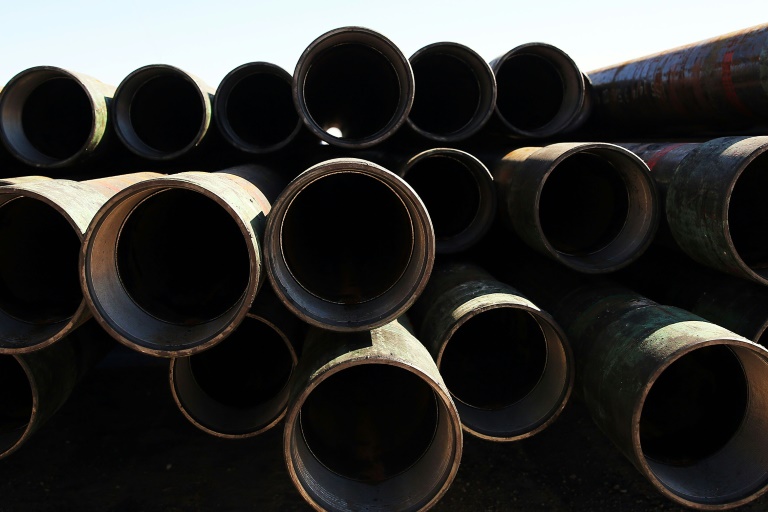
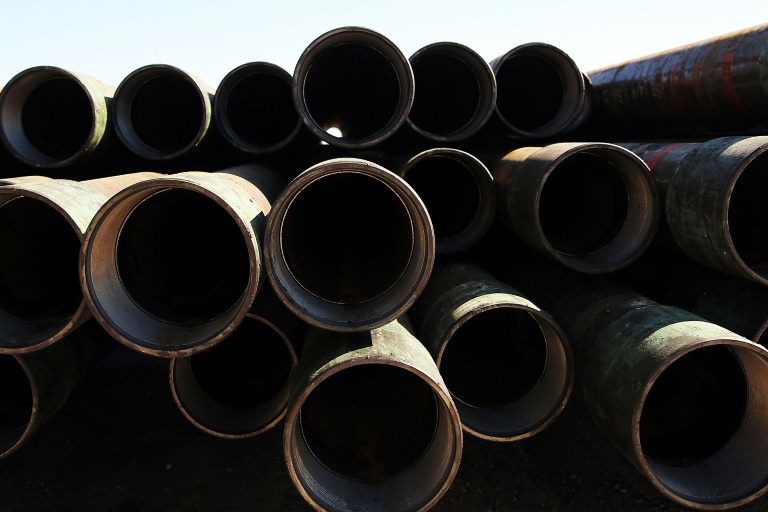
Washington resumes oil and gas drilling leases on federal land

The US government, under pressure to lower gas prices, announced Friday it will resume the sale of leases for oil and gas drilling on federal lands while imposing new conditions, including the first hike in royalties in more than 100 years. 

Shortly after coming to office in January 2021, President Joe Biden, who has made fighting climate change one of his priorities during his campaign, had proclaimed a moratorium on grants for new drilling leases on government-owned land and waters, pending a review. 

The Interior Department said in a statement that starting next week, it will auction some 173 parcels representing 144,000 acres (58,275 hectares) in nine states after making several changes. 

That area is 80 percent less than had been under consideration for leasing. 

The administration will also increase the royalties companies much pay on hydrocarbons extracted 12.5 percent — the rate that had been in place for at least a century —  to 18.75 percent of profits.

Companies interested in drilling will also have to meet new requirements, such as consultation with Native American tribes and compliance with “best available science” for the analysis of greenhouse gas emissions. 

“For too long, the federal oil and gas leasing programs have prioritized the wants of extractive industries above local communities, the natural environment, the impact on our air and water, the needs of Tribal Nations,” said Interior Secretary Deb Haaland, the country’s first ever Native American cabinet minister.

The move comes as the US president faces down record inflation, especially in gas prices, which is eroding his ratings. 

He has been taking initiatives in recent weeks aimed at lowering the price of crude oil, including ordering at the end of March the release of oil from the country’s strategic reserve.

The resumption of concessions for oil and gas exploitation on federal lands, however, is not likely to have an immediate impact, as the process can generally taking several years. 

The moratorium declared by Biden had already been put on hold by a judge in June 2021 on the basis that the administration needed to obtain congressional approval for such a move. 

A few weeks later the government launched an auction of offshore leases in the Gulf of Mexico, which were then canceled by Justice Department in January. 

The Department of the Interior also approved thousands of oil and gas permits on federal lands in 2021.

Washington resumes oil and gas drilling leases on federal land

The US government, under pressure to lower gas prices, announced Friday it will resume the sale of leases for oil and gas drilling on federal lands while imposing new conditions, including the first hike in royalties in more than 100 years. 

Shortly after coming to office in January 2021, President Joe Biden, who has made fighting climate change one of his priorities during his campaign, had proclaimed a moratorium on grants for new drilling leases on government-owned land and waters, pending a review. 

The Interior Department said in a statement that starting next week, it will auction some 173 parcels representing 144,000 acres (58,275 hectares) in nine states after making several changes. 

That area is 80 percent less than had been under consideration for leasing. 

The administration will also increase the royalties companies much pay on hydrocarbons extracted 12.5 percent — the rate that had been in place for at least a century —  to 18.75 percent of profits.

Companies interested in drilling will also have to meet new requirements, such as consultation with Native American tribes and compliance with “best available science” for the analysis of greenhouse gas emissions. 

“For too long, the federal oil and gas leasing programs have prioritized the wants of extractive industries above local communities, the natural environment, the impact on our air and water, the needs of Tribal Nations,” said Interior Secretary Deb Haaland, the country’s first ever Native American cabinet minister.

The move comes as the US president faces down record inflation, especially in gas prices, which is eroding his ratings. 

He has been taking initiatives in recent weeks aimed at lowering the price of crude oil, including ordering at the end of March the release of oil from the country’s strategic reserve.

The resumption of concessions for oil and gas exploitation on federal lands, however, is not likely to have an immediate impact, as the process can generally taking several years. 

The moratorium declared by Biden had already been put on hold by a judge in June 2021 on the basis that the administration needed to obtain congressional approval for such a move. 

A few weeks later the government launched an auction of offshore leases in the Gulf of Mexico, which were then canceled by Justice Department in January. 

The Department of the Interior also approved thousands of oil and gas permits on federal lands in 2021.

Twitter adopts 'poison pill' defense against Musk buyout bid

Twitter moved Friday to defend itself against Elon Musk’s $43 billion hostile takeover bid, announcing a “poison pill” plan that would make it harder for the billionaire to get a controlling stake.

Musk’s proposed buyout faces several hazards, including possible rejection and the challenge of assembling the money, but could have significant impacts on the key social media service if consummated.

Twitter said its board unanimously adopted a so-called shareholder rights plan, also known as a “poison pill,” which kicks in if an investor buys more than 15 percent in shares without the directors’ agreement. Musk holds nine percent.

The maneuver makes it harder for a buyer to build too big of a stake without board approval, by triggering an option that allows other investors to buy more of a company’s shares at a discount.

Twitter said the plan, which experts consider a potent tool against corporate raiders, does not prevent discussing or even agreeing to an acquisition.

Musk sent shockwaves through the tech world on Thursday with an unsolicited bid to buy the company, stating the promotion of freedom of speech on Twitter as a key motive for what he called his “best and final offer.”

The world’s richest person offered $54.20 a share, which values the social media firm at some $43 billion, in a filing with the Securities and Exchange Commission.

He has not directly addressed the poison pill, but tweeted after his bid was announced that the board would face “titanic” legal liability if it goes against the interests of shareholders in rejecting his offer.

Analyst Dan Ives predicted that the board’s move would “not be viewed positively by shareholders” given both the potential dilution of stock and the signal it sends of hostility towards being bought. He foresaw a “likely” court challenge.

Musk has already acknowledged he was “not sure” he would succeed and refused to elaborate on a “plan B,” though in the filing he noted a rejection would make him consider selling his existing shares.

He also said he “could technically afford” the buyout while offering no information on financing, though he would likely need to borrow money or part with some of his mountain of Tesla or SpaceX shares. 

– ‘Frightened’ by Musk ownership –

Some investors had already spoken against the proposal, including businessman and Saudi Prince Alwaleed bin Talal.

Morningstar Research analysts echoed that perspective, saying, “While the board will take the Tesla CEO’s offer into consideration, we believe the probability of Twitter accepting it is likely below 50 percent.”

Twitter stock closed down nearly two percent Thursday.

Musk’s move throws another curve into the roller-coaster ride of his volatile relationship with the global social media service, and raises many questions about what comes next.

He was offered a seat on the board but turned it down over the weekend.

Musk’s shock offer to buy Twitter drew worries — and some cheers — over putting the platform in the hands of a mercurial billionaire who advocates generally for few limits on what users can post.

He provided some detail Thursday on his vision, saying he’d like to lift the veil on the algorithm that runs on the platform, even allowing people to look through it and suggest changes.

He also reiterated his support for a more hands-off approach to policing the platform, a thorny matter particularly in high-profile cases such as Donald Trump who was banned after the assault on the US Capitol last year.

Critics argued that free speech absolutism on social media can be very messy in the real world.

“I am frightened by the impact on society and politics if Elon Musk acquires Twitter,” tweeted Max Boot, a Washington Post columnist, on Thursday.

“He seems to believe that on social media anything goes. For democracy to survive, we need more content moderation, not less,” Boot added.

Still Musk was rallying support on Twitter, where he has over 81 million followers, for the fight ahead.

“Thanks for the support!” he tweeted in reply to a poll that overwhelming backed his bid.

Twitter adopts 'poison pill' defense against Musk buyout bid

Twitter moved Friday to defend itself against Elon Musk’s $43 billion hostile takeover bid, announcing a “poison pill” plan that would make it harder for the billionaire to get a controlling stake.

Musk’s proposed buyout faces several hazards, including possible rejection and the challenge of assembling the money, but could have significant impacts on the key social media service if consummated.

Twitter said its board unanimously adopted a so-called shareholder rights plan, also known as a “poison pill,” as the struggle for control of the social media platform intensified.

The maneuver makes it harder for a buyer to build too big of a stake without board approval, by triggering an option that allows other investors to buy more of a company’s shares at a discount.

Musk sent shockwaves through the tech world on Thursday with an unsolicited bid to buy the company, stating the promotion of freedom of speech on Twitter as a key motive for what he called his “best and final offer.”

The world’s richest person offered $54.20 a share, which values the social media firm at some $43 billion, in a filing with the Securities and Exchange Commission.

He has not yet reacted to the poison pill, but tweeted after his bid was announced that the board would face “titanic” legal liability if it goes against the interests of shareholders in rejecting his offer.

The board’s “rights plan” kicks in if a buyer takes 15 percent or more of Twitter’s outstanding common stock in a transaction not approved by the board — Musk holds nine percent.

Analyst Dan Ives predicted that the board’s move would “not be viewed positively by shareholders” given both the potential dilution of stock and the signal it sends of hostility towards being bought. He foresaw a “likely” court challenge.

Musk has already acknowledged he was “not sure” he would succeed and refused to elaborate on a “plan B,” though in the filing he noted a rejection would make him consider selling his existing shares.

He also said he “could technically afford” the buyout while offering no information on financing, though he would likely need to borrow money or part with some of his mountain of Tesla or SpaceX shares. 

– ‘Frightened’ by Musk ownership –

Despite saying he wanted to take the company private, he said the firm would keep up to 2,000 investors — the maximum allowed.

Some investors had already spoken against the proposal, including businessman and Saudi Prince Alwaleed bin Talal.

Morningstar Research analysts echoed that perspective, saying, “While the board will take the Tesla CEO’s offer into consideration, we believe the probability of Twitter accepting it is likely below 50 percent.”

Twitter stock closed down nearly two percent Thursday.

Musk’s move throws another curve into the roller-coaster ride of his volatile relationship with the global social media service, and raises many questions about what comes next.

He was offered a seat on the board but turned it down over the weekend.

Musk’s shock offer to buy Twitter drew worries — and some cheers — over putting the platform in the hands of a mercurial billionaire who advocates generally for few limits on what users can post.

He provided some detail Thursday on his vision, saying he’d like to lift the veil on the algorithm that runs on the platform, even allowing people to look through it and suggest changes.

He also reiterated his support for a more hands-off approach to policing the platform, a thorny matter particularly in high-profile cases such as Donald Trump who was banned after the assault on the US Capitol last year.

Critics argued that free speech absolutism on social media can be very messy in the real world.

“I am frightened by the impact on society and politics if Elon Musk acquires Twitter,” tweeted Max Boot, a Washington Post columnist, on Thursday.

“He seems to believe that on social media anything goes. For democracy to survive, we need more content moderation, not less,” Boot added.

Three months after oil spill, Peru fishermen remain without work

Three months after an oil spill that polluted beaches and killed wildlife in Peru, hundreds of fishermen remain out of work as Easter approaches.

“We never imagined spending such a sad Holy Week because normally people eat fish at this time,” Anthony Chumpitaz, president of a local traditional fishermen association, told AFP.

Almost 12,000 barrels of crude spilled into the sea off Peru on January 15 as a tanker unloaded oil at a refinery owned by Spanish energy giant Repsol in Ventanilla, some 30 kilometers (20 miles) north of Lima.

Carried by ocean currents, the oil spread some 140 kilometers northwards, killing hundreds of sea birds and forcing fishermen to abandon their work due to pollution described as an ecological disaster by the government.

At least 5,000 traditional fishermen and traders in Lima and the neighboring province of Huaral have been affected by the spill, according to the government.

Many fish and seafood restaurants have been forced to close.

“I feel outraged. I have no work. We weren’t ready for this spill,” Rocio Alonzo Espinar, 30, a fish merchant in Ventanilla, told AFP as he cooked noodles with canned tuna at a soup kitchen.

Several soup kitchens have sprung up in the area since the spill.

Repsol, which blamed the spill on a volcanic eruption 10,000 kilometers away near Tonga in the Pacific, has agreed to pay fishermen and shopkeepers compensation.

Chumpitaz says those affected have so far only received a payment of 500 soles ($125) in January plus another advance payment of 3,000 soles.

There has still been no agreement on the total compensation to be paid to individuals.

“The cost of living is increasing and that’s affecting us a lot,” said Chumpitaz from the Cavero beach in Ventanilla, where several Repsol employees continue to clean up and decontaminate the area.

At the end of March, the Spanish company said it had cleaned up 95 percent of the coastal and maritime areas suffering from pollution.

Repsol denies responsibility for the spill and has made a claim against the Italian owner of the tanker involved in the accident.

Peruvian authorities have ordered the Mare Doricum tanker to remain anchored off its coast for the duration of the investigation into the disaster.

Eight directors of Repsol Peru, including its Spanish president Jaime Fernandez-Cuesta Luca de Tena, are under investigation and have been barred from leaving the country for 18 months.

Peru’s environmental evaluation and control body has hit Repsol with five fines for a total of $620,000.

The environment ministry says at least 500 hectares of protected marine reserve have been affected by the spill.

Climate activists block four of London's busiest bridges

UK climate activist group Extinction Rebellion on Friday shut down four of London’s busiest bridges, snarling traffic on the first day of the Easter bank holiday.

The activists blocked Blackfriars, Waterloo, Westminster and Lambeth bridges, which cross over the River Thames, Extinction Rebellion tweeted.

“As long as our government fails to act now on the climate crisis disregarding expert advice, licensing more drilling for oil and gas, locking up scientists, we have no choice but to disrupt,” it said.

“We’re on track for a catastrophic 3°C warming” above pre-industrial levels, the group warned.

Such a figure would be much higher than the 2015 Paris climate agreement goal to limit temperature rises to between 1.5 and 2 degrees Celsius.

Nine scientists were arrested after a protest targeting the energy ministry Wednesday and one of the individuals started a hunger strike the next day after she was not released from custody, the group said.

The Metropolitan Police said on Twitter it was aware of “pockets” of protests that were “causing delays and disruption across central London”, adding that officers were “working to manage the impact”.

The group has carried out a series of protests in the past week, including shutting down the iconic Tower Bridge last Friday.

Members of the group also targeted the headquarters of British energy giant Shell Wednesday, and some glued their hands to the building as they called on employees to quit their jobs.

The British government last week presented a new energy security strategy after the war in Ukraine and soaring inflation, with a greater focus on nuclear power and renewable energy, but also oil from the North Sea.

Global warming: even cacti can't take the heat

Sixty percent of cactus species will wind up in less hospitable climates over the coming decades as global warming sets in, according to new research challenging the long-held assumption the iconic desert plants will thrive with more heat.

By 2070, up to 90 percent could be threatened with extinction due to climate change, habitat loss and other stressors, triple the current percentage, scientists reported in Nature Plants.

Some 1,500 species of cacti spread across the Americas live in varying climes, ranging from sea-level deserts to the high Andes mountains, from bone-dry ecosystems to humid tropical forests.

Biodiversity hotspots rich in species and numbers include central Mexico and the Brazilian Atlantic Forest. 

To test the notion that cacti will benefit from a warmer and more drought-prone world, researchers led by Michiel Pillet from the University of Arizona examined data on more than 400 species and ran models projecting how they would fare at mid-century and beyond under different greenhouse gas emissions scenarios.  

The findings “paint a more pessimistic future,” according to the study, published Thursday.

Currently, the main threat to cacti is expanding agriculture, along with land degradation, biodiversity loss and harvesting for various uses.

Even without climate change, cacti “is one of the most endangered groups of organisms on the planet,” with more than 30 percent classified as at risk of extinction, the authors note.

Under a moderate emissions scenario in line with current policies, global warming will soon be a significant threat as well.

“Our results suggest that climate change will become a primary driver of cactus extinction risk, with 60 to 90 percent of species assessed negatively impacted” by global warming, the researchers reported.

Within four or five decades, some 25 percent of cacti species could experience unfamiliar climates over a quarter of their current range. 

Earlier studies have shown impaired photosynthesis — the process by which plants use sunlight to make foods from CO2 and water — with only two degrees Celsius of global warming.

Earth’s average surface temperature, including oceans, is already 1.1C warmer than preindustrial times, and about 1.7C warmer over land only.

Close Bitnami banner
Bitnami