AFP

US judge deemed controversial Musk tweet on Tesla 'false': investors

A 2018 tweet posted by Elon Musk in which he claimed to have secured the funding to take Tesla private was deemed “false and misleading” by a judge, according to documents filed by investors suing his electric car company.

The shareholders have accused Tesla of securities fraud over their stock market losses in the wake of the August 7, 2018 tweet, which caused the share price to fluctuate wildly for several days.

In a court filing late Friday, plaintiffs asked the federal judge in charge of the case, Edward Chen, to order Musk to stop saying publicly that he “secured” funding to take Tesla private at $420 a share, as he again stated on Thursday.

In the past, the billionaire entrepreneur has said he was in talks at the time with Saudi Arabia’s sovereign wealth fund and that he was confident he would reach a deal. But no agreement was ever announced.

According to the filing, Chen recently concluded in an order not made public that Musk’s statements were “false and misleading,” and made “recklessly and with full awareness of the facts that he misrepresented in his tweets.”

Plaintiffs accused Musk of engaging in “a high-profile public campaign to present a contradictory and false narrative regarding his August 7, 2018 tweets” — which could influence eventual jurors assigned to the trial set for later this year.

The Securities and Exchange Commission, the US market regulator, also charged him with fraud in the wake of the tweets.

He eventually agreed to a deal to settle the charges, which required Tesla’s lawyers to review any social media posts with information deemed “material” to shareholders. 

He also paid a $20 million fine and stepped down as Tesla’s chairman.

Musk, who has unveiled a $43 billion hostile takeover bid for Twitter, said Thursday he felt forced into the deal with the SEC to save Tesla.

Cruise ships at center of dispute in Florida's idyllic Key West

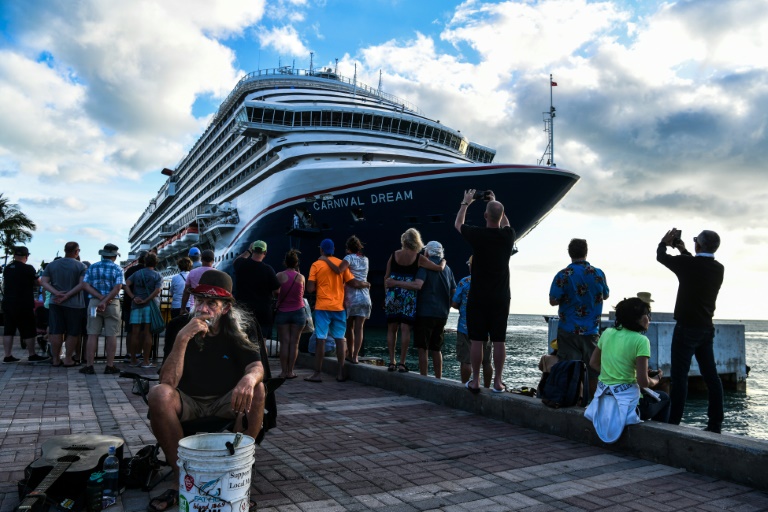
The island-city of Key West off the southern tip of Florida invites visitors to stroll slowly, enjoy turquoise waters and take in the sunset. But according to some residents, that idyllic peace is endangered — by lumbering, tourist-filled cruise ships.

The huge vessels bring thousands of visitors every day to the small city of 26,000 inhabitants, whose quaint, often pastel-colored Victorian homes line leafy, walkable streets.

Following a drawn-out local battle, the cruise tourist numbers are now down, but many residents say more still needs to be done.

While many businesses depend on the tourist throngs, residents such as Arlo Haskell find the ships to be a nuisance and believe they cause environmental harm. As a result, he founded the Safer Cleaner Ships non-profit.

“These cruise ships are an extraction industry that is profiting off of the beauty in Key West while harming that beauty and degrading the experience for everyone else,” Haskell said.

In 2020, his association put forth three local referendums: one to limit the size of cruise ships, another to allow no more than 1,500 people a day to disembark and a third to be able to prohibit boats that do the most damage to the environment.

The three proposals, each approved by between 60 to 80 percent of voters, were ratified by the city council. It was a victory for Haskell — or so he thought.

Then in June 2021, Florida Governor Ron DeSantis signed a law suspending the measures, arguing that voters could not meddle in matters of maritime trade. 

Local businesses, including ones also owned by the owner of Pier B — a huge beneficiary of the cruise ships as one of the city’s main docking locations — had donated almost $1 million to a political campaign committee supporting the governor, according to the Miami Herald.

– Public docks closed –

Relying on a bit of unexpected economic data, Safer Cleaner Ships returned to battle following DeSantis’ move. 

The info showed that cruise ship suspensions during the pandemic did not sink local finances.

To the contrary, in 2021, the city collected 25 percent more sales taxes than in 2019, before Covid.

Hotels and restaurants seem to have taken advantage of the fact that Florida promoted its open businesses in the middle of the pandemic while other states imposed rules and closings.

The city administration last month decided that since Key West cannot limit the number of cruise ships, it would close its two public docks. 

Now cruises can only park at private Pier B, which welcomes only one cruise ship per day. The era of two to three ships arriving daily is over.

The move has been a blow to some businesses. 

Although cruise tourists spend only a few hours in the city and usually eat before disembarking — generating little income for restaurants and hotels — they do buy souvenirs and snacks.

The visitors support the likes of tchotchke shops, ice cream parlors and tourist destinations, such as the Ernest Hemingway Home and Museum where the US writer lived between 1931 and 1939, according to Mayor Teri Johnston.

– Finding balance –

One morning this week, the streets of Key West were nearly deserted. Vanessa Wilder manned her downtown bike rental stand, waiting for the first passengers to disembark from a newly arrived cruise.

“The main shops and the bars down here, we thrive off of these cruise ships,” she said. 

“If we didn’t have them, a lot of businesses around here would have to shut.”

Despite his victories, Haskell maintains that things should move one step further, with cruise ships at the private dock not allowed to exceed a size specified by residents.

The boats, according to Haskell “do tremendous damage to our ecosystem” by clouding the water, which endangers the survival of corals.

But Scott Atwell, spokesman for the National Oceanic and Atmospheric Administration in Key West, said the evidence wasn’t so clear.

“We do not have specific studies on whether the cruise ship turbidity is any different than natural turbidity and whether turbidity from the ships’ channel reaches our coral reefs in a detrimental way,” he said.

In the meantime, Key West’s city council has decided to monitor water quality and also support coral restoration under an initiative that charges a fee to Pier B for disembarking passengers.

“We don’t want to get rid of the cruise ships but bring them into a moderate level so that we have good economic conditions and we also have good quality of life for our residents,” Johnston, the mayor, said.

Cruise ships at center of dispute in Florida's idyllic Key West

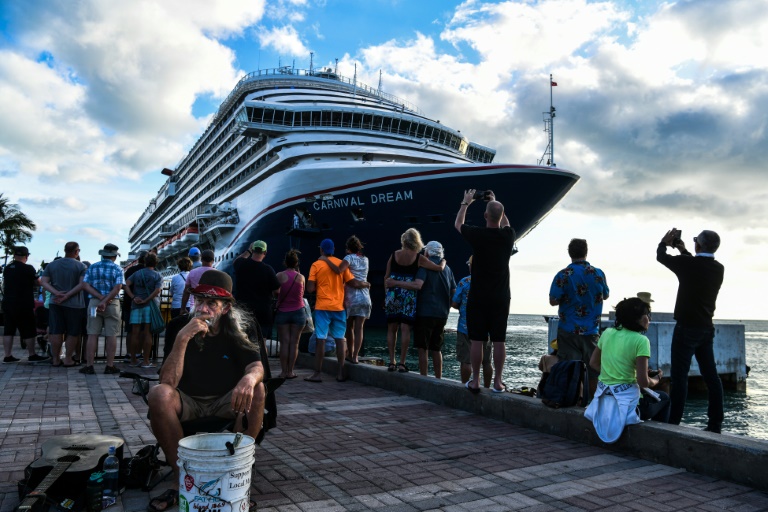
The island-city of Key West off the southern tip of Florida invites visitors to stroll slowly, enjoy turquoise waters and take in the sunset. But according to some residents, that idyllic peace is endangered — by lumbering, tourist-filled cruise ships.

The huge vessels bring thousands of visitors every day to the small city of 26,000 inhabitants, whose quaint, often pastel-colored Victorian homes line leafy, walkable streets.

Following a drawn-out local battle, the cruise tourist numbers are now down, but many residents say more still needs to be done.

While many businesses depend on the tourist throngs, residents such as Arlo Haskell find the ships to be a nuisance and believe they cause environmental harm. As a result, he founded the Safer Cleaner Ships non-profit.

“These cruise ships are an extraction industry that is profiting off of the beauty in Key West while harming that beauty and degrading the experience for everyone else,” Haskell said.

In 2020, his association put forth three local referendums: one to limit the size of cruise ships, another to allow no more than 1,500 people a day to disembark and a third to be able to prohibit boats that do the most damage to the environment.

The three proposals, each approved by between 60 to 80 percent of voters, were ratified by the city council. It was a victory for Haskell — or so he thought.

Then in June 2021, Florida Governor Ron DeSantis signed a law suspending the measures, arguing that voters could not meddle in matters of maritime trade. 

Local businesses, including ones also owned by the owner of Pier B — a huge beneficiary of the cruise ships as one of the city’s main docking locations — had donated almost $1 million to a political campaign committee supporting the governor, according to the Miami Herald.

– Public docks closed –

Relying on a bit of unexpected economic data, Safer Cleaner Ships returned to battle following DeSantis’ move. 

The info showed that cruise ship suspensions during the pandemic did not sink local finances.

To the contrary, in 2021, the city collected 25 percent more sales taxes than in 2019, before Covid.

Hotels and restaurants seem to have taken advantage of the fact that Florida promoted its open businesses in the middle of the pandemic while other states imposed rules and closings.

The city administration last month decided that since Key West cannot limit the number of cruise ships, it would close its two public docks. 

Now cruises can only park at private Pier B, which welcomes only one cruise ship per day. The era of two to three ships arriving daily is over.

The move has been a blow to some businesses. 

Although cruise tourists spend only a few hours in the city and usually eat before disembarking — generating little income for restaurants and hotels — they do buy souvenirs and snacks.

The visitors support the likes of tchotchke shops, ice cream parlors and tourist destinations, such as the Ernest Hemingway Home and Museum where the US writer lived between 1931 and 1939, according to Mayor Teri Johnston.

– Finding balance –

One morning this week, the streets of Key West were nearly deserted. Vanessa Wilder manned her downtown bike rental stand, waiting for the first passengers to disembark from a newly arrived cruise.

“The main shops and the bars down here, we thrive off of these cruise ships,” she said. 

“If we didn’t have them, a lot of businesses around here would have to shut.”

Despite his victories, Haskell maintains that things should move one step further, with cruise ships at the private dock not allowed to exceed a size specified by residents.

The boats, according to Haskell “do tremendous damage to our ecosystem” by clouding the water, which endangers the survival of corals.

But Scott Atwell, spokesman for the National Oceanic and Atmospheric Administration in Key West, said the evidence wasn’t so clear.

“We do not have specific studies on whether the cruise ship turbidity is any different than natural turbidity and whether turbidity from the ships’ channel reaches our coral reefs in a detrimental way,” he said.

In the meantime, Key West’s city council has decided to monitor water quality and also support coral restoration under an initiative that charges a fee to Pier B for disembarking passengers.

“We don’t want to get rid of the cruise ships but bring them into a moderate level so that we have good economic conditions and we also have good quality of life for our residents,” Johnston, the mayor, said.

Endangered North Atlantic right whales make a stand in Cape Cod

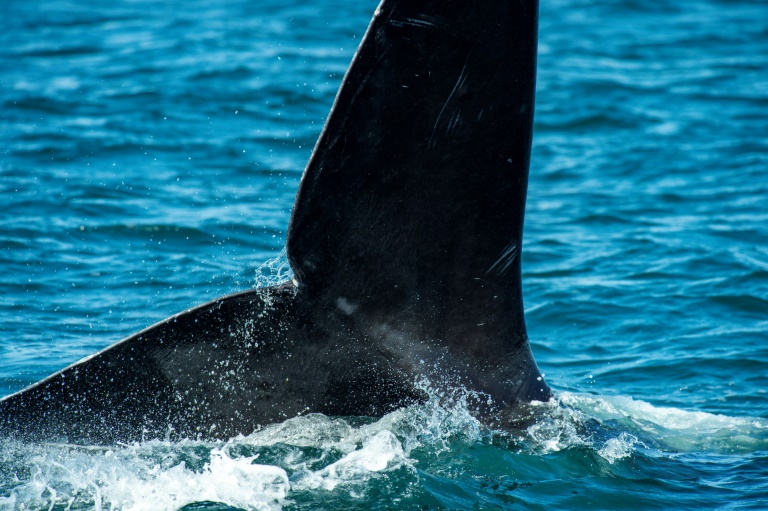
After many hours scouring Cape Cod Bay and a few false alarms, those aboard the Research Vessel Shearwater on a bright April day make their first sighting: three North Atlantic right whales, including a rare mother-calf pair.

The captain cuts the engines and a trio of marine biologists spring into action, rapidly snapping photos and noting markings that can be used to identify individual animals and track injuries — a vital part of conservation efforts for a species believed to have 336 members.

While the whaling that drove them to near-extinction has long been banned, unintended collisions with ships and entanglements with fishing gear are today the main threats for Eubalaena glacialis, one of the most endangered mammals in the world.

Approaching 60 feet in length and weighing over 70 tons, the North Atlantic right whale is the third largest whale in existence. Their life spans are similar to humans, with individuals living up to a century.

“Unfortunately, since 2010, their population has been decreasing,” explains Christy Hudak, the leader of the Center for Coastal Studies’ expedition that set off from Provincetown, a historic New England fishing village that is today popular for whale watching and gay tourism.

“We’re trying to spread the word regarding these amazing creatures and just how a key species they are in the circle of life.”

The CCS crew coordinates with an aerial survey plane, while a vessel from another research group flies mini-drones equipped with cameras over the whales as part of a study on the impact of rope entanglements on their growth rate.

Despite strict ship speed limits of 10 knots in some protected areas, and new rules brought in by authorities to limit the number of ropes between buoys to crab and lobster traps on the seafloor, conservationists worry it’s not enough.

The problems are compounded by climate change: as the waters of the North Atlantic warm, a tiny oil-rich crustacean called Calanus finmarchicus that is the whales’ main food resource is becoming more scarce in their habitat, which stretches from Florida to Canada.

Cape Cod Bay isn’t warming as fast as the whales’ more northern waters in the Gulf of Maine, and as a result, it is here, in their traditional feeding and nursing grounds, that the marine giants are now more commonly spotted.

Apart from photography and detailed note-taking, the crew also carry out plankton surveys: casting nets and using water pumps to take samples at various depths for lab analysis.

Knowledge of the composition and density of these zooplankton helps scientists predict peak whale arrivals and departures.

– The ‘right’ whale to hunt –

Right whales were the favored prey of commercial hunters for more than a millennium — by the Vikings, Basques, English, Dutch and finally Americans — who sought their blubber for whale oil and their baleen plates, which they use to filter their food, as a strong, flexible material used in the pre-plastic era.

According to David Laist, an author of a book on the species, their numbers prior to commercial whaling ranged up to 20,000, but by the early 20th century, the species was decimated. 

There was just one reliable sighting anywhere in the North Atlantic between the mid-1920s to 1950, Laist writes.

“The early whalers thought of them as the correct whale to catch because they were so valuable, great thick layers of blubber that produced oil that was used in lamps,” CCS founder Charles “Stormy” Mayo says, explaining the name. 

A baby boom in the 2000s led to a recent peak of more than 483 animals by 2010, but numbers are once more in decline — and in 2017, the species was rocked by a mass-die off due to a shift to new foraging grounds.

“Fourteen right whales died in a very short period, because they moved into an area in the Gulf of St. Lawrence that was not previously known and was not managed,” he said.

That move due to declining prey abundance elsewhere appears to have been caused by climate change, and left the whales highly vulnerable to the collisions and ropes that kill them.

And since the population is already so depleted, even a few deaths are enough to trigger a downward spiral, said Mayo, who was part of the first team to disentangle a whale in 1984. Mayo’s own father had hunted pilot whales, and their family has lived in the area since the 1600s.

The whales’ calving rate in its southern waters is also down.

While three years is considered a normal interval between births, the current average is three to six years, according to the National Oceanic and Atmospheric Administration.

The stressors placed on females — including non-fatal rope entanglements and ocean noise from human activities — are thought to be behind the steep decline.

– Playful calf, and a whale party – 

Right whales are distinguished by their stocky, black appearance with no dorsal fins, as well as heads adorned with knobby patches of rough skin called callosities, which are colored white from the tiny “whale lice” (cyamids) that cling to their hosts in what is thought to be a symbiotic relationship.

Following tips relayed by their colleagues in the air, the R/V Shearwater finds more right whales including a playful calf copying its mother, and a huddle that biologists call a surface active group — an opportunity to socialize.

The whales “are getting together, rolling around touching each other. The main part of it is to mate, but also just to interact with other right whales. It’s not always about sex,” Hudak says.

Back on land, Hudak says she was encouraged by what she saw over the day: a total of 10 right whales, two mother-calf pairs, and the social group, the “piece de resistance.”

The long term future of the species is far from assured, but there is hope.

Technologies are being tested to reduce entanglements — from weak rope that breaks more easily, to ropeless fishing traps that use floats triggered by remote control to ascend by themselves.

Other ideas include deploying more acoustic monitoring devices on buoys to track the whales’ movements better, and quickly respond with ship speed limits in those areas.

Also vital, said Hudak, is increasing public awareness and desire to protect the creatures.

The ship’s spotter Sarah Pokelwaldt, a recent graduate doing an internship with CCS, said she was blown away by what for her was her first encounter with calves.

“Being able to see the babies shows a lot of promise for the work that we do. It’s really fulfilling to see,” she said.

Climate activists disrupt traffic in London, Paris

Several hundred activists from the Extinction Rebellion activist group on Saturday blocked major roads in central Paris and London, disrupting traffic to protest “inaction” on climate change from world leaders.

Around 300 metres (980 feet) of a main thoroughfare in central Paris was taken over by activists over the Easter weekend, with some of them moving in hay bales and cement-filled containers to block traffic. 

Extinction Rebellion tweeted “thousands” of protesters were “occupying” London’s Marble Arch roundabout during a sit-in close to Hyde Park, demanding an end to the fossil fuel economy.

Demonstrators also glued themselves to a limousine in central London.

The Metropolitan Police said in a tweet that the protest caused “significant traffic disruption” and that the protesters “locked onto a stationary vehicle in the middle of the road… believed to be their own”. 

Activists from the group had glued themselves to a tanker earlier on Saturday, blocking the vehicle on a road near Hyde Park.

Three activists including 2012 Olympic canoe slalom champion Etienne Stott climbed onto the tanker belonging to British energy giant Shell, unfurling a banner saying, “End fossil filth”, Extinction Rebellion said. 

“I am aware that my actions will cause anger to many people and I am prepared to be held accountable,” Stott said. 

“But our government should also be held to account for its decisions which are destroying our planet’s ability to support human civilisation.” 

Six people were arrested, the Metropolitan Police said. 

In Paris, activists hung out a large red banner that read: “This world is dying. Let’s build the next one.” The protest is scheduled to continue until Monday. 

“Rebelling is our duty,” had been daubed in graffiti on a wall nearby. 

“This is the only way of ensuring that everyone talks a bit about climate change,” Antoine, a young activist who declined to give his surname, told AFP. 

A line of French riot police stood opposite the protesters, but officers did not intervene. 

– Anger over official policies –

Extinction Rebellion has carried out a series of protests in Britain in the past week, including shutting down four of London’s busiest bridges on Friday. 

A scientist from the group, Emma Smart, was freed on Saturday after starting a hunger strike following her arrest earlier in the week during a protest targeting the British energy ministry, Extinction Rebellion said. 

After several oil depots were targeted by the campaign group Just Stop Oil in recent days, many companies including ExxonMobil successfully took out injunctions to stop such actions, the government in London said. 

The British government last week presented a new energy security strategy after the war in Ukraine and soaring inflation, with a greater focus on nuclear power and renewable energy, but also oil from the North Sea. 

The strategy has angered many activists who believe the government is not doing enough to move away from fossil fuels. 

Many French environmentalists have been left despondent after the first round of presidential elections last weekend in which Greens candidate Yannick Jadot and hard-left ecologist Jean-Luc Melenchon were eliminated. 

A second round run-off will be held next Sunday between centrist President Emmanuel Macron and far-right leader Marine Le Pen. 

China's 'space dream': A Long March to the Moon and beyond

The return to Earth of three astronauts on Saturday after six months at China’s new space station marks a landmark step in the country’s space ambitions, ending its longest crewed mission ever.

The world’s second-largest economy has put billions into its military-run space programme, with hopes of eventually sending humans to the Moon.

China has come a long way in catching up with the United States and Russia, whose astronauts and cosmonauts have decades of experience in space exploration.

Here is a look at the country’s space programme, and where it is headed:

– Mao’s vow –

Soon after the Soviet Union launched Sputnik in 1957, Chairman Mao Zedong pronounced: “We too will make satellites.”

It took more than a decade, but in 1970, China launched its first satellite on a Long March rocket.

Human spaceflight took decades longer, with Yang Liwei becoming the first Chinese “taikonaut” in 2003.

As the launch approached, concerns over the viability of the mission caused Beijing to cancel a live television broadcast at the last minute.

But it went smoothly, with Yang orbiting the Earth 14 times during a 21-hour flight aboard the Shenzhou 5.

China has launched seven crewed missions since.

– Space station and ‘Jade Rabbit’ –

Following in the footsteps of the United States and Russia, China began planning to build its own space station circling the planet.

The Tiangong-1 lab was launched in 2011.

In 2013, the second Chinese woman in space, Wang Yaping, gave a video class from inside the space module to children across the world’s most populous country.

The craft was also used for medical experiments and, most importantly, tests intended to prepare for the construction of a space station.

That was followed by the “Jade Rabbit” lunar rover in 2013, which initially appeared a dud when it turned dormant and stopped sending signals back to Earth.

It made a dramatic recovery, however, ultimately surveying the Moon’s surface for 31 months — well beyond its expected lifespan.

In 2016, China launched its second orbital lab, the Tiangong-2. Astronauts who visited the station have run experiments on growing rice and other plants.

– ‘Space dream’ –

Under President Xi Jinping, plans for China’s “space dream” have been put into overdrive.

Beijing is looking to finally catch up with the United States and Russia after years of belatedly matching their milestones.

Besides a space station, China is also planning to build a base on the Moon, and the country’s National Space Administration said it aims to launch a crewed lunar mission by 2029.

But lunar work was dealt a setback in 2017 when the Long March-5 Y2, a powerful heavy-lift rocket, failed to launch on a mission to send communication satellites into orbit.

That forced the postponement of the Chang’e-5 launch, originally scheduled to collect Moon samples in the second half of 2017.

Another robot, the Chang’e-4, landed on the far side of the Moon in January 2019 — a historic first.

This was followed by one that landed on the near side of the Moon last year, raising a Chinese flag on the lunar surface.

The unmanned spacecraft returned to Earth in December with rocks and soil — the first lunar samples collected in four decades.

And in February 2021, the first images of Mars were sent back by the five-tonne Tianwen-1, which then landed a rover on the Martian surface in May that has since started to explore the surface of the Red Planet.

– Palace in the sky –

A trio of astronauts docked successfully in October with the core Tianhe module of the Chinese space station, which was placed in orbit in April 2021.

The astronauts stayed at the station for six months before returning safely to Earth on Saturday, ending China’s longest crewed mission to date.

The Chinese space station Tiangong — meaning “heavenly palace” — will need a total of around 11 missions to bring more parts and assemble them in orbit.

Once completed, it is expected to remain in low Earth orbit at between 400 and 450 kilometres (250 and 280 miles) above our planet for at least 10 years — realising an ambition to maintain a long-term human presence in space.

While China does not plan to use its space station for global cooperation on the scale of the International Space Station, Beijing said it is open to foreign collaboration.

It is not yet clear how extensive that cooperation will be.

Three Chinese astronauts return to Earth after six months in space

Three Chinese astronauts returned to Earth on Saturday after 183 days in space, ending China’s longest crewed mission as it continues its quest to become a major space power.

The Shenzhou-13 spacecraft was the latest mission in Beijing’s drive to rival the United States, after landing a rover on Mars and sending probes to the Moon.

Live footage from state broadcaster CCTV showed the capsule landing in a cloud of dust, with ground crew who had kept clear of the landing site rushing in helicopters to reach the capsule.

The two men and one woman — Zhai Zhigang, Ye Guangfu and Wang Yaping — returned to Earth shortly before 10 am Beijing time (0200 GMT), after six months aboard the Tianhe core module of China’s Tiangong space station.

Ground crew applauded as the astronauts each took turns to report that they were in good physical condition.

Zhai was the first to emerge from the capsule roughly 45 minutes after the landing, waving and grinning at cameras as he was lifted by ground crew into a specially designed chair before being bundled into a blanket.

“I’m proud of our heroic country,” Zhai said in an interview with CCTV shortly after leaving the capsule. “I feel extremely good.”

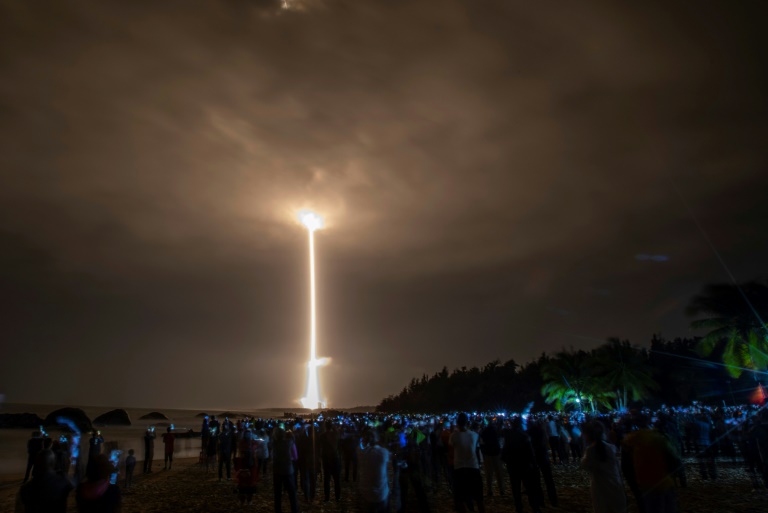
The trio originally launched in the Shenzhou-13 from China’s northwestern Gobi Desert last October, as the second of four crewed missions during 2021-2022 sent to assemble the country’s first permanent space station — Tiangong, which means “heavenly palace.”

Wang became the first Chinese woman to spacewalk last November, as she and her colleague Zhai installed space station equipment during a six-hour stint.

Mission commander Zhai, 55, is a former fighter pilot who performed China’s first spacewalk in 2008, while Ye is a People’s Liberation Army pilot.

The trio have completed two spacewalks, carried out numerous scientific experiments, set up equipment and tested technologies for future construction during their time in orbit. 

The astronauts spent the past few weeks tidying up and preparing the cabin facilities and equipment for the crew of the incoming Shenzhou-14, expected to be launched in the coming months.

China’s previous record spaceflight mission length was set by last year’s Shenzhou-12 deployment, which lasted 92 days. 

Six months will become the normal astronaut residence period aboard the Chinese space station, according to state broadcaster CCTV.

– Space race –

The world’s second-largest economy has poured billions into its military-run space programme, with hopes of having a permanently crewed space station by 2022 and eventually sending humans to the Moon.

The country has come a long way in catching up with the United States and Russia, whose astronauts and cosmonauts have decades of experience in space exploration.

But under Chinese President Xi Jinping, the country’s plans for its heavily-promoted “space dream” have been put into overdrive.

Besides a space station, Beijing is also planning to build a base on the Moon, and the country’s National Space Administration said it aims to launch a crewed lunar mission by 2029.

China has been excluded from the International Space Station since 2011, when the US banned NASA from engaging with the country.

While China does not plan to use its space station for global cooperation on the scale of the ISS, Beijing has said it is open to foreign collaboration although the scope of that cooperation is not yet clear.

The ISS is due for retirement after 2024, although NASA has said it could  remain functional until 2030.

China's economic growth under threat as virus takes hold

The mounting cost of China’s zero-Covid policy threatens to derail Beijing’s ambitious GDP target, analysts say, as supply chains snarl, ports face delays and Shanghai remains mired in lockdown.

Growth in the world’s second-largest economy was already slowing in the latter half of last year with a property market slump and regulatory crackdowns, leading policymakers to set their lowest annual GDP target in decades for 2022.

But analysts told AFP the figure of 5.5 percent would be tough to achieve with stay-at-home orders halting production and stunting consumer spending in key cities.

Experts from 12 financial institutions polled by AFP forecast GDP growth of 5.0 percent for the full year.

They expect a figure of 4.3 percent for the first quarter, just above the 4.0 percent recorded in the three months prior.

Official first-quarter data will be published Monday.

“China’s economy saw a good start in January and February with less energy constraints, domestic demand recovery… fiscal stimulus, and resilient exports,” said Gene Ma, head of China research at the Institute of International Finance.

But surging virus cases in March and lockdowns have “severely disrupted supply chains and industrial activities”, he added.

The analysts predicted the coronavirus outbreak would reverse the gains made earlier in the year.

Carmakers this week warned of severe disruption to supply chains and possibly even halting production completely if a lockdown in business hub Shanghai continues.

Premier Li Keqiang said this week that state support should be stepped up and tools including cuts to the reserve requirement ratio for banks could be tapped to help virus-hit sectors.

Other major cities struck by Covid outbreaks include southern tech powerhouse Shenzhen, which went into full lockdown for almost a week in March.

“The hit to retail sales could be even bigger, as dining-out services — around 10 percent of retail sales — were temporarily suspended in a few provinces,” Goldman Sachs said in a recent report.

But economists expect bigger consequences of the lockdowns to surface in April data and bog down growth.

– ‘Lesson’ –

With infections found in dozens of cities, Beijing has dug in its heels on the zero-Covid approach, which involves stamping out clusters as they emerge while conducting mass testing and isolating positive cases.

This has resulted in strict movement curbs in Shanghai for around two weeks now as the financial hub logs tens of thousands of cases daily — most asymptomatic.

The city is home to the world’s busiest container port and while operations are running, intercity travel restrictions and a shortage of truck drivers have snarled the passage of goods.

The daily flow of freight vehicles along highways has “weakened sharply” since the start of April, Capital Economics senior China economist Julian Evans-Pritchard said in a recent report.

Shanghai authorities have come under fire for allowing cases to spike and for failing to ensure supplies of fresh food reach all residents.

“Shanghai is a lesson, and local governments from other parts of China may become more sensitive to domestic flare-ups,” said Tommy Xie, head of Greater China research at OCBC Bank.

“If they want to lock down, they will try to lock down earlier rather than later,” he told AFP.

More short-term disruptions from Covid will likely arise, he added.

Controls in other coastal cities will also remain tight, said Dan Wang, chief economist at Hang Seng Bank China.

“It is not impossible for us to see maybe dozens or even more than 30 cities on lockdown at the same time,” she said.

“The economic cost is very high.”

In US, every dog has its… DNA test

The routine is now a familiar one: Open the kit, swirl a swab around, put it in solution and wait impatiently for the results. Except this time it’s not a test for Covid — it’s a DNA test for dogs.

The kits, which are used foremost to learn a dog’s breeds, first appeared some 15 years ago and their popularity has since exploded in the United States, where nearly 40 percent of all families have at least one canine companion.

“Having a dog and integrating them as a member of your family, you want to know where they’re from,” said Mila Bartos, a Washington lawyer.

One of the most popular test brands, Embark Vet, told AFP it experienced 235 percent growth between 2019 and 2020 alone. And the pandemic has only amplified the trend.

At around $100 to $200 a pop, the tests are not cheap. But in a country where dogs are king, the price hasn’t been a major deterrent for many pet owners.

In 2020 alone, Americans spent nearly $104 billion on their animal companions, according to the American Pet Products Association — a sum that is the equivalent of the GDP of Slovakia.

– ‘You want to know’ –

The tests are simple: a saliva sample is taken from inside a dog’s jowl and sent by mail, with results coming back generally two weeks to a month later.

Sometimes, when a new pup parent has adopted a purebred dog, the test is meant to verify that there has been no error in the dog’s one-breed lineage.

But for the owners of shelter pets, the burning question is — what IS my dog?

Bartos, 51, adopted three dogs — Natty, Maisie and Mabel — and did a DNA test for each.

Natty, she discovered, is a mix of pit bull, beagle, chow-chow and German shepherd. Results showed she even had a cousin living nearby in Baltimore.

With a luxuriously glossy brown coat, Maisie meanwhile turned out to be a descendant of a long line of show dogs.

Levi Novey, a 42-year-old consultant in the state of Virginia, said that getting a test allowed him to make more sense of his tiny dog Summer’s behavior.

“For instance, her athleticism, prey drive, interest in retrieving balls, and selective choice in people she wants to be cuddly and sweet with became easier to understand given her ancestry,” he said of the little black pup, who weighs only 13 pounds (six kilograms).

When New Jersey native Ashley Ternyila decided the German shepherd she adopted from a breeder looked a little too much like a wolf, she got a DNA test.

“He had quite a few wolf-like properties so for the fun of it and to put rumors to bed, we got him tested,” said Ternyila.

Allen McConnell, professor of psychology specializing in the relationship of humans and their pets, said “the owner’s desire to understand, predict and anticipate their dog’s actions makes wanting to know something about its breed useful in the owner’s eyes.”

Dog breeds carry stereotypes — Labradors as are good with children, pit bulls are aggressive watch dogs — which can often be inaccurate but also help guide understanding of the animal, he explained.

– Genetic marker –

In addition to revealing a dog’s breeds, DNA tests can also uncover predisposition to genetic disease.

The most expensive tests allow users to review their pet’s DNA in search of genes that cause heart abnormalities, kidney disorders and premature deafness, among other problems.

But beware, warns veterinarian Sarah Bowman of Washington: “Just because they have a genetic marker doesn’t necessarily mean they also have the condition.”

The tests make it possible to be cognizant of the risk and to exercise greater caution, she said.

The American Veterinary Medical Association said it encourages owners “to consult with their veterinarians before making any decisions based on their pets’ test results.”

Pet parents should also consider possible ramifications of finding out their dog’s breed. In many countries, certain breeds are seen as aggressive, such as pit bulls or Staffordshire terriers, and are banned from apartment buildings.

If the adoptee is half pit bull “could be an issue” with a landlord, Bartos the lawyer warned.

“If you don’t want to know that information, then you probably shouldn’t run a breed DNA on it” Bartos said.

In US, every dog has its… DNA test

The routine is now a familiar one: Open the kit, swirl a swab around, put it in solution and wait impatiently for the results. Except this time it’s not a test for Covid — it’s a DNA test for dogs.

The kits, which are used foremost to learn a dog’s breeds, first appeared some 15 years ago and their popularity has since exploded in the United States, where nearly 40 percent of all families have at least one canine companion.

“Having a dog and integrating them as a member of your family, you want to know where they’re from,” said Mila Bartos, a Washington lawyer.

One of the most popular test brands, Embark Vet, told AFP it experienced 235 percent growth between 2019 and 2020 alone. And the pandemic has only amplified the trend.

At around $100 to $200 a pop, the tests are not cheap. But in a country where dogs are king, the price hasn’t been a major deterrent for many pet owners.

In 2020 alone, Americans spent nearly $104 billion on their animal companions, according to the American Pet Products Association — a sum that is the equivalent of the GDP of Slovakia.

– ‘You want to know’ –

The tests are simple: a saliva sample is taken from inside a dog’s jowl and sent by mail, with results coming back generally two weeks to a month later.

Sometimes, when a new pup parent has adopted a purebred dog, the test is meant to verify that there has been no error in the dog’s one-breed lineage.

But for the owners of shelter pets, the burning question is — what IS my dog?

Bartos, 51, adopted three dogs — Natty, Maisie and Mabel — and did a DNA test for each.

Natty, she discovered, is a mix of pit bull, beagle, chow-chow and German shepherd. Results showed she even had a cousin living nearby in Baltimore.

With a luxuriously glossy brown coat, Maisie meanwhile turned out to be a descendant of a long line of show dogs.

Levi Novey, a 42-year-old consultant in the state of Virginia, said that getting a test allowed him to make more sense of his tiny dog Summer’s behavior.

“For instance, her athleticism, prey drive, interest in retrieving balls, and selective choice in people she wants to be cuddly and sweet with became easier to understand given her ancestry,” he said of the little black pup, who weighs only 13 pounds (six kilograms).

When New Jersey native Ashley Ternyila decided the German shepherd she adopted from a breeder looked a little too much like a wolf, she got a DNA test.

“He had quite a few wolf-like properties so for the fun of it and to put rumors to bed, we got him tested,” said Ternyila.

Allen McConnell, professor of psychology specializing in the relationship of humans and their pets, said “the owner’s desire to understand, predict and anticipate their dog’s actions makes wanting to know something about its breed useful in the owner’s eyes.”

Dog breeds carry stereotypes — Labradors as are good with children, pit bulls are aggressive watch dogs — which can often be inaccurate but also help guide understanding of the animal, he explained.

– Genetic marker –

In addition to revealing a dog’s breeds, DNA tests can also uncover predisposition to genetic disease.

The most expensive tests allow users to review their pet’s DNA in search of genes that cause heart abnormalities, kidney disorders and premature deafness, among other problems.

But beware, warns veterinarian Sarah Bowman of Washington: “Just because they have a genetic marker doesn’t necessarily mean they also have the condition.”

The tests make it possible to be cognizant of the risk and to exercise greater caution, she said.

The American Veterinary Medical Association said it encourages owners “to consult with their veterinarians before making any decisions based on their pets’ test results.”

Pet parents should also consider possible ramifications of finding out their dog’s breed. In many countries, certain breeds are seen as aggressive, such as pit bulls or Staffordshire terriers, and are banned from apartment buildings.

If the adoptee is half pit bull “could be an issue” with a landlord, Bartos the lawyer warned.

“If you don’t want to know that information, then you probably shouldn’t run a breed DNA on it” Bartos said.

Close Bitnami banner
Bitnami