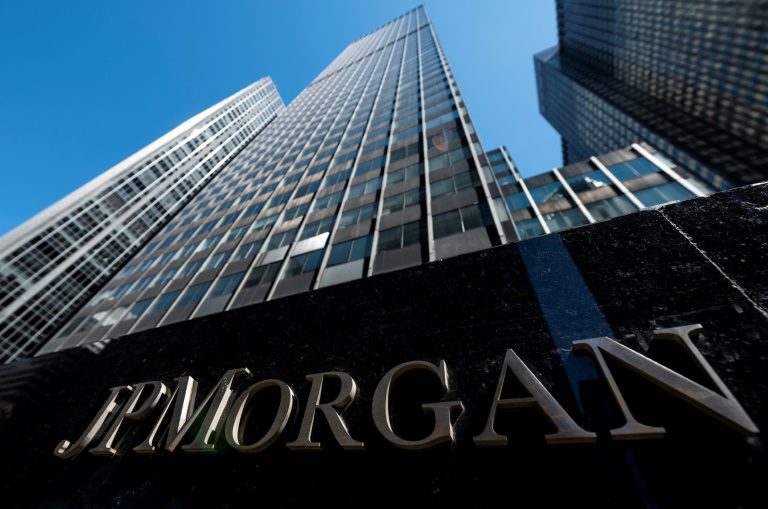
AFP

JPMorgan Chase says US economy still solid, but risks rising

JPMorgan Chase said the US economy remains on solid footing for the short-term, but warned of heightened longer-term risks due to inflation and the Ukraine war as its reported lower quarterly profits.

Executives from the giant bank said households and businesses generally remained in good shape, amid a tightening labor market.

But higher consumer prices, the Ukraine war and the shifts in Federal Reserve policy together have slightly raised the recession risk, which led the bank to set aside $902 million in additional reserves as a buffer against possible bad loans.

“There’s this very strong underlying economy,” said Chief Executive Jamie Dimon, noting that many consumers are flush with cash and businesses in “good shape” for the most part.

But he pointed to “countervailing forces,” including rising interest rates and inflation, and the war in Ukraine. 

“And those things are going to collide at one point, probably sometime next year,” he said.

“I’m not predicting a recession,” Dimon added in a conference call with reporters. “But is it possible? Absolutely.”

– ‘Wars are unpredictable’ –

The biggest US bank by assets, JPMorgan reported $8.3 billion in first-quarter profits, down 42 percent from the same three months of the prior year. Revenues dipped five percent to $30.7 billion. 

JPMorgan scored higher net interest income, reflecting a boost to lending fees because of higher interest rates. 

Profits fell in investment banking on lower equity and debt underwriting fees. The division also suffered a $120 million hit tied to upheaval in the nickel market in March that pressured some commodity brokerages, company officials said.

The results contrasted sharply from a year ago, when JPMorgan saw surging profits after it unlocked $5.2 billion in funds it had set aside early in the pandemic against potential defaults, but didn’t need because of the surprisingly solid condition of clients.

In the latest quarter, JPMorgan set aside $902 million for bad loans, citing “downside risks” including the Ukraine war and surging inflation.

About $300 million of that amount is connected to Russia-related exposures, with the remaining funds reflecting broader economic risks, executives said.

Charge offs for the first quarter came in at a relatively modest $582 million, another sign of the healthy condition of consumers.

In terms of customer trends, Dimon cited an uptick in credit card spending on dining and travel, but said higher mortgage rates had dented home lending originations, while limited vehicle availability crimped car loan originations.

Dimon highlighted the Ukraine situation as a wildcard, warning that “wars are unpredictable” and the oil market could “change dramatically.”

“The oil markets are precarious,” he said, adding that “clouds are on the horizon.”

JPMorgan’s shares fell 3.5 percent to $126.90 in early trading.

Other large banks, including Goldman Sachs, Citigroup and Bank of America, will report results in coming days.


US Treasury Secretary warns China over its stance on Russia

US Treasury Secretary Janet Yellen warned China on Wednesday that its lack of participation in the Western sanctions campaign against Russia could affect countries’ willingness to work with Beijing.

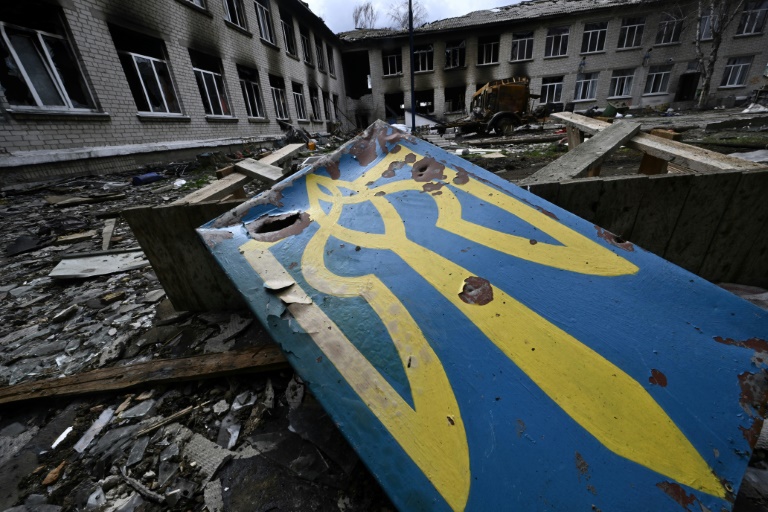
Washington and its allies in Europe and elsewhere have responded with fury to Moscow’s attack on Ukraine, sanctioning Russia’s financial system, aviation sector and other major parts of its economy in a thus-far fruitless effort to get President Vladimir Putin to back down.

“China has recently affirmed a special relationship with Russia. I fervently hope that China will make something positive of this relationship and help to end this war,” Yellen told the Atlantic Council.

“The world’s attitude towards China and its willingness to embrace further economic integration may well be affected by China’s reaction to our call for resolute action on Russia.”

China as well as India are two major economies that have not taken part in the retaliatory measures, and Yellen said Beijing’s policy could have lasting implications for a country that is pursuing territorial disputes against its neighbors.

“China cannot expect the global community to respect its appeals to the principles of sovereignty and territorial integrity in the future if does not respect these principles now when it counts,” she said, in a reference to China’s claim over Taiwan.

– ‘On the fence’ –

Yellen also spoke to countries that “are currently sitting on the fence” when it comes to Moscow, “perhaps seeing an opportunity to gain by preserving their relationship with Russia and backfilling the void left by others.”

She warned that such policies “are short-sighted,” adding: “The future of our international order, both for peaceful security and economic prosperity, is at stake.”

“The unified coalition of sanctioning countries will not be indifferent to actions that undermine the sanctions we’ve put in place,” Yellen said.

With the World Bank and IMF set to begin their spring meetings next week, Yellen also called for reform to the two major economic institutions, saying the war in Ukraine proved the necessity of change.

“We will… need to modernize our existing institutions — the IMF and the multilateral development banks — so that they are fit for the 21st century, where challenges and risks are increasingly global,” she said.

“Some may say that now is not the right time to think big. Indeed, we are in the middle of Russia’s war in Ukraine,” Yellen said. “Yet, I see this as the right time to work to address the gaps in our international financial system that we are witnessing in real time.”

These measures should force the Kremlin “to choose between propping up its economy and funding the continuation of Putin’s brutal war,” she said.

She reflected on the massive economic collapse the Covid-19 pandemic caused in 2020, saying that while rich nations were able to spend to support their economies, efforts to help poor countries were less successful, causing “a divergence in global prospects.”

Yellen said the governance of the IMF should be considered “to ensure that it reflects both the current global economy and also members’ commitments to the (lender’s) underlying principles and objectives.”

India's Infosys to exit Russia business

Indian software giant Infosys said Wednesday it was “transitioning” out of the Russian market following the Ukraine war and conflict of interest accusations levelled at Rishi Sunak, the British finance minister.

Sunak’s wife Akshata Murty holds a nearly $1 billion stake in the IT firm, which was founded by her father N.R. Narayana Murthy and established itself as a global outsourcing behemoth.

Critics have accused Sunak of financially benefiting from Infosys operations in Russia through his wife’s stake, even in the wake of stiff British sanctions against Moscow in response to the invasion of Ukraine.

“Given what is going on in the region, we have started to transition all of our work from our centres in Russia to our centres outside Russia,” chief executive and managing director Salil Parekh told a media briefing.

“We have no work with any Russian client today and we have no plans for any work with any Russian client going ahead,” he added.

Parekh said the company was “very concerned” about the situation in Ukraine and had committed $1 million in humanitarian aid.

But he declined to confirm if the company’s board has discussed recent criticism surrounding Murty’s stake in the company.

“We have no comments to make on any individual shareholder,” he said.

Infosys also announced quarterly earnings on Wednesday but fell short of analyst estimates despite strong growth on the back of sustained demand for digital services since the pandemic.

Net profit at the Bangalore-headquartered company rose 12 percent on-year to 56.86 billion rupees ($746 million) in the March quarter.

Revenues grew 22.7 percent to 322.76 billion rupees, and were up 19.7 percent on a full-year basis, the company’s fastest pace in 11 years. 

Revenue growth was forecast at 13-15 percent for the current financial year, after the company recorded an order book of $9.5 billion for the year to March 31.

Infosys was at the forefront of an outsourcing boom that saw India become a back office to the world as Western firms subcontracted work to a skilled English-speaking workforce.

More than 60 percent of its revenue comes from North American markets.

The company’s board approved a final dividend of 16 rupees per share. Its stock closed 0.41 percent higher in Mumbai ahead of the earnings announcement.

Stocks diverge while oil gains tracking soaring inflation

Stock markets diverged Wednesday as investors pored over data showing further spikes to inflation, while oil prices extended gains.

US annual consumer inflation hit a 40-year high in March, the same month that UK prices jumped at the fastest pace in three decades. 

Global inflation, already rocketing on supply constraints as economies look to fully reopen following pandemic lockdowns, is rising further on fallout from the Ukraine war.

US wholesale price inflation hit a record annual rate of 11.2 percent in the year to March, according to data released Wednesday.

Analysts said markets welcomed an indication that US inflation was approaching its peak, though it has raised expectations that the Federal Reserve will take more aggressive action to contain prices.

“The steepest rises in a generation have unsettled financial markets, as investors digest the unsavoury prospect of tougher hikes in interest rates,” noted Susannah Streeter, senior investment and markets analyst at Hargreaves Lansdown.

Tokyo shrugged off the gloom, however, with the benchmark Nikkei 225 closing almost two percent higher following sharp losses at the start of the week.

In China, where a Covid-19 outbreak has caused mass lockdowns and snarled global trade arteries, the main stock market index lost close to one percent Wednesday.

That came as official data showed China’s imports shrank on-year in March for the first time in nearly two years, hit by the coronavirus and weakening consumer demand.

European stocks were solidly lower in afternoon trading while Wall Street opened little changed as the corporate reporting season got underway.

JPMorgan Chase saw its first quarter net profit plunge by 40 percent as it set $900 million aside to deal with potential losses due to the Ukraine conflict and inflation.

It already booked $524 million in losses as it sought to lower its exposure to soaring commodities prices and Russian counterparties.

Shares in JPMorgan Chase fell 2.8 percent at the open of trading. 

Meanwhile, Delta airlines beat expectations even if it still lost money and said it expects second quarter revenue to come in at 97 percent of the pre-pandemic level in 2019.

Its shares rose 3.8 percent.

– Oil rises –

Elsewhere Wednesday, oil prices climbed further in a volatile trading week.

“Oil seems to be the primary benefactor of (the) Ukraine vs Russia conflict dragging out longer,” noted Stephen Innes of SPI Asset Management.

Russia is a major producer of oil and gas and the war has triggered fears of supply constraints.

However, global oil demand will be slightly lower than forecast this year in the wake of strict Covid lockdowns in China, the world’s biggest importer of crude, the International Energy Agency said Wednesday.

Russian oil supply is expected to continue to fall in April by 1.5 million barrels per day, according to the IEA, which advises developed countries on their energy policies.

In currency trading Wednesday, the yen hit its lowest level against the dollar in two decades, extending recent falls as the gap widens between Japan’s ultra-loose monetary policy and Fed tightening.

Despite being traditionally considered a haven currency, uncertainty fuelled by the war in Ukraine has not caused the yen to strengthen.

Instead, the Fed’s move towards a more aggressive rate-tightening policy and the shock of rising oil prices in Japan — a major importer of fossil fuels — have pushed the currency lower, analysts said.

– Key figures around 1330 GMT –

London – FTSE 100: DOWN 0.2 percent at 7,561.85 points

Paris – CAC 40: DOWN 0.7 percent at 6,491.70

Frankfurt – DAX: DOWN 1.0 percent at 13,987.03

EURO STOXX 50: DOWN 0.9 percent at 3,795.76

New York – Dow: UP 0.1 percent at 34,260.43

Tokyo – Nikkei 225: UP 1.9 percent at 26,843.49 (close)

Hong Kong – Hang Seng Index: UP 0.3 percent at 21,374.37 (close)

Shanghai – Composite: DOWN 0.8 percent at 3,186.82 (close)

Brent North Sea crude: UP 2.1 percent at $106.84 per barrel

West Texas Intermediate: UP 1.9 percent at $102.46 per barrel

Euro/dollar: DOWN at $1.0815 from $1.0818

Pound/dollar: UP at $1.2996 from $1.2977

Euro/pound: DOWN at 83.21 pence from 83.36 pence

Dollar/yen: DOWN at 125.80 from 126.22 yen

burs-rl/lth

French prosecutors raid pizza plant after E.coli outbreak

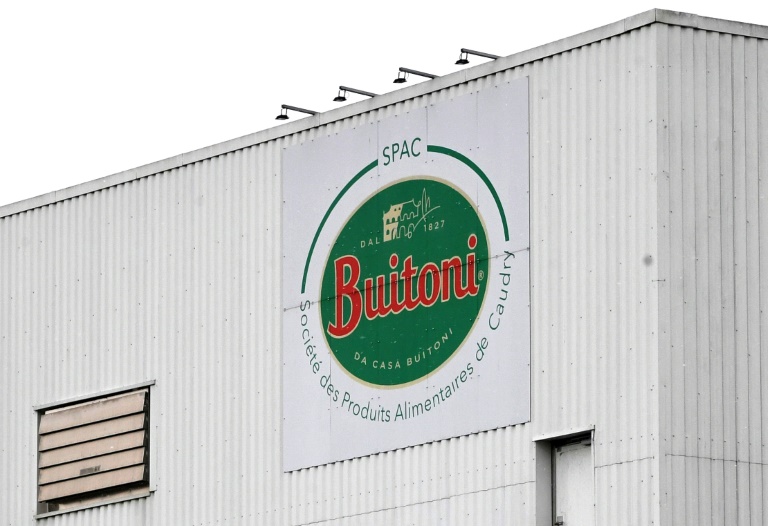
Prosecutors on Wednesday searched a Buitoni frozen pizza factory in northern France, the suspected source of an E. coli outbreak that has left dozens of children sick, as well as the headquarters of its owner Nestle France, authorities told AFP.

An investigation into involuntary manslaughter and deceitful practices was opened on April 1 after authorities learned of more than 70 infections, which may have caused the deaths of a one-year-old and an 18-year-old.

The search at the Caudry factory operated by Buitoni, which is owned by the Swiss food conglomerate Nestle, was confirmed by a police source and the Paris prosecutor’s office, which is leading the investigation.

Nestle France, whose headquarters outside Paris were also raided, announced a recall of the affected Fraich’UP pizzas on March 18, and authorities ordered a halt of their production at Caudry after carrying out two hygiene inspections.

The inspections “revealed a deterioration of food hygiene controls”, the presence of “rodents” and insufficient measures to prevent pests from contaminating a food production site, authorities said in the shutdown order.

Escherichia coli bacteria can lead to severe and long-lasting health complications, including acute kidney failure. French authorities say the reports of possible infections began to occur in late February.

Recalls were also ordered in Belgium and Luxembourg, with the affected pizzas distributed in 20 other countries, including 15 in Africa, according to the EU’s Rapid Alert System for Food and Feed.

Buitoni has said it is cooperating with the investigation and promised to take “appropriate measures” in the wake of the outbreak.

The health scare comes after nine European countries reported a total of 150 salmonella cases thought to be linked to a Kinder chocolate factory in Belgium that has since been closed.

“Most cases are children under 10 years of age, with many being hospitalised,” the European Centre for Disease Prevention and Control and the European Food Safety Authority said in a statement Tuesday.

Kinder’s owner, the Italian confectionery giant Ferrero, has apologised for the outbreak at the height of the Easter holiday season.

JPMorgan Chase profits fall 42%; warns of hit from inflation, Ukraine

JPMorgan Chase reported Wednesday that quarterly earnings tumbled as the banking giant set aside $902 million for bad loans, citing “downside risks” including the Ukraine war and surging inflation.

The biggest US bank by assets, JPMorgan reported $8.3 billion in first-quarter profits, down 42 percent from the year-ago period. Revenues dipped five percent to $30.7 billion.

The results contrasted sharply with those from a year ago, when JPMorgan’s surging profits including $5.2 billion in funds that it had initially set aside early in the pandemic for potential defaults, but didn’t need because of the surprisingly solid condition of clients.

The bank’s charge offs for the quarter came in at a relatively modest $582 in the first quarter, but JPMorgan Chief Executive Jamie Dimon warned of factors that could lead that figure to rise.

“We remain optimistic on the economy, at least for the short term –- consumer and business balance sheets as well as consumer spending remain at healthy levels –- but see significant geopolitical and economic challenges ahead due to high inflation, supply chain issues and the war in Ukraine,” Dimon said.

In terms of customer trends, Dimon cited an uptick in credit card spending on dining and travel, but said higher mortgage rates had dented home lending originations, while limited vehicle availability crimped car loan originations.

JPMorgan scored higher net interest income, reflecting a boost to lending fees because of higher interest rates. Profits fell in investment banking on lower equity and debt underwriting fees.

Shares fell 1.2 percent to $129.97 in pre-market trading.

Death toll from Philippines landslides, floods rises to 80

The death toll from landslides and floods in the Philippines rose to 80 on Wednesday with scores missing and feared dead, officials said, as rescuers dug up more bodies with bare hands and backhoes in crushed villages.

Most of the deaths from tropical storm Megi — the strongest to hit the archipelago this year — were in the central province of Leyte, where a series of landslides devastated communities.

Twenty-six people died and around 150 were missing in the coastal village of Pilar, which is part of Abuyog municipality, after a torrent of mud and earth on Tuesday pushed houses into the sea and buried most of the settlement, authorities said.

“I have to be honest, we are no longer expecting survivors,” Abuyog Mayor Lemuel Traya told AFP, adding that emergency personnel were now focused on the difficult task of retrieving bodies.

About 250 people were in evacuation centres after being rescued by boat after roads were cut by landslides, he said. 

A number of villagers were also in hospital.

A rumbling sound like “a helicopter” alerted Ara Mae Canuto, 22, to the landslide hurtling towards her family’s home in Pilar. 

She said she tried to outrun it, but was swept into the water and nearly drowned. 

“I swallowed dirt, and my ears and nose are full of mud,” Canuto told AFP by telephone from her hospital bed. Her father died and her mother has not been found.

The disaster-prone region is regularly ravaged by storms — including a direct hit from Super Typhoon Haiyan in 2013 — with scientists warning they are becoming more powerful as the world gets warmer because of human-driven climate change.

Baybay City is also reeling after waves of sodden soil smashed into farming settlements over the weekend, killing at least 48 people and injuring over 100, local authorities said. Twenty-seven are still missing, they added. 

Aerial photos showed a wide stretch of mud that had swept down a hill of coconut trees and engulfed Bunga village, where only a few rooftops poked through the now-transformed landscape.

“We were told to be on alert because a storm was coming, but they did not directly tell us we needed to evacuate,” said Bunga farmworker Loderica Portarcos, 47, who lost 17 relatives and a friend in the landslide.

Portarcos braved heat and humidity as she advised a backhoe operator where to dig for three bodies still embedded in the soft soil which had started to smell of rotting flesh.

“Our dead relatives are all in the morgue, but there will be no time for a wake to mourn them because the mayor told us they smell bad,” she said.

– ‘Many of us died’ – 

Three people were also killed in the central province of Negros Oriental and three on the main southern island of Mindanao, according to the national disaster agency.

The death toll from Megi is expected to rise as rescue operations switch to recovering bodies. 

Black body bags containing 26 victims from Pilar were laid out on sand in Abuyog for relatives to identify on Wednesday. 

Abuyog police chief Captain James Mark Ruiz said more boats were needed. But getting access to the shore was difficult.

Photos posted by the Bureau of Fire Protection on Facebook showed buildings crushed or turned over by the force of the landslide and debris in the water.

“We’re using fiber glass boats and there are steel bars exposed in the sea so it’s very difficult,” Abuyog Mayor Traya said, adding that the ground was unstable and “very risky”.

While Pilar survivor Canuto counts herself lucky to be alive, she said “many of us died and a lot are missing too”.

Whipping up seas, Megi forced dozens of ports to temporarily suspend operations, stranding thousands of people at the start of Holy Week, one of the busiest travel periods of the year in the Philippines.

It came four months after super typhoon Rai devastated swathes of the country, killing more than 400 and leaving hundreds of thousands homeless.

The Philippines — ranked among the most vulnerable nations to the impacts of climate change — is hit by an average of 20 storms every year.

iPhone, Macbook makers halt Shanghai production over Covid

Several electronics companies, including iPhone and Macbook makers, have halted production in the Chinese cities of Shanghai and Kunshan, adding to supply chain woes under Beijing’s strict zero-Covid measures.

The business hub of Shanghai has become the heart of China’s biggest Covid-19 outbreak since the virus surfaced more than two years ago.

The city of 25 million has remained almost entirely locked down since the start of the month, while other areas have rolled out less severe restrictions to stamp out Covid flare-ups.

“Local operation in Shanghai area has been temporarily suspended in response to Covid-19 prevention measures,” said Macbook maker Quanta Computer in a filing to the Taiwan Stock Exchange on Wednesday.

The Taiwan-based firm’s expected date of resumption will be advised by authorities later, the notice said.

This came a day after iPhone assembler Pegatron announced it had temporarily suspended work as well, and was “actively cooperating with local authorities” to resume operations soon.

The suspensions apply to two of its subsidiaries, in Shanghai and nearby Kunshan city, the Taiwanese company said.

Stay-at-home orders and stringent testing rules have strained supply chains in and around Shanghai, home to the world’s busiest container port and a critical gateway for foreign trade.

China reported nearly 28,000 local virus cases on Wednesday, the vast majority in Shanghai.

Many factories have been forced to halt operations as virus cases have surged, while some staff have been living in their workplaces as businesses struggle to operate.

– Logistics problems –

Pegatron and Quanta Computer’s suspensions are the latest blow to Apple, which has seen disruptions at other suppliers’ assembly lines in recent months as Chinese cities struggle to curb virus outbreaks.

In March, another major supplier Foxconn halted operations in the Chinese tech hub of Shenzhen.

Foxconn has “resumed fundamental operations” in Shenzhen as of late March, the company said.

Consultancy group Trendforce said in a recent report that manufacturers may have just a few more weeks worth of inventories as logistics problems grow over the imposed restrictions.

Chinese authorities have struggled to maintain the flow of goods across the country as tough virus controls slow movement.

A Transport Ministry circular issued late Tuesday barred the “blocking of road transportation” vehicles and personnel, ordering more efficient Covid-19 screening along transport routes.

Anxious about the spring farming season and food supplies, officials in virus-hit areas such as the northeastern province of Jilin have also issued travel passes to let agricultural workers return to farmland on chartered buses.

“The Chinese economy has been facing a rising risk of recession since mid-March”, Nomura analysts warned this week, citing severe disruptions to the delivery of exports, with coastal areas hit hard by controls to rein in the virus.

Russian gas stop promises 'sharp recession' for Germany

An immediate end to Russian energy imports would send Germany into “sharp recession” next year, the country’s leading economic institutes said in a forecast published Wednesday.

Persistently higher energy prices and geopolitical risks herald the beginning of a new era for Europe’s industrial powerhouse, they warned, one which not every company will survive.

“Not all business models that were profitable in Germany in the past will have a future,” Stefan Kooths, vice-president of the IfW Kiel institute, said at a Berlin press conference.

The government must keep this in mind when it considers support measures for struggling firms, he added.

Germany, which is highly dependent on Russian gas for its energy needs, has so far resisted calls for a European boycott in response to the war in Ukraine.

Closing the taps in “mid-April” this year would limit growth to 1.9 percent in 2022 and push Germany into a recession in 2023, causing the economy to shrink by 2.2 percent, according to the forecast.

The impact of a boycott would “not be overcome” over the next two years, the institutes (DIW, Ifo, IfW Kiel, IWH and RWI) said in a joint statement.

Europe’s largest economy could yet suffer a “set back” at the end of 2023 into 2024, as demand for energy rises in the European winter, before “gradually” returning to growth.

Before Moscow began its war in Ukraine, a third of Germany’s oil imports, 45 percent of its coal purchases and 55 percent of gas imports came via pipelines from Russia.

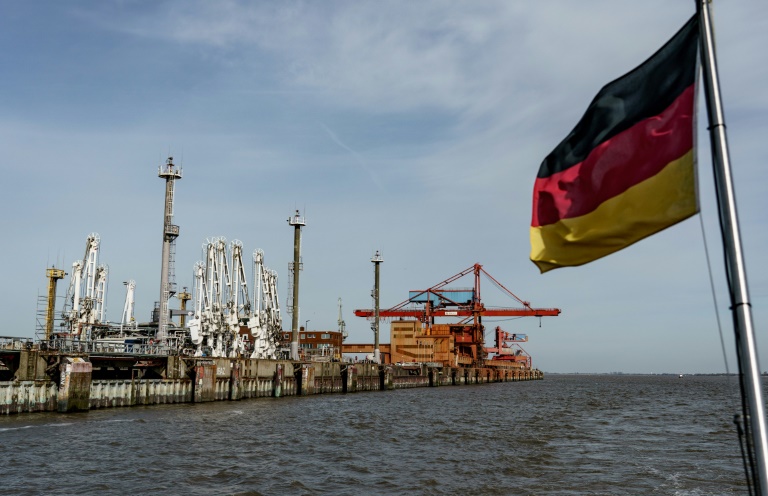
The country has set about weaning itself off Russia energy imports, accelerating investments in renewables and building LNG (liquefied natural gas) terminals on the North Sea coast to import gas from further afield, though they would take years to come online.

Economy Minister Robert Habeck said at the end of March that it would likely take until mid-2024 for Europe’s largest economy to wean itself off Russian deliveries.

– Emergency plan –

German officials have already triggered an emergency plan in anticipation of a gas shortage, which could result in gas rationing among households and businesses.

The government has also prepared legislation that would allow it to expropriate gas suppliers “to assure security of supply”, according to a draft seen by AFP.

The law would make it difficult to close storage facilities without government approval as well.

Last week, Berlin took temporary control of Russian gas giant Gazprom’s German subsidiary, which holds several key pieces of infrastructure, after its parent company unexpectedly withdrew.

European partners, who have already agreed to stop buying coal from Russia, are currently in discussions about further sanctions against Moscow.

While a gas boycott with its serious economic consequences is seen as a last resort, the next target of EU sanctions could well be Russian oil.

– ‘Difficult waters’ –

Even without a gas boycott, the war in Ukraine is “slowing down” Germany’s recovery from the economic shock of the coronavirus pandemic, the institutes said.

The German economy was “navigating difficult waters” as the war and China’s zero-Covid policy added to supply chain disruptions that are hampering industry.

The group slashed their forecast for growth in 2022 to 2.7 percent, from their previous estimate of 4.8 percent made in October last year.

At the same time, they raised their forecast for growth in 2023 to 3.1 percent from 1.9 percent, in a scenario where energy deliveries continue.

Inflation, which has hit new highs as the price for energy has soared, would come out at 6.1 percent in 2022, before falling back to 2.8 percent in 2023, the think-tanks said.

Shutting off supplies from Russia would push the price even higher, taking inflation to 7.3 percent in 2022 and keeping it at five percent in 2023.

Yen drops to 20-year low against dollar

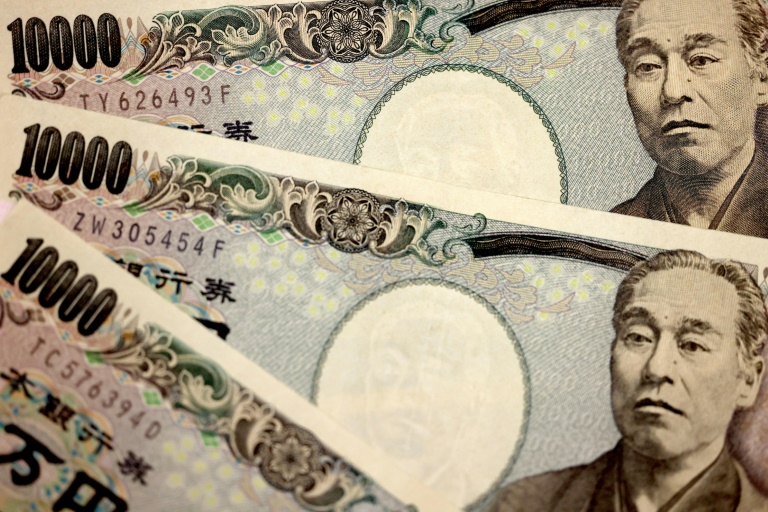
The yen hit its lowest level against the dollar in two decades on Wednesday, extending recent falls as the gap widens between Japan’s ultra-loose monetary policy and US tightening.

Despite being traditionally considered a safe-haven currency, uncertainty fuelled by the war in Ukraine has not caused the yen to strengthen.

Instead, moves by the US Federal Reserve towards a more aggressive policy and the shock of rising oil prices in Japan — a major importer of fossil fuels — have pushed the currency lower, analysts say.

One dollar bought 126 yen on Wednesday afternoon, the lowest rate since 2002.

“The Japanese yen has been one of the weakest currencies anywhere in the world this year,” Dutch banking group ING said in a recent commentary.

“Driving the rally has been the perfect storm of a hawkish Federal Reserve, a dovish Bank of Japan (BoJ), and Japan’s negative terms of trade shock as a major fossil fuel importer.”

Government spokesman Hirokazu Matsuno said “the stability of exchange rates is important and we see rapid currency moves as undesirable”.

“We will monitor trends in the foreign currency market and the impact on the Japanese economy with a sense of urgency,” he added.

The yen had already lost 10 percent of its value against the dollar in 2021 after four years of steady strengthening.

The US central bank has embarked on an aggressive tightening path, pushing up American treasury yields which have strengthened the dollar against the yen.

But its moves stand in contrast to the Bank of Japan’s ultra-loose monetary policy, which will be maintained for now, bank governor Haruhiko Kuroda said earlier Wednesday.

“Given the economy and price situation, the Bank of Japan will seek to realise its two-percent inflation target… by resiliently continuing its current powerful monetary easing,” he said.

Swiss Bank UBS said a weaker yen would likely hit Japanese households’ purchasing power, and domestic-oriented small businesses who will face higher import costs.

“The government is offering fiscal supports and most likely will expand the supports. We think the (yen) purchase intervention is possible if the pace of depreciation is regarded as too fast,” it said in a note.

Tohru Sasaki, head of Japan Market Research at JPMorgan Chase Bank, told AFP that the Bank of Japan “has to do something to slow the pace of the yen’s depreciation”.

“The Japanese government can sell foreign reserve (USD) to intervene, but it is politically difficult,” he said, adding that it would be “strange” if the finance ministry did so while the Bank of Japan keeps its current easing policies.

Close Bitnami banner
Bitnami