AFP

Grave injustice: Not even the dead rest easy in Pakistan megacity

In the teeming metropolis of Karachi, Pakistan’s biggest city, graveyards are filling up and the dead are running out of space to rest. 

But for the right price to the right person, a plot can be “found” for the body of a loved one by shady crews who demolish old graves to make room for the new.

In the coastal megacity — a crush of 20 million people — the Pakistan Employees Cooperative Housing Society (PECHS) cemetery has been officially full for five years.

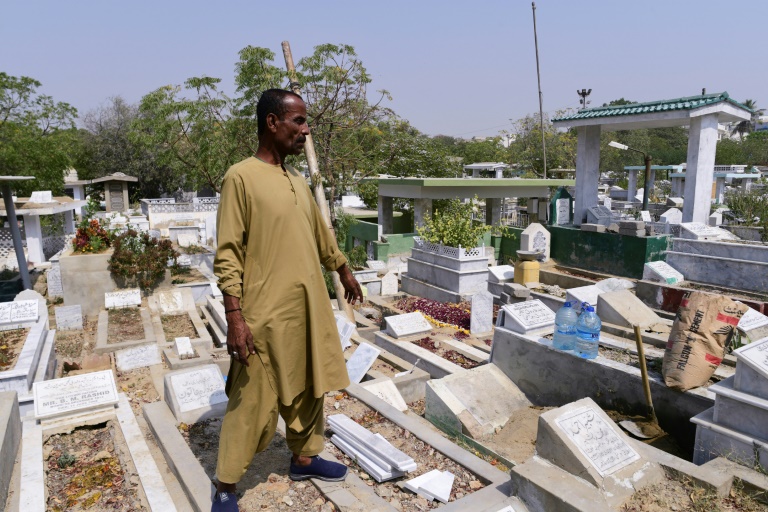
The necropolis is choc-full. Tombs big and small are slotted like Tetris into every nook — some pitted deep in the ground, others raised high on petal-strewn plinths.

Still, new tombs appear all the time, erected on smashed or scooped-out graves by men charging outsized fees.

AFP witnessed one team hacking at stonework and furtively carrying away baskets of dirt until they had carved out a fresh opening in the cramped earth.

“There’s no space in the whole of Karachi — none of the graveyards has space for fresh burials,” said digger Khalil Ahmed. 

“We have to destroy old graves if we want to create new ones.”

The government burial fee in this district is 7,900 rupees ($44) but two locals reported paying 55,000 and 175,000 to lay a loved one to rest in the PECHS graveyard last year.

Ahmed said the fees are split between 40 men and teens who, when not working, spend their time lolling on day beds in the shade.

– Gravedigger mafia –

Ahmed and his colleagues are part of what politicians and the media call the “gravedigger mafia” — a typically flamboyant term in the parlance of Pakistan social affairs.

Officials rail against the “milk mafia” watering their wares, the “sugar mafia” driving up prices and the “land mafia” annexing space.

But the freelance gravediggers are profiting on Pakistan’s changing population dynamic.

Pakistan is the world’s fifth most-populous nation with 220 million citizens and more than four million added every year.

As the population grows, so does the migration of people from the countryside to the cities, looking for work to escape rural poverty.

Muhammad Aslam has witnessed the gravedigger mafia flourish as Karachi’s population boomed.

The 72-year-old said the PECHS graveyard was a “deserted place” when he moved next door in 1953 but “space shrank fast” as burial prices rose for 14 family members interred over the years.

In 1967 Aslam’s family paid 50 rupees to bury his grandfather but a relative buried at the hands of the mafia in 2020 cost 33,000.

“The basic issue is that infrastructure is insufficient,” said Ali Hassan Sajid, a spokesman for the Karachi Metropolitan Corporation (KMC).

The KMC manages 39 of around 250 graveyards citywide — including PECHS Six are closed, while the rest are “almost full”.

“In some parts of the city the infrastructure is the same that existed when Pakistan was founded,” Sajid admitted.

He openly acknowledged the existence of gravedigger mafias conducting burials at closed sites — and claimed efforts to evict them are underway.

The gangs are also reported to be flourishing in the cities of Rawalpindi, Peshawar and Lahore.

– A missing memorial –

Fault for the gravedigger mafia — and even whether they represent a problem — depends on who you ask.

Sajid said families eager to bury relatives alongside previous generations in full yards offer high prices that “lure the gravedigger so he falls prey to his greed”.

Ahmed the gravedigger says he provides an essential service in a city unable to administer itself, scratching out a meagre living in return.

And while some locals view the practice as part of the faulty fabric of life in a teeming city, for others it is a source of angst.

Muhammad Abdullah Saif’s father was buried in the PECHS graveyard decades ago. 

Today the faded green tomb is surrounded by empty sacks of cement and the shattered cusps of tombstones –the mafias generally pick untended graves for demolition.

“We have to come and visit regularly or the grave will be knocked down,” said the 32-year-old.

Muzammil Asif, meanwhile, must clamber over a carpet of ankle-twisting hazards to reach the grave of his teenage sister, buried here last summer.

“Graves are desecrated when one walks over them,” the 21-year-old complains.

And in the nearby Korangi graveyard Muhammad Munir has experienced the saddest loss.

Every year he comes to offer prayers in the cemetry where his father was buried — an amphitheatre of tumbledown tombstones fringed by ragged flags.

But the grave is long gone, demolished more than 20 years ago and replaced by another. That replacement is gone too, swapped out for a new one.

Some years when Munir visits he finds a fresh crop of tombstones bearing unfamiliar names, erected in smeared cement.

Now he’s unsure of exactly where his father lies in rest.

“It’s painful,” he said. “The grave was the last sign of him.”
Grave injustice: Not even the dead rest easy in Pakistan megacity

In the teeming metropolis of Karachi, Pakistan’s biggest city, graveyards are filling up and the dead are running out of space to rest. 

But for the right price to the right person, a plot can be “found” for the body of a loved one by shady crews who demolish old graves to make room for the new.

In the coastal megacity — a crush of 20 million people — the Pakistan Employees Cooperative Housing Society (PECHS) cemetery has been officially full for five years.

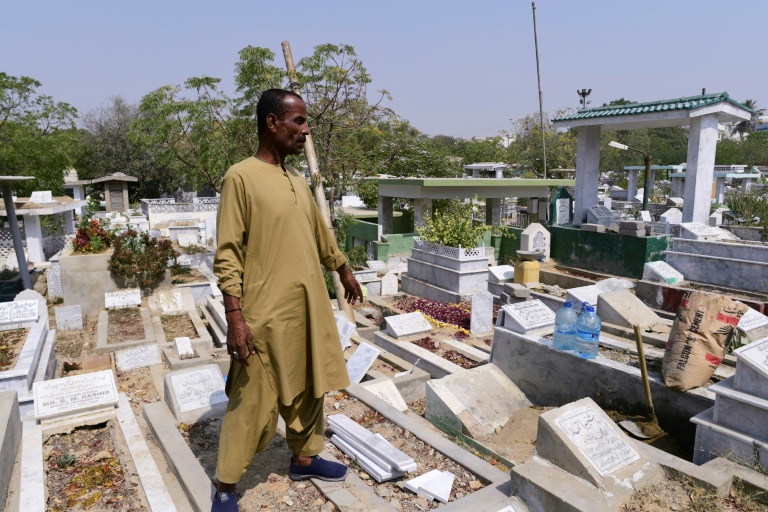
The necropolis is choc-full. Tombs big and small are slotted like Tetris into every nook — some pitted deep in the ground, others raised high on petal-strewn plinths.

Still, new tombs appear all the time, erected on smashed or scooped-out graves by men charging outsized fees.

AFP witnessed one team hacking at stonework and furtively carrying away baskets of dirt until they had carved out a fresh opening in the cramped earth.

“There’s no space in the whole of Karachi — none of the graveyards has space for fresh burials,” said digger Khalil Ahmed. 

“We have to destroy old graves if we want to create new ones.”

The government burial fee in this district is 7,900 rupees ($44) but two locals reported paying 55,000 and 175,000 to lay a loved one to rest in the PECHS graveyard last year.

Ahmed said the fees are split between 40 men and teens who, when not working, spend their time lolling on day beds in the shade.

– Gravedigger mafia –

Ahmed and his colleagues are part of what politicians and the media call the “gravedigger mafia” — a typically flamboyant term in the parlance of Pakistan social affairs.

Officials rail against the “milk mafia” watering their wares, the “sugar mafia” driving up prices and the “land mafia” annexing space.

But the freelance gravediggers are profiting on Pakistan’s changing population dynamic.

Pakistan is the world’s fifth most-populous nation with 220 million citizens and more than four million added every year.

As the population grows, so does the migration of people from the countryside to the cities, looking for work to escape rural poverty.

Muhammad Aslam has witnessed the gravedigger mafia flourish as Karachi’s population boomed.

The 72-year-old said the PECHS graveyard was a “deserted place” when he moved next door in 1953 but “space shrank fast” as burial prices rose for 14 family members interred over the years.

In 1967 Aslam’s family paid 50 rupees to bury his grandfather but a relative buried at the hands of the mafia in 2020 cost 33,000.

“The basic issue is that infrastructure is insufficient,” said Ali Hassan Sajid, a spokesman for the Karachi Metropolitan Corporation (KMC).

The KMC manages 39 of around 250 graveyards citywide — including PECHS Six are closed, while the rest are “almost full”.

“In some parts of the city the infrastructure is the same that existed when Pakistan was founded,” Sajid admitted.

He openly acknowledged the existence of gravedigger mafias conducting burials at closed sites — and claimed efforts to evict them are underway.

The gangs are also reported to be flourishing in the cities of Rawalpindi, Peshawar and Lahore.

– A missing memorial –

Fault for the gravedigger mafia — and even whether they represent a problem — depends on who you ask.

Sajid said families eager to bury relatives alongside previous generations in full yards offer high prices that “lure the gravedigger so he falls prey to his greed”.

Ahmed the gravedigger says he provides an essential service in a city unable to administer itself, scratching out a meagre living in return.

And while some locals view the practice as part of the faulty fabric of life in a teeming city, for others it is a source of angst.

Muhammad Abdullah Saif’s father was buried in the PECHS graveyard decades ago. 

Today the faded green tomb is surrounded by empty sacks of cement and the shattered cusps of tombstones –the mafias generally pick untended graves for demolition.

“We have to come and visit regularly or the grave will be knocked down,” said the 32-year-old.

Muzammil Asif, meanwhile, must clamber over a carpet of ankle-twisting hazards to reach the grave of his teenage sister, buried here last summer.

“Graves are desecrated when one walks over them,” the 21-year-old complains.

And in the nearby Korangi graveyard Muhammad Munir has experienced the saddest loss.

Every year he comes to offer prayers in the cemetry where his father was buried — an amphitheatre of tumbledown tombstones fringed by ragged flags.

But the grave is long gone, demolished more than 20 years ago and replaced by another. That replacement is gone too, swapped out for a new one.

Some years when Munir visits he finds a fresh crop of tombstones bearing unfamiliar names, erected in smeared cement.

Now he’s unsure of exactly where his father lies in rest.

“It’s painful,” he said. “The grave was the last sign of him.”
Biden's biofuel: Cheaper at the pump, but high environmental cost

In an effort to ease Americans’ pain at the gas pump, President Joe Biden has announced his administration will ease restrictions on the sale of E15 — gasoline that includes 15 percent ethanol — and new investments in biofuels as a whole.

But the decision hasn’t pleased scientists who study the environmental impact of ethanol.

– What is ethanol? –

Fuel ethanol is based on the same type of alcohol used in beverages, but with “denaturant” additives that make it unsuitable for drinking.

Blending ethanol with gasoline eases reliance on crude oil. 

Most gas now sold in the United States is E10. American ethanol is generally produced by fermenting sugar from corn starch. Other countries such as Brazil rely on sugar from sugar cane.

In 2011, the US Environmental Protection Agency approved the use of E15 following research on its pollution impact.

But it is currently offered at just 2,300 gas stations in the country, according to officials.

– What has Biden announced? –

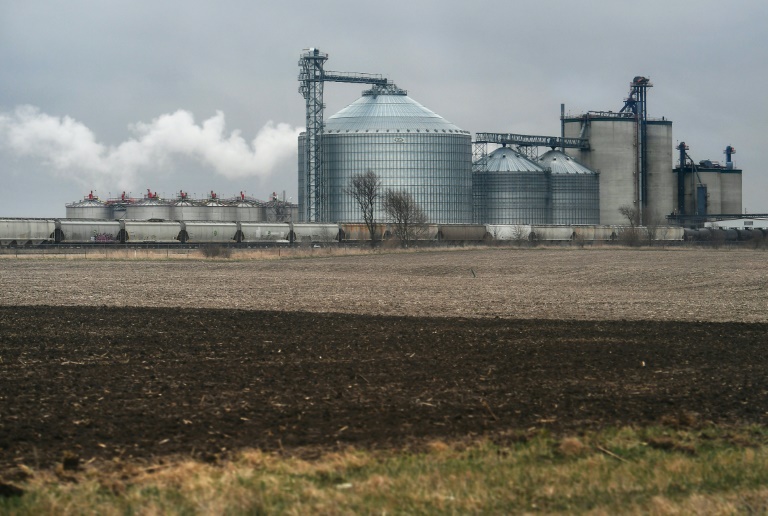
Speaking at a bioethanol production plant in the Midwestern state of Iowa, Biden said Tuesday that the EPA would lift a restriction prohibiting the sale of E15 between June 1 and September 15 — a constraint that was imposed to limit air pollution.

That’s because ethanol evaporates more easily and turns more readily into smog, which is particularly problematic in the high heat and sunlight of summer.

In 2018, then president Donald Trump also wanted to lift this restriction, as a concession to farmers in the midst of a trade war with China.

But a court decision eventually overturned Trump’s decision. 

According to the White House, at today’s prices, E15 can save an average of 10 cents per gallon of gasoline (4.5 liters).


– Environmental consequences –

Though biofuels have been touted for their ability to reduce greenhouse gas emissions, assessing the environmental impact of bioethanol requires including greenhouse gas emissions related to the crops needed for its production.

And “the carbon balance of ethanol relative to gasoline isn’t as good as it was originally anticipated,” Tyler Lark, a scientist at the University of Wisconsin-Madison told AFP.

In 2005, Congress passed a “Renewable Fuel Standard,” which required transportation fuel to include a volume of biofuel that increased over time. 

The law was further expanded in 2007. As a result, 2.8 million additional hectares of corn were grown between 2008 and 2016, according to a study published in February in the Proceedings of the National Academy of Sciences (PNAS). 

Lark. the first author of the PNAS study, said the consequences of converting land to corn cultivation were underestimated at the time.

“When you do that, you plow up other types of land that may have been sequestering carbon and you apply extra nitrogen fertilizer to grow that corn,” he said.

In addition, some of the fertilizer used to grow corn emits nitrous oxide (N2O), a very powerful greenhouse gas. 

Thus, greenhouse gas emissions related to gasoline or ethanol are ultimately comparable, concludes the study. 

There are other harmful consequences, too — including leaching of fertilizers into ground water, and the destruction of wildlife habitats to make way for corn fields.

– Health dangers –

Once in the tank, bioethanol emits less CO2 per liter than traditional fuels, but there’s less energy per volume and so more is needed.

In addition, “it produces acetaldehyde which is a carcinogen, formaldehyde, which is a carcinogen and both of those are two of the five most potent ozone producers in photochemical smog,” explained Mark Jacobson, a professor of environmental engineering at Stanford University.

Ground-level ozone represents a major health hazard, causing numerous respiratory problems including asthma. For Jacobson, both gasoline and biofuels are “horrible.”

“It’s bad for both climate and air pollution, and spending money on it is taking money away from real solutions” such as electric vehicles, he concluded.

Death toll from Philippines landslides, floods rises to 80

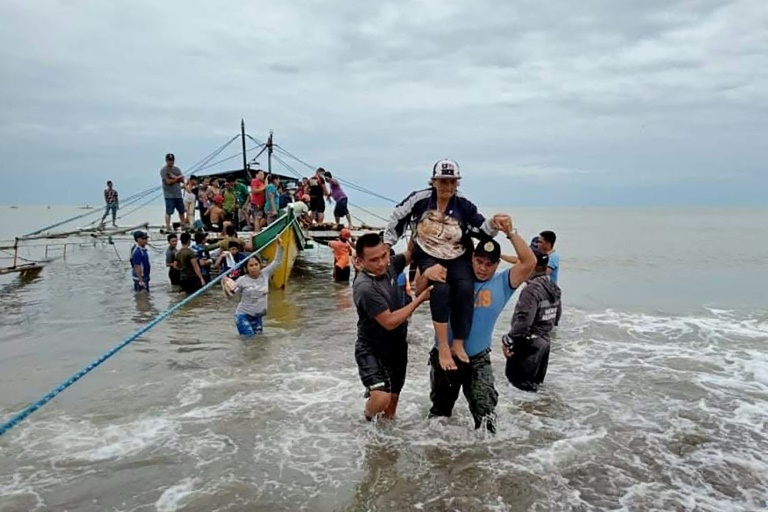
The death toll from landslides and floods in the Philippines rose to 80 on Wednesday with scores missing and feared dead, officials said, as rescuers dug up more bodies with bare hands and backhoes in crushed villages.

Most of the deaths from tropical storm Megi — the strongest to hit the archipelago this year — were in the central province of Leyte, where a series of landslides devastated communities.

Twenty-six people died and around 150 were missing in the coastal village of Pilar, which is part of Abuyog municipality, after a torrent of mud and earth on Tuesday pushed houses into the sea and buried most of the settlement, authorities said.

“I have to be honest, we are no longer expecting survivors,” Abuyog Mayor Lemuel Traya told AFP, adding that emergency personnel were now focused on the difficult task of retrieving bodies.

About 250 people were in evacuation centres after being rescued by boat after roads were cut by landslides, he said. 

A number of villagers were also in hospital.

A rumbling sound like “a helicopter” alerted Ara Mae Canuto, 22, to the landslide hurtling towards her family’s home in Pilar. 

She said she tried to outrun it, but was swept into the water and nearly drowned. 

“I swallowed dirt, and my ears and nose are full of mud,” Canuto told AFP by telephone from her hospital bed. Her father died, and her mother has not been found.

The disaster-prone region is regularly ravaged by storms — including a direct hit from Super Typhoon Haiyan in 2013 — with scientists warning they are becoming more powerful as the world gets warmer because of human-driven climate change.

Baybay City is also reeling after waves of sodden soil smashed into farming settlements over the weekend, killing at least 48 people and injuring more than 100, local authorities said. Twenty-seven are still missing, they added. 

Aerial photos showed a wide stretch of mud that had swept down a hill of coconut trees and engulfed Bunga village, where only a few rooftops poked through the now-transformed landscape.

“We were told to be on alert because a storm was coming, but they did not directly tell us we needed to evacuate,” said Bunga farmworker Loderica Portarcos, 47, who lost 17 relatives and a friend in the landslide.

Portarcos braved heat and humidity as she advised a backhoe operator where to dig for three bodies still embedded in the soft soil, which had started to smell of rotting flesh.

“Our dead relatives are all in the morgue, but there will be no time for a wake to mourn them because the mayor told us they smell bad,” she said.

– ‘Many of us died’ – 

Three people were also killed in the central province of Negros Oriental and three on the main southern island of Mindanao, according to the national disaster agency.

The death toll from Megi is expected to rise as rescue operations switch to recovering bodies. 

Black body bags containing 26 victims from Pilar were laid out on sand in Abuyog for relatives to identify on Wednesday. 

Abuyog police chief Captain James Mark Ruiz said more boats were needed, but getting access to the shore was difficult.

Photos posted by the Bureau of Fire Protection on Facebook showed buildings crushed or turned over by the force of the landslide and debris in the water.

“We’re using fiberglass boats, and there are steel bars exposed in the sea, so it’s very difficult,” Abuyog Mayor Traya said, adding that the ground was unstable and “very risky”.

While Pilar survivor Canuto counts herself lucky to be alive, she said “many of us died and a lot are missing, too”.

Pope Francis, having been informed of the storm’s destruction, expressed solidarity with the victims, the Vatican said in a statement.

“He also offers the assurance of prayers for the dead, injured and displaced as well as those engaged in recovery efforts,” the statement said.

“His Holiness willingly invokes upon all the Filipino people God’s blessings.”

Whipping up seas, Megi forced dozens of ports to temporarily suspend operations, stranding thousands of people at the start of Holy Week, one of the busiest travel periods of the year in the Philippines.

It came four months after super typhoon Rai devastated swathes of the country, killing more than 400 and leaving hundreds of thousands homeless.

The Philippines — ranked among the most vulnerable nations to the impacts of climate change — is hit by an average of 20 storms every year.

JPMorgan Chase says US economy still solid, but risks rising

JPMorgan Chase said the US economy remains on solid footing in the short term, but warned of heightened longer-term risks due to inflation and the Ukraine war as it reported lower quarterly profits.

Executives from the giant bank said households and businesses generally remained in good shape amid a tightening labor market.

But higher consumer prices, the Ukraine war and the shifts in Federal Reserve policy have together slightly raised the recession risk, which led the bank to set aside $902 million in additional reserves as a buffer against possible bad loans.

“There’s this very strong underlying economy,” Chief Executive Jamie Dimon said, noting that many consumers are flush with cash and businesses are in “good shape” for the most part.

But he pointed to “countervailing forces,” including rising interest rates and inflation, and the war in Ukraine. 

“And those things are going to collide at one point, probably sometime next year,” he said.

“I’m not predicting a recession,” Dimon added in a conference call with reporters. “But is it possible? Absolutely.”

– ‘Wars are unpredictable’ –

The biggest US bank by assets, JPMorgan reported $8.3 billion in first-quarter profits, down 42 percent from the same three months of the prior year. Revenues dipped five percent to $30.7 billion. 

JPMorgan scored higher net interest income, reflecting a boost to lending fees because of higher lending rates. 

Profits fell in investment banking on lower equity and debt underwriting fees. The division also suffered a $120 million hit tied to upheaval in the nickel market in March that pressured some commodity brokerages, company officials said.

The results contrasted sharply from a year ago, when JPMorgan saw surging profits after it unlocked $5.2 billion in funds it had set aside early in the pandemic against potential defaults, but didn’t need because of the surprisingly solid condition of clients.

In the latest quarter, JPMorgan set aside $902 million for bad loans, citing “downside risks” including the Ukraine war and surging inflation.

About $300 million of that amount is connected to Russia-related exposures, with the remaining funds reflecting broader economic risks, executives said.

Charge offs for the first quarter came in at a relatively modest $582 million, another sign of the healthy condition of consumers.

In terms of customer trends, Dimon cited an uptick in credit card spending on dining and travel, but said higher mortgage rates had dented home lending originations, while limited vehicle availability crimped car loan originations.

Dimon highlighted the Ukraine situation as a wildcard, warning that “wars are unpredictable” and the oil market could “change dramatically.”

“The oil markets are precarious,” he said, adding that “clouds are on the horizon.”

The CEO also predicted elevated volatility throughout financial markets given the scale of the Fed’s asset unwind.

“We’ve never been through a (quantitative tightening) like this,” Dimon said. 

“So this is a new thing for the world and I think is more substantially important than other people think, because the huge change of flows of funds is going to create as people change their investment portfolio.”

Briefing.com called the earnings report a “red flag” for the banking industry. 

While far from disastrous, the JPMorgan results “shows that some cracks are forming, particularly in consumer lending (home and auto), adding to growth concerns for banks and the economy,” Briefing.com said.

JPMorgan’s shares fell 3.2 percent to $127.30.

Other large banks, including Goldman Sachs, Citigroup and Bank of America, will report results in coming days.

Ecuador expands oil extraction from Amazon reserve

Ecuador said Wednesday it had begun pumping oil from a third field located partly on a protected nature reserve in the Amazon rainforest.

Extraction of 3,600 barrels per day started in the Ishpingo oil field which together with the nearby fields of Tiputini and Tambococha form the so-called ITT block, which holds more than 40 percent of the South American country’s proven crude reserves.

The three fields together hold over 1.0 billion of former OPEC member Ecuador’s four billion barrels of proven oil reserves.

Extraction at Tiputini and Tambococha started in 2016 after years of fraught debate over whether to drill inside the Yasuni national park.

Then president Rafael Correa had tried to persuade the international community to pay Ecuador $3.6 billion not to exploit the ITT block — an ultimately failed initiative to protect the Amazon and help curb climate change.

With his government strapped for cash amid a plunge in global oil prices, the leftist leader in the end asked Congress to give the go-ahead to drill.

Current rightwing President Guillermo Lasso has plans to double Ecuador’s oil production in spite of opposition from indigenous communities and environmentalists.

“If this well (at Ishpingo) maintains the current production trend of 3,600 barrels per day… about $60 million will be generated annually, which will be invested in improvements to the education, health and safety system,” a government statement said Wednesday.

In 2021, the country produced over half-a-million barrels per day, mostly by state-owned Petroecuador, according to the Central Bank. 

It is envisaged that another 36 wells will be sunk in the Ishpingo field, operated by China’s CNPC Chuanqing Drilling Engineering Company Limited.

Besides being among the most biodiverse areas on Earth, the million-hectare (2.5-million acre) Yasuni park is home to some of the world’s last uncontacted indigenous populations.

Death toll from Philippines landslides, floods rises to 80

The death toll from landslides and floods in the Philippines rose to 80 on Wednesday with scores missing and feared dead, officials said, as rescuers dug up more bodies with bare hands and backhoes in crushed villages.

Most of the deaths from tropical storm Megi — the strongest to hit the archipelago this year — were in the central province of Leyte, where a series of landslides devastated communities.

Twenty-six people died and around 150 were missing in the coastal village of Pilar, which is part of Abuyog municipality, after a torrent of mud and earth on Tuesday pushed houses into the sea and buried most of the settlement, authorities said.

“I have to be honest, we are no longer expecting survivors,” Abuyog Mayor Lemuel Traya told AFP, adding that emergency personnel were now focused on the difficult task of retrieving bodies.

About 250 people were in evacuation centres after being rescued by boat after roads were cut by landslides, he said. 

A number of villagers were also in hospital.

A rumbling sound like “a helicopter” alerted Ara Mae Canuto, 22, to the landslide hurtling towards her family’s home in Pilar. 

She said she tried to outrun it, but was swept into the water and nearly drowned. 

“I swallowed dirt, and my ears and nose are full of mud,” Canuto told AFP by telephone from her hospital bed. Her father died, and her mother has not been found.

The disaster-prone region is regularly ravaged by storms — including a direct hit from Super Typhoon Haiyan in 2013 — with scientists warning they are becoming more powerful as the world gets warmer because of human-driven climate change.

Baybay City is also reeling after waves of sodden soil smashed into farming settlements over the weekend, killing at least 48 people and injuring more than 100, local authorities said. Twenty-seven are still missing, they added. 

Aerial photos showed a wide stretch of mud that had swept down a hill of coconut trees and engulfed Bunga village, where only a few rooftops poked through the now-transformed landscape.

“We were told to be on alert because a storm was coming, but they did not directly tell us we needed to evacuate,” said Bunga farmworker Loderica Portarcos, 47, who lost 17 relatives and a friend in the landslide.

Portarcos braved heat and humidity as she advised a backhoe operator where to dig for three bodies still embedded in the soft soil, which had started to smell of rotting flesh.

“Our dead relatives are all in the morgue, but there will be no time for a wake to mourn them because the mayor told us they smell bad,” she said.

– ‘Many of us died’ – 

Three people were also killed in the central province of Negros Oriental and three on the main southern island of Mindanao, according to the national disaster agency.

The death toll from Megi is expected to rise as rescue operations switch to recovering bodies. 

Black body bags containing 26 victims from Pilar were laid out on sand in Abuyog for relatives to identify on Wednesday. 

Abuyog police chief Captain James Mark Ruiz said more boats were needed, but getting access to the shore was difficult.

Photos posted by the Bureau of Fire Protection on Facebook showed buildings crushed or turned over by the force of the landslide and debris in the water.

“We’re using fiberglass boats, and there are steel bars exposed in the sea, so it’s very difficult,” Abuyog Mayor Traya said, adding that the ground was unstable and “very risky”.

While Pilar survivor Canuto counts herself lucky to be alive, she said “many of us died and a lot are missing, too”.

Pope Francis, having been informed of the storm’s destruction, expressed solidarity with the victims, the Vatican said in a statement.

“He also offers the assurance of prayers for the dead, injured and displaced as well as those engaged in recovery efforts,” the statement said.

“His Holiness willingly invokes upon all the Filipino people God’s blessings.”

Whipping up seas, Megi forced dozens of ports to temporarily suspend operations, stranding thousands of people at the start of Holy Week, one of the busiest travel periods of the year in the Philippines.

It came four months after super typhoon Rai devastated swathes of the country, killing more than 400 and leaving hundreds of thousands homeless.

The Philippines — ranked among the most vulnerable nations to the impacts of climate change — is hit by an average of 20 storms every year.

'Green cities' focus of largest Dutch garden expo

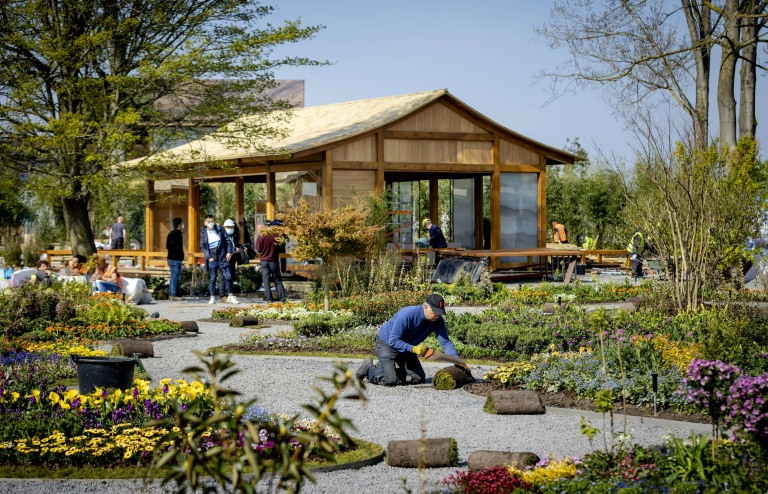
Dutch King Willem-Alexander on Wednesday opened the gates to one of Europe’s largest gardening fairs, a once-in-a-decade show focusing this year on how to make cities greener.

But critics have denounced the show, which features displays by 200 participants from 25 countries, as a “money pit” that has massively over-run its budget.

The Floriade 2022 exposition, which runs until early October, is expected to draw more than two million enthusiasts to the central city of Almere.

The Floriade 2022 shows “what a green city could be like in the future… what kind of materials could be used for this and what role the horticultural sector could play in it”, said its curator, Annemarie Jorritsma, a former mayor of the city.

“On top of that, when the show is finished it will be a fantastic residential area,” she told AFP.

Each decade, a different Dutch city gets to host the gardening extravaganza. Almere, the latest, is a city that was itself created by the Dutch by draining part of the former Zuiderzee bay to reclaim land.

As well as being a showcase for Dutch horticulture, each participating country has its own pavilion.

China’s is showing “new ways of using bamboo”, said Jorritsma. Italy is focusing on permaculture, while France shows how metallic imitations of trees can be used to cool cities.

The German pavilion is decorated with plants including garden plants, trees, food crops and wildflowers to form a “living ecosystem whose appearance would change throughout the exhibition”, organisers said.

“The Floriade is the best place to show what countries have to change their cities,” Detlef Wintzen, one of the exhibitors at the German pavilion, told AFP.

– Cost controversy –

The event has however been criticised for budget overruns that threatened its very existence.

Dutch media have reported that Almere has significantly over-run its 10-million-euro budget ($10.8 million) for the project.

Financial daily Financieele Dagblad estimated that costs could be as high as 200 million euros — with losses of up to 100 million — but said there was a “thick fog” hanging over the official costs.

First held in Rotterdam in 1960, the organisers of the last three Floriades — 1992, 2002 and 2012 — have all been criticised for losses totalling millions of euros.

And some media reports have even suggested that this could be the last-ever edition of the show.

Almere — the country’s youngest city — plans to have a “green residential area by the water” after the end of the Floriade designed by Dutch architect Winy Maas.

Some 660 homes will be built in the “Hortus” district, many of them made from durable materials such as moss and mushrooms.

An imposing colourful building in the middle of the exhibition will eventually serve as social housing, and “floating homes” are also planned.

Members of the public can visit the Floriade from Thursday onwards.

'Green cities' focus of largest Dutch garden expo

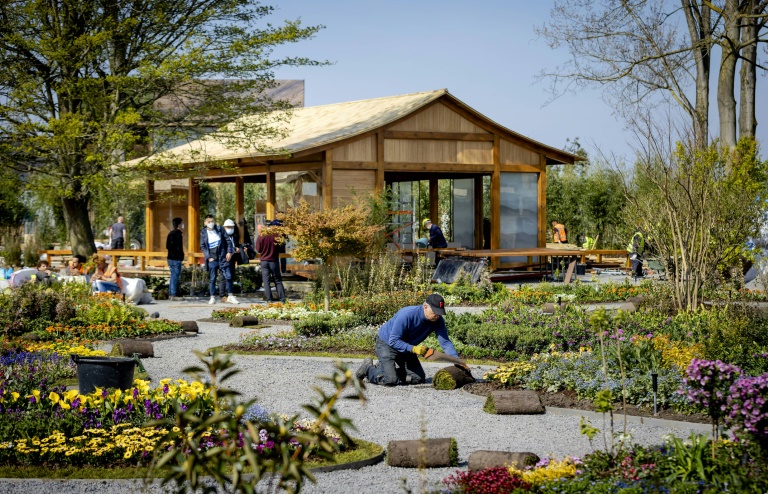
Dutch King Willem-Alexander on Wednesday opened the gates to one of Europe’s largest gardening fairs, a once-in-a-decade show focusing this year on how to make cities greener.

But critics have denounced the show, which features displays by 200 participants from 25 countries, as a “money pit” that has massively over-run its budget.

The Floriade 2022 exposition, which runs until early October, is expected to draw more than two million enthusiasts to the central city of Almere.

The Floriade 2022 shows “what a green city could be like in the future… what kind of materials could be used for this and what role the horticultural sector could play in it”, said its curator, Annemarie Jorritsma, a former mayor of the city.

“On top of that, when the show is finished it will be a fantastic residential area,” she told AFP.

Each decade, a different Dutch city gets to host the gardening extravaganza. Almere, the latest, is a city that was itself created by the Dutch by draining part of the former Zuiderzee bay to reclaim land.

As well as being a showcase for Dutch horticulture, each participating country has its own pavilion.

China’s is showing “new ways of using bamboo”, said Jorritsma. Italy is focusing on permaculture, while France shows how metallic imitations of trees can be used to cool cities.

The German pavilion is decorated with plants including garden plants, trees, food crops and wildflowers to form a “living ecosystem whose appearance would change throughout the exhibition”, organisers said.

“The Floriade is the best place to show what countries have to change their cities,” Detlef Wintzen, one of the exhibitors at the German pavilion, told AFP.

– Cost controversy –

The event has however been criticised for budget overruns that threatened its very existence.

Dutch media have reported that Almere has significantly over-run its 10-million-euro budget ($10.8 million) for the project.

Financial daily Financieele Dagblad estimated that costs could be as high as 200 million euros — with losses of up to 100 million — but said there was a “thick fog” hanging over the official costs.

First held in Rotterdam in 1960, the organisers of the last three Floriades — 1992, 2002 and 2012 — have all been criticised for losses totalling millions of euros.

And some media reports have even suggested that this could be the last-ever edition of the show.

Almere — the country’s youngest city — plans to have a “green residential area by the water” after the end of the Floriade designed by Dutch architect Winy Maas.

Some 660 homes will be built in the “Hortus” district, many of them made from durable materials such as moss and mushrooms.

An imposing colourful building in the middle of the exhibition will eventually serve as social housing, and “floating homes” are also planned.

Members of the public can visit the Floriade from Thursday onwards.

Iran says preliminary deal reached on frozen funds abroad

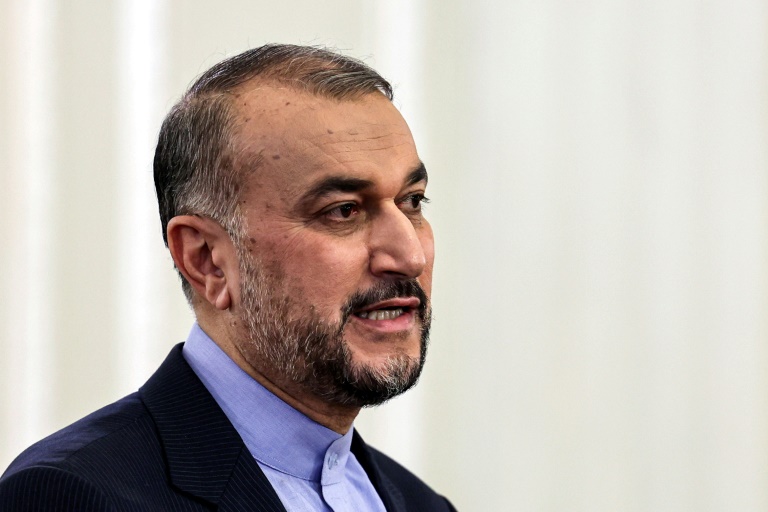
Iran’s foreign minister said Wednesday that a preliminary deal had been reached with a foreign bank over frozen funds belonging to the Islamic republic.

“An accord was concluded with a foreign bank to release a part of our financial claims,” Hossein Amir-Abdollahian said at a news conference.

“This is a preliminary agreement on when and how to release the funds,” he added.

Tens of billions of dollars in Iranian money were blocked in a number of countries, including China, South Korea and Japan, after the United States reimposed sanctions on the Islamic republic in 2018.

A 2015 nuclear deal had granted Tehran much-needed sanctions relief but the US unilaterally pulled out and reimposed punishing sanctions under then-president Donald Trump.

Until then, Iran had been one of South Korea’s main suppliers of crude.

According to Tasnim news agency, the deal announced on Wednesday aims to find a solution for frozen Iranian assets valued at more than $7 billion.

Last year Tehran threatened legal action unless Seoul released frozen funds for oil shipments, worth that same amount.

In early January, Iran had urged South Korea to unlock the funds and not to await the outcome of Vienna talks aiming to revive the nuclear agreement.

Amir-Abdollahian said a delegation from the concerned country, which he did not identify, had visited Tehran on Tuesday to follow up on the implementation of the deal with the foreign bank.

The delegation met officials from the Iranian central bank and the foreign ministry, he added.

Iran has been engaged for a year in talks with France, Germany, Britain, Russia and China directly, and the United States indirectly, to revive the nuclear deal, known formally as the Joint Comprehensive Plan of Action (JCPOA).

The talks have been paused since March 11, having progressed most of the way towards reviving the deal, but pending issues are still unresolved.

Close Bitnami banner
Bitnami