AFP

Half of US warehouse injuries in 2021 at Amazon: unions

Nearly half of all recorded injuries in US warehouses last year occurred at Amazon, according to a report released Tuesday by a coalition of unions.

The e-commerce giant has boomed during the pandemic with soaring home delivery demand, but has also faced criticism over workers’ conditions and its labor practices. 

“Amazon employed one-third of all warehouse workers in the US, but it was responsible for nearly one-half (49 percent) of all injuries in the warehouse industry,” according to the report by the Strategic Organizing Center (SOC).

The SOC report said US Amazon workers sustained more than 34,000 “serious injuries” on the job last year, a rate more than twice as high as that at warehouses not owned by the company.

Amazon acknowledged an increase in the number of injuries as tens of thousands of employees joined its workforce, but argued the rate at which its people got hurt had declined.

“Like other companies in the industry, we saw an increase in recordable injuries during this time from 2020 to 2021 as we trained so many new people,” the company said.

“However, when you compare 2021 to 2019, our recordable injury rate declined more than 13 percent year over year,” it added.

The coalition said it relies on data provided by Amazon to the US Occupational Safety and Health Administration — the federal agency responsible for preventing workplace injuries. 

“After relaxing some of its discipline systems in the first months of the Covid-19 pandemic, Amazon reimplemented its monitoring systems and production pressures in late 2020, and its injury rates rose substantially,” the SOC said. 

Hiring at Amazon has spiked during the pandemic.

In the United States, the company has gone from some 700 sites in 2020 to more than 900 in 2021, and from more than 200,000 employees in 2017 to over 560,000 in 2021, according to the report. 

In June 2021, Amazon changed working conditions, including longer breaks for its workers who prepare, ship and deliver packages. 

That decision came after a previous damning SOC report, and an attempt to unionize at an Amazon warehouse in Alabama. That failed, but the campaign exposed what many employees described as the company’s intense pace. 

“We need a better vision for our employees’ success,” wrote Amazon founder Jeff Bezos in an annual letter to shareholders in 2020. 

“We are going to be Earth’s Best Employer and Earth’s Safest Place to Work,” he promised. 

But “in stark contrast to Jeff Bezos’ recent pledge… the injury rate at Amazon facilities increased by 20 percent between 2020 and 2021,” the SOC said.

Amazon workers in New York have voted to launch the first US union at the e-commerce giant, an underdog upset against a company that has steadfastly opposed organized labor in its massive workforce.  

Stocks, oil rise as inflation soars

Stock markets mostly rose and oil prices climbed Wednesday as investors pored over data showing further spikes to inflation.

A day after data showed US annual consumer inflation hit a 40-year high in March, information showed wholesale price inflation hit a record annual rate of 11.2 percent over the same period.

Meanwhile in Britain, data showed that UK prices had jumped at the fastest pace in three decades in March. 

Global inflation, already rocketing on supply constraints as economies look to fully reopen following pandemic lockdowns, is rising further on fallout from the Ukraine war.

Analysts said markets had welcomed an indication that US inflation was approaching its peak, though it has raised expectations that the Federal Reserve will take more aggressive action to contain prices.

Wall Street stocks rose across the board, with the Dow rising 0.6 percent.

In Europe, London and Paris ended the day barely in positive territory, while Frankfurt dipped.

The gains on Wall Street also came despite a lacklustre start to the corporate earnings season, as JPMorgan Chase saw its first-quarter net profit plunge by 40 percent as it set $900 million aside to deal with potential losses due to the Ukraine conflict and inflation.

It already booked $524 million in losses as it sought to lower its exposure to soaring commodities prices and Russian counterparties.

Shares in JPMorgan Chase fell 2.5 percent.

Meanwhile, Delta Air Lines beat expectations even if it still lost money. It said it expected second-quarter revenue to come in at 97 percent of the pre-pandemic level in 2019.

Its shares rose 4.6 percent.

– Oil rises –

Elsewhere Wednesday, oil prices climbed further in a volatile trading week.

“Having rebounded strongly yesterday, oil prices are showing little sign of softening after Russian President Vladimir Putin said that peace talks with Ukraine were a ‘dead-end situation’,” said market analyst Michael Hewson at CMC Markets UK.

Russia is a major producer of oil and gas and the war has triggered fears of supply constraints.

“On the other hand, further gains in prices could be constrained after the IEA downgraded its global demand forecasts for this year due to the imposition of extended new lockdowns in China,” Hewson added.

The International Energy Agency also said that Russian oil supply is expected to continue to fall in April by 1.5 million barrels per day.

In currency trading Wednesday, the yen hit its lowest level against the dollar in two decades, extending recent falls as the gap widens between Japan’s ultra-loose monetary policy and Fed tightening.

Despite being traditionally considered a haven currency, uncertainty fuelled by the war in Ukraine has not caused the yen to strengthen.

Instead, the Fed’s move towards a more aggressive rate-tightening policy and the shock of rising oil prices in Japan — a major importer of fossil fuels — have pushed the currency lower, analysts said.

– Key figures around 1530 GMT –

New York – Dow: UP 0.6 percent at 34,408.95 points

EURO STOXX 50: DOWN 0.2 percent at 3,824.23

London – FTSE 100: UP less than 0.1 percent at 7,580.80 (close)

Paris – CAC 40: UP less than 0.1 percent at 6,542.14 (close)

Frankfurt – DAX: DOWN 0.3 percent at 14,076.44 (close)

Tokyo – Nikkei 225: UP 1.9 percent at 26,843.49 (close)

Hong Kong – Hang Seng Index: UP 0.3 percent at 21,374.37 (close)

Shanghai – Composite: DOWN 0.8 percent at 3,186.82 (close)

Brent North Sea crude: UP 2.6 percent at $107.32 per barrel

West Texas Intermediate: UP 2.2 percent at $102.85 per barrel

Euro/dollar: UP at $1.0854 from $1.0818

Pound/dollar: UP at $1.3050 from $1.2977

Euro/pound: DOWN at 83.22 pence from 83.36 pence

Dollar/yen: DOWN at 125.74 from 126.22 yen

burs-rl/jj

Delta shares fly as strong demand offsets jet fuel drag

Delta Air Lines offered an upbeat outlook for the summer travel season on Wednesday, saying strong demand is providing enough pricing power to make up for soaring fuel costs.

Shares jumped on the report and outlook, with Delta reporting a smaller than expected loss in the first quarter, even as it contended with a nearly 50 percent increase in jet fuel prices.

“Delta is well-positioned to capitalize on robust consumer demand and accelerating return of business and international travel,” said Delta President Glen Hauenstein in a press release. 

“In the June quarter, we are successfully recapturing higher fuel prices,” he said, adding that the company expects revenues equivalent to between 93 and 97 percent of the 2019 quarter. 

For the quarter ending March 31, Delta reported a loss $940 million, smaller than the year-ago loss. 

Revenues were $9.3 billion, more than double those from the 2021 quarter, but lower than the $10.5 billion in the pre-pandemic 2019 quarter.

Airlines are adjusting to a higher cost environment in general amid the tight labor market and supply chain problems. Jet fuel is typically the biggest cost for an airline, after labor.

Hauenstein said in March that the airline was targeting price increases of about $15 to $20 a ticket on a fare of $200 to make up for higher jet fuel costs.

On Wednesday, Delta executives declined to update those figures, but said brisk ticket sales meant higher prices on remaining available seats.

A July flight between Orlando and Los Angeles is currently priced at about $750 or more at most times.

“We haven’t seen a lot of resistance in the price points,” Hauenstein said. “My advice is to book early and be flexible if fare is your main attribute.” 

Executives said the heady market reflects pent-up consumer demand after two years of Covid-19 constraints.

“You’re seeing a pretty significant shift from goods to experiences,” said Delta Chief Executive Ed Bastian on a conference call with analysts.

“Consumers have not been traveling the last two years. So this is a category they have been prioritizing.”

Shares rose 4.3 percent to $40.26 in late-morning trading.

Paris climate targets feasible if nations keep vows

If all nations honour promises to reduce greenhouse gas emissions, there is a chance of capping the rise in global temperatures to under two degrees Celsius, the cornerstone target of the Paris Agreement, researchers said Wednesday.

But that is a very big “if”, they acknowledge in a peer-reviewed study, published in Nature.

The calculus includes not only carbon-cutting commitments officially registered under the 2015 treaty, but a raft of pledges made on the sidelines of last years COP26 UN climate summit in Glasgow — to curb deforestation and methane leaks, for example — that lack means for monitoring or verification.

They also include actions to lower emissions in developing countries that are contingent on financing, something wealthy nations have so far failed to deliver at agreed-upon levels.

The new estimates likewise fold in pledges to become carbon neutral by mid-century that do not detail how that will be achieved.

“Long-term targets should be treated with scepticism if they are not supported by short-term commitments to put countries on a pathway in the next decade to meet those targets,” Zeke Hausfather, a researcher at Berkeley Earth, said, commenting on the study.   

Most rich countries have announced they will be “net zero” by 2050, while China and India have vowed to reach that point by 2060 and 2070, respectively.

“Is our study a good news story?” lead author Malte Meinshausen, a professor at the University of Melbourne, asked in a briefing with journalists.

“Yes, because for the first time we can possibly keep warming below the symbolic 2C mark with promises on the table,” he continued.

– Curb your optimism –

“And no, because we show clearly that increased action this decade is necessary for us to have a chance of not shooting past 1.5C by a large margin.”

As deadly and costly climate impacts have increased, most nations have embraced the Paris deal’s more ambitious “aspirational” target of holding the rise in global temperatures to 1.5C above preindustrial levels.

The UN’s Intergovernmental Panel on Climate Change (IPCC) said in a landmark report earlier this month that carbon pollution must peak before 2025 and be cut in half by 2030 to have even a chance of reaching that goal.

Recent trends do not suggest the world is headed in the right direction: greenhouse gas emissions last year regained the record levels of 2019 after Covid lockdowns lowered them in 2020.

“Some government and business leaders are saying one thing –- but doing another,” UN chief Antonio Guterres said last week when the IPCC report was launched. “Simply put, they are lying.”

The new research analyses data from 196 countries from 2015 until the end of the COP26 meeting in mid-November 2021. 

It concludes that if all pledges are implemented in full and on time, warming can be limited to 1.9C to 2.0C.

Unless immediate steps are taken to drive down emissions even further, 1.5C will almost certainly remain out of reach, the authors said.

If no additional efforts are made beyond pledges — know as nationally determined contributions — submitted under the Paris Agreement, Earth’s surface will warm to a catastrophic 2.8C, the IPCC has said.

“Optimism should be curbed until promises to reduce emissions in the future are backed up with stronger short-term action,” Hausfather and Frances Moore, a scientist at the University of California, Davis said in a comment, also in Nature.

California start-up sends tiny robots on voyage into brains

Sending miniature robots deep inside the human skull to treat brain disorders has long been the stuff of science fiction — but it could soon become reality, according to a California start-up.

Bionaut Labs plans its first clinical trials on humans in just two years for its tiny injectable robots, which can be carefully guided through the brain using magnets.

“The idea of the micro robot came about way before I was born,” said co-founder and CEO Michael Shpigelmacher.

“One of the most famous examples is a book by Isaac Asimov and a film called ‘Fantastic Voyage,’ where a crew of scientists goes inside a miniaturized spaceship into the brain, to treat a blood clot.”

Just as cellphones now contain extremely powerful components that are smaller than a grain of rice, the tech behind micro-robots “that used to be science fiction in the 1950s and 60s” is now “science fact,” said Shpigelmacher. 

“We want to take that old idea and turn it into reality,” the 53-year-old scientist told AFP during a tour of his company’s Los Angeles research and development center.

Working with Germany’s prestigious Max Planck research institutes, Bionaut Labs settled on using magnetic energy to propel the robots — rather than optical or ultrasonic techniques — because it does not harm the human body.

Magnetic coils placed outside the patient’s skull are linked up to a computer that can remotely and delicately maneuver the micro-robot into the affected part of the brain, before removing it via the same route.

The entire apparatus is easily transportable, unlike an MRI, and uses 10 to 100 times less electricity.

– ‘You’re stuck’ –

In a simulation watched by AFP, the robot — a metal cylinder just a few millimeters long, in the shape of a tiny bullet — slowly follows a pre-programed trajectory through a gel-filled container, which emulates the density of the human brain.

Once it nears a pouch filled with blue liquid, the robot is swiftly propelled like a rocket and pierces the sack with its pointed end, allowing liquid to flow out.

Inventors hope to use the robot to pierce fluid-filled cysts within the brain when clinical trials begin in two years.

If successful, the process could be used to treat Dandy-Walker Syndrome, a rare brain malformation affecting children.

Sufferers of the congenital ailment can experience cysts the size of a golf ball, which swell and increase pressure on the brain, triggering a host of dangerous neurological conditions.

Bionaut Labs has already tested its robots on large animals such as sheep and pigs, and “the data shows that the technology is safe for us” human beings, said Shpigelmacher.

If approved, the robots could offer key advantages over existing treatments for brain disorders.

“Today, most brain surgery and brain intervention is limited to straight lines — if you don’t have a straight line to the target, you’re stuck, you’re not going to get there,” said Shpigelmacher.

Micro-robotic tech “allows you to reach targets you were not able to reach, and reaching them repeatedly in the safest trajectory possible,” he added.

– ‘Heating up’ –

The US Food and Drug Administration (FDA) last year granted Bionaut Labs approvals that pave the way for clinical trials to treat Dandy-Walker Syndrome, as well as malignant gliomas — cancerous brain tumors often considered to be inoperable.

In the latter case, the micro-robots will be used to inject anti-cancer drugs directly into brain tumors in a “surgical strike.”

Existing treatment methods involve bombarding the whole body with drugs, leading to potential severe side effects and loss of effectiveness, said Shpigelmacher.

The micro-robots can also take measurements and collect tissue samples while inside the brain.

Bionaut Labs — which has around 30 employees — has held discussions with partners for the use of its tech to treat other conditions affecting the brain including Parkinson’s, epilepsy or strokes.

“To the best of my knowledge, we are the first commercial effort” to design a product of this type with “a clear path to the clinic trials,” said Shpigelmacher.

“But I don’t think that we will be the only one… This area is heating up.”

California start-up sends tiny robots on voyage into brains

Sending miniature robots deep inside the human skull to treat brain disorders has long been the stuff of science fiction — but it could soon become reality, according to a California start-up.

Bionaut Labs plans its first clinical trials on humans in just two years for its tiny injectable robots, which can be carefully guided through the brain using magnets.

“The idea of the micro robot came about way before I was born,” said co-founder and CEO Michael Shpigelmacher.

“One of the most famous examples is a book by Isaac Asimov and a film called ‘Fantastic Voyage,’ where a crew of scientists goes inside a miniaturized spaceship into the brain, to treat a blood clot.”

Just as cellphones now contain extremely powerful components that are smaller than a grain of rice, the tech behind micro-robots “that used to be science fiction in the 1950s and 60s” is now “science fact,” said Shpigelmacher. 

“We want to take that old idea and turn it into reality,” the 53-year-old scientist told AFP during a tour of his company’s Los Angeles research and development center.

Working with Germany’s prestigious Max Planck research institutes, Bionaut Labs settled on using magnetic energy to propel the robots — rather than optical or ultrasonic techniques — because it does not harm the human body.

Magnetic coils placed outside the patient’s skull are linked up to a computer that can remotely and delicately maneuver the micro-robot into the affected part of the brain, before removing it via the same route.

The entire apparatus is easily transportable, unlike an MRI, and uses 10 to 100 times less electricity.

– ‘You’re stuck’ –

In a simulation watched by AFP, the robot — a metal cylinder just a few millimeters long, in the shape of a tiny bullet — slowly follows a pre-programed trajectory through a gel-filled container, which emulates the density of the human brain.

Once it nears a pouch filled with blue liquid, the robot is swiftly propelled like a rocket and pierces the sack with its pointed end, allowing liquid to flow out.

Inventors hope to use the robot to pierce fluid-filled cysts within the brain when clinical trials begin in two years.

If successful, the process could be used to treat Dandy-Walker Syndrome, a rare brain malformation affecting children.

Sufferers of the congenital ailment can experience cysts the size of a golf ball, which swell and increase pressure on the brain, triggering a host of dangerous neurological conditions.

Bionaut Labs has already tested its robots on large animals such as sheep and pigs, and “the data shows that the technology is safe for us” human beings, said Shpigelmacher.

If approved, the robots could offer key advantages over existing treatments for brain disorders.

“Today, most brain surgery and brain intervention is limited to straight lines — if you don’t have a straight line to the target, you’re stuck, you’re not going to get there,” said Shpigelmacher.

Micro-robotic tech “allows you to reach targets you were not able to reach, and reaching them repeatedly in the safest trajectory possible,” he added.

– ‘Heating up’ –

The US Food and Drug Administration (FDA) last year granted Bionaut Labs approvals that pave the way for clinical trials to treat Dandy-Walker Syndrome, as well as malignant gliomas — cancerous brain tumors often considered to be inoperable.

In the latter case, the micro-robots will be used to inject anti-cancer drugs directly into brain tumors in a “surgical strike.”

Existing treatment methods involve bombarding the whole body with drugs, leading to potential severe side effects and loss of effectiveness, said Shpigelmacher.

The micro-robots can also take measurements and collect tissue samples while inside the brain.

Bionaut Labs — which has around 30 employees — has held discussions with partners for the use of its tech to treat other conditions affecting the brain including Parkinson’s, epilepsy or strokes.

“To the best of my knowledge, we are the first commercial effort” to design a product of this type with “a clear path to the clinic trials,” said Shpigelmacher.

“But I don’t think that we will be the only one… This area is heating up.”

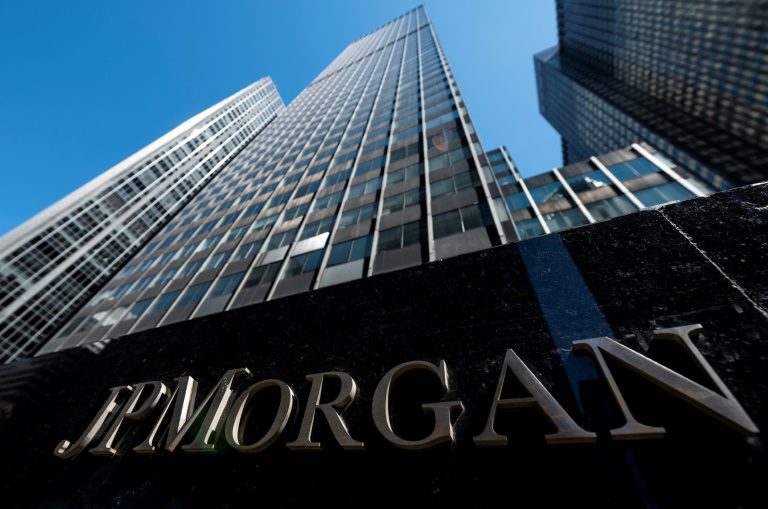
JPMorgan Chase says US economy still solid, but risks rising

JPMorgan Chase said the US economy remains on solid footing for the short-term, but warned of heightened longer-term risks due to inflation and the Ukraine war as its reported lower quarterly profits.

Executives from the giant bank said households and businesses generally remained in good shape, amid a tightening labor market.

But higher consumer prices, the Ukraine war and the shifts in Federal Reserve policy together have slightly raised the recession risk, which led the bank to set aside $902 million in additional reserves as a buffer against possible bad loans.

“There’s this very strong underlying economy,” said Chief Executive Jamie Dimon, noting that many consumers are flush with cash and businesses in “good shape” for the most part.

But he pointed to “countervailing forces,” including rising interest rates and inflation, and the war in Ukraine. 

“And those things are going to collide at one point, probably sometime next year,” he said.

“I’m not predicting a recession,” Dimon added in a conference call with reporters. “But is it possible? Absolutely.”

– ‘Wars are unpredictable’ –

The biggest US bank by assets, JPMorgan reported $8.3 billion in first-quarter profits, down 42 percent from the same three months of the prior year. Revenues dipped five percent to $30.7 billion. 

JPMorgan scored higher net interest income, reflecting a boost to lending fees because of higher interest rates. 

Profits fell in investment banking on lower equity and debt underwriting fees. The division also suffered a $120 million hit tied to upheaval in the nickel market in March that pressured some commodity brokerages, company officials said.

The results contrasted sharply from a year ago, when JPMorgan saw surging profits after it unlocked $5.2 billion in funds it had set aside early in the pandemic against potential defaults, but didn’t need because of the surprisingly solid condition of clients.

In the latest quarter, JPMorgan set aside $902 million for bad loans, citing “downside risks” including the Ukraine war and surging inflation.

About $300 million of that amount is connected to Russia-related exposures, with the remaining funds reflecting broader economic risks, executives said.

Charge offs for the first quarter came in at a relatively modest $582 million, another sign of the healthy condition of consumers.

In terms of customer trends, Dimon cited an uptick in credit card spending on dining and travel, but said higher mortgage rates had dented home lending originations, while limited vehicle availability crimped car loan originations.

Dimon highlighted the Ukraine situation as a wildcard, warning that “wars are unpredictable” and the oil market could “change dramatically.”

“The oil markets are precarious,” he said, adding that “clouds are on the horizon.”

JPMorgan’s shares fell 3.5 percent to $126.90 in early trading.

Other large banks, including Goldman Sachs, Citigroup and Bank of America, will report results in coming days.

US Treasury Secretary warns China over its stance on Russia

US Treasury Secretary Janet Yellen warned China on Wednesday that its lack of participation in the Western sanctions campaign against Russia could affect countries’ willingness to work with Beijing.

Washington and its allies in Europe and elsewhere have responded with fury to Moscow’s attack on Ukraine, sanctioning Russia’s financial system, aviation sector and other major parts of its economy in a thus-far fruitless effort to get President Vladimir Putin to back down.

“China has recently affirmed a special relationship with Russia. I fervently hope that China will make something positive of this relationship and help to end this war,” Yellen told the Atlantic Council.

“The world’s attitude towards China and its willingness to embrace further economic integration may well be affected by China’s reaction to our call for resolute action on Russia.”

China as well as India are two major economies that have not taken part in the retaliatory measures, and Yellen said Beijing’s policy could have lasting implications for a country that is pursuing territorial disputes against its neighbors.

“China cannot expect the global community to respect its appeals to the principles of sovereignty and territorial integrity in the future if does not respect these principles now when it counts,” she said, in a reference to China’s claim over Taiwan.

– ‘On the fence’ –

Yellen also spoke to countries that “are currently sitting on the fence” when it comes to Moscow, “perhaps seeing an opportunity to gain by preserving their relationship with Russia and backfilling the void left by others.”

She warned that such policies “are short-sighted,” adding: “The future of our international order, both for peaceful security and economic prosperity, is at stake.”

“The unified coalition of sanctioning countries will not be indifferent to actions that undermine the sanctions we’ve put in place,” Yellen said.

With the World Bank and IMF set to begin their spring meetings next week, Yellen also called for reform to the two major economic institutions, saying the war in Ukraine proved the necessity of change.

“We will… need to modernize our existing institutions — the IMF and the multilateral development banks — so that they are fit for the 21st century, where challenges and risks are increasingly global,” she said.

“Some may say that now is not the right time to think big. Indeed, we are in the middle of Russia’s war in Ukraine,” Yellen said. “Yet, I see this as the right time to work to address the gaps in our international financial system that we are witnessing in real time.”

These measures should force the Kremlin “to choose between propping up its economy and funding the continuation of Putin’s brutal war,” she said.

She reflected on the massive economic collapse the Covid-19 pandemic caused in 2020, saying that while rich nations were able to spend to support their economies, efforts to help poor countries were less successful, causing “a divergence in global prospects.”

Yellen said the governance of the IMF should be considered “to ensure that it reflects both the current global economy and also members’ commitments to the (lender’s) underlying principles and objectives.”

India's Infosys to exit Russia business

Indian software giant Infosys said Wednesday it was “transitioning” out of the Russian market following the Ukraine war and conflict of interest accusations levelled at Rishi Sunak, the British finance minister.

Sunak’s wife Akshata Murty holds a nearly $1 billion stake in the IT firm, which was founded by her father N.R. Narayana Murthy and established itself as a global outsourcing behemoth.

Critics have accused Sunak of financially benefiting from Infosys operations in Russia through his wife’s stake, even in the wake of stiff British sanctions against Moscow in response to the invasion of Ukraine.

“Given what is going on in the region, we have started to transition all of our work from our centres in Russia to our centres outside Russia,” chief executive and managing director Salil Parekh told a media briefing.

“We have no work with any Russian client today and we have no plans for any work with any Russian client going ahead,” he added.

Parekh said the company was “very concerned” about the situation in Ukraine and had committed $1 million in humanitarian aid.

But he declined to confirm if the company’s board has discussed recent criticism surrounding Murty’s stake in the company.

“We have no comments to make on any individual shareholder,” he said.

Infosys also announced quarterly earnings on Wednesday but fell short of analyst estimates despite strong growth on the back of sustained demand for digital services since the pandemic.

Net profit at the Bangalore-headquartered company rose 12 percent on-year to 56.86 billion rupees ($746 million) in the March quarter.

Revenues grew 22.7 percent to 322.76 billion rupees, and were up 19.7 percent on a full-year basis, the company’s fastest pace in 11 years. 

Revenue growth was forecast at 13-15 percent for the current financial year, after the company recorded an order book of $9.5 billion for the year to March 31.

Infosys was at the forefront of an outsourcing boom that saw India become a back office to the world as Western firms subcontracted work to a skilled English-speaking workforce.

More than 60 percent of its revenue comes from North American markets.

The company’s board approved a final dividend of 16 rupees per share. Its stock closed 0.41 percent higher in Mumbai ahead of the earnings announcement.

Stocks diverge while oil gains tracking soaring inflation

Stock markets diverged Wednesday as investors pored over data showing further spikes to inflation, while oil prices extended gains.

US annual consumer inflation hit a 40-year high in March, the same month that UK prices jumped at the fastest pace in three decades. 

Global inflation, already rocketing on supply constraints as economies look to fully reopen following pandemic lockdowns, is rising further on fallout from the Ukraine war.

US wholesale price inflation hit a record annual rate of 11.2 percent in the year to March, according to data released Wednesday.

Analysts said markets welcomed an indication that US inflation was approaching its peak, though it has raised expectations that the Federal Reserve will take more aggressive action to contain prices.

“The steepest rises in a generation have unsettled financial markets, as investors digest the unsavoury prospect of tougher hikes in interest rates,” noted Susannah Streeter, senior investment and markets analyst at Hargreaves Lansdown.

Tokyo shrugged off the gloom, however, with the benchmark Nikkei 225 closing almost two percent higher following sharp losses at the start of the week.

In China, where a Covid-19 outbreak has caused mass lockdowns and snarled global trade arteries, the main stock market index lost close to one percent Wednesday.

That came as official data showed China’s imports shrank on-year in March for the first time in nearly two years, hit by the coronavirus and weakening consumer demand.

European stocks were solidly lower in afternoon trading while Wall Street opened little changed as the corporate reporting season got underway.

JPMorgan Chase saw its first quarter net profit plunge by 40 percent as it set $900 million aside to deal with potential losses due to the Ukraine conflict and inflation.

It already booked $524 million in losses as it sought to lower its exposure to soaring commodities prices and Russian counterparties.

Shares in JPMorgan Chase fell 2.8 percent at the open of trading. 

Meanwhile, Delta airlines beat expectations even if it still lost money and said it expects second quarter revenue to come in at 97 percent of the pre-pandemic level in 2019.

Its shares rose 3.8 percent.

– Oil rises –

Elsewhere Wednesday, oil prices climbed further in a volatile trading week.

“Oil seems to be the primary benefactor of (the) Ukraine vs Russia conflict dragging out longer,” noted Stephen Innes of SPI Asset Management.

Russia is a major producer of oil and gas and the war has triggered fears of supply constraints.

However, global oil demand will be slightly lower than forecast this year in the wake of strict Covid lockdowns in China, the world’s biggest importer of crude, the International Energy Agency said Wednesday.

Russian oil supply is expected to continue to fall in April by 1.5 million barrels per day, according to the IEA, which advises developed countries on their energy policies.

In currency trading Wednesday, the yen hit its lowest level against the dollar in two decades, extending recent falls as the gap widens between Japan’s ultra-loose monetary policy and Fed tightening.

Despite being traditionally considered a haven currency, uncertainty fuelled by the war in Ukraine has not caused the yen to strengthen.

Instead, the Fed’s move towards a more aggressive rate-tightening policy and the shock of rising oil prices in Japan — a major importer of fossil fuels — have pushed the currency lower, analysts said.

– Key figures around 1330 GMT –

London – FTSE 100: DOWN 0.2 percent at 7,561.85 points

Paris – CAC 40: DOWN 0.7 percent at 6,491.70

Frankfurt – DAX: DOWN 1.0 percent at 13,987.03

EURO STOXX 50: DOWN 0.9 percent at 3,795.76

New York – Dow: UP 0.1 percent at 34,260.43

Tokyo – Nikkei 225: UP 1.9 percent at 26,843.49 (close)

Hong Kong – Hang Seng Index: UP 0.3 percent at 21,374.37 (close)

Shanghai – Composite: DOWN 0.8 percent at 3,186.82 (close)

Brent North Sea crude: UP 2.1 percent at $106.84 per barrel

West Texas Intermediate: UP 1.9 percent at $102.46 per barrel

Euro/dollar: DOWN at $1.0815 from $1.0818

Pound/dollar: UP at $1.2996 from $1.2977

Euro/pound: DOWN at 83.21 pence from 83.36 pence

Dollar/yen: DOWN at 125.80 from 126.22 yen

burs-rl/lth

Close Bitnami banner
Bitnami