AFP

IMF, Lebanon strike conditional deal on $3 bn aid

The IMF announced Thursday a conditional agreement to provide Lebanon with $3 billion in aid to help it emerge from a severe economic crisis, following months of negotiations.

The country has been battered by triple-digit inflation, soaring poverty rates and the collapse of its currency since a 2020 debt default.

Officials in Beirut applauded the announcement as it will open the door to additional financial support from foreign donors.

But experts reiterated doubts over the willingness of Lebanon’s political elite, widely blamed for endemic corruption, to implement the reforms needed to resuscitate the economy.

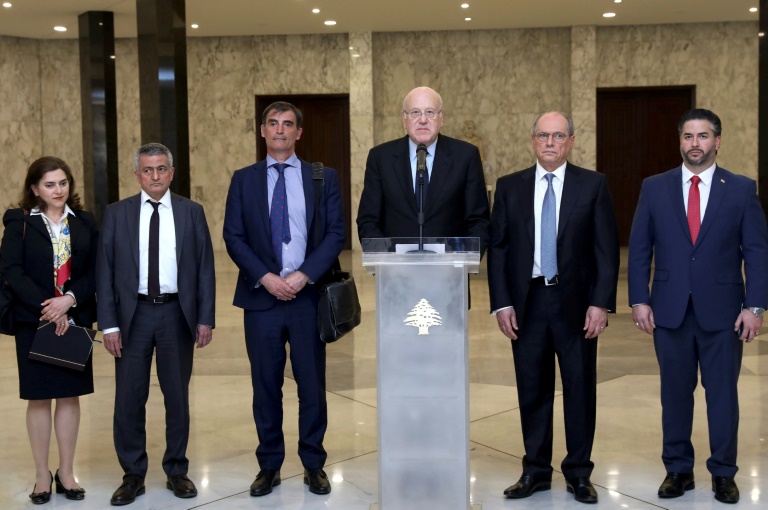
The deal is “a visa stamp for donor countries to begin co-operating with Lebanon and to put Lebanon back on the global finance map”, Prime Minister Najib Mikati told reporters on an upbeat note after the International Monetary Fund announcement of the “staff-level agreement”.

Saudi Arabia, a key financial backer, announced Thursday it was sending an ambassador to Lebanon for the first time since a row broke out five months ago over the Riyadh-led military intervention in Yemen. 

Fellow oil-rich Gulf state Kuwait, which sided with Riyadh in the row, also announced that its ambassador would return “in response to appeals of moderate national forces” in Lebanon.

Ernesto Ramirez Rigo, who led the IMF mission to Lebanon, said that once approved by the global crisis lender’s board, the 46-month financing programme will “support the authorities’ reform strategy to restore growth and financial sustainability”.

However, approval is contingent on “timely implementation of all prior actions and confirmation of international partners’ financial support”, he said in a statement.

Rigo blamed “many years of unsustainable macroeconomic policies” for the crisis in Lebanon that came to a head in 2020 when it defaulted on its sovereign debt for the first time in its history.

The Lebanese pound has lost about 90 percent of its value on the black market and four out of five Lebanese now live below the poverty line, according to the United Nations.

The situation has been exacerbated by soaring inflation, the Covid-19 pandemic and the devastating August 2020 explosion at Beirut port.

“Lebanon is facing an unprecedented crisis, which has led to a dramatic economic contraction and a large increase in poverty, unemployment, and emigration,” Rigo said, adding that the programme will support increased social spending.

– ‘Highly unlikely’ – 

The aid would be released under the global lender’s “Extended Fund Facility” but only after parliament in Beirut approves a 2022 budget and a new bank secrecy law to fight corruption.

It also will require cabinet approval of a debt restructuring plan, Rigo said.

The cabinet must likewise approve a bank restructuring strategy.

A former vice governor of Lebanon’s central bank, Nasser Saidi, said he had doubts that such reforms would ever materialise.

“This is good news if the set of Monetary-Fiscal-Governance-Structural reforms including banking sector restructuring are implemented. Highly unlikely!” he wrote on Twitter.

In a joint statement with President Michel Aoun, Mikati said the IMF deal would help “to revive Lebanon and put it on the path of recovery and solutions”.

Cabinet and parliament must approve the agreement and the reforms demanded by the IMF before the deal goes through.

For more than two years, the ruling elite has been unable to lift the country out of crisis, as it is beset by political horsetrading between rival factions that have repeatedly left Lebanon without a government.

Financial analyst Henri Chaoul dismissed the IMF agreement as a “non-event”.

“The prior actions will never be done. We are light years away,” he told AFP.

“We have 30 years of track record with a perfect-fit regression line.”
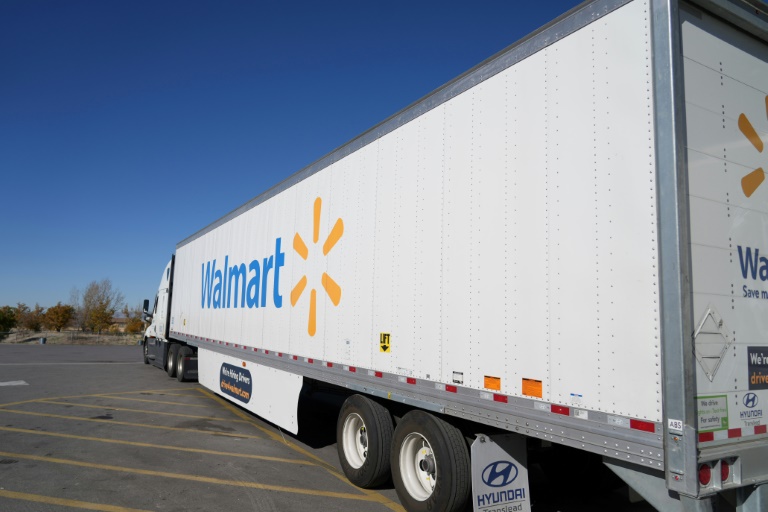
Walmart hikes starting US trucker pay to as much as $110,000/year

Walmart will lift starting pay for truckers to as much as $110,000 a year in the retail giant’s latest move to recruit and retain logistics staff in the tight US labor market.

The new salary level compares with current pay averaging $87,500 for first-year drivers and is roughly twice the average $56,491 annual pay for a long-haul driver, according to data cited by Walmart.

Whether a new driver can make the full $110,000 depends on factors such as miles driven and location, a Walmart spokesman said.

The aim is to make working as a driver for the company a “destination job,” Walmart supply chain executives Fernando Cortes and Karisa Sprague said in a blog post. 

“The investments in pay and training build on multiple recent driver bonuses and improved schedules that enable drivers to spend more time at home,” they said. “Once drivers are on board, this is a job many leave only for retirement.”

Walmart, which currently has 12,000 drivers in its fleet, is looking to add another 5,000 in 2022.

The company has also established an internal training program where staff from other parts of Walmart can train for 12 weeks and earn a commercial driver’s license. The goal is to bring on 400 to 800 drivers through the program by the end of the company’s 2023 fiscal year, a spokesman said.

The hiring push comes amid a period of significant revenue growth for Walmart and other big-box chains throughout the coronavirus pandemic, a period also characterized by port backlogs and supply chain snarls.

The crunch in drivers has prompted some larger trucking companies to argue for lowering the national driving age, a policy opposed by independent truckers who have called for more parking capacity, less unpaid waiting time and other improvements in working conditions to improve employee retention.

Colombian flooding kills 10, several missing: authorities

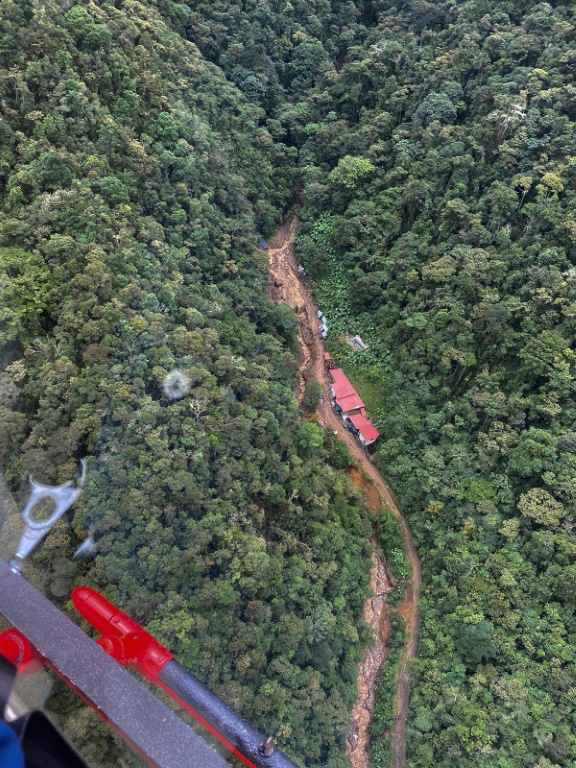
Torrential rains and flooding have killed at least 10 people at a mining camp in mountainous northwest Colombia, with several reported missing and more damage expected, authorities said Thursday.

The flooding at Abriaqui in the Antioquia department surprised a group of miners as they were eating dinner on Wednesday evening, mayor Hector Urrego told local television.

“The guys were at dinner, some were preparing to rest, others were leaving work when the flood arrived” at the El Porvenir gold mine, he said.

It destroyed one level of the mining camp as well as part of a plant, the Antioquia government said.

The National Disaster Risk Management Unit said the preliminary toll was 10 dead, seven missing and 10 injured.

Jaime Gomez of the DAGRAN regional rescue service said the casualty numbers may rise.

Urrego said 20 families were evacuated from a nearby town due to the risk of further flooding, with various rivers around Abriaqui threatening to burst their banks.

Several rural roads were made impassable by landslides.

“A team of professionals are heading to the area to support response efforts,” said the DAGRAN.

President Ivan Duque expressed “solidarity with the families of the victims” on Twitter.

“Relief agencies are working… in search operations for the disappeared,” the president said.

So far this rainy season, 17 people have died in floods in Antioquia, according to local authorities.

Hours before the Abriaqui flood, a woman was killed in a landslide triggered by heavy rains in the neighboring town of Barbosa.

In February, at least 14 people died and 34 were injured in a mudslide triggered by heavy rains in the central-west Risaralda province.

'Mystery' boson finding contradicts understanding of universe

After a decade of meticulous measurements, scientists announced Thursday that a fundamental particle — the W boson — has a significantly greater mass than theorised, shaking the foundations of our understanding of how the universe works.

Those foundations are grounded by the Standard Model of particle physics, which is the best theory scientists have to describe the most basic building blocks of the universe, and what forces govern them.

The W boson governs what is called the weak force, one of the four fundamental forces of nature, and therefore a pillar of the Standard Model.

However new research published in the Science journal said that the most precise measurement ever made of the W Boson directly contradicts the model’s prediction.

Ashutosh Kotwal, a physicist at Duke University who led the study, told AFP that the result had taken more than 400 scientists over 10 years to scrutinise four million W boson candidates out of a “dataset of around 450 trillion collisions”.

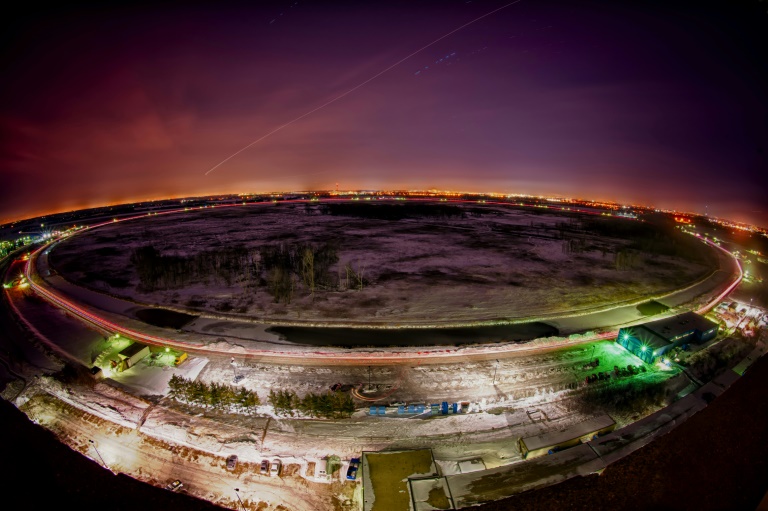
These collisions — made by smashing particles together at mind-bending speeds to study them — were done by the Tevatron collider in the US state of Illinois.

It was the world’s highest-energy particle accelerator until 2009, when it was supplanted by the Large Hadron Collider near Geneva, which famously observed the Higgs boson a few years later.

The Tevatron stopped running in 2011, but the scientists at the Collider Detector at Fermilab (CDF) have been crunching numbers ever since.

– ‘Fissures’ in the model –

Harry Cliff, a particle physicist at Cambridge University who works at the Large Hadron Collider, said the Standard Model is “probably the most successful scientific theory that has ever been written down”.

“It can make fantastically precise predictions,” he said. But if those predictions are proved wrong, the model cannot merely be tweaked.

“It’s like a house of cards, you pull on one bit of it too much, the whole thing comes crashing down,” Cliff told AFP.

The standard model is not without its problems.

For example, it doesn’t account for dark matter, which along with dark energy is thought to make up 95 percent of the universe. It also says that the universe should not have existed in the first place, because the Big Bang ought to have annihilated itself. 

On top of that, “a few fissures have recently been exposed” in the model, physicists said in a companion Science article.

“In this framework of clues that there are missing pieces to the standard model, we have contributed one more, very interesting, and somewhat large clue,” Kotwal said.

Jan Stark, physicist and director of research at the French CNRS institute, said “this is either a major discovery or a problem in the analysis of data,” predicting “quite heated discussions in the years to come”.

He told AFP that “extraordinary claims require extraordinary evidence”.

– ‘Huge deal’ –

The CDF scientists said they had determined the W boson’s mass with a precision of 0.01 percent — twice as precise as previous efforts. 

They compared it to measuring the weight of a 350-kilogram (800-pound) gorilla to within 40 grams (1.5 ounces). 

They found the boson was different than the standard model’s prediction by seven standard deviations, which are also called sigma. 

Cliff said that if you were flipping a coin, “the chances of getting a five sigma result by dumb luck is one in three and a half million”.

“If this is real, and not some systematic bias or misunderstanding of how to do the calculations, then it’s a huge deal because it would mean there’s a new fundamental ingredient to our universe that we haven’t discovered before,” he said.

“But if you’re going to say something as big as we’ve broken the standard model of particle physics, and there’s new particles out there to discover, to convince people of that you probably need more than one measurement from more than one experiment.”

CDF co-spokesperson David Toback said that “it’s now up to the theoretical physics community and other experiments to follow up on this and shed light on this mystery”.

And after a decade of measurements, Kotwal isn’t done yet.

“We follow the clues and leave no stone unturned, so we’ll figure out what this means.”

Tesla inaugurates huge Texas plant with party just as big

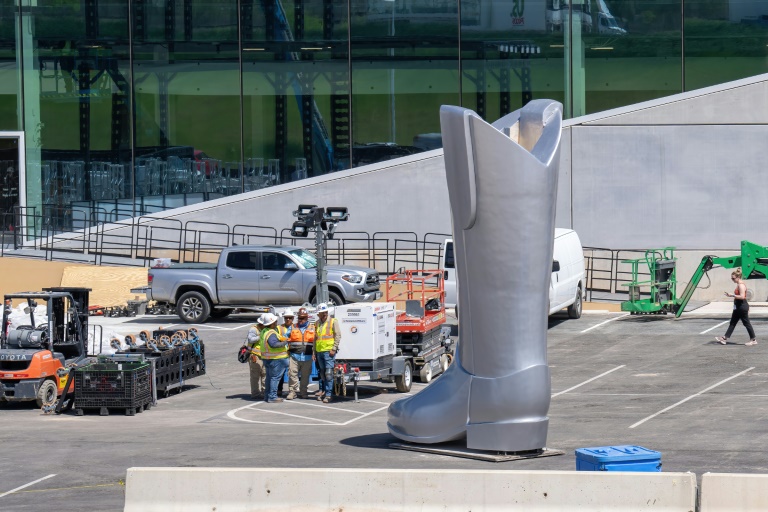
Tesla welcomed throngs of  electric car lovers to Texas Thursday for a huge party inaugurating a “gigafactory” the size of 100 professional soccer fields.

Online buzz has swelled ever since Tesla’s colorful but controversial founder and chief executive Elon Musk tweeted word of the event, with reports of perhaps as many as 15,000 guests taking part in the official plant opening in the state capital Austin.

Tesla owners posted plans for cross country road trips, while others urged the uninvited to just show up and find a way inside.

As Thursday arrived, Musk tweeted images and video of preparations including a kaleidescope-like walkway leading into a plant given a nightclub look with red and blue lights.

Tesla electric cars were on a stage backed by a giant “Giga Texas” sign made of neon lights. The festivities would not start until the evening, Musk tweeted.

The company has remained mum about details of the extravaganza, but rumors abound, including reports of an open bar and concert at Tesla’s 74-acre home in Texas.

Tesla fans have posted drone footage and other video showing sightings of what could be new vehicle models on display at the event.

“I got a golden ticket!” Luke Metger, president of a Texas environmental organization, tweeted on the eve of the party, attaching a screen-shot of his invite to the Cyber Rodeo – Giga Texas gala.

But will Texas be Musk’s land of promise?

– Farewell Silicon Valley –

The move to a US state known for conservative Republican politics is seen by some as Musk stepping away from the liberal Silicon Valley culture in which he made his fortune.

The South African-born serial entrepreneur is now ranked the world’s richest man. He founded Tesla in Silicon Valley in 2003, but shifted its headquarters to Texas late last year.

Musk has clashed with California regulators, particularly when health precautions mandated at the height of the pandemic closed Tesla’s Fremont plant.

California is also investigating whether discrimination took place at Tesla’s plant there.

It remains to be seen how Musk will navigate conservative policies in Texas, such as the state’s restrictive new abortion law and limits on seeking health services for transgender children.

Part of the Texas allure is a lack of corporate or personal income taxes. Tesla received more than $60 million in tax breaks to build the factory, which is expected to employ 10,000 people over time.

While Musk has spoken of a desire for a shift away from climate-wrecking fossil fuels, Texas is known for oil rigs and gas-guzzling cars and trucks.

“I think he is having a bit of an identity crisis and forgotten who his customer is, and it is going to come back to bite him,” tech analyst Rob Enderle said of Musk.

“He is drifting to the right; what he doesn’t seem to remember is that most of the people who buy electric cars are the liberals.”

– Cybertruck –

Giga Texas has been in operation since late last year. It is the fifth and largest gigafactory cranking out battery packs and vehicles for Tesla.

Since starting with a car plant in Silicon Valley, Tesla has gone global with mega-factories in Berlin and Shanghai as well as in US states New York and Nevada.

The Austin plant will produce Model 3 and Y cars and eventually a Cybertruck pickup and a semi for hauling cargo trailers set to go into production next year, according to Edmunds analyst Jessica Caldwell.

Tesla demand is outstripping supply to the point that some Model Y and 3 cars are being delivered months late in some parts of the world, according to Wedbush analyst Dan Ives.

“The solution is mainly in Austin and Berlin,” Ives said.

Gigafactory Berlin officially opened last month.

Tesla wants to ramp up production by some 50 percent annually, and should easily top that goal this year, Musk said recently.

He has delivered more than a million vehicles during the past 12 months despite production constraints caused by a global chip shortage plaguing many industries.

Increase in atmospheric methane set new record in 2021: US

For the second year running, US scientists observed record increases in the atmospheric concentration of the potent greenhouse gas methane, the National Oceanic and Atmospheric Administration (NOAA) said Thursday.

Methane, the second biggest contributor to global warming after carbon dioxide, is generated by the production, transport and use of fossil fuels, but also from the decay of organic matter in wetlands, and as a byproduct of ruminant digestion in agriculture.

At last year’s COP26 Climate Change Conference in Glasgow, participants agreed to a Global Methane Pledge to reduce methane emissions by 30 percent by 2030 — but notable emitters including China, Russia, Iran and India have not signed on.

“Our data show that global emissions continue to move in the wrong direction at a rapid pace,” said NOAA administrator Rick Spinrad in a statement.

The annual increase in atmospheric methane during 2021 was 17 parts per billion (ppb), the largest rise recorded since systematic measurements began in 1983, said NOAA.

Across 2021, atmospheric methane levels averaged 1,895.7 ppb, around 162 percent greater than pre-industrial levels.

“We can no longer afford to delay urgent and effective action needed to address the cause of the problem — greenhouse gas pollution,” Spinrad warned.

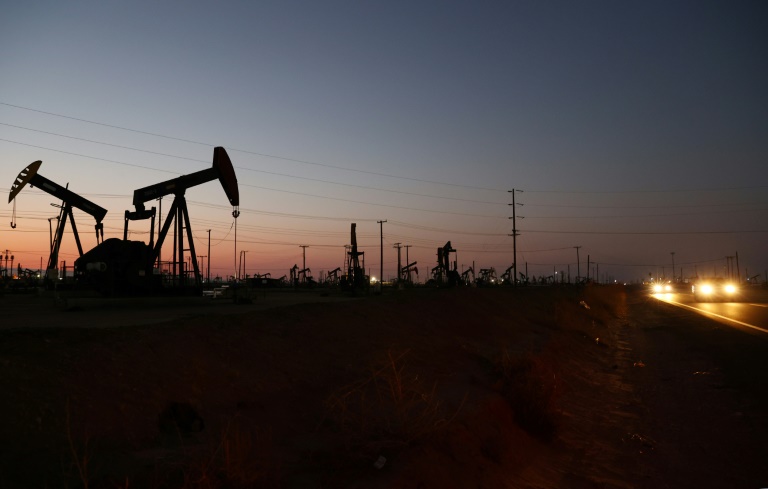
It’s estimated about 30 percent of methane comes from fossil fuel production — making it a clear target for lessening the impacts of the climate crisis in the short term.

Meanwhile, carbon dioxide levels continued to increase at historically high rates.

NOAA found that the global surface average for carbon dioxide during 2021 was 414.7 parts per million (ppm), which is an increase of 2.66 ppm over the 2020 average. 

Atmospheric levels of carbon dioxide are now comparable to where they were 4.3 million years ago, during the mid-Pliocene epoch. 

At that time, the sea level was about 75 feet (23 meters) higher than today, the average temperature was 7 degrees Fahrenheit (4C) higher than pre-industrial times, and large forests occupied areas of the Arctic.

Methane is far less abundant but around 25 times more potent than carbon dioxide at trapping heat in the atmosphere. 

The “atmospheric residence time” of methane is approximately nine years, compared to thousands of years for carbon dioxide — therefore controlling methane is critical to influencing the rate of climate change in the near future.

Methane also contributes to the formation of ozone at the ground level, which in turn is the main ingredient in smog and has harmful effects on the environment and people’s health.

Previous NOAA methane research indicated that biological sources of methane — such as from wetlands — are the main driver of increasing methane post-2006. 

This is worrying because it may signal a feedback loop caused by more rain over tropical wetlands, which in turn generates yet more methane — a cycle that would become largely outside of human control.

US Treasury secretary calls for improved cryptocurrency rules

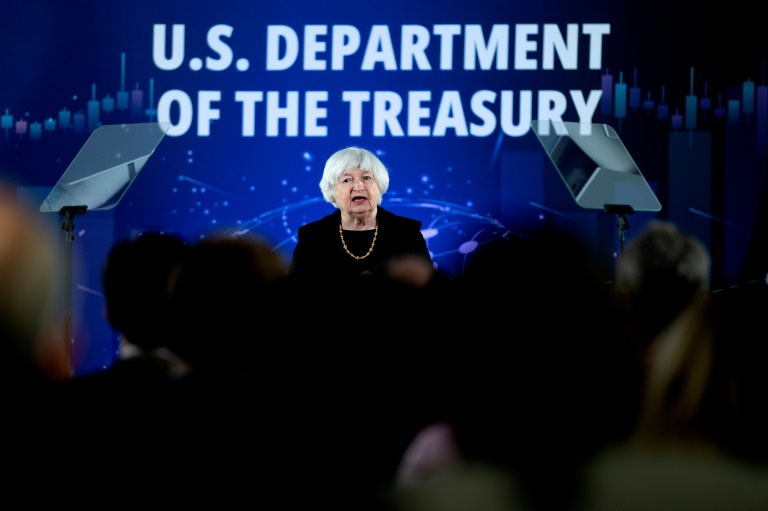
US Treasury Secretary Janet Yellen on Thursday called for increased oversight of cryptocurrencies, after President Joe Biden last month green-lit work on creating a digital American dollar.

Digital currencies such as bitcoin and ethereum have seen explosive growth in recent years, even as American officials have expressed concerns over whether the assets are properly regulated, or could be used for criminal activity.

In a speech at American University in Washington, Yellen said better regulations on such assets would protect consumers while still allowing for innovation.

“As banks and other traditional financial firms become more involved in digital asset markets, regulatory frameworks will need to appropriately reflect the risks of these new activities,” Yellen said.

“And new types of intermediaries, such as digital asset exchanges and other digital native intermediaries, should be subject to appropriate forms of oversight.”

Biden’s order last month put the United States among the more than 100 countries that are exploring or have launched pilot programs with their own central bank digital currency, including China’s digital yuan, although Yellen said issuing such a currency is likely to “require years of development, not months.” 

Washington has also looked to expand taxation of cryptocurrencies, with the $1 trillion national infrastructure overhaul that Congress passed last year including provisions to expand reporting requirements for digital assets.

Governments worldwide have fretted that cryptocurrencies are being used to fund illicit activities.

On Tuesday, Germany shut down Russian-language illegal darknet marketplace Hydra, the largest such network in the world, and seized bitcoin worth $25 million.

The US Treasury sanctioned that site and Garantex, an exchange for virtual currencies that it said was used for collecting ransomware payments.

Yellen warned that “‘financial innovation’ of the past has too often not benefited working families, and has sometimes exacerbated inequality,” and added that the department is working with Congress to regulate stablecoins, which are cryptocurrencies backed by reserves.

Yellen called for “tech neutral” regulations on digital assets that are intended to protect consumers and businesses without hampering the technology behind them.

“In many cases, regulators have authorities they can use to promote these objectives and Treasury supports those efforts,” Yellen said.

“To the extent there are gaps, we will make policy recommendations, including assessment of potential regulatory actions and legislative changes.”

IMF reaches agreement on $3 bn deal for Lebanon

The IMF announced Thursday that after months of negotiations it reached a staff-level agreement to provide Lebanon with $3 billion in aid to help it emerge from a severe economic crisis.

The country has been battered by triple digit inflation, soaring poverty rates, and the collapse of its currency since a 2020 debt default, and officials in Beirut applauded the announcement as it will open the door to additional financial support. 

The deal is “a visa stamp for donor countries to begin co-operating with Lebanon and to put Lebanon back on the global finance map,” Prime Minister Najib Mikati told reporters after the IMF announcement.

Ernesto Ramirez Rigo, who led the IMF mission to Lebanon, said that once approved by the global crisis lender’s board, the 46-month financing program will “support the authorities’ reform strategy to restore growth and financial sustainability.”

However, approval is contingent on “timely implementation of all prior actions and confirmation of international partners’ financial support,” he said in a statement.

Rigo blamed “many years of unsustainable macroeconomic policies” for the crisis that came to a head in 2020 when Lebanon defaulted on its sovereign debt for the first time in its history.

The Lebanese pound has lost about 90 percent of its value on the black market and four out of five Lebanese now live below the poverty line, according to the United Nations.

The situation has been exacerbated by soaring inflation, the Covid-19 pandemic and the war in Ukraine, as well as the August 2020 port of Beirut explosion.

“Lebanon is facing an unprecedented crisis, which has led to a dramatic economic contraction and a large increase in poverty, unemployment, and emigration,” Rigo said, who stressed that the program will support increased social spending.

– ‘In Lebanon’s best interest’ – 

The aid would be released under the global lender’s Extended Fund Facility but only after the parliament in Beirut approves a 2022 budget and a new bank secrecy law to fight corruption.

It also will require cabinet approval of a debt restructuring plan, with “sufficient creditor participation to restore debt sustainability and close financing gaps,” Rigo said.

Officials “expressed their strong commitment to carry out this reform program and sustain decisive implementation during the upcoming parliamentary and Presidential elections,” Rigo said.

Mikati agreed that “these reforms are in Lebanon’s best interest,” and said they will be fully implemented.

In a joint statement with President Michel Aoun, he said the IMF deal will help “to revive Lebanon and put it on the path of recovery and solutions.”

Kenya unveils $28 billion budget to spur recovery

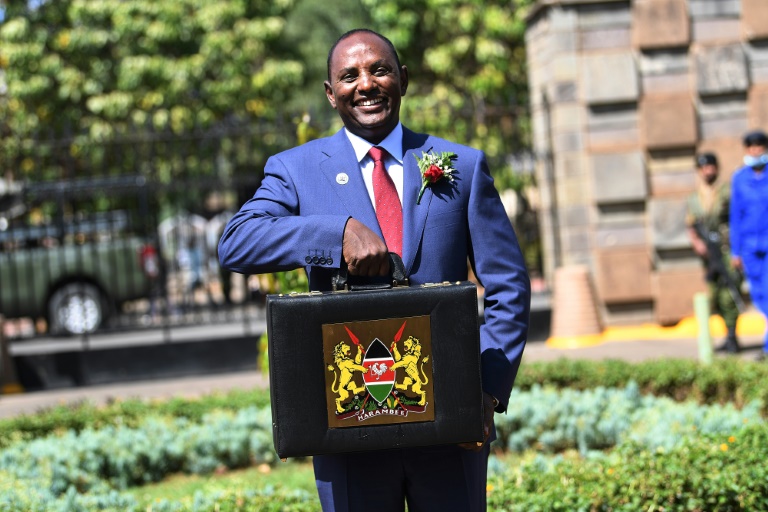
Kenya’s finance minister on Thursday unveiled a $28 billion budget aimed at helping the economy recover after the Covid-19 pandemic threw hundreds of thousands of people out of work.

The financial roadmap for the 2022/2023 fiscal year, announced just four months before the country goes to the polls, also pumps billions into outgoing President Uhuru Kenyatta’s so-called legacy projects and major infrastructure — much of it funded by China.

“We have outlined policies in this budget that are geared towards returning the economy back on a more sustainable growth path for improved livelihoods,” Treasury Cabinet Secretary Ukur Yatani told parliament.

He said the East African powerhouse’s economy was set to grow by six percent in the current calendar year, down from 7.6 percent last year but a marked improvement on the 0.3 percent contraction in 2020 — the first in three decades.

The 3.3 trillion shilling ($28 billion, 26 billion euro) budget illustrates the fine line the government is walking between trying to improve people’s livelihoods but also boost its own coffers by increasing taxes.

Yatani forecast a budget deficit of 6.2 percent of gross domestic product (GDP), down from 7.5 percent in the previous fiscal year.

If the budget is approved by parliament, the government will also splash out 146 billion shillings on Kenyatta’s legacy schemes under his so-called Big Four Agenda, which focuses on food security, affordable housing, affordable healthcare and manufacturing.

It is also planning to spend billions of dollars on infrastructure projects such as an expressway aimed at easing the capital Nairobi’s notoriously congested roads and the expansion of the nation’s railway network.

Kenya was battered by the coronavirus pandemic, which slashed income from the vital tourist sector, although agriculture — the backbone of the economy — proved more resilient.

Stocks wilt as investors brace for US Fed tightening

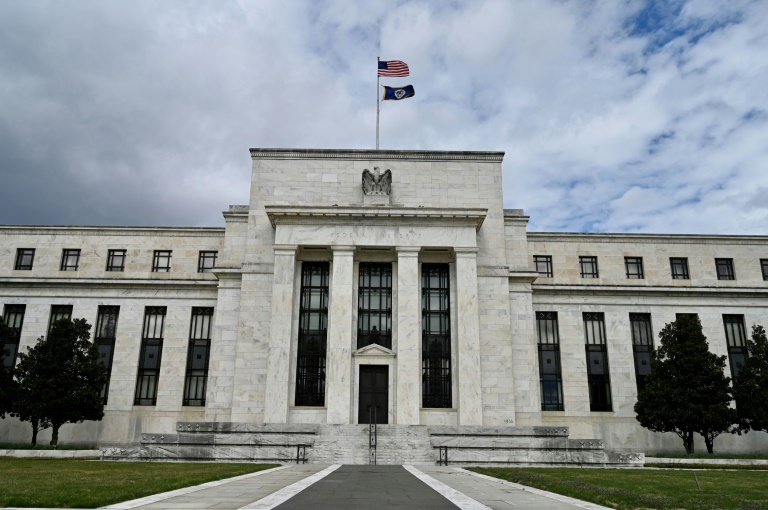
US and European stocks retreated Thursday after minutes from central banks showed US policymakers ready to aggressively wind back easy-money policies while their eurozone counterparts disagreed over their own way forward.

Meanwhile, oil prices continued to slide following heavy losses on Wednesday that had been triggered by concerns about weaker demand because of economic slowdown, with Brent crude falling below $100 per barrel.

A surge of Covid cases in major consumer China has raised concerns about demand, as has the surge in prices following the Russian invasion of Ukraine and Western sanctions.

On Wall Street all three major stock indices were lower in late morning trading, with Dow dropping 0.7 percent.

In Europe, London and Frankfurt ended the day down 0.5 percent, while Paris shed 0.6 percent.

Minutes showed the Fed in March opted to raise US borrowing costs rates by a quarter percentage point, mindful of “greater near-term uncertainty associated with Russia’s invasion of Ukraine”.

But some policymakers had favoured lifting rates even higher, by half a percentage point, to rein in decades-high inflation which is threatening to derail the economic recovery.

“Last night’s Fed minutes have recommitted the central bank to its path of tightening policy, leaving equities vulnerable in the short term after the bounce from the March lows,” said Chris Beauchamp, chief market analyst at online trading platform IG.

– Inflation fight –

At their own meeting last month, European Central Bank policymakers disagreed on how to respond to runaway inflation and economic uncertainty caused by Russia’s invasion of Ukraine, minutes indicated Thursday.

“A large number of members held the view that the current high level of inflation and its persistence called for immediate further steps towards monetary policy normalisation,” the minutes read.

The ECB’s governing council played it safe at the March meeting, agreeing to wind down monthly bond purchases at an accelerated pace in the second quarter, while keeping the end date of the stimulus scheme flexible.

An interest rate hike would follow “some time” after the end of the bond-buying scheme, it said.

But the minutes revealed that some governors wanted to go further to combat inflation, as the war in Ukraine further pushes up prices for energy, food and raw materials.

The prospect of rates rising at a quicker pace over the coming months has added to a wave of uncertainty across trading floors.

Central banks across the world are under fierce pressure to tackle runaway inflation, which has soared further on a Ukraine-driven spike in commodities like gas, oil and wheat.

March was the first Fed hike since it slashed US rates to zero when the Covid-19 pandemic broke out two years ago.

Although current US data points to a healthy economy, commentators warn of possible hard times ahead.

“While the economy continues to grow, there is a clear lack of bullish momentum in this market at the moment,” said IG’s Beauchamp.

– Key figures around 1530 GMT –

New York – Dow: DOWN 0.7 percent at 34,240.39 points

EURO STOXX 50: DOWN 0.6 percent at 3,802.10

London – FTSE 100: DOWN 0.5 percent at 7,551.81 (close)

Frankfurt – DAX: UP DOWN 0.5 percent at 14,078.15 (close)

Paris – CAC 40: DOWN 0.6 percent at 6,461.68 (close)

Tokyo – Nikkei 225: DOWN 1.7 percent at 26,888.57 (close)

Hong Kong – Hang Seng Index: DOWN 1.2 percent at 21,808.98 (close)

Shanghai – Composite: DOWN 1.4 percent at 3,236.70 (close)

Brent North Sea crude: DOWN 2.3 percent at $98.73 per barrel

West Texas Intermediate: DOWN 2.1 percent at $94.23 per barrel

Euro/dollar: UP at $1.0903 from $1.0896 late Wednesday

Pound/dollar: DOWN at $1.3063 from $1.3069

Euro/pound: UP at 83.46 pence from 83.37 pence

Dollar/yen: UP at 123.87 yen from 123.80 yen

burs-rl/cdw

Close Bitnami banner
Bitnami