AFP

The struggle to save Cuban sugar from bitter end

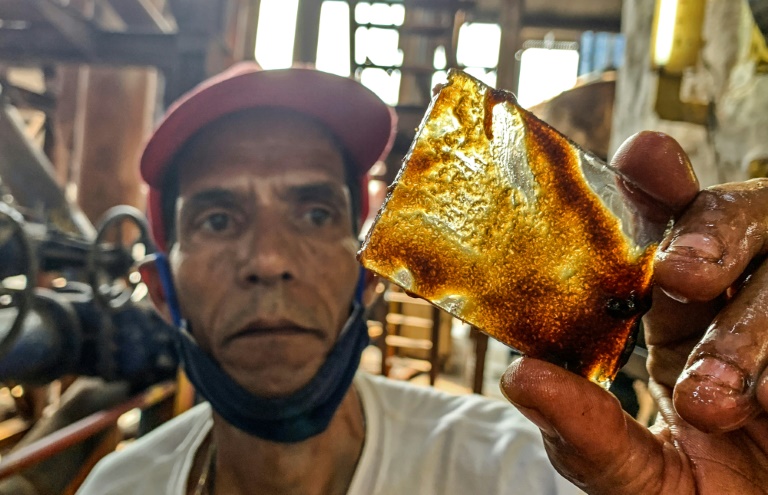
A whistle reverberates through a sugar factory in central Cuba to signal the resumption of milling at midday after an hours-long halt when the raw cane ran out.

It is cane harvest time in Cuba — once the world’s top sugar exporter but now reliant on imports. 

A critical shortage of harvesters and trucks to deliver the cane to factories has hamstrung production even as the government scrambles to revive the once-vibrant industry.

Cuba’s 2020-21 harvest yielded 800,000 tons of the sweet stuff, according to official figures.

This was just 10 percent of peak production some three decades ago and the worst outcome in 130 years for an industry that was once Cuba’s economic motor and a huge source of national pride.

“This is a war without end,” Lazaro Manuel Torres, boss of the Antonio Sanchez mill in Cuba’s central Cienfuegos province, told AFP.

“From the moment you wake up, you run into a mountain” of problems, said Torres, watching with obvious relief as a column of white smoke billowed from the chimney after the restart. 

– Just 56 mills left –

Until 1989, Cuba was the world’s biggest sugar exporter.

The United States was its major client until 1960 — two years before Washington imposed crippling sanctions on the communist island nation.

The Soviet Union, a political ally, then became an important buyer and was given preferential rates. 

Sugar was at the heart of Cuba’s plans for a prosperous future, with Fidel Castro leading a drive in the 1970s — complete with propaganda photos of him wielding a machete in the sugar plantations — to push the country’s output to 10 million tons per year. 

The goal was never achieved. 

The fall of the communist bloc in 1991 marked the beginning of the end for Cuba’s sugar industry — exacerbated by sanctions, a steep drop in prices and a lack of investment that saw 100 mills disappear.

Just 56 are left today.

Cuba now needs to import sugar to meet local demand and its export commitments.

“We have been in decline since 2017,” Noel Casanas, vice director of state-owned sugar producer AZCUBA, told AFP.

“If the situation continues, it is true that (the industry) will disappear.”

Sugar is still an important income generator for 50 of Cuba’s 169 municipalities, or some 1.2 million of the country’s 11.2 million inhabitants, he said.

– ‘Practically a corpse’ –

In December, the government approved dozens of measures in a bid to resuscitate sugar.

It doubled the price paid to cane producers, authorized the free hiring and firing of labor, and gave factories more decision-making autonomy in a country where just about everything is state-run.

“I don’t think these measures can revive an industry that is already practically a corpse,” said economist Emilio Morales of the Miami-based Havana Consulting Group.  

Casanas conceded production faces “limitations of all kinds” — critically a lack of foreign investment due to the strengthening of US sanctions since the presidency of Donald Trump.

Since the cane harvest opened in December, Antonio Sanchez has not managed to exceed 65 percent of milling capacity, set at 20,000 tons for this year’s harvest.

The problem has not been a lack of fuel or raw product, this time, but a shortage of harvesters and delivery trucks.

There are not enough spare parts, even tires, for vehicles in Cuba and producers such as Torres cannot afford to buy the limited components that are available.

“If you don’t have harvesters, if you do not have trucks, you cannot mill,” he lamented. 

Sugar producers in Cuba are also hard hit by a lack of fertilizers and pesticides.

For now, the government’s measures have managed to slow an exodus of sugar workers, industry bosses told AFP.

“We cannot complain, we are doing quite well — up to 700 pesos (about $29) a day,” said farmer Livan Hernandez. 

The average monthly Cuban salary is about $162.

Casanas said what is needed is foreign investment and expanding the industry into highly lucrative sugar derivatives such as bioethanol.

Sugar “is no longer the locomotive (of the Cuban economy) nor will it be,” he said.

But “it continues to be a strategic sector… that must be developed.”
Toshiba pauses spin-off plan, weighs going private

Troubled Japanese conglomerate Toshiba has said it is suspending its plan to split into two after last month’s shareholder vote against the idea and will now weigh the possibility of going private.

The firm announced in a statement Thursday that its management team will lead discussions with private equity funds and other possible investors on potential offers.

A newly formed special committee will also “identify the privatisation offer that is best for our diverse stakeholders” and report back before Toshiba’s annual shareholders’ meeting in June.

The management team will separately develop a new business plan, which will also be announced before the meeting, Toshiba said.

The decision comes after shareholders, in a non-binding decision, voted against a proposal to split the company into two.

It was the latest setback for the engineering giant, which was once a symbol of Japan’s tech and business prowess but has faced a series of scandals, financial troubles and shock high-level resignations in recent years.

The plan had already been revised once after an initial proposal to break up the company into three met stiff resistance.

Several major shareholders argued that a spin-off would only add to Toshiba’s woes by creating more managerial posts at smaller units, rather than improving the firm’s governance.

And some want a buyout instead, following an abandoned takeover offer last year from private equity fund CVC Capital Partners.

Bain Capital has said it is examining a bid for Toshiba, and the private equity firm has already received backing from one key shareholder.

It could face hurdles though given the national security implications of some of Toshiba’s businesses.

Amazon to fight union's win in NY labor election

Amazon told a federal agency it will file “substantial” objections to last week’s worker election in New York that established the company’s first union in the United States, according to a filing released Thursday.

In a letter to the National Labor Relations Board (NLRB), the retail giant requested more time to compile and present evidence about alleged problematic election conduct on the part of the union and the board’s officials. 

“This election involves more than 8,300 eligible voters, and voting spanned over 50 polling hours,” Amazon attorneys with the firm Hunton Andrews Kurth said in a motion to the NLRB. 

“It is simply infeasible for Amazon to sufficiently investigate the myriad of objectionable conduct within five business days.”

The NLRB granted Amazon until April 22 to present proof, but the company still must file its objections by Friday night, an official said.

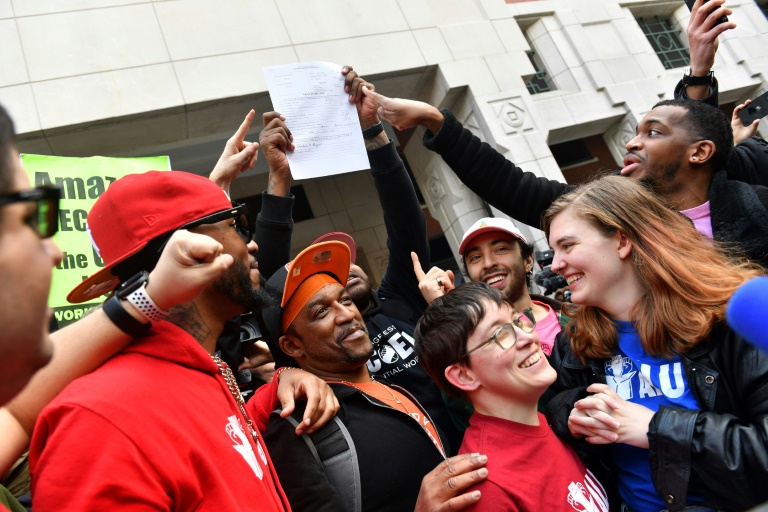
On April 1, more than 55 percent of the votes at the Staten Island, New York JFK8 warehouse sided with Amazon Labor Union (ALU), handing the bootstrap labor organization a surprise victory that has cheered the American labor movement and drew kudos from President Joe Biden.

The filing accuses union backers of intimidating workers, and said the NLRB administration of the vote led to “inordinately” long wait times that depressed turnout.

But the document did not provide evidence of these allegations, saying the company needed more time “to further compile, review and outline evidence” to support the claims.

Eric Milner, an attorney representing ALU, dismissed as “absurd” Amazon’s complaints.

“The employees have spoken and their voices have been heard,” Milner told AFP. 

“Amazon is choosing to ignore that, and instead engage in stalling tactics to avoid the inevitable; coming to the bargaining table and negotiating for a contract on behalf of the fulfillment center associates at JFK8.”

Meanwhile, organizers of an effort to form a union at an Amazon warehouse in the Alabama city of Bessemer on Thursday accused the company of interfering with a vote there that was still up in the air.

The vote is a redo of a 2021 ballot thrown out by federal officials in which 993 workers cast ballots against the labor group, compared with 875 employees in favor.

But there were 416 “challenged” ballots, according to the NLRB, meaning the number of votes still to be settled is big enough to potentially decide the final result.

The Retail, Wholesale and Department Store Union backing the Bessemer campaign asked the labor board for a hearing to decide whether Amazon “created an atmosphere of confusion, coercion and/or fear of reprisals and thus interfered with the employees’ freedom of choice.”

If that is found to be true, the results of the Bessemer vote should be put aside, union officials argued.

Canada budget amps military spending in response to Ukraine war

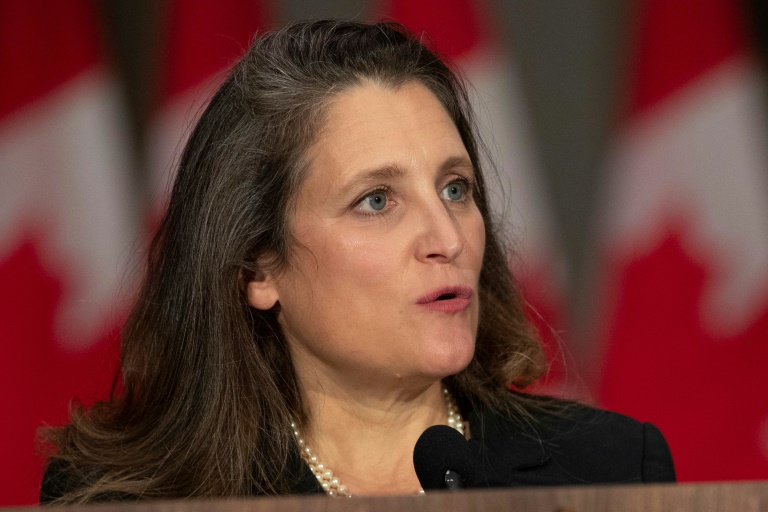
Canada’s finance minister, in response to Russia’s invasion of Ukraine, shelled out more money for the military in a budget Thursday that also aims to tackle soaring costs of living and a housing crisis.

But the additional Can$8 billion (US$6.4 billion) earmarked for defense over five years falls far short of a NATO target of spending two percent of GDP.

In a speech to parliament, Finance Minister Chrystia Freeland said: “Putin’s invasion of Ukraine has reminded us that our own peaceful democracy — like all the democracies of the world — depends ultimately on the defence of hard power.”

“We know that freedom does not come for free, and that peace is guaranteed only by our readiness to fight for it,” she said. “That is why this budget makes an immediate, additional investment in our armed forces.”

According to NATO, Canada currently spends 1.36 percent of GDP on the military, which is down slightly from just a few years ago.

To meet the two percent NATO target, Ottawa would have to set aside tens of billions of dollars more each year, according to parliament’s independent fiscal watchdog and other experts.

Freeland suggested Ottawa could still close that NATO gap soon, proposing “a swift defence policy review to equip Canada for a world that has become more dangerous.”

Canada, with one of the largest Ukrainian diasporas in the world, also announced an additional Can$1 billion in loans through the International Monetary Fund and Can$500 million in military aid for Ukraine this year.

The budget is the first since Prime Minster Justin Trudeau’s Liberals won a third term in elections last September. 

With support from a small leftist faction the minority government is expected to pass it in a soon-to-be held vote in the House of Commons.

– Slashing spending –

The budget will see spending slashed by Can$131 billion after the government doled out significant pandemic aid over the past two years that pushed the debt to a record Can$1.16 trillion this year.

At the same time, Freeland said she recognizes that Canadians are struggling with higher costs for almost everything and so the government is rolling out targeted measures to mitigate the impacts of inflation.

Notably, Ottawa aims to double the number of new homes built over the next decade to ease a supply crunch and soaring prices, as well as ban foreign investment in an overheated housing market. 

It also earmarked billions of dollars for a new dental care program, coming on the heels of a new national childcare program.

And Ottawa is setting up a fund to attract private foreign investment in Canada’s transition away from fossil fuels, raising taxes on banks and insurance companies, and supporting domestic exploration for critical minerals used to make electric vehicle batteries and semi-conductors.

After what Freeland described as having “teetered on the brink” in 2020 when the pandemic hit, the Canadian economy has rebounded strongly.

It has recovered 112 percent of the jobs lost in those early months, and the unemployment rate — at 5.5 percent — is now just shy of a pre-pandemic low, while economic growth is “1.2 percent above where it was before the pandemic,” she noted.

Private sector economists surveyed by Ottawa forecast slightly slower growth of 3.9 percent in 2022 and 3.1 percent next year. 

“After wave after wave and lockdown after lockdown, our economy has not just recovered, it is booming,” Freeland said.

But getting through the last two years came at a “significant cost” and now the government must reduce spending as it reaches for an eventual balanced budget, she said.

“We are absolutely determined that our debt-to-GDP ratio must continue to decline,” the minister said. 

“Our pandemic deficits are and must continue to be reduced. The extraordinary debts we incurred to keep Canadians safe and solvent must be paid down.”

The budget deficit is expected to fall from Can$113.8 billion in 2021-2022 to Can$52.8 billion in 2022-2023. 

The debt-to-GDP ratio, meanwhile, is forecast to fall from 46.5 percent in 2021-2022 to 45.1 percent in 2022-2023.

US recession fears grow as Fed plots aggressive course

The Federal Reserve has made clear it will come out guns blazing to battle the highest inflation rate in four decades, but that has sparked increasing fears their campaign will plunge the world’s largest economy into recession.

The US central bank is facing a daunting task as it tries to engineer a “soft landing” that preserves growth while tamping down worrying price pressures against an uncertain global backdrop.

It will require “exquisite calibration,” longtime Fed watcher David Wessel told AFP.

The United States has roared back from the Covid-19 pandemic, posting solid growth and record job gains thanks to massive government aid and aggressive stimulus from the Fed, which cut the benchmark lending rate to zero in March 2020.

But the rebound has hit multiple stumbling blocks, including renewed waves of the virus and shortages of key supplies and workers that sent prices surging. It must also now navigate the fallout from the war in Ukraine, which has caused a jump in oil prices.

The Fed last month raised interest rates by a quarter point in the first of a series of increases, and since then a chorus of officials — including Fed Chair Jerome Powell and Governor Lael Brainard — have signaled their openness to half-point rate increases, a more aggressive measure.

Wessel, director of the Hutchins Center on Fiscal and Monetary Policy at the Brookings Institution, cautioned that the Fed’s tough stance means policymakers are “more likely to overdo it than under do it.”

The Fed was caught by surprise at the speed with which inflation spiked late last year, initially driven by prices for cars and housing before spreading into other categories.

Consumer prices jumped 7.9 percent in February, the highest annual increase since 1982, but spending has nonetheless remained robust even amid new coronavirus variants.

Higher borrowing costs work by dampening consumer and business spending, bringing demand more in line with supply to lower prices.

Red-hot housing demand has already cooled as mortgage rates rose in anticipation of the Fed hikes, and data this week from the Mortgage Bankers Association indicate lenders are tightening credit availability.

– ‘Very careful’ –

Global stock markets have sagged in recent days amid the tough talk from Fed officials — including from Brainard, who this week called fighting inflation “paramount.”

Economists agree the Fed’s stance is appropriate to prevent high inflation from becoming embedded, eroding purchasing power and eating into recent wage gains.

The situation raises the specter of the 1980s, when a wage and price spiral and oil embargo from OPEC member states prompted then-Fed chief Paul Volcker to crank up interest rates, which ground down inflation but caused a recession.

But Dana Peterson, chief economist at The Conference Board, said the current situation is “very different,” notably because the economy and labor market are strong, and the Fed has built up its inflation-fighting credibility.

While the recession angst is understandable, “We need to give the Fed some credit,” Peterson told AFP.

Policymakers are looking at all the factors “and really want to calibrate this” to achieve a soft landing, and she predicted the Fed “will do everything in its power, not to ‘go too far.'” 

But she cautioned that the central bank cannot control the supply shocks that have hit the economy, including the ongoing pandemic.

– Offloading bond holdings –

Economists are expecting several rate hikes this year and next, including multiple half-point increases, with the first of those likely coming in early May when the policy-setting Federal Open Market Committee (FOMC) next meets.

The Fed also has another tool to deploy this time, which is to reduce their massive bond holdings built up during the pandemic that were meant to ensure financial markets had ample cash to support the economy.

The minutes of last month’s FOMC meeting released Wednesday indicated the $9 trillion balance sheet could be reduced by $95 billion a month, a much faster pace than in the wake of the 2008 global financial crisis.

But as an untested policy tool, it is unclear how that will interact with rate hikes.

“It’s tricky,” Wessel said, but given the strength of the economy “a mild and short recession… might be a tradeoff that policymakers are willing to make” to vanquish inflation.

US ends normal trade ties with Russia over Ukraine invasion

The US Congress voted Thursday to end normal trade relations with Moscow and codify the ban on Russian oil, as the White House ratchets up pressure on President Vladimir Putin over his invasion of Ukraine.

The legislation — which also applies to Russia’s ally Belarus — enables President Joe Biden to inflict steep tariff hikes on imports from both countries.

Biden announced the steps in a speech last month arguing that Russia must “pay the price” for the bloodshed in its ex-Soviet neighbor, where it has denied accusations of committing atrocities.

“Putin must absolutely be held accountable for the detestable, despicable war crimes he is committing against Ukraine: the images we have seen coming out of that country… are just pure evil,” said Senate Majority Leader Chuck Schumer.

“It reminds us of the worst moments in human history, caused by the evil man, Putin: hundreds of civilians murdered in cold blood.”

A key principle of the World Trade Organization, the so-called most favored nation status known in the United States as permanent normal trade relations (PNTR), requires countries to guarantee one another equal tariff and regulatory treatment.

The latest trade sanction, which passed the House with support from every Democrat and just a handful of Republicans voting no, caps several rounds of measures intended primarily to sever Moscow’s economic and financial ties with the rest of the world.

They have included banning Russian oil imports — a measure Biden already implemented by executive decree — seizing the assets of billionaires tied to Putin, and freezing the nation’s stockpile of cash.

– Unwavering support –

House Speaker Nancy Pelosi hailed the latest action as a sign that the United States was “unwavering” in its commitment to support Ukraine and hold Russia to account.

“Putin’s aggression and barbaric war crimes have horrified the world and demand a strong response,” she said in a statement. 

Together, the moves have already pushed Moscow to the brink of a debt default.

They have also caused prices for key commodities like gasoline and wheat to soar, harming US consumers already facing the highest inflation in four decades.

The United States imported just under $30 billion in goods from Russia last year, including $17.5 billion in crude oil.

The legislation includes a measure to reauthorize Magnitsky Act sanctions that target human rights violations and corruption with visa bans, asset freezes and other penalties.   

The United States moved Wednesday to block foreign investment in Russia and state-owned enterprises and levied further sanctions on the country’s banks and senior officials.   

Secretary of State Antony Blinken told NBC News that global punishments had put the Russian economy into a “deep recession.” 

“And what we’re seeing is a likely contraction of the Russian economy by about 15 percent,” he said.

“That is dramatic… We’ve seen an exodus from Russia of virtually every major company in the world. And Putin, in the space of a matter of weeks, has basically shut down Russia to the world.”   

IMF, Lebanon strike conditional deal on $3 bn aid

The IMF announced Thursday a conditional agreement to provide Lebanon with $3 billion in aid to help it emerge from a severe economic crisis, following months of negotiations.

The country has been battered by triple-digit inflation, soaring poverty rates and the collapse of its currency since a 2020 debt default.

Officials in Beirut applauded the announcement as it will open the door to additional financial support from foreign donors.

But experts reiterated doubts over the willingness of Lebanon’s political elite, widely blamed for endemic corruption, to implement the reforms needed to resuscitate the economy.

The deal is “a visa stamp for donor countries to begin co-operating with Lebanon and to put Lebanon back on the global finance map”, Prime Minister Najib Mikati told reporters on an upbeat note after the International Monetary Fund announcement of the “staff-level agreement”.

Saudi Arabia, a key financial backer, announced Thursday it was sending an ambassador to Lebanon for the first time since a row broke out five months ago over the Riyadh-led military intervention in Yemen. 

Fellow oil-rich Gulf state Kuwait, which sided with Riyadh in the row, also announced that its ambassador would return “in response to appeals of moderate national forces” in Lebanon.

Ernesto Ramirez Rigo, who led the IMF mission to Lebanon, said that once approved by the global crisis lender’s board, the 46-month financing programme will “support the authorities’ reform strategy to restore growth and financial sustainability”.

However, approval is contingent on “timely implementation of all prior actions and confirmation of international partners’ financial support”, he said in a statement.

Rigo blamed “many years of unsustainable macroeconomic policies” for the crisis in Lebanon that came to a head in 2020 when it defaulted on its sovereign debt for the first time in its history.

The Lebanese pound has lost about 90 percent of its value on the black market and four out of five Lebanese now live below the poverty line, according to the United Nations.

The situation has been exacerbated by soaring inflation, the Covid-19 pandemic and the devastating August 2020 explosion at Beirut port.

“Lebanon is facing an unprecedented crisis, which has led to a dramatic economic contraction and a large increase in poverty, unemployment, and emigration,” Rigo said, adding that the programme will support increased social spending.

– ‘Highly unlikely’ – 

The aid would be released under the global lender’s “Extended Fund Facility” but only after parliament in Beirut approves a 2022 budget and a new bank secrecy law to fight corruption.

It also will require cabinet approval of a debt restructuring plan, Rigo said.

The cabinet must likewise approve a bank restructuring strategy.

A former vice governor of Lebanon’s central bank, Nasser Saidi, said he had doubts that such reforms would ever materialise.

“This is good news if the set of Monetary-Fiscal-Governance-Structural reforms including banking sector restructuring are implemented. Highly unlikely!” he wrote on Twitter.

In a joint statement with President Michel Aoun, Mikati said the IMF deal would help “to revive Lebanon and put it on the path of recovery and solutions”.

Cabinet and parliament must approve the agreement and the reforms demanded by the IMF before the deal goes through.

For more than two years, the ruling elite has been unable to lift the country out of crisis, as it is beset by political horsetrading between rival factions that have repeatedly left Lebanon without a government.

Financial analyst Henri Chaoul dismissed the IMF agreement as a “non-event”.

“The prior actions will never be done. We are light years away,” he told AFP.

“We have 30 years of track record with a perfect-fit regression line.”

Walmart hikes starting US trucker pay to as much as $110,000/year

Walmart will lift starting pay for truckers to as much as $110,000 a year in the retail giant’s latest move to recruit and retain logistics staff in the tight US labor market.

The new salary level compares with current pay averaging $87,500 for first-year drivers and is roughly twice the average $56,491 annual pay for a long-haul driver, according to data cited by Walmart.

Whether a new driver can make the full $110,000 depends on factors such as miles driven and location, a Walmart spokesman said.

The aim is to make working as a driver for the company a “destination job,” Walmart supply chain executives Fernando Cortes and Karisa Sprague said in a blog post. 

“The investments in pay and training build on multiple recent driver bonuses and improved schedules that enable drivers to spend more time at home,” they said. “Once drivers are on board, this is a job many leave only for retirement.”

Walmart, which currently has 12,000 drivers in its fleet, is looking to add another 5,000 in 2022.

The company has also established an internal training program where staff from other parts of Walmart can train for 12 weeks and earn a commercial driver’s license. The goal is to bring on 400 to 800 drivers through the program by the end of the company’s 2023 fiscal year, a spokesman said.

The hiring push comes amid a period of significant revenue growth for Walmart and other big-box chains throughout the coronavirus pandemic, a period also characterized by port backlogs and supply chain snarls.

The crunch in drivers has prompted some larger trucking companies to argue for lowering the national driving age, a policy opposed by independent truckers who have called for more parking capacity, less unpaid waiting time and other improvements in working conditions to improve employee retention.

Colombian flooding kills 10, several missing: authorities

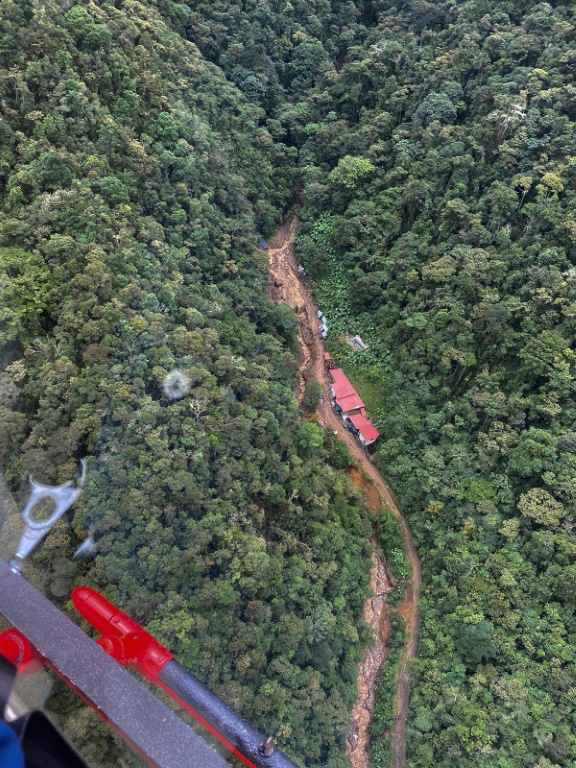
Torrential rains and flooding have killed at least 10 people at a mining camp in mountainous northwest Colombia, with several reported missing and more damage expected, authorities said Thursday.

The flooding at Abriaqui in the Antioquia department surprised a group of miners as they were eating dinner on Wednesday evening, mayor Hector Urrego told local television.

“The guys were at dinner, some were preparing to rest, others were leaving work when the flood arrived” at the El Porvenir gold mine, he said.

It destroyed one level of the mining camp as well as part of a plant, the Antioquia government said.

The National Disaster Risk Management Unit said the preliminary toll was 10 dead, seven missing and 10 injured.

Jaime Gomez of the DAGRAN regional rescue service said the casualty numbers may rise.

Urrego said 20 families were evacuated from a nearby town due to the risk of further flooding, with various rivers around Abriaqui threatening to burst their banks.

Several rural roads were made impassable by landslides.

“A team of professionals are heading to the area to support response efforts,” said the DAGRAN.

President Ivan Duque expressed “solidarity with the families of the victims” on Twitter.

“Relief agencies are working… in search operations for the disappeared,” the president said.

So far this rainy season, 17 people have died in floods in Antioquia, according to local authorities.

Hours before the Abriaqui flood, a woman was killed in a landslide triggered by heavy rains in the neighboring town of Barbosa.

In February, at least 14 people died and 34 were injured in a mudslide triggered by heavy rains in the central-west Risaralda province.

'Mystery' boson finding contradicts understanding of universe

After a decade of meticulous measurements, scientists announced Thursday that a fundamental particle — the W boson — has a significantly greater mass than theorised, shaking the foundations of our understanding of how the universe works.

Those foundations are grounded by the Standard Model of particle physics, which is the best theory scientists have to describe the most basic building blocks of the universe, and what forces govern them.

The W boson governs what is called the weak force, one of the four fundamental forces of nature, and therefore a pillar of the Standard Model.

However new research published in the Science journal said that the most precise measurement ever made of the W Boson directly contradicts the model’s prediction.

Ashutosh Kotwal, a physicist at Duke University who led the study, told AFP that the result had taken more than 400 scientists over 10 years to scrutinise four million W boson candidates out of a “dataset of around 450 trillion collisions”.

These collisions — made by smashing particles together at mind-bending speeds to study them — were done by the Tevatron collider in the US state of Illinois.

It was the world’s highest-energy particle accelerator until 2009, when it was supplanted by the Large Hadron Collider near Geneva, which famously observed the Higgs boson a few years later.

The Tevatron stopped running in 2011, but the scientists at the Collider Detector at Fermilab (CDF) have been crunching numbers ever since.

– ‘Fissures’ in the model –

Harry Cliff, a particle physicist at Cambridge University who works at the Large Hadron Collider, said the Standard Model is “probably the most successful scientific theory that has ever been written down”.

“It can make fantastically precise predictions,” he said. But if those predictions are proved wrong, the model cannot merely be tweaked.

“It’s like a house of cards, you pull on one bit of it too much, the whole thing comes crashing down,” Cliff told AFP.

The standard model is not without its problems.

For example, it doesn’t account for dark matter, which along with dark energy is thought to make up 95 percent of the universe. It also says that the universe should not have existed in the first place, because the Big Bang ought to have annihilated itself. 

On top of that, “a few fissures have recently been exposed” in the model, physicists said in a companion Science article.

“In this framework of clues that there are missing pieces to the standard model, we have contributed one more, very interesting, and somewhat large clue,” Kotwal said.

Jan Stark, physicist and director of research at the French CNRS institute, said “this is either a major discovery or a problem in the analysis of data,” predicting “quite heated discussions in the years to come”.

He told AFP that “extraordinary claims require extraordinary evidence”.

– ‘Huge deal’ –

The CDF scientists said they had determined the W boson’s mass with a precision of 0.01 percent — twice as precise as previous efforts. 

They compared it to measuring the weight of a 350-kilogram (800-pound) gorilla to within 40 grams (1.5 ounces). 

They found the boson was different than the standard model’s prediction by seven standard deviations, which are also called sigma. 

Cliff said that if you were flipping a coin, “the chances of getting a five sigma result by dumb luck is one in three and a half million”.

“If this is real, and not some systematic bias or misunderstanding of how to do the calculations, then it’s a huge deal because it would mean there’s a new fundamental ingredient to our universe that we haven’t discovered before,” he said.

“But if you’re going to say something as big as we’ve broken the standard model of particle physics, and there’s new particles out there to discover, to convince people of that you probably need more than one measurement from more than one experiment.”

CDF co-spokesperson David Toback said that “it’s now up to the theoretical physics community and other experiments to follow up on this and shed light on this mystery”.

And after a decade of measurements, Kotwal isn’t done yet.

“We follow the clues and leave no stone unturned, so we’ll figure out what this means.”

Close Bitnami banner
Bitnami