AFP

Thai national parks ban single-use plastics

Thailand on Wednesday banned styrofoam packaging and single-use plastics from national parks as it fights a scourge of waste threatening wildlife.

Waters off the coast of Thailand are choked with pollution and the coronavirus pandemic has brought a surge in plastic waste as demand for takeaway food grows.

The Thai Department of National Parks, Wildlife and Plant Conservation said the ban was necessary to protect ecology.

Offenders can be fined up to 100,000 baht ($3,000) if caught travelling into the parks with single-use plastic items or styrofoam containers.

The new regulations came into force Wednesday after they were published in the Royal Gazette a day earlier.

The ban includes “carry plastic bags which are less than 36 microns, plastic food containers, cups, straws, and cutlery”, the announcement said.

Greenpeace Thailand says plastic waste is a threat to the country’s wildlife including its elephant population. Digesting plastic can block animals’ intestines and disrupt the digestive system.

Elephants in Khao Yai National Park — three hours northeast of Bangkok — have reportedly eaten packaging, and plastic bags have been found in their faeces.

Plastic pollution on land can also wash into waterways and threaten river ecology and marine life.

Thailand, Indonesia, the Philippines, China and Vietnam together produce half of the plastic waste in the world’s oceans, according to campaign group the Ocean Conservancy.

Thailand outlawed the sale of single-use plastic bags at supermarkets and department stores in 2020, but they are still handed out by street food vendors, cafes, markets and smaller retailers.

Thais on average used around eight a day before the ban at major retailers was imposed.

The government wants 100 percent recyclable plastic to be in use by 2027.

JetBlue seeks to buy Spirit Airlines, threatening Frontier deal

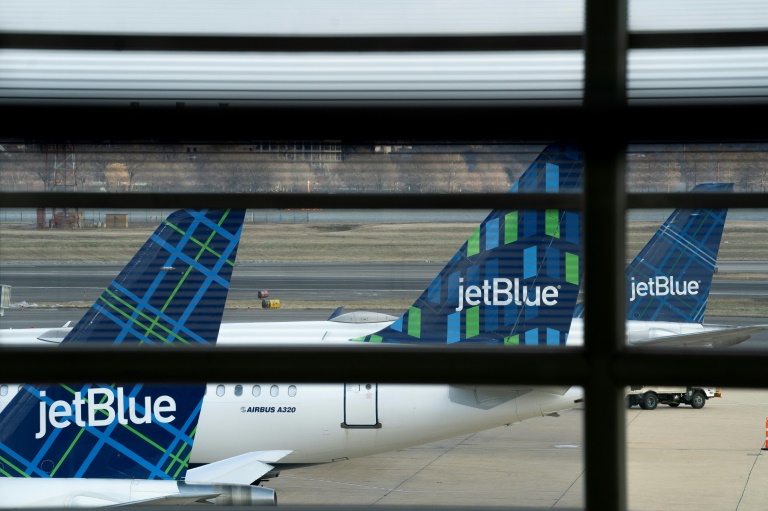
JetBlue Airways announced Tuesday a bid to acquire Spirit Airlines for $3.6 billion, setting up a bidding war with Frontier Airlines in the discount flying market.

The all-cash bid of $33 a share marks a 52 percent premium of Spirit’s price prior to its February 7 announcement of the deal with Frontier, according to JetBlue.

“JetBlue firmly believes its proposal constitutes a ‘superior proposal’ under Spirit’s merger agreement with Frontier and represents the most attractive opportunity for Spirit’s shareholders,” JetBlue said.

Spirit confirmed receipt of the “unsolicited” proposal from JetBlue, adding that its board would weigh the offer.

The board “will work with its financial and legal advisors to evaluate JetBlue’s proposal and pursue the course of action it determines to be in the best interests of Spirit and its stockholders,” Spirit said.

Frontier hit back at the JetBlue announcement and said its proposed merger with Spirit remained “in the best interest of consumers and shareholders,” a Frontier spokesperson said.

“Unlike the compelling Spirit-Frontier combination, an acquisition of Spirit by JetBlue, a high-fare carrier, would lead to more expensive travel for consumers. In particular, the significant East Coast overlap between JetBlue and Spirit would reduce competition and limit options for consumers.”

Frontier also said that JetBlue’s effort was “surprising” given an antitrust lawsuit by the Department of Justice challenging an alliance between American Airlines and JetBlue. 

In announcing the merger between Frontier and Spirit two months ago, executives from the two carriers argued they could together challenge larger US carriers and save about $1 billion in costs. 

JetBlue offered a similar argument Tuesday, saying the deal would “position JetBlue as the most compelling national low-fare challenger to the four large dominant US carriers.”

Shares of Spirit rose 22.4 percent Tuesday, while JetBlue fell 7.1 percent. Frontier Group rose 3.9 percent.

Easier for Europe to give up Russian coal than gas

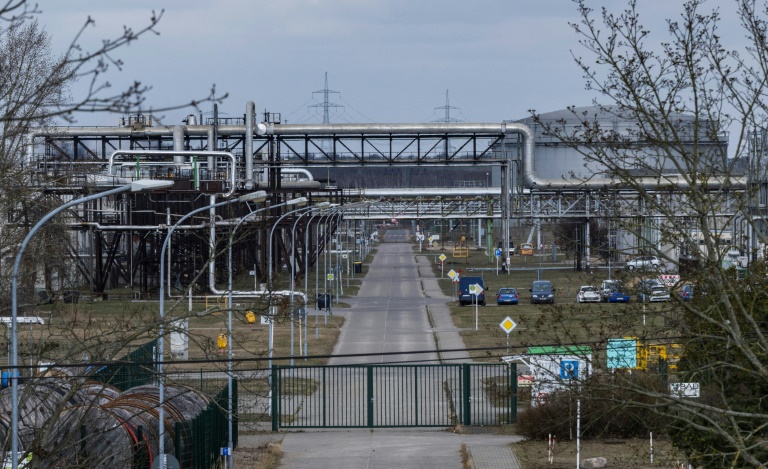
The EU is preparing to hit Russian coal with sanctions.

While European Council chief Charles Michel said Wednesday the 27-nation bloc will have to impose oil and gas sanctions on Moscow “sooner or later”, it has been reluctant to do so for now.

Here is a look at the reasons behind the hestitation:

– A boon for Russia –

Russia is a major fossil fuel producer, and revenue from oil and gas made up 45 percent of the federal budget last year, according to the International Energy Agency.

That’s why Ukrainian President Volodymyr Zelensky urged the EU to stop buying Russian energy so “Russia will have no more money for this war”.

Russia exported nearly five million barrels per day of oil in 2020, with half going to European countries, especially Germany, the Netherlands and Poland, according to US data.

The United States, a major energy producer, has put an embargo on Russian energy including oil.

But there is only an EU proposal to ban coal imports, although Brussels aims to reduce purchases of Russian gas by two-thirds this year.

– Coal: replaceable –

Russia holds 15 percent of the world’s coal reserves, according to BP’s annual report on global energy.

Certain European countries like Germany and Poland are especially dependent on Russia for coal, used to produce electricity.

The trend in the EU is to move away from polluting coal: consumption of solid fossil fuels dropped from 1.2 billion to 427 million tonnes between 1990 and 2020, according to the Brussels-based Bruegel Institute think-tank.

Europeans also closed their mines but they became more dependent on imports.

The EU purchased 40 million tonnes of Russian hard coal in 2020 (54 percent of imports) compared with eight million tonnes in 1990 (seven percent).

But Germany plans to live without Russian coal by this autumn.

“Russian coal can be replaced because global coal markets are well supplied and flexible,” noted Bruegel.

Other major producers of coal include the US from where the EU imports 17.5 percent of coal today or Australia, representing 16 percent of the bloc’s purchases. Other options include South Africa or Indonesia.

– Oil remains possible –

Russia is the world’s largest oil exporter and supplies more than 25 percent of the EU’s crude, according to the EU statistics agency Eurostat.

In the first six months of 2021, Russia provided 75 percent of crude to Bulgaria, Slovakia, Hungary and Finland.

“In principle, replacing Russian oil will be easier than replacing Russian gas” because the imports arrive by ship and not infrastructure like pipelines, wrote Bruegel.

Experts also refer to the phenomenon of “communicating vessels”: Russian barrels would ultimately be sold in China, replacing those from the Middle East, which would then become available to Europe.

But Russia also exports 1.5 million barrels per day of diesel, which Europe is very fond of.

“(An embargo) will pose a real problem for diesel,” warned French ecological transition minister Barbara Pompili.

If there is an embargo, it will be necessary to find other sources of diesel, and not just crude oil. French energy giant TotalEnergies plans to import oil from its Saudi refinery.

– Expensive choice –

Russia exports gas directly to Europe via a network of pipelines.

With 155 billion cubic metres imported annually, Russian gas represents 45 percent of the EU’s imports and meets nearly 40 percent of consumption.

A potential embargo on all Russian energy divides Europe because some are more dependant than others, like Germany where 55 percent of its gas is from Russia.

“Russian gas deliveries are not exchangeable” and cutting them off “would harm us more than Russia”, German Finance Minister Christian Lindner said.

Russian gas made up 75 percent of imports of 10 countries — Austria, Bulgaria, Czech Republic, Estonia, Finland, Hungary, Latvia, Romania, Slovakia and Slovenia — last year, according to Eurostat. 

Baltic states stopped importing Russian gas this month and are using their reserves.

By depriving itself of Russian gas completely, Europe would struggle to replenish its gas storage for next winter.

Experts say Europe could only partly replace it by increasing imports from other countries, including liquefied natural gas (LNG) arriving by ship.

It would therefore be necessary to lower gas usage also by limiting some industries’ production.

The French Council of Economic Analysis (CAE), a body tasked with advising Paris on policy, calculated an embargo on Russian energy — gas included — would cost Germany between 0.3 and three percent of its GDP.

And “Lithuania, Bulgaria, Slovakia, Finland or the Czech Republic may experience national income falls between one and five percent,” it said.

DR Congo Pygmies attacked in wildlife park: rights group

Troops and rangers in the Kahuzi-Biega National Park in eastern DR Congo have carried out attacks on indigenous Pygmies living in the famed wildlife haven, a rights watchdog said on Wednesday

Violence broke out in 2018 between park rangers and members of the Batwa community, who are accused of illegally settling in the reserve, cutting down trees to make charcoal and opening fire on rangers, killing and wounding a number of them.

The British watchdog Minority Rights Group (MRG), in a report on Wednesday, alleged that soldiers and Kahuzi-Biega guards carried out attacks against the Pygmies living in the park. 

“The attacks were well-planned, targeted civilian populations,” the group said.

“The research team obtained direct evidence of the deaths of at least 20 individual Batwa community members in connection with this three-year campaign of forced expulsion,” it added.

“The research team obtained direct evidence that 15 Batwa women were forcibly group-raped by park guards and soldiers during the July and November-December 2021 operations,” the watchdog said.

The 6,000-square-kilometre (2,300-square-mile mile) reserve lies close to the Rwandan border near Bukavu, in one of the most troubled areas of the vast country.

– Legal limbo –

Dominated by the extinct volcanoes of Kahuzi and Biega, the park’s tropical forests are a redoubt for one of the last populations of eastern lowland gorillas, made up of about 250 primates, according to its website.

Since the 1990s, the haven has been listed by UNESCO as a World Heritage site in danger because of the presence of armed groups and settlers, poaching and deforestation.

A number of Pygmies charge that their land was confiscated when the national park was expanded and want to recover what they say is theirs.

The MRG report, based on on-site investigation and dozens of witnesses, said the park rangers received financial and technical support at the time from the governments of Germany and the United States, as well as international conservation organizations such as the Wildlife Conservation Society.

An investigation has recently been launched by the park’s overseers, the Congolese Institute for the Conservation of Nature (ICCN), to probe alleged violations.

The panel has been in Bukavu since April 4 and will travel to the scene of the alleged crimes, Georges Muzibaziba, who heads the ICCN’s human rights section.

There is a lack of legal clarity between DR Congo’s laws that protect the national park and those guaranteeing the rights of the Pygmy populations. 

On April 7, 2021, a bill to protect and promote the rights of indigenous people was adopted by the DR Congo parliament.

It guarantees among other things recognition of the rights to land and natural resources of the indigenous Pygmy people to possess, occupy and use traditionally.

The Senate has been reviewing the bill for the last year.

NASA delays final test for moon shot

The latest test of NASA’s giant Moon rocket SLS has been suspended to allow for a SpaceX rocket to launch later this week, the US space agency announced Tuesday.

The dress rehearsal for the giant Space Launch System is taking at launch pad 39B at Cape Canaveral, Florida — where SpaceX is scheduled to lift off from pad 39A on Friday.

The test of the rocket, which is to return humans to the Moon, is now expected to resume shortly after the take-off of the SpaceX flight, which is to carry three businessmen and a former astronaut to the International Space Station. 

The 322-foot (98 meters) SLS rocket will remain on its launch pad while waiting.

In this final test before blast-off for the Moon later this year, all the steps leading up to launch must be rehearsed, from filling the tanks to the final countdown, which will be stopped just before the engines fire. 

The run-through started last Friday and was originally scheduled to last two days, but was extended after NASA teams encountered “a whole myriad of technical challenges” as well as uncooperative weather on Saturday, said Mike Sarafin, the mission manager for the Artemis Moon landing.

Among the problems encountered were four lightning strikes hitting the launch pad during a thunderstorm, which at least proved that the protection system had worked as planned. 

But the problems were not “major issues,” Sarafin said. “We haven’t run into any fundamental design flaws or design issues.”

“We take pride in learning from these tests,” he said, calling the ones already carried out in recent days “partially successful.” 

Artemis 1 will mark the first flight of the SLS, whose development has lagged years behind schedule. 

The Orion capsule at its top will be propelled to the Moon, where it will be placed in orbit before returning to Earth. 

The first mission will not have astronauts on board. The take-off date is to be announced after the so-called “wet” dress rehearsal. 

A launch window is possible in early June, and Sarafin said he was “not ready to give up on it yet.” 

Another launch window is possible in early July.

Good times: Luxury watchmakers face soaring demand

Times have been so good for luxury watchmakers that they are running behind demand, forcing some to delay the release of new collections and others to invest more in production capacity.

After the pandemic severely hit the global economy in 2020, the sector enjoyed a spectacular recovery last year and started 2022 with a bang, though Russia’s war in Ukraine created new uncertainties.

Watches were the best performing business for French luxury group Hermes, with sales soaring by 73 percent last year.

“We had an extraordinary year in the watches business,” Hermes vice president Guillaume de Seynes told AFP at Watches and Wonders in Geneva this week, one of the industry’s biggest annual showcases.

“We can feel a very strong dynamic for watchmaking everywhere in the world,” he said, adding that there was hot demand for a men’s watch model last year.

“We could have even sold more if we had been able to make more,” de Seynes said, noting that watchmakers face a “demand phenomenon that exceeds production capacity.”

His priority for 2022 is to invest in production. 

– Solid year –

The Oris brand also had “a very strong year”, said its chief executive, Rolf Studer.

Oris watches range between 1,800 and 7,200 Swiss francs ($1,928 and $7,710 or 1,767 euros and 7,064 euros).

The company had to delay the launch of a new collection in the higher price range because it did not produce enough watch movements — their internal mechanisms — in its workshops.

The watch was supposed to come out last summer but it is only launching now.

“We planned too conservatively,” Studer said.

“So we decided to keep the movements for the watches that were already out instead of launching new models and not be able to supply existing models already on the market,” he added.

Swiss watch exports rebounded last year, rising by 31.2 percent after a 21.8-percent contraction in 2020, when countries closed borders and went into strict Covid lockdowns.

Exports have not only exceeded pre-pandemic levels, they beat their 2014 record, too.

They went up by almost 16 percent in the first two months of this year, according to industry data, though the recovery has been seen only in watches worth more than 3,000 Swiss francs.

– Wait list –

The sector is now bracing for the fallout from the war in Ukraine and sanctions on Russia, which has a sizeable rich client base.

But the industry can rely on long wait lists for higher-end timepieces.

“Since we didn’t have enough watches for other markets, we will sell those that won’t be delivered to Russia elsewhere,” Edouard Meylan, CEO of H. Moser & Cie., told AFP.

All of his 2022 production is already pre-sold to retailers and partly pre-paid by final customers.

H. Moser only makes 2,000 watches per year at an average price of 45,000 Swiss francs. The watchmaker is even rejecting orders for timepieces that require a more than two-year wait.

“There’s uncertainty that can be created in other markets, particularly financial markets,” Meylan said.

“But we would have to have a big crash for an independent brand like ours to be affected,” he added.

'TikTok is having a bad war,' say disinformation experts

The war in Ukraine has rapidly positioned TikTok as the number one source of misinformation thanks to its gigantic number of users and minimal filtering of content, experts say. 

Every day, Shayan Sardarizadeh, a journalist with the BBC’s disinformation team, ploughs through a hallucinatory mix of fake and misleading information about the war being spewed out on the video-sharing site. 

“TikTok is really not having a good war,” he told AFP.

“I haven’t seen another platform with so much false content,” he added. 

“We’ve seen it all: videos from past conflicts being recycled, genuine footage presented in a misleading way, things that are so obviously false but still get tens of millions of views.”

He said the most disturbing were fake live-streams in which users pretended to be on the ground in Ukraine but were using footage from other conflicts or even video games — and then asking for money to support their “reporting”. 

“Millions tune in and watch. They even add fake gunshots and explosions,” said Sardarizadeh.

Anastasiya Zhyrmont of Access Now, an advocacy group, said it was no excuse to say that the war came as a surprise. 

“This conflict has been escalating since 2014 and these problems of Kremlin propaganda and misinformation have been raised with TikTok long before the invasion,” she told AFP. 

“They’ve promised to double their efforts and partner with content checkers, but I’m not sure they are taking this obligation seriously,” she added. 

– ‘No context’ –

Zhyrmont said the problem may lie with the lack of Ukrainian language content moderators, making it trickier for TikTok to spot false information. 

TikTok told AFP that it has Russian and Ukrainian speakers, but did not say how many, and said it had added resources specifically focused on the war but did not provide details. 

AFP is a partner of TikTok, providing fact-checking services in Australia, Indonesia, New Zealand, Pakistan and the Philippines. 

Some say the very nature of TikTok makes it problematic when subject matter becomes more serious than funny skits and dance routines. 

“The way you consume information on TikTok — scrolling from one video to another really quickly — means there is no context on any given piece of content,” said Chine Labbe of NewsGuard, which tracks online misinformation. 

NewsGuard ran an experiment to see how long it would take for new users to start receiving false information if they lingered on videos about the war. 

The answer was 40 minutes. 

“NewsGuard’s findings add to the body of evidence that TikTok’s lack of effective content-labelling and moderation, coupled with its skill at pushing users to content that keeps them on the app, have made the platform fertile ground for the spread of disinformation,” it concluded in its report. 

TikTok recognises the problem. 

In a blog post on March 4, it said it was using “a combination of technology and people to protect our platform” and partnering with independent fact-checkers to provide more context. 

– ‘Really troubling’ –

In the meantime, the particular concern with TikTok is the age of its users: a third in the United States, for example, are 19 or younger. 

“It’s hard enough for adults to decipher the real from the propaganda in Ukraine. For a young user to be fed all this false information is really troubling,” said Labbe.

All those interviewed emphasised that misinformation is rampant across all social media, but that TikTok had done even less than Facebook, Instagram or Twitter to combat it. 

TikTok’s relative infancy also means its own users have not yet joined the fight as they have on other platforms. 

“There are communities on Twitter and Instagram who are involved in disinformation,” said Sardarizadeh. 

“Some are starting to do fact-checking and educate people on TikTok, but we’re talking about a dozen or two dozen, compared with hundreds on Twitter.”

World stock markets beat retreat with all eyes on Fed

Global equities sank Wednesday on bets the Federal Reserve will act more aggressively to bring inflation under control, while oil prices rebounded.

Asian and European bourses retreated after heavy falls on Wall Street Tuesday.

The euro hit a one-month dollar low before minutes from the Fed’s latest policy meeting due Wednesday.

London stocks slid also as UK businesses and individuals saw a major tax hike kick in, worsening Britain’s cost-of-living crisis as domestic energy bills rocket.

Minutes from the Fed’s March meeting will be pored over for insights into the thinking of US central bankers, in light of the Ukraine war and recent data suggesting the world’s top economy remains resilient.

– ‘Significant headwinds’ –

“Investor confidence might have improved from the low point in early March when the Ukraine war was unfolding,” said AJ Bell investment director Russ Mould. 

“However, there remain significant headwinds for equities and the latest trouble spot is what the Federal Reserve might do to curb inflation.”

Investors are fretting also over how quickly officials will withdraw their vast pandemic-era financial support.

After last month’s 0.25-percentage-point hike in US interest rates, the focus is now on its plans for May’s meeting, with expectations growing that the Fed will announce a 0.50-point lift followed by several more before the end of the year.

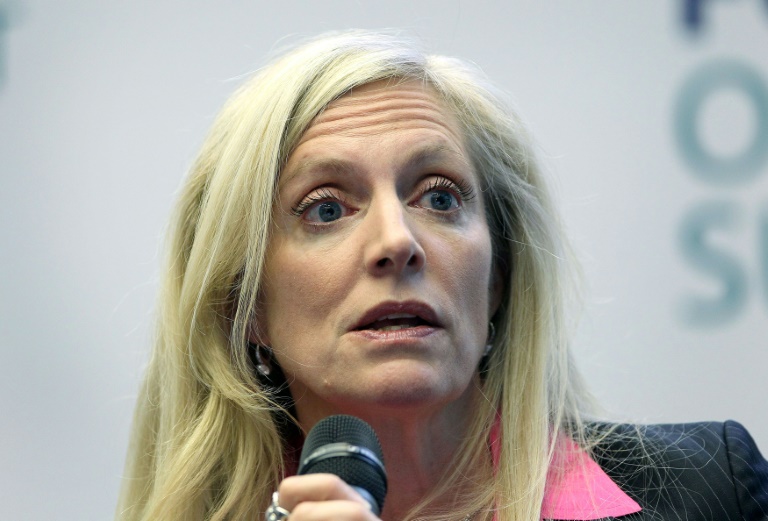
Fed governor Lael Brainard, who is considered a dove, on Tuesday spooked traders by saying bringing US inflation down from 40-year highs was of “paramount importance” and that the bank was “prepared to take stronger action” if warranted.

Brainard also said bank policymakers were ready to start reducing its vast bond holdings, which have helped keep borrowing costs down.

“Brainard’s hawkish comments rocked the markets,” said Swissquote analyst Ipek Ozkardeskaya.

“In this tense environment, investors will be closely watching the Fed minutes today. There would be no surprise if the Fed hinted a 50-basis-point hike (for) the next meeting,” she noted.

All three main indices on Wall Street ended Tuesday in the red, with the Nasdaq off more than two percent owing to tech firms being more susceptible to higher rates.

– Oil rebounds –

Oil prices rebounded on Wednesday, after European Council chief Charles Michel told the European Parliament that it must impose oil and gas sanctions on Russia “sooner or later”.

Crude futures had slid the previous day on the European Union’s decision not to include Russian oil in a fresh round of sanctions.

Adding to downward pressure on crude is a strong dollar thanks to the prospect of a series of US interest rate hikes. 

Oil is priced in dollars, making it more expensive for clients using other currencies.

– Key figures around 1030 GMT –

London – FTSE 100: DOWN 0.5 percent at 7,577.10 points

Frankfurt – DAX: DOWN 1.3 percent at 14,230.52

Paris – CAC 40: DOWN 1.2 percent at 6,564.72

EURO STOXX 50: DOWN 1.5 percent at 3,858.21

Tokyo – Nikkei 225: DOWN 1.9 percent at 27,080.52 (close)

Hong Kong – Hang Seng Index: DOWN 1.3 percent at 22,219.85 (close)

Shanghai – Composite: FLAT at 3,283.43 (close)

New York – Dow: DOWN 0.8 percent at 34,641.18 (close)

Brent North Sea crude: UP 1.5 percent at $108.24 per barrel

West Texas Intermediate: UP 1.8 percent at $103.78 per barrel

Euro/dollar: DOWN at $1.0903 from $1.0905 late Tuesday

Pound/dollar: UP at $1.3080 from $1.3074

Euro/pound: DOWN at 83.37 pence from 83.41 pence

Dollar/yen: UP at 123.96 yen from 123.60 yen

burs-rfj/bcp/lth

Asian, European markets track Wall St retreat on hawkish Fed bets

Equities sank Wednesday after Wall Street tumbled on bets the Federal Reserve will act more aggressively to bring inflation under control, while oil recovered some losses caused by the European Union’s decision not to ban Russian crude.

While the Ukraine war continues to cast a shadow across trading floors, Fed monetary policy is at the top of the agenda this week as investors fret over how quickly officials will withdraw their vast pandemic-era financial support.

After last month’s 0.25-percentage-point hike in interest rates, the focus is now on its plans for May’s meeting, with expectations growing that it will announce a 0.50-point lift followed by several more before the end of the year.

Fed governor Lael Brainard, who is considered a dove, on Tuesday spooked traders by saying bringing inflation down from 40-year highs was of “paramount importance” and that the bank was “prepared to take stronger action” if warranted.

Brainard, who is awaiting congressional confirmation for the position of Fed vice chair, also said bank policymakers were ready to start reducing its vast bond holdings, which have helped keep borrowing costs down.

“The market might have been looking for… Brainard to at least give more balanced remarks — instead, they were at the hawkish end of the spectrum from someone like Brainard,” said Stephen Innes of SPI Asset Management.

“She was not overly hawkish, but neither did she offer anything for the doves to cling to.”

Michael Hewson at CMC Markets added that Brainard’s comments, and those from Mary Daly of the San Francisco Fed, “put into sharp relief the concerns investors have, that in looking to rein back inflation, the Fed might overplay its hand and tighten too aggressively and tip the economy into recession”.

Minutes from the Fed’s March meeting will be released later in the day and will be pored over for insights into officials’ thinking, in light of the war and recent data suggesting the world’s top economy remains resilient for now.

All three main indexes on Wall Street ended in the red, with the Nasdaq off more than two percent owing to tech firms being more susceptible to higher rates.

And the selling seeped through to Asia.

Hong Kong and mainland Chinese investors returned from a break to data indicating a sharp drop in China’s services sector caused by the imposition of lockdowns around the country including Shanghai, its biggest city.

Hong Kong dropped more than one percent but Shanghai recovered from early selling to end marginally higher.

Tokyo, Sydney, Seoul, Singapore, Mumbai, Manila, Jakarta, Bangkok and Wellington also retreated.

London, Paris and Frankfurt opened lower.

“Liquidity remains poor, and no one seems willing to take the other side as air pockets are becoming easier to find these days,” Innes added.

The European Union’s decision not to include Russian oil in a fresh round of sanctions saw both main contracts drop Tuesday and extend losses in early Asian business.

The reliance of the bloc — and particularly Germany — on crude from Russia has kept it from following the United States and Britain in imposing an embargo, though it signalled it wants to hit the country’s coal and shipping.

However, European Council chief Charles Michel told the European Parliament on Wednesday that it must impose oil and gas sanctions “sooner or later”.

Adding to downward pressure on crude is the stronger dollar, which jumped in reaction to Brainard’s comments. Oil is priced in dollars, making it more expensive for clients using other currencies.

A coordinated move by Washington, Brussels and the G7 could also ban “all” new investments in Russia on Wednesday, while the US Treasury said Washington has barred Moscow from making debt payments using funds held at American banks.

Meanwhile, the Asian Development Bank lowered its 2022 growth forecast for developing Asia owing to “increasing” price pressures caused by Russia’s invasion of Ukraine, offsetting the recovery from Covid-19.

“The Ukraine crisis is nowhere near to being resolved,” Amy Wu Silverman, at RBC Capital Markets LLC, told Bloomberg Television. “And then we’re heading into earnings season. Volatility levels are probably too low and will start to pick up.”

– Key figures around 0720 GMT –

Tokyo – Nikkei 225: DOWN 1.6 percent at 27,350.30 (close)

Hong Kong – Hang Seng Index: DOWN 1.3 percent at 22,219.85

Shanghai – Composite: FLAT at 3,283.43 (close)

London – FTSE 100: DOWN 0.2 percent at 7,599.04

Brent North Sea crude: UP 0.5 percent at $107.19 per barrel

West Texas Intermediate: UP 0.3 percent at $102.21 per barrel

Dollar/yen: UP at 123.93 yen from 123.60 yen late Tuesday

Euro/dollar: DOWN at $1.0892 from $1.0903

Pound/dollar: DOWN at $1.3067 from $1.3071

Euro/pound: DOWN at 83.35 pence from 83.38 pence

New York – Dow: DOWN 0.8 percent at 34,641.18 (close)

'TikTok is having a bad war,' say disinformation experts

The war in Ukraine has rapidly positioned TikTok as the number one source of misinformation thanks to its gigantic number of users and minimal filtering of content, experts say. 

Every day, Shayan Sardarizadeh, a journalist with the BBC’s disinformation team, ploughs through a hallucinatory mix of fake and misleading information about the war being spewed out on the video-sharing site. 

“TikTok is really not having a good war,” he told AFP.

“I haven’t seen another platform with so much false content,” he added. 

“We’ve seen it all: videos from past conflicts being recycled, genuine footage presented in a misleading way, things that are so obviously false but still get tens of millions of views.”

He said the most disturbing were fake live-streams in which users pretended to be on the ground in Ukraine, but were actually using footage from other conflicts or even video games — and then asking for money to support their “reporting”. 

“Millions tune in and watch. They even add fake gunshots and explosions,” said Sardarizadeh.

Anastasiya Zhyrmont of Access Now, an advocacy group, said it was no excuse to say that the war came as a surprise. 

“This conflict has been escalating since 2014 and these problems of Kremlin propaganda and misinformation have been raised with TikTok long before the invasion,” she told AFP. 

“They’ve promised to double their efforts and partner with content checkers, but I’m not sure they are taking this obligation seriously,” she added. 

– ‘No context’ –

Zhyrmont said the problem may lie with the lack of Ukrainian language content moderators, making it trickier for TikTok to spot false information. 

TikTok told AFP that it has Russian and Ukrainian speakers, but did not say how many, and said it had added resources specifically focused on the war, but did not provide details. 

But some say the very nature of TikTok makes it problematic when subject matter becomes more serious than funny skits and dance routines. 

“The way you consume information on TikTok — scrolling from one video to another really quickly — means there is no context on any given piece of content,” said Chine Labbe of NewsGuard, which tracks online misinformation. 

NewsGuard ran an experiment to see how long it would take for new users to start receiving false information if they lingered on videos about the war. 

The answer was 40 minutes. 

“NewsGuard’s findings add to the body of evidence that TikTok’s lack of effective content-labelling and moderation, coupled with its skill at pushing users to content that keeps them on the app, have made the platform fertile ground for the spread of disinformation,” it concluded in its report. 

TikTok recognises the problem. 

In a blog post on March 4, it said it was using “a combination of technology and people to protect our platform” and partnering with independent fact-checkers to provide more context. 

– ‘Really troubling’ –

In the meantime, the particular concern with TikTok is the age of its users: a third in the United States, for example, are 19 or younger. 

“It’s hard enough for adults to decipher the real from the propaganda in Ukraine. For a young user to be fed all this false information is really troubling,” said Labbe.

All those interviewed emphasised that misinformation is rampant across all social media, but that TikTok had done even less than Facebook, Instagram or Twitter to combat it. 

TikTok’s relative infancy also means its own users have not yet joined the fight as they have on other platforms. 

“There are communities on Twitter and Instagram who are involved in disinformation,” said Sardarizadeh. 

“Some are starting to do fact-checking and educate people on TikTok, but we’re talking about a dozen or two dozen, compared with hundreds on Twitter.”

Close Bitnami banner
Bitnami