AFP

Turkey fishermen fear mines in Black Sea

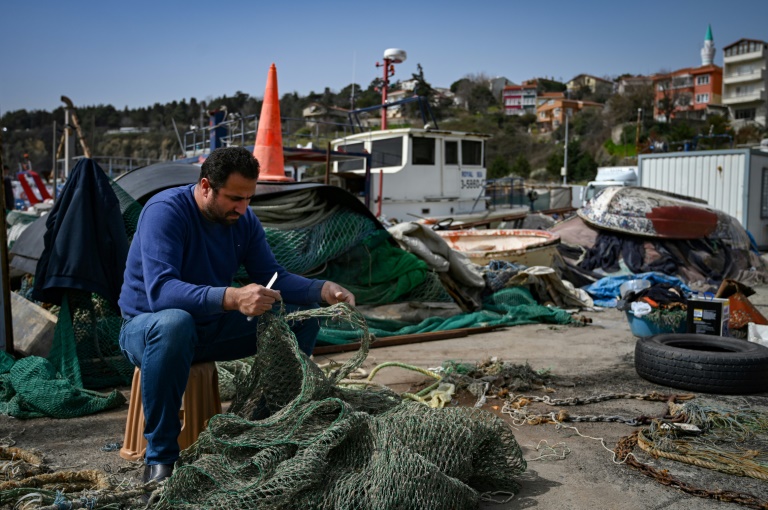
Turkish fisherman Sahin Afsut fears the worst: hitting a mine and “disappearing underwater in the blink of an eye”. 

Like many fishermen in Rumelifeneri, a village set on the rocks of the Bosphorus in northern Istanbul, Afsut and his team remain in port since the discovery of a drifting mine last month in the Black Sea. 

Fears grew after a second mine was found on March 28, which could have come from Ukraine where Russia launched an invasion in February.

A third stray mine was found Wednesday in the Black Sea off the town of Kefken in northwestern Turkey. 

Turkish authorities fear an accident and believe the mines became unmoored from the Ukrainian coast during storms. 

“If you hit (a mine), you’re finished,” says Afsut, wearing a grey cap in front of his small trawler from which he usually catches whiting, red mullet and anchovies. 

He did not see the first mine two kilometres (1.2 miles) offshore, first discovered by a local fisherman but several others described the scene.

“It was large, like half a barrel. We watched from above there, the (special Turkish navy) units neutralised it,” says 55-year-old Ahmet Tarlaci who has been a fisherman for 43 years.

– ’90 percent stopped’ –

The Turkish navy warned five days before the first was found on March 26 of the risk of mines coming from Ukrainian waters. 

But “the mines arrived quickly, even the Turkish armed forces were surprised,” Tarlaci says. 

The Russian defence ministry last week said 420 mines — 370 mines of them in the Black Sea — were placed by Ukraine to protect its coast but around 10 had broken off. 

Kyiv dismissed Moscow’s version of events, accusing the Russian navy of letting the mines wander to discredit Ukraine. 

At Rumelifeneri port, where around 100 boats, from small fishing boats to 40-metre (131-foot) trawler boats were waiting Friday, “90 percent of people that we know have stopped” going out to sea, says fisherman Sefki Deniz, 42. 

Turkish officials have banned fishing at night, and with the price of diesel reaching spectacular heights, many fishermen decided to end the fishing season three weeks ahead of time.

“We already have financial losses, there shouldn’t be any human losses,” says Deniz, wearing plastic boots and a blue fleece. 

The fisherman regrets the little information provided by officials who say they cannot reveal how many mines there are, where they came from or how dangerous they may be. 

“For the time being, (the mines) are not a problem, but we won’t let our guard down,” Turkish President Recep Tayyip Erdogan said Friday. 

“They speak now of 10 mines and what if the others wander off? The Black Sea is not a large sea, it’s like a lake,” says Deniz, despite 24-hour searches by minehunters in the area.

– ‘Never found their bodies’ – 

“Across from us, there is Ukraine, Russia: if the wind blows violently from the north, it’s only a question of time” before the mines arrive in Turkey’s waters, fears fishing captain Saban Ucar, 32. 

The 30-40 metre (98-foot to 131-foot) fishing boats “have radars, sonars… but the 9-10 metre boats only have binoculars,” he says from a building overlooking the port.

Ucar was not born at the time, but the memory is still vivid in the village of two accidents in the 1980s caused by mines dating back to World War II.

“There was one that exploded at the port in 1983, five people from the village died. And in 1989, it happened at sea while lifting a net, the mine exploded and so did the boat: four people died. 

“We never found their bodies,” says Deniz, one of the veterans at the port.

The fisherman now fears a mine will be able to make its way to the Bosphorus Strait used by 38,500 ships last year.

The strait, which crosses Istanbul, is in some places less than 700 metres (2,296 feet) wide. 

“At sea, the risk (of an accident) is 10 percent,” Deniz says, adding: “In the Bosphorus, it’s 100 percent.” 

Canada approves controversial Bay du Nord offshore oil project

Canada’s environment minister approved Wednesday a controversial offshore oil project expected to see 300 million barrels of oil extracted over 30 years — and to set back efforts to curb climate change.

In a statement, Steven Guilbeault said Norwegian firm Equinor’s proposed development of oil discoveries in the Flemish Pass Basin, some 500 kilometers (310 miles) east of St. Johns, Newfoundland, passed an environmental assessment.

That four-year review, the minister said, determined that the Bay du Nord project “is not likely to cause significant adverse environmental effects when mitigation measures are taken into account.”

“The project is therefore allowed to proceed with strict measures to protect the environment,” he said.

Canada is the world’s fourth largest oil producer.

The Bay du Nord project, which split Prime Minister Justin Trudeau’s Liberals and was widely seen as a test of the government’s resolve in tackling climate change and curtailing oil output, is expected to generate an estimated Can$3.5 billion in government revenue.

For Newfoundland province, which has the highest unemployment rate in the country, it also represents a much needed economic boost.

Ottawa set 137 binding conditions on the project, including incorporating reduced greenhouse gas emissions in its design, protecting fish habitat and air quality — which Guilbeault said represent “some of the strongest environmental conditions ever” applied in Canada.

But environmental groups immediately panned the decision, citing UN warnings to stop tapping new oil sources or risk irreversible and catastrophic climate impacts.

“Approving Bay du Nord is another leap towards an unlivable future,” Environmental Defence’s Julia Levin said in a statement. “The decision is tantamount to denying that climate change is real and threatens our very existence.”

– ‘Burning the planet’ –

Greenpeace Canada climate campaigner Patrick Bonin said fossil fuels need to be phased out as quickly as possible, and that the approval of Bay du Nord “only worsens the climate crisis and the global reliance on fossil fuels that are burning the planet.”

Even the New Democratic Party, a small leftist faction that recently agreed to prop up Trudeau’s minority government, accused the Liberals of caving to “their corporate buddies from the oil and gas sector instead of listening to climate scientists.”

“Under the Liberals we have the worst record of any G7 country when it comes to emissions reductions, and we are the only country who has increased emissions every single year,” the NDP said in a statement.

“With the approval of the Bay du Nord project, it’s difficult to imagine this record will improve,” it said.

The decision on the project had twice been delayed, after the Trudeau government last year enhanced its Paris Agreement target to reduce carbon emissions by 40-45 percent from 2005 levels by 2030.

Guilbeault, a former eco-warrior picked by Trudeau to guide Canada’s climate policy, said the floating oil rig’s emissions are expected to produce five times less emissions than the average Canadian oil project and incorporate new technologies.

He said it fits within Ottawa’s climate strategy and “is an example of how Canada can chart a path forward on producing energy at the lowest possible emissions intensity while looking to a net-zero future.”

In an interview with public broadcaster CBC, Guilbeault touted the stringent emissions controls imposed on Bay du Nord while adding: “The world still needs oil.”

Canada approves controversial Bay du Nord offshore oil project

Canada’s environment minister approved Wednesday a controversial offshore oil project expected to see 300 million barrels of oil extracted over 30 years — and to set back efforts to curb climate change.

In a statement, Steven Guilbeault said Norwegian firm Equinor’s proposed development of oil discoveries in the Flemish Pass Basin, some 500 kilometers (310 miles) east of St. Johns, Newfoundland, passed an environmental assessment.

That four-year review, the minister said, determined that the Bay du Nord project “is not likely to cause significant adverse environmental effects when mitigation measures are taken into account.”

“The project is therefore allowed to proceed with strict measures to protect the environment,” he said.

Canada is the world’s fourth largest oil producer.

The Bay du Nord project, which split Prime Minister Justin Trudeau’s Liberals and was widely seen as a test of the government’s resolve in tackling climate change and curtailing oil output, is expected to generate an estimated Can$3.5 billion in government revenue.

For Newfoundland province, which has the highest unemployment rate in the country, it also represents a much needed economic boost.

Ottawa set 137 binding conditions on the project, including incorporating reduced greenhouse gas emissions in its design, protecting fish habitat and air quality — which Guilbeault said represent “some of the strongest environmental conditions ever” applied in Canada.

But environmental groups immediately panned the decision, citing UN warnings to stop tapping new oil sources or risk irreversible and catastrophic climate impacts.

“Approving Bay du Nord is another leap towards an unlivable future,” Environmental Defence’s Julia Levin said in a statement. “The decision is tantamount to denying that climate change is real and threatens our very existence.”

– ‘Burning the planet’ –

Greenpeace Canada climate campaigner Patrick Bonin said fossil fuels need to be phased out as quickly as possible, and that the approval of Bay du Nord “only worsens the climate crisis and the global reliance on fossil fuels that are burning the planet.”

Even the New Democratic Party, a small leftist faction that recently agreed to prop up Trudeau’s minority government, accused the Liberals of caving to “their corporate buddies from the oil and gas sector instead of listening to climate scientists.”

“Under the Liberals we have the worst record of any G7 country when it comes to emissions reductions, and we are the only country who has increased emissions every single year,” the NDP said in a statement.

“With the approval of the Bay du Nord project, it’s difficult to imagine this record will improve,” it said.

The decision on the project had twice been delayed, after the Trudeau government last year enhanced its Paris Agreement target to reduce carbon emissions by 40-45 percent from 2005 levels by 2030.

Guilbeault, a former eco-warrior picked by Trudeau to guide Canada’s climate policy, said the floating oil rig’s emissions are expected to produce five times less emissions than the average Canadian oil project and incorporate new technologies.

He said it fits within Ottawa’s climate strategy and “is an example of how Canada can chart a path forward on producing energy at the lowest possible emissions intensity while looking to a net-zero future.”

In an interview with public broadcaster CBC, Guilbeault touted the stringent emissions controls imposed on Bay du Nord while adding: “The world still needs oil.”

West ramps up sanctions as Russia threatens Ukraine's east

The United States and Britain announced new sanctions against Russia Wednesday after Ukraine said hundreds of civilians were found dead around its capital, as Kyiv warned residents in the east to get out “now” ahead of a feared assault.

The White House unveiled measures targeting Russia’s top banks and two daughters of President Vladimir Putin, while Britain sanctioned two banks — and vowed to eliminate all Russian oil and gas imports by year-end.

Their actions followed an international outcry as Ukraine said its forces found hundreds of civilians dead around Kyiv, including the town of Bucha, after the pullout of Russian troops.

“They burned families. Families. Yesterday we found again a new family: father, mother, two children. Little, little children, two. One was a little hand, you know,” Ukraine President Volodymyr Zelensky said Wednesday.

In Washington, US President Joe Biden joined in describing the horrors in Bucha.

“Civilians executed in cold blood, bodies dumped into mass graves, the sense of brutality and inhumanity left for all the world to see, unapologetically,” Biden said.

“There’s nothing less happening than major war crimes,” he added, urging the world to hold the killers accountable.

The Kremlin denies responsibility and has claimed Kyiv staged civilian deaths — with Putin on Wednesday accusing Ukrainian authorities of “crude and cynical provocations” in Bucha.

The Russian withdrawal from areas around Kyiv and the north is part of a shift towards Ukraine’s southeast, in a bid to create a land bridge between occupied Crimea and Moscow-backed separatist statelets in the Donbas region.

Ukraine Deputy Prime Minister Iryna Vereshchuk on Wednesday warned residents in the eastern Kharkiv, Lugansk and Donetsk regions to leave immediately ahead of a feared Russian attack.

“It has to be done now because later people will be under fire and face the threat of death,” she wrote on Telegram.

The threat was already very real in the industrial city of Severodonetsk, the easternmost city held by Ukrainian forces, where shells and rockets were landing at regular intervals on Wednesday.

“We have nowhere to go, it’s been like this for days,” one of them, 38-year-old Volodymyr, told AFP standing opposite a burning building.

Elsewhere, preparations for the feared attack were hard under way, such as on a two-lane highway through the rolling eastern plains connecting Kharkiv and Donetsk.

Trench positions were being dug, and the road was littered with anti-tank obstacles. Nearby water reservoirs had been opened and bridges were being destroyed, all in an effort to slow any Russian advance.

“We’re waiting for them!” said a lieutenant tasked with reinforcing the positions, giving a thumbs up.

– ‘Leaving forever’ –

Thousands of people have been killed and more than 11 million displaced since Russia invaded Ukraine on February 24.

In Bucha, where Ukrainian officials blame Russian forces for carrying out a “massacre,” residents were desperate to know the fate of their loved ones.

But Tetiana Ustymenko knows the conclusion to her story. Her son and his two friends were gunned down in the street, and she buried them in the garden of the family home. 

“How can I live now?” she said.

Meanwhile efforts to evacuate civilians continued Wednesday, with a Red Cross convoy arriving in the southern city of Zaporzhzhia.

It was carrying hundreds of evacuees from Russian-occupied areas, but had failed to reach the besieged port of Mariupol. 

One of the evacuees, Iryna Nikolaienko, told how she had been able to make her way out of Mariupol during a pause in the fighting.

“The Mariupol that I knew and loved, it does not exist anymore,” she said.

“I understood that I was leaving forever.”

– EU ‘indecisiveness’ –

Western powers have already pummelled Russia with debilitating economic sanctions, which forced Moscow on Wednesday to make foreign debt payments on dollar-denominated bonds in rubles, raising the prospect of a potential default.

Washington’s new sanctions targeted Maria Vorontsova and Katerina Tikhonova, two adult daughters of Putin, plus the wife and daughter of Foreign Minister Sergei Lavrov and members of Russia’s Security Council.

The White House also declared “full blocking” sanctions on Russia’s largest public and private financial institutions, Sberbank and Alfa Bank, and said all new US investment in Russia was now prohibited.

Britain meanwhile froze the overseas assets of both Sberbank and Credit Bank of Moscow. 

The EU is also poised to implement a fifth round of sanctions cutting off Russian coal imports — and European Council chief Charles Michel said that “sooner or later”, it must also impose oil and gas sanctions.

And rich countries will tap an additional 120 million barrels of oil from emergency reserves in a bid to calm crude prices that have soared following the invasion.

But addressing the Irish parliament Wednesday, Ukraine’s Zelensky condemned the “indecisiveness” of European nations dependent on Russian energy.

In other moves to isolate Moscow, the US and Britain have pressed to have Russia excluded from the UN Human Rights Council, with a vote in the General Assembly scheduled for Thursday.

But US Secretary of State Antony Blinken admitted there was little anyone could do about Russia’s position on the UN Security Council, where it has a veto.

“There’s a pretty fundamental problem there,” he said, a day after Zelensky called for Russia to be expelled from the council.

– ‘Unbelievable’ morale –

Peace talks between the sides have so far gone nowhere.

Moscow says it is “ready” to continue — however NATO chief Jens Stoltenberg said there was no sign Putin had dropped “his ambition to control the whole of Ukraine”.

Spirits are high yet in Kyiv, however, said American veteran Steven Straub, who has been training with the national guard in the capital.

Straub, 73, fought during the Vietnam war, and said Ukraine was “much different.”

“What surprised me here is the morale… It’s unbelievable,” he told AFP. 

burs-st/mlm

World stock markets beat retreat with all eyes on Fed

Global equities sank Wednesday and oil prices retreated as Federal Reserve meeting minutes added to expectations for aggressive central bank monetary tightening.

Several US Federal Reserve officials supported raising interest rates by half a percentage point in the future to combat inflation, according to minutes of the central bank’s meeting last month.

Officials also discussed lowering their bond holdings by a total of $95 million per month as soon as the upcoming May 3-4 meeting, according to the minutes.

The disclosures added to a stream of hawkish commentary from Fed officials, exacerbating worries that the central bank’s efforts to rein in prices could harm economic growth.

“The markets remain unnerved by the economic implications of a highly aggressive Fed and a potential policy mistake,” Charles Schwab investment bank said in a note.

Wall Street tumbled for a second straight session, with the S&P 500 losing one percent and large tech equities like Amazon, Facebook parent Meta and Microsoft all shedding more than three percent.

Earlier, Asian and European bourses retreated, while the euro hit a one-month low. 

“Investor confidence might have improved from the low point in early March when the Ukraine war was unfolding,” said AJ Bell investment director Russ Mould. 

“However, there remain significant headwinds for equities and the latest trouble spot is what the Federal Reserve might do to curb inflation.”

Worries about a potential slowing of the economy due to higher interest rates also weighed on oil prices, which dropped more than five percent.

Analysts also pointed to an announcement from the International Energy Agency outlining plans to release crude stockpiles after Russia’s invasion of Ukraine destabilized oil markets.

Data from the US Energy Information Administration also showed a surprise build in crude inventories.

“It seems that the concerns are a little bit of weakness in demand short term, which is raising concerns of some demand destruction, along with the Federal Reserve minutes today,” said Phil Flynn, analyst at the Price Futures Group.

The retreat in crude prices came as Democrats in the US Congress pressed CEOs from ExxonMobil, Chevron and other oil giants on the reasons for spiking gasoline prices.

Oil executives rejected suggestions they had withheld supply to drive up prices and said they are in the process of increasing investments in response to higher commodity prices.

– Key figures around 2100 GMT –

New York – Dow: DOWN 0.4 percent at 34,496.51 (close)

New York – S&P 500: DOWN 1.0 percent at 4,481.15 (close)

New York – Nasdaq: DOWN 2.2 percent at 13,888.82 (close)

London – FTSE 100: DOWN 0.3 percent at 7,587.70 points (close)

Frankfurt – DAX: DOWN 1.9 percent at 14,151.69 (close) 

Paris – CAC 40: DOWN 2.2 percent at 6,498.83 (close) 

EURO STOXX 50: DOWN 2.4 percent at 3,824.69 (close)

Tokyo – Nikkei 225: DOWN 1.6 percent at 27,350.30 (close)

Hong Kong – Hang Seng Index: DOWN 1.9 percent at 22,080.52 (close)

Shanghai – Composite: FLAT at 3,283.43 (close)

Brent North Sea crude: DOWN 5.2 percent at $101.07 per barrel

West Texas Intermediate: DOWN 5.6 percent at $96.23 per barrel

Euro/dollar: DOWN at $1.0900 from $1.0905 late Tuesday

Pound/dollar: DOWN at $1.3071 from $1.3074

Euro/pound: DOWN at 83.38 pence from 83.41 pence

Dollar/yen: UP at 123.79 yen from 123.60 yen

burs-jmb/cs

DR Congo Pygmies attacked in wildlife park: rights group

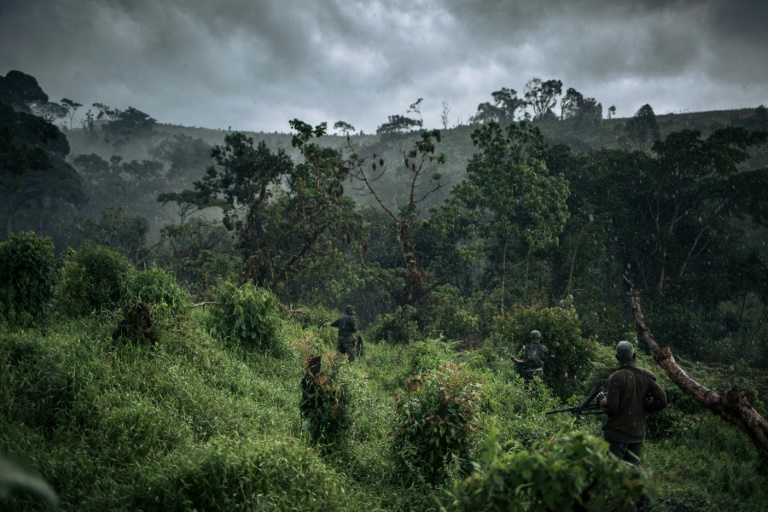
Troops and rangers in the Kahuzi-Biega National Park in eastern Democratic Republic of Congo have carried out attacks on indigenous Pygmies living in the famed wildlife haven, a rights watchdog said on Wednesday.

Violence broke out in 2018 between park rangers and members of the Batwa community, who are accused of illegally settling in the reserve, cutting down trees to make charcoal and opening fire on rangers, killing and wounding a number of them.

The British watchdog Minority Rights Group (MRG), in a report on Wednesday, alleged that soldiers and Kahuzi-Biega guards carried out attacks against the Pygmies living in the park. 

“The attacks were well-planned, targeted civilian populations,” the group said.

“The research team obtained direct evidence of the deaths of at least 20 individual Batwa community members in connection with this three-year campaign of forced expulsion,” it added.

“The research team obtained direct evidence that 15 Batwa women were forcibly group-raped by park guards and soldiers during the July and November-December 2021 operations,” the watchdog said.

The 6,000-square-kilometre (2,300-square-mile) reserve lies close to the Rwandan border near Bukavu, in one of the most troubled areas of the vast country.

– Legal limbo –

Dominated by the extinct volcanoes of Kahuzi and Biega, the park’s tropical forests are a redoubt for one of the last populations of eastern lowland gorillas, made up of about 250 primates, according to its website.

Since the 1990s, the haven has been listed by UNESCO as a World Heritage site in danger because of the presence of armed groups and settlers, poaching and deforestation.

A number of Pygmies charge that their land was confiscated when the national park was expanded and want to recover what they say is theirs.

The MRG report, based on on-site investigation and dozens of witnesses, said the park rangers received financial and technical support at the time from the governments of Germany and the United States, as well as international conservation organizations such as the Wildlife Conservation Society (WCS).

WCS said in a statement it condemned violence like that alleged and called for an independent investigation into the claims of abuses in the Kahuzi-Biega National Park.

“If the allegations are true, these were illegal and horrific military attacks on DRC’s own citizens. WCS has never played a role in supporting or facilitating such heinous acts,” it said. 

An investigation has recently been launched by the park’s overseers, the Congolese Institute for the Conservation of Nature (ICCN), to probe alleged violations.

The panel has been in Bukavu since April 4 and will travel to the scene of the alleged crimes, Georges Muzibaziba, who heads the ICCN’s human rights section.

There is a lack of legal clarity between DR Congo’s laws that protect the national park and those guaranteeing the rights of the Pygmy populations. 

On April 7, 2021, a bill to protect and promote the rights of indigenous people was adopted by the DR Congo parliament.

It guarantees among other things recognition of the rights to land and natural resources of the indigenous Pygmy people to possess, occupy and use traditionally.

The Senate has been reviewing the bill for the last year.

Good times: Luxury watchmakers face soaring demand

Times have been so good for luxury watchmakers that they are running behind demand, forcing some to delay the release of new collections and others to invest more in production capacity.

After the pandemic severely hit the global economy in 2020, the sector enjoyed a spectacular recovery last year and started 2022 with a bang, though Russia’s war in Ukraine created new uncertainties.

Watches were the best performing business for French luxury group Hermes, with sales soaring by 73 percent last year.

“We had an extraordinary year in the watches business,” Hermes vice president Guillaume de Seynes told AFP at Watches and Wonders in Geneva this week, one of the industry’s biggest annual showcases.

“We can feel a very strong dynamic for watchmaking everywhere in the world,” he said, adding that there was hot demand for a men’s watch model last year.

“We could have even sold more if we had been able to make more,” de Seynes said, noting that watchmakers face a “demand phenomenon that exceeds production capacity.”

His priority for 2022 is to invest in production. 

– Solid year –

The Oris brand also had “a very strong year”, said its chief executive, Rolf Studer.

Oris watches range between 1,800 and 7,200 Swiss francs ($1,928 and $7,710 or 1,767 euros and 7,064 euros).

The company had to delay the launch of a new collection in the higher price range because it did not produce enough watch movements — their internal mechanisms — in its workshops.

The watch was supposed to come out last summer but it is only launching now.

“We planned too conservatively,” Studer said.

“So we decided to keep the movements for the watches that were already out instead of launching new models and not be able to supply existing models already on the market,” he added.

Swiss watch exports rebounded last year, rising by 31.2 percent after a 21.8-percent contraction in 2020, when countries closed borders and went into strict Covid lockdowns.

Exports have not only exceeded pre-pandemic levels, they beat their 2014 record, too.

They went up by almost 16 percent in the first two months of this year, according to industry data, though the recovery has been seen only in watches worth more than 3,000 Swiss francs.

– Wait list –

The sector is now bracing for the fallout from the war in Ukraine and sanctions on Russia, which has a sizeable rich client base.

But the industry can rely on long wait lists for higher-end timepieces.

“Since we didn’t have enough watches for other markets, we will sell those that won’t be delivered to Russia elsewhere,” Edouard Meylan, CEO of H. Moser & Cie., told AFP.

All of his 2022 production is already pre-sold to retailers and partly pre-paid by final customers.

H. Moser only makes 2,000 watches per year at an average price of 45,000 Swiss francs. The watchmaker is even rejecting orders for timepieces that require a more than two-year wait.

“There’s uncertainty that can be created in other markets, particularly financial markets,” Meylan said.

“But we would have to have a big crash for an independent brand like ours to be affected,” he added.

'Amazon, here we come': Biden cheers US union drive

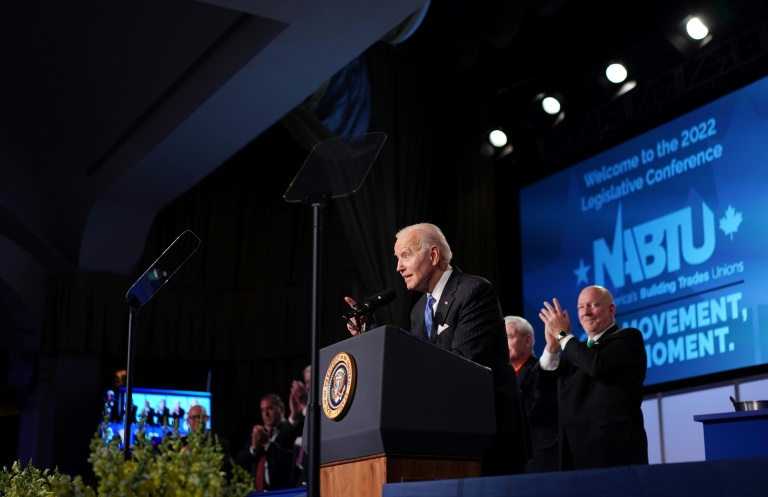
President Joe Biden sang praises for organized labor once again Wednesday, hailing last week’s triumph by union backers at Amazon as a sign of what is possible throughout the United States.

“That’s what unions are about in my view, by providing dignity and respect for people who” work hard, the US president said during a speech to a construction workers union.

The Democratic president, a self-professed “union guy,” alluded to his White House task force on union organizing to “make sure the choice to join a union belongs to workers alone,” Biden said.

“By the way: Amazon, here we come!”

The remarks came after Friday’s landmark ballot in which workers at a New York warehouse voted to establish the first  US union at Amazon.

Many US Fed officials support future half-point increase: minutes

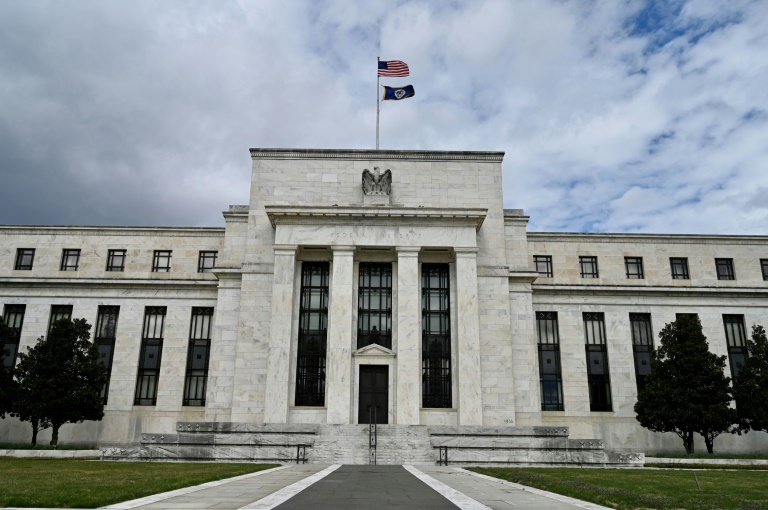
At their March policy meeting, several US Federal Reserve officials supported raising interest rates by half a percentage point in the future to combat inflation, minutes released Wednesday said.

“Many participants noted that one or more 50 basis point increases in the target range could be appropriate at future meetings, particularly if inflation pressures remained elevated or intensified,” according to minutes from the Federal Open Market Committee’s (FOMC) March 15-16 gathering.

Fed officials at that meeting decided to raise interest rates by a quarter percentage point, their first increase since slashing the rate to zero when Covid-19 broke out two years ago.

The central bank is under pressure to curb inflation, which has climbed to levels not seen since the 1980s in the United States, without tightening conditions so much they damage the economy’s recovery.

A half percentage point rate increase would represent a more forceful response to the inflation wave, and the minutes said many participants at last month’s meeting “would have preferred a 50 basis point increase in the target range for the federal funds rate.”

“A number of these participants indicated, however, that, in light of greater near-term uncertainty associated with Russia’s invasion of Ukraine, they judged that a 25 basis point increase would be appropriate at this meeting,” the minutes said.

Officials also believed “that the committee’s previous communications had already contributed to a tightening of financial conditions, as evident in the notable increase in longer-term interest rates over recent months,” according to the minutes.

Meeting participants wanted to “expeditiously” move towards neutral monetary policy — a term indicating a balance between restriction and accommodation for the economy — but “depending on economic and financial developments, a move to a tighter policy stance could be warranted.”

Fed Chair Jerome Powell and other central bank leaders have signaled they will soon take further action to tighten policy by beginning the process of reducing the Fed’s stockpile of trillions of dollars in bonds and other securities, many of which were accumulated during the pandemic to support the economy.

The minutes said officials believe it is appropriate to begin the process of balance sheet runoff “at a coming meeting, possibly as soon as” the upcoming May 3-4 meeting.

Officials were leaning towards reducing their holdings by $60 billion per month for US Treasury securities and $35 billion for mortgage-backed securities, and phasing in the reductions over three months, the minutes said.

Lots of low- and no-cost ways to halt global warming

Not only do we have the tools to slash emissions and curb global warming by 2030, but half of available carbon-cutting options are cost-free or very cheap, UN climate experts say.

There is no silver bullet, but a mosaic of actions — from ramping up solar and wind technology, to economy-wide energy efficiencies — were identified by the UN’s Intergovernmental Panel on Climate Change (IPCC) as low hanging fruit. 

The IPCC said humanity has less than three years to halt the rise of planet-warming carbon emissions, and less than a decade to slash them by 43 percent from 2019 levels to give us a shot at capping global warming at 1.5 degrees Celsius.      

But current policies support continued fossil fuel use and are taking the world in the wrong direction, the IPCC said, in a flagship report on how to avoid catastrophic warming, published on Monday.

Despite the tight timeline, the IPCC said the existing carbon-cutting potential across sectors “is sufficient to reduce global greenhouse gas emissions to half of the current level or less”. 

While this requires taking action across a wide range of options, the report said that measures that are low-cost “make up more than half of this potential and are available for all sectors”. 

“The market benefits of some options exceed their costs,” it added.

– Wind and solar – 

In 2019, total emissions were 59 billion tonnes, or gigatonnes, of CO2 or its equivalent in other greenhouse gases. 

The range of options identified would enable a reduction in emissions of 31 to 44 gigatonnes by 2030. 

There are four key areas where the total potential for carbon reduction is highest between now and the end of the decade — solar and wind energy, reductions in deforestation, and restoration of forests and other ecosystems. 

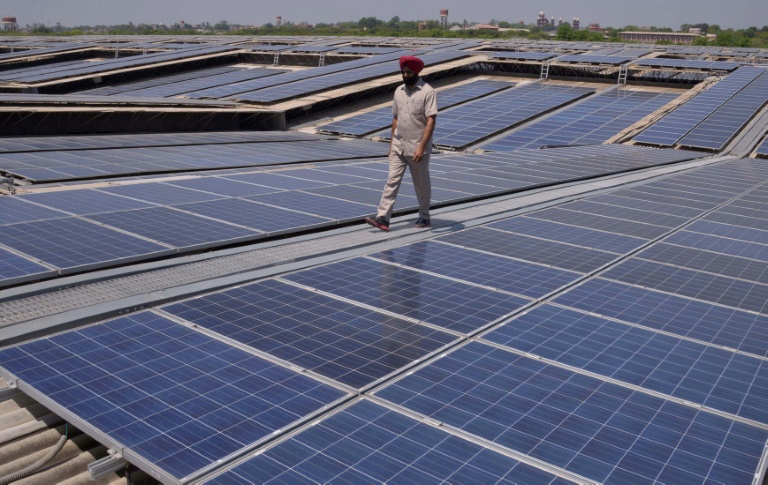
Of those, solar and wind are also among the cheapest options available thanks to the steep drop in the unit costs of these technologies — down 85 and 55 percent respectively between 2010 and 2019, according to the report. 

This “demonstrates that with the right policy incentives and economic frameworks, climate change mitigation can be financed at scale and relatively quickly,” said Michael Wilkins, head of the Centre For Climate Finance And Investment at Imperial College Business School. 

More investment in solar could see an emissions reduction of between two and seven gigatonnes of CO2 equivalent by 2030. Wind energy could save between 2.1 and 5.6 gigatonnes. 

Most of that potential, according to the report, would have essentially negative lifetime costs because they are cheaper than fossil fuel alternatives. 

The reduction of methane emissions in the production of fossil energies is also mostly low cost.

Other energy generation options have a lower overall potential, with a higher cost, such as nuclear power and hydroelectricity.

– Food and forests –

Protecting and restoring natural habitats is the second most significant area for reducing CO2 emissions.  

Forests are crucial for absorbing CO2 generated by human activities, and the IPCC found that limiting deforestation and the destruction of grasslands could reduce net emissions between three and almost eight gigatonnes, largely at a low cost. 

Restoring these types of ecosystems would save one to five gigatonnes. But action in this category would be at the more expensive end of the range considered by the IPCC. 

Shifting to “sustainable” diets and reducing waste food could save more than two gigatonnes, the IPCC said, but it did not give a cost estimate because of wide global variability and a lack of data. 

– ‘Fair balance’ –

The transport sector is notable for the fact that no single option has a particularly large potential to reduce emissions.  

But almost all of the potential measures — switching to public transport and bicycles, fuel efficiency in road vehicles, shipping and aviation — are associated with negative costs. 

In the construction sector, reduction in energy demand and efficiencies in things like lighting are seen as the lowest cost options, albeit with limited potential. 

The construction of new highly energy efficient buildings have the greatest potential (between less than one and more than two gigatonnes), although costs are towards the higher end.

In industry, meanwhile, most of the options — beyond improving energy efficiency and cutting other greenhouse gas emissions — are associated with higher costs. 

But the sector still has significant potential for reducing emissions, in particular the switch to less carbon-intensive energy sources.

“The costs of climate protection are economically absolutely feasible when examined on a global scale and over generations,” said Elmar Kriegler, of the Potsdam Institute for Climate Impact Research, who was one of the IPCC authors. 

But, he said, costs vary significantly from region to region, with developing countries facing a relatively higher price tag to move away from fossil fuels.   

“That is why a fair balance is crucial, not only within individual countries but also internationally. Because one thing is clear: The benefits of climate protection clearly exceed its costs,” he added.

Close Bitnami banner
Bitnami