AFP

'Infurrection': red fox terrorizes humans in US Capitol rampage

Being outfoxed in Congress usually means losing a vote on an amended resolution or being too late for the donut line in the Senate cafeteria.

So spare a thought for the politicians and staff at the US Capitol in Washington, where police were scouring the grounds Tuesday amid reports of a highly aggressive red fox trying to take chunks out of humans, including a Democratic congressman.

Officers warned that they received multiple reports on Monday of people “being attacked or bitten” by at least one aggressive canine at the seat of US democracy, in a statement first reported by none other than… Fox News.  

“One encounter was at the botanic garden, and a second was on the House side of the Capitol near the building foundation,” the US Capitol Police (USCP) said.

“This morning, USCP received a call about a fox approaching staff near First and C Street. This fox may have a den in the mulch bed area… and there is another possible den near the perimeter of the Russell Building.”

The force said animal control officers were responding to the incidents and “looking to trap and relocate” any foxes they find. 

“Foxes are wild animals that are very protective of their dens and territory. Please do not approach any fox you see,” the police cautioned.

Online political magazine Punchbowl News reported that congressman Ami Bera had to be rescued by police late Monday after squaring up to a fox that had just bitten him in an “unprovoked” attack.

“I didn’t see it and all of a sudden I felt something lunge at the back of my leg,” Bera, a physician by profession, told Punchbowl. “I jumped and got my umbrella.”

– Bloodlust sated –

The 57-year-old Sacramento Democrat wasn’t hurt, but agreed “out of an abundance of caution” to get a series of rabies shots. 

“I expect to get attacked if I go on Fox News, I don’t expect to get attacked by a fox,” he told Punchbowl.

Witnesses flooded social media with sightings, with several reporting seeing it munching on a squirrel or merely enjoying the sun — its bloodlust apparently sated — in the Senate gardens. 

Fifteen months after a violent mob stormed the Capitol to disrupt the certification of last presidential election, one wag even referred to the ongoing animal threat as an “infurrection.”

Inside the Capitol, reporters dropped the usual barrage of economic questions at the weekly leaders’ press conferences in favor of a breathless interrogation about possible action on the four-legged menace. 

Top Republican Mitch McConnell ignored the inquiries, but Iowa’s intrepid two-term senator Joni Ernst was proud to report that she had spotted the animal, without revealing how close the encounter was.

Red foxes — the most common of several North American species — are regularly found in towns and cities but tend to avoid people, according to the city environmental department.

They typically eat insects, small birds, squirrels and rabbits, and are not known for their predilection for legislators or their intimidated staffers.

The species has thrived during the pandemic, according to wildlife experts in the nation’s capital.

“Less ambient noise, less traffic, less interference… right now, life is better for them,” Bill McShea, a wildlife ecologist with the Smithsonian National Zoo, told DCist magazine.

“If there’s an upside to Covid, it’s on the wildlife.”

Germany closes Russian darknet marketplace Hydra

German police said Tuesday they have taken down Russian-language illegal darknet marketplace Hydra, the largest such network in the world, and seized bitcoins worth 23 million euros ($25 million).

Founded in 2015, Hydra sold illegal drugs but also stolen credit card data, counterfeit currency and fake identity documents, masking the identities of those involved using the Tor encryption network.

The marketplace had around 17 million customer accounts and more than 19,000 vendor accounts, according to the BKA federal police.

“The Hydra market was probably the illegal marketplace with the highest turnover worldwide”, with sales amounting to at least 1.23 billion euros in 2020 alone, the BKA said in a statement.

Investigators have taken control of Hydra’s servers in Germany and the marketplace has been “shut down”, the BKA said.

Suspects are being investigated for “operating criminal trading platforms on the internet on a commercial basis”.

Investigators do not know whether Hydra also has servers in other countries but “assume this was the main hub” of the network’s infrastructure, a spokesman for Frankfurt prosecution service’s internet crime office ZIT told AFP.

Investigations into the illegal marketplace started in August 2021 and also involved several US authorities, according to the BKA.

The “Bitcoin Bank Mixer” provided by the platform, a service for concealing digital transactions, had made investigations especially difficult, it added. 

The BKA said it had published a seizure banner on the marketplace’s website.

– US sanctions –

In Washington Tuesday, the US Treasury announced sanctions on Hydra as well as Garantex, an exchange for virtual currencies that the Treasury said was used for collecting ransomware payments.

Formerly based in Estonia, Garantex operates out of Federation Tower in Moscow, it said, like two other similar exchanges already under sanctions, Suex and Chatex.

“Analysis of known Garantex transactions shows that over $100 million in transactions are associated with illicit actors and darknet markets,” the Treasury said, including nearly $6 million from Russian ransomware group Conti and $2.6 million from Hydra.

The sanctions block accounts and financial activities under US jurisdiction of anyone involved in the two markets, effectively making it harder for users to obtain and transfer funds.

– ‘Uniquely sophisticated operations’ –

The secret “darknet” includes websites that can be accessed only with specific software or authorisations, ensuring anonymity for users.

Such networks have faced increased pressure from international law enforcement after a boom in usage during the coronavirus pandemic.

The United States, Russia, Ukraine and China dominate in terms of value both sent to and received from darknet markets, according to a 2021 report from blockchain forensics firm Chainalysis.

Hydra accounted for 75 percent of sales in the global darknet market in 2020, the report said.

The US Treasury said Hydra’s revenue passed $1.3 billion in 2020.

“Hydra is a big driver of Eastern Europe’s unique crypto crime landscape. Eastern Europe has one of the highest rates of cryptocurrency transaction volume associated with criminal activity,” Chainalysis said.

The marketplace had become particularly popular with users by developing creative delivery methods, the Chainalysis report added.

“Hydra has developed uniquely sophisticated operations, such as an Uber-like system for assigning drug deliveries to anonymous couriers, who drop off their packages in out-of-the-way, hidden public locations, commonly referred to as ‘drops’,” it said. 

“That way, no physical exchange is made, and unlike with traditional darknet markets, vendors don’t need to risk using the postal system.”

A German-led police sting last year took down notorious darknet marketplace DarkMarket, which had nearly 500,000 users and more than 2,400 vendors worldwide.

The marketplace had offered for sale “all kinds of drugs” as well as “counterfeit money, stolen and fake credit card data, anonymous SIM cards, malware and much more”, prosecutors said.

Fed prepared to take 'stronger action' to fight inflation: Brainard

Reducing high inflation is of “paramount importance” for the US central bank and policymakers are prepared to act more aggressively if needed, Federal Reserve Governor Lael Brainard said Tuesday.

“Getting inflation down is our most important task, while sustaining a recovery that includes everyone,” Brainard said in a prepared speech, noting that rising prices for food and fuel hurt lower-income families the most.

The central bank’s policy-setting committee  “is prepared to take stronger action” if warranted, said Brainard, who is awaiting congressional confirmation for the position of Fed vice chair.

The committee took the first step to raise the benchmark lending rate last month with a quarter-point increase, but a growing number of central bankers, including Fed Chair Jerome Powell, have signaled bigger steps could be coming as soon as its meeting next month.

The Fed also is expected to start reducing its massive bond holdings as part of its efforts to cool price pressures and bring inflation back down towards its two percent target.

“It is of paramount importance to get inflation down,” Brainard said. “Accordingly, the committee will continue tightening monetary policy methodically through a series of interest rate increases and by starting to reduce the balance sheet at a rapid pace as soon as our May meeting.”

Removing CO2 from air, sea no longer optional, says UN

However quickly the world slashes greenhouse gas emissions, it will still need to suck CO2 from the air and oceans to avoid climate catastrophe, a landmark UN report said this week.

Long seen as marginal or an industry ploy to avoid curbing emissions, carbon dioxide removal (CDR) is today a necessary weapon in the battle against global heating, according to the UN’s Intergovernmental Panel on Climate Change (IPCC). 

“This is the first IPCC report to state clearly that carbon dioxide removal is needed to achieve our climate targets,” said Steve Smith, head of Oxford Net Zero at the University of Oxford.

The Paris Agreement calls for capping global warming below two degrees Celsius, and most countries have signed on for a more ambitious limit of 1.5C.   

Even under the most aggressive carbon-cutting scenarios, several billion tonnes of CO2 will need to be extracted each year from the atmosphere by 2050, and an accumulated total of hundreds of billions of tonnes by 2100. 

“Carbon dioxide removal is necessary to achieve net-zero C02 and greenhouse gas emissions, both globally and nationally,” the report concludes.

This will compensate for sectors where emissions will be hard to abate, such as aviation, shipping and cement. 

And depending on how successfully carbon pollution is drawn down, CDR may be needed to cool Earth’s surface if the Paris treaty temperatures targets are breached. 

– Grow, burn, bury –

There are a variety of ways that “negative emissions” can be achieved, but all would be needed to be ramped up significantly to make a dent in the approximately 40 billion tonnes of CO2 currently emitted each year.

Drawing down carbon pollution remains the absolute priority. 

“It is critical that an equitable and orderly roadmap for the transition away from fossil fuels is agreed,” said David King, head of the Climate Crisis Group and Britain’s former Chief Scientific Advisor.

“But we must also put significantly more resource into greenhouse gas removal.”

Virtually all of the IPCC models laying out pathways for a liveable future reserve an important role for technology called BECCS, or bioenergy with carbon capture and storage.

The recipe is pretty straightforward: grow trees, burn them for energy, and bury the CO2 emitted underground, in an abandoned mineshaft for example.

By 2050, the IPCC says, BECCS could be called upon to extract just under three billions tonnes of CO2 per year.

Restoring forests and planting trees that absorb and stock CO2 as they grow also figure prominently in development scenarios achieving net-zero emissions at or near mid-century, accounting for the same level of carbon removal at mid-century. 

But what works on paper — and in so-called integrated assessment models — has not materialised in reality. 

One of the few commercial-scale BECCS facilities in the world, in Britain, was dropped last year from the S&P Clean Energy Index because it failed to meet sustainability criteria.

“I don’t see a BECCS boom,” said Oliver Geden, a senior fellow at the German Institute for International and Security Affairs and an expert on CDR. 

– Offset schemes –

The area required, meanwhile, for tree-planting schemes — up to twice the size of India — would compete with food and biofuel needs.

Many businesses, including fossil fuel companies, rely heavily on carbon offset schemes based on afforestation to compensate for continuing carbon emissions.

The newest CDR method, a chemical process known as direct air carbon capture and storage (DACCS), is attracting interest.

Industry leader Swiss-based Climeworks announced Tuesday it had raised $650 million (595 million euros), and the technology has attracted major corporate backing from via Bill Gates’ Breakthrough Energy partnership. 

But the potential for scaling up remains to be proven: Climeworks’ direct air capture facility in Iceland — the largest in the world — removes in a year what humanity emits in three or four seconds.

Other CDR methods at various stages of experimentation and development include enhancing the capacity of soil to sequester carbon; conversion of biomass into a charcoal-like substance called biochar; peatland and coastal wetland restoration; and so-called enhanced weathering of rocks rich in minerals that absorb CO2.

Potential ocean-based methods include boosting marine alkalinity, either by directly adding alkaline minerals or an electrochemical processing, and stimulating the growth of phytoplankton, tiny organisms  that stock carbon through photosynthesis and then sink to the ocean floor when they die

Hit by sanctions, Lada factory town braces for tough times

For generations the Russian city of Tolyatti has been synonymous with leading car manufacturer Avtovaz, maker of one of the country’s best-known brands, the Lada automobile.

But with the West piling sanctions on Russia over its military action in Ukraine, Tolyatti and the workers of Avtovaz are bracing for tough times.

Gathered in a small apartment in the city’s Avtozavodsky district, a residential area surrounding the sprawling factory, several workers from the “Yedinstvo” (Unity) trade union said they were worried about their future.

“It’s a factory town. Everyone here works either for the factory or for the police,” said Alexander Kalinin, 45, a freight elevator operator at Avtovaz for 15 years.

Founded in the 1960s for the Soviet Union to meet the growing demand for affordable cars, the Avtovaz factory’s flagship Lada vehicles became widely known for their simplicity and durability.

The factory was set up in the town of Stavropol about 780 kilometres (485 miles) southeast of Moscow, which was renamed Tolyatti after Italian Communist politician Palmiro Togliatti.

The plant survived the economic crisis that followed the 1991 collapse of the Soviet Union and was eventually taken over by French auto group Renault.

“For Tolyatti, the factory is everything. The whole city was built around it,” said 33-year-old Irina Myalkina, a worker in the spare parts warehouse for 11 years.

“When I started, I was full of enthusiasm, I hoped for a good income. I still hope,” Myalkina added with a sad smile.

– ‘People are nervous’ –

Most of the factory’s assembly lines stopped running after Moscow moved troops into Ukraine on February 24 and sanctions meant it could no longer receive components from aboard.

Workers are on paid leave, with two-thirds of their usual wage, which for Myalkina means receiving 13,000 rubles (about $140) instead of her usual 20,000 rubles ($215).

Prices for food and other basic goods are soaring, in Tolyatti as elsewhere in Russia.

“People are nervous,” Myalkina said.

After completing its acquisition of Avtovaz, Renault funnelled billions of euros into the Soviet-era factory, but also carried out huge staff cuts, leaving fewer than 40,000 workers out of 70,000.

“There were many problems with the departure of employees, but nevertheless there was a clear positive trend,” said Andrei Yakovlev, head of the Institute for Industrial and Market Studies at Moscow’s Higher School of Economics.

“A major Russian car manufacturer was being born.” 

Now its future is very much in doubt, with Renault, under intense pressure to boycott Russia, considering whether to withdraw from Avtovaz. 

No one from the company would agree to talk and it even refused to give access to the Lada Museum in Tolyatti during a recent visit.

When AFP was filming near the factory, Avtovaz security called police, who questioned and released the journalists after several hours.

The factory’s employees have been forced to take their three weeks of summer vacation in April, while Renault considers its options.

– Second jobs –

Many employees have already been forced to take up second jobs, like Leonid Emchanov, 31, a mechanic now moonlighting as a security guard to feed his family. 

“I am the only one in the family who works. I have two children, my wife… is on maternity leave. I have to work two jobs, but even this is not enough,” he said.

If Avtovaz is unable to survive this crisis, its demise would mark the end of an industrial era for Russia, and for its many Lada enthusiasts.

In an underground garage in Tolyatti, two men in vintage overalls were busy at work on an ’80s Lada Niva, a legendary four-wheel drive vehicle, that was shining with a fresh coat of red paint. 

“Since childhood, my whole life has been linked to the factory,” said one of the mechanics, Sergei Diogrik.

“All our relatives in Tolyatti worked at the factory and I myself worked there. I had no choice, everything is related to the company,” he added. 

The 43-year-old founded and runs the Lada History Club, bringing together fans of the Soviet car from all over the world.  

“It was a powerful producer. The record in the early 1980s was 720,000 cars per year,” he said, compared to nearly 300,000 cars produced in 2021.

“It was fashionable to come here. Now the fashion is for young people to go to Moscow or somewhere else,” Diogrik added.

He said he is trying to remain hopeful, pointing out that the factory and its workers already survived the economic hardships of the 1990s.

“A Russian person who survived the 90s, especially in Tolyatti, will cope now, everything will be fine.”

In space, Russians and Americans remain 'dear friends': astronaut

After nearly a week back on Earth, NASA astronaut Mark Vande Hei said Tuesday the relationship between US astronauts and Russian cosmonauts remained positive while on board the International Space Station, despite their countries’ animosity over Moscow’s February invasion of neighboring Ukraine.

Vande Hei landed in Kazakhstan last Wednesday in a Russian capsule, along with cosmonauts Anton Shkaplerov and Pyotr Dubrov.

“About my relationship with my Russian crewmates, they were, are and will continue to be very dear friends of mine,” the American Vande Hei said during a press conference in Texas Tuesday. 

“We supported each other throughout everything,” he said. “And I never had any concerns about my ability to continue working with them.”

Vande Hei said the Russian invasion of Ukraine was discussed on board the ISS, but “it was largely how they felt about things and those are things that I would prefer that they get to share directly.”

Moscow and Washington jointly manage the ISS, and NASA has said cooperation between the two countries’ space programs has so far remained unaffected by their governments’ friction. 

But Russian space authority head Dmitry Rogozin has been ramping up incendiary rhetoric on Twitter for weeks.

“If you block cooperation with us, who will save the ISS from uncontrolled deorbiting and falling on US or European territory?” Rogozin wrote in a February tweet — noting that the station does not fly over much of Russia.

Vande Hei said he has stayed away from social media, but heard about some of the tweets from his wife. 

“I just had too much confidence in our cooperation to date, to take that those tweets as anything but something that was meant for a different audience than myself,” he said. 

The 55-year-old now holds the record for the American who has spent the most consecutive days in space, at 355 days. 

He said his legs were a bit “wobbly” for his first eight hours back on solid ground, but he is adjusting quickly to life back on Earth. 

“I’m a little disappointed with how normal it feels. I kind of want it to seem more strange being back,” he said. 

“I’m still uncomfortable, but humans are very adaptable.”

The goal for the extended mission was to observe the effects of prolonged exposure to a space environment on humans in preparation for future missions — like going to Mars, for example. 

“My body is part of the experiment,” Vande Hei remarked, adding that he hopes his record time in space is soon broken.

The record for the longest space journey for any human belongs to Russian cosmonaut Valery Polyakov, who spent 437 days on board the Mir station in 1994 and 1995. 

In space, Russians and Americans remain 'dear friends': astronaut

After nearly a week back on Earth, NASA astronaut Mark Vande Hei said Tuesday the relationship between US astronauts and Russian cosmonauts remained positive while on board the International Space Station, despite their countries’ animosity over Moscow’s February invasion of neighboring Ukraine.

Vande Hei landed in Kazakhstan last Wednesday in a Russian capsule, along with cosmonauts Anton Shkaplerov and Pyotr Dubrov.

“About my relationship with my Russian crewmates, they were, are and will continue to be very dear friends of mine,” the American Vande Hei said during a press conference in Texas Tuesday. 

“We supported each other throughout everything,” he said. “And I never had any concerns about my ability to continue working with them.”

Vande Hei said the Russian invasion of Ukraine was discussed on board the ISS, but “it was largely how they felt about things and those are things that I would prefer that they get to share directly.”

Moscow and Washington jointly manage the ISS, and NASA has said cooperation between the two countries’ space programs has so far remained unaffected by their governments’ friction. 

But Russian space authority head Dmitry Rogozin has been ramping up incendiary rhetoric on Twitter for weeks.

“If you block cooperation with us, who will save the ISS from uncontrolled deorbiting and falling on US or European territory?” Rogozin wrote in a February tweet — noting that the station does not fly over much of Russia.

Vande Hei said he has stayed away from social media, but heard about some of the tweets from his wife. 

“I just had too much confidence in our cooperation to date, to take that those tweets as anything but something that was meant for a different audience than myself,” he said. 

The 55-year-old now holds the record for the American who has spent the most consecutive days in space, at 355 days. 

He said his legs were a bit “wobbly” for his first eight hours back on solid ground, but he is adjusting quickly to life back on Earth. 

“I’m a little disappointed with how normal it feels. I kind of want it to seem more strange being back,” he said. 

“I’m still uncomfortable, but humans are very adaptable.”

The goal for the extended mission was to observe the effects of prolonged exposure to a space environment on humans in preparation for future missions — like going to Mars, for example. 

“My body is part of the experiment,” Vande Hei remarked, adding that he hopes his record time in space is soon broken.

The record for the longest space journey for any human belongs to Russian cosmonaut Valery Polyakov, who spent 437 days on board the Mir station in 1994 and 1995. 

Twitter names Elon Musk to board, further lifting shares

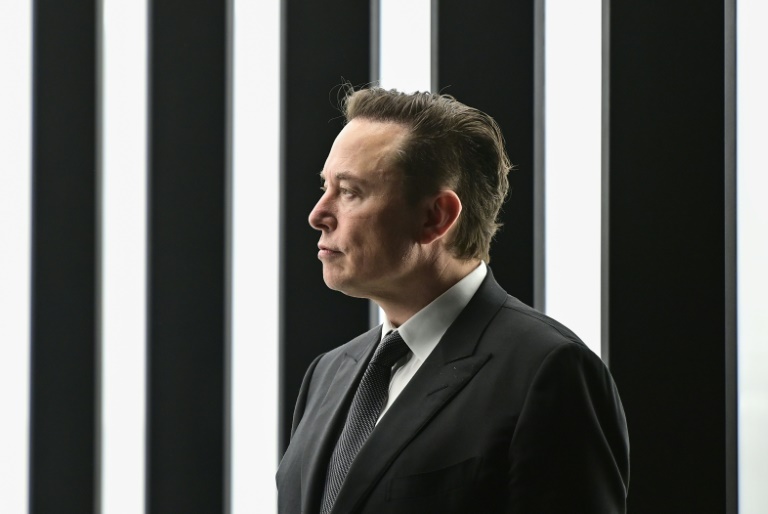
Twitter announced Tuesday that Elon Musk will join its board, one day after the Tesla CEO disclosed a large stake that made him the social media company’s largest shareholder.

“I’m excited to share that we’re appointing @elonmusk to our board! Through conversations with Elon in recent weeks, it became clear to us that he would bring great value to our Board,” Twitter CEO Parag Agrawal said in a tweet.

Musk, who also leads the SpaceX venture and is the world’s richest man, had the day prior announced his purchase of 73.5 million shares or 9.2 percent of Twitter’s common stock, sending the company’s value up more than 27 percent on Wall Street.

The billionaire’s investment had fueled speculation about a takeover of the microblogging platform, which is influential in the political and media worlds but for which profitable growth has often proved elusive.

Analysts at Wedbush said the invitation from Agrawal marks “a friendly move by the Twitter board to embrace Musk with open arms” that could lead to significant strategic shifts for a company “still struggling in a social media arms race,” according to a note.

But given Musk’s penchant for polarizing comments, they advised: “get out the popcorn.”

Musk had previously questioned the platform’s committment to freedom of speech, echoing a position of Donald Trump’s supporters, who hope to see the former US president return to Twitter following a lifetime ban instituted in the wake of the January 6 riot.

Agrawal called Musk “a passionate believer and intense critic of the service which is exactly what we need” at the company. 

The Twitter CEO also shared a poll posted by Musk to the platform asking whether to add a function to edit tweets, saying, “the consequences of the poll will be important. Please vote carefully.”

Musk, for his part, said he was “looking forward to working with Parag & Twitter board to make significant improvements to Twitter in coming months!”

Also applauding was founder Jack Dorsey, who said of Musk, “he cares deeply about our world and Twitter’s role in it.”

Musk will remain on Twitter’s board until the company’s annual shareholder’s meeting in 2024, and he has promised not to take a stake larger than 14.9 percent in the company during that time, according to a securities filing.

– Political implications? –

The arrival of Musk also cheered some analysts, who have expressed chagrin at the company’s performance.

In 2021, Twitter’s revenues were $5.1 billion, up 37 percent from 2020, but a fraction of the $33.7 billion reported by Facebook parent Meta.

CFRA Research analyst Angelino Zino applauded the arrival of a “true visionary” in Musk.

“Ultimately, the goal is to better monetize the platform, and we think Musk can only help, not hurt the process, with his recent criticism of the company as a refreshing sign,” Zino said, noting that the term’s of Musk’s stake mean he can’t take over the company. 

Susannah Streeter, an analyst at Hargreaves Lansdown, offered a more muted outlook, characterizing Musk as “socially ambitious” and raising the possibility that the Tesla boss will use the platform to promote his ventures.

“Over the longer term, Twitter investors will want to see that high levels of governance are adhered to, otherwise the independence of Twitter could be questioned, and the risk is that users may start to drift away,” Streeter said, adding that Musk could also use the intelligence gathered to launch his own platform.

In the political universe, far-right Republican House Representative Lauren Boebert was among those calling for Musk to “lift the political censorship.”

“Oh… and BRING BACK TRUMP!” she tweeted.

Two days after the January 6 attack on the US capitol, Twitter announced the “permanent suspension” of Trump’s account, citing the “risk of further incitement of violence.”

Historian James Fell was among those trying to preempt a Trump Twitter revival, saying if the ex-president is restored, “I’ll probably ditch this platform altogether.”

Also unhappy was former labor secretary Robert Reich, who tweeted, “What could possibly go wrong with an oligarch determining what constitutes free speech?”

Shares of Twitter rose 4.5 percent to $52.20 in midday trading.

World's fossil fuel assets risk evaporating in climate fight

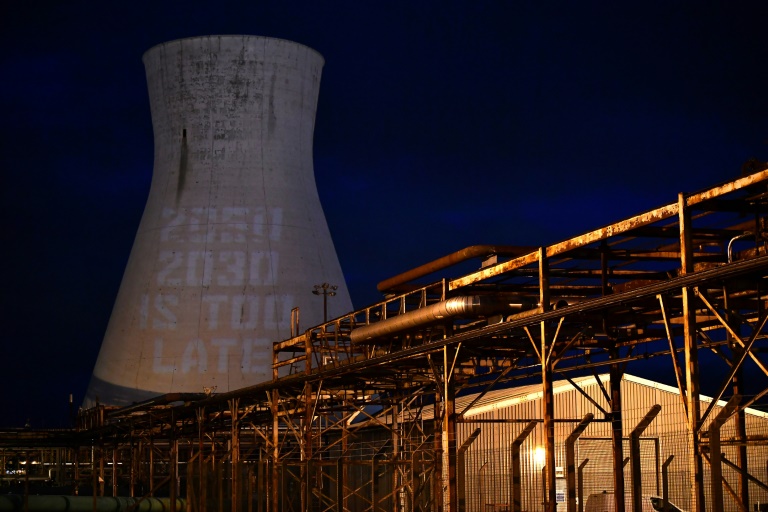
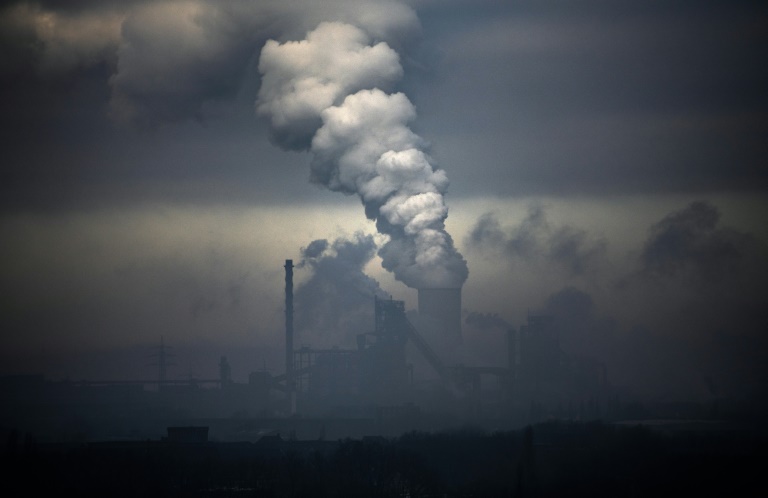
Oil platforms, pipelines, coal power plants and other fossil fuel assets could lose trillions of dollars in the battle against climate change in the coming decades, experts say.

The warning was issued in a 3,000-page report by UN experts who said fossil fuel assets must be retired and replaced with clean energy faster to mitigate financial losses.

Such assets will become “stranded” and worth less than expected because they may never be used since fossil fuel demand must fall in the near future to limit greenhouse gas emissions.

Limiting warming to the aspirational 1.5 degree Celsius target in the Paris Agreement, or the more conservative 2C goal, “will strand fossil-related assets”, said the UN’s Intergovernmental Panel on Climate Change (IPCC) in its latest report Monday.

“The combined global discounted value of the unburned fossil fuels and stranded fossil fuel infrastructure has been projected to be around 1–4 trillion dollars from 2015 to 2050 to limit global warming to approximately 2C, and it will be higher if global warming is limited to approximately 1.5C,” the IPCC said.

Any move to alleviate the impact of climate change means using less fossil fuel, thus rendering assets obsolete as companies are under pressure to move away from harmful energy production.

The IPCC said that if current oil, gas and coal energy infrastructure were to operate for their designed lifetime — without technology to capture and store carbon — capping global warming at the 1.5C target would be impossible.

It said nations should stop burning coal completely and cut oil and gas use by 60 and 70 percent respectively by 2050 to keep within the Paris deal goals, noting that both solar and wind were now cheaper than fossil fuels in many places.

The idea of “stranded assets” dates back to the 2010s and was put forward by think tank Carbon Tracker.

Companies could be further affected by governments taking decisions such as increasing the price of coal or even banning certain energies.

Consumers could also turn to other products like electric vehicles.

Other assets impacted include infrastructure such as drilling platforms, which have become useless quicker than expected.

Some fossil fuel reserves will become too costly to exploit due to falling prices.

– Risky bets –

For the IPCC, coal-related assets are the most vulnerable before 2030, than those that are oil- and gas-related towards mid-century.

The idea of stranded assets, taken up by both environmentalists and investors, has gained popularity and has been used in shareholder meetings of energy companies such as ExxonMobil or TotalEnergies.

The climate issue has in fact become central to some companies, even if it has taken three decades after the IPCC’s creation in 1988.

“It’s really the financial risk that originally created this spark, which took a long time,” said Hugues Chenet, research associate at Polytechnique and the University College London. 

That “convinced financial actors there was a problem.”

The idea of “stranded assets” — which Chenet prefers to call “obsolete” — has made it possible to pinpoint a “contradiction”.

There is one “path that says we must live without fossil fuels, facing an economy that is rather more geared up to do the opposite”.

Lucie Pinson of NGO Reclaim Finance, who does not find the climate commitments of major companies like TotalEnergies credible, also pointed out the inconsistency.

“We can see that (TotalEnergies) doesn’t believe in its own (climate) rhetoric, because if it believed it, it would not develop projects which have no future,” she added.

– Revenue losses –

It’s decision time for countries which get revenue from fossil fuels.

From Azerbaijan to Angola to Nigeria and Saudi Arabia, oil producers risk losing a significant amount of their revenue over the next 20 years, warned Carbon Tracker.

But “if they continue to invest, you’re betting on the failure of policy action on climate but you’re also betting on the failure of renewables and other low carbon technologies to displace oil and gas”, said Carbon Tracker’s Mike Coffin, who calls on countries to diversify.

Another risky bet would be to ignore acting against climate change, hoping to make profits from oil and gas. 

But “you’ll lose way more on all your other assets when you’ve got forest fires, global migrations, famine,” he said.

World's fossil fuel assets risk evaporating in climate fight

Oil platforms, pipelines, coal power plants and other fossil fuel assets could lose trillions of dollars in the battle against climate change in the coming decades, experts say.

The warning was issued in a 3,000-page report by UN experts who said fossil fuel assets must be retired and replaced with clean energy faster to mitigate financial losses.

Such assets will become “stranded” and worth less than expected because they may never be used since fossil fuel demand must fall in the near future to limit greenhouse gas emissions.

Limiting warming to the aspirational 1.5 degree Celsius target in the Paris Agreement, or the more conservative 2C goal, “will strand fossil-related assets”, said the UN’s Intergovernmental Panel on Climate Change (IPCC) in its latest report Monday.

“The combined global discounted value of the unburned fossil fuels and stranded fossil fuel infrastructure has been projected to be around 1–4 trillion dollars from 2015 to 2050 to limit global warming to approximately 2C, and it will be higher if global warming is limited to approximately 1.5C,” the IPCC said.

Any move to alleviate the impact of climate change means using less fossil fuel, thus rendering assets obsolete as companies are under pressure to move away from harmful energy production.

The IPCC said that if current oil, gas and coal energy infrastructure were to operate for their designed lifetime — without technology to capture and store carbon — capping global warming at the 1.5C target would be impossible.

It said nations should stop burning coal completely and cut oil and gas use by 60 and 70 percent respectively by 2050 to keep within the Paris deal goals, noting that both solar and wind were now cheaper than fossil fuels in many places.

The idea of “stranded assets” dates back to the 2010s and was put forward by think tank Carbon Tracker.

Companies could be further affected by governments taking decisions such as increasing the price of coal or even banning certain energies.

Consumers could also turn to other products like electric vehicles.

Other assets impacted include infrastructure such as drilling platforms, which have become useless quicker than expected.

Some fossil fuel reserves will become too costly to exploit due to falling prices.

– Risky bets –

For the IPCC, coal-related assets are the most vulnerable before 2030, than those that are oil- and gas-related towards mid-century.

The idea of stranded assets, taken up by both environmentalists and investors, has gained popularity and has been used in shareholder meetings of energy companies such as ExxonMobil or TotalEnergies.

The climate issue has in fact become central to some companies, even if it has taken three decades after the IPCC’s creation in 1988.

“It’s really the financial risk that originally created this spark, which took a long time,” said Hugues Chenet, research associate at Polytechnique and the University College London. 

That “convinced financial actors there was a problem.”

The idea of “stranded assets” — which Chenet prefers to call “obsolete” — has made it possible to pinpoint a “contradiction”.

There is one “path that says we must live without fossil fuels, facing an economy that is rather more geared up to do the opposite”.

Lucie Pinson of NGO Reclaim Finance, who does not find the climate commitments of major companies like TotalEnergies credible, also pointed out the inconsistency.

“We can see that (TotalEnergies) doesn’t believe in its own (climate) rhetoric, because if it believed it, it would not develop projects which have no future,” she added.

– Revenue losses –

It’s decision time for countries which get revenue from fossil fuels.

From Azerbaijan to Angola to Nigeria and Saudi Arabia, oil producers risk losing a significant amount of their revenue over the next 20 years, warned Carbon Tracker.

But “if they continue to invest, you’re betting on the failure of policy action on climate but you’re also betting on the failure of renewables and other low carbon technologies to displace oil and gas”, said Carbon Tracker’s Mike Coffin, who calls on countries to diversify.

Another risky bet would be to ignore acting against climate change, hoping to make profits from oil and gas. 

But “you’ll lose way more on all your other assets when you’ve got forest fires, global migrations, famine,” he said.

Close Bitnami banner
Bitnami