AFP

Oil extends rally as EU proposes more Russia sanctions

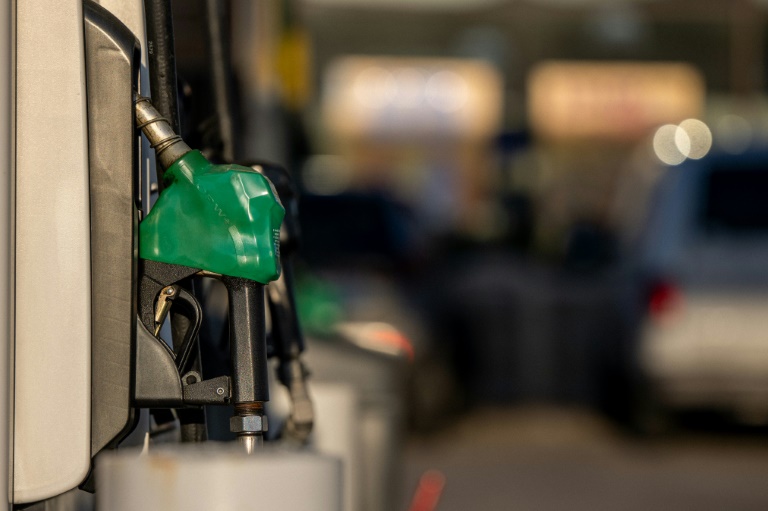
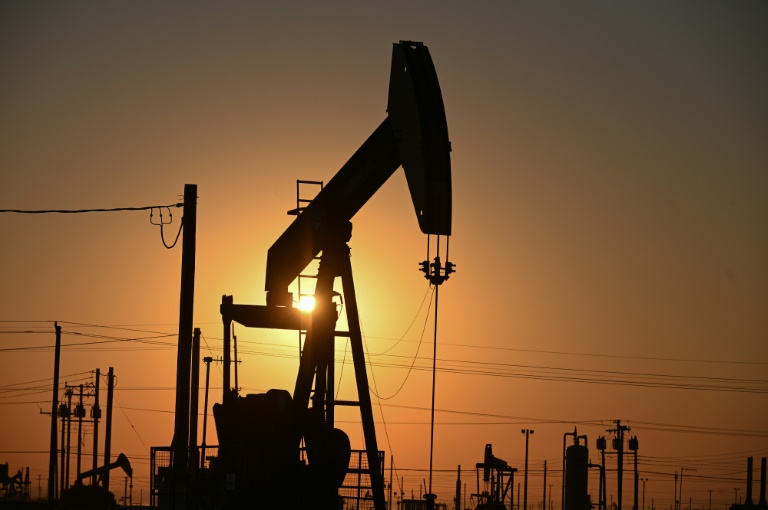
Oil prices jumped further Tuesday as the European Union proposed further sanctions against major crude producer Russia in response to killings in the Ukrainian town of Bucha that have prompted international condemnation.

Elsewhere, European and US stocks were mostly lower, while Asian equity markets rose. The dollar was mixed versus major rivals.

Oil rising again “is bad news for corporates looking to manage cost pressures, and for consumers already struggling to stomach higher energy bills”, noted Russ Mould, investment director at AJ Bell.

While countries in Europe — particularly Germany — rely heavily on energy from Russia, the possibility of an oil embargo sent both main crude contracts sharply higher Monday.

In the end the EU didn’t target oil, instead calling for sanctions on coal and shipping.

But Brent North Sea and WTI oil continued their rise on Tuesday, helping paring some of the sharp losses seen Friday in reaction to a pledge by Washington and other major economies to unleash millions of barrels from their stockpiles to keep a lid on prices, which are fanning already high inflation.

The additional EU sanctions came days after dozens of bodies were found on the streets in Bucha, northwest of Kyiv, though some countries remain worried of the potential economic fallout.

Ukrainian President Volodymyr Zelensky blames Russian troops for the killings, but the Kremlin has denied responsibility.

White House National Security Advisor Jake Sullivan signalled more US sanctions were on the way this week.

The US Treasury said Tuesday said that the United States will bar Russia from making debt payments using funds held at American banks, to ramp up the economic pain on Moscow.

Wall Street opened moderately lower after posting strong gains Monday despite continued uncertainty caused by the war in Ukraine.

But market analyst Patrick J. O’Hare at Briefing.com said investors were concerned that the rally by stocks off March lows won’t last.

Investors “will be battling the idea that further upside will be harder to come by given an existing backdrop that includes rising interest rates, persistently high inflation pressures around the globe, and Russia’s continued attack on Ukraine,” he said.

Traders will be keeping a close eye on the release this week of minutes from the Federal Reserve’s most recent policy meeting, hoping for an insight into officials’ thinking over future monetary policy.

After the Fed’s expected quarter-point interest rate hike last month, there are increasing bets on a half-point lift in May in light of soaring inflation and strong jobs data that suggest the US economy remains robust enough to absorb higher borrowing costs.

– Key figures around 1330 GMT –

Brent North Sea crude: UP 0.6 percent at $108.21 per barrel

West Texas Intermediate: UP 0.7 percent at $104.02 per barrel

London – FTSE 100: UP 0.2 percent at 7,570.62 points

Frankfurt – DAX: DOWN 0.6 percent at 14,429.87

Paris – CAC 40: DOWN 1.6 percent at 6,626.82

EURO STOXX 50: DOWN 0.8 at 3,921.07

New York – Dow: DOWN 0.3 percent at 34,835.12

Tokyo – Nikkei 225: UP 0.2 percent at 27,787.98 (close)

Hong Kong – Hang Seng Index: Closed for a holiday

Shanghai – Composite: Closed for a holiday

Euro/dollar: DOWN at $1.0960 from $1.0978 late Monday

Pound/dollar: UP at $1.3146 from $1.3114

Euro/pound: DOWN at 83.38 pence from 83.65 pence

Dollar/yen: UP at 122.82 yen from 122.78 yen

burs-rl/raz
EU proposes sanctions on Russian coal, shipping

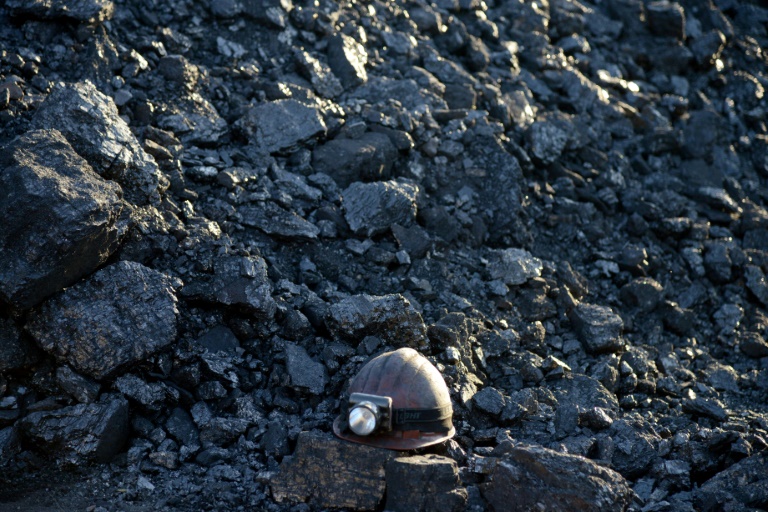
The EU executive on Tuesday proposed a fresh wave of sanctions against Russia that would include a ban on coal imports and blocking Russian ships from entering European ports.

The proposal, part of the bloc’s planned fifth wave of sanctions since the February 24 invasion, needs to be approved unanimously by the EU’s 27 member states.

The European Union and US are seeking to tighten the noose on Moscow after dozens of bodies were discovered in the Ukrainian town of Bucha following the withdrawal of Russian troops.

“Russia is waging a cruel, ruthless war, also against Ukraine’s civilian population. We need to sustain utmost pressure at this critical point,” European Commission President Ursula von der Leyen said in a video address.

The Europeans have been under pressure to hit Moscow in the crucial energy sector and stop Russia’s main source of revenue to pay for its war.

Brussels is also proposing a total ban on transactions of four large banks that represent a quarter of the Russian banking sector, including VTB, the country’s second largest lender.

The EU executive additionally wants to expand the list of Russian products banned in the EU, including vodka.

The proposal from the commission will now be presented to the EU’s member states with hopes they will approve it as early as Wednesday.

So far countries deeply dependent on Russia for energy — such as Germany, Austria and Italy — have resisted expanding the measures to gas or oil.

Germany on Monday said gas was still off-limits for now, given its continued importance to the European economy, but insisted that it could target gas and oil later.

Von der Leyen said additional sanctions, including on oil imports, were being worked on.

EU foreign ministers could adopt the latest package, either on the sidelines of NATO and G7 meetings happening Wednesday and Thursday, or at their regular meeting early next week.

Since Russia’s military buildup against Ukraine began, sanctions against Moscow have been coordinated with the United States and other allies.

Washington on Monday said more sanctions against Russia would be announced “this week”.

Publisher signs over Russian printing houses to Nobel winner

Norwegian publisher Amedia said Tuesday it was transferring control over its Russian printing houses to Nobel Peace Prize winner Dmitry Muratov, chief editor of independent newspaper Novaya Gazeta.

The announcement came as the media group also announced it was leaving Russia over the country’s invasion of Ukraine.

“With what we are currently witnessing in Ukraine from the Russian authorities, it is impossible for Amedia to continue the printing business in the country,” Amedia chief executive Anders Moller Opdahl said in a statement.

“Amedia is now withdrawing, in a way that leaves control to Peace Prize laureate Muratov,” Opdahl added.

Board chairman Andre Stoylen said the company believed this was “the best possible solution given the prevailing circumstances.”

“In this way, the printing houses will be able to continue being important for independent media in Russia in the future,” Stoylen said.

Muratov, who together with Maria Ressa of the Philippines was awarded the 2021 Nobel Peace Prize, would have full control of daily operations and “exercise all shareholder rights at his own discretion” of the four printing houses wholly owned by Amedia’s Russian subsidiary.

Novaya Gazeta, which was already using the printing presses of Amedia’s subsidiary, announced in late March that it had suspended its publication until the end of Russia’s military actions in Ukraine.

“This will support free expression of opinion, and all profits will be contributed to promoting it. Independent media are the antidote to war. We will take care of the open printing business and the employees,” Muratov said in a statement, adding his paper welcomed the resource with “great gratitude.”

Amedia also said it had written down the value of its Russian operations from 38 million Norwegian kroner ($4.4 million, 4 million euros) to zero.

In total the Norwegian publisher owns six printing houses in Russia, four of them wholly-owned and two together with Russian minority shareholders.

“Amedia is working on a solution with the minority shareholders in the last two printing companies, so that the group can withdraw completely from Russia,” the company said, adding that funds from a potential future sale would be used to support independent media in Russia.

Twitter announces Elon Musk to join board of directors

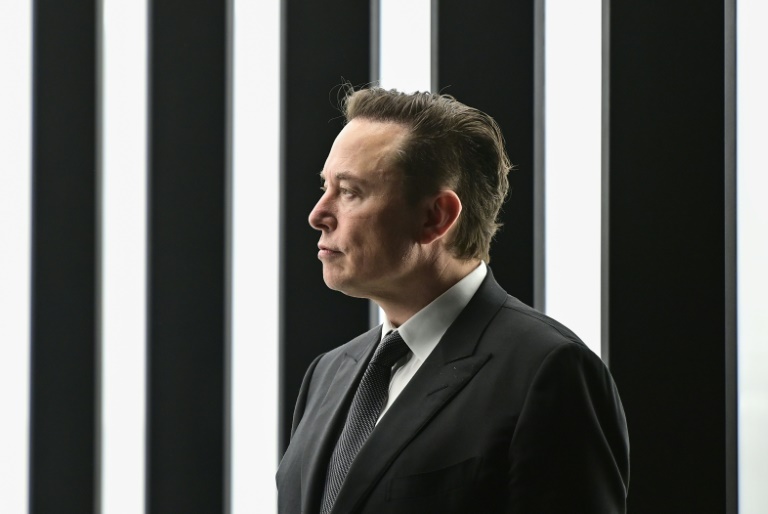
Elon Musk will join Twitter’s board of directors, the social network’s chief executive announced Tuesday, a day after the Tesla boss bought a major stake in the company and became its largest shareholder.

“I’m excited to share that we’re appointing @elonmusk to our board! Through conversations with Elon in recent weeks, it became clear to us that he would bring great value to our Board,” Twitter CEO Parag Agrawal said in a tweet.

He called Musk “a passionate believer and intense critic of the service which is exactly what we need” at the company.

Currently the world’s richest man and with more than 80 million followers on the microblogging platform, Musk on Monday disclosed a purchase of 73.5 million shares or 9.2 percent of Twitter’s common stock.

The billionaire is a frequent user of the platform, regularly mixing in inflammatory and controversial statements about current affairs or other public figures with remarks that range from whimsical to business-focused.

He has also sparred repeatedly with federal securities regulators, who cracked down on his social media use after a purported effort to take Tesla private in 2018 fell apart.

Musk has criticized Twitter for its approach to freedom of speech, launching a poll last month in which he asked if the network adheres to the principle — to which a majority of respondents voted no.

Musk will remain on Twitter’s board until the company’s annual shareholder’s meeting in 2024, and he has promised not to take a stake larger than 14.9 percent in the company during that time, according to a securities filing.

Kinder recalls chocolate eggs after salmonella cases

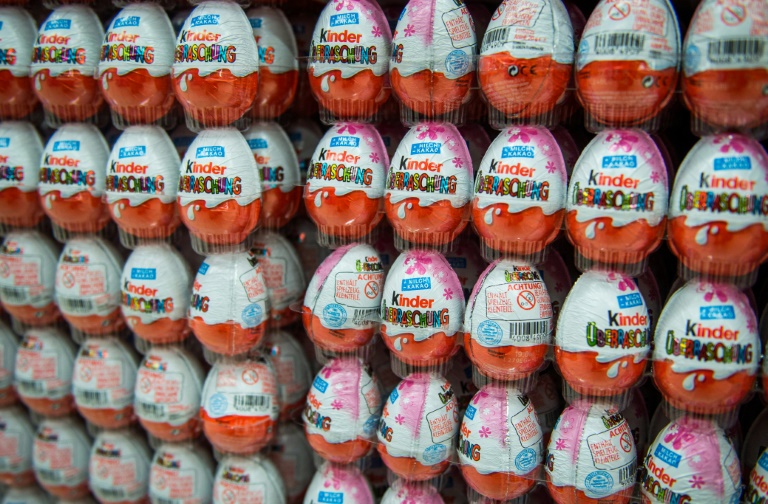
Italian confectionary group Ferrero said Tuesday it has recalled Kinder chocolate eggs in several European countries over possible links to dozens of salmonella cases less than two weeks before Easter.

While none of the toy-filled Kinder Surprise chocolate eggs or other products has been proven to contain salmonella, Ferrero told AFP that it issued the recall as a precautionary step.

It concerns products from Ferrero’s factory in the Belgian town of Arlon that were put on sale in Belgium, Britain, France, Germany and Sweden.

British authorities warned the public on Saturday about the Kinder products “in connection with a potential link to a salmonella outbreak” that included children and said Ferrero had issued a recall as a “precautionary step”.

An official said Tuesday that the number of salmonella cases in Britain had now risen to 63.

In France, 21 cases have been reported and 15 reported having eaten the Kinder products that have now been recalled, according to the French public health service.

The median age of those stricken is four years old.

Salmonella is a type of bacteria that can cause symptoms including diarrhoea, fever and stomach cramps in humans, and is one of the most common food-borne infections.

“None of our Kinder products put on the market have tested positive for salmonella and we have not received any complaints from consumers,” the company said in a statement released Monday on its French website.

In France, the recall totals several hundred tonnes of products, a company spokeswoman said.

The recall concerns the original 20-gram Kinder Surprise milk chocolate egg that contains a small plastic capsule with a toy inside, as well as a larger 100-gram version, with last sale dates between the end of June and end of October 2022.

Kinder Schoko-Bons, Kinder Mini Eggs, Kinder Happy Moments, Kinder Mix and a number of other products have also been recalled. 

Germany closes Russian darknet marketplace Hydra

German police said Tuesday they have taken down Russian-language illegal darknet marketplace Hydra, the largest such network in the world, and seized bitcoins worth 23 million euros ($25 million).

Founded in 2015, Hydra sold illegal drugs but also stolen credit card data, counterfeit currency and fake identity documents, masking the identities of those involved using the Tor encryption network.

The marketplace had around 17 million customer accounts and over 19,000 vendor accounts, according to the BKA federal police.

“The Hydra market was probably the illegal marketplace with the highest turnover worldwide” with sales amounting to at least 1.23 billion euros in 2020 alone, it said in a statement.

Investigators have taken control of Hydra’s servers in Germany and the marketplace has been “shut down”, the BKA said.

Suspects are being investigated for “operating criminal trading platforms on the internet on a commercial basis”, the BKA said. 

Investigators do not know whether Hydra also has servers in other countries but “assume this was the main hub” of the network’s infrastructure, a spokesman for Frankfurt prosecution service’s internet crime office ZIT told AFP.

Investigations into the illegal marketplace started in August 2021 and also involved several US authorities, according to the BKA.

The “Bitcoin Bank Mixer” provided by the platform, a service for concealing digital transactions, had made investigations especially difficult, it added. 

The BKA said it had published a seizure banner on the marketplace’s website.

– ‘Uniquely sophisticated operations’ –

The secret “darknet” includes websites that can be accessed only with specific software or authorisations, ensuring anonymity for users.

Such networks have faced increased pressure from international law enforcement after a boom in usage during the coronavirus pandemic.

The United States, Russia, Ukraine and China dominate in terms of value both sent to and received from darknet markets, according to a 2021 report from blockchain forensics firm Chainalysis.

Hydra accounted for 75 percent of sales in the global darknet market in 2020, the report said.

“Hydra is a big driver of Eastern Europe’s unique crypto crime landscape. Eastern Europe has one of the highest rates of cryptocurrency transaction volume associated with criminal activity,” it said.

The marketplace had become particularly popular with users by developing creative delivery methods, the Chainalysis report added.

“Hydra has developed uniquely sophisticated operations, such as an Uber-like system for assigning drug deliveries to anonymous couriers, who drop off their packages in out-of-the-way, hidden public locations, commonly referred to as ‘drops’,” it said. 

“That way, no physical exchange is made, and unlike with traditional darknet markets, vendors don’t need to risk using the postal system.”

A German-led police sting also last year took down notorious darknet marketplace DarkMarket, which had nearly 500,000 users and more than 2,400 vendors worldwide.

The marketplace had offered for sale “all kinds of drugs” as well as “counterfeit money, stolen and fake credit card data, anonymous SIM cards, malware and much more”, prosecutors said.

Climate scorecard: good news and bad news

The task is clear — stop burning fossil fuels, radically reduce energy demand and slash all planet-warming emissions in order to keep the planet cool enough so humans, animals and plants can survive and thrive.

So how do the actions of the world so far match up to the challenge?  

Here is a rundown from the UN Intergovernmental Panel on Climate Change’s handbook on how to halt global warming: 

– Emissions growth is slowing –

While we are continuing to spew more carbon dioxide (CO2) into the atmosphere, the rate of that increase has slowed in recent years. 

Emissions actually fell in 2020 — by an estimated 5.8 percent compared to 2019 — as governments around the world imposed unprecedented lockdowns to try to halt the spread of Covid-19. 

Demand for energy shrank in almost all areas — except residential buildings. International aviation emissions were down some 45 percent.

Meanwhile, at least 24 countries in the world have managed to cut greenhouse gas emissions and consumption-based CO2 pollution for a decade or more. Almost all are in Europe, although the list also includes the United States and Jamaica. 

– But they need to fall, and fast –

Emissions have already rebounded from the pandemic.

Developing nations that have come from a low base per capita are seeing sharp increases.

And carbon footprints per person in rich countries remain stubbornly high, particularly in Australia, Canada.   

– We have most of the means –

There are a range of low-carbon technologies to produce electricity and these are becoming cheaper, better and more widely used. These include solar photovoltaics (PV), onshore and offshore wind, and batteries. 

“In many contexts solar PV and onshore wind power are now competitive with fossil-based generation,” the report said. 

Since 2010 emissions from coal have grown, but more slowly, as the US and Europe retired some old plants, while China added fewer new ones. A large number of planned coal plants around the world were either scrapped or converted so that they could also burn biomass. 

– But we struggle to kick the dirty fuel habit –

All of the world’s electricity will have to come from low-carbon generation by 2050 to meet the Paris Agreement global warming targets. This is “challenged” by growing electricity demand. 

Currently, solar PV and wind generation technologies account for less than 10 percent of the market.

Despite coal’s hefty C02 emissions, some countries and even international development banks continue to fund and develop new coal capacity. 

– We can transform transport, buildings and industry –

Electrification is a “feasible, scalable and affordable” option to decarbonise mass transportation. 

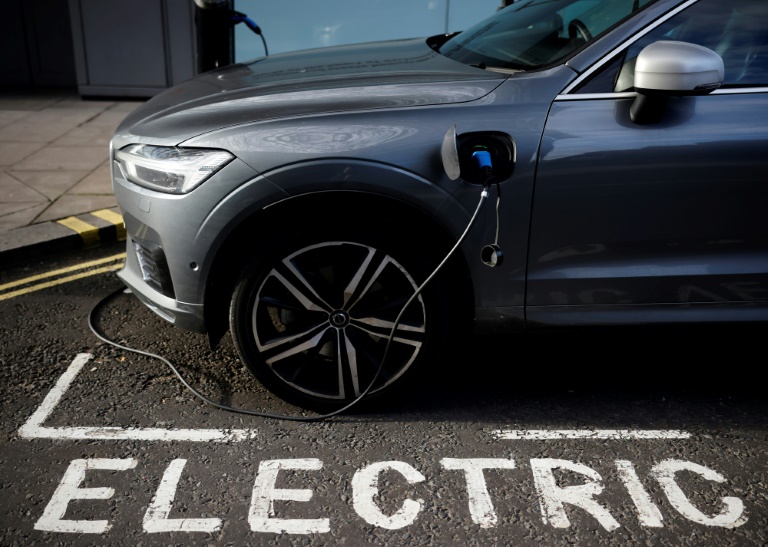
Electric vehicles (EVs) are the fastest-growing part of the automobile industry and if these cars and trucks are charged with low-carbon electricity they can significantly reduce emissions. 

It is possible to make existing and new buildings in all parts of the world either nearly zero-energy or low-energy. 

Most industrial processes in general can be decarbonised through a combination of technology using electricity and hydrogen, carbon capture and innovation in the circular use of materials (i.e. recycling and reusing). 

– But change is slow –

Transport emissions grew at an average of two percent a year per between 2010 and 2019, due to continued “high travel demand, heavier vehicles, low efficiencies and car-centric development”.

Beyond charging EVs with zero-emissions electricity, car manufacturing, shipping and aviation also need to be decarbonised, as do supply chains in general. 

As for construction, the low ambition of government policies is a particular concern, for both existing buildings in developed countries and new buildings in developing ones. 

The strong global demand for basic materials means industrial emissions continue to grow. This demand must be sharply reduced, alongside the rapid scale up of low-carbon innovations, otherwise there is a risk of locking in emissions “for decades to come”. 

– A crescendo of climate action – 

An increasing number of countries say they plan to achieve “net-zero” C02, or greenhouse gas, emissions by mid-century. 

Mandatory policies like pricing and regulation have expanded, while many businesses have promised to curb emissions. 

Climate activism is growing, labour unions are starting to engage with the issues, while media coverage of climate change is increasing and becoming better at accurately reflecting the science.

– But action needs to happen faster –

Current national pledges under the Paris Agreement will not limit global warming to the target of 1.5 degrees Celsius. 

Many net-zero targets are “ambiguously defined” and the policies to achieve them are not yet in place. 

Low-carbon alternatives need much more investment, while “status quo interests” are acting to block progress.  

People are also subjected to misinformation on online and in traditional media that has “undermined significantly” understanding of the science.  

Hit by sanctions, Lada factory town braces for tough times

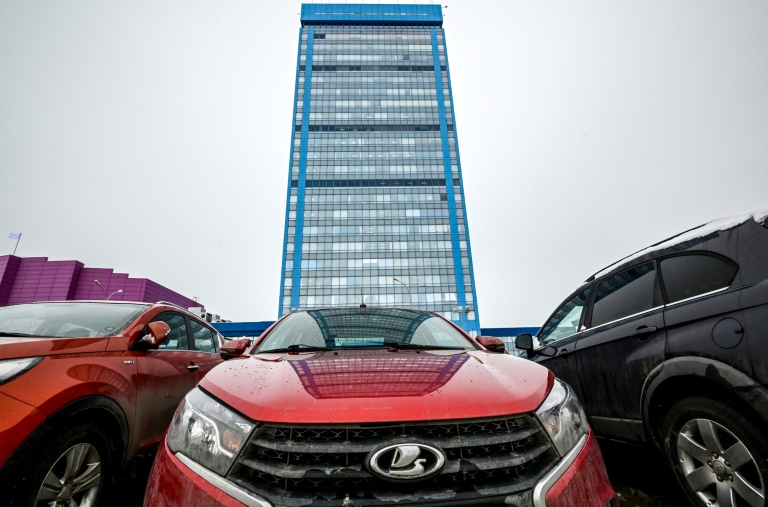
For generations the Russian city of Tolyatti has been synonymous with leading car manufacturer Avtovaz, maker of one of the country’s best-known brands, the Lada automobile.

But with the West piling sanctions on Russia over its military action in Ukraine, Tolyatti and the workers of Avtovaz are bracing for tough times.

Gathered in a small apartment in the city’s Avtozavodsky district, a residential area surrounding the sprawling factory, several workers from the “Yedinstvo” (Unity) trade union said they were worried about their future.

“It’s a factory town. Everyone here works either for the factory or for the police,” said Alexander Kalinin, 45, a freight elevator operator at Avtovaz for 15 years.

Founded in the 1960s for the Soviet Union to meet the growing demand for affordable cars, the Avtovaz factory’s flagship Lada vehicles became widely known for their simplicity and durability.

The factory was set up in the town of Stavropol about 780 kilometres (485 miles) southeast of Moscow, which was renamed Tolyatti after Italian Communist politician Palmiro Togliatti.

The plant survived the economic crisis that followed the 1991 collapse of the Soviet Union and was eventually taken over by French auto group Renault.

“For Tolyatti, the factory is everything. The whole city was built around it,” said 33-year-old Irina Myalkina, a worker in the spare parts warehouse for 11 years.

“When I started, I was full of enthusiasm, I hoped for a good income. I still hope,” Myalkina added with a sad smile.

– ‘People are nervous’ –

Most of the factory’s assembly lines stopped running after Moscow moved troops into Ukraine on February 24 and sanctions meant it could no longer receive components from aboard.

Workers are on paid leave, with two-thirds of their usual wage, which for Myalkina means receiving 13,000 rubles (about $140) instead of her usual 20,000 rubles ($215).

Prices for food and other basic goods are soaring, in Tolyatti as elsewhere in Russia.

“People are nervous,” Myalkina said.

After completing its acquisition of Avtovaz, Renault funnelled billions of euros into the Soviet-era factory, but also carried out huge staff cuts, leaving fewer than 40,000 workers out of 70,000.

“There were many problems with the departure of employees, but nevertheless there was a clear positive trend,” said Andrei Yakovlev, head of the Institute for Industrial and Market Studies at Moscow’s Higher School of Economics.

“A major Russian car manufacturer was being born.” 

Now its future is very much in doubt, with Renault, under intense pressure to boycott Russia, considering whether to withdraw from Avtovaz. 

No one from the company would agree to talk and it even refused to give access to the Lada Museum in Tolyatti during a recent visit.

When AFP was filming near the factory, Avtovaz security called police, who questioned and released the journalists after several hours.

The factory’s employees have been forced to take their three weeks of summer vacation in April, while Renault considers its options.

– Second jobs –

Many employees have already been forced to take up second jobs, like Leonid Emchanov, 31, a mechanic now moonlighting as a security guard to feed his family. 

“I am the only one in the family who works. I have two children, my wife… is on maternity leave. I have to work two jobs, but even this is not enough,” he said.

If Avtovaz is unable to survive this crisis, its demise would mark the end of an industrial era for Russia, and for its many Lada enthusiasts.

In an underground garage in Tolyatti, two men in vintage overalls were busy at work on an ’80s Lada Niva, a legendary four-wheel drive vehicle, that was shining with a fresh coat of red paint. 

“Since childhood, my whole life has been linked to the factory,” said one of the mechanics, Sergei Diogrik.

“All our relatives in Tolyatti worked at the factory and I myself worked there. I had no choice, everything is related to the company,” he added. 

The 43-year-old founded and runs the Lada History Club, bringing together fans of the Soviet car from all over the world.  

“It was a powerful producer. The record in the early 1980s was 720,000 cars per year,” he said, compared to nearly 300,000 cars produced in 2021.

“It was fashionable to come here. Now the fashion is for young people to go to Moscow or somewhere else,” Diogrik added.

He said he is trying to remain hopeful, pointing out that the factory and its workers already survived the economic hardships of the 1990s.

“A Russian person who survived the 90s, especially in Tolyatti, will cope now, everything will be fine.”

The suffering of those who cannot feel pain

Patrice Abela first knew something was wrong when his eldest daughter was learning to walk and her feet left trails of blood behind her, yet she showed no sign of distress.

She was soon diagnosed with congenital insensitivity to pain, an extremely rare and dangerous genetic disorder that dooms sufferers to a lifetime of hurting themselves in ways they cannot feel.

Abela, a 55-year-old software developer in the southern French city of Toulouse, then watched in horror as his youngest daughter was revealed to have the same condition.

Now aged 12 and 13, the two girls spend around three months of every year in hospital. 

“When they take a shower, they perceive hot and cold, but if it burns they don’t feel anything,” the father of four told AFP.

“Due to repeated infections, my eldest daughter lost the first joint of each of her fingers. She also had to have a toe amputated.”

Repeated knee injuries have left both girls only able to move around using crutches or a wheelchair.

Abela said they may not feel physical pain but lamented their intense “psychological pain”.

Aiming to raise awareness about the disease and “challenge the scientific community”, Abela plans to run the equivalent of 90 marathons in fewer than four months. He plans to start on April 12, following the route of this year’s Tour de France from Copenhagen to Paris. 

– Danger everywhere –

A life without pain might sound like a dream come true but the reality is more like a nightmare.

There are only a few thousand known cases of the condition worldwide. The low number is believed to be partly due to sufferers often not living into adulthood.

“Pain plays a major physiological role in protecting us from the dangers of our environment,” said Didier Bouhassira, a doctor at the centre for pain evaluation and treatment at Ambroise-Pare hospital in Paris.

In the most extreme cases, babies will “mutilate their tongue or fingers while teething”, he told AFP.

Then comes “a lot of accidents, burns, walking on fractured limbs which heal badly”, he added.

“They have to be taught what is innate in others: to protect themselves.”

But when there are no warning signs, danger lurks everywhere.

Appendicitis, which announces itself in others via symptoms like pain and fever, can fester into a devastating general infection of the abdomen.

“Blindness can also occur because the eye must always be kept moist and the nervous system controls these processes via the so-called blink reflex,” said Ingo Kurth of Germany’s Institute of Human Genetics.

– New painkiller hopes –

Congenital insensitivity to pain (CIP) was first recognised in the 1930s, and numerous studies have since identified a genetic mutation that blocks a person’s ability feel pain.

“We have learned that there are now more than 20 genetic causes of congenital or progressive insensitivity to pain,” Kurth told AFP.

There is no cure and “no real drug breakthroughs have been made so far”, Kurth said.

“But our understanding of the molecular causes of CIP continues to reveal new targets, and based on this, hopefully new therapies will be developed in the coming years.”

There are also hopes that studying how CIP works could lead to the development of a new kind of painkiller, prompting huge interest from pharmaceutical giants seeking a fresh product in the billion-dollar industry of pain relief.

In this way, the unlucky few with CIP could contribute to the creation of a treatment that would help everyone in the world — except themselves.

Oil extends rally as EU considers more Russia sanctions

Oil prices jumped further Tuesday as the European Union considered further sanctions against major crude producer Russia in response to killings in the Ukrainian town of Bucha that have prompted international condemnation.

Elsewhere, European and Asian stock markets diverged and the dollar dipped versus major rivals.

Oil rising again “is bad news for corporates looking to manage cost pressures, and for consumers already struggling to stomach higher energy bills”, noted Russ Mould, investment director at AJ Bell.

While countries in Europe — particularly Germany — rely heavily on energy from Russia, the possibility of an oil embargo sent both main crude contracts sharply higher Monday.

Brent North Sea and WTI oil continued their rise on Tuesday, each putting on more than 1.5 percent.

That pared some of the sharp losses seen Friday in reaction to a pledge by Washington and other major economies to unleash millions of barrels from their stockpiles to keep a lid on prices, which are fanning already high inflation.

The EU is considering hitting Russia with sanctions on oil or coal, a top official said Tuesday, after dozens of bodies were found on the streets in Bucha, northwest of Kyiv, though some countries remain worried of the potential economic fallout.

Ukrainian President Volodymyr Zelensky blames Russian troops for the killings, but the Kremlin has denied responsibility.

White House National Security Advisor Jake Sullivan signalled more US sanctions were on the way this week.

The continued uncertainty caused by the war in Ukraine, and blow to the global economy it is expected to deal, was unable to prevent another healthy performance Monday on Wall Street.

“Despite all the concerns, equities remain the best bet to achieve returns above today’s elevated inflation,” said markets strategist Louis Navellier.

Equities trading was tepid in Asia on Tuesday, with Hong Kong, Shanghai and Taipei closed for holidays.

Tokyo’s blue-chip shares ended higher, driven by buying of high-tech shares, though the yen’s gyrations weighed on the market.

Traders will be keeping a close eye on the release this week of minutes from the Federal Reserve’s most recent policy meeting, hoping for an insight into officials’ thinking over future monetary policy.

After the Fed’s expected quarter-point interest rate hike last month, there are increasing bets on a half-point lift in May in light of soaring inflation and strong jobs data that suggest the US economy remains robust enough to absorb higher borrowing costs.

– Key figures around 0930 GMT –

Brent North Sea crude: UP 1.5 percent at $109.15 per barrel

West Texas Intermediate: UP 1.7 percent at $104.98 per barrel

London – FTSE 100: DOWN 0.1 percent at 7,551.11 points

Frankfurt – DAX: UP 0.3 percent at 14,557.93

Paris – CAC 40: DOWN 0.4 percent at 6,703.88

EURO STOXX 50: FLAT at 3,952.83

Tokyo – Nikkei 225: UP 0.2 percent at 27,787.98 (close)

Hong Kong – Hang Seng Index: Closed for a holiday

Shanghai – Composite: Closed for a holiday

New York – Dow: UP 0.3 percent at 34,921.88 (close)

Euro/dollar: UP at $1.0983 from $1.0978 late Monday

Pound/dollar: UP at $1.3138 from $1.3114

Euro/pound: DOWN at 83.59 pence from 83.65 pence

Dollar/yen: DOWN at 122.74 yen from 122.78 yen

Close Bitnami banner
Bitnami