AFP

UN talks on climate solutions wrap up two days into overtime

Negotiations to finalise a key UN report on how to stave off climate catastrophe wrapped up on Sunday more than two days late following a tussle over how to describe financial needs, participants told AFP.

Two-weeks of virtual talks were contentious from the start, as nearly 200 nations grapple with hard choices about how to rapidly purge carbon pollution from their economies and become carbon neutral by mid-century.

The latest report from the UN’s Intergovernmental Panel on Climate Change (IPCC), due to be published on Monday, will detail how societies and industries must be reimagined to cut greenhouse gas emissions and avoid the worst impacts of a heating planet. 

But with sweeping changes needed — and huge investments on the line — the political stakes are high. 

“Everybody has something to lose and everybody has something to gain,” another participant monitoring the process said.

Nations were tasked with thrashing out line-by-line a high-level “summary for policymakers” that distils the thousands of pages of the IPCC’s underlying assessment.

As talks resumed Sunday, only 50 percent of the text had been approved, and by late evening all the sticking points had been cleared. 

“A final reading and checkup will take place Monday morning,” tweeted Belgian scientist Jean-Pascal van Ypersele, a delegate from Belgium.

A source close to the talks told AFP earlier that delays were down to the references to finance.

The United States baulked at data showing how much developing countries require to slash greenhouse gas emissions to meet the temperature goals of the Paris Agreement, whereas China wants the figures prominently included, he said.

While these detailed estimates will likely remain in the main IPCC report, the US and other wealthy nations wanted it dropped from the all-important summary for policymakers.  

Some studies have said that developing nations need to spend trillions per year, many times more than current levels of investment.

“These figures are very policy relevant. The report says it is possible to limit warming to 1.5C and cut emissions in half by 2030,” the source said. 

“But you can’t say that without saying how much money you need to implement those solutions.” 

The closed-door negotiations on how to cast the IPCC’s findings stumbled over how, and how quickly, the fossil fuels that drive global warming must be drawn down.

They also stalled over how big a role should be given to technologies that capture CO2 as it is emitted or extract it from the air.

Nikki Reisch, of the Center for International Environmental Law, said “political pressure” was trying to “mask the undeniable reality” that warming will reach catastrophic levels if the shift away from fossil fuels is not accelerated immediately.
UN talks on climate change solutions hung up on finance

Negotiations to finalise a key UN report on how to stave off climate catastrophe, already two days into overtime, remained stymied Sunday on the issue of financial needs, participants told AFP.

The two-week virtual talks have been contentious from the start, as nearly 200 nations grapple with hard choices about how to rapidly purge carbon pollution from their economies and become carbon neutral by mid-century.

The latest report from the UN’s Intergovernmental Panel on Climate Change (IPCC), due to be published on Monday, will detail how societies and industries must be reimagined to cut greenhouse gas emissions and avoid the worst impacts of a heating planet. 

But with sweeping changes needed — and huge investments on the line — the political stakes are high. 

“Everybody has something to lose and everybody has something to gain,” another participant monitoring the process said.

Nations are tasked with thrashing out line-by-line a high-level “summary for policymakers” that distils the thousands of pages of the IPCC’s underlying assessment.

“We’re at 90 percent of approving the Summary,” which is about 40 pages long, one person tracking the talks said. “What is holding things up is the finance.”

The United States is balking at data showing how much developing countries require to slash greenhouse gas emissions to meet the temperature goals of the Paris Agreement, whereas China wants the figures prominently included, one source said.

While these detailed estimates would remain in the main IPCC report, the US and other wealthy nations want it dropped from the all-important summary for policymakers. 

Some studies have said that developing nations need to spend trillions per year, many times more than current levels of investment.

“These figures are very policy relevant. The report says it is possible to limit warming to 1.5C and cut emissions in half by 2030,” the source said. 

“But you can’t say that without saying how much money you need to implement those solutions.” 

Negotiations on how to cast the IPCC’s findings have stumbled over how, and how quickly, the fossil fuels that drive global warming must be drawn down.

Talks have also stalled over how big a role should be given to technologies that capture CO2 as it is emitted or extract it from the air.

Nikki Reisch, of the Center for International Environmental Law, said “political pressure” was trying to “mask the undeniable reality” that warming will reach “catastrophic levels” if the shift away from fossil fuels is not accelerated immediately.
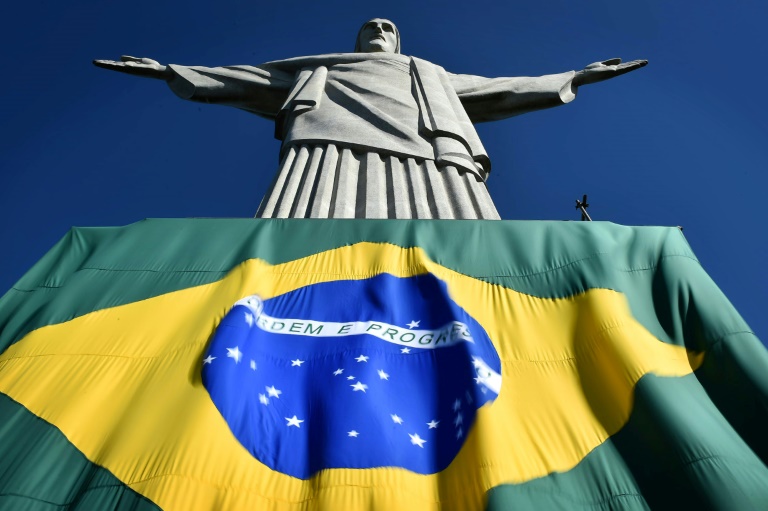
Brazil storm death toll rises to 16

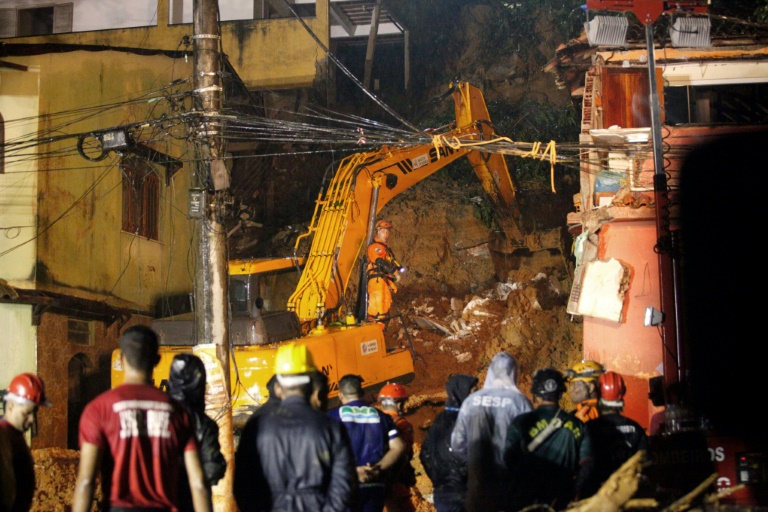
The death toll from torrential downpours that triggered flash floods and landslides in Brazil’s Rio de Janeiro state rose to 16 Sunday, with three people still missing, authorities said.

Three days of heavy rain have battered a broad swathe of the southeastern state’s Atlantic coast, the latest in a series of deadly storms in Brazil that experts say are being made worse by climate change. 

Emergency workers pulled two more bodies early Sunday from the mud and wreckage left by a landslide in the Monsuaba neighborhood of Angra dos Reis, a seaside town 160 kilometers (100 miles) southwest of Rio de Janeiro city, officials said.

In all, four children and four adults were killed there, the city government said. Emergency workers are still searching for three people reported missing in Monsuaba.

Another landslide in the picturesque colonial town of Paraty killed a mother and six of her children, aged two to 17.

A seventh child was rescued alive and taken to the hospital, where he was in stable condition, the mayor’s office said.

In the Rio suburb of Mesquita, a 38-year-old man was electrocuted trying to help another person escape the flooding, officials and media reports said.

President Jair Bolsonaro said on Facebook the federal government had sent military aircraft to help the rescue effort and dispatched national disaster response secretary Alexandre Lucas to the state of 17.5 million people.

The new storms come six weeks after flash floods and landslides killed 233 people in the scenic city of Petropolis, the Brazilian empire’s 19th-century summer capital, also in Rio state.

Scientists risk arrest to sound climate alarm

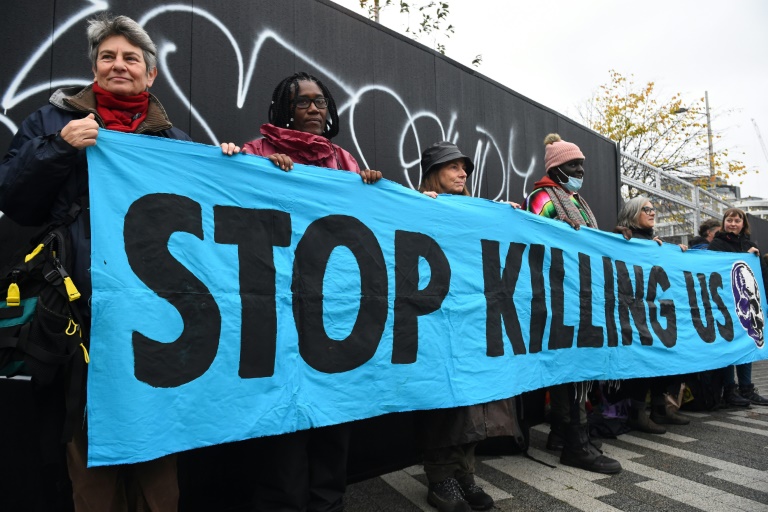
A loosely federated network of scientists in more than two dozen countries plan acts of civil disobedience starting this week to highlight the climate crisis, members of Scientist Rebellion told AFP.

Their non-violent actions are timed to the release Monday of a landmark report from the UN’s climate science advisory panel laying out options for slashing carbon pollution and controversial schemes for extracting CO2 from the air, they said in interviews.

Scientist Rebellion targets universities, research institutes and major scientific journals, prodding them and their staff to speak out more forcefully on what they describe as the existential threat of global warming.

“Scientists are particularly powerful messengers, and we have a responsibility to show leadership,” said Charlie Gardner, a conservation scientist at the University of Kent specialised in tropical biodiversity.

“We are failing in that responsibility. If we say it’s an emergency, we have to act like it is.”

Starting Monday, the group hopes to see “high levels of disobedience” with more than 1,000 scientists worldwide taking part in direct non-violent action against government and academic institutions.

The world has seen a crescendo of deadly extreme weather amplified by rising temperatures — heatwaves, wildfires, flooding, storms engorged by rising seas — and a torrent of recent climate science projects worse to come. 

Much of that research is distilled in periodic reports from the UN’s Intergovernmental Panel On Climate Change (IPCC). 

Scientist Rebellion was founded in 2020 by two physics PhD students at St Andrews College in Scotland, inspired in part by the more broadly based Extinction Rebellion.

The group’s first significant action with more than 100 scientists, in March 2021, targeted the British Royal Society and science publishing behemoth Springer Nature.        

“We basically pasted enlarged copies of their journal articles calling for rapid transformative change onto their offices,” said Kyle Topher, an environmental scientist from Australia and full-time activist for the group.

– ‘It is survival’ –

Last year’s COP26 climate summit in Glasgow saw a score of their members arrested. 

“As far as we know this was the first mass arrest of scientists anywhere in the world since Carl Sagan protested nuclear weapons testing in the 1980s,” said Gardner.

They also made headlines by leaking an early draft of Monday’s IPCC report, which warned that carbon dioxide emissions need to peak within three years if the world is to keep the Paris Agreement targets for global warming in reach. 

“As scientists, we tend to be risk averse — we don’t want to risk our jobs, our reputations, and our time,” said Rose Abramoff, a soil scientist at Oak Ridge National Laboratory in Knoxville, Tennessee and a Scientist Rebellion member.

“But it is no longer sufficient to do our research and expect others to read it and understand the severity and urgency of the climate crisis.”

The aim of the group is to “make this crisis impossible to ignore”, she added.

Many of its members are in the Global South, where climate change protests up to now have been more muted, even if the impacts are more keenly felt.

“I am not sure this is our last chance, but time is definitely running out,” said Jordan Cruz, an environmental engineer in Ecuador who studies the devastating impact of mining industries on human communities in the Andes.

“I am terrified,” he said by email. “But it’s the kind of fear that motivates action. It is survival.”

More information about Scientist Rebellion can be found here: https://scientistrebellion.com/take-action/

Stung by drought, Morocco's bees face disaster

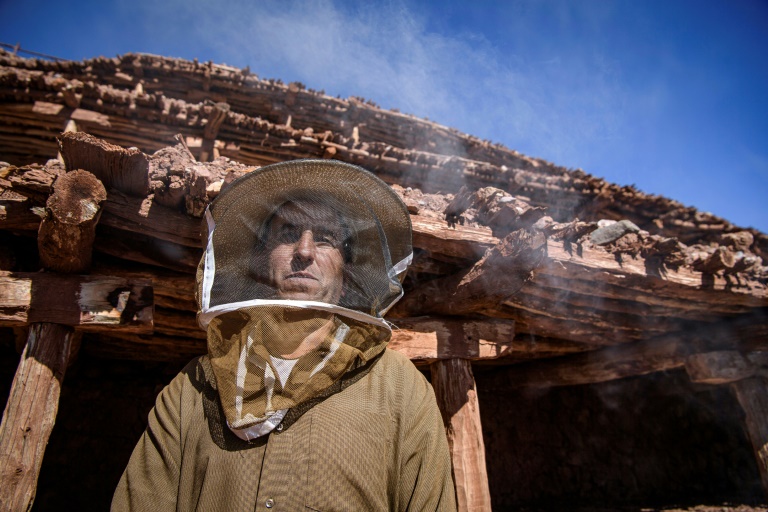
Morocco’s village of Inzerki is proud to claim it has the world’s oldest and largest collective beehive, but instead of buzzing with springtime activity, the colonies have collapsed amid crippling drought.

Beekeeper Brahim Chatoui says he has lost almost a third of his hives in just two months — and he is not alone.

“At this time of year, this area would normally be buzzing with bees,” said Chatoui, sweating under a blazing springtime sun. “Today, they’re dying at a terrifying rate.”

The North African kingdom has seen a dramatic spike in mass die-offs of the critical pollinators, a phenomenon called “colony collapse disorder”.

Worldwide, experts say such sudden mass deaths of bees are often linked to the destruction of nature and the rampant use of pesticides.

But authorities in Morocco say these collapses are caused by the worst drought to hit the country in 40 years, which has decimated the plants on which bees rely for food.

– ‘Unprecedented’ spike –

The crisis is so acute that the government released 130 million dirhams ($13 million), to support beekeepers and investigate the cause of the bee deaths.

Morocco’s National Food Safety Office, which carried out the investigation, ruled out disease as a reason.

Instead, it blamed the “unprecedented” spike in hive collapses on an intense drought driven by climate change.

Inzerki’s unique collective beehive sits on a sunny hillside in the heart of the Arganeraie Biosphere Reserve, a UNESCO-protected 2.5-million-hectare region, some 415 kilometres (260 miles) southwest of the capital Rabat.

The complex is striking: A five-storeyed structure of wooden struts and dry mud stretch along a hillside, each compartment home to a cylindrical wicker hive, covered with a mix of earth and cow dung. 

Experts say it is the oldest traditional, collective beehive in the world, dating back to 1850, but today it is under threat amid a changing climate.

“This year we hope for rain, because I have lost 40 hives so far,” Chataoui said.

Bee expert Antonin Adam, who has studied the insects in southwestern Morocco, also blamed the collapse on the drought.

But he added the problem may have been exacerbated by “the bees’ vulnerability to diseases, nomadic pastoral practices, intensive agriculture and the country’s desire to increase its honey production”.

That desire is clearly visible in agriculture ministry figures.

Honey output has risen by 69 percent in a decade, from 4.7 tonnes in 2009 to almost eight tonnes in 2019, generating revenues of over 100 million euros.

But it is not only Inzerki’s apiary that is in trouble.

Mohamed Choudani, of the UAM beekeepers union, said the crisis was hitting bee populations across the country.

Last summer, Morocco’s 36,000 beekeepers were managing some 910,000 hives, up by 60 percent since 2009, according to official figures.

But Choudani said that since last August, 100,000 colonies had been lost in the central region of Beni Mellal-Khenifra alone.

Bees and other pollinators are vital for the reproduction of more than three-quarters of food crops and flowering plants.

The UN’s Food and Agriculture Organisation (FAO) say bees play an “essential role… in keeping people and the planet healthy”, with the UN saying they “serve as sentinels for emergent environmental risks, signalling the health of local ecosystems”.

– ‘Exceptional legacy’ –

For the villagers of Inzerki, the collapse of hives is an ecological and economic disaster — but also a crisis for their unique heritage.

Chatoui, the beekeeper, said many Inzerki residents can’t afford to revive the hives they have lost.

“Some families have decided just to give up on beekeeping completely,” he said.

The hives at Inzerki are in trouble. Parts of the structure, recently listed as a national heritage site, are sagging.

Geographer Hassan Benalayat says the neglect is due to several factors on top of climate change, including the arrival of modern agriculture and a general exodus from the countryside.

Around 80 families in the village once kept bees. Today there are less than 20.

“It’s urgent to keep this exceptional legacy alive,” Benalayat said.

Chatoui and other villagers have set up an association to restore the structure, as well as planting herbs for the bees that are better able to tolerate hot and arid conditions.

“The situation is critical, but that doesn’t mean I’m giving up,” Chatoui said.

“The aim isn’t to produce honey, but to protect the hives and make sure the bees survive until better days.”

From Beirut to Baghdad: Lebanese flee crisis seeking jobs in Iraq

Iraq, once synonymous with conflict and chaos, is becoming a land of opportunity for Lebanese job-seekers fleeing a deep economic crisis back home.

Akram Johari is one of thousands who fled Lebanon’s tumbling currency and skyrocketing poverty rates.

Last year, he packed his bags and boarded a plane from Beirut to Baghdad, using social media to search for opportunities.

“I didn’t have enough time to look for a job in the Gulf,” the 42-year-old said, explaining why he eschewed the more traditional path for those seeking economic opportunities in the region.

With its relative proximity and visas on arrival for Lebanese, the Iraqi capital seemed a good option.

“I had to take quick action, and so I came to Baghdad and began searching for work on Instagram,” Johari said, speaking in a restaurant he has run for about a month.

Lebanon is grappling with an unprecedented financial crisis that the World Bank says is of a scale usually associated with war.

Beirut’s crisis, driven by years of endemic corruption, has seen Lebanon’s currency lose more than 90 percent of its value against the dollar.

Lebanon’s 675,000-pound monthly minimum wage now fetches around $30 on the black market, and about 80 percent of the population now lives in poverty, according to the UN.

When he left Beirut, Johari was earning the equivalent of about $100 per month. In Iraq, he earns enough to support his family back home, he said.

– Thousands flock to Iraq –

More than 20,000 Lebanese citizens arrived in Iraq between June 2021 and February 2022, excluding pilgrims visiting the Shiite holy cities of Najaf and Karbala, according to the Iraqi authorities.

Lebanon’s ambassador in Baghdad, Ali Habhab, said that movement from Lebanon to Iraq “has recently multiplied”.

There are more than 900 Lebanese businesses now operating in Iraq, the majority of them in the restaurant trade, tourism and health, Habhab said. 

In particular, there have been “dozens of Lebanese doctors who offer their services” in Iraqi hospitals, he said.

Iraq’s decades of conflict — from the Iran-Iraq war of the 1980s, to the US-led invasion of 2003 and  subsequent sectarian conflict, and on to the rise of the Islamic State group in 2014 — means that Baghdad might appear to be an unlikely magnet for those seeking to build a new life.

But since the country declared victory over IS in 2017, Iraq has slowly begun to recover its stability.

Today, streets in Baghdad that once witnessed atrocities are buzzing with shops lining main thoroughfares and cafes open late into the night.

According to Iraqi economic expert Ali al-Rawi, many Lebanese companies came to Iraq because they “know the investment environment well”, while many foreign companies from other countries “fear investing” because of its violent past.

“There is a lot of space for Lebanese enterprises in the Iraqi economy,” he said.

But Iraqis themselves have seen their fair share of economic hardship.

In a country where 90 percent of revenues come from oil sales, roughly a third of the population lives in poverty, according to the World Bank. 

In 2019, nationwide protests erupted across Iraq, driven by anger over rampant corruption, the absence of basic services and unemployment — similar factors behind protests in Lebanon that erupted around the same time.

– Lebanese firms flourish –

Lebanon was once a prime destination for medical tourism, as Iraqis flocked to better equipped medical centres in Beirut and other cities.

But, as with other sectors, Lebanon’s economic crisis has hit healthcare.

The Beirut Eye & ENT Specialist Hospital was once popular with Iraqi patients, but an official at the hospital, Michael Cherfan, said that “many doctors had left Lebanon”.

The hospital responded to the crisis in the way many Lebanese have — by opening a branch in Baghdad, sparing Iraqis the trip to Beirut.

“Our doctors come on a rotating basis,” Cherfan said. “Every week, one or two doctors come and do consultations and surgeries, earn some money and then return to Lebanon, which helps offset some of their losses.”

For Johari, while the money he earns in Iraq supports his family, it comes with a bitter taste. He flies home once a month, but he misses his family.

“It saddens me a lot that I can’t watch my two-month-old daughter grow up”, he said.

Clock ticking on Swiss watches' raw materials from Russia

Diamonds shine brightly at this year’s Geneva watch fair but the sanctions slapped on Russia could soon force the Swiss watch industry to produce more subdued designs.

Russia is a major supplier of diamonds, gold and other precious metals to the luxury watchmakers exhibiting at Watches and Wonders, one of the world’s top salons for the prestige industry.

The Russian group Alrosa — the world’s largest diamond mining company — was hit by US sanctions within hours of the Kremlin-ordered invasion of Ukraine on February 24.

According to US Treasury figures, it accounts for 90 percent of Russia’s diamond mining capacity, and 28 percent globally.

And while trade between Switzerland and Russia is modest, gold is the chief import, ahead of precious metals such as platinum followed by diamonds not mounted or set, according to the Swiss customs office.

Compared to other sectors of the Swiss economy, “watchmaking was a branch that was less affected than others by supply problems in 2021”, Jean-Daniel Pasche, president of the Federation of the Swiss Watch Industry, told AFP.

But that may no longer be the case, he acknowledged, adding that it was hard to assess the repercussions for the watch industry at this stage.

“There are obviously reserves. Afterwards, we will have to see, depending on how long the conflict lasts,” Pasche said.

– Recycled gold and palladium –

The Swiss luxury giant Richemont owns the Cartier and Van Cleef & Arpels jewellery firms, plus eight prestigious watch brands, including Piaget and IWC.

The group took the lead on Wednesday, saying all its brands have stopped sourcing diamonds from Russia.

The move will create a lot of work on the supply chain to find responsibly-sourced, quality diamonds from elsewhere, Richemont chief executive Jerome Lambert told a press conference.

Gold supply is of less concern. For a decade or so, Richemont has been sourcing recycled gold for watchmaking, bought from industry and the electronics sector.

For palladium, used for instance for wedding and engagement rings, the group decided “ahead of the sanctions” to switch to suppliers specialising in recycled palladium, Lambert said.

– Draining the stocks –

At Patek Philippe, one of the most prestigious Swiss brands, the firm’s president is counting on his stockpile to ride out the storm.

“Luckily I produce in small quantities,” said Thierry Stern, who represents the fourth generation of his family at the company helm.

“So I don’t feel any difference yet,” he told AFP. For 2022, Patek Philippe plans to manufacture 66,000 timepieces.

“And if I can’t find certain stones, I can always do engraving,” said the head of the  brand, which relies on a wide range of disciplines including ceramics, marquetry and enamel.

H. Moser, a niche brand producing 2,000 watches a year for wealthy collectors, struck much the same tone.

“Purchases are made in advance. For example, for the casings that I want to make in 2023, I have already bought all the gold I need,” said boss Edouard Meylan.

“But maybe in six months’ time some of our suppliers will call to push back the deadlines because they haven’t received the materials,” he admitted.

Concerns over raw materials “will drive up prices, of course”, said Jon Cox, an industry analyst with the Kepler Cheuvreux financial services company.

However, compared to other sectors, luxury firms have more leeway to pass on costs to customers, he added.

At the Watches and Wonders salon in Geneva, where 38 brands are exhibiting until Tuesday, the displays are brimming with diamonds, reflecting the “generally upbeat mood” of the industry this year after a prosperous 2021.

However, given the war and its repercussions, “I imagine product development will move to more subdued luxury goods”, Cox said.

Torrential rains kill 14 in Brazil

Torrential downpours triggered flash floods and landslides across Brazil’s Rio de Janeiro state, killing at least 14 people including eight children, and leaving five missing, authorities said Saturday.

Two days of heavy rain have battered a broad swathe of the southeastern state’s Atlantic coast, the latest in a series of deadly storms in Brazil that experts say are being aggravated by climate change. 

More rain is forecast for the region in the coming days.

The victims included a mother and six of her children, who were buried when a landslide swept away their home, officials said.

President Jair Bolsonaro said on Facebook the federal government had sent military aircraft to help the rescue effort and dispatched national disaster response secretary Alexandre Lucas to the state of 17.5 million people.

The new incidents come six weeks after flash floods and landslides killed 233 people in the scenic city of Petropolis, the Brazilian empire’s 19th-century summer capital, also in Rio state.

This time, the areas hit hardest included the tourist town of Paraty, a seaside colonial city known for its picturesque cobblestone streets and colorful houses.

Officials there said a landslide in the Ponta Negra neighborhood had killed a mother and six of her children, ages two, five, eight, 10, 15 and 17.

A seventh child was rescued alive and taken to the hospital, where he was in stable condition, they said.

Another four people were injured.

Six more victims, including at least two children, were killed in the city of Angra dos Reis, where officials declared a “maximum alert” and state of emergency after landslides devastated the Monsuaba neighborhood.

Several people were rescued alive, while another five remain missing, they said.

Mayor Fernando Jordao said emergency workers were installing floodlights to continue the search-and-rescue operation through the night if necessary.

“Residents have been working side-by-side with us on the search,” he told a press conference.

“We’ll continue working hard.”

In Mesquita, 40 kilometers (25 miles) northwest of Rio de Janeiro city, a 38-year-old man was electrocuted trying to help another person escape the flooding, officials and media reports said.

– Record rains –

The storms turned streets into rivers Friday night in several cities including Rio, the state capital, sweeping up cars and triggering landslides — a frequent tragedy in the rainy season, especially in poor hillside communities.

TV channel Globo News carried images of a family evacuating two young children through the floodwaters in a styrofoam cooler in the Rio suburb of Belford Roxo, while residents posted videos on social media of small alligators swimming through flooded streets.

A hospital in the suburb of Nova Iguacu was badly flooded, turning the corridors of its intensive care unit into streams.

Officials in Angra said the city had received up to 800 millimeters (31 inches) of rain in 48 hours in some areas, “levels never before registered in the municipality.”

Experts say rainy season downpours in Brazil are being augmented by La Nina — the cyclical cooling of the Pacific Ocean — and by climate change.

Because a hotter atmosphere holds more water, global warming increases the risk and intensity of flooding from extreme rainfall.

In December, storms killed 24 people in the northeastern state of Bahia, and in January, floods and landslides claimed at least 28 lives in southeastern Brazil, mostly in Sao Paulo state.

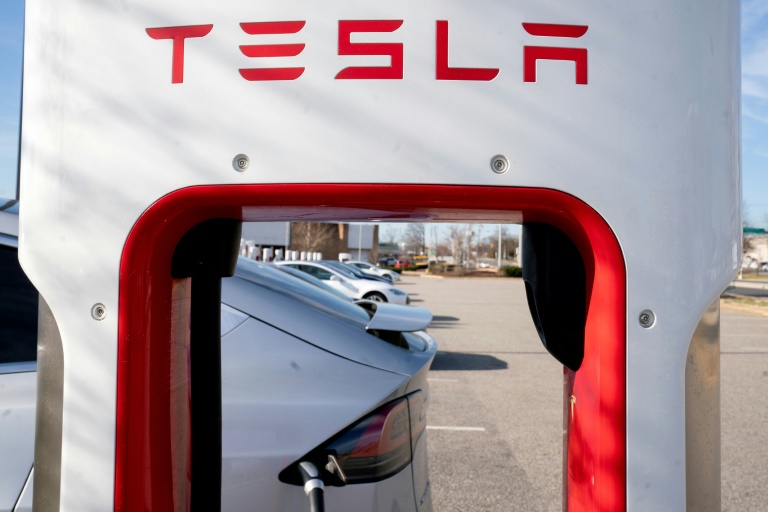
Tesla delivers over 1 million electric cars over past year

US electric car manufacturer Tesla shipped a record number of more than one million cars over the past year, according to figures published Saturday. 

The company delivered 1.06 million cars from April 2021 to March 2022, including more than 310,000 cars in the first quarter of this year alone, which is 67 percent higher than over the same period last year.

Still, the figure fell short of analysts’ expectations of 317,000 cars, according to data compiled by FactSet.

Deliveries are considered similar to sales figures published by other manufacturers.

Growth, however, slowed sharply in recent months for the Austin, Texas-based company, with deliveries rising a minuscule 0.4 percent since the fourth quarter of last year.

The number of vehicles produced is also slightly down against the previous quarter (-0.1 percent).

“This was an exceptionally difficult quarter due to supply chain interruptions & China zero Covid policy,” Tesla CEO Elon Musk said on Twitter, referring to China’s strict health restrictions. “Outstanding work by Tesla team & key suppliers saved the day.”

However, Tesla is still faring better than its competitors, with the entire automobile industry affected by supply chains snarls.

Toyota saw its sales in North America fall 23.5 percent in volume in the first quarter of 2022, compared to the same period last year, and 26.3 percent in value.

General Motors earned a profit of $1.7 billion for the quarter ending December 31, down 38.7 percent from the final three months of 2020 as revenues dropped 10.5 percent to $33.6 billion.

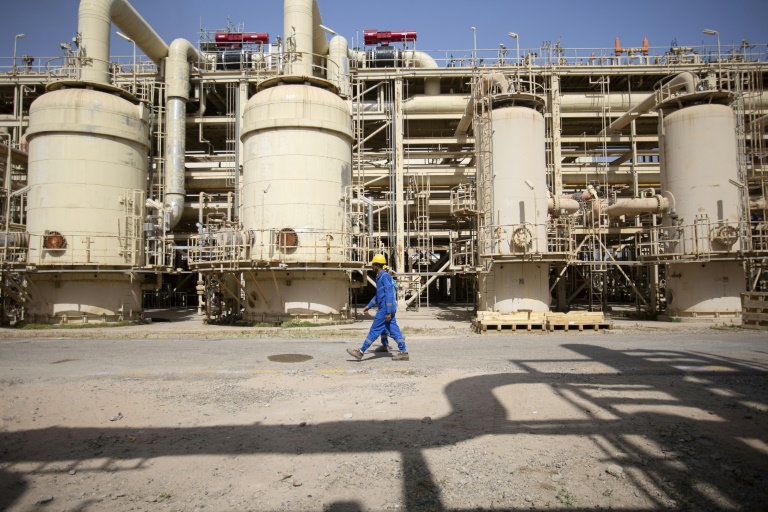
Iraq oil exports $11.07 bn in March, highest for 50 years

Iraq exported $11.07 billion of oil last month, the highest level for half a century, as crude prices soared amid shortfall fears following Russia’s invasion of Ukraine, the oil ministry said.

The second largest producer in the Organization of the Petroleum Exporting Countries (OPEC), Iraq exported “100,563,999 barrels for revenues of $11.07 billion, the highest revenue since 1972”, the ministry said.

The figures published late Friday are preliminary data but final data “generally does not vary” much, a ministry official said, speaking on condition of anonymity.

In February, oil revenues reached an eight-year high of $8.5 billion dollars, with daily exports of 3.3 million barrels of oil.

Oil exports account for more than 90 percent of Iraq’s income.

Crude prices spiked over fears of a major supply shortfall after Moscow invaded Ukraine on February 24. Russia is the world’s second biggest exporter of oil after Saudi Arabia.

On Thursday, the OPEC group of oil producing countries and its Russia-led allies agreed on another modest oil output increase, ignoring Western pressure to significantly boost production as the Ukraine conflict has rocked prices.

The 13 members of the Saudi-led OPEC and 10 countries spearheaded by Russia — a group known as OPEC+ — backed an increase of 432,000 barrels per day in May, marginally higher than in previous months.

– ‘Two-edged sword’ –

The United States has urged OPEC+ to boost production as high energy prices have contributed to soaring inflation across the world, which has threatened to severely derail the recovery from the Covid pandemic.

While OPEC refused to budge, Washington said it would tap its strategic stockpile by a record amount in a bid to cool soaring prices.

The international benchmark contract, Brent North Sea crude, flirted with a record high in early March as it soared to almost $140 per barrel, but has retreated since then.

On Friday, oil was around $100 a barrel.

Oil revenues are critical for Iraq’s government, with the country mired in a financial crisis and needing funds to rebuild infrastructure after decades of devastating war.

Iraq, with a population of some 41 million people, is also grappling with a major energy crisis and suffers regular power cuts.

Despite its immense oil and gas reserves, Iraq remains dependent on imports to meet its energy needs.

Neighbouring Iran currently provides a third of Iraq’s gas and electricity needs, but supplies are regularly cut or reduced, aggravating daily load shedding.

“Overall, a windfall in oil revenues is positive for Iraq,” said Yesar al-Maleki, an analyst at Middle East Economic Survey.

“But is a two-edged sword, since it may dampen government efforts to implement economic reforms needed to diversify it’s sources of income beyond oil.”

Many ordinary Iraqis are frustrated that they see little impact of the higher oil revenues trickle down to them, in a country where nearly a third live below the poverty line, according to the UN.

“With the new parliament bringing a more populist flavour of MPs, it is expected that this windfall will lead to greater calls by politicians and the public alike to increase public sector wages and employment,” Maleki added.

Close Bitnami banner
Bitnami