AFP

BirdLife Cyprus sees 'worrying' spike in migratory bird killings

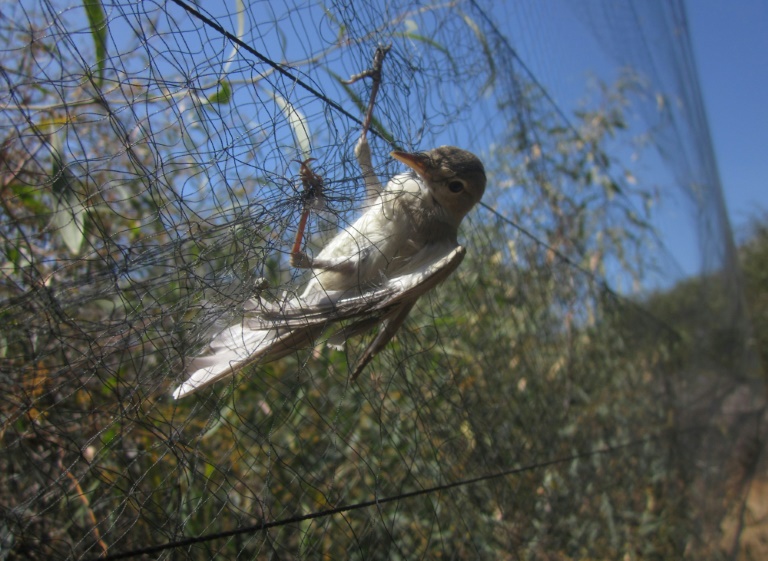
Conservation group BirdLife Cyprus reported Wednesday a “worrying increase” in illegal bird trappings last year, blaming authorities for reducing fines for killing protected species. 

“This sadly comes as no surprise, following a shameful relaxation of the Cyprus bird-protection law in December 2020,” the group said in a statement.

It has systematically monitored bird trapping levels for the past 20 years in the Republic of Cyprus and a British military base area on the Mediterranean island.

Its autumn 2021 report showed a big increase in trapping levels with so-called “mist nets” within the survey areas compared to 2020.

Autumn is when trappers target migratory birds, especially Blackcaps and other migrant songbirds.

Late last year, activity using mist nets — which are barely visible and designed to entangle the birds — was 132 percent higher than for autumn 2020.

At Dhekelia, a British base area, mist netting activity showed an increase of 46 percent from 2020.

Last year’s increase is similar to the past four years but significantly lower than the peak 2016 trapping season when 2.3 million songbirds were killed.

– ‘Troubling trend’ –

“These recorded trapping levels amount to just over 600,000 birds that might have been illegally trapped and killed in the autumn of 2021 within the survey areas,” said BirdLife Cyprus. 

“This troubling increasing trend in trapping activity comes after a series of retrograde steps on a policy level that sent a general message of decriminalising bird trapping.” 

It said fines that were reduced from 2,000 euros (about $2,200) to 200 euros “are non-deterrent and non-punitive, and clearly not proportionate to the profit one would make by illegally selling these birds”.

The illicit trade in migratory birds is estimated at 15 million euros per year, although it has been illegal for decades. Critics blame lax enforcement.

In a letter to the Cyprus government last October, the European Commission expressed concern and urged Nicosia to annul this law amendment and restore the fines starting at 2,000 euros.

“The state’s objective should be the protection and conservation of our natural heritage, starting from re-instating a strict and deterrent law,” said the group.

“Cyprus is very likely to be taken to the EU Court of Justice for the insufficient protection of migratory birds, as highlighted in the Commission’s letter.”

9,000-year-old ritual complex found in Jordan desert

Archaeologists deep in the Jordanian desert have discovered a 9,000-year-old ritualistic complex near what is thought to be the earliest known large human-built structure worldwide.

The Stone Age shrine site, excavated last year, was used by gazelle hunters and features carved stone figures, an altar and a miniature model of a large-scale hunting trap.

The giant game traps the model represents — so-called “desert kites” — were made of long walls that converge to corral running gazelles into enclosures or holes for slaughter.

Similar structures of two or more stone walls, some several kilometres (miles) long, have been found in deserts across Saudi Arabia, Syria, Turkey and Kazakhstan.

The Neolithic-era ritual site was discovered inside a larger campsite last October by a joint French-Jordanian team called the South Eastern Badia Archaeological Project.

The nearby desert kites in Jibal al-Khashabiyeh are “the earliest large-scale human built structures worldwide known to date,” said a statement by the SEBA Project.

It hailed the “spectacular and unprecedented discovery” of the ritualistic site, believed to date to about 7000 BC.

It featured two steles with anthropomorphic features, the taller one 1.12 metres high, other artefacts including animal figurines, flints, and some 150 arranged marine fossils.

The wider, decade-old research project aims to study “the first pastoral nomadic societies, as well as the evolution of specialised subsistence strategies”. 

The desert kites suggest “extremely sophisticated mass hunting strategies, unexpected in such an early timeframe,” said the project’s statement.

The sacral symbolism was most likely meant “to invoke the supranatural forces for successful hunts and abundance of prey to capture,” it said. 

The teams of researchers have also found campsites with circular dwellings and large numbers of gazelle bones.

The project is a collaboration of Jordan’s Al Hussein Bin Talal University and the French Institute of the Near East.

French ambassador Veronique Vouland-Aneini hailed the “outcome for both the scientific world and Jordan”, saying “it provides us with a priceless testimony of the historical life in the Middle East, its traditions and rituals”.

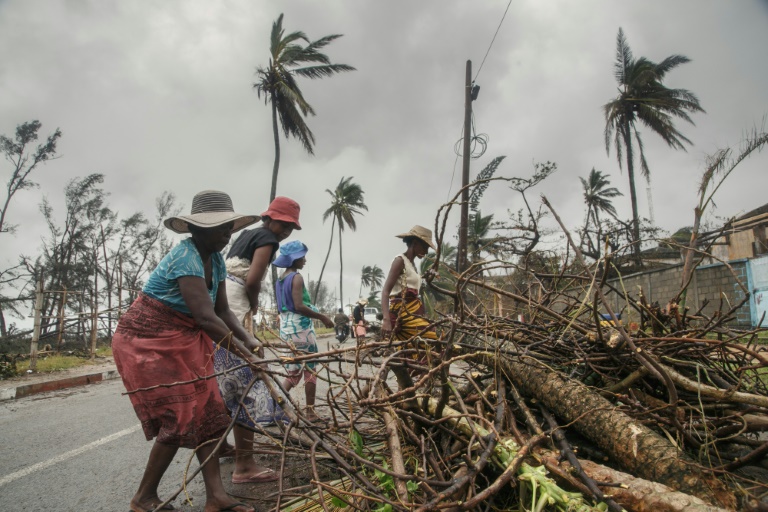
Cyclone Emnati lashes Madagascar

Cyclone Emnati overnight lashed the island nation of Madagascar, still reeling from the impact of another cyclone earlier this month, local authorities said Wednesday.

The cyclone “made landfall around 2300 GMT just north of the southeastern district of Manakara,” Faly Aritiana Fabien, a senior official of the National Risk Management Office (BNGRC) told AFP. No casualties have been reported yet.

The storm, which passed just north of Indian Ocean islands of Mauritius and Reunion, had weakened slightly by the time it reached the eastern coast of Madagascar, but was still packing winds of around 100 kilometres (60 miles) per hour and gusts of 140 km/h, according to Meteo-France. 

The cyclone is forecast to exit Madagascar Wednesday night, but authorities are warning of torrential rains.

National Weather forecaster, Meteo-Madagascar warned of strong gusts, heavy rain and widespread flooding around the southern and southeastern districts.

UN agencies had on Tuesday said they were preparing “for the worst”. 

Another storm, Cyclone Batsirai struck the island on February 5, affecting some 270,000 people and claiming 121 lives.

At the same time, some 21,000 people still remain displaced from when tropical storm Ana struck in late January.

Another 5,000 were affected last week by tropical storm Dumako.

More than 30,600 people have precautionary been moved to emergency shelters.

One of the poorest countries in the world, the southern region of the large Indian Ocean island country has been ravaged by drought, the worst in 40 years, according to the UN, which blames climate change for the crisis.

The island is prone to numerous storms and cyclones between November and April every year.

World must brace for more extreme wildfires: UN

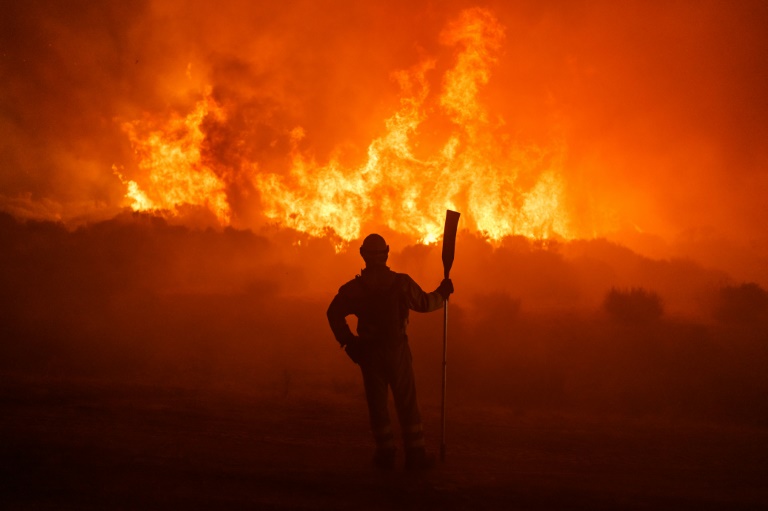
The number of major wildfires worldwide will rise sharply in coming decades due to global warming, and governments are ill-prepared for the death and destruction such mega-blazes trail in their wake, the UN warned Wednesday.

Even the most ambitious efforts to curb greenhouse gas emissions will not prevent a dramatic surge in the frequency of extreme fire conditions, a report commissioned by the UN Environment Programme (UNEP) concluded.

“By the end of the century, the probability of wildfire events similar to Australia’s 2019–2020 Black Summer or the huge Arctic fires in 2020 occurring in a given year is likely to increase by 31–57 percent,” it said.

The heating of the planet is turning landscapes into tinderboxes, and more extreme weather means stronger, hotter and drier winds to fan the flames.

Such wildfires are burning where they have always occurred, and are flaring up in unexpected places such as drying peatlands and thawing permafrost.

“Fires are not good things,” said co-author Peter, an expert in forest fire management at the UN’s Food and Agriculture Organization (FAO).

“The impacts on people — socially, health-wise, psychologically — are phenomenal and long-term,” he told journalists in a briefing.

Large wildfires, which can rage uncontrolled for days or weeks, cause respiratory and heart problems, especially for the elderly and very young. 

A recent study in The Lancet concluded that exposure to wildfire smoke results, on average, in more than 30,000 deaths each year across 43 nations for which data was available.

Economic damages in the United States — one of the few countries to calculate such costs — have varied between $71 to $348 billion (63 to 307 billion euros) in recent years, according to an assessment cited in the report.

– Zombie fires –

Major blazes can also be devastating for wildlife, pushing some endangered species closer to the brink of extinction.

Nearly three billion mammals, reptiles, birds and frogs were killed or harmed, for example, by Australia’s devastating 2019-20 bushfires, scientists have calculated.

Wildfires are made worse by climate change.

Heatwaves, drought conditions and reduced soil moisture amplified by global warming have contributed to unprecedented fires in the western United States, Australia and the Mediterranean basin just in the last three years.

Even the Arctic — previously all but immune to fires — has seen a dramatic increase in blazes, including so-called “zombie fires” that smoulder underground throughout winter before bursting into flames anew.

But wildfires also accelerate climate change, feeding a vicious cycle of more fires and rising temperatures.

Last year, forests going up in flames emitted more than 2.5 billion tonnes of planet-warming CO2 in July and August alone, equivalent to India’s annual emissions from all sources, the European Union’s Copernicus Atmosphere Monitoring Service (CAMS) reported.

Compiled by 50 top experts, the report called for a rethink on how to tackle the problem.

“Current government responses to wildfires are often putting money in the wrong places,” investing in managing fires once they start rather than prevention and risk reduction, said UN Environment chief Inger Andersen.

“We have to minimise the risk of extreme wildfires by being prepared.”

One dead, 10 feared missing in Australia floods

One person was found dead in a submerged car and 10 others were reportedly missing on Wednesday after heavy rain caused flash flooding in eastern Australia and set off a string of emergency warnings up and down the Pacific coast. 

The body of the drowned 60-year-old was found early Wednesday in the state of Queensland, premier Annastacia Palaszczuk told parliament, describing the incident as a “tragedy”.

Almost half a meter (1.5 feet) of rain has fallen on some parts of her state in the last 24 hours, causing multiple road closures and transport chaos.

Emergency services received more than a hundred calls for help and swift water rescue crews have been despatched to assist dozens of stranded residents.

Emergency services have received more than a hundred calls for help and swift water rescue crews have been despatched to rescue dozens of stranded residents.

“This has the potential to be a significant rainfall event for south-east Queensland,” Palaszczuk said.

A freight train overturned near the town of Gympie, although the driver was said to have minor injuries.

Local media quoted Sunshine Coast Police District Superintendent Craig Hawkins as saying 10 people were also missing.

Fifteen Queensland dams are at capacity and more rain is expected in the coming days.

“Locally intense rainfall is possible and since many catchments are now saturated there is an increased risk of dangerous and life-threatening flash flooding over the coming days,” said Palaszczuk.

Police warned motorists to avoid driving through flooded roads and to stay at home.

“Flash flooding is occurring on roads and bridges – Re-consider your need to travel today,” police told residents.

Heavy rain has also pelted the state of New South Wales, where parts of Sydney were briefly submerged Tuesday.

After several years of drought and climate-worsened bushfires, Australia’s east is wrapping up an extraordinarily wet antipodean summer, thanks to a La Nina weather pattern.

La Nina increases the chances of tropical cyclones off Australia’s Pacific coast and brings above-average rainfall, according to the country’s Bureau of Meteorology. 

Mexican town toasts tequila fish saved from extinction

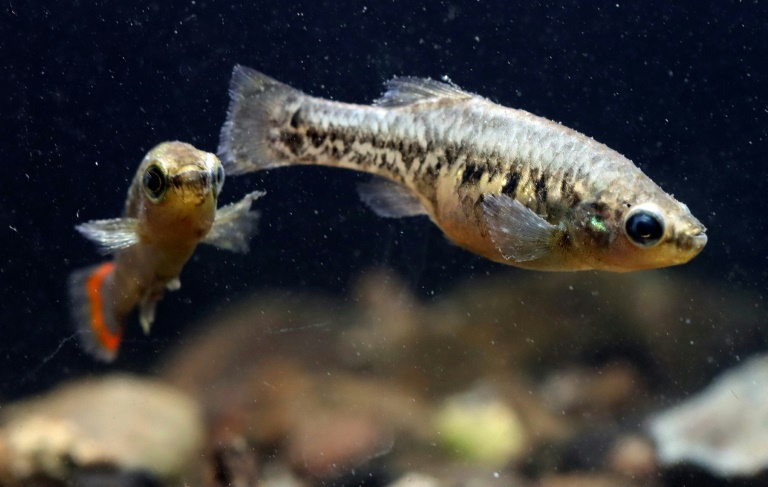
Residents of a small town in western Mexico are celebrating the reintroduction into the wild of the tequila fish — an endemic species saved from the brink of extinction.

The fish, whose scientific name is Zoogoneticus Tequila, was rescued in the 1990s by US and British conservationists who kept it in aquariums and helped it return to its original habitat in the Teuchitlan river.

Children in Teuchitlan, home to about 10,000 people, have been at the forefront of efforts to inform visitors not only about the importance of keeping their habitat clean, but also about the tequila fish.

“The children are the ones who approach people on the river bank and tell them that in this river lives a little fish that is unique in the world… and that they participated in its reintroduction,” said Consuelo Rivera, a 70-year-old retired teacher.

The tequila fish was reported to be extinct in 1998, possibly due to fragmentation of its habitat, pollution and competition from non-native species, according to the International Union for the Conservation of Nature (IUCN).

The species survived only in captivity for several years until conservationists, led by Michoacan University, began the process in 2014 to reintroduce it into the wild.

Since then the fish has gone from strength to strength, helped by the last major release of fish in 2018, said project leader Omar Dominguez.

– ‘Little rooster’ resurrected –

The tequila fish grows to around seven centimeters (2.7 inches) and the male has a bright reddish-orange tail.

It shares the name of the world-renowned Mexican liquor originating in the town of Tequila, which like Teuchitlan is located in the state of Jalisco.

The species has unique characteristics such as giving birth to well-developed fetuses, which it feeds through a kind of umbilical cord similar to that of humans, Dominguez said.

“It’s an important part of the ecosystem. It’s a carnivorous species and it feeds, for example, on mosquito larvae, which keeps ecosystems healthy for humans,” he added.

There are now estimated to be between 1,500 and 2,000 tequila fish in the wild, and the species is listed as endangered by the IUCN.

The civil society group Guardians of the River carries out educational campaigns and workshops for children and adults to shown them the flora and fauna of the area.

Tourism also plays an important role in the initiative.

Local visitors bathe in spa pools around the river said to have therapeutic properties, and swim with the fish — also known as “gallito” (little rooster) because of its colorful tail.

“There are a lot of little fish. They swim together with people and sometimes the little fish also start to bite people, to caress them,” said Maria Aurea Martinez, a spa employee.

Jaime Navel, a local parish priest, sees the species as “the little fish that was resurrected, that came back to life.”

“There’s awe and joy in the community,” he said.

Mining firms targeting Brazil indigenous lands: report

Major mining companies are seeking to expand to currently protected indigenous lands in the Amazon rainforest, bolstered by billions of dollars in financing from international banks and investment firms, a report found Tuesday.

Nine mining giants including Brazil’s Vale, Britain’s Anglo American and Canada’s Belo Sun have filed applications seeking authorization to mine on indigenous reservations in Brazil — even though that is currently illegal, said the report by the environmental group Amazon Watch and the Association of Brazil’s Indigenous Peoples (APIB).

The firms appear to be betting Brazilian President Jair Bolsonaro, who has pushed to open protected lands to mining and agribusiness, will succeed in passing legislation introduced by his government that would allow them to operate on indigenous territories, it said.

As of November, the companies had a total of 225 active mining applications to Brazil’s National Mining Agency (ANM) that overlap 34 indigenous lands, for a total area more than three times the size of London, it said.

“The environmental damages and threats against the lives of forest peoples by mining activities are brutal and have only worsened under Bolsonaro’s administration,” Ana Paula Vargas, Brazil program director at Amazon Watch, said in a statement.

“With the rainforest at the tipping point of ecological collapse, we need to involve all the actors behind this industry.”

Experts say preserving indigenous lands is among the best ways to protect the world’s biggest rainforest, a vital resource in the race to curb climate change.

– Alleged violations –

The report found the mining firms, which also included Glencore, AngloGold Ashanti, Rio Tinto, Potassio do Brasil and Grupo Minsur, received a total of $54.1 billion in financing from international investors over the past five years for their Brazilian operations.

It urged banks and financial firms backing such companies to pull out of them, saying many also had a history of human rights violations and environmental destruction.

Major backers of the nine mining companies include US firms BlackRock, Capital Group and Vanguard, which invested $14.8 billion in them over the past five years, it said.

Banks including France’s Credit Agricole, US-based Bank of America and Citigroup and Germany’s Commerzbank are also major financiers of the companies, with a total of $2.7 billion in loans and underwriting, it said.

Many of the companies denied the report’s findings.

Anglo American said it had “legacy tenure applications” for indigenous lands that it had “fully and formally withdrawn several years ago.”

Vale said it had done the same last year.

South Africa-based AngloGold Ashanti said it “does not operate nor have interest in operating on indigenous lands.”

It said it had applied in the 1990s for mining licenses for three areas that were later declared indigenous reservations. It withdrew those applications more than two decades ago, but the mining agency’s database “was not updated,” it said.

Belo Sun, Peru’s Minsur and Potassio do Brasil said they had no activity relating to indigenous territory, and defended their social and environmental records.

A spokesperson for Vanguard meanwhile said the firm “regularly engages with mining companies” to promote sound environmental and social practices.

And Credit Agricole said it financed no mines in the Amazon.

“We have contacted Anglo American and Vale, which both confirmed they had no exploration permits for indigenous lands,” it said.

Mining firms targeting Brazil indigenous lands: report

Major mining companies are seeking to expand to currently protected indigenous lands in the Amazon rainforest, bolstered by billions of dollars in financing from international banks and investment firms, a report found Tuesday.

Nine mining giants including Brazil’s Vale, Britain’s Anglo American and Canada’s Belo Sun have filed applications seeking authorization to mine on indigenous reservations in Brazil — even though that is currently illegal, said the report by the environmental group Amazon Watch and the Association of Brazil’s Indigenous Peoples (APIB).

The firms appear to be betting Brazilian President Jair Bolsonaro, who has pushed to open protected lands to mining and agribusiness, will succeed in passing legislation introduced by his government that would allow them to operate on indigenous territories, it said.

As of November, the companies had a total of 225 active mining applications to Brazil’s National Mining Agency (ANM) that overlap 34 indigenous lands, for a total area more than three times the size of London, it said.

“The environmental damages and threats against the lives of forest peoples by mining activities are brutal and have only worsened under Bolsonaro’s administration,” Ana Paula Vargas, Brazil program director at Amazon Watch, said in a statement.

“With the rainforest at the tipping point of ecological collapse, we need to involve all the actors behind this industry.”

Experts say preserving indigenous lands is among the best ways to protect the world’s biggest rainforest, a vital resource in the race to curb climate change.

– Alleged violations –

The report found the mining firms, which also included Glencore, AngloGold Ashanti, Rio Tinto, Potassio do Brasil and Grupo Minsur, received a total of $54.1 billion in financing from international investors over the past five years for their Brazilian operations.

It urged banks and financial firms backing such companies to pull out of them, saying many also had a history of human rights violations and environmental destruction.

Major backers of the nine mining companies include US firms BlackRock, Capital Group and Vanguard, which invested $14.8 billion in them over the past five years, it said.

Banks including France’s Credit Agricole, US-based Bank of America and Citigroup and Germany’s Commerzbank are also major financiers of the companies, with a total of $2.7 billion in loans and underwriting, it said.

Many of the companies denied the report’s findings.

Anglo American said it had “legacy tenure applications” for indigenous lands that it had “fully and formally withdrawn several years ago.”

Vale said it had done the same last year.

Belo Sun, Peru’s Minsur and Potassio do Brasil said they had no activity relating to indigenous territory, and defended their social and environmental records.

A spokesperson for Vanguard meanwhile said the firm “regularly engages with mining companies” to promote sound environmental and social practices.

And Credit Agricole said it financed no mines in the Amazon.

“We have contacted Anglo American and Vale, which both confirmed they had no exploration permits for indigenous lands,” it said.

Only nine percent of plastic recycled worldwide: OECD

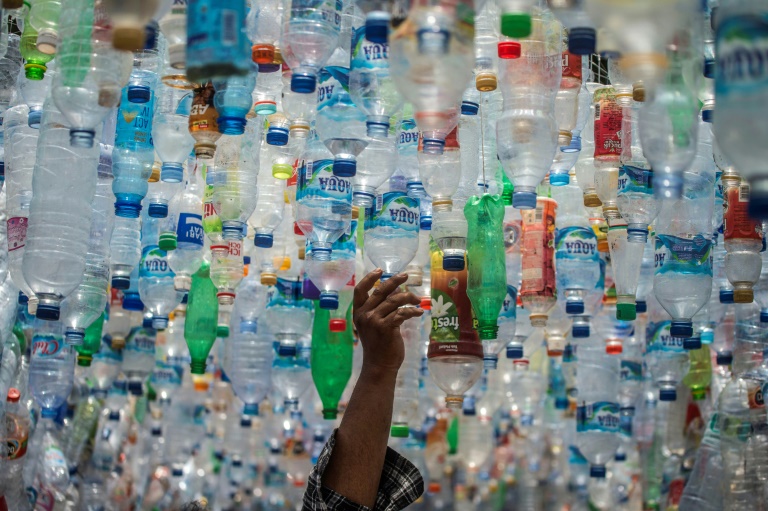
Less than 10 percent of the plastic used across the world is recycled, the OECD said Tuesday, calling for “coordinated and global solutions” ahead of expected talks on an international plastics  treaty.

A new report by the Organisation for Economic Co-operation and Development report found that 460 million tonnes of plastics were used in 2019, the number nearly doubling since 2000.

The amount of plastic waste had more than doubled during that time to 353 million tonnes, the Paris-based OECD said.

“After taking into account losses during recycling, only nine percent of plastic waste was ultimately recycled, while 19 percent was incinerated and almost 50 percent went to sanitary landfills,” it said in its Global Plastics Outlook.

“The remaining 22 percent was disposed of in uncontrolled dumpsites, burned in open pits or leaked into the environment.”

The Covid-19 pandemic saw the use of plastics drop by 2.2 percent in 2020 compared to the previous year. However single-use plastics rose and overall use is “projected to pick up again” as the economy rebounds.

Plastics contributed 3.4 percent of global greenhouse emissions in 2019, 90 percent of it from “production and conversion from fossil fuels”, the report said. 

In the face of rampant global warming and pollution, it is “crucial that countries respond to the challenge with coordinated and global solutions”, OECD Secretary-General Mathias Cormann said in the report.

The OECD proposed a series of “levers” to address the issue, including developing the market for recycled plastics, which only represent six percent of the total — largely because they are more expensive.

It added that new technologies related to decreasing the environmental footprint of plastic represented only 1.2 percent of all innovation concerning the product.

While calling for “a more circular plastics lifecycle”, the OECD said that policies must also restrain overall consumption.

It also called for “major investments in basic waste management infrastructure”, including 25 billion euros ($28 billion) a year to go towards efforts in low and middle-income countries.

– Plastic treaty talks –

The report comes less than a week before the UN Environment Assembly begins on February 28 in Nairobi, where formal talks are expected to begin on a future international plastics treaty, the scope of which will be discussed.

Shardul Agrawala, the head of the OECD’s environment and economy integration division, said Tuesday’s report “further accentuates the need for countries to come together to start looking towards a global agreement to address this very important problem”.

Asked about the priorities of the treaty to be discussed in Nairobi, she said that “there is an urgent waste management problem which is responsible for the bulk of the leakage to the environment”.

“But we should not limit our focus just to the end of pipe solutions, there is a greater need in the long term to forge international cooperation and agreement towards alignment of standards,” she told an online press briefing Monday.

In a survey published Tuesday by polling firm Ipsos for the World Wildlife Fund, 88 percent of respondents stressed the importance of an international treaty to combat plastic pollution.

In the 28 countries surveyed, 23 percent of the respondents said such a treaty was “fairly important”, 31 percent said it was “very important” and 34 percent found it “essential”.

Only nine percent of plastic recycled worldwide: OECD

Less than 10 percent of the plastic used across the world is recycled, the OECD said Tuesday, calling for “coordinated and global solutions” ahead of expected talks on an international treaty on the issue.

A new report by the Organisation for Economic Co-operation and Development report found that 460 million tonnes of plastics were used last year, the number nearly doubling since 2000.

The amount of plastic waste had more than doubled during that time to 353 million tonnes, the Paris-based OECD said.

“After taking into account losses during recycling, only nine percent of plastic waste was ultimately recycled, while 19 percent was incinerated and almost 50 percent went to sanitary landfills,” it said in its Global Plastics Outlook.

“The remaining 22 percent was disposed of in uncontrolled dumpsites, burned in open pits or leaked into the environment.”

The Covid-19 pandemic saw the use of plastics drop by 2.2 percent in 2020 compared to the previous year. However single-use plastics rose and overall use is “projected to pick up again” as the economy rebounds.

Plastics contributed 3.4 percent of global greenhouse emissions in 2019, 90 percent of it from “production and conversion from fossil fuels”, the report said. 

In the face of rampant global warming and pollution, “it will also be crucial that countries respond to the challenge with coordinated and global solutions”, OECD Secretary-General Mathias Cormann said in the report.

The OECD proposed a series of “levers” to address the issue, including developing the market for recycled plastics, which only represent six percent of the total — largely because they are more expensive.

It added that new technologies related to decreasing the environmental footprint of plastics was only 1.2 percent of all innovation concerning the product.

While calling for “a more circular plastics lifecycle”, the OECD said that policies must also restrain overall consumption.

It also called for “major investments in basic waste management infrastructure”, including 25 billion euros ($28 billion) a year to go towards efforts in low and middle-income countries.

The reports comes less than a week before the UN Environment Assembly begins on February 28 in Nairobi, where formal talks are expected to begin on a future plastics treaty, the scope of which is still unclear.

According to a survey published Tuesday by polling firm Ipsos for the World Wildlife Fund carried out in 28 countries, an average of 88 percent of respondents said an international treaty to combat plastic pollution was “fairly important (23 percent), “very important” (31 percent) or “essential (34 percent). 

Close Bitnami banner
Bitnami