AFP

Colombia eyes 200 tonnes of galleon gold

Colombia took a step Thursday toward recovering a long-lost Spanish wreck and its fabled riches, but it may be a rough ride as Spain and native Bolivians have also staked claims on the booty.

Long the daydream of treasure hunters worldwide, the wreck of the San Jose galleon was first located off Columbia’s coast in 2015, but has been left untouched as the government determines rules for its recovery.

Colombia was a colony of Spain when the San Jose was sunk, and gold from across South America, especially modern-day Peru and Bolivia, was stored in the fort of its coastal city, Cartagena, before being shipped back to Europe.

The Colombian government considers the booty a “national treasure” and wants it to be displayed in a future museum to be built in Cartagena.

According to a presidential decree released Thursday, companies or individuals interested in excavating the ship will have to sign a “contract” with the state and submit a detailed inventory of their finds to the government as well as plans for handling the goods.

The uber-loot, which experts estimate to include at least 200 tonnes of gold, silver and emeralds, will be a point of pride for Colombia, Vice President and top diplomat Marta Lucia Ramirez said in a statement.

Long the daydream of treasure hunters worldwide, the San Jose galleon was sunk by the British Navy on the night of June 7, 1708, off Cartagena de Indias. 

The San Jose was at the time carrying gold, silver and precious stones which were to be delivered from the Spanish colonies in Latin America to the court of King Philip V.

Only a few of the San Jose’s 600-member crew survived the wreck. 

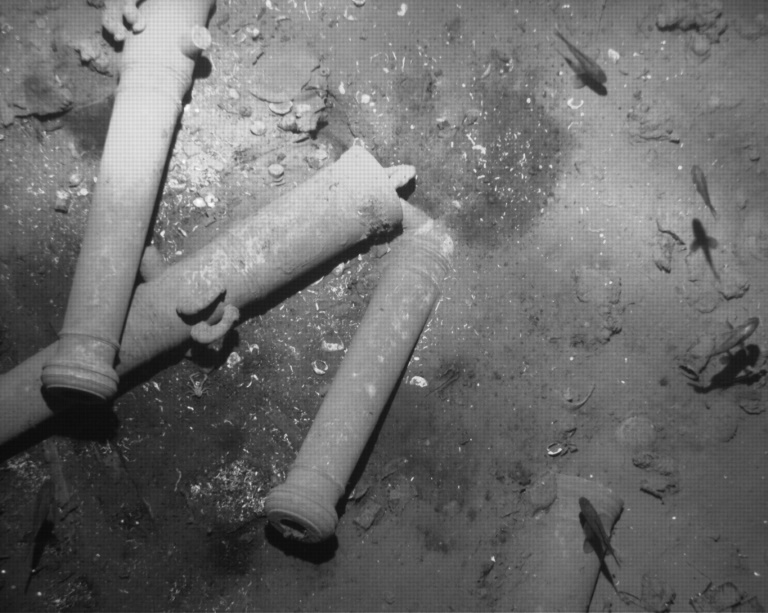
At the end of 2015, then-Colombian President Juan Manuel Santos announced the discovery of the exact location of the wreck, which was confirmed by the ship’s unique bronze cannons with dolphin engravings.

Colombia has said it will cost about $70 million to carry out a full salvage operation on the wreckage, which is at a depth of between 600 and 1000 meters (2000-3200 feet).

Spain says the wreck is its own, as a ship of state; and an indigenous group in Bolivia, the Qhara Qhara, says the treasure belongs to them, since their ancestors were forced to mine it from what was in the 1500s the world’s largest silver mine.

Tesla undertaking 4th car recall in two weeks

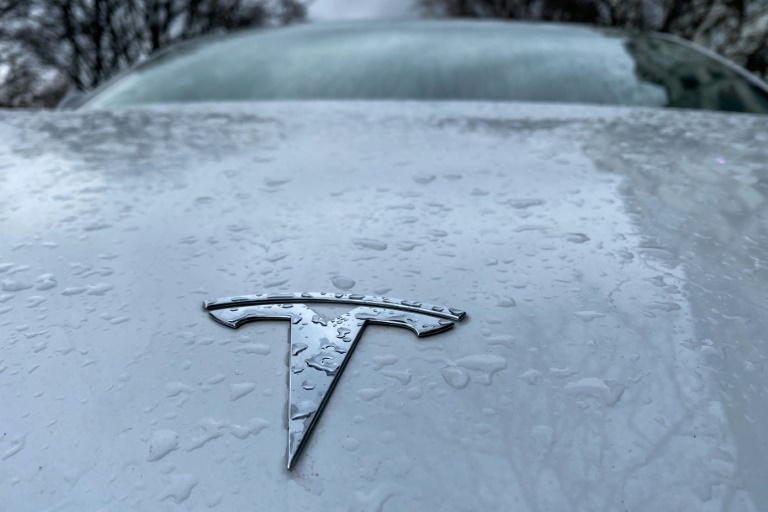
Tesla was recalling over a half a million US electric cars due to a “Boombox” feature that can drown out audible warnings for pedestrians, in the fourth recall made public in two weeks, records showed Thursday.

The automaker faces increasing scrutiny from American regulators, as watchdogs have accused Elon Musk’s firm of pushing safety limits. 

US authorities have set specific standards for the sounds that electric and hybrid vehicles must make, which are quieter than vehicles with internal combustion engines, in order to warn pedestrians.  

Yet the “Boombox” option launched by Tesla in late 2020, which allows custom sounds like music to be emitted from an outdoor speaker when the car is parked or moving, could interfere with that warning, the National Highway Traffic Safety Administration found. 

This “could increase the risk of a collision,” NHTSA said in a recall report dated February 4, which notes Tesla is not aware of any accidents caused by this problem.

The regulator said about 578,600 cars were potentially involved in the recall, which Tesla plans to solve by remotely updating its software rather than forcing owners to come to service centers. 

The agency sent an initial request for information to Tesla about “Boombox” back in January 2021 and then held several meetings with the manufacturer, which tried to defend the compliance of this option. 

But Tesla eventually agreed to disable the feature when the vehicle is in drive, reverse or neutral mode. 

The “Boombox” recall is the fourth for Tesla made public in the United States in a matter of weeks.

NHTSA announced on February 1 the recall of nearly 54,000 vehicles to end a drive-assist feature that allows Tesla cars in certain conditions to go through a stop sign without fully stopping.

Two days later it announced a recall of 817,143 vehicles to adjust the seatbelt warning system, which may not activate under certain conditions.

And on Wednesday, the agency announced a recall of 26,681 cars to correct a software error related to a valve in the heat pump that can affect the ability to defrost the windshield.

Tesla has long regularly performed remote software updates without necessarily notifying users or regulators.

But NHTSA has stepped up its actions against the company in recent months, including launching an investigation last summer after several crashes with emergency vehicles and requesting more information from the company.  

Prehistoric drum is top ancient find: British Museum

A carved stone drum unearthed in England is one of the most significant pieces of prehistoric art ever found in the country, the British Museum said Thursday.

The 5,000-year-old drum carved from chalk is set to go on display for the first time in a major exhibition about the Neolithic site of Stonehenge and its historical context.

Extensive research into the drum, uncovered near a village in Yorkshire in northern England in 2015, has confirmed it is one of the most significant ancient objects ever found in the British Isles, the museum said.

“This is a truly remarkable discovery, and is the most important piece of prehistoric art to be found in Britain in the last 100 years,” said Neil Wilkin, curator of the exhibition “The World of Stonehenge”, which opens February 17.

The drum is “one of the most elaborately decorated objects of this period found anywhere in Britain and Ireland”, and its style echoes that of objects from Stonehenge and related sites, the museum said. 

Seemingly created as a sculpture or talisman rather than a functional musical instrument, the drum is one of only four known examples.

It was found alongside the grave of three children who were buried close together, touching or holding hands. The drum was placed just above the head of the eldest child, accompanied by a chalk ball and a polished bone pin.

The drum was found around 240 miles (380 kilometres) from Stonehenge near the village of Burton Agnes.

A similar ball and pins have been found in and near Stonehenge.

This suggests that communities across Britain and Ireland shared “artistic styles, and probably beliefs, over remarkable distances”, the British Museum said.

“Analysis of its carvings will help to decipher the symbolism and beliefs of the era in which Stonehenge was constructed,” said Wilkin.

The British Museum’s collection includes a group of three similar drums found in 1889 at the burial site of a single child around 15 miles (24 kilometres) away from the latest find.

The museum describes these three, known as the Folkton Drums, as “some of the most famous and enigmatic ancient objects ever unearthed in Britain”. 

Radiocarbon dating has revealed they were created at the same time as the first phase of construction of Stonehenge, between 3005 and 2890 BC. 

US calls for talks with Mexico on endangered porpoise

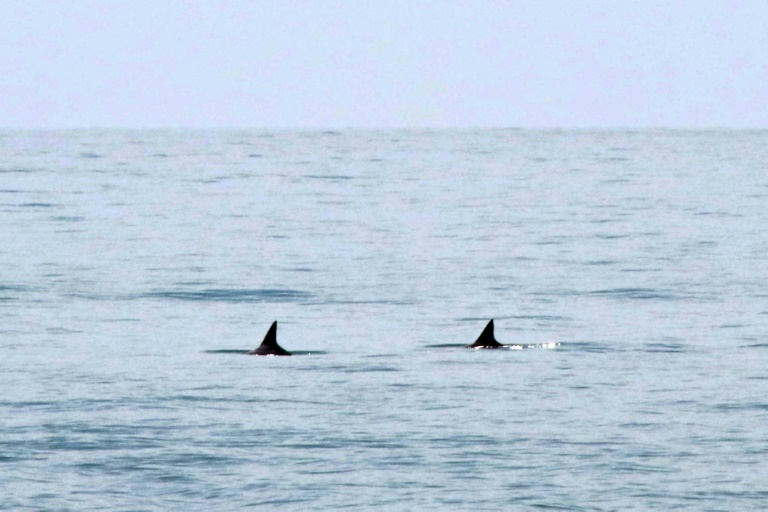
Washington has invoked the environmental provisions of the North American free trade pact to urge Mexico to do more to protect the critically endangered vaquita porpoise, officials announced Thursday.

The office of the US Trade Representative (USTR) said it is requesting consultations with Mexico under the Environment Chapter of the United States-Mexico-Canada Agreement, or USMCA.

While Mexico last year put in place measures to protect the world’s most endangered marine mammal, there is evidence it is not meeting its commitments under the pact, USTR said in a statement.

“USTR is committed to protecting the environment and is requesting this consultation to ensure Mexico lives up to its USMCA environment commitments,” US Trade Representative Katherine Tai said. “We look forward to working with Mexico to address these issues.”

It is the first time a government has invoked the environmental provisions of the trade pact, which took effect in July 2020.

The vaquita is endemic to the Upper Gulf of California in Mexico, with at least six but likely fewer than 19 remaining, the statement said, noting that it is threatened largely by illegal gillnets used to catch shrimp and totoaba.

However, “scientists maintain that the species continues to be biologically viable, if given the space to recover.”

The consultations also cover illegal fishing of the totoaba.

Deputy USTR Jayme White told reporters Washington has “serious concerns about Mexico’s enforcement of its environmental laws,” and the talks will focus on finding “a durable solution.”

Under USMCA, consultations should be scheduled within 30 days, and at least 75 days must pass before Washington can escalate a dispute to the next level. 

Without a resolution it could lead to imposition of tariffs but senior USTR officials cautioned that it is premature to discuss any punitive actions.

Mexico’s economy ministry said it would coordinate work between authorities from the two countries to present “the efforts and measures adopted to protect marine species” in Mexican waters.

“The government of Mexico reaffirms its commitment to the correct implementation of USMCA and the responsibilities assumed under it,” it said in a statement.

California sizzles in February heatwave

A heatwave was bringing unseasonably high temperatures to California on Thursday, sending sun-worshippers to the beach, but also sparking a brushfire.

Forecasters issued a heat warning for the most populous US state through to Sunday, warning the mercury could hit a height-of-summer 90 Fahrenheit (32 Celsius) in Los Angeles, well above the average for winter.

California, in common with much of the western United States, is enduring a historic drought and wild swings in weather that scientists say is exacerbated by man-made climate change.

“If you warm the planet, you’re going to break heat records,” said geographer Justin Mankin of Dartmouth College.

Continuing to burn fossil fuels that release planet-heating carbon dioxide is going to make that worse, especially when coupled with natural weather variations.

“Right now you have this kind of prevailing high pressure system that’s somewhat amplified,” he told AFP.

“You have drier-than-usual conditions at the surface, which just means that more energy will go towards warming up the air rather than evaporating water.”

The heat was set to continue into the weekend, when Los Angeles is due to host the Super Bowl, American football’s showpiece final.

The previous hottest Super Bowl was in 1973, also in LA, when players trotted out in balmy 84F conditions.

In San Diego, near the Mexican border, temperatures were also expected to hit 90F.

In northern California, the UC Berkeley laboratory in the central Sierra region recorded another record Wednesday: 32 consecutive days without rain, the longest period without precipitation in winter.

A wetter-than-usual December across the state had given hope that the years-long drought might be waning, but 2022 has been dry.

While surfers were happily soaking up California’s rays, dozens of people had to flee their homes overnight around Laguna Beach, where a fire tore through 145 acres.

There were no reports of injuries or any property damage in the swanky spot, where million-dollar homes line the roads, but firefighters were urging residents to stay away.

Laguna Beach Mayor Sue Kempf told reporters the flames brought back memories of a 1993 wildfire that destroyed more than 300 homes.

“We no longer have a fire season, we have a fire year,” said local fire chief Brian Fennessy.

“It’s February 10. This is supposed to be the middle of winter and we’re anticipating 80- to 90-degree weather.

“If this is any sign of what’s to come throughout the rest of the winter and spring we’re in for a long year.”

Macron calls for 14 new reactors in nuclear 'renaissance'

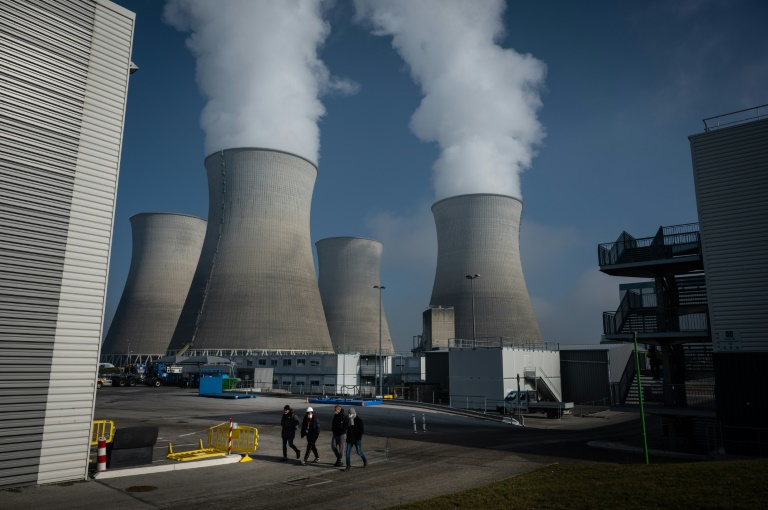
French President Emmanuel Macron called Thursday for a “renaissance” for the country’s nuclear industry, saying he wanted up to 14 new reactors to power the country’s transition away from fossil fuels.

Acknowledging that France had hesitated on whether to continue investing in its atomic sector after the 2011 Fukushima disaster in Japan, he called for a bold new bet on the technology alongside renewables. 

“We are going towards an electrification of all our tasks, our way of manufacturing, of moving around,” Macron said in a speech at a turbine plant in eastern France, just two months ahead of presidential elections.

“We are going to need to produce a lot more electricity,” he said. 

As well as calling for new investments in solar, wind and hydrogen power, his headline announcement was a plan to order six new-generation EPR2 reactors from state-controlled giant EDF, while launching studies for eight more. 

“What we have to build today is the renaissance of the French nuclear industry because it’s the right moment, because it’s the right thing for our nation, because everything is in place,” he added.

Low-cost nuclear power has been a mainstay of the French economy since the 1970s, but recent attempts to build French-designed reactors at home, in Britain and in Finland have become mired in cost over-runs and delays.

Opponents of nuclear power, who worry about its safety and highly toxic radioactive waste, immediately criticised Macron’s announcements.

“The EPRs he’s promising are at best for 2040-2045,” Greens presidential candidate Yannick Jadot said during a trip to southern France on Thursday, meaning France would be condemned to a “century of nuclear power.” 

Whether Macron’s announcements amount to anything will depend on the outcome of presidential elections on April 10 and 24.

Most presidential candidates have vowed to continue investing in the industry, however, with the exception of hard-left candidate Jean-Luc Melenchon and Greens contender Jadot.

– French-German split –

The 44-year-old centrist argued that nuclear energy was required to help advanced economies transition to a low-carbon future because renewables were not yet a reliable energy source, nor able to produce the amount of electricity needed. 

“Some nations made radical choices to turn their backs on nuclear,” Macron said, referring to the Fukushima accident. “France did not make this choice. We resisted. But we did not invest because we had doubts.”

Germany decided to phase out nuclear industry by the end of 2022 following the Fukushima disaster, but the decision has been criticised for increasing Berlin’s reliance on carbon-emitting gas and raising power prices.

Calling French nuclear regulators “unequalled” in their strictness, Macron termed the decision to build new nuclear power plants a “choice of progress, a choice of confidence in science and technology.”

He also announced that he would seek to extend the lives of all existing French nuclear plants where it was safe to do so, and said one billion euros in funding would be made available to develop innovative new small reactors.

The French government lobbied hard — and successfully — to have nuclear power labelled as “green” by the European Commission this month in a landmark energy review which means it can attract funding as a climate-friendly power source. 

– Turbines –

The new French programmes comes as heavily indebted EDF faces difficulties in trying to build its latest-generation EPR reactors. 

Its flagship French project, in Flamanville in northern France, is expected to cost around four times the initial budget of 3.3 billion euros ($3.8 billion) and will not be loaded with fuel until next year at the earliest — 11 years later than expected.

The group has also faced shutdowns at three plants this year after France’s IRSN nuclear regulator warned of possible problems with corroded welds on the pipes of their emergency cooling systems.

Macron chose to speak from a turbine manufacturing factory in Belfort on the day the complex was brought back under French ownership. 

The site was sold by industrial giant Alstom to American rival General Electric in 2015 in a widely criticised deal associated with Macron who was economy minister in the Socialist government at the time.

The deal — between two private companies but which Macron could have blocked as minister — led to more than a thousand job cuts and fears about the loss of a strategic industry to a foreign investor.

Under pressure from the French government, EDF announced Thursday that it had agreed a deal to buy back the unit at a cost of $200 million.

jmi-pab-cho-adp/jh/yad

Macron to announce new French nuclear power ambitions

French President Emmanuel Macron is set to throw his support behind a massive nuclear power plant programme on Thursday despite concerns about the cost and complexity of building new reactors.

The head of state will go to a key turbine manufacturing site in eastern France on a pre-election visit dedicated to energy policy and the future of the country’s atomic industry, which provides around 70 percent of French electricity.

Low-cost nuclear power has been a mainstay of the French economy since the 1970s, but recent attempts to build new-generation reactors to replace older models have become mired in cost over-runs and delays.

Macron is set to announce the construction of at least six new reactors by state-controlled energy giant EDF by 2050, with an option for another eight, a source close to the president told AFP on condition of anonymity.  

“It (nuclear) is ecological, it enables us to produce carbon-free electricity, it helps give us energy independence, and it produces electricity that is very competitive,” another presidential aide told reporters on Wednesday.

Whatever the 44-year-old head of state announces will depend on the outcome of presidential elections in April, however, with his rivals likely to review and change his proposals if they defeat him.

Most presidential candidates have vowed to continue investing in the industry with the exception of hard-left candidate Jean-Luc Melenchon and Greens contender Yannick Jadot who object to it on environmental grounds.

– French-German split –

The French government lobbied hard — and successfully — to have nuclear power labelled as “green” by the European Commission this month in a landmark energy review which means it can attract funding as a climate-friendly power source. 

Macron has consistently argued that nuclear energy is required to help advanced economies transition to a low-carbon future, with ministers frequently citing German policy as an example of what can happen if it is abandoned.

Germany decided to phase out nuclear industry by the end of 2022 following the 2011 Fukushima nuclear disaster, but the decision has been criticised for increasing Berlin’s reliance on carbon-emitting gas and raising power prices.

The new French programmes comes as heavily indebted EDF faces difficulties in trying to build its latest-generation EPR reactors in separate projects in France, Britain and Finland. 

Its flagship French project, in Flamanville in northern France, is expected to cost around four times the initial budget of 3.3 billion euros ($3.8 billion) and will not be loaded with fuel until next year at the earliest — 11 years later than expected.

The Flamanville overruns have been denounced as “a fiasco at the French public’s expense” by Jadot.

– Turbines –

Macron is set to law out his vision “of our future energy mix, for nuclear but also renewables and energy efficiencies,” according to the aide.  

He will speak in Belfort, home to a key manufacturing site that produces turbines that will be used in the future power stations.

The site was sold by French industrial giant Alstom to American rival General Electric in 2015 in a widely criticised deal associated with Macron who was economy minister in the Socialist government at the time.

The divestment led to more than a thousand job cuts and fears about the loss of a strategic industry to a foreign investor.

Under pressure from the French government, EDF announced Thursday that it had agreed a deal to buy back the unit at a cost of 200 million dollars (175 million euros).

jmi-pab-cho-adp/sjw/ach 

Swiss region votes on giving primates fundamental rights

A northern Swiss region will vote Sunday on whether non-human primates should enjoy some of the same basic fundamental rights as their human cousins.

The vote in the Basel-Stadt canton, which is home to the city of the same name and to one of Europe’s best-known zoos, is being keenly followed by animal rights activists.

– Giving primates ‘integrity’ –

Triggered by the campaign group Sentience under Switzerland’s direct democracy system, the regional vote concerns whether to give primates the right to life and the right to “mental and physical integrity”.

“This will mark the first time worldwide that people can vote on fundamental rights for non-human animals,” the group claims.

Basel-based Sentience says primates are highly intelligent and maintain an active social life, and feel pain, grief and compassion.

However, they cannot defend themselves against interventions in their lives — so humans need to take responsibility and grant them rights, says Sentience.

The group says some 150 primates live in the canton, which borders France and Germany.

– Legal challenge –

In 2020, Switzerland’s Supreme Court deemed a public vote on the topic was valid, rejecting an appeal.

It found that the proposal would not extend fundamental rights to animals — but instead introduce specific rights for non-human primates.

However, it said the proposal would only bind the cantonal and municipal authorities in Switzerland’s third-biggest city, and “not directly private persons”.

The impact on private research institutions, and on Basel Zoo — in the hands of family shareholders — would therefore be limited.

And, according to the court, the local authorities and their public bodies do not have any primates.

– Establishing the law –

The vote is “a statement of intent so that primates live in better conditions,” said Pedro Pozas, the Spanish director of the Great Apes Project, an international movement which demands a set of rights.

Animal defenders say the vote is highly symbolic. Its scope could be very wide, said Steven Wise, a US lawyer specialising in animal rights.

The vote “would give certain rights to primates, which would have to be litigated out as to what rights those are”, he told AFP.

Wise said the proposal raises several questions, including who would plead a primate’s case in court if its rights were violated?

If the vote goes through, Swiss courts would meanwhile not be the first to hear such cases.

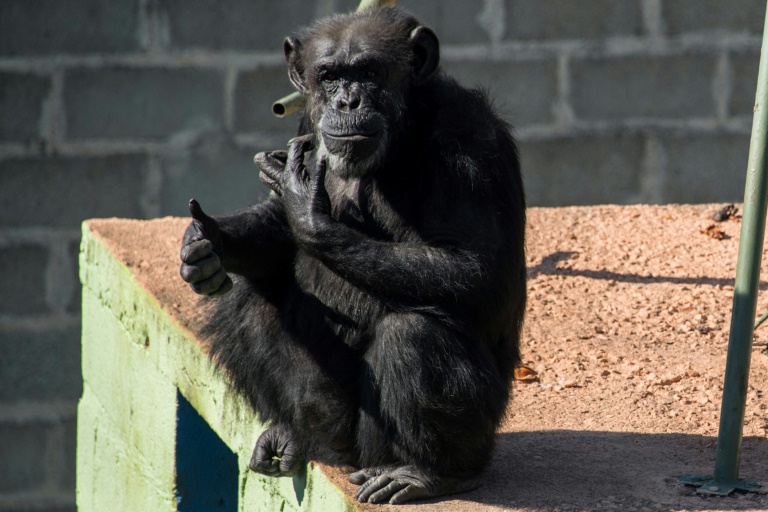
In 2017 in Argentina, a court granted a female chimpanzee the right not to be imprisoned without trial, under habeas corpus. It was the first chimpanzee in the world to benefit from this right.

Wise said the animal rights movement was trying to “break through the barrier” limiting the extent to which rights can be applied.

He compared the situation to previous battles to extend rights among humans, citing children, women or racial minorities.

Pozas said the United Nations should also make a declaration on the rights of great apes.

– Euthanasia question –

While the proposed new law would only concern primates kept by public bodies, Basel Zoo board member Olivier Pagan fears a spillover effect on their primates.

“If the initiative was adopted, the scrutiny of their well-being and safety would no longer be the responsibility of experienced biologists, veterinarians and experienced caregivers, but of a mediator… or even unqualified lawyers,” he said.

When a primate is in serious pain, it might not be possible to end its suffering, under the right to life clause.

Zoo veterinarian Fabia Wyss said: “If the initiative is adopted and if I decide to put the animal to sleep, I put myself beyond the law.”

“But by letting an animal suffer unnecessarily, I am also equally culpable.”

Climate hope as scientists in UK set fusion record

Scientists in Britain announced Wednesday they had smashed a previous record for generating fusion energy, hailing it as a “milestone” on the path towards cheap, clean power and a cooler planet.

Nuclear fusion is the same process that the sun uses to generate heat. Proponents believe it could one day help address climate change by providing an abundant, safe and green source of energy.

A team at the Joint European Torus (JET) facility near Oxford in central England generated 59 megajoules of energy for five seconds during an experiment in December, more than doubling a 1997 record, the UK Atomic Energy Authority said.

That is about the power needed to power 35,000 homes for the same period of time, five seconds, said JET’s head of operations Joe Milnes.

The results “are the clearest demonstration worldwide of the potential for fusion energy to deliver safe and sustainable low-carbon energy”, the UKAEA said.

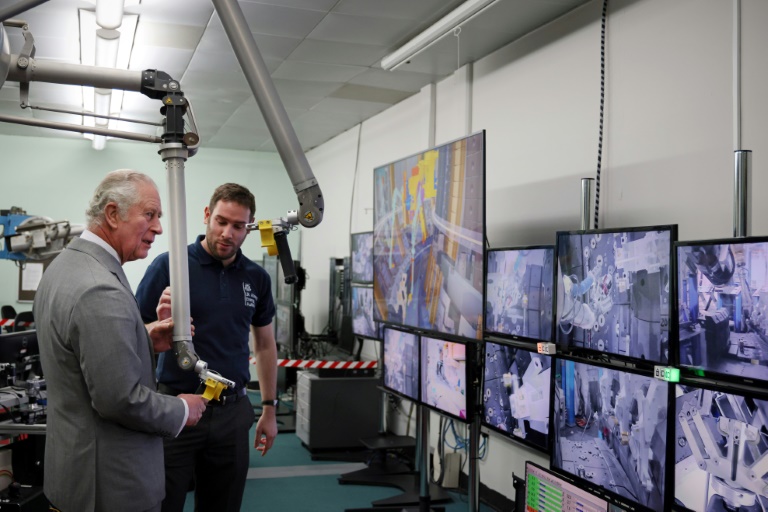
The donut-shaped machine used for the experiments is called a tokamak, and the JET site is the largest operational one in the world.

Inside, just 0.1 milligrammes each of deuterium and tritium — both are isotopes of hydrogen, with deuterium also called heavy hydrogen — is heated to temperatures 10 times hotter than the centre of the sun to create plasma.

This is held in place using magnets as it spins around, fuses and releases tremendous energy as heat.

Fusion is inherently safe in that it cannot start a run-away process. 

Deuterium is freely available in seawater, while tritium can be harvested as a byproduct of nuclear fission.

Pound for pound (gram for gram) it releases nearly four million times more energy than burning coal, oil or gas, and the only waste product is helium.

– Reagan-Gorbachev fusion –

The results announced Wednesday demonstrated the ability to create fusion for five seconds, as longer than that would cause JET’s copper wire magnets to overheat.

A larger and more advanced version of JET is currently being built in southern France, called ITER, where the Oxford data will prove vital when the site comes online, possibly as soon as 2025.

ITER will be equipped with superconductor electromagnets which will allow the process to continue for longer, hopefully longer than 300 seconds.

About 350 scientists from EU countries plus Britain, Switzerland and Ukraine — and more from around the globe — participate in JET experiments each year.

JET will soon pass the fusion baton to ITER, which is around 80 percent completed, said Milnes.

“If that’s successful, as we now think it will be given the results we’ve had on JET, we can develop power plant designs in parallel… we’re probably halfway there” to viable fusion, he said.

If all goes well at ITER, a prototype fusion power plant could be ready by 2050.

International cooperation on fusion energy has historically been close because, unlike the nuclear fission used in atomic power plants, the technology cannot be weaponised.

The France-based megaproject also involves China, the EU, India, Japan, South Korea, Russia and the US.

Tim Luce, head of science and operation at ITER, said the project emerged in the 1980s from talks on nuclear disarmament between US president Ronald Reagan and Soviet leader Mikhail Gorbachev.

“And the one thing they did agree on was using fusion as a cooperation,” he told AFP.

“Somehow fusion has had the scientific panache to bring together disparate governmental entities and actually choose to work together on it.”

Despite dozens of tokamaks being built since they were first invented in Soviet Russia in the 1950s, none has yet managed to produce more energy than is put in.

The latest results use about three times the amount of energy that is produced.

Ian Fells, emeritus professor of energy conversion at the University of Newcastle, said Wednesday’s result was a “landmark in fusion research”. 

“Now it is up to the engineers to translate this into carbon-free electricity and mitigate the problem of climate change,” added Fells, who is not involved in the project.

Germany taps Greenpeace chief Morgan as first climate envoy

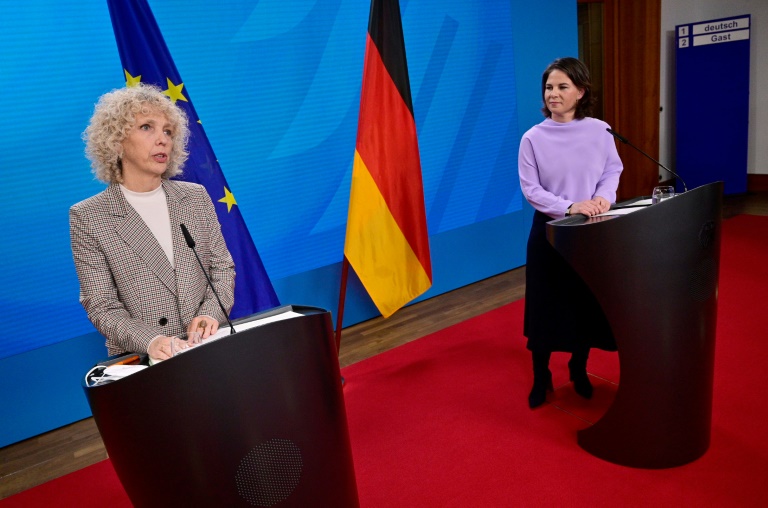
Germany’s foreign minister on Wednesday unveiled former Greenpeace chief Jennifer Morgan as her special climate envoy, as part of a pledge to put the battle against global warming “at the top” of the diplomatic agenda.

US-born Morgan, 55, who had been co-leader of Greenpeace International since 2016, will be the first person to hold the newly created role in Europe’s top economy. 

The eye-catching appointment comes as Germany’s two-month-old coalition government, led by Social Democrat Chancellor Olaf Scholz, aims to pursue more global cooperation against climate change.

Foreign Minister Annalena Baerbock, from the ecologist Green party, introduced Morgan as “the face of Germany’s international climate policy”.

“Even in our foreign policy we are putting the climate crisis where it belongs: at the top of the agenda,” Baerbock told reporters after Scholz’s cabinet approved Morgan’s appointment.

The appointment caused a stir in Germany, with supporters hailing it as a coup for Baerbock while critics accused the minister of blurring the line between lobbying and governing.

Morgan’s US nationality also drew scrutiny, which Baerbock countered by saying Morgan was in the process of applying for German citizenship and that it suited the foreign ministry to have international staff.

The new role will see Morgan work as a special representative for international climate policy initially and as state secretary in the foreign ministry once she has acquired German citizenship.

Morgan said “time is running out” to limit global warming to 1.5 degrees Celsius, requiring “international cooperation like we have never seen before”.

After 30 years of environmental activism, Morgan said Germany’s foreign ministry was where she could now “make the biggest difference”.

Among Morgan’s key tasks will be preparing Germany for global climate conferences like the COP27 in Egypt in November.

The German government has also pledged to use its G7 presidency this year to create a “climate club” of leading economies. 

The aim is to agree common climate protection standards and avoid competitive disadvantages as countries transform their industries to reach carbon neutrality.

Germany itself is planning massive investments to green its economy, including by scaling up the use of renewable energy, to achieve net-zero emissions by 2045.

The Greens’ Robert Habeck, who heads Germany’s new “super ministry” of economy, energy and climate protection, warned last month that the country had a “gigantic” task ahead.

– ‘Radical views’ –

Karsten Smid, a climate and energy campaigner for Greenpeace in Germany, congratulated Morgan on Twitter. “We will miss you,” he said. 

Thomas Silberhorn, a lawmaker from the opposition CSU conservative party, condemned the appointment.

“The government apparently has a problem differentiating between government, activists and lobbyists,” he told German media.

Lawmaker Lukas Koehler from the pro-business FDP, the other junior partner in Scholz’s three-way coalition, told the Handelsblatt daily that Morgan’s hiring had raised eyebrows given her “radical views” in the past.

Over three decades in the climate action arena, Morgan has developed a reputation as an uncompromising champion of peoples and nations worst affected by global warming and least able to protect themselves against its ravages.

She has attended every UN climate summit since 1995, and has close ties to US climate envoy John Kerry and EU Commission vice president Frans Timmermans.

Prior to becoming head of Greenpeace International alongside Bunny McDiarmid in 2016, Morgan worked for the Climate Action Network, WWF’s global climate change programme and the World Resources Institute, among others.

Greenpeace drew controversy in Germany last year when a protester parachuted into a Munich stadium during a Euro 2020 football match, injuring two people. It later apologised for the botched stunt.

Close Bitnami banner
Bitnami