AFP

Shelter for traumatised apes in DR Congo's strife-torn east

Beyond the reach of bloody conflicts in eastern Democratic Republic of Congo, rescued apes swing from one branch to another under the leafy canopy at a wildlife sanctuary.

On the edge of a national park that is home to endangered gorillas, the Lwiro Ape Rehabilitation Centre (CRPL) has for two decades nursed wounded and traumatised animals to recovery and taken in orphans.

The centre houses scores of chimpanzees, gorillas and bonobos among its wards, often saved from poachers in a region where illegal activities go largely unchallenged in the insecurity caused by many armed groups.

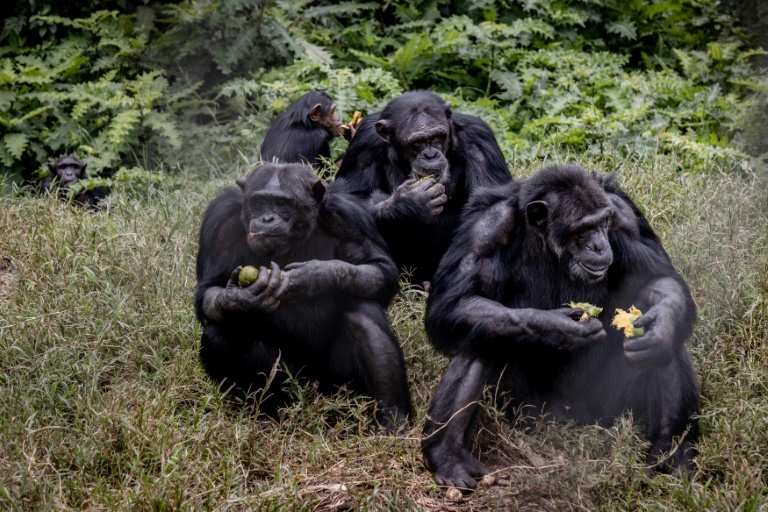
During a recent visit, half a dozen apes gathered behind a fence to choose the best banana to peel and eat after a fresh food delivery.

Female chimpanzees walked around, carrying their babies on their backs.

Each of the 110 chimpanzees at the sanctuary in South Kivu province eats six kilogrames (13.2 pounds) of fruit, cereals and vegetables a day, its staff say. The infants are bottle-fed.

“These orphaned baby chimps are coming to us because of insecurity and war,” centre manager Sylvestre Libaku said, urging the government to secure the region to “let the animals live peacefully in their natural habitat”.

– ‘Unhealed wounds’ –

Weeks or even months of effort are needed to stabilise an animal in its new home. Tarzan, a chimpanzee collected last June in Bunia in the troubled Ituri province to the north, still lives in quarantine.

The ape has unhealed wounds on his skull, but “is doing better. The hair is starting to grow [but] he is still kept in his cage, waiting for him to be able to mix with the others”, Libaku said.

However, Byaombe, another injured chimpanzee picked up more than a year ago, is a source of worry. The animal receives care every day but “without success — its future is not reassuring”, he said.

In his laboratory, Damien Muhugura handles samples taken from sick animals.

“We do parasitological analyses to search for intestinal worms, for example,” among other bacteriological and biochemical risks, he explained.

The facility extends over four hectares (almost 10 acres) inside the Kahuzi-Biega National Park, named after two extinct volcanoes and listed as a UN World Heritage Site.

Animals brought in from large forests where they roamed freely “feel trapped” on the small territory, said Assumani Martin, a veterinarian for the CRPL.

In November 2020, 39 grey parrots were released into the Kahuzi-Biega forest, after a stay for adaptation at the Lwiro facility, founded in 2002 by the Congolese Institute for the Conservation of Nature and the Centre for Research in Natural Sciences.

Since then, no animals have been introduced to the reserve because of the insecurity in and around the protected domain, Libaku says.

Covering 600,000 hectares, the national park lies between the extinct Kahuzi and Biega volcanoes. It provides a sanctuary to a remarkable diversity of wildlife, including some 250 eastern lowland gorillas, the last of their kind.

UNESCO describes the park as “one of the ecologically richest regions of Africa and worldwide”, but it is also one of 52 sites on the World Heritage endangered list for the planet.
Chile museum to return Easter Island 'head'

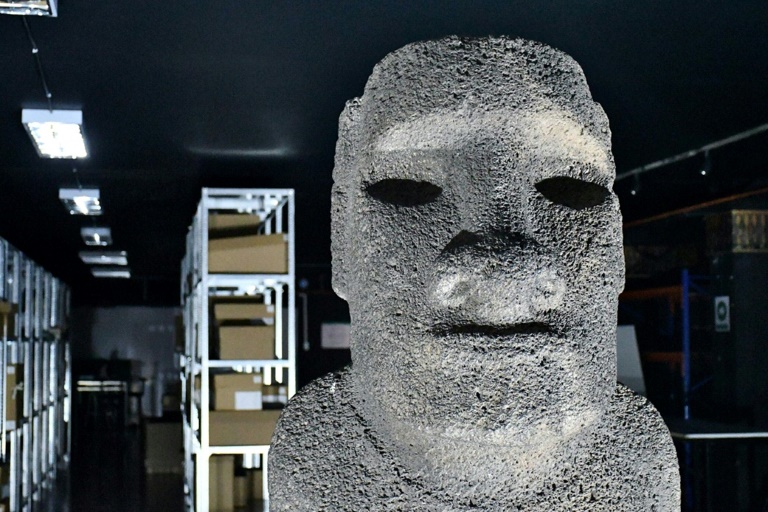
Chile’s National Museum of Natural History said Monday it will return to Easter Island an enormous stone statue taken from the Rapa Nui people and brought to the mainland 150 years ago.

The monolith is one of hundreds, called Moai, carved by the Rapa Nui in honor of their ancestors and sometimes referred to as the Easter Island heads. 

The statues are today the island’s greatest tourist attraction, sculpted from basalt more than 1,000 years ago. 

The one being returned, dubbed Moai Tau, is a 715-kilogram (1,500-pound) giant brought by the Chilean navy some 3,700 kilometers (2,300 miles) across the Pacific in 1870.

Eight years later, it was moved to the natural history museum to be displayed.

The Rapa Nui, for whom the Moai represent the spirits of their ancestors, have been asking for the statue’s return for years — as well as other cultural treasures taken from their island. 

“For the Rapa Nui, their ancestors, funerary objects and ceremonial materials may be as alive as members of their communities themselves,” said a museum statement.

The return of the monolith “is profoundly significant as a gesture towards our indigenous peoples,” said museum curator Cristian Becker.

With delays due to the coronavirus epidemic, the statue will finally depart from the port of Valparaiso next Monday on a trip of about five days to Easter Island, said the museum, “after a complex technical and diagnostic process” to guarantee its structural integrity.

A traditional ceremony was held at the museum Monday to send the statue safely on its way.

“It is essential that the Moai return to my homeland. For them (the community) and for me, this day is very much awaited,” said Veronica Tuqui, a Rapa Nui representative.

Back on Easter Island, the Moai will be exhibited at the Father Sebastian Englert Anthropological Museum.  

The Rapa Nui community has also asked the British Museum in London to return another Moai, dubbed Hoa Hakananai’a, that was taken in 1868 from Orongo, a ceremonial village on Easter Island. 

The Rapa Nui in 2017 gained self-administration over their ancestral lands on Easter Island, a special territory of Chile.

Shelter for traumatised apes in DR Congo's strife-torn east

Beyond the reach of bloody conflicts in eastern Democratic Republic of Congo, rescued apes swing from one branch to another under the leafy canopy at a wildlife sanctuary.

On the edge of a national park that is home to endangered gorillas, the Lwiro Ape Rehabilitation Centre (CRPL) has for two decades nursed wounded and traumatised animals to recovery and taken in orphans.

The centre houses scores of chimpanzees, gorillas and bonobos among its wards, often saved from poachers in a region where illegal activities go largely unchallenged in the insecurity caused by many armed groups.

During a recent visit, half a dozen apes gathered behind a fence to choose the best banana to peel and eat after a fresh food delivery.

Female chimpanzees walked around, carrying their babies on their backs.

Each of the 110 chimpanzees at the sanctuary in South Kivu province eats six kilogrames (13.2 pounds) of fruit, cereals and vegetables a day, its staff say. The infants are bottle-fed.

“These orphaned baby chimps are coming to us because of insecurity and war,” centre manager Sylvestre Libaku said, urging the government to secure the region to “let the animals live peacefully in their natural habitat”.

– ‘Unhealed wounds’ –

Weeks or even months of effort are needed to stabilise an animal in its new home. Tarzan, a chimpanzee collected last June in Bunia in the troubled Ituri province to the north, still lives in quarantine.

The ape has unhealed wounds on his skull, but “is doing better. The hair is starting to grow [but] he is still kept in his cage, waiting for him to be able to mix with the others”, Libaku said.

However, Byaombe, another injured chimpanzee picked up more than a year ago, is a source of worry. The animal receives care every day but “without success — its future is not reassuring”, he said.

In his laboratory, Damien Muhugura handles samples taken from sick animals.

“We do parasitological analyses to search for intestinal worms, for example,” among other bacteriological and biochemical risks, he explained.

The facility extends over four hectares (almost 10 acres) inside the Kahuzi-Biega National Park, named after two extinct volcanoes and listed as a UN World Heritage Site.

Animals brought in from large forests where they roamed freely “feel trapped” on the small territory, said Assumani Martin, a veterinarian for the CRPL.

In November 2020, 39 grey parrots were released into the Kahuzi-Biega forest, after a stay for adaptation at the Lwiro facility, founded in 2002 by the Congolese Institute for the Conservation of Nature and the Centre for Research in Natural Sciences.

Since then, no animals have been introduced to the reserve because of the insecurity in and around the protected domain, Libaku says.

Covering 600,000 hectares, the national park lies between the extinct Kahuzi and Biega volcanoes. It provides a sanctuary to a remarkable diversity of wildlife, including some 250 eastern lowland gorillas, the last of their kind.

UNESCO describes the park as “one of the ecologically richest regions of Africa and worldwide”, but it is also one of 52 sites on the World Heritage endangered list for the planet.
Gaza construction workers find 31 Roman-era tombs

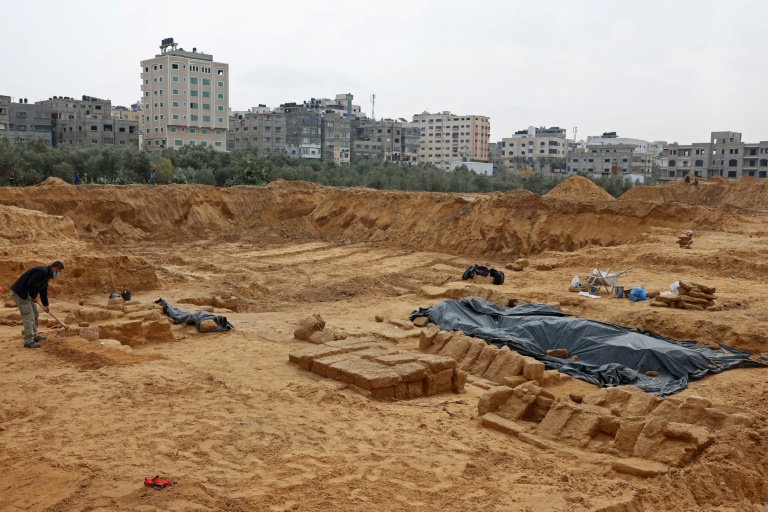
Construction workers at a building site in northern Gaza have uncovered 31 Roman-era tombs dating from the first century AD, the Palestinian territory’s Islamist rulers Hamas said Monday.

The tombs were discovered near the town of Beit Lahia as work began on an Egyptian-funded residential area, part of the $500 million reconstruction package Cairo pledged after the 11-day war in May between Israel and armed groups in the Gaza Strip.

Naji Sarhan, an official at Gaza’s Ministry of Public Works, confirmed the find and said there is “evidence that there are other graves” at the site.

Construction work has been halted and technicians from Gaza’s Ministry of Antiquities and Tourism have been sent to the site to catalogue gravestones and artefacts, officials said.

One technician, who requested anonymity, said the tombs were believed to be part of a cemetery linked to a nearby Roman site in Balakhiya.

The find was the latest in Gaza, where tourism to archaeological sites is limited due to an Israeli blockade imposed since Hamas took over the strip in 2007.

Israel and Egypt, which shares a border with Gaza, tightly restrict the flow of people in and out of the impoverished strip, which is home to about 2.3 million Palestinians.  

Last month, Hamas reopened the remains of a fifth-century Byzantine church following a years-long restoration effort backed by foreign donors. 

US climate envoy Kerry in Egypt to discuss COP27 summit

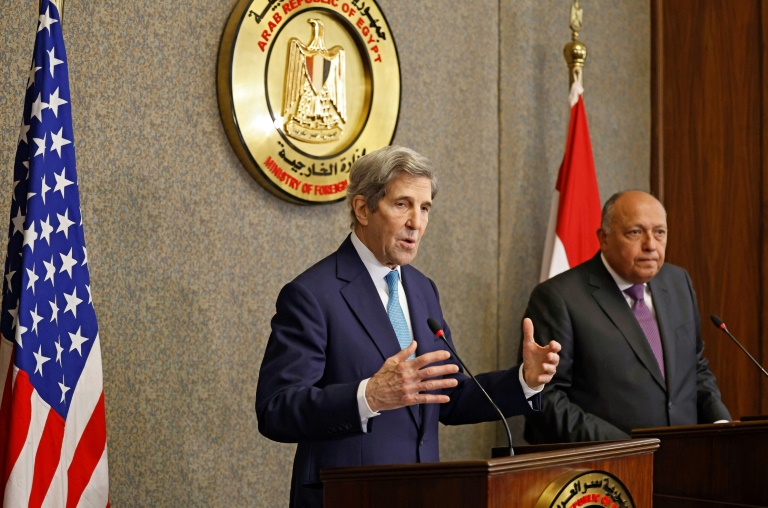
The United States and Egypt on Monday launched a working group to prepare for the COP27 climate summit this year, with US envoy John Kerry urging more countries to come on board.

The meeting will take place in November in the Egyptian Red Sea resort of Sharm el-Sheikh, seeking to build on gains made at the previous conference in Glasgow last year.

“In Glasgow, we made significant progress… we now need to bring more countries on board,” Kerry told reporters in Cairo.

“This is about a threat to our planet and it is driving our considerations and our thoughts about how to deal with that,” he said alongside Egyptian Foreign Minister Sameh Shoukry.

Pledges were made at the COP26 to phase down coal-fired power, curb methane emissions and boost financial aid to developing countries. 

Kerry, who arrived in Cairo on Sunday, launched with Shoukry the US-Egypt Climate Working Group, to advance bilateral and multilateral climate goals ahead of COP27.

Egypt, with 102 million people, is the most populous Arab country, and its northern coast has in recent years faced the threat of rising sea levels due to climate change.

The country’s coral reefs have also begun to gradually perish due to rising temperatures.

The Egyptian government has said it aims to increase renewable energy sources to 42 percent of its mix by 2035. 

Shukri told reporters that talks with Kerry focused “in details about the priority of the Egyptian presidency for the next COP27”.

Some rights groups have argued that Egypt should not have been allowed to host the upcoming climate summit due to the “repressive” policies of the government of President Abdel Fattah al-Sisi.

Sri Lanka completes return of illegal waste to Britain

Sri Lanka shipped out to Britain on Monday the last of several hundred containers filled with thousands of tonnes of illegally imported waste, officials said.

Several Asian countries have in recent years been pushing back against an onslaught of refuse from wealthier nations and have started turning back unwanted shipments.

The waste from Britain arrived in Sri Lanka between 2017 and 2019 and was listed as “used mattresses, carpets and rugs”.

But in reality it also contained biowaste from hospitals including body parts from mortuaries, according to customs officials.

The containers were not chilled and some of them gave off a powerful stench. 

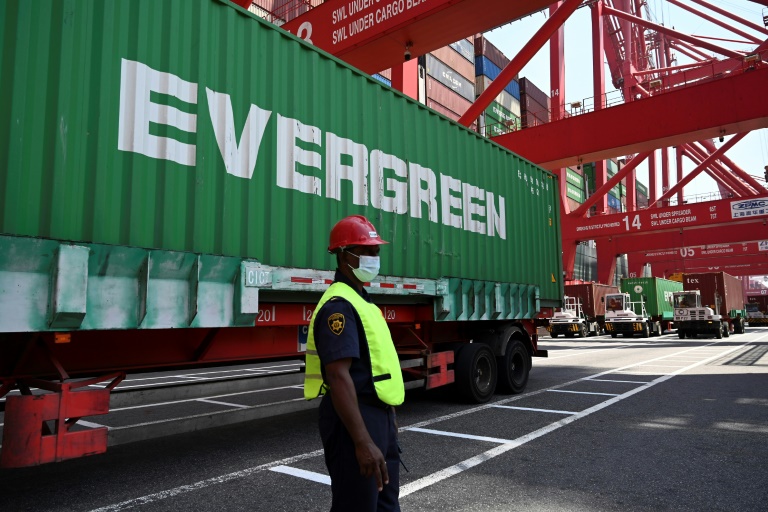
The 45 containers loaded onto a ship at a Colombo port on Monday were the final batch of 263 containers holding around 3,000 tonnes of waste.

“There could be fresh attempts to import such hazardous cargo, but we will be vigilant and ensure that this does not happen again,” customs chief Vijitha Ravipriya said.

The first 21 containers holding medical waste were returned to Britain in September 2020, according to customs.

A local company had imported the waste from Britain, saying it planned to recover the springs from used mattresses as well as cotton to be reshipped to manufacturers abroad.

But customs failed to find credible evidence of such “resource recovery”.

A local environmental activist group filed a petition demanding the waste be returned to its sender and Sri Lanka’s Court of Appeal upheld the petition in 2020.

Customs maintained that all the containers had been brought into the country in violation of international law governing the shipment of hazardous waste, including plastics.

A Sri Lankan investigation in 2019 found the importer had reshipped about 180 tonnes of waste brought into the island to India and Dubai in 2017 and 2018.

The Philippines, Indonesia and Malaysia have also returned hundreds of containers of refuse back to their countries of origin.

Billionaire Icahn steps up campaign against McDonald's pig farm practices

Billionaire Carl Icahn has nominated two allies to the board of McDonald’s, the company confirmed Sunday, part of the activist investor’s campaign against pig-farming practices used in the fast-food giant’s supply chains.

“Carl Icahn has nominated Leslie Samuelrich and Maisie Ganzler for the 2022 election,” McDonald’s said in a statement, adding that the board would “evaluate the nominees as it would any other candidates proposed to it.”

Icahn’s “stated focus in making this nomination relates to a narrow issue regarding the Company’s pork commitment”, it added, in a reference to the use of so-called gestation crates.

According to the Humane Society, the metal enclosures — used to contain sows for almost all of a pregnancy — are so small that the animal cannot turn around, and can lead to health issues such as infection or anatomical problems.

Icahn is known for taking stakes in companies to ask for radical measures before reaping huge profits, but he has said animal welfare concerns are behind his intervention.

“I really do feel emotional about these animals and the unnecessary suffering,” he told Bloomberg.

He said he had worked with the Humane Society a decade ago on the use of the crates, winning an agreement from McDonald’s that it would stop buying from suppliers using the cages within 10 years.

McDonald’s “did a little something but never delivered,” Icahn said.

But the fast-food giant has said that, since its 2012 commitment, “McDonald’s has led the industry, and today an estimated 30–35 percent of US pork production has moved to group housing systems.”

“By the end of 2022, the Company expects to source 85 percent to 90 percent of its US pork volumes from sows not housed in gestation crates during pregnancy,” it added.

The company noted that Icahn, “who states that he holds 200 shares of McDonald’s stock, is the majority owner of Viskase, a company that produces and supplies packaging for the pork and poultry industry.”

“It’s noteworthy that Mr. Icahn has not publicly called on Viskase to adopt commitments similar to those of McDonald’s 2012 commitment.”

Brazil storm death toll rises to 165

The death toll from torrential rains that triggered flash floods and landslides in the scenic Brazilian city of Petropolis has risen to 165, authorities said Sunday, as more violent storms killed two people in another region nearby.

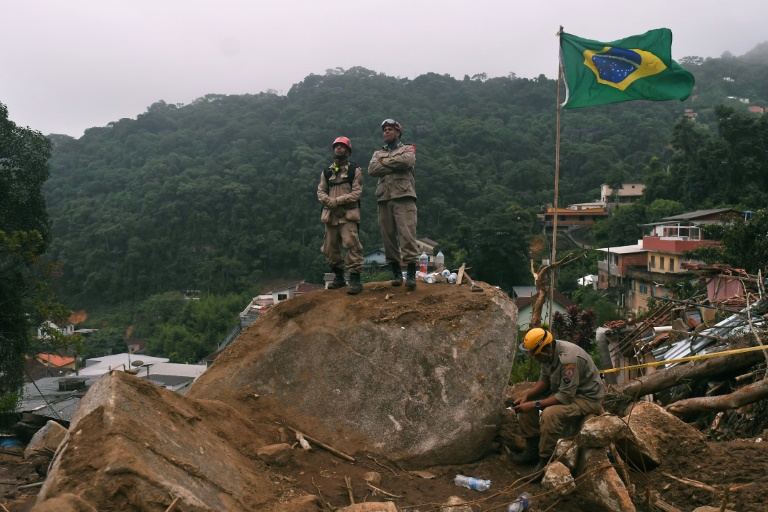
Rescue workers and residents searching for their missing relatives continued digging through mountains of mud and rubble in Petropolis, which President Jair Bolsonaro said Friday looked like it had been through a “war.”

It is unclear how high the steadily rising death toll will go. It is unlikely any more survivors will be found beneath the wreckage, authorities say.

The dead include at least 28 children, police said.

Weather chaos continued to batter Brazil as more violent rains lashed the southeastern state of Espirito Santo Sunday.

The new storms killed at least two people, said emergency officials in Espirito Santo, which borders Rio de Janeiro state, where Petropolis is located.

One person was crushed by a collapsing wall and killed in the city of Alegre, and another swept away trying to retrieve a car from severe flooding in the city of Nova Venecia, officials said.

The storms forced more than 1,200 people to evacuate their homes and destroyed another 43 people’s houses, they said.

They are the latest in a series of deadly storms to hit Brazil, which experts say are made worse by climate change.

In the past three months, at least 219 people have died in severe rainstorms, mainly in the southeastern state of Sao Paulo and the northeastern state of Bahia, as well as Petropolis and now Espirito Santo.

Pope Francis sent his latest message of condolences Sunday following his Angelus prayer at Saint Peter’s Square in the Vatican.

“I express my closeness to those people hit in previous days by natural calamities,” he said, mentioning “devastated” Petropolis as well as Madagascar, hit recently by deadly cyclones.

“Lord, welcome the dead in peace, comfort the family members and support those who offer aid,” he said.

– ‘Mega clean-up’ –

The storm turned streets in Petropolis into violent rivers that swept away trees, cars and buses, and triggered deadly landslides in poor hillside neighborhoods that ring the city of 300,000 people.

It dumped a month’s worth of rain in several hours on the picturesque tourist town, which was the 19th-century summer capital of the Brazilian empire.

The city held what it called a “mega clean-up operation” Sunday, aided by 370 sanitation workers sent in as reinforcements from the nearby cities of Rio de Janeiro and Niteroi.

The mayor’s office urged residents to stay home except in case of “extreme necessity” to let clean-up crews clear the piles of muck and debris still clogging streets.

Authorities have so far recovered more than 300 cars that were “strewn around the city, blocking streets and sidewalks or stuck in rivers,” they said.

“We need our streets clear so we can speed up the job of getting our city back on its feet,” Mayor Rubens Bomtempo said in a statement.

There is no word on when those who lost their homes or had to evacuate will be able to return to the hardest-hit areas, if at all.

At least 856 people are being housed in emergency shelters, according to officials.

A steady stream of funerals for victims meanwhile continued at the city’s main cemetery, where the local government brought in extra grave-diggers as reinforcements.

Brazil storm death toll rises to 152

The death toll from torrential rains that triggered flash floods and landslides in the scenic Brazilian city of Petropolis has risen to 152, authorities said Sunday, as the pope sent his condolences.

Rescue workers and residents searching for their missing relatives continued digging through mountains of mud and rubble in the southeastern city, which President Jair Bolsonaro said Friday looked like “scenes of war.”

Police said 165 people remain missing after Tuesday’s storm. It is unlikely any more will be found alive beneath the wreckage, authorities say.

It is unclear how high the steadily rising death toll will go.

The number of missing has fallen as more bodies are identified, and as families manage to find relatives alive and well whom they feared lost in the chaos after the storm, police said.

So far, 124 bodies have been identified, including 28 children, they said.

Pope Francis sent his latest message of condolences Sunday following his Angelus prayer at Saint Peter’s Square in the Vatican.

“I express my closeness to those people hit in previous days by natural calamities,” he said, mentioning “devastated” Petropolis as well as Madagascar, hit recently by deadly cyclones.

“Lord, welcome the dead in peace, comfort the family members and support those who offer aid,” he said.

Tuesday’s was the latest in a series of deadly storms to hit Brazil, which experts say are made worse by climate change.

In the past three months, more than 200 people have died in severe rainstorms, mainly in the southeastern state of Sao Paulo and the northeastern state of Bahia, as well as Petropolis.

– ‘Mega clean-up’ –

The storm turned streets in Petropolis into violent rivers that swept away trees, cars and buses, and triggered deadly landslides in poor hillside neighborhoods that ring the city of 300,000 people.

It dumped a month’s worth of rain in several hours on Petropolis, a picturesque tourist town that was the 19th-century summer capital of the Brazilian empire.

The city held what it called a “mega clean-up operation” Sunday, aided by 370 sanitation workers sent in as reinforcements from the nearby cities of Rio de Janeiro and Niteroi.

The mayor’s office urged residents to stay home except in case of “extreme necessity” to let clean-up crews clear the piles of muck and debris still clogging streets.

Authorities have so far recovered more than 300 cars that were “strewn around the city, blocking streets and sidewalks or stuck in rivers,” they said.

“We need our streets clear so we can speed up the job of getting our city back on its feet,” Mayor Rubens Bomtempo said in a statement.

There is no word on when those who lost their homes or had to evacuate will be able to return to the hardest-hit areas, if at all.

At least 856 people are being housed in emergency shelters, according to officials.

A steady stream of burials for victims meanwhile continued at the city’s main cemetary, where the local government brought in extra grave-diggers as reinforcements.

16 dead as Storm Eunice, hits power, transport in W.Europe

Emergency crews Saturday battled to restore power to more than one million homes and businesses a day after Storm Eunice carved a deadly trail across northwest Europe and left transport networks in disarray.

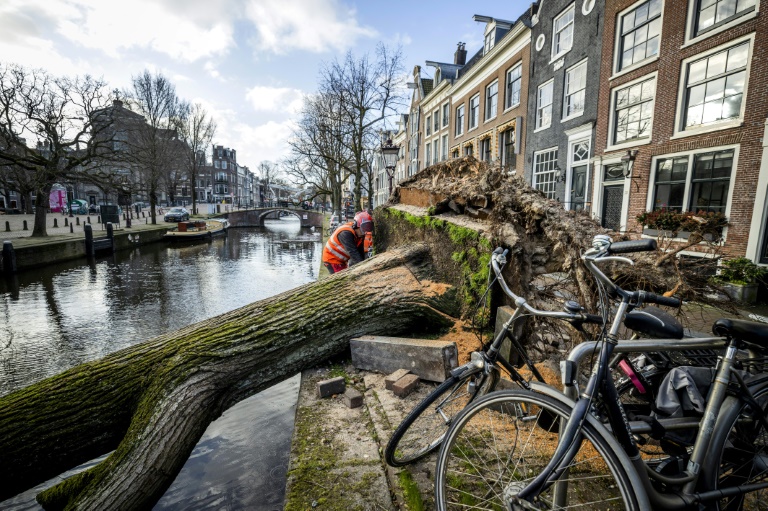
At least 16 people were killed by falling trees and flying debris caused by the fierce winds in Britain, Ireland, the Netherlands, Belgium, Germany and Poland, emergency services said.

Train operators in Britain urged people not to travel, after most of the network was shut down when Eunice brought the strongest wind gust ever recorded in England — 122 miles (196 kilometres) per hour.

In Brentwood, east of London, a 400-year-old tree crashed into a house where Sven Good was working from home, as millions of other Britons heeded government advice to stay indoors.

“I could feel the whole roof going above me. It was absolutely terrifying,” Good, 23, told Sky News, adding that none of the occupants was injured.

The train network in the Netherlands was paralysed, with no Eurostar and Thalys international services running from Britain and France after damage to overhead power lines.

France and Ireland were also grappling with rail disruption and power cuts, and Germany’s rail operator Deutsche Bahn said “more than 1,000 kilometres” (620 miles) of track had suffered damage.

– Explosive storms –

Poland still had 1.2 million customers without electricity on Saturday afternoon, officials said, after the country’s northwest took a battering.

“I appeal to you: please stay at home!” Polish Prime Minister Mateusz Morawiecki said in a Facebook post.

“We are constantly monitoring the situation and the appropriate services are at work. The fire brigade has already intervened more than 12,000 times,” he said.

In the UK, 226,000 homes and businesses remained without power after 1.2 million others were reconnected. 

The toll so far includes four each in the Netherlands and Poland; three in the UK, two dead each in Belgium and Germany, and one in Ireland.

Around 30 people in northern France were injured in storm-related road accidents, and in the Netherlands, dozens of people have to be evacuated from their homes because of fears that a church’s clock tower might collapse.

Eunice sparked the first-ever “red” weather warning for London on Friday. It was one of the most powerful tempests in Europe since the “Great Storm” hit Britain and northern France in 1987.

Scientists said both storms packed a “sting jet”, a rarely seen meteorological phenomenon borne out of an unusual confluence of pressure systems in the Atlantic that magnified the effects of Eunice.

– Hefty insurance bill –

The Met Office, Britain’s meteorological service, on Saturday issued a less severe “yellow” wind warning for much of the south coast of England and South Wales, which it said “could hamper recovery efforts from Storm Eunice”.

The UK’s total bill for damage could exceed £300 million ($410 million, 360 million euros), according to the Association of British Insurers, based on repairs from previous storms.

At the storm’s height, planes struggled to land in ferocious winds, as documented by the YouTube channel Big Jet TV, which streamed the attempts to a mass live following from London’s Heathrow airport.

Hundreds of other flights were cancelled or delayed at Heathrow and Gatwick, and Schiphol in Amsterdam. 

A section of the roof on London’s O2 Arena was shredded, and the spire of a church in the historic city of Wells, southwest England, toppled over.

Ferries across the Channel, the world’s busiest shipping lane, were suspended, before the English port of Dover reopened Friday afternoon. 

Experts said the frequency and intensity of the storms could not be linked necessarily to climate change.

But Richard Allan, professor of climate science at the University of Reading, said a heating planet was leading to more intense rainfall and higher sea levels.

Therefore, he said, “flooding from coastal storm surges and prolonged deluges will worsen still further when these rare, explosive storms hit us in a warmer world”.

Close Bitnami banner
Bitnami