AFP

Kiwi cops blast use of Barry Manilow songs to clear protesters

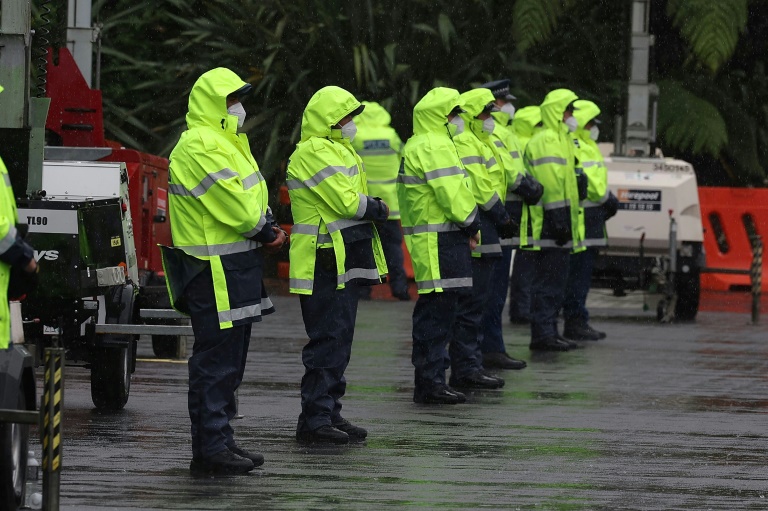
Efforts to clear New Zealand anti-vaccine protesters by blasting Barry Manilow songs on a loop have drawn criticism from police officers caught in the crossfire.

Hundreds of demonstrators — inspired by the “Freedom Convoy” of truckers in Canada — have been camped on the lawns of parliament for a week, ignoring appeals from Prime Minister Jacinda Ardern on Monday to “go home, and take your children”.

Attempts to move the protesters over the weekend included dousing them with sprinklers and pummelling them with sickly sweet pop tracks such as “Baby Shark”, “Macarena” and Manilow’s “Mandy”.

Wellington police chief Superintendent Corrie Parnell was unamused at the tongue-in-cheek tactics deployed by parliament officials, which appear to have steeled demonstrators’ determination not to move.

“It certainly wouldn’t be tactics or methodologies that we would endorse, and it’s something we would have preferred did not occur,” Parnell told Radio New Zealand.

“But it did occur, so we have to deal with what we’ve got in front of us.”

Parnell urged protesters who arrived as part of a convoy last week to move vehicles that were still blocking streets.

He also defended the hands-off approach adopted by police since Thursday, when officers tried to forcibly clear the lawns, resulting in violent clashes and more than 120 arrests.

“This is not a matter of… arresting your way out of it,” he said, calling on protest organisers to negotiate in good faith.

While the original convoy was promoted as a demonstration against vaccine mandates, Ardern said it was clearly now being dominated by anti-vaccination activists.

“What we’ve seen out there seems to be much more anti-vaccination than anything else,” she told TV3.

“It’s included yelling abuse at people who are walking around with masks on… there are signs calling for the execution of politicians… we’ve seen some horrific behaviour down there.”

Ardern declined to comment on the musical anti-protest stunt, but opposition figures criticised parliamentary speaker Trevor Mallard for approving the action.

“Mallard’s actions are unedifying, embarrassing and ineffective,” National party lawmaker Chris Bishop tweeted.

Opposition ACT Party leader David Seymour accused Mallard of “acting like a kid” and fuelling a siege mentality among the protesters.

“Not only are Mallard’s antics immature, not only are they ineffective, they have made a serious situation much worse,” he said. 

“His petty behaviour has only encouraged the protesters further.”
Spain, Portugal hit by winter drought

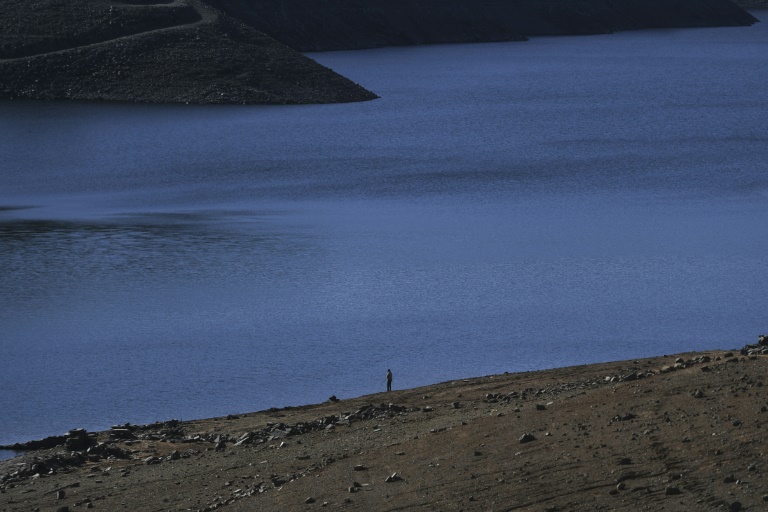
In central Portugal, a sustained drought has revealed the ruins of a village that was totally submerged underwater when a large reservoir was created nearly 70 years ago.

“I have never seen that!” says Carlos Perdigao, 76, as he gazes at the ruined stone houses of Vilar which were swallowed up by the Zezere river when a dam was opened in 1954.

Vilar stands on the banks of the river, surrounded by cracked yellow earth, another sign of the ongoing dry spell during what is normally a rainy winter season, with the drought also hitting neighbouring Spain.

Weather services in both countries say it was the second driest January on record since the year 2000.

The current drought is extraordinary because of “its intensity, scale and length”, says climate scientist Ricardo Deus of Portugal’s meteorology agency IPMA.

Of Portugal’s 55 dams, 24 are only holding half of their water capacity, and five are below 20 per cent, according to the European Union’s Copernicus Earth observation service.

The  Algarve, Portugal’s southernmost province, and one of Europe’s top tourism destinations, is one of those most affected by the drought.

Meanwhile Spain only got a quarter of the precipitation it normally gets in January, said the AEMET weather service. 

The dry spell, which began at the end of 2021, is ruining crops, leaving farmers struggling to feed livestock and hampering hydroelectricity production.

– ‘It’s a disaster’ –

Earlier this month, Portugal ordered five of its hydropower dams to suspend water use for electricity production in order to prioritise human consumption.

Nearly 30 percent of Portugal’s electricity comes from hydropower dams.

And in Spain, Agriculture Minister Luis Planas on Tuesday said the government was “concerned” about the drought and would adopt the “necessary measures” depending on how the situation evolves.

Spain’s water reserves are currently at less than 45 percent of their capacity, officials say, with the southern Andalusia region and Catalonia in the northeast worst hit. 

Farmers in both countries are worried.

“Look! The grass isn’t growing to feed the animals,” says Antonio Estevao, a cheese producer who owns a herd of around 30 goats in Portela de Fojo Machio, a village in central Portugal near the town of Pampilhosa da Serra.

“If it doesn’t rain in the coming days, it’s going to be very complicated,” he sighs, gazing at his drought-stressed pastures.

The lack of rain is also jeopardising the town’s efforts to draw tourists inland with a floating pool structure set up for bathers in the Zezere river.

But the pool’s plastic lining lies slumped on the ground, with the drought forcing the river to recede.

“For us, it’s a disaster,” says the town’s mayor, Henrique Fernandes Marques.

The same area was badly hit by a wave of wildfires that raged through parched farmlands and forests in 2017, claiming over 100 lives.

– No end in sight –

More frequent and intense droughts are expected to put enormous strain on climate-vulnerable regions as temperatures rise, and will likely heighten the risk of related natural disasters such as wildfires, scientists say.

While the alternation between dry and wet years is normal in southern Europe, “we have observed a decline in the percentage of rainy years lately,” said Filipe Duarte Santos, an environment specialist at Lisbon University.

These droughts are “one of the most serious consequences of climate change,” he added.

“Until greenhouse gas emissions are drastically reduced, the problem will continue.”

The situation is not likely to improve in the coming weeks as forecasters expect rainfall in both countries to be below the seasonal average.

Faced with this reality, the Portuguese government on Thursday said it would boost its cooperation with Spain to fight the drought.

Webb telescope spots its first star — and takes a selfie

Star light, star bright, the James Webb Space Telescope has seen its first star (though it wasn’t quite tonight) — and even taken a selfie, NASA announced Friday.

The steps are part of the months-long process of aligning the observatory’s enormous golden mirror that astronomers hope will begin unraveling the mysteries of the early Universe by this summer.

The first picture sent back of the cosmos is far from stunning: 18 blurry white dots on a black background, all showing the same object: HD 84406 a bright, isolated star in the constellation Ursa Major.

But in fact it represents a major milestone. The 18 dots were captured by the primary mirror’s 18 individual segments — and the image is now the basis for aligning and focusing those hexagonal pieces.

The light bounced off the segments to Webb’s secondary mirror, a round object located at the end of long booms, and then to the Near Infrared Camera (NIRCam) instrument — Webb’s main imaging device.

“The entire Webb team is ecstatic at how well the first steps of taking images and aligning the telescope are proceeding,” said Marcia Rieke, principal investigator for the NIRCam instrument and regents professor of astronomy, University of Arizona, in a statement.

“We were so happy to see that light make its way into NIRCam.”

The image capturing process began on February 2, with Webb pointing at different positions around the predicted location of the star.

Though Webb’s initial search covered an area of the sky about equal to the size of the full Moon, the dots were all located near the center portion, meaning the observatory is already relatively well positioned for final alignment.

To aid the process, the team also captured a “selfie” taken not through an externally mounted camera but through a special lens on board NIRCam. 

NASA had previously said a selfie wasn’t possible, so the news comes as a welcome bonus for space fans.

“I think pretty much the reaction was holy cow,” Lee Feinberg, Webb optical telescope element manager, told reporters in a call, explaining that the team wasn’t sure it was possible to obtain such an image using starlight alone.

The $10 billion observatory launched from French Guiana on December 25 and is now in an orbit that is aligned with the Earth’s around the Sun, one million miles (1.5 million kilometers away) from our planet, in a region of space called the second Lagrange point.

Webb will begin its science mission by summer, which includes using its high resolution instruments to peer back in time 13.5 billion years to the first generation of galaxies that formed after the Big Bang.

Visible and ultraviolet light emitted by the very first luminous objects has been stretched by the Universe’s expansion, and arrives today in the form of infrared, which Webb is equipped to detect with unprecedented clarity.

Its mission also includes the study of distant planets, known as exoplanets, to determine their origin, evolution and habitability.

Coca-Cola says 25% of packaging will be reusable by 2030

Coca-Cola, under pressure from environmentalists over its packaging policies, has pledged to use reusable containers for at least 25 percent of its beverages by 2030.

The soda giant announced the pledge Thursday, saying it would be implemented globally through the glass and plastic bottles it sells to consumers and through the containers used at soda fountains and dispensers.

Refillable containers accounted for about 16 percent of total volumes in 2020, Coca-Cola said.

“Reusable packaging is among the most effective ways to reduce waste, use fewer resources and lower our carbon footprint in support of a circular economy,” said Ben Jordan, senior director of packaging and climate at Coca-Cola.

But the coalition #Breakfreefromplastics, which has rated the company the world’s top plastic polluter because of its historic use of single-use plastic containers, offered only measured praise.

“Coke’s announcement that they are expanding their reusable packaging target globally is definitely a step in the right direction,” said Emma Priestland, global corporate campaigns coordinator for the group. 

“The company’s string of broken promises in the past, however, compels us to welcome this announcement with some skepticism.”

The advocacy group As You Sow, which has drafted a shareholder proposal urging greater use of refillable bottles, praised the announcement.

Conrad MacKerron, the group’s senior vice president, said he was “pleased” by Coca-Cola’s commitment, adding that, “this action has the potential to substantially reduce the amount of single-use plastic bottles used, many of which end up as ocean plastic pollution.”

As You Sow said it will undertake additional analysis of the pledge to determine whether to withdraw its shareholder proposal.

US court reinstates gray wolf endangered species protections

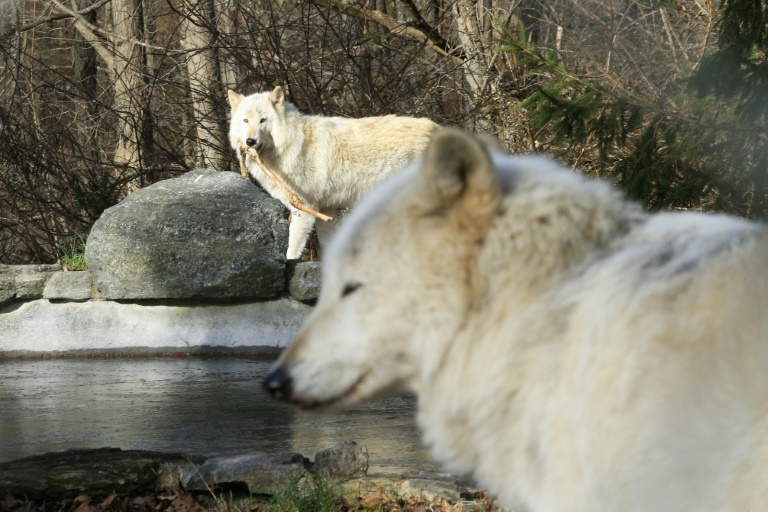
A US court has struck down a Trump-era decision to remove federal protections for gray wolves across much of the country, in a move hailed by conservationists who said the listing was vital for the species’ recovery.

A 26-page ruling issued Thursday by Judge Jeffrey White in a case brought by wildlife groups found the Fish and Wildlife Service (FWS) had erred in its October 2020 decision to remove the apex predators from the Endangered Species Act (ESA), where they were first listed in the 1970s.

Though the decision to delist gray wolves across most of the lower-48 states was taken by the administration of former president Donald Trump, Joe Biden’s government had continued to defend the move in court.

“It really is a win for wolves across the country,” Collette Adkins of the Center for Biological Diversity, told AFP.

“And I hope it finally convinces the Fish and Wildlife Service to really focus on recovering wolves instead of prematurely removing their protections.”

A quarter million gray wolves — long a symbol of the free spirit of the American wilderness — once roamed from coast to coast before the arrival of European settlers and eradication campaigns that endured into the 20th Century.

At the time of the decision to de-list them, the wolves had recovered from a low of 1,000 to around 6,000 — but hundreds were subsequently legally killed, either through hunting or conflicts with livestock operators.

In one egregious example, hunters in Wisconsin killed over 218 wolves in less than three days in February 2021, using packs of dogs, snares and leg-hold traps — well beyond the state’s own limit of killing 119 wolves.

The 2020 decision to remove the species’ protections had been opposed by 1.8 million Americans in public comments, as well as hundreds of scientists, veterinary professionals, and the iconic conservationist Jane Goodall.

Even the researchers commissioned by the FWS to carry out a review of the science found it did not support de-listing.

“Both under Democratic and Republican administrations, there has been this year-to-year desire to just be done recovering wolves,” said Adkins. 

“It’s been frustrating because the Endangered Species Act envisions a recovery of these animals so that they can fulfill their ecosystem role,” she added.

Research has confirmed the wolf’s importance in thinning over-browsing herds of elk, which in turn prevents destruction of habitat, for example. And a recent study from Wisconsin found that wolves kept deer away from roads, reducing collisions between deer and cars.

Adkins said she was hopeful of a change in policy after interior secretary Deb Haaland this week penned an op-ed in USA Today criticizing some western States in the northern Rocky mountain range, which have stepped up hunting campaigns in recent months.

The gray wolves of the northern Rockies haven’t been covered by the Endangered Species Act since a 2011 Congressional act, but Halaand wrote she could reinstate federal protections specifically for them if necessary.

Don't just blame climate change for weather disasters

As a pioneer in so-called attribution science — establishing a link between extreme weather and climate change — Friederike Otto is adamant that the rising toll of heatwaves and hurricanes cannot be explained by global warming alone.

AFP spoke to Otto, a physicist at the Grantham Institute for Climate Change at Imperial College London, ahead of the release of a major UN climate report on climate change impacts and how humanity can adapt to them.

Q. Is ‘natural disaster’ a contradiction in terms?

To talk about natural disasters the way that we usually do is not very helpful because it turns the attention away from the agency that we have as humans. 

You have to search very hard to find climate disasters that are purely natural. Even without climate change, if humans are involved, such disasters occur for the most part when vulnerability and exposure meet extreme weather events. Global warming just makes it worse.

Q. Can you give an example?

Last year there were major floods in western Germany which led to lots of lost lives, damaged property. 

Yes, climate change made the rainfall more intense. But even without global warming there would have been a huge, heavy rainfall event. And it would have landed in a densely populated geography where the rivers flood very easily and the water has nowhere to go. 

Q. Has attribution science led to blaming disasters just on climate change?

When we started to do attribution, everyone -– we, the media –- were excited to finally have an answer to the question: what is the role of climate change in these disasters? It was a breakthrough to be able to say an individual event was made, say, 10 times more likely.  

But if we ignore vulnerability, then we also ignore to a large degree what we can actually do to cope with and protect ourselves from climate change.

Q. How do we assess responsibility for a natural disaster?

The goal… is not so much to pinpoint fault or blame, but to understand the causes. The next step is to ask: what do we need to change? Who has the agency to do that? Then you can ask about responsibility. 

We know now that building mansions on the beach or cliffs of Malibu is probably a stupid idea. It is deliberately exposing oneself to risk. 

A 1,000-year-old city built on what has now become a flood plain is different. But we still have to adapt: educate people not to build there anymore, build in a way -– on stilts, for example — that can withstand floods. We also need better flood forecasting.  

Q. Is it also an equity issue?

It’s the vulnerable in society who suffer the greatest loss and damages. They live in houses that can’t withstand natural hazards; they live in floodplains; they can’t afford insurance. And it’s not just Global North vs Global South. Who’s still suffering today from the consequences of Hurricane Katrina, that devastated New Orleans in 2005? It’s not the rich and white. It’s the poor, and people of colour.

Q. What is ‘maladaptation’, and where does that fit in?

Just blaming climate for disasters can lead to maladaptation. If you think of climate disasters purely as a physical problem, you’re likely to favour a technical solution, like building a dam. That may result in less flooding in a small part of a city but have bad consequences along the rest of the river.  

If the measure you put in place to adapt makes things worse in the long run or for the majority of people, that’s maladaptation. Adaptation also means education, governance, and so on. But investing in those things is harder, and it can take decades to see results.

Q. Have disasters been incorrectly blamed on climate change?

The drought and famine in Madagascar. Climate change is really not playing a role there. The population is extremely dependent on rain-fed agriculture, but the rains are just naturally not terribly reliable. 

And there’s a very high rate of poverty. Outside disaster assistance has been very short-term. Lots of things that have gone really wrong on the vulnerability side. But climate change is not really a driver.

Q. The UN identified Madagascar at the world’s first climate-driven famine

Even without doing an attribution study, just from everything that we knew before from IPCC reports, it should have been clear that climate change is not the only, and not even a major driver of the drought in southern Madagascar.  

I can see why they do that -– to raise funds and so on. But it’s just not helpful to say, “everything is tickety-boo and then the big, bad climate change monster comes and eats us all”. That’s not how it works.

UN science report to sound deafening alarm on climate

Nearly 200 nations kick off a virtual meeting Monday to finalise what promises to be a harrowing scientific overview of accelerating climate impacts that will highlight the urgent need to cut emissions — and prepare for the challenges ahead.

The world is already feeling the effects of global warming, driven largely by the burning of fossil fuels, with last year seeing a cascade of deadly floods, heatwaves and wildfires across four continents. 

The upcoming update from the Intergovernmental Panel on Climate Change (IPCC) is set to outline in stark detail what the best available science tells us are the impacts of the changing climate — past, present and future.   

During a two-week gathering, diplomats and scientists will vet, line-by-line, an all-important Summary for Policymakers, boiling down an underlying report thousands of pages long.

An early draft of the IPCC review seen by AFP in 2021 makes clear the extent to which devastating climate impacts are a here-and-now reality.

In some cases this means that adapting to intolerably hot days, flash flooding and storm surges has become a matter of life and death.

“Even if we find solutions for reducing carbon emissions, we will still need solutions to help us adapt,” said Alexandre Magnan, a researcher at the Institute for Sustainable Development and International Relations in Paris and a co-author of the report, without commenting on the report’s findings. 

Species extinction, ecosystem collapse, crippling health impacts from disease and heat, water shortages — all will accelerate in the coming decades even if the carbon emissions that drive global warming are drawn down, the report is likely to find.

“This is a real moment of reckoning,” said Rachel Cleetus, Climate and energy policy director at the Union of Concerned Scientists.

“This not just more scientific projections about the future,” she told AFP. “This is about extreme events and slow-onset disasters that people are experience right now.”

– Planning ahead –

The report comes three months after pledges at the COP26 climate summit in Glasgow to halt deforestation, curb methane emissions, phase down coal-fired power and boost financial aid to developing countries. 

IPCC assessments are divided into three sections, each with its own volunteer “working group” of hundreds of scientists.

In August 2021, the first instalment on physical science found that global heating is virtually certain to pass 1.5 degrees Celsius (2.7 degrees Fahrenheit), probably within a decade. 

That is the heating limit envisioned in the Paris Agreement, beyond which impacts become more severe.   

This second report on impacts and adaptation, due for release after the two-week meeting, is likely to underscore that vulnerability to extreme weather events — even when they are made worse by global warming — can be reduced by better planning.

This is not only true in the developing world, noted Imperial College professor Friederike Otto, pointing to massive flooding in Germany last year that killed scores and caused billions in damage. 

“Even without global warming there would have been a huge rainfall event in a densely populated geography where the rivers flood very easily,” said Otto, a pioneer in the science of quantifying the extent to which climate change makes extreme weather events more likely or intense.

– Hard choices –

The latest report will also likely zero in on how climate change is widening already yawning gaps in inequality, both between regions and within nations. 

This means that the people least responsible for climate change are the ones suffering the most from its impacts.

Not only is this unjust, experts and advocates say, it is a barrier to tackling the problem.

“I do not think there are pathways to sustainable development that do not substantively address equity issues,” said Clark University professor Edward Clark, a lead author of one of the reports chapters.

Earth’s surface has warmed 1.1 degrees Celsius since the 19th century. 

The 2015 Paris deal calls for capping global warming at “well below” 2C, and ideally the more ambitious limit of 1.5C.

This report is sure to reinforce that goal.

“There are limits — for ecosystems and human systems — to adaptation,” said Cleetus. “We cannot adjust to runaway climate change.”

Indeed, the report will probably emphasise more than ever before dangerous “tipping points”, invisible temperature trip wires in the climate system for irreversible and potentially catastrophic change.

Some of them — such as the melting of permafrost housing twice as much carbon as in the atmosphere — could fuel global warming all on their own.

At the same time, scientists are only just beginning to get a handle on so-called cascading and compound impacts — how Greenland’s melting ice sheet, for example, affects ocean currents across the globe.

“There is a finite set of choices we can make that would move us productively into the future,” said Carr. “Every day we wait and delay, some of those choices get harder or go away.”

Turbine 'torture' for Greek islanders as wind farms proliferate

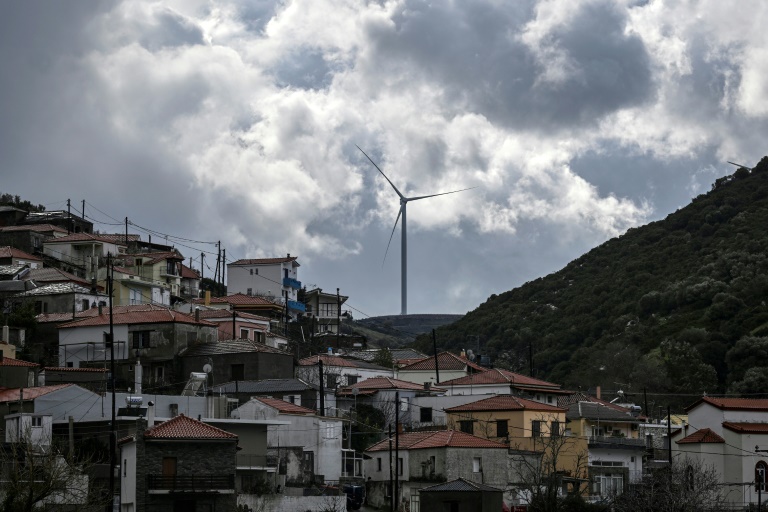
Until a few years ago, Agii Apostoli was a picturesque seaside village on the eastern coast of Evia, drawing a modest income from tourism and fishing.

Now it is ringed by towering wind turbines whose night lights and whirring sounds are tantamount to daily “torture”, locals say.

“Longterm visitors ask us, why did you allow this crime to take place?” laments Stamatoula Karava, a local employee involved in a local cultural association.

With their aviation lights flashing through the night in the surrounding hills, the turbines “have completely ruined the view,” she says.

Evia, 80 kilometres (50 miles) east of Athens and Greece’s second largest island after Crete, was among the first of the country’s regions to host wind farms some two decades ago.

But they have since mushroomed, mainly in the more sparsely populated south of the island, environment groups say.

The municipality of Karystos alone, with an area of 672 square kilometres, has more than 400 turbines, some of them along the area’s main road.

The oldest ones have now fallen into disuse, yet there are no plans to remove them and recycle their parts, says Chryssoula Bereti, who chairs the Karystos anti-wind farm front.

“It’s a scandal,” she fumes.

In line with EU clean energy targets, Greece has reduced its once-overwhelming reliance on lignite for electricity production to around 10 percent currently.

Forty percent of Greek power plants are now gas-fired and 30 percent run on renewable resources, of which 18 percent are wind turbines.

Hydroelectric plants and imports account for the remainder. 

According to the Regulatory Authority for Energy (RAE), Greece’s power production watchdog, the maximum capacity of wind turbines in the country increased more than sixfold between 2019 and 2021 to 8,205 MW.

With its propensity for high winds, Evia is a natural location for wind farms, notes RAE chairman Athanasios Dagoumas.

But critics say that this expansion has gone too far.

“Wind turbines have been installed on mountain peaks, in forests, near archaeological sites, on islands, in protected habitats… it’s as if energy production is the only possible activity in this country”, says Dimitris Soufleris, a lawyer and spokesman of the environmental association of the Evia town of Kymi.

“We cannot have so many wind farms in Greece,” he told AFP.

– ‘We can’t sleep’ –

In past months, protests against wind farm development have been held in Agrafa, central Greece, as well as the islands of Andros, Skyros and Tinos.

Soufleris notes that another 18 turbines are scheduled to be installed near Agii Apostoli. 

Nikos Balaskas, a local engineer whose house in Agii Apostoli is less than 400 metres (450 yards) from the nearest wind turbine, has sued the company.

“As an engineer, I’m not opposed to green energy. But there have to be standards. This is torture, we can no longer sleep for the noise,” he said.

There are similar concerns in the nearby coastal town of Styra, where another 14 wind turbines are to be located.

“This is going to cause enormous damage to our region,” says local hotel chairwoman Afroditi Lekka, noting that thousands of hikers visit the area annually.

In response to the mounting criticism, the conservative government of Prime Minister Kyriakos Mitsotakis last month announced that six mountain ranges in central Greece, the Peloponnese, Crete and the island of Samothrace would be given additional protection status against future energy infrastructure development.

“Planned licences in these areas were withdrawn,” says RAE’s Dagoumas.

Similar steps have also been taken in the north of Evia, which was devastated by wildfires this summer, he adds.

RAE’s Dagoumas notes in the past two years solar parks have overtaken wind farm investments owing mainly to “the implementation of a new automatic system” that facilitates the application for the investors and lower average cost.  

“The wind farms cannot been implemented everywhere, it has to be high wind capacity, for the photovoltaics there is much more space for them”, he says.

Australia warns koalas 'endangered' as numbers plunge

Australia officially listed koalas across a swathe of its eastern coast as “endangered” on Friday, with the marsupials fighting to survive the impact of bushfires, land-clearing, drought and disease.

Conservationists said koala populations had crashed in much of eastern Australia over the past two decades, warning that they were now sliding towards extinction.

Environment Minister Sussan Ley said she had designated koala populations as “endangered” to offer them a higher level of protection in New South Wales, the Australian Capital Territory and Queensland.

The koala, a globally recognised symbol of Australia’s unique wildlife, had been listed as “vulnerable” on the eastern coast just a decade earlier.

“We are taking unprecedented action to protect the koala,” the minister said, highlighting a recent government promise of Aus$50 million (US$36 million) to protect and recover koala habitats.

Environmentalists welcomed the koalas’ new status but condemned Australia’s failure to protect the species so far.

“Koalas have gone from no-listing to vulnerable to endangered within a decade. That is a shockingly fast decline,” said WWF-Australia conservation scientist Stuart Blanch.

“Today’s decision is welcome but it won’t stop koalas from sliding towards extinction unless it’s accompanied by stronger laws and landholder incentives to protect their forest homes.”

Conservationists said it was hard to give precise figures on koala populations in the affected eastern states.

But estimates by an independent government advisory body — the Threatened Species Scientific Committee — indicated that koala numbers had slumped from 185,000 in 2001 to just 92,000 in 2021.

– ‘Losing a national icon’ –

Alexia Wellbelove of the Humane Society International said east coast koalas could be extinct by 2050 if no action was taken. 

“We can’t afford any more clearing,” she said.

The Australian Conservation Foundation said its own research showed that the federal government had approved the clearing of more than 25,000 hectares of koala habitat since the species was declared vulnerable a decade ago.

“Australia’s national environment laws are so ineffective they have done little to stem the ongoing destruction of koala habitat in Queensland and NSW since the species was supposedly protected a decade ago,” said the foundation’s nature campaign manager, Basha Stasak.

“The extinction of koalas does not have to happen,” Stasak added.

“We must stop allowing their homes to be bulldozed for mines, new housing estates, agricultural projects and industrial logging.”

Australia’s koalas had been living on a “knife edge” even before the devastating “Black Summer” bushfires of 2019-2020 because of land-clearing, drought, disease, car strikes and dog attacks, said Josey Sharrad, wildlife campaign manager at the International Fund for Animal Welfare.

“We should never have allowed things to get to the point where we are at risk of losing a national icon,” Sharrad said.

“The bushfires were the final straw. This must be a wake-up call to Australia and the government to move much faster to protect critical habitat from development and land-clearing and seriously address the impacts of climate change.”

Musk 'confident' of Starship orbital launch this year

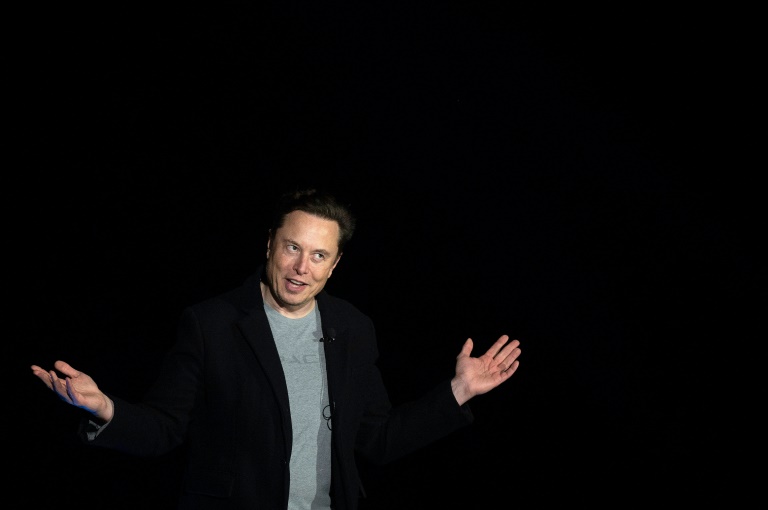
Elon Musk delivered updates on SpaceX’s efforts to develop its interplanetary Starship rocket on Thursday night, but stopped short of announcing a firm launch date for an orbital test or new  missions, despite considerable buildup ahead of the rare presentation.

Addressing an audience at the company’s Starbase facility near Boca Chica, south Texas, the tycoon merely said: “I feel at this point highly confident that we’ll get to orbit this year,” while hinting at a potential pivot to launching from Florida if the company encounters regulatory hurdles.

Musk was speaking against the impressive backdrop of the spacecraft in its fully-stacked configuration, standing 394 feet (120 meters) tall, with a matte black upper-stage placed on a shimmering silver Super Heavy first-stage rocket. 

Together, they make the biggest spacecraft ever built: taller than even the Saturn V rockets that took astronauts to the Moon during the Apollo era. 

Made of stainless steel and designed to be fully reusable, Starship is also intended to be the world’s most powerful rocket, and will be capable of lifting up to 100 metric tonnes to Earth orbit.

SpaceX envisages the ship carrying crew and cargo to the Moon, Mars and beyond — and last year, NASA awarded the company a contract for a version of Starship to ferry astronauts on the Artemis program from lunar orbit to the surface.

– $10 million launches? – 

In his first detailed progress report on the project since 2019, Musk recapped his ultimate vision for colonizing Mars as a “life insurance” in case of catastrophe on Earth, and as the first step in expanding humanity’s footprint beyond the solar system.

The speech was peppered with dry humor, such as his “sales pitch” for Mars: “It’s going to be cramped, dangerous, difficult, very hard word, you might die” — though he eventually hopes to terraform the Red Planet. 

Musk also included some updates for fans, such as an illustration of how one Starship would be sent to refuel another on deep space voyages, and the thrust advantage and neater design of the latest generation of Raptor engines compared to the first iteration.

Each Starship booster is planned to have 33 Raptors, and a bottleneck in the production is expected to ease in the coming weeks, with as many as one engine manufactured per day by next month, said Musk.

He also revealed that within years the cost of launch could be as little as $10 million — a price point that could revolutionize the industry by making rockets attractive for commercial transportation purposes.

A flight to Singapore from the US is 20 hours “while in a rocket it would be less than an hour. So like 45 minutes or there abouts.”

Starship’s upper stage has already made several suborbital flights. After multiple tests that ended in impressive explosions, SpaceX finally succeeded in landing the spacecraft last May.

– Possible pivot to Florida –

But a far more ambitious orbital test is pending an environmental impact clearance from the Federal Aviation Administration.

The FAA said in a December release it would deliver a report by February 28.

Musk said that while he was optimistic of receiving approval, he was prepared to shift launch operations to the company’s launch site at the Kennedy Space Center in Florida, if it was held up. 

Former deepwater oil drilling rigs the company has acquired to convert into rocket launch and land sites could also come into play, he added.

Beyond exploration missions, Starship’s tremendous payload capacity could also be a boon for astronomers seeking to place bigger telescopes into space, while the US military has given SpaceX a five-year contract to demonstrate its capacity to whizz cargo around the world in ultra quick time. 

Japanese billionaire Yusaku Maezawa has contracted Starship for a journey around the Moon with a crew of artists, and Musk hinted there would soon be “future announcements that I think people will be pretty fired up about,” without divulging more.

Close Bitnami banner
Bitnami