AFP

IAEA wraps up first trip to monitor Fukushima water release

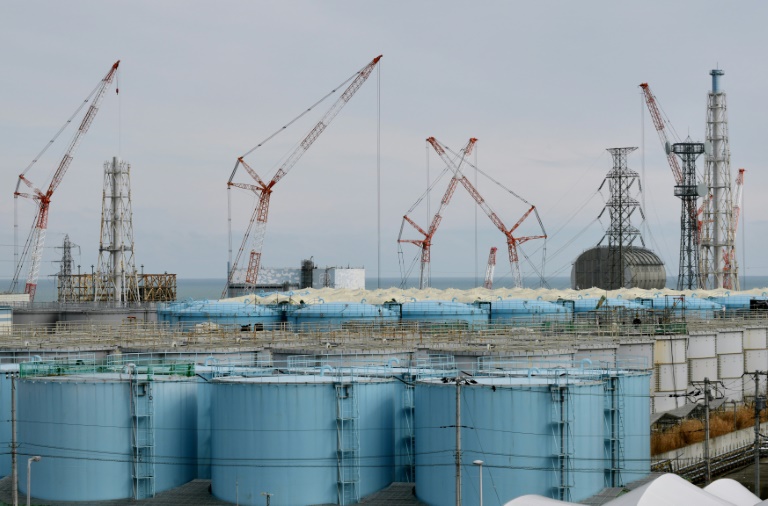
The International Atomic Energy Agency said Friday it made “significant progress” on its first mission to review the planned release of treated water from Japan’s Fukushima nuclear plant.

Since Monday, an IAEA taskforce has been in Japan to assess the country’s plan to gradually release the water, which has been processed to remove most radioactive elements, into the ocean.

The organisation’s deputy director general Lydie Evrard said the international team including non-IAEA experts had examined early preparations at the site for the release, expected to begin as soon as March next year.

“The IAEA taskforce made significant progress in its work this week to get a better understanding of Japan’s operational and regulatory plans for the discharge of the treated water,” she told reporters.

More than a million tonnes of liquid, including rain, groundwater and water used for cooling, has accumulated in tanks at the crippled Fukushima plant since it went into meltdown after a tsunami in 2011, and space is running out.

The IAEA has already endorsed the release, which it says is similar to wastewater disposal at nuclear plants elsewhere.

But neighbouring countries have expressed environmental and safety concerns, and local fishing communities are opposed, fearing it will undermine years of work to restore their reputation.

The water is treated but some radioactive elements including tritium remain. Experts say there is no evidence that would pose any danger, but opponents want the plan blocked.

Evrard said the taskforce collected water samples and gathered technical information on the trip and will release its findings in late April, the first of several reports in a multi-year review.

Ahead of the press conference on Friday, Greenpeace said it had “low expectations” for the taskforce’s investigation, calling for alternative options to the release to be explored.

“The IAEA is incapable of protecting the environment, human health or human rights from radiation risks — that’s not its job,” Shaun Burnie, senior nuclear specialist for Greenpeace East Asia, said in a statement.

Evrard said the UN-affiliated organisation is listening to concerns over the plans and takes them “very seriously”, and the review was “aimed at providing an objective and science-based approach”.
Sirens alert more rain in Brazilian city where 117 have died in flooding

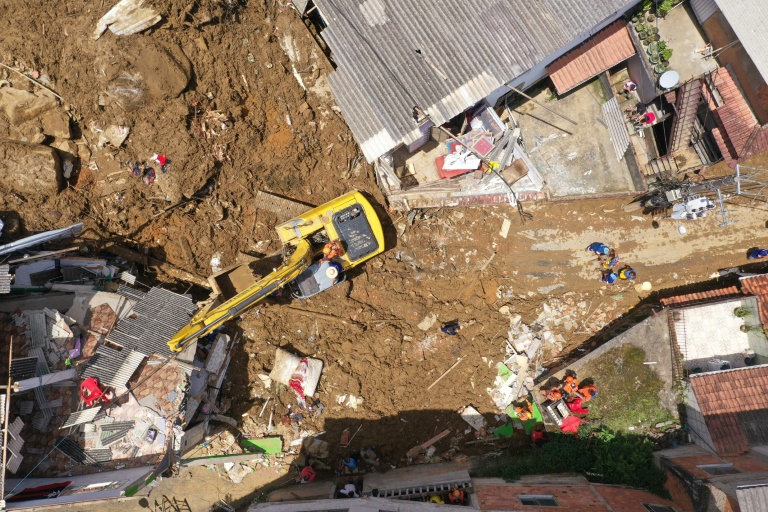
Ahead of more heavy rain, residents of several neighborhoods in the devastated Brazilian city of Petropolis were called to evacuate Thursday, just two days after flash floods and landslides killed 117 people.

Sirens warned neighborhoods in the hillside tourist town to leave, with residents still shocked from the rivers of mud that buried homes and swept away cars and trees. At least two streets were already closed after landslides containing “rocky blocks.”

The new rainfall comes with dozens still reported missing in the city, located some 60 kilometers (37 miles) north of Rio de Janeiro, and as the first funerals of identified victims took place.

Text messages warned residents to take refuge at relatives’ homes or in public shelters “due to the volume of rain affecting the city, which will continue, with an intensity between moderate to strong, in the next few hours,” the local Civil Defense said.

“I feel scared when I see that it’s raining again, because the ground is still soaked,” said 45-year-old Petropolis resident Rodne Montesso, whose house was not at risk from the latest rains. “I think of the families who live in neighborhoods where many people have already died and I get desperate.”

Amid fears that the toll could climb, firefighters and volunteers scrambled through the remains of houses Thursday — many of them impoverished slums.

As rescue helicopters flew overhead, residents shared stories about loved ones or neighbors swept away.

“Unfortunately, it is going to be difficult to find survivors,” Luciano Goncalves, a 26-year-old volunteer, told AFP, completely covered in mud.

“Given the situation, it is practically impossible. But we must do our utmost, to be able to return the bodies to the families. We have to be very careful because there are still areas at risk” of fresh landslides, he added.

– ‘Scene from a war’ –

A total of 24 people have been rescued, while the number of missing is murky due to many of the dead bodies not yet having been identified. Globo TV has reported the number of missing at 41.

So far, 850 displaced people have been relocated to makeshift shelters, the vast majority of them in public schools.

Some 500 firefighters, with the help of hundreds of volunteers, dogs, bulldozers and dozens of aircraft participated in the rescue.

The rains were the latest in a series of deadly storms — which experts say are made worse by climate change — to hit Brazil in the past three months.

Charities have called for donations of mattresses, food, water, clothing and face masks.

Governor Claudio Castro of Rio de Janeiro state said the streets of Petropolis resembled “a scene from a war,” adding these were the heaviest rains to hit the region since 1932.

The “historic tragedy” was made worse, Castro said, by “deficits” in urban planning and housing infrastructure.

The effects of uncontrolled urban expansion, said meteorologist Estael Sias, hit the poor hardest when disaster strikes.

“Those who live in these regions at risk are the most vulnerable,” he said.

City hall declared a state of disaster and three days of mourning.

– ‘Tragedy’ –

Petropolis — the 19th-century summer capital of the Brazilian empire — is a popular destination for tourists fleeing the heat of Rio.

It is known for its leafy streets, stately homes, imperial palace — today a museum — and the natural beauty of surrounding mountains.

President Jair Bolsonaro, on an official trip to Russia and Hungary, will travel to Petropolis on his return Friday to inspect the damage, the government announced.

Experts say rainy season downpours are being augmented by La Nina — the cyclical cooling of the Pacific Ocean — and by climate change.

Because a warmer atmosphere holds more water, global warming increases the risk and intensity of flooding from extreme rainfall.

Last month, torrential downpours triggered floods and landslides that killed at least 28 people in southeastern Brazil, mainly in Sao Paulo state.

There have also been heavy rains in the northeastern state of Bahia, where 24 people died in December.

Petropolis and the surrounding region were previously hit by severe storms in January 2011, when more than 900 people died in flooding and landslides.

jhb-pt-lg-pt/mm/mlr/bfm//to

Sydney reopens beaches after fatal shark attack

Sydney reopened beaches to surfers and swimmers on Friday after failing to find a large, great white shark that devoured a swimmer in the Australian city’s first such attack since 1963.

A 35-year-old British diving instructor, Simon Nellist, was identified by national broadcaster ABC and other media as the victim of Wednesday’s attack, which led the authorities to close a string of beaches including the iconic Bondi Beach.

Fishermen and golfers watched helplessly from nearby cliffs as a shark mauled the swimmer to death in a horrific attack off Sydney’s Little Bay Beach. 

Emergency responders described his injuries as “catastrophic”.

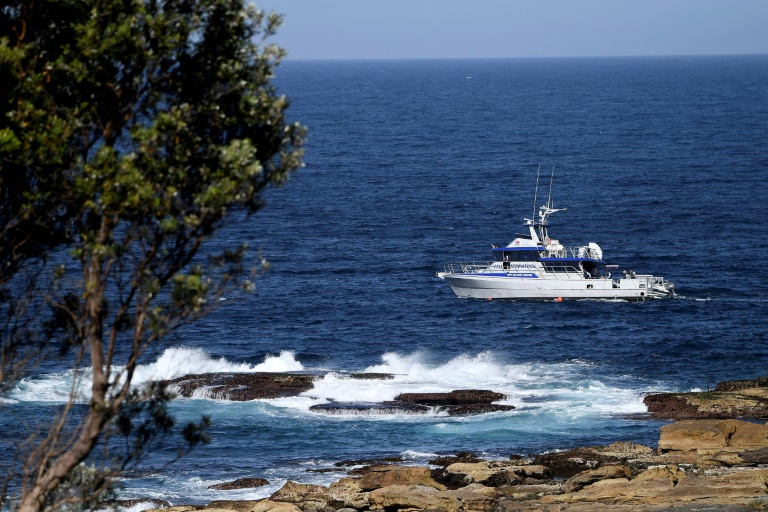
After the attack, drones scoured the ocean from the air, spotters launched on boats and six drum lines were set to try to catch the creature, which is believed to be at least three metres (10 feet) in length.

But no shark was seen.

“There have been no further sighting of sharks in the area, so beaches have been cleared to re-open on Friday 18 February 2022,” the mayor of Sydney’s Randwick local government area, Dylan Parker, said on the eve of the reopening.

Shortly after dawn on Friday, about a hundred swimmers at Bondi Beach stood in a circle on the sand and heads-bowed paid their respects to Nellist.

They then entered the surf on mass, and after a ritual swim beyond the breaking waves, regrouped to form another vast circle in moving tribute. 

“Ocean swimming is a special sport that has given me so much and I’m proud to be a part of this beautiful community,” said Bondi lifeguard and local celebrity Andrew ‘Reidy’ Reid. “Rest In Peace Simon.”  

“Everything that is connected to Simon is connected to the ocean,” Della Ross, a reported friend of the victim, told Australia’s Channel Seven news.

“The news hit us like a truck because he was one of the people who make this earth lighter.”

The man’s former employers before he moved to Australia, the Queens Hotel in Penzance, Cornwall, said they were “shocked” by his death.

“Our thoughts and prayers go out to Simon Nellist and his family, fiance and friends at this sad time,” the hotel said on Facebook, describing him as a “wonderful man”.

Rescued condors spread wings in Chilean Andes

Pumalin and Liquine, two juvenile condors rescued from certain death, have been released back into the wild in a much-needed boost for a dwindling species emblematic of the Chilean Andes.

After 14 months of rehabilitation, the pair of scavengers were freed last week in the Patagonian National Park in Chile’s extreme south, where every individual counts for a species listed by the International Union for Conservation of Nature (IUCN) as “vulnerable” to extinction.

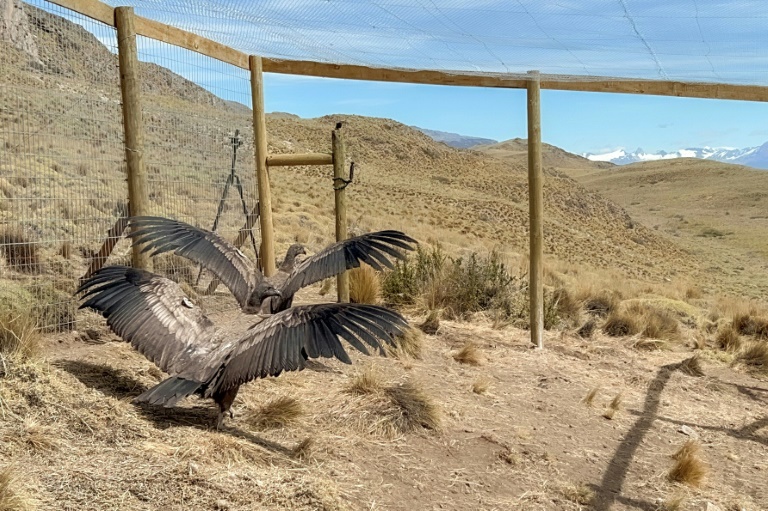
From a vast cage perched on the edge of a cliff overlooking the Patagonian valley, the pair spread their massive wings, waddled to the ledge, and took the leap of freedom, soaring away graciously.

“Today we have witnessed a milestone,” Christian Saucedo of the Rewilding Chile Foundation told AFP.

“It is a very complex process… but it means returning individuals who would otherwise be condemned to live in captivity,” he said.

According to the IUCN, the Andean condor — a type of scavenging vulture — is a declining species, with fewer than 7,000 left in the wild.

– Human ‘persecution’ –

The main threat is “direct and indirect persecution by humans,” it states.

Dominic Duran, the executive director of the Manku Project for condor conservation, told AFP “the biggest threat is toxic baits set by humans to poison… pumas or wild dogs eating their livestock.”

When the condors feed on these carcasses, up to 30 at a time, they get poisoned in turn.

The first to eat, he added, are usually the breeding males and females, and “when condors are killed by toxic bait, all the reproductive individuals at the top of the chain die.”

Other threats are hunting by humans, intoxication from poorly-managed landfills and dwindling numbers of the wild animals that make up their diet.

The foundation that rescued Pumalin and Liquine is a legacy of US philanthropist Douglas Tompkins, who in 1990 donated 8,000 square kilometers (3,088 square miles) of land to Chile and Argentina for conservation.

The Patagonia National Park now housed there holds an estimated 70 percent of Chile’s Andean condors — the largest population in South America.

Pumalin, a male, was found over a year ago unable to fly after getting caught in a heavy storm, and Liquine, a female, was rescued struggling to make it in the wild after an earlier attempt to rehabilitate her.

They will now go back to “learning the codes of condor society,” said Saucedo.

The pair’s progress will be monitored with radio transmitters implanted in their wings.

Rescued condors spread wings in Chilean Andes

Pumalin and Liquine, two juvenile condors rescued from certain death, have been released back into the wild in a much-needed boost for a dwindling species emblematic of the Chilean Andes.

After 14 months of rehabilitation, the pair of scavengers were freed last week in the Patagonian National Park in Chile’s extreme south, where every individual counts for a species listed by the International Union for Conservation of Nature (IUCN) as “vulnerable” to extinction.

From a vast cage perched on the edge of a cliff overlooking the Patagonian valley, the pair spread their massive wings, waddled to the ledge, and took the leap of freedom, soaring away graciously.

“Today we have witnessed a milestone,” Christian Saucedo of the Rewilding Chile Foundation told AFP.

“It is a very complex process… but it means returning individuals who would otherwise be condemned to live in captivity,” he said.

According to the IUCN, the Andean condor — a type of scavenging vulture — is a declining species, with fewer than 7,000 left in the wild.

– Human ‘persecution’ –

The main threat is “direct and indirect persecution by humans,” it states.

Dominic Duran, the executive director of the Manku Project for condor conservation, told AFP “the biggest threat is toxic baits set by humans to poison… pumas or wild dogs eating their livestock.”

When the condors feed on these carcasses, up to 30 at a time, they get poisoned in turn.

The first to eat, he added, are usually the breeding males and females, and “when condors are killed by toxic bait, all the reproductive individuals at the top of the chain die.”

Other threats are hunting by humans, intoxication from poorly-managed landfills and dwindling numbers of the wild animals that make up their diet.

The foundation that rescued Pumalin and Liquine is a legacy of US philanthropist Douglas Tompkins, who in 1990 donated 8,000 square kilometers (3,088 square miles) of land to Chile and Argentina for conservation.

The Patagonia National Park now housed there holds an estimated 70 percent of Chile’s Andean condors — the largest population in South America.

Pumalin, a male, was found over a year ago unable to fly after getting caught in a heavy storm, and Liquine, a female, was rescued struggling to make it in the wild after an earlier attempt to rehabilitate her.

They will now go back to “learning the codes of condor society,” said Saucedo.

The pair’s progress will be monitored with radio transmitters implanted in their wings.

World funds own destruction with $1.8 tn subsidies: study

The world must by 2030 slash $1.8 trillion in annual subsidies that destroy the environment, in order to “finance a net-zero global economy”, according to a study Thursday from business groups including one founded by tycoon Richard Branson.

The report, estimating the value of damaging state subsidies, was commissioned by Branson’s nonprofit initiative The B Team and global coalition Business for Nature, which comprises academic, corporate and environmental organisations.

The vast subsidies, totalling two percent of global gross domestic product, fund the “global destruction of nature” and governments worldwide must act, the two organisations said in a statement.

The study “finds the fossil fuel, agriculture and water industries receive more than 80 percent of all environmentally harmful subsidies per year”, the organisations concluded.

And they called upon governments to “redirect, repurpose or eliminate” those subsidies by 2030 to help “finance a net-zero global economy”.

At least 20 nations were subsidising the price of gasoline or petrol, sparking higher emissions of carbon and other dangerous air pollutants, the research suggested.

Beef and soy production were also stimulated by “significant” subsidy flows that are a cause of tropical rainforest loss in Brazil, the report found.

European policies on biofuel blending biofuels with motor fuel meanwhile ramped up pressure for new cropland, often at the expense of tropical biodiversity hotspots, the study added.

And illegal logging, often via corruption and favouritism over lumbering concessions, contributed to climate change, deforestation and ecosystem destruction.

“Nature is declining at an alarming rate, and we have never lived on a planet with so little biodiversity,” said Christiana Figueres, head of The B Team’s climate group.

“At least $1.8 trillion is funding the destruction of nature and changing our climate, while creating huge risks for the very businesses who are receiving the subsidies.”

Governments across the world pay an estimated $640 billion in support to the fossil fuel industry, contributing to climate change, air and water pollution and land subsidence, the study found.

Agriculture receives some $520 billion in subsidies that contribute towards soil erosion, water pollution, deforestation, greenhouse gas emissions and loss of biodiversity and natural habitats, it claimed.

And another $350 billion in subsidies for the water industry is said to help fund water pollution and risk ocean and waterway ecosystems. 

Figueres said that “harmful subsidies must be redirected towards protecting the climate and nature, rather than financing our own extinction”.

The study was published one month before the next phase of the UN biodiversity summit COP15 in Geneva.

The research was based on data from the International Energy Agency watchdog and the Organisation for Economic Co-operation and Development, which is a club of industrialised economies that includes wealthy G20 members.

Race to find survivors after Brazil floods, landslides kill 104

Rescuers raced against the clock Thursday to find survivors among the mud and wreckage caused by devastating flash floods and landslides that killed 104 people in the picturesque Brazilian city of Petropolis.

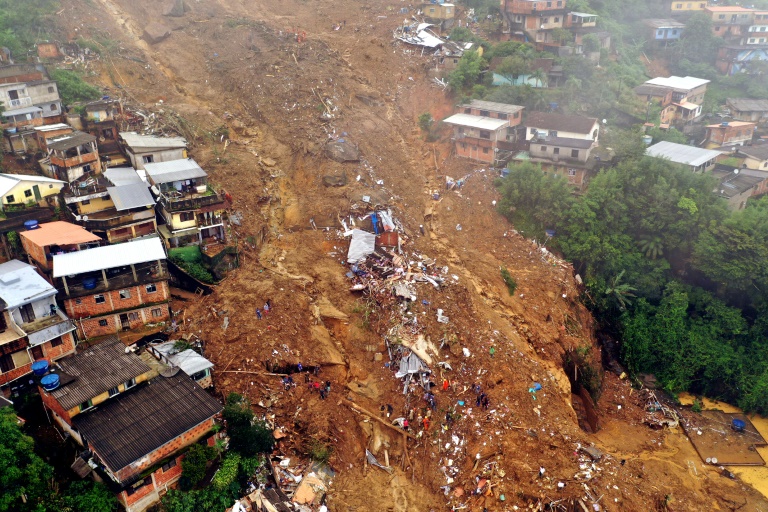
Streets were turned into torrential rivers of mud burying houses and sweeping away cars, trees and just about everything in their path in the hillside tourist town north of Rio de Janeiro.

With dozens still reported missing and more rain looming, fears that the toll could climb sent firefighters and volunteers scrambling through the remains of houses — many of them in impoverished hillside slums.

As rescue helicopters flew overhead, residents shared stories about loved ones or neighbors swept away.

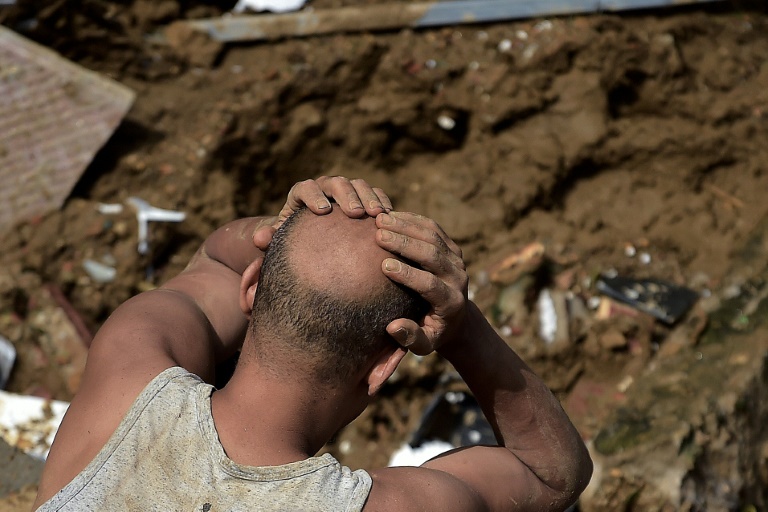
“Unfortunately, it is going to be difficult to find survivors,” Luciano Goncalves, a 26-year-old volunteer, told AFP, completely covered in mud.

“Given the situation, it is practically impossible. But we must do our utmost, to be able to return the bodies to the families. We have to be very careful because there are still areas at risk” of fresh landslides, he added.

Sansao de Santo Domingo, a military policeman aiding the effort, managed to save a small grey dog from the rubble of a house.

“He was scared, he tried to bite me when I arrived. He was defending his territory, because he knew that his masters had been buried below, in the mud,” he said.

– ‘Scene from a war’ –

Some 500 firefighters resumed the search early Thursday after breaking for a few hours due to the instability of the water-soaked soil in the city of 300,000 inhabitants some 60 kilometers (37 miles) north of Rio de Janeiro.

Civil defense authorities have warned of more heavy rains later Thursday, and the government has said there is a high risk of new landslides.

This was the latest in a series of deadly storms — which experts say are made worse by climate change — to hit Brazil in the past three months.

About two dozen people have been rescued alive, but dozens remain missing, possibly more than 130.

About 700 people have been moved to shelters, mainly in schools, officials said.

Charities have called for donations of mattresses, food, water, clothing and face masks.

Governor Claudio Castro of Rio de Janeiro state said the streets of Petropolis resembled “a scene from a war,” adding these were the heaviest rains to hit the region since 1932.

The “historic tragedy” was made worse, Castro added, by “deficits” in urban planning and housing infrastructure.

The effects of uncontrolled urban expansion, said meteorologist Estael Sias, hit the poor hardest when disaster strikes.

“Those who live in these regions at risk are the most vulnerable,” he said.

“Not to mention that we are experiencing an economic crisis as a result of the pandemic that made everything worse because the number of people who left areas that were not at risk to settle in areas of risk undoubtedly increased,” he explained.

City hall declared a “state of disaster and declared three days of mourning.

– ‘Tragedy’ –

Petropolis — the 19th-century summer capital of the Brazilian empire — is a popular destination for tourists fleeing the summer heat of Rio.

It is known for its leafy streets, stately homes, imperial palace — today a museum — and the natural beauty of the surrounding mountains.

President Jair Bolsonaro, on an official trip to Russia, said on Twitter he was keeping abreast of the “tragedy.”

Experts say rainy season downpours are being augmented by La Nina — the cyclical cooling of the Pacific Ocean — and by climate change.

Because a warmer atmosphere holds more water, global warming increases the risk and intensity of flooding from extreme rainfall.

Last month, torrential downpours triggered floods and landslides that killed at least 28 people in southeastern Brazil, mainly in Sao Paulo state.

There have also been heavy rains in the northeastern state of Bahia, where 24 people died in December.

Petropolis and the surrounding region were previously hit by severe storms in January 2011, when more than 900 people died in flooding and landslides.

jhb-pt-lg-pt/mm/mlr/st

World funds own destruction with $1.8 tn subsidies: study

The world must slash $1.8 trillion in annual subsidies that destroy the environment, according to a study Thursday from business groups including one founded by tycoon Richard Branson.

The report, estimating the value of damaging state subsidies, was commissioned by Branson’s nonprofit initiative The B Team and global coalition Business for Nature, which comprises academic, corporate and environmental organisations.

The vast subsidies, totalling two percent of global GDP, fund the “global destruction of nature” and governments worldwide must act, the two organisations added in a statement.

The study “finds the fossil fuel, agriculture and water industries receive more than 80 percent of all environmentally harmful subsidies per year”, the organisations concluded.

And they called upon governments to “redirect, repurpose or eliminate” those subsidies by 2030 to help “finance a net zero global economy”.

Governments across the world pay an estimated $640 billion in support to the fossil fuel industry, contributing to climate change, air and water pollution and land subsidence, the study found.

Agriculture receives some $520 billion in subsidies that contribute towards soil erosion, water pollution, deforestation, greenhouse gas emissions and loss of biodiversity and natural habitats, it claimed.

And another $350 billion in subsidies for the water industry is said to help fund water pollution and risk ocean and waterway ecosystems. 

“Nature is declining at an alarming rate, and we have never lived on a planet with so little biodiversity,” said Christiana Figueres, head of The B Team’s climate working group.

“At least $1.8 trillion is funding the destruction of nature and changing our climate, while creating huge risks for the very businesses who are receiving the subsidies.”

She added that “harmful subsidies must be redirected towards protecting the climate and nature, rather than financing our own extinction”.

The study was published one month before the next phase of the UN biodiversity summit COP15 in Geneva.

The research was based on data from the International Energy Agency watchdog and the Organisation for Economic Co-operation and Development, which is a club of industrialised economies that includes wealthy G20 members.

Despair, solidarity for Brazil storm victims

Holding the few possessions they are able to carry, families stream down the slopes of the hillside neighborhood of Alto da Serra, many in tears, fleeing the devastation left by deadly landslides in the Brazilian city of Petropolis.

Their modest neighborhood was one of the hardest hit by Tuesday’s storms, which dumped a month’s worth of rain on this scenic tourist town in a matter of hours, triggering flash floods and torrents of mud that gushed violently through the city.

“It’s devastating. We never could have imagined something like this,” says one fleeing resident, Elisabeth Lourenco, clutching two bags in which she stuffed some clothing when emergency officials ordered everyone in the neighborhood to evacuate.

“When the rain was falling hardest, a huge amount of mud came pouring down the hillside, and some tree branches fell on my house,” says the 32-year-old manicurist, on the verge of tears.

Nearby is a scene of total chaos. A giant swathe of hillside is covered in mud and strewn with the remains of shattered houses.

Authorities say the disaster killed at least 104 people across the city. There are fears the death toll, which rose steadily Wednesday, could climb further still as rescue workers continue digging through the mud and ruins.

Watching the rescue operation in disbelief, residents shudder with each deafening pass of the helicopters hovering overhead.

“I was eating dinner when the storm started. My brother came in and said, ‘We need to get out of here, the hillside is collapsing,'” says Jeronimo Leonardo, 47, whose home sits at the edge of the area wiped out by the landslide.

– ‘Up to our waists’ –

Residents of Alto da Serra have been evacuated to a church that sits atop another hill nearby.

From the square outside the small blue building, they can see the disaster zone through the mist.

Dozens of families swarm the church, carting their belongings in bags.

Outside, volunteers unload a truck of bottled water, as others sort through donated clothing.

“Can I have some shoes?” asks a little boy standing barefoot, his clothes stained with mud.

Inside, mattresses line the floor.

“We started taking people in as soon as the tragedy started Tuesday evening. We’re hosting around 150 to 200 people, including a lot of children,” says Father Celestino, a parish priest.

Yasmin Kennia Narciso, a 26-year-old teacher’s assistant, is sitting on a mattress nursing her nine-month-old baby.

“I didn’t sleep all night,” she says.

She tells the story of how she fled with her two daughters around 11:00 pm.

“We tried to leave earlier, but there were boulders strewn across the path and everything was flooded. We were in water up to our waists. We had no choice but to wait until it went down,” she says.

She adds that she is still waiting for news on several neighbors.

“An older lady and her three grandchildren who lived just above us were buried in the mud.”

Survivors know they likely face a long wait to learn if and when they can return home — for those who still have homes left.

Rescuers scour for survivors after Brazil floods, landslides kill 104

Rescue workers raced against the clock searching for any remaining survivors among mud and wreckage after devastating flash floods and landslides hit the picturesque Brazilian city of Petropolis, as authorities said Thursday the death toll had risen to 104.

Streets were turned into torrential rivers and houses swept away when heavy storms dumped a month’s worth of rain in three hours on the scenic tourist town in the hills north of Rio de Janeiro.

With dozens still reported missing, fears that the death toll could climb further sent firefighters and volunteers scrambling through the remains of houses washed away in torrents of mud, many of them in impoverished hillside slums.

It is the latest in a series of deadly storms to hit Brazil in the past three months, which experts say are being made worse by climate change.

The state government said at least 24 people had been rescued alive.

Using dogs, excavators and helicopters, rescue workers were urgently searching for more before it was too late, with the Rio Public Prosecutor’s office reporting that 35 missing people had been registered.

Around 300 people were being housed in shelters, mostly in schools, officials said. Charities called for donations of mattresses, food, water, clothing and face masks for victims.

Wendel Pio Lourenco, a 24-year-old resident, was walking through the street with a television in his arms, heading to a local church in search of shelter.

He said he was trying to save a few possessions, after spending a sleepless night helping search for victims.

“I found a girl who was buried alive,” he said.

“Everyone is saying it looks like a war zone.”

Governor Claudio Castro said the same after visiting the scene.

“It looks like a scene from a war. It’s incredible,” he said, adding that it was the worst rain since 1932.

He praised rescue workers for managing “to save a large number of people before it was too late.”

Videos posted on social media from Tuesday’s rains showed streets in Petropolis, the 19th-century summer capital of the Brazilian empire, fill with violent floods that swept away cars, trees and nearly everything else in their paths.

Many shops were completely inundated by the rising water, which gushed down the streets of the historic city center, leaving jumbled piles of overturned cars in its wake.

Officials said more than 180 firefighters and other rescue workers were responding to the emergency, aided by 400 soldiers sent in as reinforcements.

City hall declared a “state of disaster” in the city of 300,000 people, which sits 68 kilometers (42 miles) north of Rio.

The city council declared three days of mourning for victims.

– ‘Tragedy’ –

Petropolis is a popular destination for tourists fleeing the summer heat of Rio.

The area is known for its leafy streets, stately homes, imperial palace — today a museum — and the natural beauty of the surrounding mountains.

Tuesday’s storms dumped 258 millimeters (10 inches) of rain on the city in three hours, nearly equal to all the rainfall from the previous month, the mayor’s office said.

The heaviest downpour had passed, but more moderate rain was expected to continue on and off for several days, authorities said.

President Jair Bolsonaro, on an official trip to Russia, said on Twitter he was keeping abreast of the “tragedy.”

“Thank you for your words of solidarity with the people of Petropolis,” he told President Vladimir Putin after meeting the Russian leader.

“May God comfort (the victims’) families.”

Brazil has been swept by heavy rains since December that have caused a series of deadly floods and landslides.

Experts say rainy season downpours are being augmented by La Nina — the cyclical cooling of the Pacific Ocean — and by the impact of climate change.

Because a warmer atmosphere holds more water, global warming increases the risk and intensity of flooding from extreme rainfall.

Last month, torrential rain triggered floods and landslides that killed at least 28 people in southeastern Brazil, mostly in Sao Paulo state.

There have also been heavy rains in the northeastern state of Bahia, where 24 people died in December.

Petropolis and the surrounding region were previously hit by severe storms in January 2011, when more than 900 people died in flooding and landslides.

Close Bitnami banner
Bitnami