AFP

Virgin Galactic re-opens ticket sales for $450,000

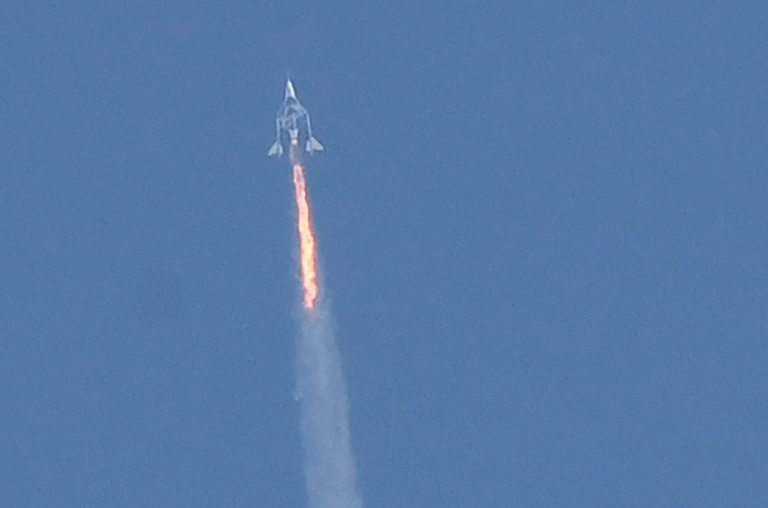
Virgin Galactic, which last year flew its flamboyant founder Richard Branson to space, will re-open ticket sales to the general public starting Wednesday, for the sum of $450,000.

Previously, only people who had paid a deposit to be on a waiting list could buy new tickets — but now sales are once more open to everyone.

“We plan to have our first 1,000 customers on board at the start of commercial service later this year, providing an incredibly strong foundation as we begin regular operations and scale our fleet,” said CEO Michael Colglazier in a statement.

Established in 2004, Virgin Galactic is looking to build on the success of a high profile test mission last July, which saw Branson beat Blue Origin founder Jeff Bezos in their billionaire space race by a few days. 

But Virgin has not flown since then. In October it announced it was entering an “enhancement period” to make safety upgrades to its fleet, and pushed back a planned test flight with the Italian Air Force to this year. 

Its target to fly its first paying individual customers towards the end of 2022 puts it behind its competition in the nascent space tourism sector — Blue Origin and Elon Musk’s SpaceX — which have already flown commercial passengers. 

Blue Origin’s suborbital rockets have now carried out three crewed flights with customers and guests, though the price is thought to be significantly higher.

Privately-held Blue Origin and SpaceX have not revealed their exact ticket costs, unlike publicly-traded Virgin Galactic, which is required to be more transparent.

Virgin’s spaceflights launch from Spaceport America in New Mexico. 

A massive carrier aircraft takes off horizontally, gains high altitude, and drops a rocket-powered spaceplane that soars into space at Mach-3, before gliding back to Earth.

The total journey time is 90 minutes, with passengers experiencing a few minutes of weightlessness in the spaceplane’s cabin, from where they can also observe the Earth’s curvature through 17 windows.

As of last November, the company said it had sold 700 tickets. The current fare, which includes a $150,000 deposit, is well above the $200,000-$250,000 paid by some waiting 600 customers from 2005 to 2014.
Plastic, chemical pollution beyond planet's safe limit: study

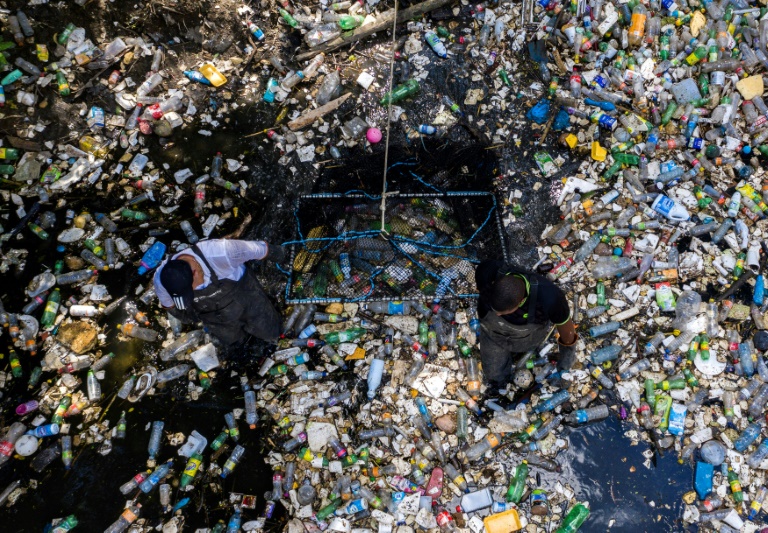
The torrent of man-made chemical and plastic waste worldwide has massively exceeded limits safe for humanity or the planet, and production caps are urgently needed, scientists have concluded for the first time.

There are an estimated 350,000 different manufactured chemicals on the market and large volumes of them end up in the environment.

“The impacts that we’re starting to see today are large enough to be impacting crucial functions of planet Earth and its systems”, Bethanie Carney Almroth, co-author of a new study told AFP in an interview.

The study, by the Stockholm Resilience Centre, comes ahead of a UN meeting in Nairobi at the end of the month on tackling plastic pollution “from source to sea”, UN Environment Programme head Inger Andersen said on Monday.

Chemicals and plastics are affecting biodiversity, piling additional stress on already stressed ecosystems.

Pesticides kill living organisms indiscriminately and plastics are ingested by living things.

“Some chemicals are interfering with hormone systems, disrupting growth, metabolism and reproduction in wildlife,” Carney Almroth said.

While greater efforts are needed to prevent these substances being released into the environment, scientists are now pushing for more drastic solutions, such as production caps.

– ‘Enough is enough’ –

Recycling has so far yielded only mediocre results.

Less than 10 percent of the world’s plastic is currently recycled, even as production has doubled to 367 million tonnes since 2000. 

Today, the total weight of plastic on Earth is now four times the biomass of all living animals, according to recent studies.

“What we’re trying to say is that maybe we have to say, ‘Enough is enough’. Maybe we can’t tolerate more,” the Sweden-based researcher said.

“Maybe we have to put a cap on production. Maybe we need to say, ‘We can’t produce more than this’.”

For several years, the Stockholm Resilience Centre has been conducting studies on “planetary boundaries” in nine areas that influence Earth’s stability, such as greenhouse gas emissions, freshwater usage and the ozone layer.

The aim is to determine if mankind is in a “safe operating space” or if the limits are being exceeded and threaten the future of the planet.

The impact of so-called “novel entities” — or man-made chemical products such as plastics, antibiotics, pesticides, and non-natural metals — has until now been a big question.

And the answer is complex.

“We are only beginning to understand the large-scale, long-term effects of these exposures,” Carney Almroth said.

Not only are there thousands of these products but the data on the risks they pose is often non-existent or classified as corporate secrets.

Additionally, the chemicals are relatively recent, most of them developed in the past 70 years.

“And we’re talking about 350,000 different substances,’ Carney Almroth said.

“We don’t have knowledge on the vast majority of those, in terms of how much are produced or their stability. Or their fate in the environment or their toxicity.”

“We know what some of them are. For most of them, we have no clue.”

Even the most comprehensive databases, such as the European Union’s REACH inventory, only cover 150,000 products, and only a third of those have been the subject of detailed toxicity studies.

– ‘No silver bullet’ –

As a result, the team of researchers focused on what is known, and this partial information was enough to draw an alarming conclusion.

“Looking at changes over time and trends in production volumes lost in the environment … and connecting that to the little bit we do know about impacts, we could say that every arrow is pointing in the wrong direction”, Carney Almroth said.

There is still “time to revert this situation” but it will take “urgent and ambitious actions … at an international level”, she added.

Furthermore, “there’s no silver bullet”.

“No one answer is going to solve all of this, because a lot of these chemicals and materials are things that we use and that are necessary for our lives as of right now,” she said.

Regardless of how much effort is made during the production or waste management phase, production volumes need to come down, she stressed.

“This seems very obvious to say but it’s only recently accepted as truth: The more you produce, the more you release”.

Mongolia reopens borders for vaccinated travellers

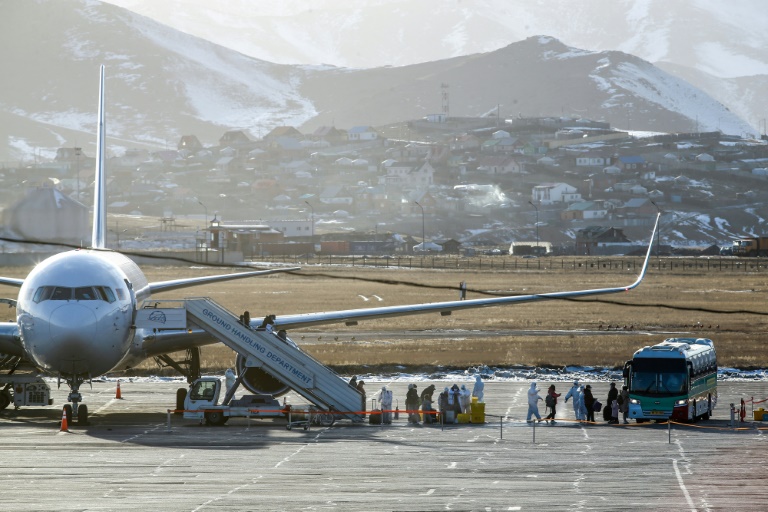
Mongolia has reopened its borders to fully vaccinated international travellers, state media reported, rolling back coronavirus curbs that had kept the country isolated for two years.

The nation has implemented some of the world’s toughest anti-Covid measures since the start of the pandemic, largely sealing off its borders and imposing several lockdowns.

The curbs have battered its economy as businesses closed, exports plunged and hundreds of thousands faced precarious employment.

Mongolia’s cabinet approved a resolution downgrading the pandemic “state of readiness” from orange to yellow, effectively lifting all restrictions on business operations, state news agency Montsame reported Monday.

The move means the country of three million “fully opens its borders to international travel”, Prime Minister Luvsannamsrai Oyun-Erdene said, according to Montsame.

Declaring Mongolia open to fully jabbed tourists and investors, he reportedly said the government would “put efforts into creating the necessary conditions to ensure safety… for all those arriving in the country for business and tourism purposes”.

Oyun-Erdene’s predecessor resigned last year during protests and public anger over the treatment of a coronavirus-positive woman and her newborn baby.

She had been transferred to a disease control centre in hospital pyjamas and plastic slippers despite temperatures of minus 25 degrees Celsius.

An aggressive Covid vaccination campaign has since helped turn the tide, with 92 percent of Mongolian adults now fully inoculated and more than half in targeted groups having received a booster, according to Montsame.

Mongolia has recorded 885,000 coronavirus cases and more than 2,000 deaths during the pandemic, according to World Health Organisation data.

The border reopening follows the easing of restrictions last month under the orange and yellow readiness levels.

Official advisories on wearing face masks, social distancing and hand sanitising remain in place.

Young labels make sustainable fashion headway at NY Fashion Week

Two years after losing her job in fashion due to the pandemic, Emma Gage founded her own brand, Melke, that debuted at this season’s New York Fashion Week with an emphasis on sustainability.

The 26-year-old from Minnesota is not the first to bet on this trend, at a moment when the fashion industry has faced criticism for its environmental impact.

Another designer, 23-year-old Olivia Cheng, told AFP that “everybody now wants to be part of this conversation.”

Her brand, Dauphinette — known for its jewelry and outfits crafted from real flowers — was featured on New York fashion week’s official calendar for the first time, showing over the weekend at a Chinatown restaurant.

Gage cited the use of hemp, organic cotton and recycled fabrics as materials that are less environmentally harmful, and also voiced her mission to purchase materials from companies committed to respecting human rights.

“I would never want to come out and say like, yeah, everything’s 100%, sustainable, everything’s perfect,” Gage said. “Because that’s a lie.”

Speaking from her studio in Brooklyn’s Bushwick neighborhood, a trendy area for New York creatives, Gage said she’s “focusing on making pieces that will last.”

– Zero plastic? Still elusive –

She said “zero plastic” remains an elusive goal at the moment, because synthetic materials often slip into recycled fabrics.

Thus the focus on durability, and making use of every piece of fabric on hand: Gage creates “scrap bags” made out of small bits of material, for example.

Far from voluminous or elegant evening gowns, one of Gage’s favorite items is the humble sweater, which she makes a play on every collection with embroidered motifs — flowers, fish and now sheep have graced her pieces.

But keeping it simple doesn’t translate to less creativity. The designer’s second collection — inspired by the Anne Carson book “Autobiography of Red” — emphasizes this strong color, often incorporating dark tones and using fringe reminiscent of lava flows.

For her fall/winter 2022 collection, set for presentation Tuesday, Gage wanted to evoke memories of a trip to an Irish medieval castle and her discovery of falconry: “The symbiotic relationship of two predators working together — you have human and a bird trying to work together for the same common goal.”

– Gingko nuts and beetle wings –

Cheng’s presentation Sunday bet on old clothes and floral materials, preserved thanks to a resin she said is non-toxic.

She also ventured into experimentation, offering one outfit made of gingko nuts and a dress studded with beetle wings — which she specified died of natural causes and not for her project.

Both designers said they favor local suppliers but aren’t against sourcing from elsewhere.

Gage said that only sourcing stateside “completely eliminates all of the beautiful craftsmanship that exists around the world.”

She does face a dilemma of keeping her brand — which makes pieces to order — affordable.

“I can’t be the only one making things more affordable, if they’re sustainable,” she said. “I need other people to also be buying what I’m buying so that the price can go down.”

But that kind of popularity could create its own problem of overproduction and waste. Gage has tried to approach the problem by creating a product line with varying price points, the least expensive being a t-shirt for $75.

Cheng — the daughter of Chinese immigrants who has two dresses on show in the Metropolitan Museum’s current fashion exhibition — is able to keep prices lower for her fruit and flower jewelry, with some pieces going for less than $50.

“It’s most central to me to remember why we started our mission and how we can kind of further that story,” she said. “And to not get caught up in kind of the illusions of grandeur.”

Rocket set to hit Moon was built by China, not SpaceX, say astronomers

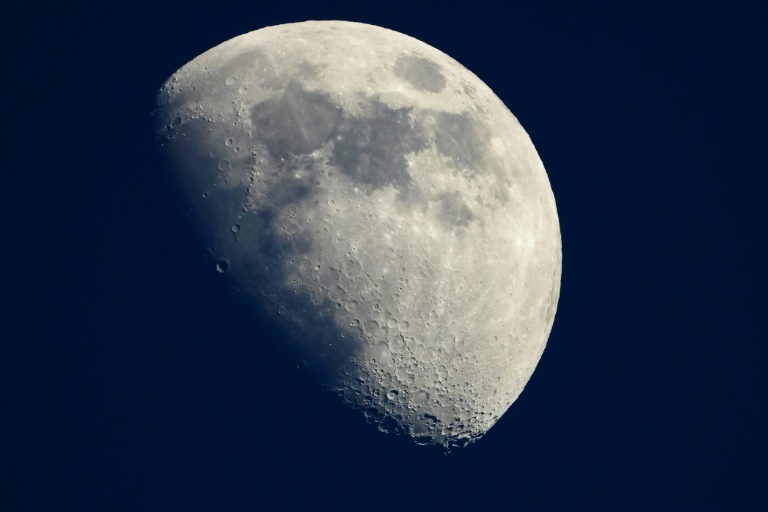
Astronomy experts say they originally misread the secrets of the night sky last month: it turns out that a rocket expected to crash into the Moon in early March was built by China, not SpaceX.

A rocket will indeed strike the lunar surface on March 4, but contrary to what had been announced, it was built not by Elon Musk’s company, but by Beijing, experts now say.

The rocket is now said to be 2014-065B, the booster for the Chang’e 5-T1, launched in 2014 as part of the Chinese space agency’s lunar exploration program.

The surprise announcement was made by astronomer Bill Gray, who first identified the future impact, and admitted his mistake last weekend.

“This (honest mistake) just emphasizes the problem with lack of proper tracking of these deep space objects,” tweeted astronomer Jonathan McDowell, who advocates for greater regulation of space waste.

“The object had about the brightness we would expect, and had showed up at the expected time and moving in a reasonable orbit,” he wrote in post.

But “in hindsight, I should have noticed some odd things” about its orbit, he added.

NASA said in late January that it would attempt to observe the crater that will be formed by the explosion of this object, thanks to its probe that orbits around the Moon, the Lunar Reconnaissance Orbiter (LRO).

The agency called the event an “exciting research opportunity.” 

Climate-boosted drought in western US worst in 1,200 years

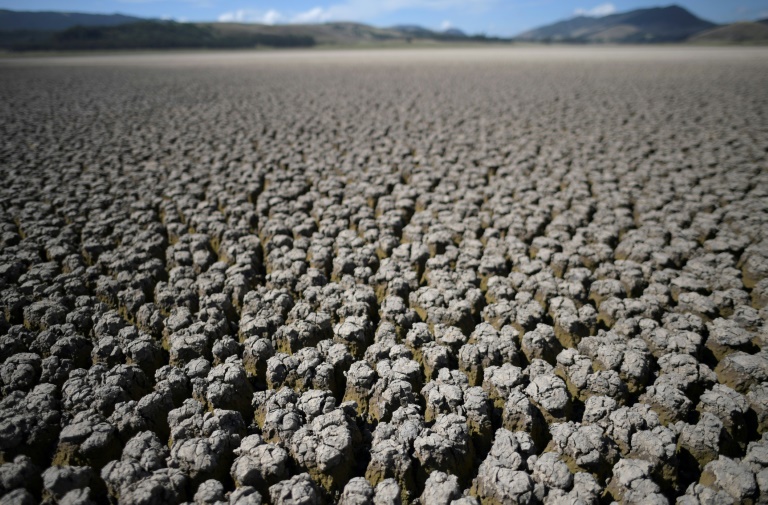
The megadrought that has parched southwestern United States and parts of Mexico over the last two decades is the worst to hit the region in at least 1,200 years, researchers said Monday.

Human-caused global heating accounts for more than 40 percent of the dry spell’s intensity, they reported in the journal Nature Climate Change.

“The turn-of-the-21st-century drought would not be on a megadrought trajectory without anthropogenic climate change,” lead author Park Williams, an associate professor at the University of California in Los Angeles, and colleagues wrote.

Over the last decade, California and other western states have experienced severe water shortages, triggering periodic restrictions on water usage and forcing some communities to import bottled water for drinking.

Occasional heavy snow or rainfall have not been enough to compensate. 

2021 was especially dry. As of February 10, 95 percent of western US had drought conditions, according to the US government’s Drought Monitor.

Last summer, two of North America’s largest reservoirs — Lake Mead and Lake Powell — reached their lowest recorded level in more than a century. 

The odds are high that the current dry spell will continue for at least a couple of years, probably longer, according to the findings.

Running simulations based on soil moisture records stretching back 1,200 years, the researchers calculated a 94 percent chance that the drought would extend through 2022.

There’s a three-in-four chance it will run until the end of decade.

Tree-ring analysis shows that the area west of the Rocky Mountains from southern Montana to northern Mexico was hit repeatedly by so-called megadroughts — lasting at least 19 years — between the years 800 and 1600. 

– Chronic water scarcity –

Earlier research had established that the period 2000-2018 was likely the second worst drought since the year 800, topped by one in the late 1500s. 

Data from 2019-2021, backed by new climate models released last year, have revealed the current drought to be worse than any from the Middle Ages.

But without climate change it “wouldn’t hold a candle to the megadroughts of the 1500s, 1200s or 1100s,” Williams said in a statement.

Western North America is not the only region hit by increasingly severe dry periods.

Climate change worsened the El Nino-driven droughts of 2015-2016, leading to widespread crop failures, loss of livestock, Rift Valley fever outbreaks, and increased rates of malnutrition. 

Globally, 800 million to three billion people are projected to experience chronic water scarcity due to drought caused by two degrees Celsius warming above preindustrial levels, according to a draft 4,000-page Intergovernmental Panel on Climate Change (IPCC) report on climate impacts seen by AFP. 

In a 4C world, that figure is up to four billion people.

Earth’s surface has already warmed 1.1C on average, and is almost certain to breach the 1.5C cap called for in the Paris Agreement within two decades. 

Other natural extreme weather events enhanced by global warming include deadly heatwaves, flood-causing rainfall and superstorms.

US billionaire announces three more ambitious SpaceX flights

US billionaire Jared Isaacman, who chartered the first all-civilian orbital spaceflight, announced Monday three more private missions with SpaceX — which will include spacewalking and culminate in the first crewed flight of the next-generation Starship rocket.

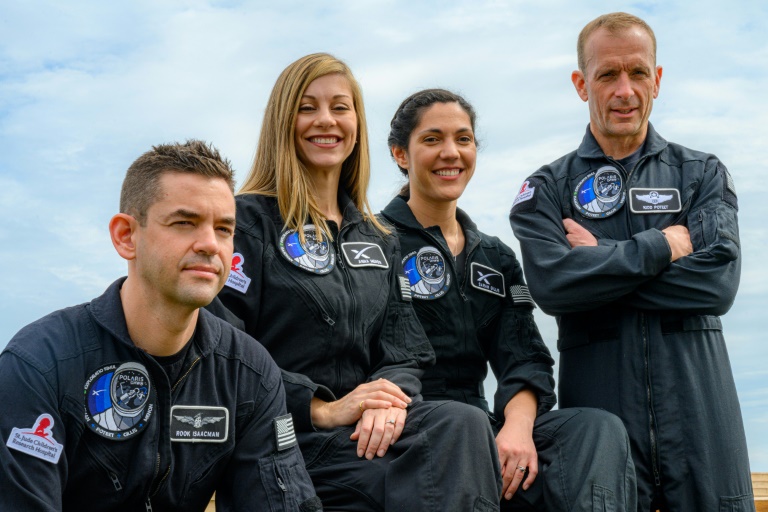
The first, named Polaris Dawn, will take place no sooner than the fourth quarter of this year, and will be commanded by Isaacman, the founder of payment processing company Shift4.

The program represents a new step for the commercial space sector, as Elon Musk’s SpaceX seeks to carry out more ambitious missions that were until now the domain of national space agencies.

In a press call, Isaacman revealed that the Polaris Program, named after the North Star, will be co-funded by himself and SpaceX. He declined to give further details such as total cost, or the percentage each side would contribute. 

It is however widely expected to run into the hundreds of millions of dollars.

“This program has been purposefully designed to advance long duration spaceflight capabilities… guiding us towards the ultimate goal of facilitating Mars exploration,” Isaacman told reporters.

He is an experienced pilot who last year led the Inspiration4 mission, which saw four civilian crew complete a three-day orbital mission aboard a SpaceX Dragon, raising $240 million for St. Jude Children’s Research Hospital. 

For Polaris Dawn, the crew will journey deeper into space than any Dragon has previously flown — with Isaacman indicating the altitude would be similar to NASA’s Project Gemini, the agency’s second crewed spaceflight program in the 1960s. 

Gemini 11 flew around 850 miles (1370 kilometers) high, which is far deeper into space than more recent missions to the International Space Station, 250 miles high. 

But it is still well short of the journey to the Moon during the Apollo-era, which is roughly 239,000 miles — or 30 Earths back-to-back — away.

The Polaris Dawn crew will also attempt the first commercial spacewalk, which will require new extravehicular space suits that have yet to be developed.

Since Dragon has no airlock, the whole spacecraft will be exposed to the vacuum of space when the hatch is opened. 

The crew will “make sure that everything is secured very well before we open that hatch,” mission specialist and medical officer Anna Menon said.

Launching from the Kennedy Space Center in Florida on a Falcon 9 rocket, the spacecraft will spend up to five days in orbit.

The crew’s intended altitude will see them enter the inner Van Allen belt, a region of dangerous radiation that protects the Earth from solar wind.

Dragon’s hull and the new spacesuits will help protect the crew, who will be measuring radiation exposure throughout, added Menon, a former NASA employee whose husband Anil Menon was selected in the latest cohort of NASA astronaut candidates.

“We had just told our four-year-old son that daddy was going to be an astronaut and our son’s first response was, ‘Mama, when are you going to be an astronaut?'” she said — with her invitation to join Isaacman’s mission coming just weeks later.

– Starship mission –

The crew includes former US Air Force Colonel Scott Poteet — an executive at Isaacman’s companies Shift4 and private aerospace contractor Draken International — as its pilot. 

Rounding out the quartet is Sarah Gillis, SpaceX’s lead space operations engineer, who will assume the role of mission specialist.

During the mission, they will also test laser-based communication in space using SpaceX’s Starlink satellite network, and conduct medical research such as studying decompression sickness, the impacts of space radiation and the effects of spaceflight on eye health.

The last of the three missions will involve a SpaceX Starship rocket, which when complete will be the biggest and most powerful spacecraft ever built. 

Musk sees the vessel as key to fulfilling his vision of colonizing Mars, while a version has been contracted by NASA as a lunar lander for the Artemis program, which is set to return humans to the Moon around the middle of this decade.

Brazil launches plan to expand mining in Amazon

Brazilian President Jair Bolsonaro launched a plan Monday to expand gold mining in the Amazon rainforest, drawing criticism from environmentalists for bolstering an industry accused of rampant deforestation, pollution and attacks on indigenous peoples.

Bolsonaro signed a decree creating a program to support the development of artisanal mining, a controversial activity known as “garimpo” that occupies something of a legal gray area in Brazil.

The decree says the aim is to “propose public policies and stimulate the development of artisanal and small-scale mining, fostering sustainable development for the region and the nation.”

It also creates an inter-ministerial commission on artisanal mining, whose “priority region” will be the nine states that make up Brazil’s 60-percent share of the Amazon.

Artisanal miners, or “garimpeiros,” are divisive in Brazil.

Bolsonaro, whose father was once a “garimpeiro,” defends wildcat miners as hardscrabble frontiersmen.

Critics paint a different picture.

Mining destroyed a record 125 square kilometers (nearly 50 square miles) of the Brazilian Amazon last year — more than twice the size of Manhattan.

Much of the destruction was on protected indigenous reservations.

The use of mercury to separate gold dust from soil has also left toxic pollution in rivers.

Prosecutors say illegal gold miners have links to organized crime, and there have been deadly clashes between armed miners and indigenous groups opposed to them.

Artisanal mining is legal in Brazil, provided miners have environmental licenses and work on authorized land.

But many don’t.

The government estimates there are 4,000 illegal miners operating on indigenous territory in the Amazon. Activists say the figure is much higher.

“What (the government) should be doing is proposing and supporting environmental licensing of this activity and monitoring its implementation,” said Suely Araujo of the Climate Observatory, a coalition of environmental groups.

“Instead… the Bolsonaro administration looks set to defend the sector’s ‘historical values,’ which is to say, environmental destruction,” she said in a statement.

Bolsonaro, who has pushed to expand agribusiness and mining in the Amazon, has faced international outcry over the destruction of the world’s biggest rainforest.

Deforestation in the Brazilian Amazon has surged since the far-right leader took office in 2019, to a 15-year high of 13,235 square kilometers from August 2020 to July 2021.

Ancient mummies of children, likely sacrificed, unearthed in Peru

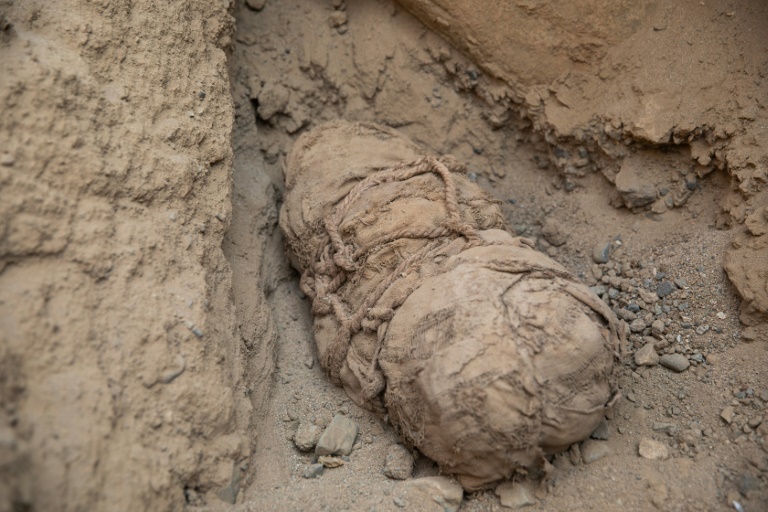
Six mummified children thought to have been sacrificed hundreds of years ago, apparently to accompany a dead nobleman to the afterlife, have been unearthed in a tomb near Lima, archaeologists reported.

The tiny skeletons, wrapped tightly in cloth, were found in the grave of an important man, possibly a political figure, discovered last November at the dig site of Cajamarquilla about 24 kilometers (15 miles) east of Lima. 

“The children could be close relatives and were placed… in different parts of the entrance of the tomb of the (nobleman’s) mummy, one on top of the other,” archaeologist Pieter Van Dalen, in charge of the dig, told AFP. 

“The children, according to our working hypothesis, would have been sacrificed to accompany the mummy to the underworld,” says Van Dalen. 

Cajamarquilla was a city built out of mud in about 200 BC, in the pre-Inca period, and occupied until about 1500. It could have been home to 10,000-20,000 people.

Van Dalen said the mummies were about 1,000 to 1,200 years old.

Nearby, the team also found the bones of seven adults who had not been mummified, as well as the remains of llama-like animals, and earthenware.

The remains of the supposed nobleman were found last year in a tomb some three meters (9.8 feet) long and 1.4 meters deep in Cajamarquilla, one of the largest archaeological complexes near Lima.

He had been about 20 when he died and was entombed with his hands covering his face, and tied up with rope.

Stakes 'never been higher' in climate fight: IPCC head

The stakes in the fight against global warming are higher than ever, the UN’s climate science chief said Monday as nearly 200 nations met to finalise what is sure to be a harrowing report on climate impacts.

“The need for the Working Group 2 report has never been greater because the stakes have never been higher,” Intergovernmental Panel on Climate Change (IPCC) Chair Hoesung Lee said in a live videocast.

Species extinction, ecosystem collapse, mosquito-borne disease, deadly heat, water shortages and reduced crop yields are already measurably worse due to rising temperatures.

Just in the last year, the world has seen a cascade of unprecedented floods, heatwaves and wildfires across four continents.

All these impacts will accelerate in the coming decades even if the carbon pollution driving climate change is rapidly brought to heel, the IPCC report is likely to warn.

A crucial, 40-page Summary for Policymakers — distilling underlying chapters totalling thousands of pages, and reviewed line-by-line — is to be made public on February 28.

“This is a real moment of reckoning,” said Rachel Cleetus, climate and energy policy director at the Union of Concerned Scientists.

“This not just more scientific projections about the future,” she told AFP ahead the two-week plenary. This is about extreme events and slow-onset disasters that people are experiencing right now.”

The report will also underscore the urgent need for “adaptation” — climate-speak which means preparing for devastating consequences that can no longer be avoided, according to an early draft seen by AFP in 2021.

In some cases this means that adapting to intolerably hot days, flash flooding and storm surges has become a matter of life and death.

– ‘Doping the atmosphere’ –

“The growth in climate impacts is far outpacing our efforts to adapt to them,” said Inger Andersen, head of the UN Environment Programme, noting that climate change threatens to become a major driver of species loss.

IPCC assessments — this will be the sixth since 1990 — are divided into three sections, each with its own volunteer “working group” of hundreds of scientists.

In August 2021, the first instalment on physical science found that global heating is virtually certain to pass 1.5 degrees Celsius (2.7 degrees Fahrenheit), probably within a decade.

Earth’s surface has warmed 1.1C since the 19th century.

“We have been doping the atmosphere with fossil fuels,” World Meteorological Organization chief Petteri Taalas said Monday, comparing the result to the “enhanced performance” of Olympic athletes who used banned substances.

The 2015 Paris deal calls for capping global warming at “well below” 2C, and ideally 1.5C.

This report is sure to reinforce this more ambitious goal. 

It will likewise underscore that vulnerability to extreme weather events — even when they are made worse by global warming — can be reduced by better planning and preparation, according to the draft seen by AFP.

This is not only true in the developing world, noted Imperial College professor Friederike Otto, pointing to massive flooding in Germany last year that killed scores and caused billions in damage. 

– Tipping points –

“Even without global warming there would have been a huge rainfall event in a densely populated geography where the rivers flood very easily,” said Otto, a pioneer in the science of quantifying the extent to which climate change makes extreme weather events more likely or intense.

The report will zero in on how climate change is widening already yawning gaps in inequality, both between regions and within nations. 

The simple fact is that the people least responsible for climate change are the ones suffering the most from its impacts.

The report is also likely to highlight dangerous “tipping points”, invisible temperature trip wires in the climate system for irreversible and potentially catastrophic change.

Some of them — such as the melting of permafrost housing twice as much carbon as in the atmosphere — could fuel global warming all on their own.

“There is a finite set of choices we can make that would move us productively into the future,” said Clark University professor Edward Carr, a lead author of one of the report’s chapters. 

“Every day we wait and delay, some of those choices get harder or go away.”

Close Bitnami banner
Bitnami