AFP

Germany taps Greenpeace chief Morgan as first climate envoy

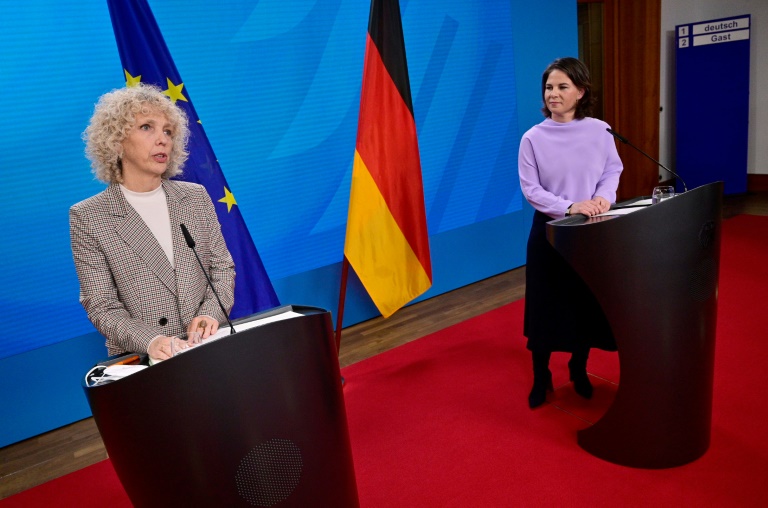
Germany’s foreign minister on Wednesday unveiled former Greenpeace chief Jennifer Morgan as her special climate envoy, as part of a pledge to put the battle against global warming “at the top” of the diplomatic agenda.

US-born Morgan, 55, who had been co-leader of Greenpeace International since 2016, will be the first person to hold the newly created role in Europe’s top economy. 

The eye-catching appointment comes as Germany’s two-month-old coalition government, led by Social Democrat Chancellor Olaf Scholz, aims to pursue more global cooperation against climate change.

Foreign Minister Annalena Baerbock, from the ecologist Green party, introduced Morgan as “the face of Germany’s international climate policy”.

“Even in our foreign policy we are putting the climate crisis where it belongs: at the top of the agenda,” Baerbock told reporters after Scholz’s cabinet approved Morgan’s appointment.

The appointment caused a stir in Germany, with supporters hailing it as a coup for Baerbock while critics accused the minister of blurring the line between lobbying and governing.

Morgan’s US nationality also drew scrutiny, which Baerbock countered by saying Morgan was in the process of applying for German citizenship and that it suited the foreign ministry to have international staff.

The new role will see Morgan work as a special representative for international climate policy initially and as state secretary in the foreign ministry once she has acquired German citizenship.

Morgan said “time is running out” to limit global warming to 1.5 degrees Celsius, requiring “international cooperation like we have never seen before”.

After 30 years of environmental activism, Morgan said Germany’s foreign ministry was where she could now “make the biggest difference”.

Among Morgan’s key tasks will be preparing Germany for global climate conferences like the COP27 in Egypt in November.

The German government has also pledged to use its G7 presidency this year to create a “climate club” of leading economies. 

The aim is to agree common climate protection standards and avoid competitive disadvantages as countries transform their industries to reach carbon neutrality.

Germany itself is planning massive investments to green its economy, including by scaling up the use of renewable energy, to achieve net-zero emissions by 2045.

The Greens’ Robert Habeck, who heads Germany’s new “super ministry” of economy, energy and climate protection, warned last month that the country had a “gigantic” task ahead.

– ‘Radical views’ –

Karsten Smid, a climate and energy campaigner for Greenpeace in Germany, congratulated Morgan on Twitter. “We will miss you,” he said. 

Thomas Silberhorn, a lawmaker from the opposition CSU conservative party, condemned the appointment.

“The government apparently has a problem differentiating between government, activists and lobbyists,” he told German media.

Lawmaker Lukas Koehler from the pro-business FDP, the other junior partner in Scholz’s three-way coalition, told the Handelsblatt daily that Morgan’s hiring had raised eyebrows given her “radical views” in the past.

Over three decades in the climate action arena, Morgan has developed a reputation as an uncompromising champion of peoples and nations worst affected by global warming and least able to protect themselves against its ravages.

She has attended every UN climate summit since 1995, and has close ties to US climate envoy John Kerry and EU Commission vice president Frans Timmermans.

Prior to becoming head of Greenpeace International alongside Bunny McDiarmid in 2016, Morgan worked for the Climate Action Network, WWF’s global climate change programme and the World Resources Institute, among others.

Greenpeace drew controversy in Germany last year when a protester parachuted into a Munich stadium during a Euro 2020 football match, injuring two people. It later apologised for the botched stunt.
Madagascar cyclone toll rises to 80

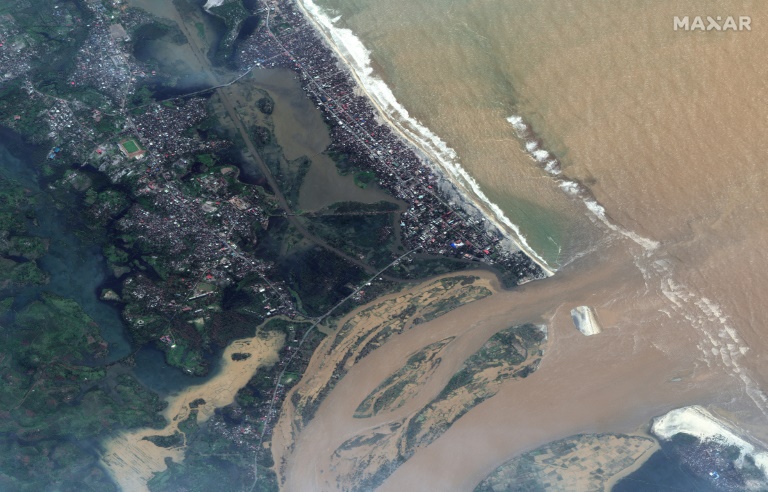
The death toll from Tropical Cyclone Batsirai has risen to 80, Madagascar’s authorities said Wednesday, releasing data from the regions hardest-hit by the storm that left bodies buried under their collapsed homes.

The National Office for Risk and Disaster Management (BNGRC) said the toll had jumped from 30 since Tuesday, with 60 of the dead found in Ikongo district, near the east coast of the Indian Ocean island nation.

The BNGRC said that Batsirai, which made landfall on the weekend, had left 94,000 people in need of emergency assistance and forced 60,000 from their homes.

“It’s devastation here,” said Brunelle Razafintsiandrofa, a lawmaker from Ikongo who spoke to AFP by phone. 

“Most of the victims died after their homes collapsed.”

Many NGOs and UN agencies have begun to deploy resources and teams to help the victims of the cyclone which brought heavy rain and winds of 165 kilometres (102 miles) per hour.

France sent 60 emergency workers to help set up facilities for purifying drinking water, and to fly drones to assess damage in areas that are difficult to reach even at the best of times. 

The tropical cyclone hit Madagascar on Saturday night, on a 150-kilometre long, sparsely populated and agricultural eastern coastal area. 

As the cyclone moved inland, it caused flooding that ravaged rice fields in the country’s central “breadbasket”, raising fears of a humanitarian crisis. 

– Food security ‘seriously affected’ – 

German experts have arrived in the country, one of the poorest on the planet, to “support the humanitarian response in the Batsirai passage areas”, the BNGRC said.

Work is underway on the 20 roads and the 17 bridges that were cut and had isolated villages, it added.

“We know for sure that rice fields, that rice crops will be damaged, will be lost,” said Pasqualina DiSirio, director of the World Food Program in the country.

“This is the main crop for Malagasy people and they will be seriously affected in food security in the next three to six months if we don’t do something immediately.”

The UN agency distributed hot meals in Manakara, one of the most affected areas. 

Numerous aid organisations, including Action Against Hunger, Handicap International, Save the Children and Medecins du Monde, were mobilised ahead of the cyclone, organising equipment and medicines. 

Alongside the aid provided by the government, they provided assistance to the victims: food, primary health care and the distribution of kitchen equipment, blankets, hygiene products.

Some 77 percent of Madagascar’s 28 million people live below the poverty line, and the latest blow comes during a severe drought in the south which has plunged more than a million people into acute malnutrition, some facing famine.

Madagascar was still picking up the pieces after Tropical Storm Ana affected at least 131,000 people across the island late last month, with most of the 55 deaths occurring in the capital Antananarivo. 

Ana also hit Malawi, Mozambique and Zimbabwe, causing dozens of deaths.

England could end Covid isolation requirement by March: Johnson

England will scrap the legal requirement to self-isolate after testing positive for Covid-19 later this month if infection levels remain stable, Prime Minister Boris Johnson unexpectedly announced Wednesday.

The proposed move would be one of the most dramatic easings of coronavirus rules taken by any country so far in the pandemic, as Johnson doubles down on a strategy of trying to “live with Covid”. 

However it is likely to prove controversial, with health experts warning much of the world still needs to be vaccinated and UK opposition politicians asking whether the government’s scientific advisers support the planned change. 

Johnson, dogged by revelations of apparent breaches of the Covid rules at Downing Street that have led to calls for him to quit, had earlier said he aimed to end the self-isolation rules on March 24.

But addressing lawmakers before parliament goes into recess on Thursday until February 21, he said he would bring the change forward by a month, to cheers from hordes of his fellow Conservative MPs who have grown increasingly weary with the restrictions.

“It is my intention to return on the first day after the half-term recess to present our strategy for living with Covid,” Johnson told parliament. 

“Provided the current encouraging trends in the data continue, it is my expectation that we will be able to end the last domestic restrictions — including the legal requirement to self-isolate if you test positive — a full month early.”

Johnson’s spokesman later told reporters it was justified by falling case numbers and hospitalisation rates but noted the law to self-isolate could be reimposed promptly in response to a dangerous new variant.

– ‘Burden of disease’ –

The UK government only has responsibility for health policy in England, with devolved administrations in Scotland, Wales and Northern Ireland setting their own rules.

England lifted almost all coronavirus restrictions in late January that had been reimposed in early December to tackle the Omicron variant, with masks no longer required in enclosed places and vaccine passports shelved.

That came weeks after the government cut the minimum self-isolation period for those with Covid-19 from seven to five days to help boost economic activity.

Meanwhile, it has been gradually easing rules around international travel, with the need for fully vaccinated travellers to test for Covid-19 before or after arriving in the UK set to end later this week.

The number of positive Covid-19 cases has fallen sharply since the new year. Although still at high levels, the figures have kept falling in the weeks following the easing of the measures.

The government announced 66,183 new infections on Tuesday, as well as 314 new deaths from the virus, taking the country’s total toll to nearly 159,000 — one of the highest in Europe.

Ahead of Johnson’s unexpected announcement, Bruce Aylward, senior advisor to the World Health Organisation director-general, warned that Covid-19 numbers globally are still “absolutely staggering”.

“What we’re learning to live with is not just this virus, but what should be an unacceptable burden of disease, an unacceptable number of deaths every single day,” he told BBC radio.

Aylward urged Western countries such as Britain to step up investment in the global vaccination efforts.

Vietnam arrests green activist on tax charges

Vietnam on Wednesday arrested a high-profile environmentalist known for taking on the energy industry on suspicion of tax evasion, state media said.

Nguy Thi Khanh, 46, has been one of the few voices in Vietnam prepared to challenge plans to increase coal power to fuel economic development.

Her organisation GreenID, Vietnam’s best-known environmental NGO, convinced the government to reduce some of its coal targets and sparked a national conversation about rising air and water pollution.

But while she has won international plaudits, she has also been the target of smear campaigns on state-sponsored media sites and is routinely attacked by trolls on Facebook who criticise her work.

The state-owned Tuoi Tre newspaper on Wednesday said Khanh had been arrested by police in the capital Hanoi “on a tax evasion accusation”. No further details were given.

Communist Vietnam tolerates no dissent, and numerous activists have wound up in jail for speaking out against the government.

Authorities have recently stepped up raids on corrupt officials as well as people involved in financial or economic scandals.

Khanh’s organisation has been successful in persuading the government to strip 20,000 megawatts of coal power from the national energy plan by 2030.

Her goal for the coming years is for Vietnam to scale back its ambitious coal plans in favour of more renewable energy options.

In a 2020 interview with AFP, she acknowledged the risks her activism brought.

“When we got global recognition, vested interest groups recognised who their enemy is, and they are very powerful,” she said.

Fresh hopes for landmark treaty to rescue ocean life

World leaders are under pressure to conclude years of talks on an agreement to protect open oceans that help sustain life on Earth, cover almost half the planet and currently fall under no country’s laws.

As plans to protect and restore ecosystems across the world are mainstreamed, conservationists hope an oceans summit in France this week will give fresh momentum to efforts to finalise a legally binding UN treaty on the high seas.

The issue could not be more urgent, they say. 

Oceans produce half the oxygen we breathe, regulate the weather and provide humanity’s single largest source of protein.

But they are being pushed to the brink by human activities. 

Carbon dioxide emissions and global warming drive devastating heatwaves and acidification, while humans have fished some marine species to the edge of extinction and used the world’s waters as a garbage dump.  

“The oceans as a whole are becoming warmer, the salinity levels are increasing. There’s less oxygen for marine life,” said Liz Karan, an expert with The Pew Charitable Trusts. 

Even if a new treaty cannot solve all these problems, she said the accord was “more important than ever”.

“What it can do is to ensure that there are refuges in place, great protected areas in place, that can give marine species a chance to breathe, an opportunity to survive and adapt to climate change.”

– ‘Greatest opportunity’ –

Today, a patchwork of agreements and regulatory bodies govern shipping, fishing, and mineral extraction, while the UN Convention on the Law of the Sea, negotiated in the 1970s, lays out rules for how far a nation’s zone of influence extends beyond its shores. 

But despite two decades of consultations and negotiations, there is still no treaty protecting international waters — those marine areas beyond national jurisdiction, accounting for about two-thirds of the world’s oceans. 

A new round of UN talks in March will aim to conclude the agreement. 

“We sometimes say this is the most important environmental treaty that most people haven’t even heard of,” said Peggy Kalas, director of the High Seas Alliance, which brings together some 40 NGOs and the International Union for Conservation of Nature (IUCN). 

The issue is finally gathering wider attention, she said, adding that meetings like the One Ocean Summit being held this week in the north-western French port city of Brest can help add to the pressure on governments to reach an agreement. 

“It is really the greatest opportunity in a generation to conserve ocean life and diversity on a global scale,” she told AFP.

– Shared responsibility –

Several issues divide nations on how best to manage the world’s vast expanse of open ocean. 

Among the chief issues up for debate are the creation of marine protected areas and the scope for curbing large-scale commercial fishing.  

Another contentious question is who gets a share of the benefits from the exploitation of what are known as “marine genetic resources”.     

Poorer countries fear they will be sidelined as wealthier nations scour the seas for the next wonder ingredients for the pharmaceutical, chemical or cosmetic industries, and lock up the spoils in trademarks and patents. 

“They want any financial gain originating from the resources of the high seas to fall under a benefit-sharing regime,” said Andre Abreu, of the Tara Ocean Foundation.

An indication of the continued wrangling is the sheer number of sections in the latest treaty draft from 2019 still in tentative square brackets. 

These include several overarching statements for the high seas, like the reference to the “polluter pays principle” and the “common heritage of mankind”, a designation that currently only applies to the world’s sea beds.   

Other issues on the table include how to set up environmental impact assessments, enforcement and technology transfer.

The concept of marine protected areas has gathered significant international support, with more than 75 countries backing a plan to create conservation areas covering 30 percent of the world’s land and oceans by 2030.

But the High Seas Alliance said a key issue will be if the treaty allows individual states to be able to veto the creation of a marine protected area. 

“We’re at the stage where we really need leadership from the highest level,” Kalas said.    

“This is urgent, every day and year it is delayed, there is biodiversity loss. We need to conclude these negotiations.”

Pfizer sees Covid-19 drug sales topping $50 bn in 2022

Pfizer forecast more than $50 billion in 2022 sales for its Covid-19 vaccine and therapeutic on Tuesday as the pharmaceutical giant reported a more than doubling of annual profits on strong sales of its innoculation.

Pfizer, whose vaccinee developed with German company BioNTech was the first approved in the United States to counter the deadly virus, sees slightly lower 2022 revenues for the vaccine compared with the just-finished year, but a big infusion of revenues from Paxlovid, the company’s pill for Covid-19.

Chief Executive Albert Bourla described 2021 as a “watershed year” for Pfizer, adding that the company’s efforts in the pandemic “have fundamentally changed our company forever.”

Still, shares fell Tuesday following the results, which lagged estimates in terms of fourth-quarter revenues.

Besides vaccines, sales were mixed across Pfizer’s other divisions. Revenues dipped for internal medicine and inflammation and immunology, but rose for oncology, hospitals and rare disease.

Analysts have also projected higher 2022 profits compared with the company’s forecasts.

– Heavy interest in therapeutic –

Pfizer reported annual profits of $22 billion, more than double the 2020 level. Annual revenues nearly doubled to $81.3 billion, with $36.8 billion from the Covid-19 vaccine.

The company projected 2022 revenues of between $98 and $102 billion.

The results are the latest to show how the coronavirus has transformed Pfizer, which a year ago had projected just $15 billion in Covid-19 vaccines sales in 2021 and ended up selling more than twice that amount after repeatedly lifting the forecast. 

For 2022, Pfizer expects $32 billion in revenue from Covid-19 vaccines and $22 billion in revenues from Paxlovid.

Bourla said the company is currently working on a new vaccine candidate based on the Omicron variant of Covid-19, as well as a new “potential next-generation oral Covid-19 treatment.”

The company expects to produce 120 million treatment courses for Paxlovid, with six million in the first quarter and 30 million the first half of 2022. 

Pfizer executives described heavy interest in Paxlovid, with ongoing contract talks with about 100 governments around the world. The treatment has so far been approved in about 40 countries.

Bourla said the sales for Paxlovid “could be way bigger” than current forecasts. The 2022 estimate of $22 billion is based on signed contracts and negotiations where there is essentially an agreement, he said.

However, Chief Financial Officer Frank D’Amelio cautioned that there was “less potential upside” to 2022 estimates for Covid-19 vaccine revenues, compared with 2021 “when the vaccine was newly available and few people had received any doses of the vaccine.”

Morningstar’s Damien Conover estimated that Covid-19-related products will account for $60 billion in revenues in 2022, but fall to close to $5 billion by 2025. 

“We expect increased near-term utilization of Covid vaccines will reduce the demand for these vaccines and treatments over the long term,” Conover said in a note. “We view Pfizer as slightly overvalued, with the market likely extrapolating strong Covid vaccine and treatment sales too far into the future.”

Bourla said the company’s scientists “continue to monitor the Covid-19 virus and believe it is unlikely that it will be fully eradicated in the foreseeable future.” 

“That said, we now have the tools — in the forms of vaccines and treatments — that we believe will help enable us to not only better manage the pandemic but also help countries move into the endemic phase,” he said.

Shares fell 2.8 percent to $51.70.

Europe to cut funds for Poland over unpaid fine

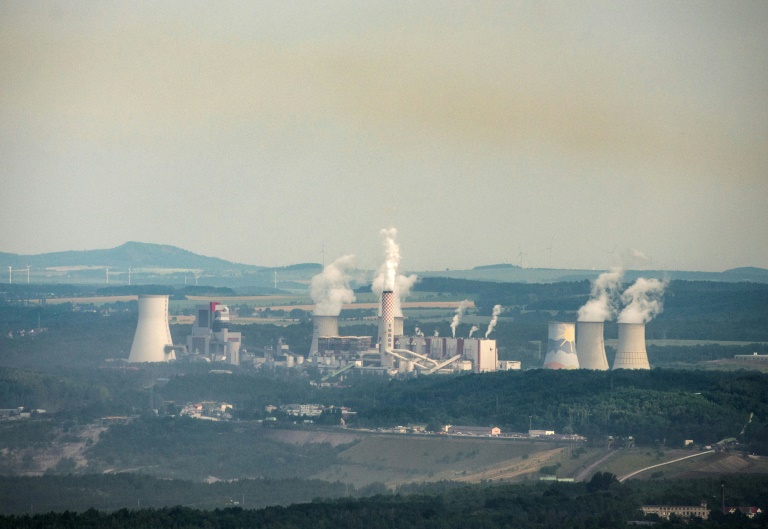
The European Commission said Tuesday it would take the unprecedented step of tapping into EU funding earmarked for Poland to collect a fine imposed on Warsaw for refusing to close a coal mine, one of several points of friction between Brussels and the eastern European nation.

EU Commission spokesman Balazs Ujvari said the EU had informed Poland of its decision, which will be carried out next week.

Polish government spokesman Piotr Muller said Warsaw would use “all possible legal means to appeal against this,” Poland’s PAP news agency reported.

The cut will amount to nearly 15 million euros ($17 million) for the period between September 20 and October 19 last year. The total unpaid fine amounts to around 70 million euros including interest, according to an AFP calculation. 

The row is the latest to afflict relations between Brussels and one of the EU’s biggest members, already on a knife edge over controversial judicial reforms enacted by Poland’s conservative government.

The Court of Justice of the European Union (CJEU) hit Poland with the 500,000-euro a day fine last September for refusing to comply with an order to close its Turow mine producing lignite, or brown coal.

Poland’s neighbours, the Czech Republic and Germany, had complained of environmental damage from the mine, including groundwater pollution as well as dust and noise.

Last week, Poland signed a deal with the Czech Republic to end the dispute over the mine, which was confirmed by the court on Tuesday.

But that did not erase the fine, which Warsaw has insisted it will not pay.

– Test of EU will –

Poland argues that decisions taken by the EU court violate the country’s right to ensure its energy supply.

But the EU justice commissioner, Didier Reynders, insisted that the European Commission — the guardian of the EU treaties — must be seen to uphold the decisions of the EU court.

“If the member state does not pay, it is obvious that we must organise, as we have said from the start, the withholding of funds,” he told AFP.

“If we don’t do this, no one would pay their fines anymore, obviously,” he said.

Ujvari said the levied amount covering the period September 20 to October 19 would be recovered from Poland’s EU funding. That comes to 14.5 million euros plus interest, which takes it close to a total of 15 million euros.

– Another fine –

Poland has been hit with another CJEU fine, of one million euros per day, for refusing to suspend a national Supreme Court chamber contested by Brussels.

The EU accuses Warsaw of undermining judicial independence and rolling back democratic norms.

There, too, the commission has warned it will recover the fine amount — currently over 100 million euros — from Poland’s EU funding if it goes unpaid. 

Poland’s President Andrzej Duda has proposed a law to scrap the Supreme Court chamber in hopes of drawing a line under the dispute.

But the changes still have to be approved by Polish lawmakers, and legal observers queried whether it is merely a rebranding exercise.

On Tuesday, Warsaw was also taken to task by the European Court of Human Rights, a continent-wide body that rules on alleged violations of the European Convention on Human Rights.

The court demanded that Poland guarantee a “fair trial” to a Supreme Court judge critical of the country’s judicial reforms, Wlodzimierz Wrobel, who is targeted by disciplinary proceedings.

Poland’s populist government insists its reforms are needed for the judiciary to root out corruption and the legacy of judges appointed while the country was still under communist rule.

On the Turow mine deal with the Czech Republic, Poland has agreed to pay the Czechs 45 million euros in compensation in return for Prague withdrawing its complaint.

The European Court of Justice tweeted on Tuesday confirmation that it had closed the case “following an amicable agreement between the Czech Republic and Poland”.

Poland is reluctant to close the mine as it feeds a power station that provides around seven percent of the country’s electricity needs.

Poland relies on coal to meet up to 80 percent of its energy, but has vowed to develop green energy sources and to shut its last mine by 2049, in line with EU emissions targets.

NGO files complaint over dead fish deluge off French coast

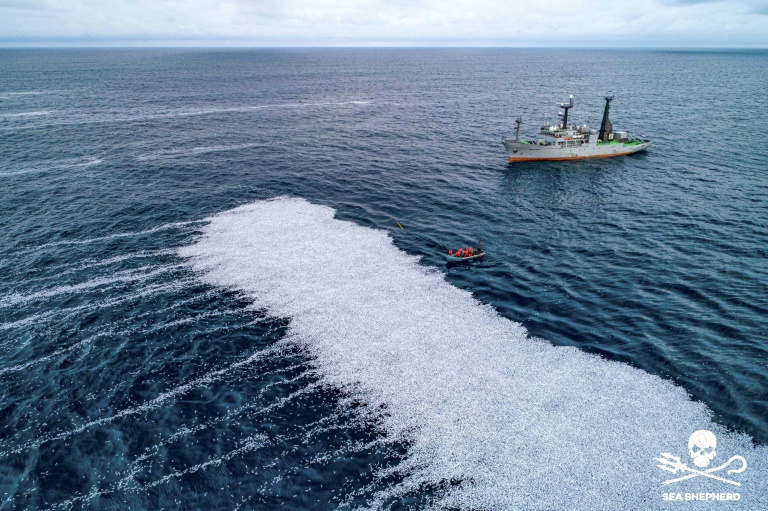
Environmental organisation Sea Shepherd on Tuesday filed a legal complaint against the owners of a large fishing vessel after tens of thousands of dead fish were spotted off France’s Atlantic coast.

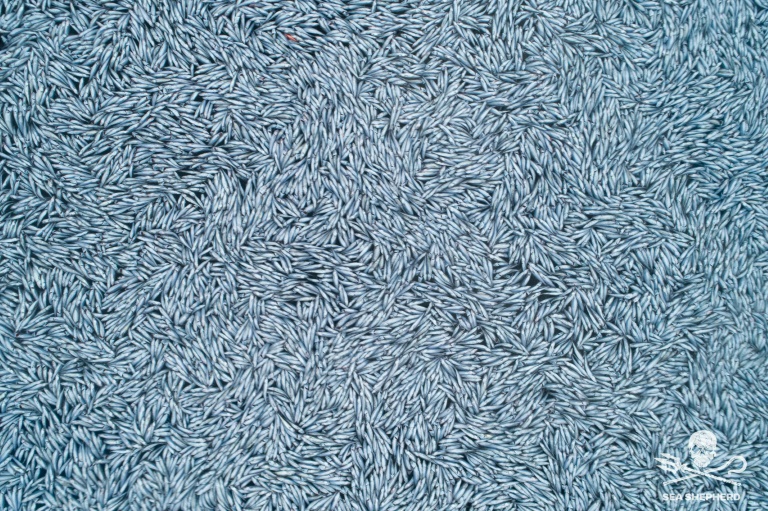
The NGO last week published footage of what it said were more than 100,000 dead fish floating in the sea some 300 kilometres (186 miles) off the southwestern port city of La Rochelle in the Bay of Biscay.

The fish, of the cod species blue whiting, had been caught by the Margiris, one of the world’s biggest fishing trawlers at 143 metres (470 feet) long.

On Thursday, the Margiris logged a “fishing incident” with the freezer-trawler association PFA, saying its net had ruptured, causing the involuntary release of the fish into the sea.

The PFA said the breakage, “a rare occurrence” had been due to “the unexpectedly large size of the fish caught”.

The incident had also been reported to the vessel’s flag state, Lithuania, it said.

But Sea Shepherd said it suspected the blue whiting, an abundant species in the northeast Atlantic, might have been discarded deliberately.

“Some vessels, when they catch a great number of fish of low commercial value like blue whiting, discard them to make room for higher-value fish,” said Lamya Essemlali, president of Sea Shepherd France.

This practice, she told AFP, “is completely illegal”.

Sea Shepherd’s case was based on the Margiris’s failure to bring the fish it caught to shore in accordance with fishing rules, she said. The organisation had backed up its claim “with various elements of what we found at the site”, she added.

France’s maritime minister, Annick Girardin, said on Friday there would be an inquiry into the incident, and that the dead fish would be subtracted from the Margiris’s fishing quota.

“This was a non-authorised discarding of fish,” a spokesperson at her ministry said.

The EU’s commissioner for oceans and fisheries Virginijus Sinkevicius — himself a Lithuanian national — said the European Commission would also look into the matter.

burs/jh/jj

13 million face hunger as Horn of Africa drought worsens: UN

An estimated 13 million people in Kenya, Somalia and Ethiopia are facing severe hunger as the Horn of Africa experiences its worst drought in decades, the United Nations said Tuesday.

Three consecutive rainy seasons have failed as the region has recorded its driest conditions since 1981, the UN’s World Food Programme said.

The drought has destroyed crops and inflicted “abnormally” high livestock deaths, forcing rural families who rely on herding and farming to abandon their homes.

Water and grazing land is in short supply and forecasts of below-average rainfall in the coming months only threaten more misery, said Michael Dunford, WFP’s regional director in East Africa.

“Harvests are ruined, livestock are dying, and hunger is growing as recurrent droughts affect the Horn of Africa,” he said in a statement.

“The situation requires immediate humanitarian action” to avoid a repeat of a crisis like that of Somalia in 2011, when 250,000 died of hunger during a prolonged drought.

Speaking to journalists in Geneva, WFP spokesman Tomson Phiri described the scene he witnessed during a recent trip to northeastern Kenya.

“While it’s common to see dead livestock by the roadside… this time, they have not been hit by passing vehicles: they have died from thirst and starvation, and died in large numbers,” he said.

“The drought is widespread, severe and likely to grow worse.”

Food aid is being distributed across an arid swathe of Kenya, Ethiopia and Somalia where malnutrition rates are high and some 13 million people are at risk of severe hunger in the first quarter of this year.

– ‘Catastrophe’ –

The UN children’s agency meanwhile assesses that as many as 20 million people in those three countries, plus Eritrea, will need water and food assistance over the next six months.

Mohamed Fall, UNICEF’s regional director for eastern and southern Africa, said the situation was particularly dire for children and families.

Nearly 5.5 million children in the four countries are threatened by acute malnutrition, while 1.4 million risked falling into severe acute malnutrition, which can lead to death.

“UNICEF fears this number will increase by 50 percent if rains don’t come in the next three months,” Fall told reporters in Geneva via video-link.

“The needs are massive and urgent, and they are quickly outpacing the available funds to respond,” he said.

“We need to act now to prevent a catastrophe.”

According to WFP, some 5.7 million already need food assistance in southern and southeastern Ethiopia, including half a million malnourished children and mothers.

In Somalia, the number of people classified as seriously hungry is expected to rise from 3.5 million to 4.6 million by May unless urgent interventions are taken.

Another 2.8 million people need assistance in southeastern and northern Kenya, where a drought emergency was declared in September.

WFP said $327 million was required to respond to immediate needs over the next six months and support pastoral communities to become more resilient against recurring climate shocks.

UNICEF meanwhile is appealing for $123 million to cover life-saving needs in Ethiopia, Eritrea, Somalia and Kenya through to the end of June.

In 2011, failed rains led to the driest year since 1951 in arid regions of Kenya, Somalia, Ethiopia, Djibouti and Uganda.

Experts say extreme weather events are happening with increased frequency and intensity due to climate change — with Africa, which contributes the least to global warming, bearing the brunt.

Indonesian croc freed after five years trapped in tyre

A wild crocodile in Indonesia who was trapped in a tyre for more than five years has been rescued, freed from its rubber vice and released back into the wild, officials and residents said Tuesday.

Conservation workers have been trying to lure the stricken saltwater crocodile from a river since 2016 after residents of Palu city on Sulawesi island spotted the animal with a motorbike tyre wrapped around its neck.

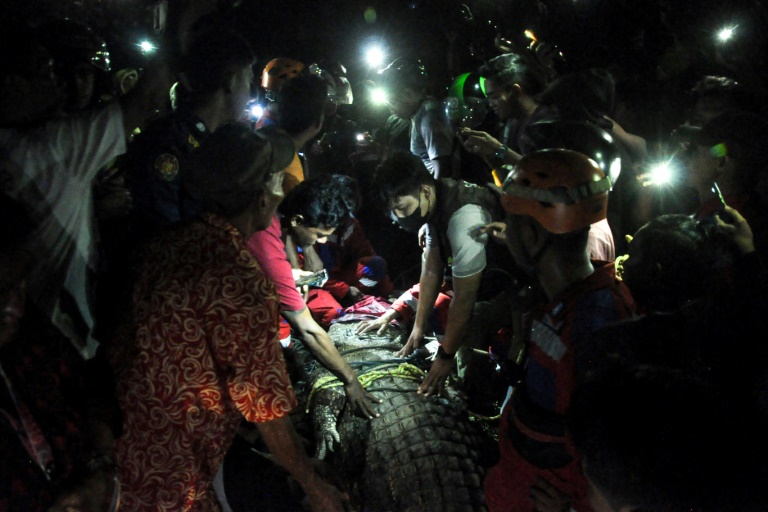
But it was a local resident who snared the 5.2-metre (17 foot) long reptile — who was regularly seen sunbathing in the Palu river in Central Sulawesi — from its tight squeeze late on Monday.

Tili, a 34-year-old bird-seller, used chicken as bait and ropes to catch the beast at the end of what he said was a three-week rescue effort, before dozens of locals helped to drag the crocodile to shore and cut the tyre around its neck.

“I just wanted to help, I hate seeing animals trapped and suffering,” Tili, who like many Indonesians uses only one name, told AFP. 

His first two attempts to rescue the croc failed because the ropes were not strong enough to contend with its weight, he said, before turning to nylon ropes used for tugging boats.

“I was already exhausted so I let them finish the rescue, the crocodile was unbelievably heavy, everybody was sweating and getting very tired.”  

The crocodile was released back into the water immediately after the rescue to relieved cheers from locals. 

Conservationists believe someone may have deliberately placed the tyre around the croc’s neck in a failed attempt to trap it as a pet in the archipelago nation that is home to several species of the animal. 

Tili beat the authorities to the capture because they lacked the proper equipment for a rescue in the river that houses more than 30 other crocodiles.

“Yesterday was a historical day for us, we are grateful the crocodile was finally rescued and we appreciate the locals who showed concern for the wildlife,” Hasmuni Hasmar, head of the local conservation agency, told AFP.

The reptile made headlines in early 2020 when the local government promised a reward to anyone who caught the croc and removed the tyre, but later called off the contest over fears it could endanger its safety. 

But the local conservation agency said Tili is in line for a prize after his daring plan paid off.

“We will award Tili for his effort in rescuing the wildlife,” Hasmar said.

Close Bitnami banner
Bitnami