AFP

Livelihoods lost as climate disaster woes mount in Kenya

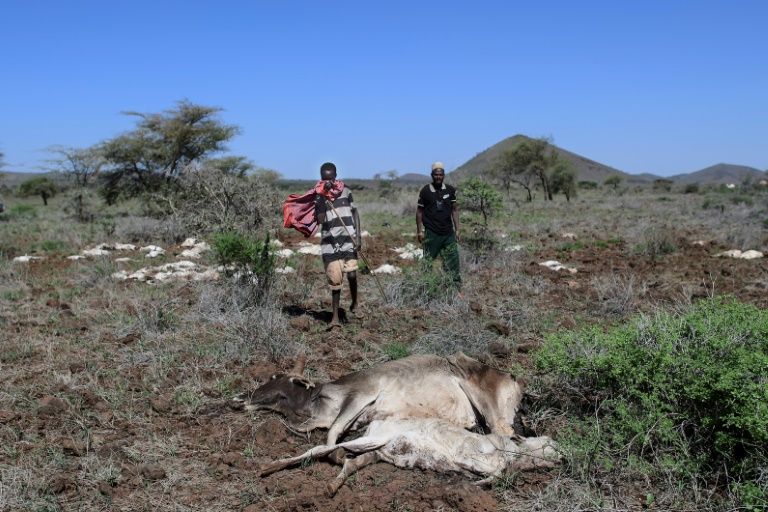
Dabaso Galgalo is now used to the smell and grisly spectacle of rotting flesh festering in the scorching heat as Kenya reels from a spate of climate disasters.

Surrounded by barren scrubland littered with withered carcasses of sheep and goats, the 56-year-old pastoralist is struggling to keep his beloved animals, and himself, alive.

What was left of his herd after a months-long dry spell was decimated by once-in-a-generation floods that hit northern Kenya, the latest in a series of unforgiving climate shocks lashing the region. 

“We recently had heavy rains and strong winds that ended up killing livestock that had gathered at this water point,” he told AFP, outside a settlement called ‘kambi ya nyoka’ (snake camp) in Marsabit.  

The semi-arid region has been the scene of a prolonged drought. Then, when the rains finally came, the deluge pushed communities, who rely exclusively on livestock for their survival, to the edge of disaster.

“This is a very huge loss because we have lost lots of resources following this tragedy,” said Galgalo.

“If one had 500 goats (earlier), they have between five and 20 goats left.”

Nomadic livestock herders in East Africa’s drylands have learnt to cope with the vagaries of weather over decades, driving their relentless search for water and pasture in some of the world’s most inhospitable terrain.

But their resilience is being severely tested by climate change. 

– Fight for resources – 

Poor rainfall in the last quarter of 2021 — the third consecutive failed rainy season — followed a devastating locust invasion a year earlier, with animals now too weak to produce milk or too skinny to be sold. 

There are growing fears that as the situation worsens, tensions among communities could sharpen as they compete for access to meagre resources.

Marsabit is particularly vulnerable because of a perennial conflict between the Borana and Gabra pastoralist communities.

President Uhuru Kenyatta declared the drought a natural disaster last September, with 2.1 million people — four percent of Kenya’s population — already grappling with hunger, according to government figures.

The government said last week that 23 of the country’s 47 counties faced “food and water stress” while the meteorological department has warned of a potential increase in “human-to-human and human-to-wildlife conflicts”.

The authorities have invested 450 million shillings ($3.9 million, 3.4 million euros) to buy 11,250 cattle and 3,200 goats from farmers in the worst-hit counties.

The UN’s Food and Agricultural Organization (FAO) on Monday called for “aggressive” efforts to address the situation, warning it was concerned about “the realities on the ground.”

“We must stay committed to doing things differently,” FAO Deputy General Beth Bechdol told a press conference in Nairobi before embarking on a trip to the drought-hit north.

“We have seen too many efforts that have taken too many years, that have been repeated and tried over and over again with often times the same disappointing outcomes.” 

– Africa hardest-hit –

East Africa endured a harrowing drought in 2017 which also brought neighbouring Somalia to the brink of famine.

In 2011, two successive failed rainy seasons in 12 months led to the driest year since 1951 in arid regions of Kenya, Somalia, Ethiopia, Djibouti and Uganda.

With conflicts raging in Ethiopia and Somalia, aid agencies are struggling to assess the true extent of the current crisis.

Experts say extreme weather events are happening with increased frequency and intensity due to climate change — with Africa, which contributes the least to global warming, bearing the brunt.

For Galgalo, the race is on to save his remaining animals and protect his only source of income. 

But he is losing hope.

“They are suffering from pneumonia and are still dying,” he said. 
Livelihoods lost as climate disaster woes mount in Kenya

Dabaso Galgalo is now used to the smell and grisly spectacle of rotting flesh festering in the scorching heat as Kenya reels from a spate of climate disasters.

Surrounded by barren scrubland littered with withered carcasses of sheep and goats, the 56-year-old pastoralist is struggling to keep his beloved animals, and himself, alive.

What was left of his herd after a months-long dry spell was decimated by once-in-a-generation floods that hit northern Kenya, the latest in a series of unforgiving climate shocks lashing the region. 

“We recently had heavy rains and strong winds that ended up killing livestock that had gathered at this water point,” he told AFP, outside a settlement called ‘kambi ya nyoka’ (snake camp) in Marsabit.  

The semi-arid region has been the scene of a prolonged drought. Then, when the rains finally came, the deluge pushed communities, who rely exclusively on livestock for their survival, to the edge of disaster.

“This is a very huge loss because we have lost lots of resources following this tragedy,” said Galgalo.

“If one had 500 goats (earlier), they have between five and 20 goats left.”

Nomadic livestock herders in East Africa’s drylands have learnt to cope with the vagaries of weather over decades, driving their relentless search for water and pasture in some of the world’s most inhospitable terrain.

But their resilience is being severely tested by climate change. 

– Fight for resources – 

Poor rainfall in the last quarter of 2021 — the third consecutive failed rainy season — followed a devastating locust invasion a year earlier, with animals now too weak to produce milk or too skinny to be sold. 

There are growing fears that as the situation worsens, tensions among communities could sharpen as they compete for access to meagre resources.

Marsabit is particularly vulnerable because of a perennial conflict between the Borana and Gabra pastoralist communities.

President Uhuru Kenyatta declared the drought a natural disaster last September, with 2.1 million people — four percent of Kenya’s population — already grappling with hunger, according to government figures.

The government said last week that 23 of the country’s 47 counties faced “food and water stress” while the meteorological department has warned of a potential increase in “human-to-human and human-to-wildlife conflicts”.

The authorities have invested 450 million shillings ($3.9 million, 3.4 million euros) to buy 11,250 cattle and 3,200 goats from farmers in the worst-hit counties.

– Africa hardest-hit –

East Africa endured a harrowing drought in 2017 which also brought neighbouring Somalia to the brink of famine.

In 2011, two successive failed rainy seasons in 12 months led to the driest year since 1951 in arid regions of Kenya, Somalia, Ethiopia, Djibouti and Uganda.

With conflicts raging in Ethiopia and Somalia, aid agencies are struggling to assess the true extent of the current crisis.

Experts say extreme weather events are happening with increased frequency and intensity due to climate change — with Africa, which contributes the least to global warming, bearing the brunt.

For Galgalo, the race is on to save his remaining animals and protect his only source of income. 

But he is losing hope.

“They are suffering from pneumonia and are still dying,” he said. 
Forest fire rages across Kenya national park

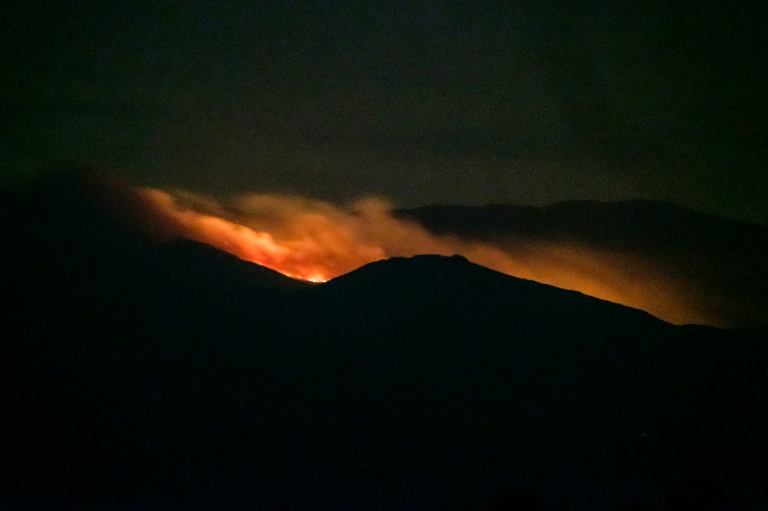
Forest rangers and volunteers battled flames and strong winds on Sunday to stop a fierce fire raging across Kenya’s Aberdare national park for nearly 24 hours.

The blaze broke out on Saturday night, according to an official working for Kenya Wildlife Service (KWS), the government body in charge of national parks, who said the fire was “moving very fast”.

“It is on the grasses, it is spreading and very windy,” the official told AFP on condition of anonymity, explaining that he was not authorised to speak to media.

“We have mobilised the community and staff around and today they have really tried their best… it is only that they were overwhelmed.”

The park’s name was etched in history when Britain’s Elizabeth II, then a princess on a visit to Kenya, received news of her father’s death while staying at the Treetops hotel, a remote game-watching lodge built high into a tree in the Aberdare forest.

Rhino Ark, a conservation charity in Kenya, said on Twitter that it had deployed helicopters to conduct aerial surveys of the area to estimate the extent of damage to the forest cover.

The Mount Kenya Trust, a body set up to conserve the country’s forests, said Sunday that a team had “headed up to help with the bushfires in the Aberdares.

“They will camp and hit the fires at first light,” it said on Twitter.

The park lies some 100 kilometres (60 miles) north of the capital Nairobi.

Located in the Aberdare mountain range, the park is home to spectacular waterfalls and lush bamboo jungles as well as a variety of wildlife including leopards, elephants and critically endangered black rhinos.

The Aberdares are the third highest mountain range in Kenya, reaching a summit of just over 4.000 metres (over 13,100 feet).

In recent days, concern has grown over a contentious proposal before parliament which could allow politicians to determine if public forest can be carved out and handed over to private interests.

The amendment to the Forest Conservation and Management Act –- reforms passed after decades of rampant land clearing — has roused significant community anger and sparked fears that it could result in unchecked logging and environmental destruction.

Ecuador capital flooding toll raised to 28

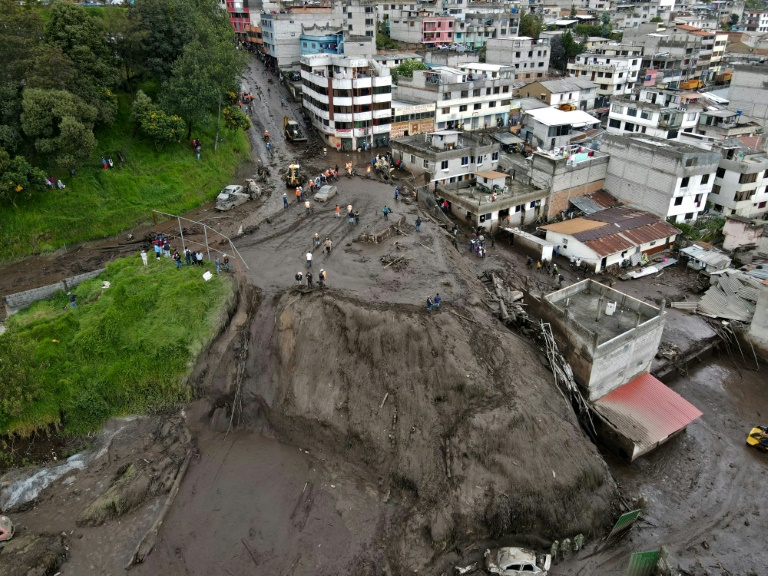
The heaviest flooding to hit Ecuador in two decades claimed 28 lives in the capital Quito this week and left 52 people injured, the city’s mayor said Sunday.

The floods inundated homes, carried off cars and swept away volleyball players and spectators on a sports field.

Rescuers are still searching for a missing 38-year-old woman who lived in the popular La Comuna neighborhood.

Rain that drenched Quito for 17 straight hours caused flooding and surges of mud that damaged roads, agricultural areas, clinics, schools, a police station and an electric power substation.

“The total number of dead is 28, 52 people were injured, seven of whom were hospitalized,” Quito mayor Santiago Guarderas told a press conference.

Earlier in the week, Guarderas said Monday’s rains overwhelmed a hillside water catchment structure that had a capacity of 4,500 cubic meters but was inundated with more than four times that volume.

Guarderas said Monday’s downpour brought down 75 liters per square meter (1.8 gallons per square foot) following 3.5 liters on Saturday.

This is “a record figure, which we have not had since 2003,” he added.

Three days of mourning were observed in Quito, a city of some 2.7 million people.

Heavy rains have hit 22 of Ecuador’s 24 provinces since October, claiming at least 44 lives.

End of the road in Colombia for Escobar's 'cocaine' hippos?

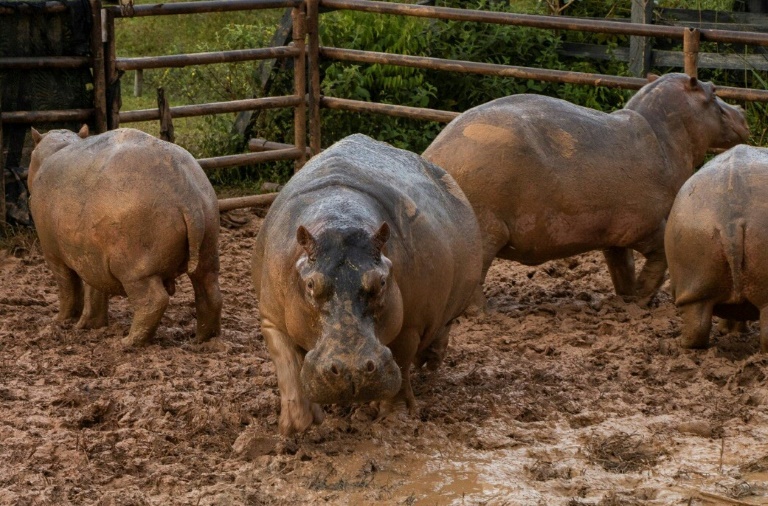
More than 100 African hippos descended from fewer than a handful imported as exotic pets by drug lord Pablo Escobar, face an uncertain future in Colombia.

After the government added Escobar’s so-called “cocaine” hippos Friday to a list of “introduced, invasive species,” experts say killing them may be the only viable option.

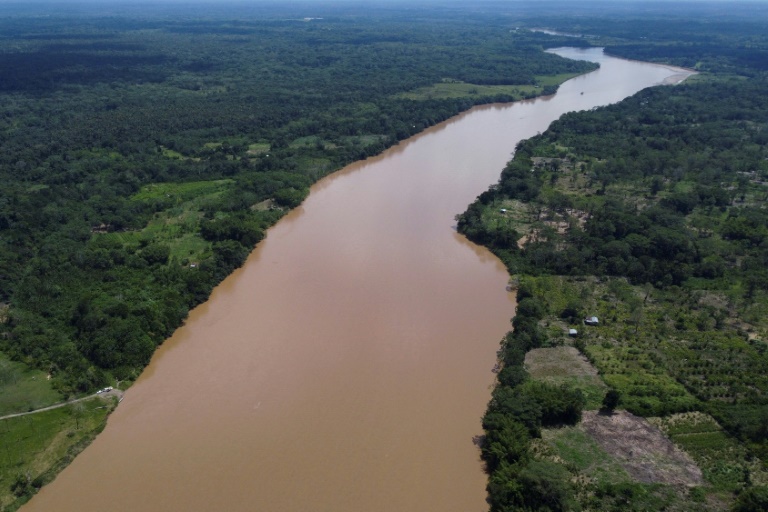
From the few individuals once housed at Escobar’s Hacienda Napoles estate, the hippos’ numbers have ballooned, with 130 now roaming free north of Bogota around the Magdalena River.

Officials say the grazing giants, endemic to sub-Saharan Africa, threaten local wildlife and humans living along the river, whom they have already come into conflict with.

Attempts have been made to sterilize the animals, which can weigh as much as 1.8 tons, but doing so is expensive and difficult.

“Sacrifice (culling) remains on the table,” said David Echeverri, head of the Cornare state environmental agency in charge of the sterilization effort.

“It is a necessary option… it could be the only way to stop the problem from getting worse,” he told AFP.

Escobar, once head of the deadly Medellin Cartel, became one of the richest men on the planet, according to Forbes, thanks to the drug trafficking empire he built.

With his wealth he built a menagerie, acquiring hippos, flamingos, giraffes, zebras and kangaroos for his ranch.

After he was shot dead by police in 1993, all but the hippopotamuses were sold to zoos. 

The semi-aquatic ungulates were left to roam Escobar’s estate and continued breeding. 

They are now believed to be the largest so-called “bloat” of hippopotamuses outside of Africa.

– ‘Complex, expensive and dangerous’ –

The creatures have long been a headache for authorities faced with a vocal anti-culling campaign.

Last Friday, the government officially declared the hippos an invasive species and announced it had a plan to “manage” their population, which studies have suggested could quadruple in 10 years.

Although the details of the plan have not been revealed, former environment minister Manuel Rodriguez has urged the government to use any means, including opening a hunt on the animals.

“Obviously there are animal activists opposed to this, but what is the alternative?” he said.

To date, Cornare has managed to surgically sterilize 11 hippos and dart another 40 with contraceptives.

The effort has cost more than $100,000, but has failed to stop hippo numbers from swelling. 

“Everything with hippos is complex, expensive and dangerous,” Echeverri told AFP.

– Potential ‘tragedy’ –

For Rodriguez, the animals pose a major threat to fishermen and other river-side inhabitants.

Last year, Cornare recorded two hippo attacks on people, neither fatal.

In Africa, hippos kill hundreds of people every year.

“We could face a tragedy,” Rodriguez warned.  

Also threatened by the hippos are the manatee — large marine mammals that make the Magdalena River their home — and a variety of native fish.

Earlier this year, activists with the backing of green parliamentary candidate Luis Domingo Gomez, proposed creating a sanctuary for the hippos with a mix of public and private funds.

But experts reject the proposal as costly and no less harmful to the local ecosystem.

“Are we going to maintain a sanctuary for hippos that attack the manatee?” asked Rodriguez.

Biologist Nataly Castelblanco, an expert on manatees, said local animals should take precedence.

“Native species have conservation priority over invasive species,” she wrote on Twitter.

UN praises 'positive' talks with Yemen sides on ageing oil tanker

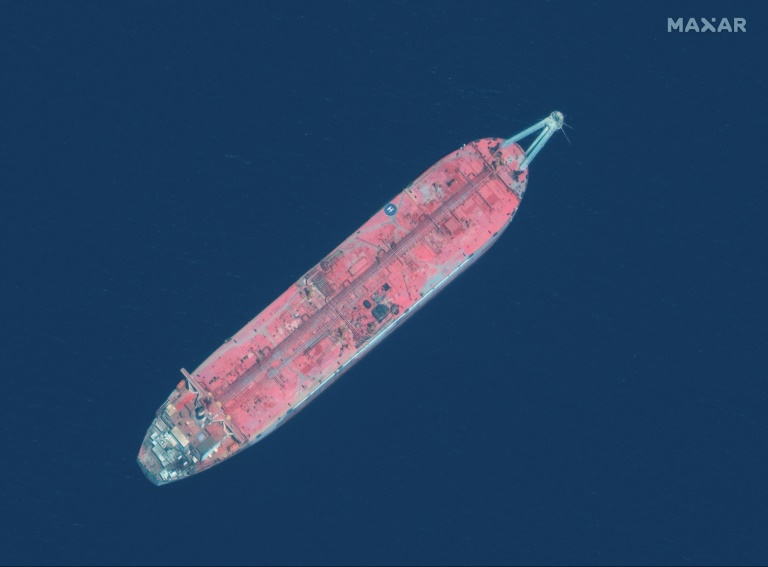
The UN’s humanitarian coordinator for war-torn Yemen said he held constructive talks with government officials and Huthi rebels over dealing with the threat posed by a rusting oil tanker abandoned offshore.

Experts warn of the risk of a major environmental disaster posed by the 45-year-old FSO Safer, which lacks both power and a functioning fire fighting system while volatile gases are thought to be building up inside.

“The risk of imminent catastrophe is very real,” stressed the UN’s David Gressly in a statement Saturday. “We need to translate the good will being shown by all interlocutors into action as soon as possible.”

But he praised talks he held last week with all sides in the Yemen conflict on a “UN-coordinated proposal to mitigate the threat”.

“In our very positive discussions, the government officials confirmed that they support the UN-coordinated proposal to shift the million barrels of oil onboard the vessel to another ship,” said Gressly.

“I also held very constructive discussions” with Huthi rebels, he said, adding that “they also agreed in principle on how to move forward with the UN-coordinated proposal”.

Gressly said he was also having talks with countries interested in backing the project, according to the statement, but did not elaborate on that issue.

Environmental group Greenpeace last week warned that the Safer, moored for years off Yemen’s western port of Hodeida “with its toxic cargo of crude oil,” posed a “grave threat” to millions in the impoverished country.

Greenpeace said an oil spill would prevent access to Yemen’s main ports of Hodeida and Salif, affecting food aid supplies for up to 8.4 million people. 

It also said that desalination plants on the coast could be affected, which would interrupt the drinking water supply for about 10 million people.

Yemeni fisheries would likely shut down and ecosystems in the Red Sea would be destroyed, Greenpeace added, with the impact possibly reaching Djibouti, Eritrea and Saudi Arabia.

The Huthis — who have been battling the government since 2014 — have insisted the UN team conducts maintenance work, but the world body says it must be allowed to assess the site first before carrying out any work.

Yemen’s grinding conflict has killed hundred of thousands directly or indirectly and left millions on the brink of famine, according to the UN.

Wind powers change in England's industrial heartland

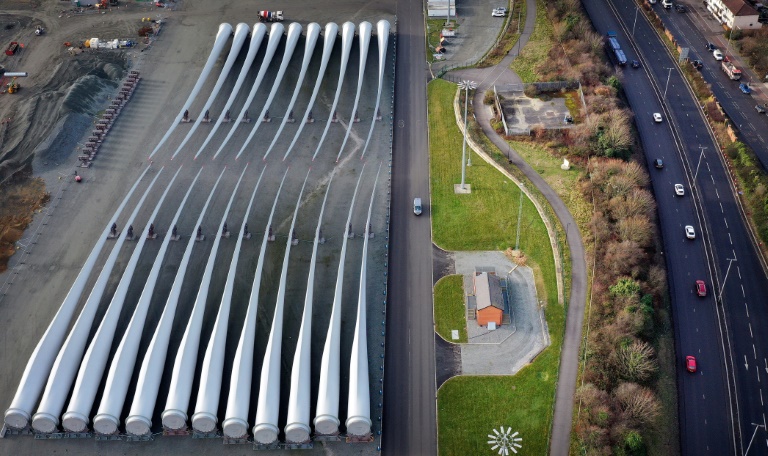
On the banks of the River Humber in northern England, the winds of change are blowing through Hull, where factory workers busily craft turbine blades in a green revolution.

Hull, known for a once-thriving fishing industry, the poet Philip Larkin, rugby league, and the city’s eponymous football club recently bought by Turkish TV personality Acun Ilicali, is home to Britain’s biggest wind turbine blade plant.

That has placed Hull at the centre of the UK government’s long-term plan to slash carbon emissions, tackle climate change and cut rocketing household energy bills.

German-Spanish giant Siemens Gamesa is rapidly expanding its facility to meet booming demand and keep the country’s much-trumpeted 2050 net-zero target on track.

The need for cheaper sources of energy became increasingly urgent this week, as the government scrambled to head off a cost of living crisis, faced with runaway electricity and gas costs that are fuelling decades-high inflation.

Britain unveiled financial support for households after the UK energy regulator lifted prices to reflect the spiking natural gas market.

– ‘Cheaper and cleaner’ –

“We are doing our bit to tidy the world up and get cheaper and cleaner energy for everybody,” blade painter Carl Jackson, 56, told AFP from the factory floor.

“I think wind power is a big part of the future. It’s been a massive boost to jobs and the economy in Hull,” added Jackson, who joined when Siemens Gamesa opened six years ago.

The hub has since manufactured 1,500 hand-made turbine blades and now employs more than 1,000 people.

Prime Minister Boris Johnson, host of last November’s UN climate change summit in Glasgow, has vowed to “level up” economic opportunity in places like Hull, which voted overwhelmingly for Brexit.

Siemens Gamesa built the £310-million plant jointly with Associated British Ports in 2016, and it is now undergoing a major extension to build bigger blades.

The Hull factory manufactures about 300 turbine blades per year, with each measuring 81 metres in length — about the same as the wingspan of an Airbus A380 aircraft.

A wind turbine, comprising three such blades, can power an average house for 24 hours with one single rotation.

New, even longer 100-metre blades will provide enough power for up to two days.

– ‘Driving down energy costs’ –

In the cavernous Hull factory, staff assemble balsa wood, fibreglass and resin into vast blade moulds to start a journey that will eventually harness the ferocious winds of the North Sea.

That enables Britain to cut carbon emissions while curbing its dependency on imported energy and lowering prices in the long term, said plant director Andy Sykes.

“Over the course of last year, 25 percent of the UK’s (electricity) was delivered from wind power,” said Sykes.

“That will only continue to grow and help drive down the cost of energy by reducing the need for the import of energy.”

The group will open another factory in Le Havre, northern France, this year in a push for cleaner energy across Europe, where wind generated an average 16 percent of electricity according to 2020 industry data.

Scotland recently awarded a string of vast offshore wind projects after Johnson vowed to make Britain the “Saudi Arabia of wind”.

Hull is also expanding into the broader renewable sector, with plans for biofuels, green hydrogen, and carbon capture, as well as solar and tidal power generation under the city’s “Green Port” initiative.

The local authority is eager to slash carbon output from the Humber estuary region, which accounts for 40 percent of Britain’s industrial emissions — particularly from the cement, gas, oil, petrochemicals and steel sectors.

“You really have to decarbonise the Humber area for the UK to be really able to address significant parts of its net zero challenge,” Hull City Council climate officer Martin Budd told AFP.

“And this Siemens offshore wind plant provides a key activator to achieve that.”

The Humber estuary’s high seabed makes it ideal for offshore turbines.

At the same time, the estuary expels an estimated 12.3 million tonnes of carbon per year.

– Ensuring survival –

Budd said tackling climate change was vital to saving low-lying Hull from flooding.

“We are the second most vulnerable UK city after London to flooding. So the survival of the city depends on tackling climate change,” he added.

“It’s integral that we tackle climate change and that as a city we take those steps by supporting manufacturing in industries that are going to tackle climate change.”

The UK wants offshore wind farms to provide one-third of the country’s electricity by 2030.

Climate change specialist Nick Cowern, an emeritus professor at Newcastle University, cautioned that Britain also needed to develop chemical storage capability.

“It’s realistic to put wind power at the centre of the UK’s low carbon electricity generation approach, which is a major part of the effort towards net zero,” he told AFP.

He added that while wind and solar were safe long-term bets, gas still had a significant role to play.

“Until we have the ability to store electricity as hydrogen — or alternatives like ammonia — and be better grid-connected to our neighbours in continental Europe and the Nordic countries, gas will still be needed during periods of low wind speeds and low solar generation.”

Cyclone Batsirai closes in on eastern Madagascar

As powerful Cyclone Batsirai closed in on eastern Madagascar on Saturday people sought shelter in more secure concrete buildings while others reinforced their roofs with large sandbags.

Batsirai is expected to lash the eastern parts of the cyclone-prone Indian ocean island with powerful winds and torrential rains on Saturday.

The Meteo-France weather service warned of winds of up to 260 kilometres per hour (162 miles per hour) and waves as high as 15 metres (50 feet).

It said Batsirai would likely make landfall in the late afternoon as an intense tropical cyclone, “presenting a very serious threat to the area” after passing Mauritius and drenching the French island of La Reunion with torrential rain for two days.

Residents hunkered down before the storm made landfall in the impoverished country still recovering from the deadly Tropical Storm Ana late last month.

In the eastern coastal town of Vatomandry more than 200 people were crammed in one room in a Chinese-owned concrete building while waiting for Batsirai to hit. 

Families slept on mats or mattresses.

Community leader Thierry Louison Leaby lamented the lack of clean water after the water utility company turned off supplies ahead of the cyclone.

“People are cooking with dirty water,” he said, amid fears of a diarrhoea outbreak.

Outside plastic dishes and buckets were placed in a line to catch rainwater dripping from the corrugated roofing sheets.

“The government must absolutely help us. We have not been given anything,” he said.

Residents who chose to remain in their homes used sandbags to buttress their roofs.

– ‘We are very nervous’ –

Other residents of Vatomandry were stockpiling supplies in preparation for the storm.

“We have been stocking up for a week, rice but also grains because with the electricity cuts we can not keep meat or fish,” said Odette Nirina, 65, a hotelier in Vatomandry. 

“I have also stocked up on coal. Here we are used to cyclones,” she told AFP.

Gusts of winds of more than 50km/h pummelled Vatomandry Saturday morning, accompanied by intermittent rain.

The United Nations said it was ramping up its preparedness with aid agencies, placing rescue aircraft on standby and stockpiling humanitarian supplies.

The impact of Batsirai on Madagascar is expected to be “considerable”, Jens Laerke, spokesman for the UN’s humanitarian organisation OCHA, told reporters in Geneva Friday.

At least 131,000 people were affected by Ana across Madagascar in late January. At least 58 people were killed, mostly in the capital Antananarivo. The storm also hit Malawi, Mozambique and Zimbabwe, causing dozens of deaths.

The UN’s World Food Programme (WFP) pointed to estimates from national authorities that some 595,000 people could risk being directly affected by Batsirai, and 150,000 more might be displaced due to new landslides and flooding.

“We are very nervous,” Pasqualina Di Sirio, who heads the WFP’s programme in Madagascar, told reporters by video-link from the island.

Search and rescue teams have been placed on alert.

Inland in Ampasipotsy Gare, sitting on top of his house, Tsarafidy Ben Ali, a 23-year-old coal seller, held down corrugated iron sheets on the roof with large bags filled with soil.

“The gusts of wind are going to be very strong. That’s why we’re reinforcing the roofs,” he told AFP.

The storm poses a risk to at least 4.4 million people in one way or another, the International Federation of Red Cross and Red Crescent Societies said.

burs-str-sn/dl

Covid vaccination compulsory in Austria, in EU first

It’s official: Austrians over the age of 18 must be vaccinated against Covid-19 from Saturday or face the possibility of a heavy fine, an unprecedented measure in the European Union.

The new measure, adopted on January 20 by Parliament, came into force on Saturday, the culmination of a process that began in November in the face of the rapid spread of the Omicron variant.

The government decided to pursue its new, tougher approach despite criticism within the country.

“No other country in Europe is following us on compulsory vaccines,” said Manuel Krautgartner, who has campaigned against the new approach. 

In neighbouring Germany, a similar  proposal championed by the new Social Democrat Chancellor Olaf Scholz was debated last month in the lower house of parliament but many MPs still oppose the idea.

– Checks from mid-March –

Despite the threat of such a drastic measure, the vaccination rate in Austria has still failed to take off, languishing below the levels seen in France or Spain.

The humanitarian association Arbeiter Samariter Bund, which oversees some vaccination sites in the capital Vienna, said there had an uptick in turnout this week.

“We recorded a small increase of around nine percent compared to last week,” the organisation’s manager, Michael Hausmann, told AFP.

From the average of around 7,000 injections administered every day in the capital, only 10 percent are a first dose, he said.

Erika Viskancove, a 33-year-old accountant, said she came to a vaccination centre situated next to an Art Deco swimming pool to receive her third booster dose.

“I sincerely believe that the law is the best way” to defeat the pandemic, she said, calling on other countries to follow Austria’s lead.

Melanie, a 23-year-old waitress who preferred not to give her second name, said she was mainly there to avoid ending up “locked up at home”.

Non-vaccinated people are currently excluded from restaurants, sports and cultural venues. 

But from now on they will also be subject to fines, which Melanie said was “unhealthy”.

The law applies to all adult residents with the exception of pregnant women, those who have contracted the virus within the past 180 days and those with medical exemptions.

Checks will begin from mid-March, with fines ranging from 600 to 3,600 euros ($690-$4,100).

They will, however, be lifted if the person fined gets vaccinated within two weeks.

– Protect against new variants – 

More than 60 percent of Austrians support the measure, according to a recent survey, but large swathes of the population remain strongly opposed.

For several weeks after the announcement of the new law, tens of thousands of people took to the streets to protest against what they regard as a draconian policy.

Critics have also questioned the need for compulsion given the milder nature of the Omicron variant.

Conservative Chancellor Karl Nehammer, who leads the Alpine country with the environmentalist Greens, also announced at the same time a relaxation of earlier Covid-19 restrictions.

But for Health Minister Wolfgang Mueckstein, compulsory vaccination is aimed at both protecting the country against new waves and fighting new variants.

Vaccination passes are now a reality in an increasing number of countries for certain professions or activities.

In Ecuador, it is compulsory, including for children over the age of five, a world first.

Before that, two authoritarian states in Central Asia — Tajikistan and Turkmenistan — mandated vaccination, as did Indonesia, even if less than half its population is actually vaccinated.

Record heat, forest fires in Colombia's Amazon in January

January of this year was the hottest month in the Colombian Amazon in a decade, leading to an increase in forest fires in the southeastern region and very likely impacting air quality in the capital Bogota, according to an Environment Ministry report seen by AFP Friday.

It said the month of January recorded the “highest hot spot values in the last 10 years” in the Colombian Amazon.

The phenomenon occurs, the ministry said, when the country goes through a season of low rainfall, and is due to human activity, of which “the most important is associated with deforestation fronts.” 

At least 80 percent of the “hot spots” were forest fires, a ministry spokesman told AFP. At the end of January, the ministry identified more than 3,300 “hot spots” in the six departments that make up the Colombian Amazon, including 1,300 in the Guaviare region alone.

According to testimony collected by AFP in October in the region, peasants and landowners take advantage of the dry season, from January to April, to burn or cut down trees and plant coca plants in their place, or to let cattle graze there.

The Serrania del Chiribiquete National Park, listed as a UNESCO World Heritage Site, is particularly threatened, as is the Nukak National Nature Reserve, a vast territory of jungle inhabited by the last nomadic indigenous people of Colombia.

The Foundation for Conservation and Sustainable Development (FCDS), which keeps its own count and regularly flies over the areas concerned, recorded at least 938 forest fires, the highest monthly January figure since 2012.

“Thousands of hectares of Amazon jungle, cut in recent months, are on fire today. These massive fires are now being felt as far away as Bogota,” FCDS director Rodrigo Botero warned on Twitter.

“There are public health decisions to be made quickly. What are the air indicators saying in Bogota?”

Bogota mayor Claudia Lopez decried “the inability” of the government “to control the territory and guarantee security.”

She described the fires as “arson attacks … which, due to the direction of the wind, end up arriving and deteriorating the quality of the air” in the capital, almost 500 km away.

In Medellin, the country’s second most populous city, officials have warned of a deterioration in air quality to a level “harmful to the health” of children and the elderly.

According to data from the Colombian government, deforestation has exploded in recent years in the country’s Amazonian regions, notably as a result of the historic peace deal signed in 2016 with the Marxist guerrillas of the FARC, which then abandoned large swaths of territory which they previously controlled.

Close Bitnami banner
Bitnami