
AFP

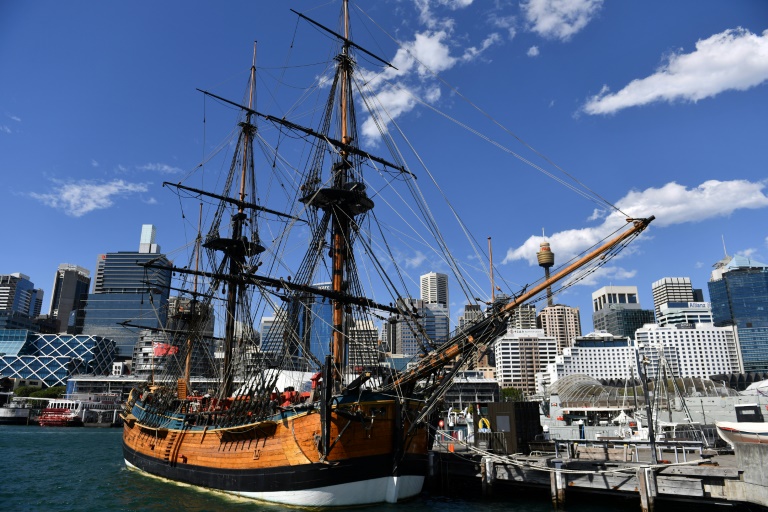
Wreck of British explorer James Cook's Endeavour found: researchers

The wreck of Captain James Cook’s famed vessel the Endeavour has been found off the coast of the US state of Rhode Island, Australian researchers said Thursday.

Their research partners in the United States, however, have described the announcement as premature.

The Endeavour, which the British explorer sailed in an historic voyage to Australia and New Zealand between 1768 and 1771, was scuttled in Newport Harbour during the American War of Independence.

For more than two centuries, it lay forgotten.

“Since 1999, we have been investigating several 18th-century shipwrecks in a two-square-mile area where we believed that Endeavour sank,” Kevin Sumption, director of the Australian National Maritime Museum, told a Thursday media briefing. 

“Based on archival and archaeological evidence, I’m convinced it’s the Endeavour.”

But the Rhode Island Marine Archaeology Project said it was too early to draw that conclusion.

In a statement, project executive director DK Abbass said the announcement was a “breach of contract”, adding that “conclusions will be driven by proper scientific process and not Australian emotions or politics”.

A spokesperson for the Australian museum said Abbass was “entitled to her own opinion regarding the vast amount of evidence we have accumulated.”

The museum does not believe it is in breach of any contracts.

Sumption was among a team of archaeologists that announced in 2018 they believed the Endeavour’s remains were at the Rhode Island site, but said then more analysis had to be done. 

The Endeavour was the ship Cook sailed from England to Tahiti and then New Zealand before reaching Australia in 1770 and charting the continent’s east coast.

By the time the ship sank in Newport Harbor in August 1778, it had been renamed the Lord Sandwich and was being used by the British to hold prisoners of war during the American revolution.

The British scuttled the ship, along with others, to block a French fleet from sailing into Newport Harbour to support the Americans.

This was just a few months before Cook’s death in Hawaii in February 1779.

After two centuries at the bottom of the harbour, only about 15 percent of the Endeavour remains intact, according to the Australian National Maritime Museum. 

“The focus is now on what can be done to protect and preserve it,” Sumption said Thursday. 
Scraping a living: salt offers women lifeline in Yemen

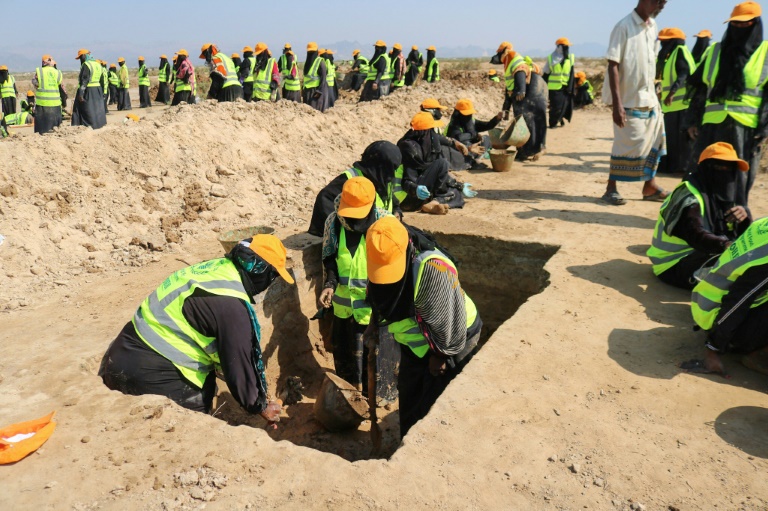
Scooping up handfuls of white crystals from coastal pools, a group of women in Yemen harvest salt — a traditional industry proving to be a lifeline after seven years of war.

Zakiya Obeid is one among nearly 500 women who work in the industry in a village overlooking the Gulf of Aden, on Yemen’s southern coast.

“We cooperate and take shifts because it is a sisterhood and we know each others’ difficult circumstances,” Obeid told AFP.

Employment is so scarce that the women work in rotation to allow more people to benefit. She said the women are divided into two groups, with each working for 15 days while the others rest.

In bare feet and mud-spattered abaya robes, the women dig basins at low tide and return when the seawater has evaporated to dredge up the salt for packaging and selling.

The time-honoured livelihood has been passed down from generation to generation.

It is now a means of survival, providing many families with their only source of income. The women earn about $100 per month for harvesting the salt and packing it in plastic containers.

Since the formation of the Al Hassi Association for Sea Salt Production in 2020, the women are able to transport the salt to be ground, packaged and sold across Yemen.

“Before then, we used to do the same work but could only sell the salt raw,” Obeid said. “But that is no longer the case, with the association providing us with bags and transport.”

– ‘Only source of income’ –

Yemen has been embroiled in a civil war between the government — supported by a Saudi-led military coalition — and Iran-backed Huthi rebels since 2014, pushing the country to the brink of famine.

The conflict has killed hundreds of thousands of people and left millions displaced, according to the UN, which calls it the world’s worst humanitarian catastrophe.

The head of the Al Hassi Association, Khamis Bahtroush, said the women, who produce between 20-30 tonnes of salt every three months, have come to rely on this industry. 

“Production is lower in winter than in summer,” he said. “Each bag is sold for approximately 3,000 Yemeni rials ($12)… but we are struggling with inflation and do not have liquidity to give them raises.

“This is their only source of income… they have nothing else. No farms, no livestock.”

The United Nations Population Fund has said the loss of male breadwinners in the conflict has added to the difficulties faced by women.

“The pressure is even more severe where women or girls suddenly find themselves responsible for providing for their families when they themselves have been deprived of basic education or vocational training,” it said.

Close Bitnami banner
Bitnami

