AFP

Kenya under fire over calls to 'weaken' forest protections

In his 15 years defending one of Nairobi’s last green spaces, Simon Nganga has seen off brazen attempts to seize what’s left of the lush forest bordered by highways and housing estates.

Persistent efforts by developers and powerful individuals to seize chunks of the bush as their own were defeated under historic laws enacted to protect Kenya’s dwindling forests from unchecked logging and environmental destruction.

But a proposal expected before parliament on Thursday seeks a major change to these protections, by allowing politicians to determine if public forest can be carved out and handed over to private interests.

Under the contentious amendment, anyone wishing to alter forest boundaries to claim ownership of land could lobby parliament directly, bypassing approval from the Kenya Forest Service (KFS), which is currently mandated to scrutinise such bids.

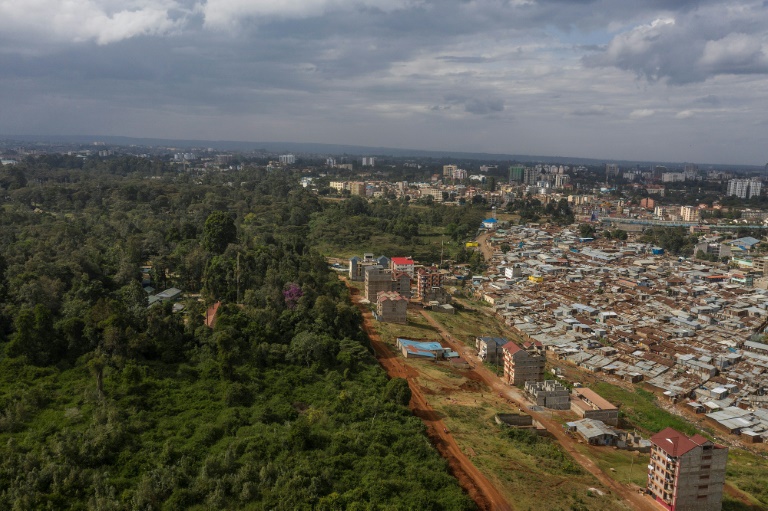
“If it goes through… that will open a Pandora’s Box,” Nganga told AFP beneath the canopy of Ngong Road Forest, a 1,224-hectare (3,025-acre) tract of indigenous woodland inhabited by bush bucks, Sykes monkeys and over 100 species of birds.

“Everyone will want a piece of the forest, which is very dangerous for our forests, and our future.”

The amendment to the Forest Conservation and Management Act –- reforms passed after decades of rampant land clearing — has been  opposed by the environment ministry and the KFS, and has roused significant community anger.

It has also drawn rare criticism from the United Nations, which headquarters its environment programme in Nairobi, and is just weeks away from staging the world’s highest-level decision-making assembly on nature and biodiversity in the Kenyan capital.

– Environmentalists blindsided –

The amendment argues that granting KFS primary authority over hearing and ruling on changes to forest boundaries “unnecessarily limits the right of any person to petition Parliament” as granted under the constitution. 

Environmentalists were blindsided by the proposal, which they say would shift power over Kenya’s forests from a dedicated government agency with a record of fighting land theft, to political elites trying to win a bitterly-contested election.

“Why do members of parliament want to condemn Kenya and the world to an unbearably hot future by weakening the Forest Act?” said conservation group Nature Kenya.

Nganga said the forest laws had proved a bulwark against encroachment — since first passing in 2005, no land within Ngong Road Forest had been legally hived off, keeping its boundary firmly intact.

It is a remarkable achievement for an urban forest pressed in on all sides by one of Africa’s fastest-growing cities, but it still bears the scars of battles won and lost.

A major highway slices through its interior, one unfenced side opens onto the vast Kibera slum, while forest doled out years ago to connected elites saw trees razed for apartments.

But it survived as a whole only because strong laws had kept land grabbers at bay, said Nganga, vice chairman of the Ngong Road Forest Association.

“It has been a success,” Nganga said at the forest edge overlooking Kibera, where men walked by carrying trees they had felled for firewood.

“We cannot talk about winding back success. We know what happened before the Act, when individuals could give out land. We don’t want to get back there.”

– ‘We’ll lose everything’ –

Parliament is considering the amendment as Nairobi this month prepares to host the UN Environment Assembly, where countries will be asked to commit to stronger protections for biodiversity.

In a letter to parliament, a top UN official in Nairobi warned the proposed changes threatened Kenya’s reputation and undermined its efforts to expand forest cover and tackle climate change.

“Unfortunately, we believe the proposed amendment takes us in a contrary direction, incompatible with Kenya’s laudable commitments and trajectory hitherto,” resident coordinator Stephen Jackson wrote in a February 1 letter seen by AFP.

Kenyan Environment Minister Keriako Tobiko said his office learned about the amendment through the press and regretted it had caused “panic and doubt in the international community”.

Land is extremely contentious in Kenya, and disputes over ownership can turn violent.

Environmental activist Joannah Stutchbury was shot dead outside her home in Nairobi in July 2021 after spearheading a vocal campaign to protect a forest near the city from developers.

The timing of this bill in a closely-fought election year has also raised eyebrows.

Electoral cycles have often spelled destruction for forests as land is promised to communities and political allies in exchange for votes, said Paula Kahumbu, the head of conservation group Wildlife Direct.

“Forests have always been up for grabs when it comes to elections,” she told AFP.

“It is kind of like the bribe that is not cash.”

Nganga has fought for the forest before, and knows what is at stake now.

“We will lose everything,” he said.
Texas butterfly sanctuary shuts citing threats from Trump supporters

A butterfly sanctuary caught in the crossfire of polarizing conspiracy theories on illegal immigration to the United States said it will shut its doors Thursday, citing security concerns after receiving threats from supporters of former president Donald Trump.

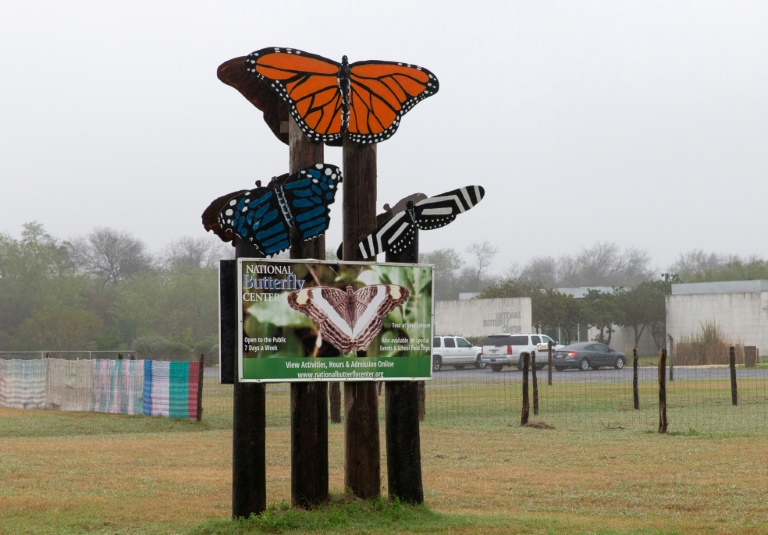
The National Butterfly Center in Texas, located on the banks of the Rio Grande that separates the United States from Mexico, had filed a complaint to block construction of the border wall that became a centerpiece of Trump’s presidency, saying it threatened the winged insects’ habitat.

The private sanctuary’s gardens are home to more than 200 species of butterfly as well as bobcats, coyotes, peccaries, armadillos and Texas tortoises. 

But it will now be closed until further notice because “the safety of our staff and visitors is our primary concern,” Jeffrey Glassberg, president of the North American Butterfly Association, which runs the organization, said in a statement Wednesday. 

Conspiracy theories targeting the sanctuary — which have been linked to far-right group QAnon by US media — have claimed it was helping to bring illegal migrants to America.

The facility already closed between January 28 and 30 because of “credible threats” related to an event held by supporters of the former president in nearby McAllen, Glassberg said. 

Photos purporting to be from the center had been circulating along with messages accusing the organization of helping smugglers bring migrants to the United States.

Several right-wing activists have posted videos on social media of themselves in front of the sanctuary.

“We don’t think the threat has passed,” the sanctuary’s executive director Marianna Trevino Wright told AFP on Wednesday, citing repeated “provocations” from these individuals.

Wright said she feared the allegations against the center would eventually push someone to “take action.”

“We look forward to reopening, soon, when the authorities and the professionals who are helping us get past this situation give us the green light,” Glassberg said in the statement, noting that employees would continue to receive their salaries during the closure. 

The QAnon far-right conspiracy movement began in 2017 with claims that the Democrats ran a satanic child-kidnapping sex-trafficking ring, and it has been blamed for fuelling a riot at the US Capitol on January 6 last year.

Trump has never condemned the movement and even fed QAnon fever before the US presidential election in 2020, floating his own conspiracy theories about a planeload of black-clad saboteurs disrupting his party convention.

Texas butterfly sanctuary shuts citing threats from Trump supporters

A butterfly sanctuary caught in the crossfire of polarizing conspiracy theories on illegal immigration to the United States said it will shut its doors Thursday, citing security concerns after receiving threats from supporters of former president Donald Trump.

The National Butterfly Center in Texas, located on the banks of the Rio Grande that separates the United States from Mexico, had filed a complaint to block construction of the border wall that became a centerpiece of Trump’s presidency, saying it threatened the winged insects’ habitat.

The private sanctuary’s gardens are home to more than 200 species of butterfly as well as bobcats, coyotes, peccaries, armadillos and Texas tortoises. 

But it will now be closed until further notice because “the safety of our staff and visitors is our primary concern,” Jeffrey Glassberg, president of the North American Butterfly Association, which runs the organization, said in a statement Wednesday. 

Conspiracy theories targeting the sanctuary — which have been linked to far-right group QAnon by US media — have claimed it was helping to bring illegal migrants to America.

The facility already closed between January 28 and 30 because of “credible threats” related to an event held by supporters of the former president in nearby McAllen, Glassberg said. 

Photos purporting to be from the center had been circulating along with messages accusing the organization of helping smugglers bring migrants to the United States.

Several right-wing activists have posted videos on social media of themselves in front of the sanctuary.

“We don’t think the threat has passed,” the sanctuary’s executive director Marianna Trevino Wright told AFP on Wednesday, citing repeated “provocations” from these individuals.

Wright said she feared the allegations against the center would eventually push someone to “take action.”

“We look forward to reopening, soon, when the authorities and the professionals who are helping us get past this situation give us the green light,” Glassberg said in the statement, noting that employees would continue to receive their salaries during the closure. 

The QAnon far-right conspiracy movement began in 2017 with claims that the Democrats ran a satanic child-kidnapping sex-trafficking ring, and it has been blamed for fuelling a riot at the US Capitol on January 6 last year.

Trump has never condemned the movement and even fed QAnon fever before the US presidential election in 2020, floating his own conspiracy theories about a planeload of black-clad saboteurs disrupting his party convention.

Wreck of British explorer James Cook's Endeavour found: researchers

The wreck of Captain James Cook’s famed vessel the Endeavour has been found off the coast of the US state of Rhode Island, Australian researchers said Thursday.

Their research partners in the United States, however, have described the announcement as premature.

The Endeavour, which the British explorer sailed in an historic voyage to Australia and New Zealand between 1768 and 1771, was scuttled in Newport Harbour during the American War of Independence.

For more than two centuries, it lay forgotten.

“Since 1999, we have been investigating several 18th-century shipwrecks in a two-square-mile area where we believed that Endeavour sank,” Kevin Sumption, director of the Australian National Maritime Museum, told a Thursday media briefing. 

“Based on archival and archaeological evidence, I’m convinced it’s the Endeavour.”

But the Rhode Island Marine Archaeology Project said it was too early to draw that conclusion.

In a statement, project executive director DK Abbass said the announcement was a “breach of contract”, adding that “conclusions will be driven by proper scientific process and not Australian emotions or politics”.

A spokesperson for the Australian museum said Abbass was “entitled to her own opinion regarding the vast amount of evidence we have accumulated.”

The museum does not believe it is in breach of any contracts.

Sumption was among a team of archaeologists that announced in 2018 they believed the Endeavour’s remains were at the Rhode Island site, but said then more analysis had to be done. 

The Endeavour was the ship Cook sailed from England to Tahiti and then New Zealand before reaching Australia in 1770 and charting the continent’s east coast.

By the time the ship sank in Newport Harbor in August 1778, it had been renamed the Lord Sandwich and was being used by the British to hold prisoners of war during the American revolution.

The British scuttled the ship, along with others, to block a French fleet from sailing into Newport Harbour to support the Americans.

This was just a few months before Cook’s death in Hawaii in February 1779.

After two centuries at the bottom of the harbour, only about 15 percent of the Endeavour remains intact, according to the Australian National Maritime Museum. 

“The focus is now on what can be done to protect and preserve it,” Sumption said Thursday. 

Scraping a living: salt offers women lifeline in Yemen

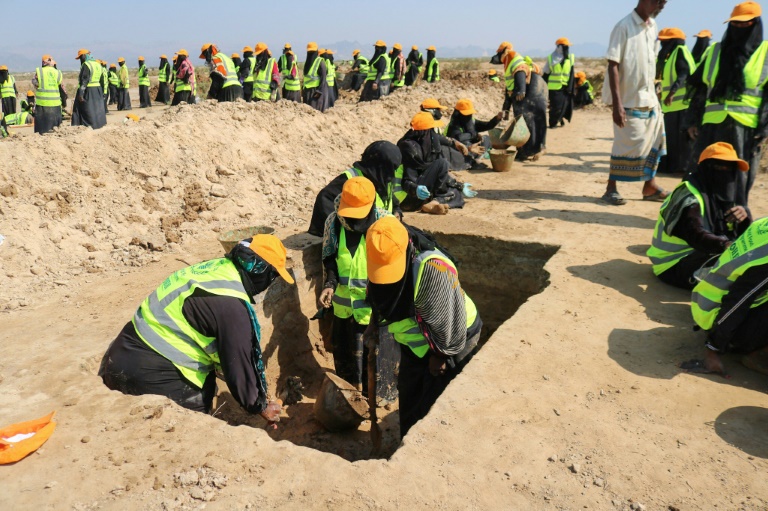
Scooping up handfuls of white crystals from coastal pools, a group of women in Yemen harvest salt — a traditional industry proving to be a lifeline after seven years of war.

Zakiya Obeid is one among nearly 500 women who work in the industry in a village overlooking the Gulf of Aden, on Yemen’s southern coast.

“We cooperate and take shifts because it is a sisterhood and we know each others’ difficult circumstances,” Obeid told AFP.

Employment is so scarce that the women work in rotation to allow more people to benefit. She said the women are divided into two groups, with each working for 15 days while the others rest.

In bare feet and mud-spattered abaya robes, the women dig basins at low tide and return when the seawater has evaporated to dredge up the salt for packaging and selling.

The time-honoured livelihood has been passed down from generation to generation.

It is now a means of survival, providing many families with their only source of income. The women earn about $100 per month for harvesting the salt and packing it in plastic containers.

Since the formation of the Al Hassi Association for Sea Salt Production in 2020, the women are able to transport the salt to be ground, packaged and sold across Yemen.

“Before then, we used to do the same work but could only sell the salt raw,” Obeid said. “But that is no longer the case, with the association providing us with bags and transport.”

– ‘Only source of income’ –

Yemen has been embroiled in a civil war between the government — supported by a Saudi-led military coalition — and Iran-backed Huthi rebels since 2014, pushing the country to the brink of famine.

The conflict has killed hundreds of thousands of people and left millions displaced, according to the UN, which calls it the world’s worst humanitarian catastrophe.

The head of the Al Hassi Association, Khamis Bahtroush, said the women, who produce between 20-30 tonnes of salt every three months, have come to rely on this industry. 

“Production is lower in winter than in summer,” he said. “Each bag is sold for approximately 3,000 Yemeni rials ($12)… but we are struggling with inflation and do not have liquidity to give them raises.

“This is their only source of income… they have nothing else. No farms, no livestock.”

The United Nations Population Fund has said the loss of male breadwinners in the conflict has added to the difficulties faced by women.

“The pressure is even more severe where women or girls suddenly find themselves responsible for providing for their families when they themselves have been deprived of basic education or vocational training,” it said.

Close Bitnami banner
Bitnami