AFP

Ghana labour unions call for strike over local debt swap

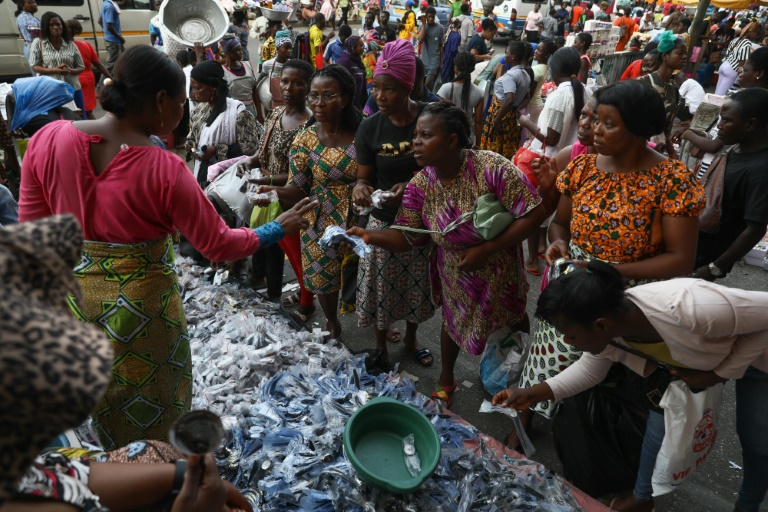
Ghana’s main unions on Monday called for a nationwide strike from next week in protest against the inclusion of workers’ pensions in a local debt swap programme as part of the terms for an IMF credit.

A top cocoa and gold producer, Ghana has oil and gas reserves but its debt payments are high and its revenues weak. 

Like the rest of Africa, it has been hit by economic fallout from the global pandemic and the Ukraine war. 

Two weeks ago, the west African nation offered investors a domestic debt swap to ease a crunch in payments. 

But labour unions refuse to have pension funds included in the exchange.

The unions met in the capital Accra on Monday and told reporters they had called a strike to compel the government to heed their demand.

“We have decided firmly that because the government has refused to grant us our request that all pension funds must be exempted from the domestic debt exchange programme, all workers of Ghana are going to strike on 27 December 2022,” said Yaw Baah, secretary general of Trades Union Congress.

“We will be on strike until our demand has been granted,” he said.

Baah called on workers to stay at home.

“We will stay at home until the government acts. That is straight forward and very simple,” he said. 

“We won’t sit down for the vulnerable people to suffer because somebody has made mistakes.”

Labour unions present at the press conference included the Ghana National Association of Teachers (GNAT), the Ghana Medical Association, the University Teachers Association of Ghana (UTAG), the Ghana Registered Nurses and Midwives Association and the Teachers and Educational Workers Union (TEWU).

The government has so far not responded to the strike threat.

The West African state is facing an economic crisis, with inflation at more than 50 percent and its cedi currency down sharply, hit by the adverse effects of the global pandemic and Ukraine conflict. 

The crisis forced President Nana Akufo-Addo’s government to reverse its position earlier this year and seek International Monetary Fund help as economists warned of a default on debt payments.

Ghana and the IMF have agreed on a three-billion-dollar credit, but the fund’s board has yet to approve the deal.

Ghana on Monday announced it was suspending payments on part of its foreign debts.
Hong Kong exchange headed to worst IPO finish in a decade

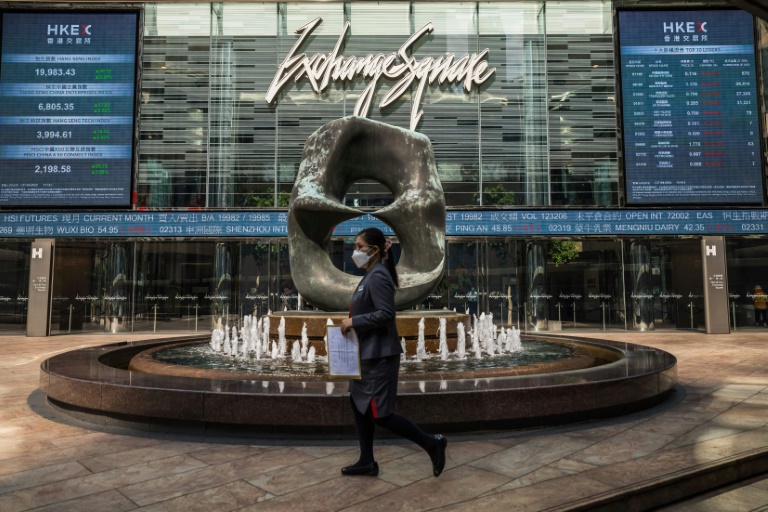
Hong Kong’s stock exchange is on track for its weakest year since 2012 for new listings as the city reeled from the pandemic, rising interest rates and China’s economic uncertainty, according to data released Tuesday.

Hong Kong Exchanges and Clearing (HKEX) said this year it had 69 new listings raising HK$87.8 billion ($11.3 billion) as of November 30, down 74 percent from the year before.

The bourse said “renewed momentum” in the second half of the year accounted for nearly two-thirds of the IPOs, following a slump during the city’s worst-ever coronavirus outbreak.

“The macroeconomic and geopolitical backdrop led to weak sentiment and softness in the global IPO market,” the exchange said.

The latest figures were a steep drop from peak levels in 2020 when IPOs raised HK$400 billion, as Hong Kong benefited from the bonanza of Chinese mega-companies opting to list closer to home.

Before the pandemic Hong Kong’s bourse was often crowned as the top IPO venue in the world, drawing more than 100 new listings annually between 2013 and 2020.

HKEX shares have lost 28.3 percent since the start of the year while the city’s flagship Hang Seng Index is down 18 percent.

But both have seen a rebound in the past six weeks. 

As China pivots towards reopening, bankers and analysts expect a slew of mid-sized Hong Kong deals in the first quarter will drive a recovery in listings.

“With the transition toward a reopening, we anticipate several delayed Chinese IPOs and follow-on transactions to occur in the near term,” Murli Maiya of JPMorgan Chase in Hong Kong told Bloomberg News.

Victoria Lloyd, a partner in Baker McKenzie’s Hong Kong office, said she expected the IPO pipeline to pick up after Chinese New Year.

“With China opening up, everyone is hoping that next year will be a better year — because there is a solid IPO pipeline, with a series of companies that have submitted applications for listings or are waiting to do so,” Lloyd told Bloomberg.

HKEX said Tuesday that it had bolstered its popular “Connect” franchise this year that links to bourses in Shanghai and Shenzhen, which will soon extend to interbank interest rate swap markets.

This year Hong Kong also saw the listing of four special purpose acquisition companies (SPACs) — investment vehicles sometimes called “blank cheque” companies.

HKEX started to allow SPAC listings this year, subject to a strict framework, in a bid to boost competitiveness following in the steps of regional rival Singapore.

But SPACs have largely fallen out of favour this year on Wall Street amid rising inflation, interest rate hikes and a looming recession.

Hong Kong exchange headed to worst IPO finish in a decade

Hong Kong’s stock exchange is on track for its weakest year since 2012 for new listings as the city reeled from the pandemic, rising interest rates and China’s economic uncertainty, according to data released Tuesday.

Hong Kong Exchanges and Clearing (HKEX) said this year it had 69 new listings raising HK$87.8 billion ($11.3 billion) as of November 30, down 74 percent from the year before.

The bourse said “renewed momentum” in the second half of the year accounted for nearly two-thirds of the IPOs, following a slump during the city’s worst-ever coronavirus outbreak.

“The macroeconomic and geopolitical backdrop led to weak sentiment and softness in the global IPO market,” the exchange said.

The latest figures were a steep drop from peak levels in 2020 when IPOs raised HK$400 billion, as Hong Kong benefited from the bonanza of Chinese mega-companies opting to list closer to home.

Before the pandemic Hong Kong’s bourse was often crowned as the top IPO venue in the world, drawing more than 100 new listings annually between 2013 and 2020.

HKEX shares have lost 28.3 percent since the start of the year while the city’s flagship Hang Seng Index is down 18 percent.

But both have seen a rebound in the past six weeks. 

As China pivots towards reopening, bankers and analysts expect a slew of mid-sized Hong Kong deals in the first quarter will drive a recovery in listings.

“With the transition toward a reopening, we anticipate several delayed Chinese IPOs and follow-on transactions to occur in the near term,” Murli Maiya of JPMorgan Chase in Hong Kong told Bloomberg News.

Victoria Lloyd, a partner in Baker McKenzie’s Hong Kong office, said she expected the IPO pipeline to pick up after Chinese New Year.

“With China opening up, everyone is hoping that next year will be a better year — because there is a solid IPO pipeline, with a series of companies that have submitted applications for listings or are waiting to do so,” Lloyd told Bloomberg.

HKEX said Tuesday that it had bolstered its popular “Connect” franchise this year that links to bourses in Shanghai and Shenzhen, which will soon extend to interbank interest rate swap markets.

This year Hong Kong also saw the listing of four special purpose acquisition companies (SPACs) — investment vehicles sometimes called “blank cheque” companies.

HKEX started to allow SPAC listings this year, subject to a strict framework, in a bid to boost competitiveness following in the steps of regional rival Singapore.

But SPACs have largely fallen out of favour this year on Wall Street amid rising inflation, interest rate hikes and a looming recession.

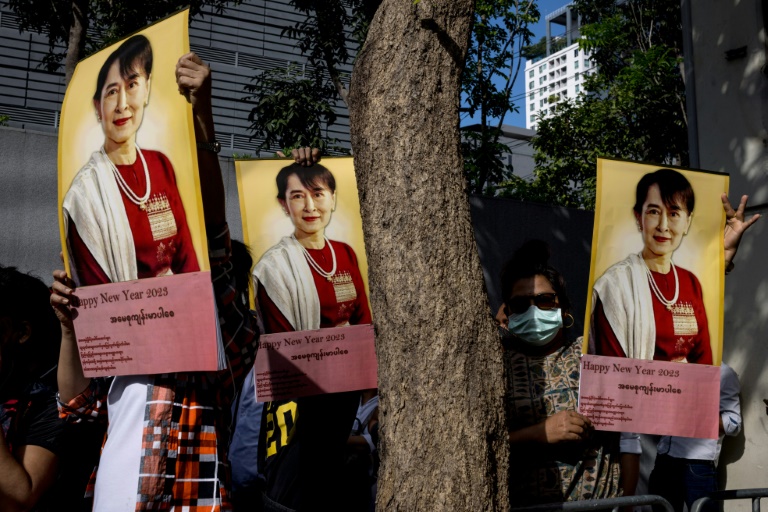
Trial of Myanmar's Suu Kyi enters final phase

A junta court will hear the final arguments in the 18-month-long trial of Myanmar’s Aung San Suu Kyi next week, a legal source said Tuesday, before reaching its final verdicts against the Nobel laureate.

Suu Kyi has been a prisoner since the military toppled her government in February 2021, ending the Southeast Asian nation’s brief period of democracy.

She has been convicted on 14 charges, ranging from corruption to illegally possessing walkie-talkies and flouting Covid restrictions.

The junta court will hear “final arguments” from both sides related to five remaining charges of corruption on December 26, according to a source with knowledge of the case.

“The verdict will be given after that stage,” the source said, adding a date had not yet been set.

Suu Kyi, 77, appeared in good health, the source said.

Each corruption charge carries a maximum jail term of 15 years. 

Journalists have been barred from attending the court hearings and Suu Kyi’s lawyers have been banned from speaking to the media.

In June, she was transferred from house arrest in military-built Naypyidaw to a prison compound, where her trial continues at a special court.

The military alleged widespread voter fraud during the November 2020 election, won resoundingly by Suu Kyi’s National League for Democracy party, although international observers said the poll was largely free and fair.

Myanmar has been in turmoil since the coup, with over 2,500 killed in the military’s crackdown on dissent, according to a local monitoring group.

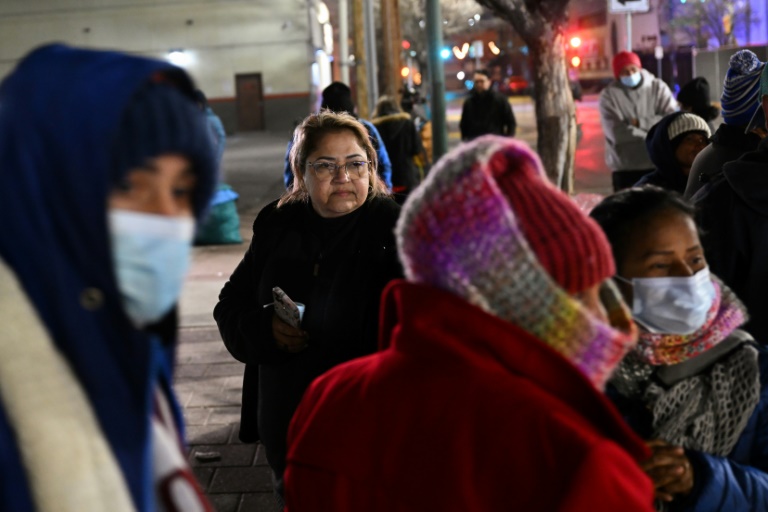
The kindness of strangers keeps migrants warm on US-Mexico border

Rosa Falcon has turned her Texas home into a shelter for desperate migrants crossing from Mexico, whose numbers have swelled as the United States prepares for the possible lifting of rules that have kept the border effectively shut.

The sight of hundreds of people huddling against the freezing winter weather on the streets of El Paso was just too much for her to bear.

“With everything they have lived through, to leave them like that, adrift, on the street, seems illogical and inhumane to me,” said Falcon as she made her nightly rounds through the city which neighbors Mexico’s Ciudad Juarez.

The southern border of the United States has been officially closed to immigrants without visas for more than two years under a controversial health measure invoked by then-president Donald Trump during the Covid-19 pandemic.

Title 42 prevents asylum seekers from presenting themselves at ports of entry, allowing border patrol officers to turn them away without starting an asylum application.

Its stated purpose is to prevent the entry to the United States of people carrying a contagious disease.

But critics charge that with Covid endemic in the country — the United States has logged around 100 million confirmed cases — it is meaningless. Its true purpose, they say, is to keep migrants out.

But it’s never been very good at doing that.

Knowing that ports of entry are closed to them, would-be asylum seekers instead seek out gaps in the fence and other well-used crossing locations.

Once across, they present themselves to under-resourced border officials who take them to facilities where their cases are considered, and, if accepted, release them with a date when their bid for asylum will be considered.

In El Paso those with relatives wait for money transfers from friends and family that will allow them to buy a bus ticket.

Many sleep rough, the clothes they wear their only possessions.

“It’s heartbreaking, especially when there are children,” said Falcon, a school teacher, who has built a support network with other volunteers and local churches. 

– State of emergency –

More than 53,000 migrants surrendered to border authorities after illegally crossing this section of the border in October alone, a 280 percent increase on the same month last year.

Many arrive in desperate poverty, hungry and exhausted after an arduous struggle through the Darien jungle in Panama, or wet and dirty after wading across the Rio Grande, the river that separates Mexico from the United States.

Recent days have seen a spike in the number of people who have made it to El Paso after sneaking over the border.

So great are the numbers that Mayor Oscar Leeser has declared a state of emergency, to free up resources to help them.

On Saturday night, after his announcement, a bus arrived at a station in downtown El Paso, a frequent stop for poverty-stricken migrants looking to make their way to other cities.

“Anyone who doesn’t have a ticket by tomorrow can come with us,” a municipal official said, explaining people would be taken to a hotel to sleep.

Most of those at the bus station refused to move.

“We have heard so many things,” said Santiago, a 23-year-old Colombian. “How can we trust them? What if they take us to another state?”

– Lapse –

Title 42 had been due to lapse at midnight between December 20 and 21, but on Monday the US Supreme Court issued an administrative stay to allow the bench to consider an appeal by Republican Party-led states against its expiration.

In the meantime, the desperate migrants continue to cross.

President Joe Biden’s administration is at pains to stress they have control of the border, and that it is not a free-for-all.

“It would be wrong to think that the border is open,” White House spokeswoman Karine Jean-Pierre said Monday.

“It’s not open.”

An AFP team at the border on Monday watched 10 people squeeze through a hole in the fence in around 10 minutes.

They, and the many others that cross, will surrender to officials. If their cases qualify they will then be sent back out onto the streets, where for a few days they will survive on the mercy of strangers unwilling to watch them shiver.

On a recent chilly evening, Falcon, her mother, daughter and son-in-law drove around El Paso offering help to anyone who needed it.

There are usually four or five people sleeping in her living room, strangers she feeds — and sometimes clothes — from her own pocket.

“Even though I don’t know them, I feel like they are part of my family,” she said. 

'Asterix' takes on new writer for 2023 instalment

Popular French comic book series “Asterix” will turn a new page for its forthcoming 40th volume, with a new writer chosen to pen next year’s instalment, the publisher said Tuesday.

French novelist and comic book author Fabcaro, who is known for his absurdist humour, will be the fourth scriptwriter to carry on the adventure of the indomitable Gaul who stood against the Romans.

As is tradition, the next volume will come out in an odd-numbered year, with the latest release planned for October 26, 2023, publisher Albert Rene said.

The title of the forthcoming book remains a secret.

Asterix — defender of the last Gaulish village holding out against the Roman empire — was dreamed up in 1959 by Rene Goscinny, who died in 1977, and Albert Uderzo, who died in 2020.

The comic books have sold hundreds of millions of copies worldwide.

Before the Asterix series, there was no history of comics having a scriptwriter.

Fabcaro, 49, said he was excited to be taking on the task.

“I was a huge fan of Asterix. This is a great gift to the child that I once was,” he said.

“I want to stay faithful to… what makes Asterix so appealing. With classic ingredients such as the anachronisms, the puns… And especially remain faithful to the characters.”

As the new writer Fabcaro follows in the footsteps of previous authors Goscinny, Uderzo and Jean-Yves Ferri.

He is well-known for his 2015 comic “Zai Zai Zai Zai”, in which a man goes on the run after forgetting a shop loyalty card.

The upcoming “Asterix” book is to be illustrated by Didier Conrad, who has been in the job since Uderzo named him as his successor for the 35th volume in 2013.

World Bank slashes China growth forecasts on Covid woes, property crisis

The World Bank on Tuesday slashed its China growth forecast for the year as the pandemic and weaknesses in the property sector hit the world’s second largest economy.

In a statement, the institution slashed its forecast to 2.7 percent from 4.3 percent predicted in June. It also revised its forecast for next year from 8.1 percent down to 4.3 percent.

Both figures are well below Beijing’s GDP growth target of around 5.5 percent for the year, a figure many analysts believe is now unattainable.

“Economic activity in China continues to track the ups and downs of the pandemic — outbreaks and growth slowdowns have been followed by uneven recoveries,” the World Bank said. 

“Real GDP growth is projected to reach 2.7 percent this year, before recovering to 4.3 percent in 2023, amid a reopening of the economy.” 

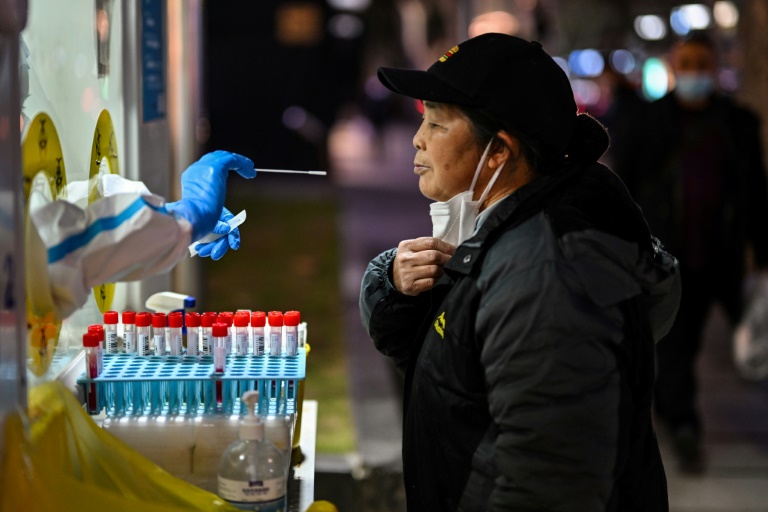
After years of sudden lockdowns, mass testing, long quarantines and travel restrictions, China this month abruptly abandoned its zero-Covid policy. 

But disruption to businesses has continued as cases surge and some restrictions remain in place.

Health authorities have admitted that official figures no longer capture the full picture of domestic infections now that mass testing requirements have been dropped.

“Continued adaptation of China’s Covid-19 policy will be crucial, both to mitigate public health risks and to minimise further economic disruption,” Mara Warwick, World Bank Country Director for China, Mongolia and Korea, said. 

Last week the IMF warned it too would likely downgrade its projections for China again, blaming a predicted continued rise in cases. 

The fund cut its growth projection for China in October to 3.2 percent this year — the lowest in decades — while expecting growth to rise to 4.4 percent next year.

But “very likely, we will be downgrading our growth projections for China, both for 2022 and for 2023”, IMF chief Kristalina Georgieva told AFP. 

– Other stresses –

Experts fear China is ill-equipped to manage the exit wave of infections as it presses ahead with reopening, with millions of vulnerable elderly people still not fully vaccinated.

“Accelerated efforts on public health preparedness, including efforts to increase vaccinations especially among high-risk groups, could enable a safer and less disruptive reopening,” Warwick said. 

The economy is under pressure on other fronts, too. 

“Persistent stress” in the real estate sector — which accounts for about a quarter of annual GDP — could have wider macroeconomic and financial effects, the World Bank noted.

And it added that youth unemployment, the risks from extreme weather caused by climate change and the wider global slowdown also threatened growth.

The world economy is being battered by surging interest rates aimed at fighting runaway inflation that has been triggered by Russia’s war in Ukraine as well as global supply chain snarls.

Beijing has sought to mitigate low growth with a series of easing measures to provide support, slashing key interest rates and pumping cash into the banking system. 

“Directing fiscal resources towards social spending and green investment would not only support short-term demand but also contribute to more inclusive and sustainable growth in the medium term,” said the World Bank’s Lead Economist for China Elitza Mileva.

World Bank slashes China growth forecasts on Covid woes, property crisis

The World Bank on Tuesday slashed its China growth forecast for the year as the pandemic and weaknesses in the property sector hit the world’s second largest economy.

In a statement, the institution slashed its forecast to 2.7 percent from 4.3 percent predicted in June. It also revised its forecast for next year from 8.1 percent down to 4.3 percent.

Both figures are well below Beijing’s GDP growth target of around 5.5 percent for the year, a figure many analysts believe is now unattainable.

“Economic activity in China continues to track the ups and downs of the pandemic — outbreaks and growth slowdowns have been followed by uneven recoveries,” the World Bank said. 

“Real GDP growth is projected to reach 2.7 percent this year, before recovering to 4.3 percent in 2023, amid a reopening of the economy.” 

After years of sudden lockdowns, mass testing, long quarantines and travel restrictions, China this month abruptly abandoned its zero-Covid policy. 

But disruption to businesses has continued as cases surge and some restrictions remain in place.

Health authorities have admitted that official figures no longer capture the full picture of domestic infections now that mass testing requirements have been dropped.

“Continued adaptation of China’s Covid-19 policy will be crucial, both to mitigate public health risks and to minimise further economic disruption,” Mara Warwick, World Bank Country Director for China, Mongolia and Korea, said. 

Last week the IMF warned it too would likely downgrade its projections for China again, blaming a predicted continued rise in cases. 

The fund cut its growth projection for China in October to 3.2 percent this year — the lowest in decades — while expecting growth to rise to 4.4 percent next year.

But “very likely, we will be downgrading our growth projections for China, both for 2022 and for 2023”, IMF chief Kristalina Georgieva told AFP. 

– Other stresses –

Experts fear China is ill-equipped to manage the exit wave of infections as it presses ahead with reopening, with millions of vulnerable elderly people still not fully vaccinated.

“Accelerated efforts on public health preparedness, including efforts to increase vaccinations especially among high-risk groups, could enable a safer and less disruptive reopening,” Warwick said. 

The economy is under pressure on other fronts, too. 

“Persistent stress” in the real estate sector — which accounts for about a quarter of annual GDP — could have wider macroeconomic and financial effects, the World Bank noted.

And it added that youth unemployment, the risks from extreme weather caused by climate change and the wider global slowdown also threatened growth.

The world economy is being battered by surging interest rates aimed at fighting runaway inflation that has been triggered by Russia’s war in Ukraine as well as global supply chain snarls.

Beijing has sought to mitigate low growth with a series of easing measures to provide support, slashing key interest rates and pumping cash into the banking system. 

“Directing fiscal resources towards social spending and green investment would not only support short-term demand but also contribute to more inclusive and sustainable growth in the medium term,” said the World Bank’s Lead Economist for China Elitza Mileva.

Japan central bank tweaks monetary policy, yen strengthens

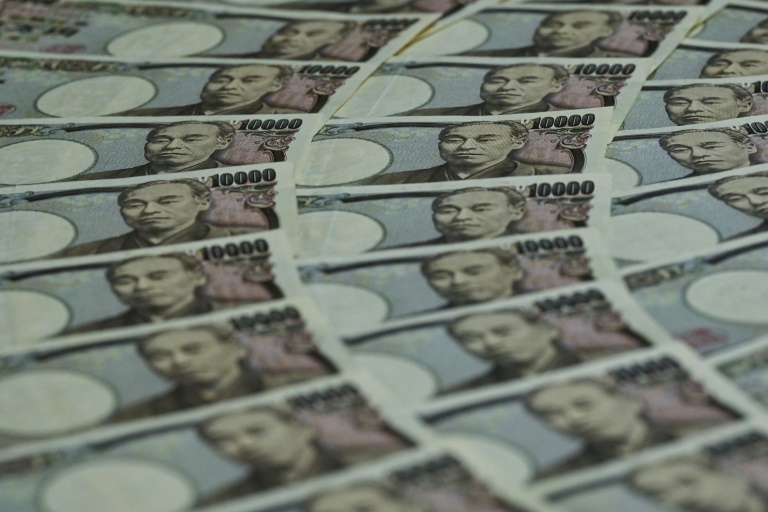
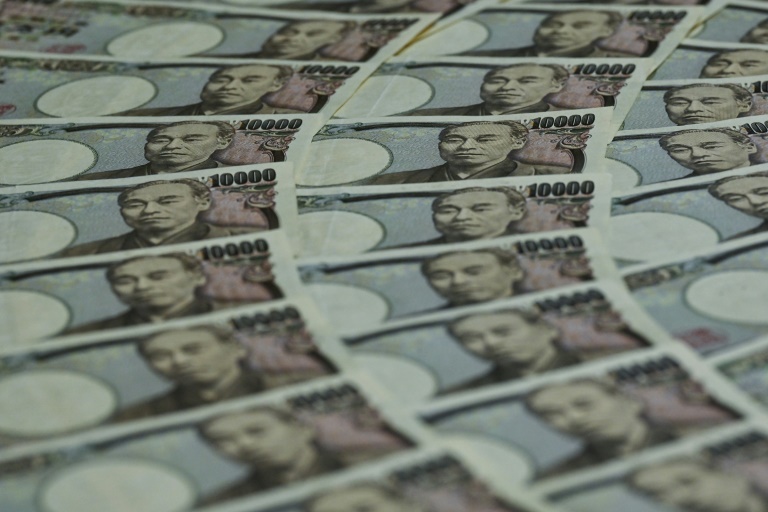
Japan’s central bank tweaked its longstanding monetary easing programme on Tuesday, in a surprise move that saw the yen strengthen quickly against the dollar while Tokyo stock markets fell.

The change marks a rare shift of gears for the dovish central bank, which has largely left its policy intact even as counterparts in other major economies hike rates to tackle inflation.

After a two-day policy meeting, the bank said it would widen the band in which it would allow rates for 10-year Japan government bonds to move, saying it would “improve market functioning”.

“The Bank will expand the range of 10-year JGB yield fluctuations from the target level: from between around plus and minus 0.25 percentage points to between around plus and minus 0.5 percentage points,” it said in a statement.

The move saw the yen strengthen rapidly against the dollar, with the greenback falling from a daily high of 137 yen to 133 yen within minutes of the decision.

The announcement came during the morning break in Tokyo trade, but the key Nikkei 225 index plunged as it reopened, falling as much as three percent before recovering slightly.

Few had anticipated the shift, with all 47 of the economists surveyed by Bloomberg ahead of the decision saying they expected no change in policy.

The bank left the rest of its longstanding loose monetary programme intact, including its years-old inflation target of two percent.

Governor Haruhiko Kuroda, whose term ends next spring, has for years struggled to steer the world’s third largest economy towards sustained two percent inflation, seen as necessary for growth.

Prices in Japan have risen sharply this year, with the consumer price index in October at 3.6 percent, the highest in four decades.

But Kuroda and the central bank consider the increases temporary, citing a lack of strong demand and wage rises.

– ‘A sense of policy flexibility’ –

Still, the BoJ has come under pressure to move away from its ultra-loose policy as central banks in other major economies hike interest rates to tackle inflation.

The resulting differential has seen the yen nosedive about 20 percent against the dollar this year.

Hideo Kumano, chief economist at Dai-ichi Life Group, said the decision showed the bank recognised its existing policy was no longer tenable.

“It has been unrealistic to try to cap the long-term yield with the fixed-rate bond-buying operations at 0.25 percent,” he told AFP.

“It seems to me that the bank wanted to create a little bit of a sense of policy flexibility or room for policy choices and pass the baton to the next governor,” he added.

Kuroda’s term ends in April, and over the weekend reports suggested Japan’s government could work with his successor to move away from the longstanding two-percent price target.

The bank’s decision Tuesday sent shockwaves through Asian markets, with stocks falling on regional bourses as investors digested the news.

“In reality the long-term rate will become 0.5 percent. It will reduce the rate gap between Japan and the US,” said Kumano.

Saisuke Sakai, chief economist of Mizuho Research & Technologies, said the move would help address the weaker yen caused by the growing gulf between US and Japanese central bank policy.

But “unlike rate hikes by the Fed and European central banks aimed at cooling down overheated economies… this is aimed chiefly at stabilising market function,” he told AFP.

“Japan’s economy has not recovered to the pre-pandemic level yet, in contrast to the US economy,” he noted.

Japan central bank tweaks monetary policy, yen strengthens

Japan’s central bank tweaked its longstanding monetary easing programme on Tuesday, in a surprise move that saw the yen strengthen quickly against the dollar while Tokyo stock markets fell.

The change marks a rare shift of gears for the dovish central bank, which has largely left its policy intact even as counterparts in other major economies hike rates to tackle inflation.

After a two-day policy meeting, the bank said it would widen the band in which it would allow rates for 10-year Japan government bonds to move, saying it would “improve market functioning”.

“The Bank will expand the range of 10-year JGB yield fluctuations from the target level: from between around plus and minus 0.25 percentage points to between around plus and minus 0.5 percentage points,” it said in a statement.

The move saw the yen strengthen rapidly against the dollar, with the greenback falling from a daily high of 137 yen to 133 yen within minutes of the decision.

The announcement came during the morning break in Tokyo trade, but the key Nikkei 225 index plunged as it reopened, falling as much as three percent before recovering slightly.

Few had anticipated the shift, with all 47 of the economists surveyed by Bloomberg ahead of the decision saying they expected no change in policy.

The bank left the rest of its longstanding loose monetary programme intact, including its years-old inflation target of two percent.

Governor Haruhiko Kuroda, whose term ends next spring, has for years struggled to steer the world’s third largest economy towards sustained two percent inflation, seen as necessary for growth.

Prices in Japan have risen sharply this year, with the consumer price index in October at 3.6 percent, the highest in four decades.

But Kuroda and the central bank consider the increases temporary, citing a lack of strong demand and wage rises.

– ‘A sense of policy flexibility’ –

Still, the BoJ has come under pressure to move away from its ultra-loose policy as central banks in other major economies hike interest rates to tackle inflation.

The resulting differential has seen the yen nosedive about 20 percent against the dollar this year.

Hideo Kumano, chief economist at Dai-ichi Life Group, said the decision showed the bank recognised its existing policy was no longer tenable.

“It has been unrealistic to try to cap the long-term yield with the fixed-rate bond-buying operations at 0.25 percent,” he told AFP.

“It seems to me that the bank wanted to create a little bit of a sense of policy flexibility or room for policy choices and pass the baton to the next governor,” he added.

Kuroda’s term ends in April, and over the weekend reports suggested Japan’s government could work with his successor to move away from the longstanding two-percent price target.

The bank’s decision Tuesday sent shockwaves through Asian markets, with stocks falling on regional bourses as investors digested the news.

“In reality the long-term rate will become 0.5 percent. It will reduce the rate gap between Japan and the US,” said Kumano.

Saisuke Sakai, chief economist of Mizuho Research & Technologies, said the move would help address the weaker yen caused by the growing gulf between US and Japanese central bank policy.

But “unlike rate hikes by the Fed and European central banks aimed at cooling down overheated economies… this is aimed chiefly at stabilising market function,” he told AFP.

“Japan’s economy has not recovered to the pre-pandemic level yet, in contrast to the US economy,” he noted.

Close Bitnami banner
Bitnami