AFP

Twitter users vote to oust Elon Musk as CEO

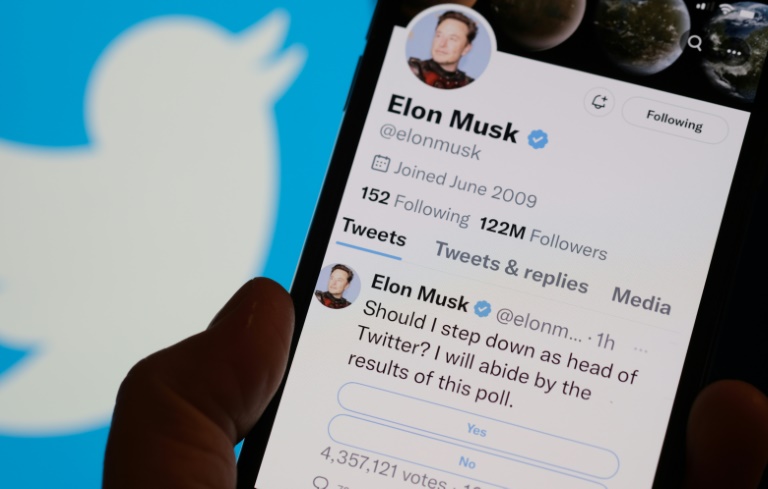
Twitter users voted on Monday to oust owner Elon Musk as chief executive in a highly unscientific poll he organized and promised to honor, just weeks after he took charge of the social media giant.

A total of 57.5 percent of more than 17 million accounts voted for him to step down. Musk, who also runs car maker Tesla and rocket firm SpaceX, has not yet reacted publicly to the results.

“The question is not finding a CEO, the question is finding a CEO who can keep Twitter alive,” the South African-born billionaire tweeted before the vote closed.

In a response to another tweet, he added: “No one wants the job who can actually keep Twitter alive. There is no successor.”

Musk has fully owned Twitter since October 27 and has repeatedly courted controversy as CEO, sacking half of its staff, readmitting far-right figures to the platform, suspending journalists and trying to charge for previously free services.

Analysts have also pointed out that the stock price of Tesla has slumped by one-third since Musk’s Twitter takeover. The share price briefly rallied by 3.3 percent on Monday before fading.

“It’s hard to ignore the numbers since [the Twitter] deal closed,” tweeted investment expert Gary Black, saying he reckoned Tesla’s board was putting pressure on Musk to quit his Twitter role.

In discussions with users after posting his latest poll, Musk renewed his warnings that the platform could be heading for bankruptcy.

– ‘Won’t happen again’ –

Resorting to Twitter’s polling feature has been a favorite strategy of Musk’s to push through policy decisions, including the reinstatement of the account of former president Donald Trump.

Paris-based Reporters Without Borders, which defends press freedom around the world, said the polls were a “crude and cynical” ploy.

“These methods appear to be democratic procedures, but in reality they are… the opposite of democracy,” said the group’s head, Christophe Deloire.

Unpredictable entrepreneur Musk posted his latest poll shortly after trying to extricate himself from yet another controversy.

On Sunday, Twitter users were told they would no longer be able to promote content from other social media sites.

But Musk seemed to reverse course a few hours later, writing that the policy would be limited to “suspending accounts only when that account’s *primary* purpose is promotion of competitors.”

“Going forward, there will be a vote for major policy changes. My apologies. Won’t happen again,” he tweeted.

The attempted ban had prompted howls of disapproval and even bemused Twitter cofounder Jack Dorsey, who had backed Musk’s takeover.

Dorsey questioned the new policy with a one-word tweet: “Why?”

– ‘Perfect storm’ –

Musk has generated a series of controversies in his short reign, one which analyst Dan Ives from Wedbush described as a “perfect storm.” 

He noted that “advertisers have run for the hills and left Twitter squarely in the red ink potentially on track to lose roughly $4 billion per year.”

Shortly after taking over the platform, Musk announced it would charge $8 per month to verify account holders’ identities, but had to suspend the “Twitter Blue” plan after an embarrassing rash of fake accounts. It has since been relaunched.

On November 4, with Musk saying the company was losing $4 million a day, Twitter laid off half of its 7,500-strong staff.

Musk also reinstated Trump’s account — though the former US president indicated he had no interest in the platform — and said Twitter would no longer work to combat Covid-19 disinformation.

In recent days, he suspended the accounts of several journalists after complaining some had published details about the movements of his private jet, which he claimed could endanger his family.

Employees of CNN, The New York Times and The Washington Post were among those affected in a move that drew sharp criticism, including from the European Union and the United Nations.

Washington Post executive editor Sally Buzbee said the suspension of journalist Taylor Lorenz’s account “further undermines Elon Musk’s claim that he intends to run Twitter as a platform dedicated to free speech.”

Some of the suspended accounts have since been reactivated.

On Monday, the head of the European Parliament, speaker Roberta Metsola, sent a letter to Musk inviting him to testify before the legislature, her spokesman said.

The parliament has no power to compel Musk to turn up, and his response was not immediately known.
Twitter users vote to oust Elon Musk as CEO

Twitter users voted on Monday to oust owner Elon Musk as chief executive in a highly unscientific poll he organized and promised to honor, just weeks after he took charge of the social media giant.

A total of 57.5 percent of more than 17 million accounts voted for him to step down. Musk, who also runs car maker Tesla and rocket firm SpaceX, has not yet reacted publicly to the results.

“The question is not finding a CEO, the question is finding a CEO who can keep Twitter alive,” the South African-born billionaire tweeted before the vote closed.

In a response to another tweet, he added: “No one wants the job who can actually keep Twitter alive. There is no successor.”

Musk has fully owned Twitter since October 27 and has repeatedly courted controversy as CEO, sacking half of its staff, readmitting far-right figures to the platform, suspending journalists and trying to charge for previously free services.

Analysts have also pointed out that the stock price of Tesla has slumped by one-third since Musk’s Twitter takeover. The share price briefly rallied by 3.3 percent on Monday before fading.

“It’s hard to ignore the numbers since [the Twitter] deal closed,” tweeted investment expert Gary Black, saying he reckoned Tesla’s board was putting pressure on Musk to quit his Twitter role.

In discussions with users after posting his latest poll, Musk renewed his warnings that the platform could be heading for bankruptcy.

– ‘Won’t happen again’ –

Resorting to Twitter’s polling feature has been a favorite strategy of Musk’s to push through policy decisions, including the reinstatement of the account of former president Donald Trump.

Paris-based Reporters Without Borders, which defends press freedom around the world, said the polls were a “crude and cynical” ploy.

“These methods appear to be democratic procedures, but in reality they are… the opposite of democracy,” said the group’s head, Christophe Deloire.

Unpredictable entrepreneur Musk posted his latest poll shortly after trying to extricate himself from yet another controversy.

On Sunday, Twitter users were told they would no longer be able to promote content from other social media sites.

But Musk seemed to reverse course a few hours later, writing that the policy would be limited to “suspending accounts only when that account’s *primary* purpose is promotion of competitors.”

“Going forward, there will be a vote for major policy changes. My apologies. Won’t happen again,” he tweeted.

The attempted ban had prompted howls of disapproval and even bemused Twitter cofounder Jack Dorsey, who had backed Musk’s takeover.

Dorsey questioned the new policy with a one-word tweet: “Why?”

– ‘Perfect storm’ –

Musk has generated a series of controversies in his short reign, one which analyst Dan Ives from Wedbush described as a “perfect storm.” 

He noted that “advertisers have run for the hills and left Twitter squarely in the red ink potentially on track to lose roughly $4 billion per year.”

Shortly after taking over the platform, Musk announced it would charge $8 per month to verify account holders’ identities, but had to suspend the “Twitter Blue” plan after an embarrassing rash of fake accounts. It has since been relaunched.

On November 4, with Musk saying the company was losing $4 million a day, Twitter laid off half of its 7,500-strong staff.

Musk also reinstated Trump’s account — though the former US president indicated he had no interest in the platform — and said Twitter would no longer work to combat Covid-19 disinformation.

In recent days, he suspended the accounts of several journalists after complaining some had published details about the movements of his private jet, which he claimed could endanger his family.

Employees of CNN, The New York Times and The Washington Post were among those affected in a move that drew sharp criticism, including from the European Union and the United Nations.

Washington Post executive editor Sally Buzbee said the suspension of journalist Taylor Lorenz’s account “further undermines Elon Musk’s claim that he intends to run Twitter as a platform dedicated to free speech.”

Some of the suspended accounts have since been reactivated.

On Monday, the head of the European Parliament, speaker Roberta Metsola, sent a letter to Musk inviting him to testify before the legislature, her spokesman said.

The parliament has no power to compel Musk to turn up, and his response was not immediately known.
Japan central bank tweaks monetary policy, yen strengthens

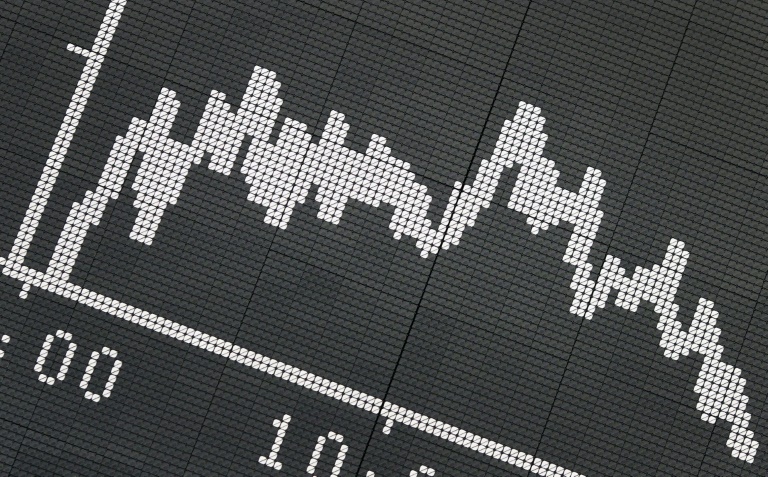
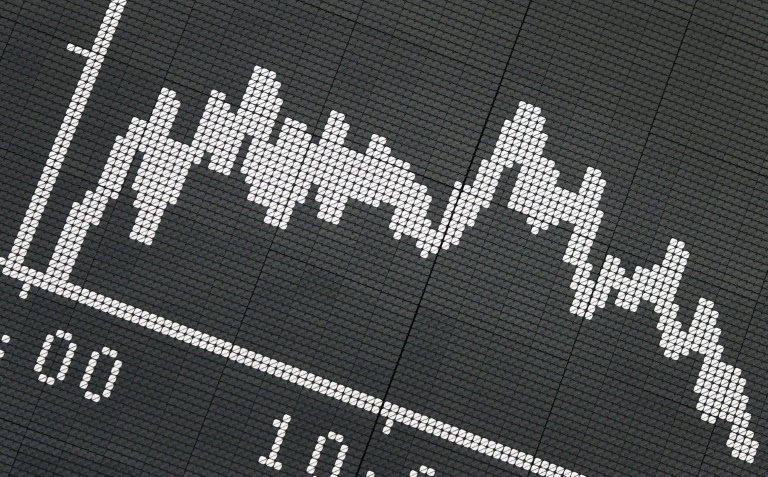
Japan’s central bank tweaked its longstanding monetary easing programme on Tuesday, in a surprise move that saw the yen strengthen quickly against the dollar while Tokyo stock markets fell.

After a two-day policy meeting, the bank said it would widen the band in which it would allow rates for 10-year Japan government bonds to move, saying it would “improve market functioning”.

“The Bank will expand the range of 10-year JGB yield fluctuations from the target level: from between around plus and minus 0.25 percentage points to between around plus and minus 0.5 percentage points,” it said in a statement.

The move saw the yen strengthen rapidly against the dollar, with the greenback falling from a daily high of 137 yen to 133 within minutes of the decision.

The announcement came during the morning break in Tokyo trade, but the key Nikkei 225 index plunged as it reopened, falling more than two percent.

The Bank of Japan left the rest of its longstanding loose monetary policy intact, including its years-old inflation target of two percent.

Governor Haruhiko Kuroda, whose term ends next spring, has for years struggled to steer the world’s third largest economy towards sustained two percent inflation, seen as necessary for growth.

Prices in Japan have risen sharply this year, with the consumer price index in October at 3.6 percent, the highest in four decades.

But Kuroda and the central bank consider the increases temporary, citing a lack of strong demand and wage rises.

Still, the BoJ has come under pressure to move away from its ultra-loose policy as central banks in other major economies hike interest rates to tackle inflation.

The resulting differential has seen the yen nosedive about 20 percent against the dollar this year.

Japan central bank tweaks monetary policy, yen strengthens

Japan’s central bank tweaked its longstanding monetary easing programme on Tuesday, in a surprise move that saw the yen strengthen quickly against the dollar while Tokyo stock markets fell.

After a two-day policy meeting, the bank said it would widen the band in which it would allow rates for 10-year Japan government bonds to move, saying it would “improve market functioning”.

“The Bank will expand the range of 10-year JGB yield fluctuations from the target level: from between around plus and minus 0.25 percentage points to between around plus and minus 0.5 percentage points,” it said in a statement.

The move saw the yen strengthen rapidly against the dollar, with the greenback falling from a daily high of 137 yen to 133 within minutes of the decision.

The announcement came during the morning break in Tokyo trade, but the key Nikkei 225 index plunged as it reopened, falling more than two percent.

The Bank of Japan left the rest of its longstanding loose monetary policy intact, including its years-old inflation target of two percent.

Governor Haruhiko Kuroda, whose term ends next spring, has for years struggled to steer the world’s third largest economy towards sustained two percent inflation, seen as necessary for growth.

Prices in Japan have risen sharply this year, with the consumer price index in October at 3.6 percent, the highest in four decades.

But Kuroda and the central bank consider the increases temporary, citing a lack of strong demand and wage rises.

Still, the BoJ has come under pressure to move away from its ultra-loose policy as central banks in other major economies hike interest rates to tackle inflation.

The resulting differential has seen the yen nosedive about 20 percent against the dollar this year.

Harvey Weinstein guilty of Hollywood rape, jury finds

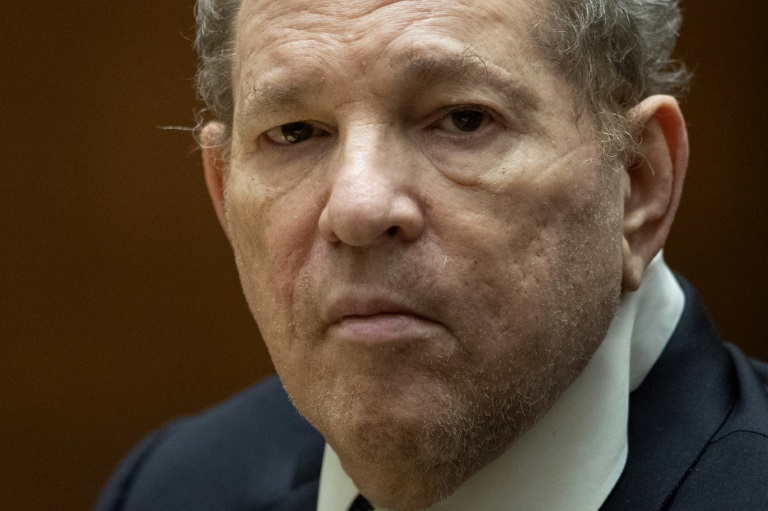
Disgraced US movie titan Harvey Weinstein was convicted Monday of the rape and sexual assault of a woman a decade ago, in what prosecutors said was part of his “reign of terror” over aspiring young actresses in Hollywood.

The 70-year-old “Pulp Fiction” producer, who was once one of the most powerful men in the film industry, faces up to 24 years in jail, in addition to a sentence he is already serving for sex crimes in New York.

His victim in the Los Angeles case said Monday she hopes he “never sees the outside of a prison cell during his lifetime.”

“Harvey Weinstein forever destroyed a part of me that night in 2013 and I will never get that back,” the woman, identified during the trial as Jane Doe #1, said in a statement.

A weeks-long trial heard graphic descriptions of encounters between the once-powerful producer and women who were trying to make their way in the world of movies.

Prosecutors painted a picture of a predatory ogre, who for years used his physical size and his professional prowess to rape and abuse women with impunity.

His victims were left terrorized and afraid for their careers if they spoke out against a man who dominated Tinseltown, prosecutors said.

Rumors of Weinstein’s impropriety had circulated in Hollywood for years, but his position at the apex of the industry meant few were prepared to challenge him.

That all changed in 2017 with the publication of bombshell allegations against him, ushering in the #MeToo movement and opening the floodgates for women to speak out against sexual violence in the workplace.

Dozens of women have since alleged they were victims of Weinstein. 

His convictions in New York, which landed him with a 23-year jail term, were followed by charges in Los Angeles, ultimately relating to four women.

On Monday after two weeks of deliberation, a jury convicted him of three of the seven counts he faced — forcible rape, forcible oral copulation and sexual penetration by a foreign object — all relating to Jane Doe #1 in a Beverly Hills hotel room in February 2013. 

The eight men and four women on the panel acquitted him of one charge of sexual battery by restraint involving another woman.

They did not reach a verdict on charges relating to the alleged assaults of two other women, one of whom was identified by her lawyers as Jennifer Siebel Newsom, the wife of California Governor Gavin Newsom.

Los Angeles Superior Court Judge Lisa Lench declared a mistrial on those counts.

Weinstein faces up to 18 years in prison for the counts on which he was convicted, but aggravating factors could increase that to 24 years.

Attorneys will be back in court Tuesday for arguments as to sentencing.

– ‘Despicable behavior’ –

Siebel Newsom welcomed the verdicts.

“Harvey Weinstein will never be able to rape another woman,” she said.

“He will spend the rest of his life behind bars where he belongs. Harvey Weinstein is a serial predator and what he did was rape.”

Siebel Newsom said that “throughout the trial, Weinstein’s lawyers used sexism, misogyny and bullying tactics to intimidate, demean and ridicule us survivors. This trial was a stark reminder that we as a society have work to do.”

The Oscar-winning producer had denied all the charges, with his attorney seeking to portray accusers either as liars who never had sex with his client, or as women who willingly lay on the casting couch, swapping sex for a leg up in the competitive world of filmmaking.

Weinstein, who was credited with making the careers of household names like Matt Damon, Ben Affleck and Gwyneth Paltrow, used his power to prey on and silence women, said prosecutor Marlene Martinez.

The jury heard testimony from women who said they had been tricked into being alone with Weinstein in his hotel room.

Several described how they had begged him to stop as he forced himself on them, made them perform oral sex on him, or watch him masturbate, sometimes as he groped them.

“We know the despicable behavior the defendant engaged in,” Martinez told the jury in her closing argument, adding Weinstein believed he was so powerful that people would excuse his behavior.

“‘That’s just Harvey being Harvey. That’s just Hollywood.’ And for so long that’s what everyone did. Everyone just turned their heads,” Martinez said.

“It is time for the defendant’s reign of terror to end,” she added. “It is time for the kingmaker to be brought to justice.”

Biden says 'will not be silent' over rising anti-Semitism

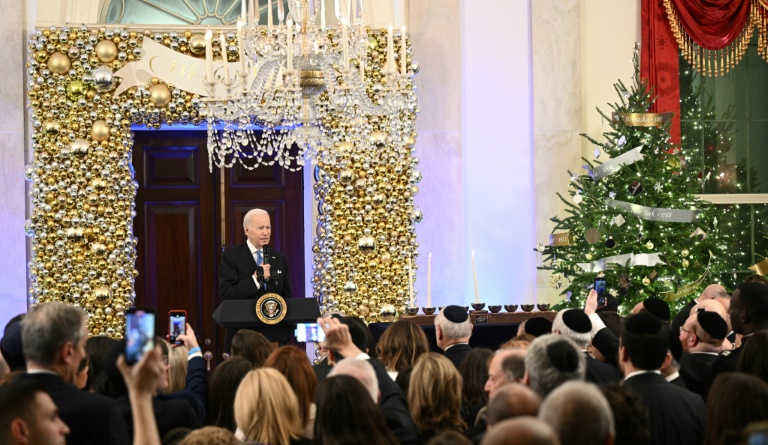
Joe Biden on Monday promised he will not remain silent in the face of growing anti-Semitism in the United States, as the president hosted a White House reception celebrating Hanukkah, the Jewish festival of lights.

“I recognize your fear, your hurt, your worry that this vile and venom is becoming too normal,” Biden said as he stood next to a menorah, a traditional Jewish candelabra, lit by guests to mark the second of the festival’s eight nights. 

“Silence is complicity,” said the president. “We must not remain silent… I will not be silent. America will not be silent.”

Among the guests were Holocaust survivor Bronia Brandman, and Charlie Cytron-Walker, the rabbi at Congregation Beth Israel, a synagogue in Colleyville, Texas that was the scene of a hostage-taking in January.

According to the Anti-Defamation League, the United States experienced a record 2,717 anti-Semitic acts such as assaults, verbal attacks and property damage in 2021, a year-on-year increase of 34 percent.

In its own report, the American Jewish Committee, one of the country’s oldest Jewish advocacy organizations, said that 39 percent of US Jews acknowledged they had “changed their behavior, limiting their activities and concealing their Jewishness due to concerns about anti-Semitism,” while about one in four had themselves been a victim of anti-Semitism over the past year.

Experts have voiced concern they are witnessing a trivialization of anti-Jewish rhetoric, highlighted by public figures including the rapper Kanye West, who recently blurted out “I like Hitler” during an online interview with a conspiracy theorist.

For his part, former president Donald Trump sparked a wave of outrage for dining with a known white supremacist and Holocaust denier last month at his Mar-a-Lago home in Florida.

Asian markets mostly down on worries over rate hikes, inflation

Most markets fell in Asia on Tuesday following a sell-off in New York as traders fret that central bank efforts to tame inflation will tip economies into recession.

Sentiment was also being weighed down by a spike in Covid infections in China as officials roll back many of the strict containment measures that have been in place for almost three years.

A so-called Santa rally appears to be eluding investors, with the mood dampened by last week’s warnings from the Federal Reserve and European Central Bank that they will likely push interest rates higher than expected next year.

The remarks dealt a blow to a short rally across equities that had been fuelled by data showing inflation coming down.

Adding to the selling pressure were comments from former New York Fed chief William Dudley, who told Bloomberg Television that any sign of optimism in markets could make monetary policymakers tighten even more.

In early trade, Hong Kong led losses with tech firms tracking a sell-off in US giants including Amazon and Apple, while Shanghai, Sydney, Seoul, Singapore, Wellington, Taipei, Manila and Jakarta were also in the red.

However, Tokyo edged up slightly ahead of a Bank of Japan policy decision later in the day.

“Those who were in the camp of a year-end rally are now second-guessing their investment thesis,” said JC O’Hara of MKM Partners.

“The markets may have placed a little too much faith in Santa Claus and the rally he typically brings.”

With few catalysts to drive trade, investors are winding down for the Christmas break, though they are keeping a close eye on developments in China, which is suffering a sharp jump in Covid cases.

Officials last month started to move away from their rigid zero-Covid policy of lockdowns and mass testing following widespread protests.

And while the shift has been welcomed as a much-needed boost to the world’s number-two economy, there is growing anxiety about the immediate impact on businesses and the healthcare system.

“A massive China reopening bounce is giving way to a reality check as investors come to grips with numerous zero-Covid offramp economic and medical issues that China is simply unprepared to handle,” said SPI Asset Management’s Stephen Innes.

“Especially if the predicted 10 million-plus daily Covid cases hit the healthcare system later this month.”

Still, the expected pick-up in demand from the China reopening continues to support commodity prices, with both main oil contracts up more than one percent, extending Monday’s gains.

– Key figures around 0230 GMT –

Tokyo – Nikkei 225: UP 0.3 percent at 27,315.54 (break)

Hong Kong – Hang Seng Index: DOWN 0.6 percent at 19,242.72

Shanghai – Composite: DOWN 0.4 percent at 3,099.38

Euro/dollar: DOWN at $1.0607 from $1.0610 on Monday

Pound/dollar: UP at $1.2153 from $1.2148

Euro/pound: DOWN at 87.28 pence from 87.31 pence

Dollar/yen: UP at 137.27 yen from 136.95 yen

West Texas Intermediate: UP 1.2 percent at $76.12 per barrel

Brent North Sea crude: UP 1.2 percent at $80.73 per barrel

New York – Dow: DOWN 0.5 percent at 32,757.54 (close)

London – FTSE 100: UP 0.4 percent at 7,361.31 (close)

Asian markets mostly down on worries over rate hikes, inflation

Most markets fell in Asia on Tuesday following a sell-off in New York as traders fret that central bank efforts to tame inflation will tip economies into recession.

Sentiment was also being weighed down by a spike in Covid infections in China as officials roll back many of the strict containment measures that have been in place for almost three years.

A so-called Santa rally appears to be eluding investors, with the mood dampened by last week’s warnings from the Federal Reserve and European Central Bank that they will likely push interest rates higher than expected next year.

The remarks dealt a blow to a short rally across equities that had been fuelled by data showing inflation coming down.

Adding to the selling pressure were comments from former New York Fed chief William Dudley, who told Bloomberg Television that any sign of optimism in markets could make monetary policymakers tighten even more.

In early trade, Hong Kong led losses with tech firms tracking a sell-off in US giants including Amazon and Apple, while Shanghai, Sydney, Seoul, Singapore, Wellington, Taipei, Manila and Jakarta were also in the red.

However, Tokyo edged up slightly ahead of a Bank of Japan policy decision later in the day.

“Those who were in the camp of a year-end rally are now second-guessing their investment thesis,” said JC O’Hara of MKM Partners.

“The markets may have placed a little too much faith in Santa Claus and the rally he typically brings.”

With few catalysts to drive trade, investors are winding down for the Christmas break, though they are keeping a close eye on developments in China, which is suffering a sharp jump in Covid cases.

Officials last month started to move away from their rigid zero-Covid policy of lockdowns and mass testing following widespread protests.

And while the shift has been welcomed as a much-needed boost to the world’s number-two economy, there is growing anxiety about the immediate impact on businesses and the healthcare system.

“A massive China reopening bounce is giving way to a reality check as investors come to grips with numerous zero-Covid offramp economic and medical issues that China is simply unprepared to handle,” said SPI Asset Management’s Stephen Innes.

“Especially if the predicted 10 million-plus daily Covid cases hit the healthcare system later this month.”

Still, the expected pick-up in demand from the China reopening continues to support commodity prices, with both main oil contracts up more than one percent, extending Monday’s gains.

– Key figures around 0230 GMT –

Tokyo – Nikkei 225: UP 0.3 percent at 27,315.54 (break)

Hong Kong – Hang Seng Index: DOWN 0.6 percent at 19,242.72

Shanghai – Composite: DOWN 0.4 percent at 3,099.38

Euro/dollar: DOWN at $1.0607 from $1.0610 on Monday

Pound/dollar: UP at $1.2153 from $1.2148

Euro/pound: DOWN at 87.28 pence from 87.31 pence

Dollar/yen: UP at 137.27 yen from 136.95 yen

West Texas Intermediate: UP 1.2 percent at $76.12 per barrel

Brent North Sea crude: UP 1.2 percent at $80.73 per barrel

New York – Dow: DOWN 0.5 percent at 32,757.54 (close)

London – FTSE 100: UP 0.4 percent at 7,361.31 (close)

US Supreme Court freezes removal of policy blocking migrants

The US Supreme Court halted Monday the imminent scrapping of a key policy used since Donald Trump’s administration to block migrants at the southwest border, amid worries over a surge in undocumented immigrants.

An order signed by Chief Justice John Roberts placed an emergency stay on the removal planned for Wednesday of Title 42, which allowed the government to use Covid-19 safety protocols to summarily block the entry of millions of migrants.

Roberts placed government immigration policy on temporary hold in response to a last-minute petition from 20 states arguing that ending Title 42 would create a gush in migrants that would overwhelm their services.

They cited the Department of Homeland Security predicting that border crossings, mostly by Mexicans and other Latin Americans asking for asylum, could triple to 18,000 every day.

“The greatly increased number of migrants resulting from this termination will necessarily increase the States’ law enforcement, education, and healthcare costs,” the states argued.

The move came after an appeals court in Washington ruled last Friday that there was no longer justification for using Title 42 to sweepingly reject asylum-seekers.

The policy was put in place in March 2020, in Trump’s final year in office, as the coronavirus pandemic swept into the United States.

In their petition, the mostly Republican-led states — which include border states Texas and Arizona as well as Missouri, Ohio and Virginia — asked that beyond the stay, the court take on the full case over the law.

Roberts gave the parties 24 hours to respond. That left open the possibility that Title 42 could still end this week, or, conversely, that the court could decide to keep it in place while it reviews the case more broadly.

The administration of President Joe Biden had previously accepted a lower court ruling that Title 42 was no longer justified to block asylum seekers and other migrants.

Last week the White House said the Department of Homeland Security was prepared to deal with the expected surge, but gave few details on how it would do that.

“We have an intensive all-of-government effort underway to prepare,” said White House Spokeswoman Karine Jean-Pierre.

DHS said in a statement that Title 42 will remain in effect as a result of the high court’s stay order, and that “individuals who attempt to enter the United States unlawfully will continue to be expelled to Mexico.”

While litigation proceeds, “we will continue our preparations to manage the border in a safe, orderly, and humane way when the Title 42 public health order lifts,” the department said.

Conservative lawmakers swiftly commended the stay, with some urging that Title 42 be codified in US law.

Top House Republican Kevin McCarthy said he was “glad to see the Supreme Court inject some temporary sanity into the situation.”

How Chinese diplomacy helped seal historic nature deal

Expectations heading into a UN biodiversity conference in Montreal were about as low as they could be. 

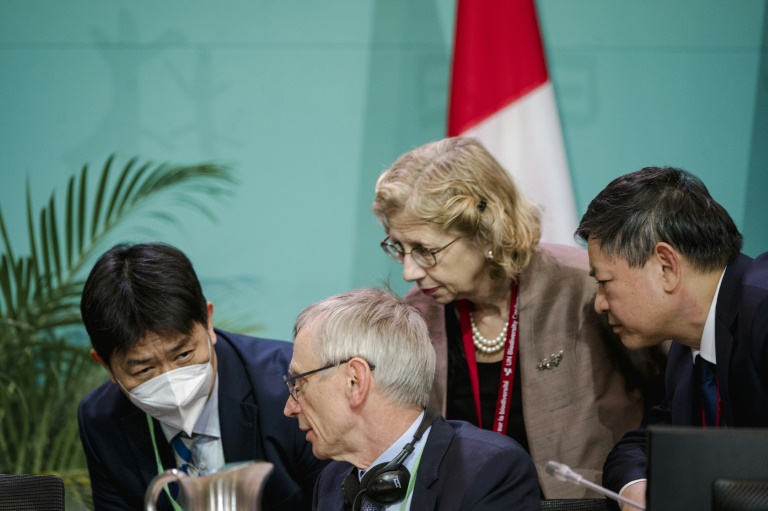
But a broad recognition that it was now or never for nature — and a flurry of late diplomacy by China —  helped seal a “historic” deal on a night of high drama.

Dubbed the “ugly duckling” of global policy, the COP15 negotiations were snubbed by world leaders who had just attended a far higher-profile climate summit in Egypt.

Beijing, which held the presidency of the talks, at first appeared to have a hands-off approach, and the defining issue — whether the rich world would pledge enough money so their developing counterparts could protect vanishing species and habitats — seemed too great to surmount.

“For months, there was the question: Where is China?” a high-level source close to the matter told AFP.

What’s more, relations between China and Canada, which had to step in to host the event because of China’s strict Covid rules, have deteriorated in recent years.

Canada’s 2018 arrest of Chinese telecommunications executive Meng Wanzhou at the request of the United States was followed quickly by China arresting two Canadians.

Just last month, Chinese leader Xi Jinping was caught on camera scolding Canada’s Justin Trudeau over a sleight. 

What’s more, “it’s strange to have a Chinese presidency on North American soil,” said the high-level source — and early signs did nothing to dispel assumptions that China in charge would mean a weakening of ambition.

In the first week, China let Canada run the show shepherding talks on the key issues, from finance to the cornerstone target of protecting 30 percent of land and oceans by 2030.

But as the clock ticked down, it was China that took charge of the text, in an approach described as “gentle” diplomacy: having subject experts and political representatives work in a calm, even environment, according to another diplomatic source.

“China closed out the deal and cornered the developing countries with the $30 billion financing pledge by 2030,” said a third source, a European negotiator. 

When countries of the Global North sought more ambitious targets from the South, China responded by telling them they’d need to up their financing. And Beijing acted as a neutral arbiter, not aligning itself with the Group of 77 as it normally does.

“They’ve taken the risk of putting their own reputation on the line for something many thought they weren’t the natural leaders of,” said Lee White, a British-Gabonese conservationist and minister of water, forests and environment of Gabon. 

Nor is China a natural champion of environmental issues, having badly polluted its air and waters and degraded much of its land through agricultural production — a process it is trying to reverse through a greenification campaign. 

“Countries that destroy their biodiversity end up regretting it —  I think the Chinese probably got to that point and are now trying to put things right,” said White.

– High drama –

The passage of China’s compromise text wasn’t smooth sailing. 

A plenary session to ratify the text was postponed Sunday several times to accommodate last minute holdouts, though delegates were eventually asked to take their seats by around 9:00 pm, and wait. And wait, and wait, and wait. 

Some left the main hall to take naps, with several Western delegates expressing irritation that the session was not being adjourned until the next day.

It was around 3:00 am that the session finally began. A new text had been uploaded, and participants were once more buzzing at the prospect of a “peace pact for nature.” When delegates gathered in the vast plenary hall, drama struck.

A delegate from Democratic Republic of Congo refused to back the accord, demanding more funds.

The conference chair, China’s environment minister Huang Runqiu, brushed this off, declaring the deal “approved” and whacking down his gavel to loud applause. DRC’s ally Uganda branded it a “fraud” and a “coup,” but the accord passed.

An exultant Steven Guilbeault, Canada’s environment minister, downplayed the drama — insisting the process was upheld by the United Nations and disagreements on this scale were commonplace at such summits which he had been attending for 25 years.

“I’ve never seen a presidency text tabled and have so much support for it from the get-go,” with the vast majority of countries signing up right away, he enthused.

On cooperation with China, he told AFP: “We both decided to set aside our differences… to focus on what unites us,” adding: “What China and Canada have accomplished together in our relationship is symbolic of what we’ve accomplished here together, more than 196 countries.”

While China took center stage, the United States participated only in a supporting role.

President Joe Biden supports the pact’s goals and announced his own “30×30” plan domestically — but political opposition by Republicans prevents the US from signing on to the convention on biological diversity.

Close Bitnami banner
Bitnami